


How Soil Biology Self-Regulates Nutrients for Your Plants | Dr. Mani's Magic
How Soil Biology Self-Regulates Nutrients: The Living System Feeding Your Plants Right Now
Picture your backyard on a quiet morning. The grass is still wet with dew. You're holding a cup of coffee, looking at that fruit tree you planted two summers ago. It's alive. Barely. The leaves are a little yellow. The growth has stalled. You've fertilized it three times this season, just like the bag said. And yet.
Something isn't working. And here's the thing nobody at the garden center told you: the problem isn't what's above the soil. The problem is what's been killed beneath it. There is an entire invisible civilization living in healthy dirt. Billions of tiny organisms. Bacteria. Fungi. Protozoa. Nematodes. They form a living network that feeds your plants, protects their roots, and regulates nutrients automatically. No measuring. No guessing. No burning. When that network is alive and humming, plants thrive the way they do in the wild, with nobody spraying anything on them. When it's been destroyed by salt-based fertilizers, herbicides, or cheap potting mix, your plants are on their own. And that's a losing fight.
After growing over 250,000 trees at our South Texas nursery, we learned something that changed everything we thought we knew about plant care. The soil isn't just a medium for holding roots in place. It's a living nutrient economy. And once you understand how it regulates itself, you'll never look at a bag of quick-release fertilizer the same way again. Let's walk through exactly how this system works, why most gardeners never see it working, and what you can do today to turn it back on.
Key Takeaways
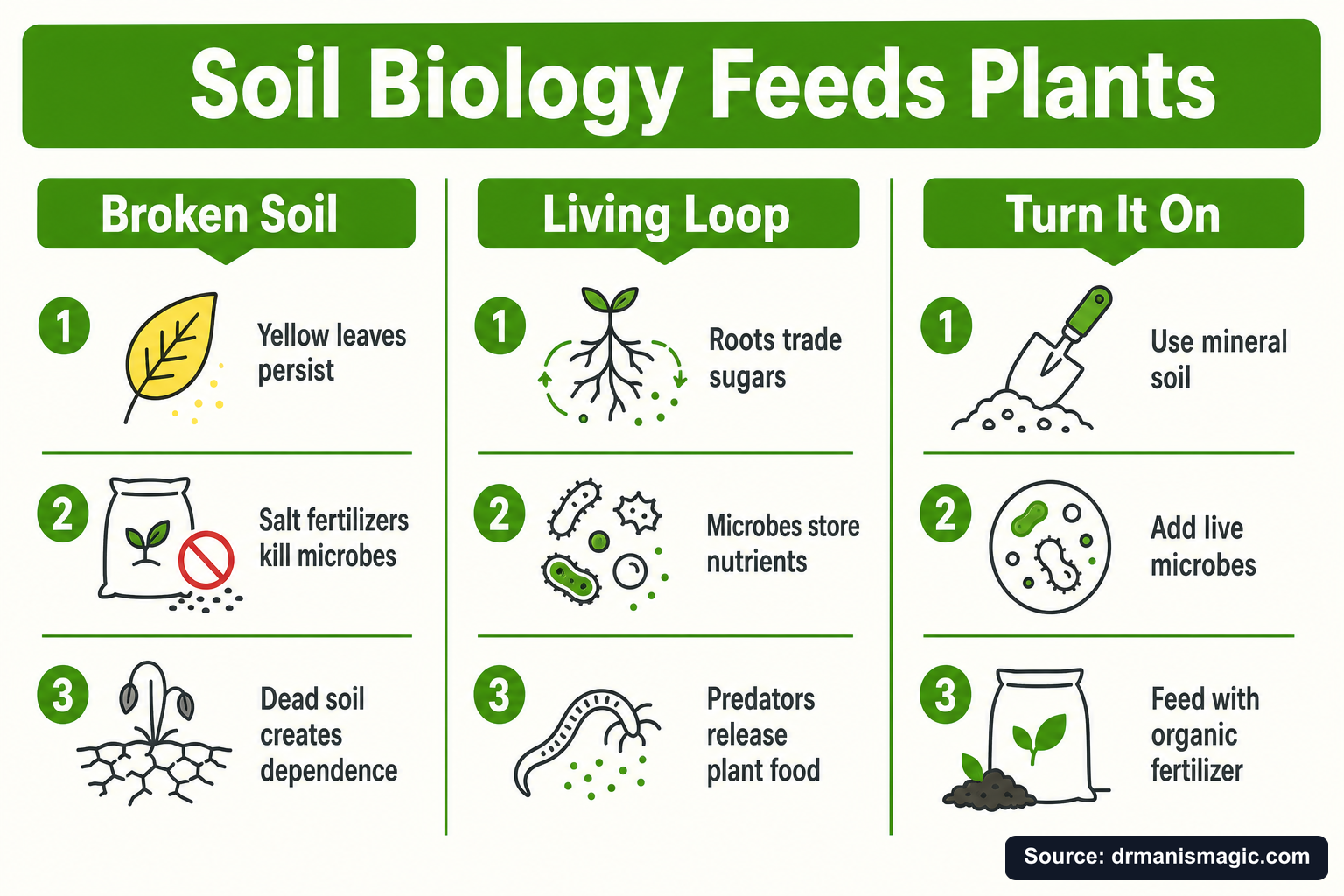
- Soil biology self-regulates nutrients through a loop: plant sugars feed microbes, microbes store nutrients, predators release them, and roots capture them.
- University of Minnesota Extension research shows soil biology supplies roughly 75% of plant-available nitrogen and 65% of available phosphorus in healthy soil.
- Bacteria, fungi, protozoa, and beneficial nematodes each play a specific role in this nutrient cycle. Remove any one group and the loop breaks.
- Salt-based synthetic fertilizers kill the very microbes that make nutrients available naturally, creating a dependency cycle that weakens plants over time.
- Most commercial microbial products use dried or dead organisms that have shown little real-world effect. Live, stabilized microbes are what actually move the needle.
- The Three Plant Pillars — mineral soil, live microbials, and organic fertilizer — rebuild and protect the soil food web so plants can feed themselves.
- Damaged soil can be brought back to life, but it takes time, the right inputs, and consistent reapplication of beneficial biology.
What Is the Soil Food Web and Why Does It Feed Your Plants?
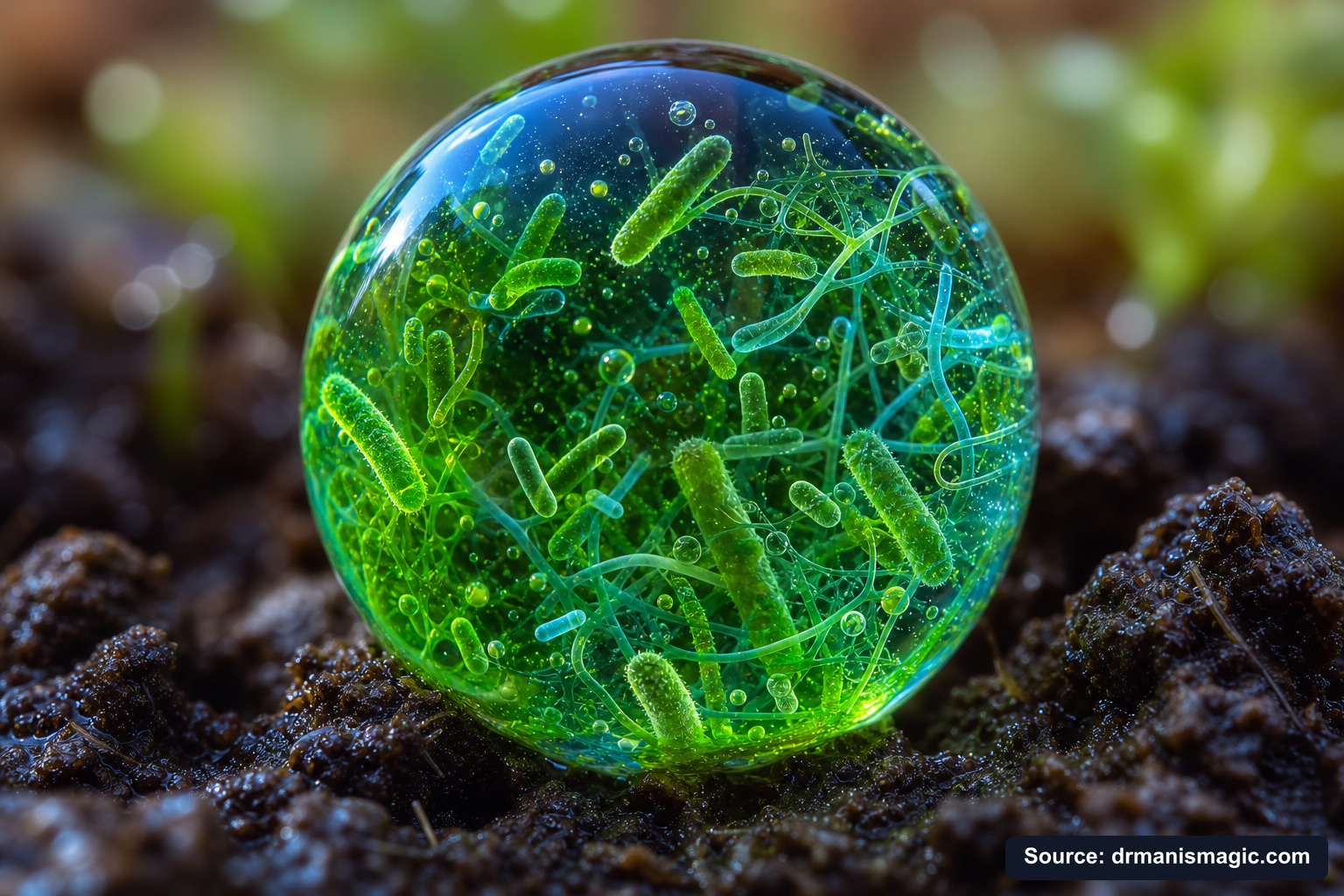
Quick Answer: The soil food web is a community of living organisms — bacteria, fungi, protozoa, nematodes, and more — that break down organic matter, store nutrients, and release them directly to plant roots. In healthy soil, this web supplies the majority of the nutrients your plants need without any synthetic fertilizer inputs.
The soil food web is the original farming system. It existed long before humans ever picked up a shovel.
Think about a forest. No one fertilizes it. No one sprays it with micronutrient blends or pH correctors. And yet those trees grow massive, produce fruit and seeds, fight off disease, and thrive for centuries. How? Because the soil beneath them is alive with trillions of organisms working in coordinated cycles to feed every root in the ground.
According to University of Minnesota Extension, soil biological processes supply approximately 75% of plant-available nitrogen and 65% of available phosphorus in healthy, biologically active soil. That is not a small number. That is the majority of what your plants eat, delivered for free by organisms you cannot see with the naked eye.
The system works like a nutrient economy. Plants are the producers. They pump sugars and proteins through their roots into the soil. Microbes eat those sugars and multiply. Larger organisms eat the microbes and excrete nutrients right next to the roots. The roots absorb those nutrients. The cycle repeats. Nothing is wasted. Everything is timed to the plant's actual need.
This is not magic. It is biology. But it feels like magic when you see a tree you thought was struggling suddenly push out new growth and fruit after the biology comes back online.
| Organism | What It Does | Nutrient Role | Where It Lives |
|---|---|---|---|
| Beneficial Bacteria | Decomposes fresh residues and root exudates; fixes nitrogen | Immobilizes nutrients; releases them when grazed | Root zone (rhizosphere), organic matter |
| Fungi (including mycorrhizae) | Extends root reach; decomposes tough materials; forms plant partnerships | Delivers phosphorus, zinc, and water to plant roots | Root surface, organic matter, deep soil layers |
| Protozoa | Grazes on bacteria; excretes excess nitrogen near roots | Primary driver of nitrogen mineralization | Thin water film around soil particles |
| Beneficial Nematodes | Grazes on bacteria and fungi; releases nutrients from microbial biomass | Secondary nutrient mineralization; also suppresses harmful nematodes | Root zone, decomposing matter |
| Actinomycetes | Breaks down tough organic materials like woody stems | Bridges bacterial and fungal decomposition | Deeper soil layers, compost |
| Arthropods (beetles, mites) | Shreds organic matter into smaller pieces for microbes to process | Accelerates decomposition cycle | Leaf litter, upper soil layers |
How Do Root Exudates Start the Entire Nutrient Cycle?
Quick Answer: Plants pump sugars, amino acids, and proteins through their roots into the surrounding soil. These root exudates are food for bacteria and fungi. The more a plant feeds the microbes, the more the microbes feed the plant back. It is a direct trade that starts with the plant's own energy output.
It starts with the plant making a choice.
That might sound strange. Plants don't think. But they do respond. When a plant needs more phosphorus, for example, it pumps more sugar through its roots into the zone directly around them. That zone is called the rhizosphere. The sugar attracts specific microbes that help unlock phosphorus from the soil. More sugar, more microbes, more phosphorus. Less sugar, fewer microbes, less phosphorus.
Plants have been doing this for over 400 million years. They evolved alongside these microorganisms. They grew to depend on each other. The plant feeds the microbe. The microbe feeds the plant. It is one of the most elegant trades in all of nature.
Root exudates include simple sugars, complex carbohydrates, amino acids, vitamins, and even compounds that specifically attract or repel certain microbes. The plant is not passive. It is actively recruiting its workforce through chemical signals underground.
When you understand this, you start to see why synthetic fertilizers cause problems. If you flood the soil with soluble nutrients, the plant stops sending signals. It stops pumping exudates. The microbial workforce shrinks because the food source dried up. The next time the plant needs nutrients, fewer microbes are available to provide them. So you add more fertilizer. The microbes shrink further. You need even more fertilizer next season. This is not a solution. This is a trap.
See also: Why Most Fertilizers Are Actually Salt in Disguise
What Do Bacteria and Fungi Actually Do Inside the Soil?
Quick Answer: Bacteria rapidly consume simple sugars and fresh plant residues, locking nutrients inside their cells. Fungi break down tougher materials like wood and stems, extend root reach through hyphal threads, and form direct partnerships with roots to deliver phosphorus and water. Together they are the engine room of the nutrient cycle.
Bacteria are the fast movers. They are everywhere, reproducing rapidly, consuming the simple sugars that plant roots push out. When bacteria eat, they lock nutrients like nitrogen, phosphorus, and sulfur inside their cells. This is called immobilization. It sounds like a problem, but it is actually a feature. By holding nutrients inside living cells, bacteria prevent those nutrients from washing away in rain. They are a living storage system.
Fungi work differently. They grow long threads called hyphae that spread through soil like an underground internet. A single teaspoon of healthy soil can contain several miles of fungal threads. Those threads reach places roots cannot go. They find phosphorus locked in mineral particles, pull it free, and carry it back to the root. In exchange, the plant feeds the fungi with sugar.
One specific type of fungi, called mycorrhizal fungi, takes this partnership even further. Mycorrhizae (my-cor-RY-zee) physically fuse with root cells and become a biological extension of the root system. Research from the University of Wisconsin-Madison has shown that mycorrhizal networks can extend a plant's effective root surface area by up to 700%, dramatically increasing access to water and nutrients.
Here is something most gardening content never tells you: plants actually reduce their investment in mycorrhizal fungi when soluble phosphorus is abundant. The plant is smart about this. Why pay for a service you don't need? But this means that every time you pour soluble phosphorus fertilizer on your soil, you are training the plant to downgrade its fungal partnerships. Over time, those partnerships weaken. When the fertilizer is gone, the plant is exposed, with no fungal network to fall back on.
Actinomycetes are a fascinating bridge between bacteria and fungi. They look like fungi but are classified as bacteria. They are responsible for that rich, earthy smell after rain. That smell, called petrichor, is a sign of biologically active soil. If your soil smells like that, something good is happening down there.
What Role Do Protozoa and Beneficial Nematodes Play in Nutrient Release?
Quick Answer: Protozoa and beneficial nematodes graze on bacteria and fungi. When they eat a microbe, they absorb what they need and excrete the rest as plant-available nutrients directly in the root zone. This grazing is the primary trigger that converts stored, locked-up nutrients into forms plant roots can actually absorb.
This is the part of the story almost nobody tells you. And it is the most important part.
Bacteria and fungi immobilize nutrients by locking them inside their cells. That storage is great for preventing leaching. But the plant still can't access those nutrients while they're locked inside a living microbe. Something has to release them.
That something is the predator.
Protozoa are single-celled organisms that swim through the thin films of water coating soil particles. They eat bacteria. Constantly. When a protozoan eats a bacterium, it absorbs the carbon it needs for energy. But bacteria are relatively rich in nitrogen compared to what protozoa need. So the protozoan excretes the excess nitrogen as ammonium, right there in the root zone, right where the plant roots are waiting. This is called mineralization. The nutrient moves from locked inside a cell to free and plant-available in a matter of hours.
Beneficial nematodes do the same thing at a slightly larger scale. They graze on bacteria and fungi, releasing nutrients in the same mineralization process. They also suppress harmful nematodes and some soil pathogens through competition and predation.
This predator-prey loop is the engine that drives the whole nutrient cycle. Plant sugars feed bacteria. Bacteria multiply and lock up nutrients. Protozoa and nematodes eat the bacteria. Nutrients are released to plant roots. Roots absorb them and make more sugar. The loop runs again.
Disrupt any link in that chain and the whole system slows down. Kill the bacteria with salt fertilizer and the protozoa have nothing to eat. Kill the protozoa with a broad-spectrum pesticide and nutrients stay locked up. The plant starves even if the soil is technically full of nutrients.
How Does Microbial Immobilization Protect Nutrients From Washing Away?
Quick Answer: When microbes consume organic matter, they pull nitrogen, phosphorus, and sulfur out of the soil solution and lock them inside living cells. This temporarily removes nutrients from the leaching zone. When those microbes die or get eaten, the nutrients are released back in a controlled, slow trickle that matches the plant's uptake rhythm.
Rain is both a blessing and a problem.
Water carries dissolved nutrients through the soil. In a dead, compacted, biologically empty soil, those nutrients can wash straight through the root zone and into groundwater before the plant ever gets a chance to absorb them. This is called leaching. It is expensive. It is wasteful. And it is one of the main reasons people keep adding more and more fertilizer with diminishing returns.
Live soil biology solves this problem naturally. When bacteria and fungi consume organic matter and root exudates, they pull soluble nutrients out of the soil water and store them inside their cells. The nutrients are immobilized. They cannot leach. They stay in the root zone, held safely inside living organisms, until those organisms are eaten or die.
This is why a high-carbon organic amendment like fresh wood chips can temporarily cause a nitrogen deficiency. The bacteria rush in to decompose the carbon, pulling nitrogen from the soil solution to fuel their own growth. Nutrients appear to vanish. But they have not gone anywhere. They are being held in microbial biomass. Within weeks, as the decomposition slows and the bacteria are grazed, that nitrogen comes flooding back out, often right when the plant enters a growth flush and needs it most.
The soil is not just a nutrient-release system. It is a nutrient-timing system. And that timing is controlled by biology, not by a schedule on a fertilizer bag.
How Does Mycorrhizal Self-Regulation Prevent Overfertilization Damage?
Quick Answer: Plants automatically reduce or cut off carbon payments to mycorrhizal fungi when soluble phosphorus is already abundant. This means synthetic phosphorus fertilizers literally cause the plant to fire its fungal partners. When the fertilizer runs out, the plant has no network left and must start from scratch, which can take months or years to rebuild.
Nature built a feedback system into every plant to prevent waste.
When phosphorus is plentiful in the soil solution, the plant detects this and reduces the carbon it sends to its mycorrhizal partners. The message is simple: I don't need you right now. The fungi, receiving less energy, reduce their growth. The partnership scales back.
This is elegant and efficient in a natural system where soluble phosphorus is rare. But in a garden where someone is regularly dumping soluble phosphorus fertilizer, this feedback loop becomes destructive. The plant reads the high phosphorus as a signal to scale back fungal investment. The mycorrhizal network shrinks. Month after month, application after application, the fungal infrastructure erodes.
Then one day you stop fertilizing, or you travel for a few weeks, or the season changes. The soluble phosphorus is gone. The plant reaches for its fungal network and finds a ghost of what it used to be. It cannot access the phosphorus locked in soil minerals. It cannot pull in water from deep in the soil profile. It is suddenly, catastrophically vulnerable.
This is a root-cause explanation for why so many heavily fertilized gardens crash when the inputs stop. The plants were not being fed. They were being kept alive on an IV drip while their own life-support systems slowly disappeared.
See also: The Hidden Reason Synthetic Fertilizers Cause Root Rot
You Never Had a Brown Thumb.
You were handed the wrong tools. This free guide hands you the right ones.
You watered it. You fed it. It died anyway.
It was never you. It was the dirt, the salt food, and the bad advice.
This guide shows you what really went wrong, and how to fix it for good.
- Why your plants really died, and why it was never your fault
- The salt hiding in your plant food that quietly burns the roots
- The hidden killer in almost every bag of store soil
- The tiny helpers that grow a whole forest for free
- The rescue trick that brings a half dead plant back to life

What Kills Soil Biology and How Long Does Recovery Take?
Quick Answer: Salt-based synthetic fertilizers, herbicides like glyphosate, broad-spectrum fungicides, pesticides, soil fumigation, compaction, and long-term bare soil all damage or destroy soil biology. Recovery depends on how severe the damage was, but with the right inputs — organic matter, live microbials, reduced disturbance, and consistent moisture — meaningful recovery can begin within 30 to 90 days.
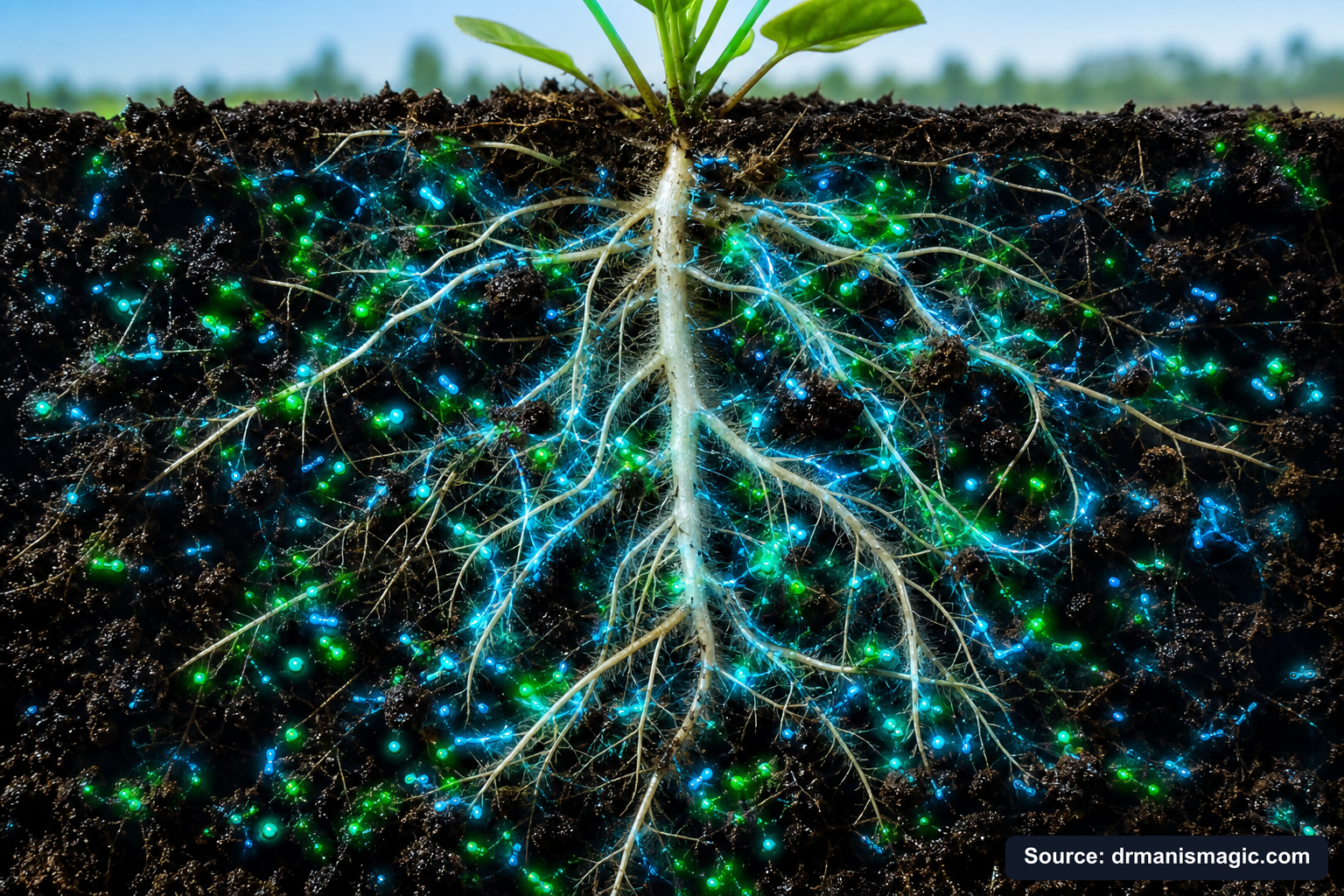
Most soil damage happens slowly. Quietly. You don't see it happening.
You buy a fertilizer that promises fast results. It works. The plant greens up. You do it again next month. Meanwhile, beneath the surface, the salt concentration is rising. Beneficial bacteria are stressed. Mycorrhizal fungi are retreating. Protozoa populations are shrinking. The plant looks fine on the outside. But the living infrastructure underneath is getting thinner every season.
Then you apply a weed killer to the lawn. Or a fungicide to fight a disease. Or a pesticide for an insect problem. Each of these inputs is not targeted only at the pest. They ripple through the entire food web. Broad-spectrum fungicides cannot distinguish between the fungus causing root rot and the mycorrhizal fungi feeding your tree. They hit both.
Glyphosate, the active ingredient in many common weed killers, has been shown in multiple studies to disrupt microbial communities, particularly beneficial bacteria and fungi in the root zone. The plant survives the spray. The soil biology takes a hit.
Construction damage, heavy foot traffic, and long-term bare soil also destroy biology. Compaction squeezes out the oxygen that aerobic soil microbes need to survive. Bare soil exposed to UV light and temperature extremes kills surface microbes and breaks down the organic matter that feeds deeper populations.
Potting mix is one of the worst offenders that nobody talks about. Most commercial potting mix is steam-sterilized and sold with zero living biology. You are putting your plant in a biologically dead medium and expecting it to thrive. It might survive. But it will never reach its potential.
| Damage Source | Primary Harm to Soil Biology | Visible Plant Symptom | Recovery Approach |
|---|---|---|---|
| Salt-based synthetic fertilizer | Kills beneficial bacteria; disrupts mycorrhizal partnerships | Yellow leaves, stunted growth after initial green-up | Flush salts; switch to organic fertilizer; reintroduce live microbes |
| Glyphosate / herbicides | Disrupts microbial communities; reduces beneficial bacteria diversity | Slow recovery after spraying; weak new growth | Avoid further herbicide use; add compost; apply live microbials |
| Broad-spectrum fungicides | Kills mycorrhizal fungi along with pathogens | Poor phosphorus uptake; drought stress even with water | Use targeted fungal treatments only; reintroduce mycorrhizae |
| Soil fumigation | Near-complete sterilization of all biology | Strong initial growth followed by crash | Full biological reinoculation; organic matter; cover crops |
| Compaction / construction damage | Eliminates oxygen; destroys fungal networks | Waterlogged soil; poor drainage; root rot | Aerate; add mineral-based soil; reduce traffic; apply microbes |
| Sterile potting mix (bark-based) | No living biology present at all | Slow establishment; nutrient deficiencies despite fertilizing | Use mineral-based soil; add full-spectrum microbial inoculant |
How Do You Rebuild Damaged Soil Biology? A Step-by-Step Recovery Protocol
Quick Answer: Rebuilding damaged soil biology requires removing inputs that kill microbes, adding organic matter to feed microbial populations, introducing live beneficial organisms, maintaining consistent moisture and oxygen, and repeating applications over several months. There is no single product that does it overnight, but meaningful improvement begins within the first 30 to 90 days when the right steps are followed consistently.
Here is the hard truth: you cannot undo years of chemical use in a single season.
But you can start today. And starting today means you will be further along in 90 days than if you wait. Time does not stop. Every season you spend trying to force-feed a biologically dead soil is a season you will not get back. We hear this more than almost anything else from gardeners: I just want to see my tree produce fruit while I still have the energy to enjoy it. That desire is real, and it is urgent. The answer is to stop fighting nature and start rebuilding it.
Here is a practical recovery sequence we use for soil that has been damaged by chemicals, compaction, or long-term sterilization:
- Stop adding salt-based inputs immediately. Every application of synthetic fertilizer adds more salt that stresses or kills the beneficial microbes you are trying to rebuild. Switch to organic fertilizer that feeds both the plant and the biology.
- Test your soil pH and correct it if needed. Most beneficial soil bacteria thrive between pH 6.0 and 7.0. If your soil is too acidic or too alkaline, the microbial community cannot establish properly. A simple soil test from your local extension office will tell you where you stand.
- Add organic matter. Compost, mulch, and organic matter are food for the microbial community you are trying to rebuild. A 2-3 inch layer of organic mulch on the surface protects soil temperature, retains moisture, and slowly feeds the biology below as it breaks down.
- Introduce live, full-spectrum beneficial microbes. This step is critical in damaged soils. The native biology may be too depleted to recover on its own in a reasonable timeframe. Applying a genuinely live microbial inoculant jump-starts the process. This is what Plant Super Boost was specifically designed to do. It delivers live bacteria, fungi, mycorrhizae, protozoa, and nematodes stabilized through a proprietary natural process so they arrive alive and active, not dried or dead.
- Maintain consistent moisture without waterlogging. Soil microbes need moisture to move, reproduce, and do their work. But waterlogged, anaerobic conditions kill aerobic beneficial bacteria and create conditions that favor root rot pathogens. Good drainage is essential. This is one reason mineral-based soil is so valuable compared to decomposing bark-heavy potting mix.
- Reduce physical disturbance. Every time you till or dig heavily, you shred fungal networks and disrupt bacterial colonies. Gentle surface cultivation is fine. Deep, repeated tilling undoes months of biological recovery work.
- Reapply live microbials monthly for at least six months. A single application is not enough in damaged soil. Pathogens and environmental pressures are still present and competing. Regular reapplication builds population density until the biology becomes self-sustaining again.
Live Microbes vs. Dried Powder Products: Why Does the Difference Matter?
Quick Answer: Live microbial products deliver active, reproducing organisms that can establish in soil and begin working within days. Dried or powdered products typically contain dormant spores with low viability that rarely survive rehydration and soil contact at meaningful numbers. The difference between a live product and a dead one is the difference between planting a seed and scattering sawdust.
Walk into any garden center today and you will find a shelf full of microbial products. Bags of white powder. Bottles of dark liquid. All of them making bold claims.
Most of them do not work. And we have tested dozens of them on our own trees to know this firsthand.
Here is what is actually inside most of those products. A handful of large chemical companies manufacture bulk microbial concentrates in giant industrial vats. They grow selected strains, dry them into powder, and sell them wholesale. Smaller companies buy the powder, put their label on it, and market it as a soil amendment. The problem is that the drying process dramatically reduces viability. The spores that survive are dormant. When you add water and pour them into soil, many never fully reactivate. Those that do are not the broad, diverse community that a living soil actually needs. They are a narrow selection of a few commercially convenient strains.
The second category is liquid products harvested from compost or worm castings and sold as compost tea. These can be genuinely effective, but only when they are truly fresh. Within 24 hours of production, most compost teas go anaerobic. The aerobic beneficial bacteria die off. The liquid begins to ferment. The bottle stinks. You might have smelled this before. That odor is not a sign of potency. It is a sign of death.
We want to be direct here. We are not saying this to sell you something. We are saying this because we spent years testing these products on our own trees before we found a solution that actually worked. And when the biology was genuinely alive in the product we applied, we could see it. Literally. Under a microscope, a drop of truly live microbial solution shows visible movement. Organisms swimming, dividing, active. That is what you want going into your soil.
| Product Type | Organism Viability | Microbial Diversity | Odor | Real-World Results |
|---|---|---|---|---|
| Dried / powdered lab microbes | Very low; most dormant spores fail to reactivate | Narrow (few strains) | Minimal | Minimal observable benefit in our testing |
| Dried powder rehydrated into liquid | Low; same viability problem | Narrow | Minimal | Minimal observable benefit |
| Compost tea (fresh, under 24 hours) | Moderate when aerated | Moderate | Earthy, pleasant | Good when used immediately; time-sensitive |
| Compost tea (over 24 hours) | Low; anaerobic die-off | Partial; aerobic species gone | Strong, foul | Limited benefit; some humic/fulvic acids remain |
| Lactobacillus-based products | High; very vigorous | Very narrow (single strain) | Sour/fermented | Can outcompete beneficial microbes; not recommended |
| Plant Super Boost (stabilized, full-spectrum) | High; visibly active under microscope | 2,000+ bacteria strains; 400-500 fungi including mycorrhizae; protozoa; nematodes | Earthy; no foul odor | Consistent results across 250,000+ trees; strong customer verification |
Plant Super Boost was not invented in a lab. It came from compost. From the same hot, steaming, biologically explosive compost that gardeners everywhere describe as transformative when applied fresh. The challenge was always preservation. How do you bottle the power of fresh compost without it dying on the way to the customer?
Dr. Mani partnered with a world-class compostologist, a researcher whose work had been adopted by royal estates and governments across multiple continents, to solve that problem. Using a proprietary all-natural stabilization technique, they found a way to keep the full spectrum of compost biology alive, shelf-stable, and odor-free. The result contains zero synthetic salts, zero biosludge, and zero PFAS compounds. It smells earthy because it is alive and healthy, not rotting. And it comes with a 30-day money-back guarantee because we know it works.
How Do the Three Plant Pillars Support Soil Biology Long-Term?
Quick Answer: The Three Plant Pillars — mineral-based soil for drainage and oxygen, live microbials to establish and maintain the soil food web, and organic fertilizer to feed both plants and microbes without salt damage — create the complete environment soil biology needs to self-regulate nutrients indefinitely. Miss one pillar and the system weakens. Use all three and the system compounds over time.
You cannot have a thriving soil food web in dead soil.
Most commercial potting mixes are made from pine bark, peat, and wood fiber. These materials break down over time. As they decompose, they compact. They squeeze out oxygen. They hold too much water in the wrong places. Roots suffocate. Beneficial aerobic bacteria cannot survive without oxygen. The biology collapses before it ever gets started.
The first pillar, mineral-based soil, solves this at the foundation. Mineral soil made from sandy loam does not decompose. It does not compact over time. It provides the permanent drainage and aeration that aerobic soil microbes need to thrive. Roots can breathe. Water moves through properly. The environment is hospitable to life. You can learn more about building this foundation with Super Soil, which is engineered specifically to support this kind of long-term biological activity.
The second pillar, live microbials, populates that environment with the right organisms. Soil dug from a wild forest and placed in a pot would contain thousands of species. Commercial potting mix contains almost none. Even healthy garden soil in a managed yard is often missing key species after years of herbicide, pesticide, and synthetic fertilizer use. Reintroducing a diverse, live microbial community restores the food web that makes nutrient self-regulation possible.
The third pillar, organic fertilizer, feeds both the plant and the biology simultaneously. Organic fertilizers derived from crab, kelp, and amino acids release nutrients slowly. The plant gets a steady supply. The microbes get carbon and organic compounds to consume. The biology grows stronger over time rather than being burned by salt. And because there is no osmotic shock from high salt concentration, the mycorrhizal partnerships stay intact and keep expanding.
The three pillars work together as a system. Remove one and the others are compromised. Keep all three in place and each growing season builds on the last. The soil gets richer. The biology gets denser. The plant gets stronger. This is what regenerative growing actually means in practice, not as a buzzword, but as a measurable, observable result in your own backyard.
You can explore all three pillars together at the Three Plant Pillars bundle builder, where we have put together exactly what you need to get started without any guesswork.

What Can You Do Right Now to Let Soil Biology Feed Your Plants?
Quick Answer: Stop adding salt-based fertilizers, add organic matter to feed existing microbes, introduce live full-spectrum beneficial organisms, use mineral-based soil that keeps roots oxygenated, and apply consistent monthly microbial treatments for at least six months. These steps rebuild the self-regulating nutrient cycle that your plants evolved to depend on.
You do not need a PhD in soil science to start doing this right.
You need to understand one idea: your soil wants to be alive. It wants to feed your plants. It has been doing this without human help for hundreds of millions of years. Your job is not to manage the system. Your job is to stop disrupting it and give it what it needs to recover.
Start today with these actions:
- Put down the synthetic fertilizer. If it smells like chemicals or comes in a bright blue or neon green formulation, it is almost certainly salt-based. Salt kills the microbes you need.
- Add a 2-inch layer of organic mulch around your trees, garden beds, and containers. This feeds surface biology and protects soil temperature and moisture.
- If you are planting in containers or raised beds, use mineral-based soil that will not compact and suffocate roots over time.
- Apply a genuinely live, full-spectrum microbial inoculant once a month. Look for one that smells earthy, not foul, and that has lab verification of live organisms. Check the label for diversity, not just one or two strains.
- Switch to an organic fertilizer that feeds both your plant and your soil biology without burning either one.
- Be patient. The first month, you may not see dramatic changes. The biology is rebuilding underground. By month two or three, new growth will start to tell the story. By six months, in most cases, you will not recognize the plant you almost gave up on.
We built the Three Plant Pillars system after 30 years of growing citrus and tropical trees in South Texas. We tested it on 250,000 trees before we ever sold a single product. We know what works because we could not afford to have it fail. Neither can you, because the clock is always running. The tree you plant today, cared for with the right biology, could be giving you fruit to share with your family years sooner than you ever thought possible. That is worth protecting. Download our free Plant Care Field Guide to get the full step-by-step system, written in plain language, with nothing left out.
Frequently Asked Questions
Most gardeners never get told the truth about what is actually feeding their plants. These questions come up again and again from real growers who are tired of yellow leaves, stalled growth, and wasted money. Get the straight answers here, grounded in over 30 years of hands-on growing from South Texas.
What is the importance of soil biology in the cycling of nutrients?
Soil biology is the engine that drives nutrient cycling. Bacteria, fungi, protozoa, and nematodes work together to break down organic matter, store nutrients, and release them right to your plant roots. University of Minnesota Extension research shows healthy soil biology delivers roughly 75% of plant-available nitrogen and 65% of available phosphorus on its own. Without that living system, your plants are starving no matter how much fertilizer you pour on. Dr. Mani's Magic Plant Super Boost puts live microbes back in your soil so that engine can run again.
What are the big 3 nutrients plants need?
The big three are nitrogen, phosphorus, and potassium. You see them listed as NPK on every fertilizer bag. Nitrogen drives leafy green growth. Phosphorus builds strong roots and pushes out blooms and fruit. Potassium toughens your plant against stress and disease. The problem most gardeners face is not a shortage of these nutrients in the ground. It is that dead soil biology locks those nutrients up so roots cannot reach them. Fix the biology first and the nutrients unlock naturally.
Which soil organism is most essential for nutrient cycling?
Bacteria do the heaviest lifting. Nitrogen-fixing bacteria grab nitrogen right out of the air and convert it into forms plant roots can drink up. Fungi stretch out like a second root system, pulling in phosphorus from far beyond where roots can reach. Protozoa eat bacteria and release stored nutrients as waste that roots absorb instantly. Every one of these organisms plays a role. That is exactly why Dr. Mani's Magic Plant Super Boost delivers live bacteria, fungi, and mycorrhizae together, not just one type.
Does soil ever run out of nutrients?
Yes, it absolutely can. Every time you harvest a plant or pull weeds, nutrients leave with them. Rain washes water-soluble nutrients below the root zone. Synthetic salt-based fertilizers kill the microbes that recycle nutrients back into plant-available forms. Over time the soil goes bankrupt. That is why Dr. Mani built the Three Plant Pillars around mineral-based soil that does not break down, live microbials that keep recycling nutrients, and slow-release organic fertilizer from crab, kelp, and amino acids that feeds the soil without burning it.
What happens if soil has no nutrients left?
Your plants tell you loud and clear. Leaves turn pale yellow or develop a purplish tint. Growth slows to almost nothing. Roots stay weak and shallow. Fruit never sizes up the way it should. You might think you need more fertilizer, but pouring synthetic salts on dead soil just makes things worse. It burns what little biology is left. The fix is to rebuild the living system first. Once the microbes are working, they start unlocking nutrients that were already there but locked away.
What nutrients are cycled through healthy soil ecosystems?
The main players are nitrogen, phosphorus, potassium, sulfur, and carbon. But healthy soil biology also cycles calcium, magnesium, iron, zinc, and boron. These trace elements are what give your fruit its flavor, your flowers their color, and your leaves their deep green shine. Most synthetic fertilizers only deliver NPK and ignore the rest. Dr. Mani's Magic Crab, Kelp, and Amino Acids organic fertilizer delivers the full spectrum of nutrients in slow-release form so your plants get everything they need without the toxic burn.
How do you bring soil biology back to life after using synthetic fertilizers?
You stop feeding the addiction and start rebuilding the foundation. First, switch to a mineral-based soil that drains well and does not compact, like Dr. Mani's Magic Super Soil. Second, reintroduce live microbes with Plant Super Boost. These are stabilized living organisms, not dead powder. Third, feed the whole system with slow-release organic fertilizer that nourishes microbes instead of killing them. We proved this approach works across more than 250,000 citrus trees at our South Texas nursery. It works for any plant you grow.
About the Author
Ron Skaria, MD
Ron Skaria, MD, is the co-founder of Dr. Mani's Magic and the son of Dr. Mani. He trained as a medical doctor at Baylor College of Medicine, did his residency at UT Health Science Center - San Antonio and fellowship training at Texas Tech University. He now works full time on the family farm at US Citrus and US Citrus Nursery in Hargill, Texas, building Dr. Mani's Magic alongside his dad. He wrote the Brown Thumb Field Guide to put his father's 48 years of plant science into plain words any gardener can use. His belief is simple. You never had a brown thumb. You just never had the right help.


