


How Protozoa Release Nutrients at the Perfect Time for Plant Roots | Dr. Mani's Magic
How Protozoa Release Nutrients at the Perfect Time: The Invisible Feeding System Inside Your Soil
Picture your favorite fruit tree. Maybe it's in your backyard right now. You've watered it. You've fertilized it. You've done everything the bag told you to do. But something is missing. The leaves are pale. The growth is slow. The fruit is small, or maybe there's no fruit at all. You stand there, hands on your hips, wondering what you're doing wrong.
Here's the secret nobody at the garden center will tell you. The real feeding system for your tree has nothing to do with what you pour out of a bottle. It lives in the soil. It's been running for 450 million years. And at the center of it are microscopic predators called protozoa, tiny single-celled hunters that eat bacteria by the millions and, in doing so, release exactly the nutrients your roots are asking for. Not too early. Not too late. Right when the root needs them most.
That's not magic. That's biology. And once you understand how it works, you'll never look at a bag of synthetic fertilizer the same way again. We've grown over 250,000 trees at our South Texas nursery, and this invisible feeding system is the single biggest reason our trees thrive where others don't. Let us show you exactly how it works, and what you can do to wake it up in your own soil.
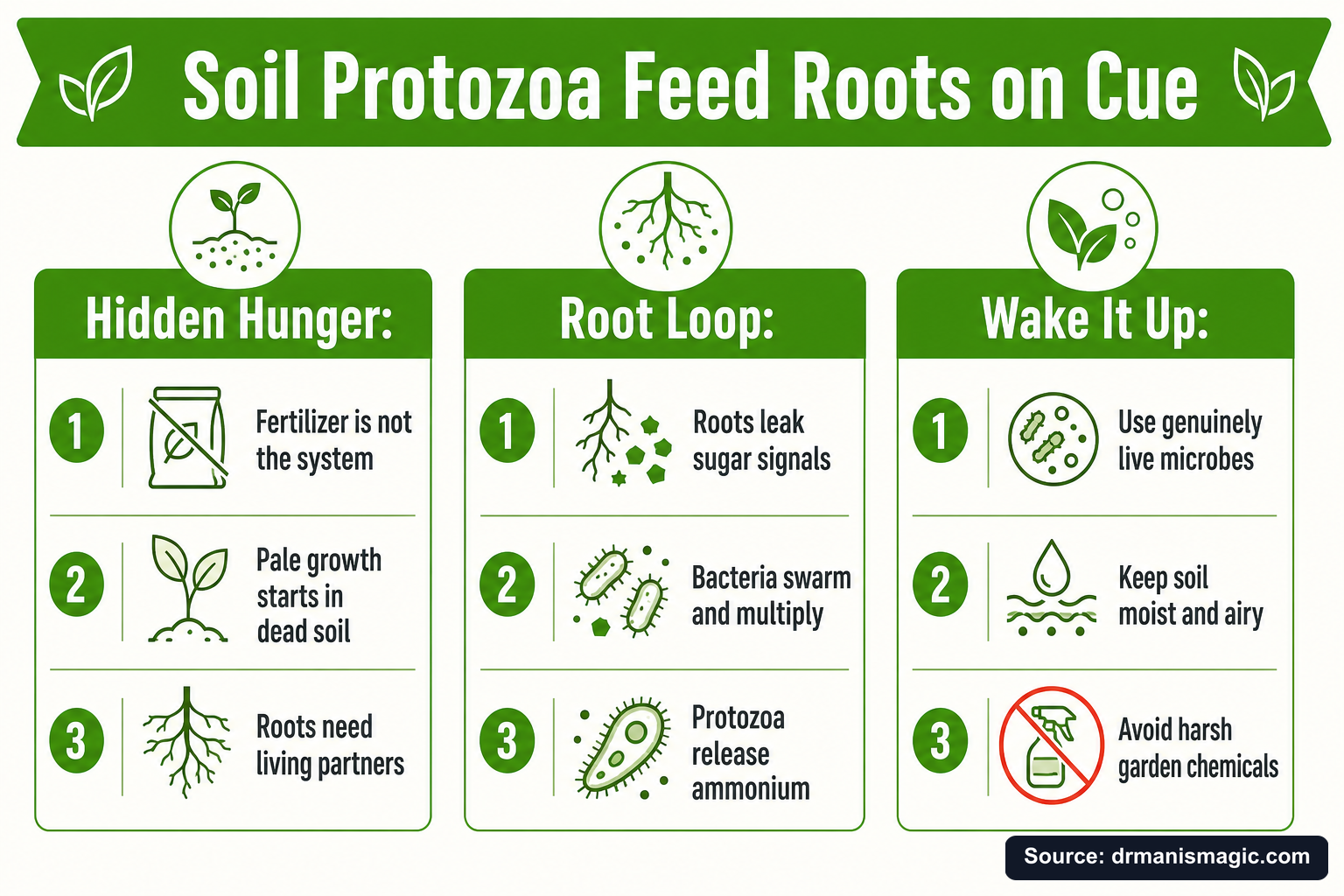
Key Takeaways
- Protozoa don't "know" when your plant is hungry. They release nutrients as a natural side effect of eating bacteria near your roots, and the root itself triggers that whole chain reaction.
- Plant roots leak sugars into the soil to attract bacteria. Bacteria multiply near roots. Protozoa eat those bacteria. The leftovers become plant food. This loop is called the rhizosphere nutrient cycle.
- The reason protozoa release nitrogen is simple: bacteria contain more nitrogen than protozoa can use, so protozoa excrete the extra as ammonium, right next to the root where it gets absorbed immediately.
- Synthetic fertilizers, pesticides, herbicides, and fungicides all damage or kill the microbes that power this system, including protozoa, bacteria, and fungi.
- Dead, dried, or foul-smelling microbial products cannot restart this cycle. You need genuinely live microbes to rebuild it.
- Soil moisture, pore structure, and compaction directly control whether protozoa can move and feed. Dead, dry, or compacted soil shuts the whole system down.
- You can rebuild this system in your garden, pots, lawn, or orchard, and the Three Plant Pillars give you the fastest, most reliable way to do it.
What Is the Rhizosphere, and Why Does It Matter for Nutrient Timing?
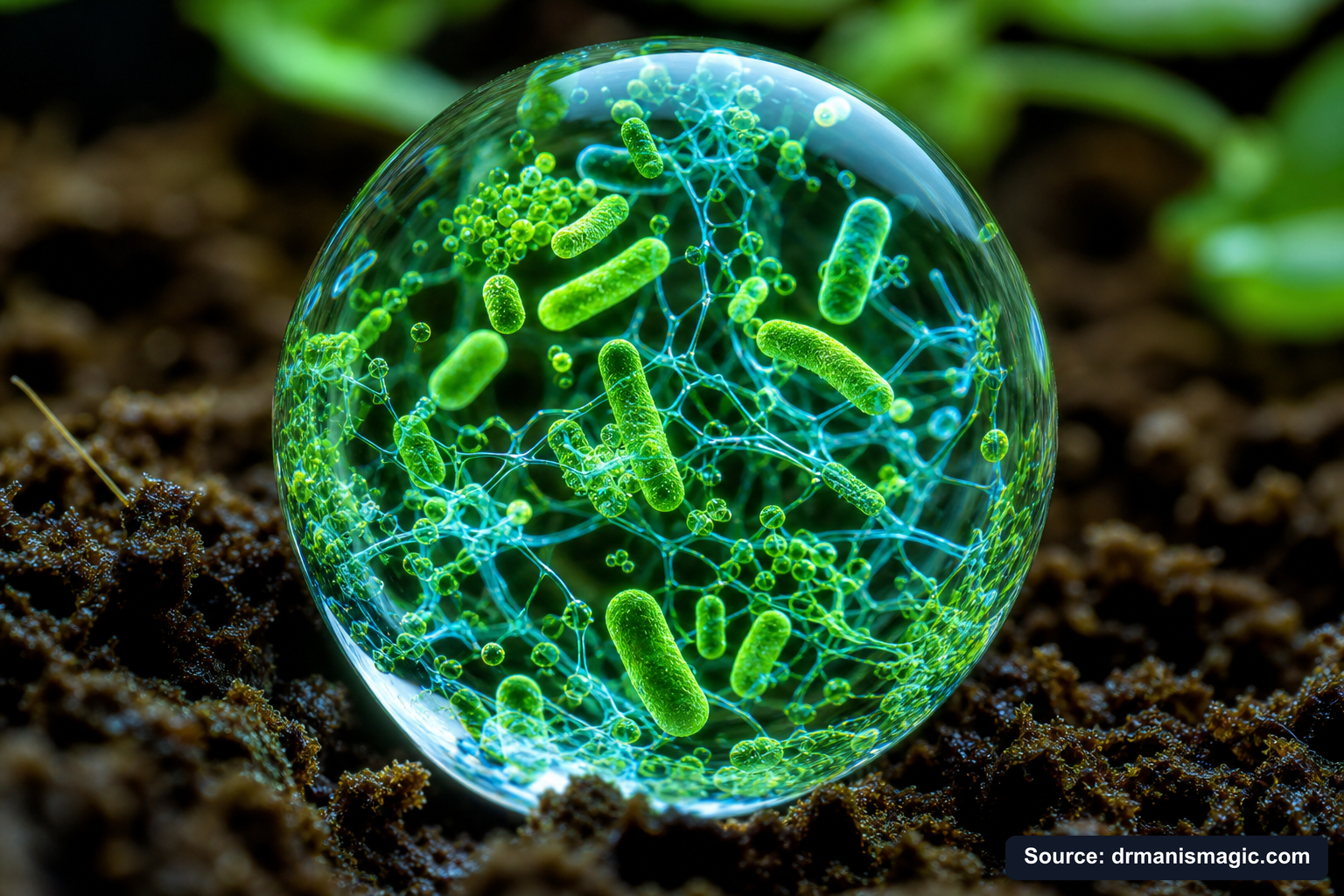
Quick Answer: The rhizosphere is the thin zone of soil directly around plant roots. It's the most biologically active spot on Earth because roots leak sugars there, attracting billions of bacteria and fungi. Protozoa follow those bacteria, eat them, and release nutrients in plant-available form. This feedback loop makes nutrient delivery demand-linked rather than random.
Most people think of soil as dirt. Inert. Dead. Something to fill a hole with.
The truth is almost unbelievable. A single teaspoon of healthy soil contains more living organisms than there are people on Earth. And the hottest, most active neighborhood in that entire world is a paper-thin zone right around your plant's roots. Scientists call it the rhizosphere.
Here's what happens there, step by step.
Your plant photosynthesizes. It captures sunlight and turns it into sugar. Most people think that sugar powers the plant's growth. That's true. But here's what most people don't know. Your plant also pumps a large portion of those sugars directly out through its roots into the surrounding soil. On purpose.
Why would a plant give away its food?
Because it's hiring workers.
Those root sugars, called exudates, are a signal. They tell bacteria and fungi: "Come here. Food is available." Billions of bacteria swarm toward the root surface, feeding on those sugars and multiplying rapidly. The root zone becomes a packed, buzzing city of microbial life.
Now the protozoa arrive. And that's where the nutrient magic happens.
According to the USDA NRCS Soil Biology Primer, protozoa and other predators graze on bacteria in the rhizosphere and release mineral nutrients as they do. This is the foundation of biological nutrient cycling. It isn't a coincidence. It's a feedback loop that plants have been running since long before humans existed.
Why Do Protozoa Release Nitrogen Right Next to the Root?
Quick Answer: Bacteria contain more nitrogen than protozoa need for their own bodies. When a protozoan eats a bacterium, it keeps what it needs and excretes the leftover nitrogen as ammonium, a plant-ready form of nitrogen. Because this happens right next to the root, the plant absorbs it almost instantly.
This is the part most gardening articles skip. And it explains everything.
Think of it like this. Imagine you sit down to a big meal. The plate has more food than you can eat. You eat what you need. The rest goes back on the table. Now imagine that table is sitting one inch from your plant's root.
That's exactly what happens with protozoa and bacteria.
Bacteria are protein-rich. They pack a lot of nitrogen into their tiny bodies. Protozoa eat bacteria, but protozoa don't need nearly as much nitrogen for their own cell structure. So when a protozoan eats a bacterium, it extracts the carbon it needs for energy, holds onto a little nitrogen for its own proteins, and excretes the excess nitrogen as ammonium.
Ammonium is a form of nitrogen that plant roots can absorb directly. No waiting. No processing. It's plant food, freshly made, delivered right at the root surface.
Researchers at Penn State Extension describe this process as microbial mineralization, the conversion of nutrients locked inside living microbial cells into mineral forms that plants can take up. The key word is "mineralization." It means the nitrogen was immobilized, locked up inside living bacteria, and then mineralized, released into plant-available form, when the protozoa grazed.
This is not guesswork. This is established soil science. And it's why healthy soil with a thriving food web feeds plants more consistently than a bag of synthetic nitrogen ever could.
Synthetic nitrogen hits all at once. It's a flood. It can burn. It disappears fast. Then there's nothing.
Protozoan mineralization is a slow, steady drip. Timed by the root's own sugar signals. Delivered exactly where the root can grab it.
What Is the Full Soil Food Web, and Who Are the Players?
Quick Answer: The soil food web is the network of organisms that feed on each other in healthy soil. Plants feed bacteria and fungi with root sugars. Protozoa and nematodes eat bacteria and fungi and release plant-available nutrients. Each predator-prey relationship recycles nutrients and keeps the system in balance.
Protozoa don't work alone. They're one layer in a whole community of life that scientists call the soil food web.
Here's how to picture it. Your plant is at the top of a pyramid. Below it are the workers that keep it fed. Below them are the workers that keep the workers fed. Each layer depends on the one beneath it.
| Organism | What It Eats | What It Releases for Plants | Additional Benefit |
|---|---|---|---|
| Bacteria | Root exudates, organic matter | Immobilizes nutrients; releases enzymes | Decompose organic matter; fix nitrogen; suppress pathogens |
| Fungi (including mycorrhizae) | Root sugars, organic matter | Phosphorus, micronutrients, water | Extend root reach by 100x; build soil structure with glomalin |
| Protozoa | Bacteria, some fungi | Ammonium (nitrogen), other minerals | Regulate bacterial populations; keep food web in balance |
| Bacterivorous Nematodes | Bacteria | Ammonium, other nutrients | Accelerate nitrogen cycling near roots |
| Fungivorous Nematodes | Fungi | Nutrients released from fungal tissue | Regulate fungal communities |
| Mycorrhizal Fungi | Root sugars | Phosphorus, zinc, water | Dramatically increase root surface area; drought resistance |
Notice something important in that table. Protozoa and nematodes are not primary decomposers. Bacteria and fungi do most of the heavy lifting of breaking down organic matter. Protozoa and nematodes are the grazers, the secondary layer that unlocks nutrients from microbial biomass and makes them available to plants.
This is why the Penn State Extension's soil health resources emphasize the food web as a system. Remove any one layer and the whole cycle slows down or breaks.
At our nursery in South Texas, we've seen what happens when this web is intact versus when it's been destroyed by synthetic inputs. The difference is visible. Healthy food web soil grows plants that look different. Deeper green. Stronger stems. Roots that fill a pot with white, vigorous growth instead of brown, struggling threads.
This is Pillar 2 of the Three Plant Pillars: Microbial Muscle. It's not optional. It's the engine that runs everything else.
How Do Protozoa Know When to Release Nutrients? The "Rhizosphere Dinner Bell" Explained
Quick Answer: Protozoa don't "know" anything. The timing is automatic. When your plant photosynthesizes, it pumps sugars into the soil. Bacteria multiply near roots to eat those sugars. Protozoa follow the bacteria and graze. The grazing releases ammonium. More plant growth creates more exudates and the loop repeats. The plant's own activity sets the pace.
This is the part that sounds like magic but is really just elegant biology.
Protozoa don't have a calendar. They can't read a plant's growth stage. They don't know it's spring, or that your tree just started flowering, or that your tomato is setting fruit.
But here's the thing. They don't need to know.
The system is self-regulating. Here's the sequence:
- Your plant photosynthesizes on a sunny day. More light means more sugar production.
- More sugar gets pumped into the rhizosphere through root exudates.
- More exudates attract more bacteria. The bacterial population near the root spikes.
- More bacteria means more food for protozoa. Protozoan populations rise.
- More protozoa means more grazing. More grazing means more ammonium released near the root.
- More ammonium feeds the plant. The plant grows faster and makes more sugar.
- Go back to step one.
Scientists call this a feedback loop. We call it the rhizosphere dinner bell. The plant rings it. The whole food web responds. Nutrients arrive at the root surface right when growth is happening fastest.
This is fundamentally different from how synthetic fertilizers work. When you pour a synthetic fertilizer on your soil, you're dumping nutrients whether the plant wants them or not. If the timing is wrong, or the soil is wet, or the roots aren't actively growing, those nutrients leach away, evaporate, or sit unused. Worse, the salt load can damage the very root hairs trying to absorb them.
The soil food web doesn't waste. It responds to demand. That's why we say it feeds plants at the perfect time. Not because it's magical. Because it's synchronized with the plant itself.
What Destroys Protozoa and Breaks the Nutrient Cycle?
Quick Answer: Synthetic herbicides, salt-based fertilizers, broad-spectrum pesticides, fungicides, soil compaction, drought, and waterlogging all damage or kill protozoa and the bacteria they depend on. Once the food web is broken, nutrient cycling slows dramatically and plants become dependent on synthetic inputs to survive.
Here's where the story gets uncomfortable.
Almost everything sold at a big box garden center is designed for a world without a living soil food web. Synthetic fertilizers bypass the food web entirely. Herbicides like glyphosate disrupt bacterial communities. Broad-spectrum pesticides don't just kill the bad bugs. They wipe out the good ones too. And fungicides? They can't tell a pathogenic fungus from a mycorrhizal one. They hit both.
Add it all up and you get soil that looks like dirt but functions like concrete. Sterile. Silent. Dependent on whatever you pour into it to keep the plant alive.
It's not your fault. The system was built this way. Chemical companies profit when your plants struggle. Dead soil creates repeat customers. Healthy soil food webs do not.
But there's more. Even without chemicals, physical damage kills protozoa. Here's something most people don't know: protozoa can only move through thin films of water around soil particles. They can't teleport. They can't fly. They swim. If your soil is compacted, those water films are gone. Protozoa can't reach the bacteria near the root. The dinner bell rings and nobody shows up.
That's why Pillar 1 of the Three Plant Pillars, mineral-based soil with proper drainage and aeration, is not just about avoiding root rot. It's about keeping the physical conditions right for the entire food web to function. Roots need to breathe. So do protozoa.
See also: The Hidden Reason Synthetic Fertilizers Cause Root Rot
You Never Had a Brown Thumb.
You were handed the wrong tools. This free guide hands you the right ones.
You watered it. You fed it. It died anyway.
It was never you. It was the dirt, the salt food, and the bad advice.
This guide shows you what really went wrong, and how to fix it for good.
- Why your plants really died, and why it was never your fault
- The salt hiding in your plant food that quietly burns the roots
- The hidden killer in almost every bag of store soil
- The tiny helpers that grow a whole forest for free
- The rescue trick that brings a half dead plant back to life

Live Microbes vs. Dead Microbes: Why Most Products on the Shelf Don't Work
Quick Answer: Most microbial products are either dried powders with low viability or liquid compost teas that went anaerobic in transit. Both deliver few or no living organisms by the time you use them. Only genuinely live, stabilized microbes can restart the soil food web and support protozoa activity near your roots.
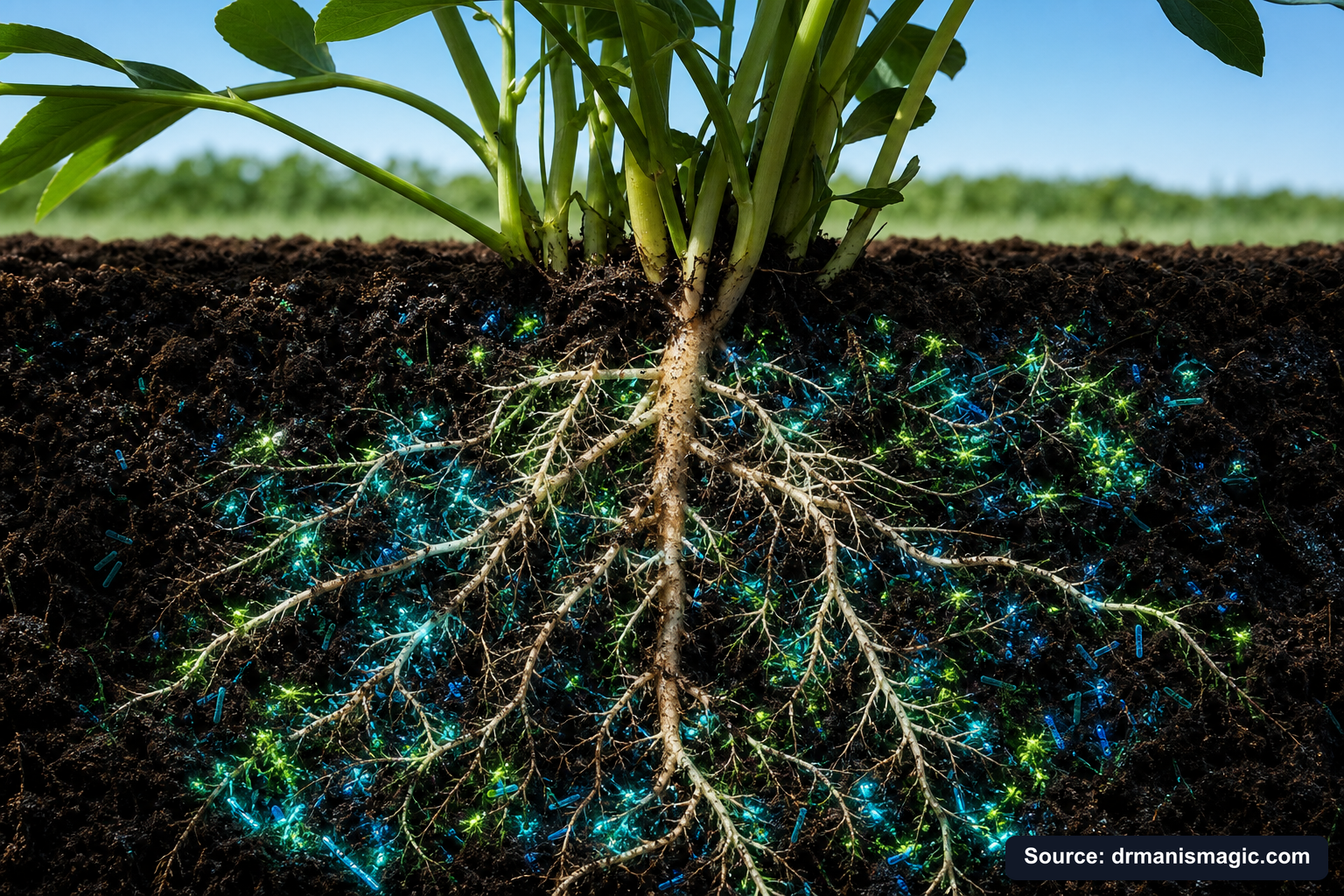
Walk into any garden center and you'll find shelves of microbial products. Bags of powder. Bottles of liquid. All promising to boost your soil biology. Most of them don't work. After growing over 250,000 trees at our South Texas nursery and testing dozens of different microbial products, we can tell you exactly why.
There are three main categories of products on the market:
Dried powder products. These are made by multiplying bacteria in giant factory vats, then drying them into powder. The idea is that the bacteria are dormant and will "wake up" when you add water. In our experience, and in the experience of growers who have tested these side by side with living alternatives, they simply don't produce results. The drying process kills most of the diversity. What's left is a narrow slice of the full food web, without the protozoa, without the full fungal spectrum, without the thousands of bacterial species that a healthy rhizosphere needs.
Liquid compost teas gone anaerobic. These are made by harvesting microbes from compost and putting them in a bottle. When they're fresh, they can be effective. But shipping takes days. Without active aeration, the liquid goes anaerobic, meaning the oxygen runs out and the microbes die or shift to organisms that don't help plants. The telltale sign is the smell. If your microbial product smells like sewage or makes a fizzing sound when you open it, the biology is gone. You're essentially pouring dead organic matter on your plant.
Lactobacillus products. Yes, like in yogurt. These bacteria are vigorous and stay alive. But they're not soil organisms. They outcompete the beneficial species your plant actually needs. We tested them. We don't use them in our products. They belong in your yogurt, not your soil.
| Product Type | Viability at Use | Biological Spectrum | Includes Protozoa? | Smell | Our Verdict |
|---|---|---|---|---|---|
| Dry/powdered lab microbes | Very low | Narrow (1-10 species) | No | Neutral | Avoid. Little to no field result. |
| Rehydrated dry microbes | Very low | Narrow | No | Neutral | Avoid. Same issue as above. |
| Fresh compost tea (<24 hours) | Moderate | Broad (if source compost is good) | Sometimes | Earthy | Good if you make it yourself and use immediately. |
| Aged compost tea (>24 hours) | Very low (anaerobic) | Degraded | No | Strong stench | Avoid. Microbes are dying or dead. |
| Lactobacillus products | High (but wrong organisms) | Very narrow | No | Sour | Avoid. Crowds out beneficial species. |
| Plant Super Boost (stabilized, full-spectrum) | High | 2,000+ bacteria; 400-500 fungi; protozoa; nematodes | Yes | Earthy, not foul | Our recommendation. Visible living organisms under a microscope. |
What makes Plant Super Boost different is the stabilization process. Our formula is harvested from real, hand-crafted compost, the same hot, steaming, biologically active compost that veteran gardeners have always called "black gold." But instead of handing you a bucket of compost and wishing you luck, we use a proprietary all-natural technique developed by a world-renowned compost expert to stabilize the full spectrum of living organisms. They don't go anaerobic. They don't die in transit. They don't smell like a sewer. And if you put a drop under a microscope, you can actually watch them move.
Zero synthetic salts. Zero PFAS. Zero biosludge. Just living biology, stabilized and delivered to your door.
See also: Why Dead Microbe Products Fail in Real Gardens
How Does Soil Moisture and Pore Structure Control Protozoan Activity?
Quick Answer: Protozoa are aquatic organisms living on land. They can only move through thin water films coating soil particles. Compacted, dry, or waterlogged soil destroys those films. When protozoa can't move, they can't reach bacteria near roots, and nutrient cycling stops, even if the bacteria are present.
This is the piece that almost nobody talks about. And it might be the reason your soil biology isn't working even if you've added microbes.
Protozoa are, at their core, water creatures. They evolved in water. They live on land only because thin films of water coat soil particles. Those water films are their highways. Without them, protozoa go dormant or die. And without active protozoa, the nitrogen cycle near your roots stalls.
Three things destroy those water films:
Compaction. When soil particles are pressed tightly together, pore spaces collapse. Water films disappear. Protozoa can't move. This is one of the hidden costs of using heavy, bark-based potting mixes that compact over time, or of foot traffic across a garden bed, or of containers packed with dense soil.
Drought. When soil dries out, water films thin to nothing. Protozoa form protective cysts and go dormant. They can survive, but they're not cycling nutrients. Your plant is essentially on its own until moisture returns.
Waterlogging. Ironically, too much water also breaks the system. Waterlogged soil goes anaerobic. Beneficial aerobic bacteria die. Protozoa lose their food source. Pathogenic organisms take over. This is how root rot starts.
This is exactly why Pillar 1 of the Three Plant Pillars, mineral-based soil with excellent drainage and aeration, is the foundation everything else depends on. You can have the best microbial product in the world. If your soil is compacted or waterlogged, the biology can't function. The protozoa can't reach the bacteria. The nutrients don't get mineralized. The plant struggles.
Our Super Soil is built from mineral-based sandy loam from the Rio Grande Valley. It doesn't compact. It doesn't decompose into sludge. It holds moisture without waterlogging. It keeps the pore spaces open so water films persist and the food web can function the way it's supposed to.
What Happens to Your Plant When the Soil Food Web Is Broken?
Quick Answer: Without a functioning soil food web, nutrients stay locked in organic matter that can't be broken down efficiently. Plants become dependent on synthetic inputs. Root systems weaken. Pathogens find it easier to establish. Fruit production drops. The plant shows yellowing, poor growth, and high susceptibility to pests and disease.
We've seen this pattern hundreds of times at our nursery. A tree comes in looking okay. Planted in bark-based potting mix. Fed with a salt-based fertilizer. Gets a quick green flush. Then it stalls. Then it starts going backward. Leaves yellow. Growth slows. Roots turn brown and mushy at the tips.
The gardener buys more fertilizer. Gets another quick flush. Then another stall. The cycle repeats until the plant is exhausted.
Here's what's actually happening underneath the soil surface. The synthetic salts in the fertilizer are damaging the bacterial community. Fewer bacteria means less food for protozoa. Fewer protozoa means less ammonium mineralized near the root. Less natural nitrogen means the plant becomes more dependent on the next fertilizer application. Each application adds more salt. More salt kills more bacteria. The food web collapses further.
Meanwhile, without beneficial fungi, root surface area shrinks. Without protozoa regulating bacterial populations, pathogenic bacteria get a foothold. Without nematodes keeping the system in balance, root diseases take hold.
This is not a failure of the plant. It's a failure of the growing system. And it's not your fault. You were handed a system that was never designed to work with nature. It was designed to create repeat customers.
The real cost isn't just money. It's time. You can get money back. You cannot get time back. Every month a plant spends struggling in dead soil is a month you'll never recover. Every year that passes without fruit on your tree is a year gone. The number one thing people tell us they want is to see their own tree produce fruit while they're still around to enjoy it. That window is real. And the old way of gardening eats that window alive.
How Do You Rebuild a Dead Soil Food Web? A Practical Recovery Checklist
Quick Answer: Rebuilding a damaged soil food web requires adding live microbes, reducing chemical inputs, improving soil structure, maintaining moisture, and feeding the new biology with organic matter. It takes consistent effort over months, but results start appearing within weeks when all three Plant Pillars are working together.
The good news is that the soil food web is resilient. Given half a chance, it comes back. Here's the step-by-step process we use and recommend.
- Stop the damage first. Eliminate or dramatically reduce synthetic herbicides, broad-spectrum pesticides, and salt-based synthetic fertilizers. You can't rebuild a food web while the inputs that destroy it are still active. This is not about being perfect. It's about stopping the bleeding.
- Fix the physical structure of your soil. If your soil is compacted, waterlogged, or bark-based and collapsing, the protozoa and bacteria you add have nowhere to live. Use a mineral-based soil with proper aeration and drainage. In containers, this means replacing degraded potting mix with a permanent mineral-based blend. In garden beds, it means reducing compaction and improving pore structure with amendments like biochar.
- Add genuinely live, full-spectrum microbes. Not dried powder. Not a foul-smelling liquid. Live, stabilized microbes that include bacteria, fungi, protozoa, and nematodes. Apply monthly. The biology needs to be restocked regularly, especially in managed growing environments where the full natural decomposition cycle is absent.
- Feed the biology with organic matter. Microbes need carbon to multiply. Organic fertilizers, compost, and mulch all provide the carbon substrate that fuels bacterial growth and, in turn, protozoan activity. Organic fertilizer also doesn't carry the salt load that kills the very microbes you're trying to grow.
- Keep living roots in the soil. Root exudates are the dinner bell. Without living roots pumping sugars into the rhizosphere, bacterial populations near the root zone collapse. In garden beds, plant cover crops in the off-season. In containers, don't leave pots empty for long periods.
- Maintain consistent moisture without waterlogging. Protozoa need water films to move. Keep your soil moist but well-drained. Mulching over the soil surface helps retain moisture and moderate temperature fluctuations that stress microbial communities.
- Be patient and consistent. A severely damaged food web won't recover in a week. Expect meaningful improvement within 30 days of starting the full Three Plant Pillars protocol. Full biological richness develops over multiple months of consistent practice. The longer you stay with it, the more self-sustaining the system becomes.
For a complete guide to getting started, the Free Plant Care Field Guide walks you through the whole system in plain language, step by step.
What Do Real Growers See When the Food Web Comes Back?
Quick Answer: When the soil food web is restored, plants show deeper green color, faster growth, stronger root systems, improved drought tolerance, better fruit set, and noticeably fewer pest and disease problems. These changes are visible within weeks and compound over time as the biology becomes self-sustaining.
We've watched this happen more times than we can count. A tree that was pale and struggling. Monthly applications of live microbes. A switch to organic fertilizer. Better soil structure. And then, slowly, the plant changes.
The leaves go deeper green. The stems thicken. New growth appears where there was none. Roots that used to be thin and brown become white and dense. The tree starts flowering. Then fruiting.
It's not dramatic in the way a synthetic fertilizer flush is dramatic. There's no sudden burst of forced color. It's steadier than that. More real. The kind of growth that doesn't stall after two weeks because the salt spike wore off. The kind of growth that keeps going because the system underneath it is alive and working.
Dr. Mani Skaria, Professor Emeritus of Plant Pathology, inventor of micro-budding, and founder of the Clean Citrus Program in Texas, spent four decades learning this the hard way. Testing. Failing. Adjusting. Until the system clicked. The Three Plant Pillars aren't a marketing concept. They're the distilled result of growing over 250,000 trees and watching what works in real soil, in real weather, under real growing pressure.
Pillar 1: Mineral-based soil that doesn't compact or collapse. Pillar 2: Live microbes with the full spectrum of the food web. Pillar 3: Organic fertilizer that feeds both the plant and the biology without salt damage.
When all three are working together, the rhizosphere dinner bell rings clearly. The bacteria arrive. The protozoa graze. The ammonium flows. The root absorbs. The plant grows. The cycle repeats.
That's not complicated. That's nature doing what it has always done, when we stop getting in the way.
What Can You Do Right Now to Start This Cycle in Your Own Soil?
You don't need to understand every detail of soil biochemistry to benefit from it. You just need to give the system what it needs to run.
Start with living biology in your soil. If your current setup uses bark-based potting mix, salt-based fertilizer, or any product that smells wrong or comes as a dry powder, the food web you're counting on probably isn't there. The protozoa aren't grazing. The ammonium isn't flowing. Your plant is working harder than it should for far less result than it deserves.
The simplest first step is to introduce a genuinely live, full-spectrum microbial product into your soil and start feeding it with organic matter. Do that consistently, every month, and pair it with a growing environment that lets biology function: good drainage, proper moisture, and no chemical inputs that wipe out what you're building.
If you want to see how we've set this up as a complete, field-tested system, take a look at what we've built at the Three Plant Pillars. It's the same protocol we use on every tree we grow and every plant we care for. Proven in South Texas across 250,000+ trees. Simple enough that anyone can follow it. Powerful enough that the results speak for themselves.
Your plants deserve a living soil. And so do you.
Frequently Asked Questions
You just learned how protozoa feed your roots at exactly the right moment. Now you probably have questions. Good. These are the exact questions Dr. Mani gets asked all the time, and the answers will change how you think about your soil forever.
How do protozoa release nutrients into the soil?
Protozoa eat bacteria. Bacteria hold more nitrogen than protozoa can use. So protozoa excrete the leftover nitrogen as ammonium, right next to your roots. Your plant absorbs it almost instantly. This is not random. Your roots leak sugars that attract bacteria first. Then protozoa follow. The whole chain starts with your plant sending a signal. That is demand-driven feeding, and no synthetic fertilizer can copy it.
How do protozoa get their food in the soil?
Protozoa are hunters. They chase bacteria through water films in your soil. They engulf bacteria whole, digest them, and absorb what they need. The leftovers become plant food. This process is called phagocytosis. Without live bacteria to hunt, protozoa starve. Without protozoa hunting, nutrients stay locked up. That is why dead or dried microbial products cannot restart this system. You need genuinely live microbes to make it work.
Can protozoa make their own food?
Most soil protozoa cannot make their own food. They depend entirely on eating bacteria and other tiny organisms. A few rare types can photosynthesize, but the protozoa doing the heavy lifting in your garden are hunters and consumers. That means your job is to keep bacteria populations healthy and thriving. Feed the bacteria, the protozoa follow, and your roots get fed on cue. It is a chain reaction that starts with healthy soil.
What kills protozoa in garden soil?
Synthetic fertilizers, pesticides, herbicides, and chemical fungicides all damage or destroy protozoa and the bacteria they depend on. Salt-based fertilizers are especially harmful. They wipe out the microbial community that powers your soil's feeding system. Dr. Mani tested this across more than 250,000 trees at the US Citrus Nursery. The trees that got chemical inputs struggled. The trees fed with live microbes and organic fertilizer thrived. The evidence is not a theory. It is a track record.
How do protozoa know when my plant is hungry?
They do not know. They do not have to. Your plant roots leak sugars when they need nutrients. Those sugars attract bacteria. Protozoa follow the bacteria and eat them. Nutrients spill out right where the root is waiting. The root absorbs them immediately. The whole system is triggered by the plant itself. It is nature's version of a just-in-time delivery system, and it has been running for 450 million years without a single instruction manual.
Why does compacted or dry soil stop protozoa from working?
Protozoa need water films to move through soil. They swim from bacteria to bacteria. When soil dries out or compacts, those water films disappear. Protozoa stop moving. They stop eating. Nutrients stop flowing to your roots. That is why Dr. Mani built Super Soil around mineral-based sandy loam from South Texas. It holds structure, drains perfectly, and keeps pore spaces open so protozoa can do their job. Compacted sawdust-based potting mix shuts the whole system down.
How do I rebuild the protozoa system in my own garden or pots?
You need three things working together. A mineral-based soil that does not compact and lets roots breathe. Live microbes that include bacteria, fungi, and the organisms that feed on them. And an organic fertilizer that feeds the whole system without burning it. That is exactly what the Three Plant Pillars are built on. Dr. Mani proved this combination works across 250,000 trees, container gardens, lawns, and houseplants. Start with the right foundation and the biology does the rest.
About the Author
Ron Skaria, MD
Ron Skaria, MD, is the co-founder of Dr. Mani's Magic and the son of Dr. Mani. He trained as a medical doctor at Baylor College of Medicine, did his residency at UT Health Science Center - San Antonio and fellowship training at Texas Tech University. He now works full time on the family farm at US Citrus and US Citrus Nursery in Hargill, Texas, building Dr. Mani's Magic alongside his dad. He wrote the Brown Thumb Field Guide to put his father's 48 years of plant science into plain words any gardener can use. His belief is simple. You never had a brown thumb. You just never had the right help.


