


The Beneficial Nematodes That Feed Plants Through Nutrient Cycling | Dr. Mani's Magic
The Beneficial Nematodes That Feed Plants: How Tiny Soil Worms Unlock Hidden Nutrients
Picture your garden on a quiet morning. The sun is just coming up. You walk outside, coffee in hand, and look at your plants. Some are thriving. Thick leaves. Strong stems. Deep green color. Others? Pale. Struggling. Barely hanging on.
You've done everything right. You water. You fertilize. You follow the instructions on the bag. But something is still missing. Something you can't see. Something happening six inches below your feet, right now, in a world so tiny it makes a grain of sand look enormous. A world full of bacteria, fungi, protozoa, and — here's the part most gardeners never hear about — nematodes. Not the kind that hurt your plants. The kind that feed them.
Most people hear the word "nematode" and think of root damage and dying crops. That's the bad kind. But there's another kind — billions of them living in every healthy handful of soil — that are quietly doing some of the most important work in your entire garden. They graze. They cycle. They release nutrients right where your roots can grab them. And almost nobody is talking about it. Until now. Keep reading, because once you see how this invisible workforce operates, you'll never look at your soil the same way again.

Plant Super Boost
Key Takeaways
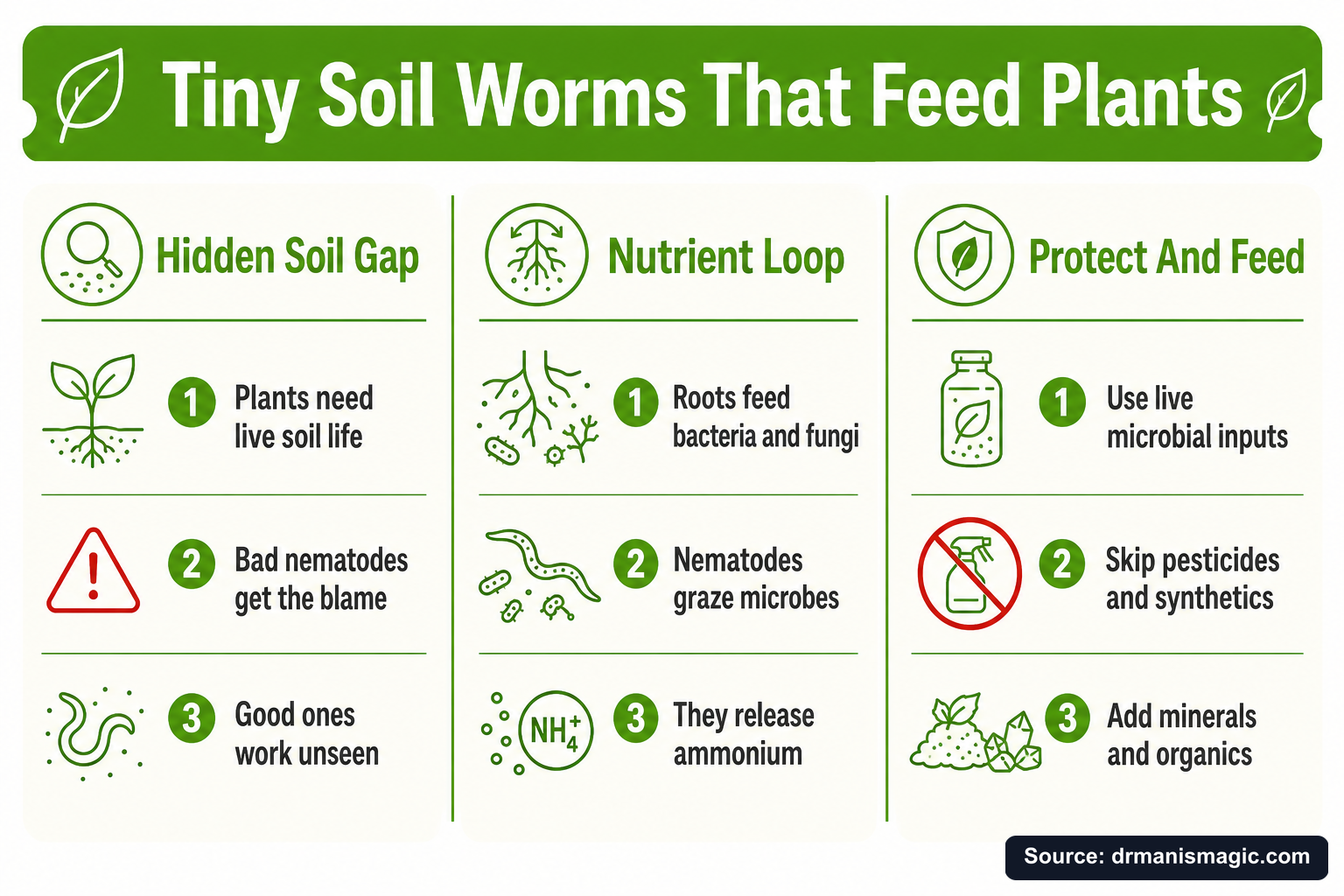
- Beneficial nematodes don't feed plants directly — they graze on bacteria and fungi, then release plant-ready nutrients into the root zone.
- There are several types of beneficial nematodes: bacterial-feeding, fungal-feeding, predatory, and entomopathogenic (pest-killing). Each plays a different role.
- The full nutrient loop goes: plant roots feed microbes, microbes multiply, nematodes eat microbes, nutrients are released as ammonium that roots can absorb.
- Dead, dried, or foul-smelling microbial products break this cycle before it even starts — live biology is the only biology that works.
- Pesticides, synthetic fertilizers, fumigation, and herbicides can wipe out the very nematodes and microbes your plants depend on.
- Rebuilding your soil's food web takes time and repeated applications of genuinely live biology.
- The Three Plant Pillars — mineral soil, live microbials, and organic fertilizer — create the conditions where beneficial nematodes and microbes can thrive together.
What Are the Beneficial Nematodes That Feed Plants?
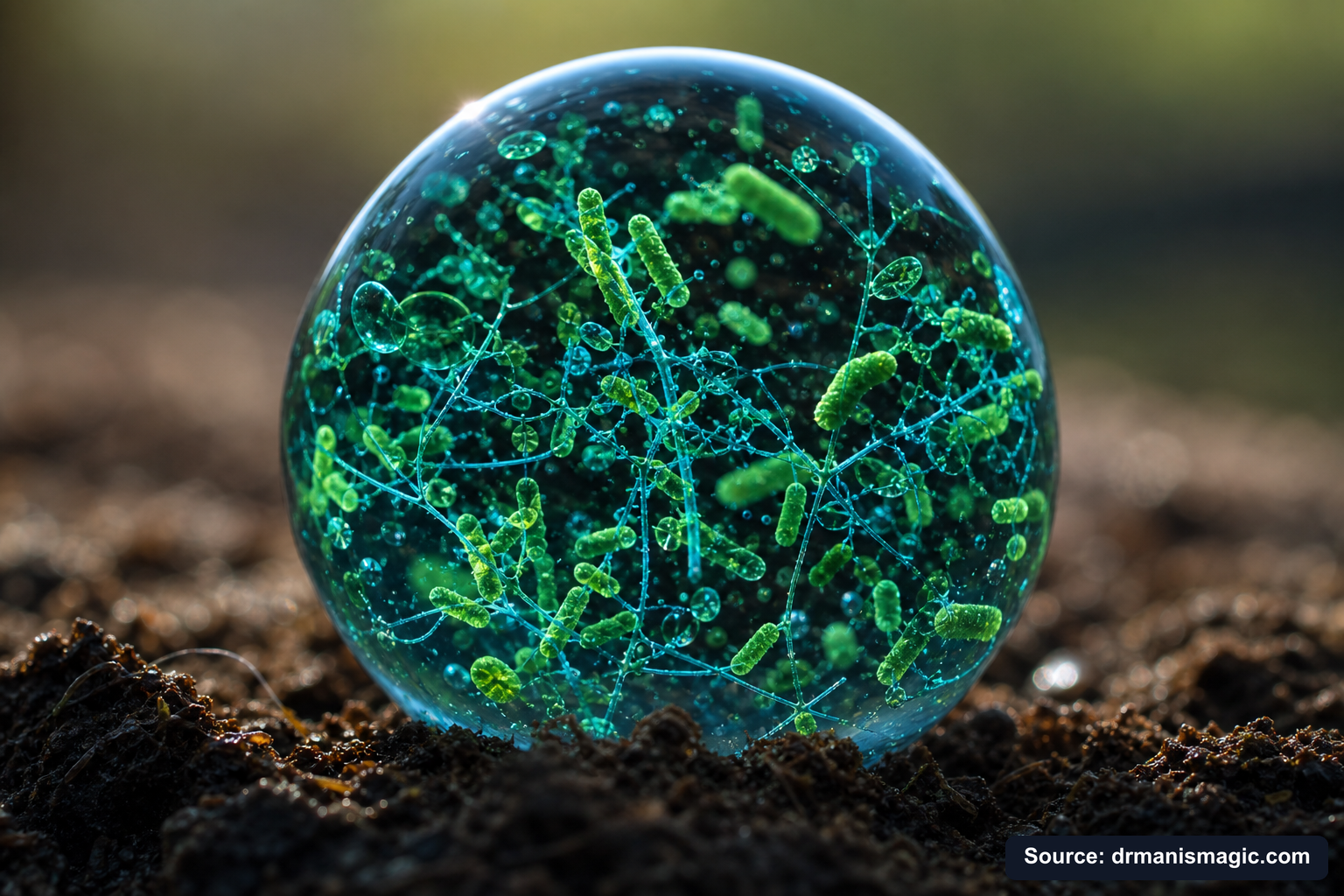
Quick Answer: Beneficial nematodes are microscopic roundworms that live in soil and feed on bacteria, fungi, and other small organisms. When they eat microbes, they release nitrogen as ammonium — a form plants can absorb directly through their roots. They feed plants indirectly, through nutrient cycling, not by acting like fertilizer themselves.
Nematodes are roundworms. Tiny ones. Most are invisible to the naked eye. A single teaspoon of healthy soil can hold hundreds of them. They have been living in soil for hundreds of millions of years, long before the first farmer ever picked up a shovel.
Here's the thing most gardening content gets completely wrong. When people talk about "beneficial nematodes," they almost always mean one specific group — the pest-killers. The ones you buy in little sponges to wipe out grubs, fleas, and fungus gnats. Those are called entomopathogenic nematodes. They are real, they work, and we'll cover them. But they are only one small chapter in a much bigger story.
The nematodes that truly feed plants — the ones doing the heavy lifting in healthy soil right now — are the free-living nematodes. Specifically, the bacterial-feeding and fungal-feeding guilds. These microscopic grazers are the bridge between soil microbes and plant roots. They eat the bacteria and fungi that have locked up nutrients in their tiny bodies. And when they digest those microbes, they excrete excess nitrogen as ammonium — right in the root zone, right where your plant needs it most.
According to the USDA NRCS Soil Biology Primer, nematodes are critical links in the soil food web, helping to regulate bacterial and fungal populations and release plant-available nutrients through their feeding activity. This is not fringe science. This is the foundation of how natural ecosystems feed themselves — without a single bag of fertilizer.
What Are the Different Types of Beneficial Nematodes in Soil?
Quick Answer: There are six main nematode types in soil. Bacterial-feeding and fungal-feeding nematodes are the primary nutrient cyclers that help plants grow. Predatory and omnivorous nematodes regulate the soil food web. Entomopathogenic nematodes kill insect pests. Plant-parasitic nematodes are the harmful ones that damage roots. Most gardening advice only covers the last two categories.
Not all nematodes are created equal. In fact, lumping them together is like saying all dogs are the same because they have four legs. The differences matter enormously — especially if you want to understand why your soil is either thriving or struggling.
| Nematode Type | What They Eat | Do They Help Plants? | Can You Buy Them? | Common Example |
|---|---|---|---|---|
| Bacterial-feeding | Soil bacteria | Yes — release ammonium (plant nitrogen) | Not typically sold; build through healthy soil | Rhabditida order |
| Fungal-feeding | Soil fungi | Yes — release nutrients from fungal biomass | Not typically sold; build through healthy soil | Aphelenchida order |
| Predatory | Other nematodes, protozoa | Yes — regulate food web balance | Rarely | Mononchida order |
| Omnivorous | Bacteria, fungi, other nematodes | Yes — flexible food web regulators | Rarely | Dorylaimida order |
| Entomopathogenic | Insect larvae and pupae | Yes — kill soil pests like grubs, fleas, fungus gnats | Yes — sold commercially | Steinernema, Heterorhabditis |
| Plant-parasitic | Plant roots | No — damage and weaken roots | N/A | Root-knot nematode (Meloidogyne) |
The ones most gardeners need to understand — and almost nobody talks about — are the bacterial-feeding and fungal-feeding nematodes. These are not something you buy in a package. They are something you grow. You grow them by growing the microbes they eat. And you grow those microbes by feeding them. Which brings us to the most important loop in all of gardening.
How Do Nematodes Actually Feed Plants Through the Soil Food Web?
Quick Answer: Plants release sugars through their roots to attract bacteria and fungi. Those microbes multiply and lock nutrients inside their bodies. Nematodes eat the microbes and release excess nitrogen as ammonium into the root zone. Plant roots absorb that ammonium directly. This is the soil food web nutrient loop — and it runs continuously in healthy soil.
Here's the loop. Read it slowly, because this single cycle explains more about plant health than most gardening books ever will.
Step 1: The plant feeds the microbes. Plant roots constantly leak sugars, amino acids, and other compounds into the surrounding soil. Scientists call this area the rhizosphere. Plants do this on purpose. Those root exudates attract bacteria and fungi. The plant is essentially paying rent — feeding the workers it needs.
Step 2: The microbes multiply and lock up nutrients. Bacteria and fungi consume those root sugars and reproduce rapidly. As they grow, they pull nitrogen, phosphorus, and other nutrients from the surrounding soil and lock them inside their bodies. At this stage, those nutrients are not available to the plant. They are tied up in microbial biomass.
Step 3: The nematodes eat the microbes. This is where the magic happens. Bacterial-feeding nematodes graze on those bacteria. Fungal-feeding nematodes graze on those fungi. The nematodes consume far more nitrogen than they need for their own bodies. So what happens to the excess?
Step 4: The nutrients are released as ammonium. The nematode excretes that excess nitrogen as ammonium — a form plants can absorb directly through their roots. Right there. In the rhizosphere. Exactly where the root hairs are waiting.
Step 5: The plant feeds again. The plant absorbs the ammonium. It grows stronger. It releases more root exudates. More microbes grow. More nematodes graze. The loop continues.
This is not a theory. Researchers at UC Davis NemaPlex have documented this nutrient mineralization process extensively, showing that nematode grazing can significantly increase the availability of plant-ready nitrogen in the rhizosphere compared to soils where nematodes have been removed.
Nature figured this out long before we did. Every thriving forest, every lush prairie, every wild meadow runs on this exact loop. No fertilizer bag required.
How Are Entomopathogenic Nematodes Different From Nutrient-Cycling Nematodes?
Quick Answer: Entomopathogenic nematodes are specialist pest killers. They enter insect larvae and release bacteria that kill the host. They are sold commercially for grubs, fungus gnats, fleas, and cutworms. Nutrient-cycling nematodes — the bacterial and fungal feeders — work silently in the soil food web and are not sold in packages. You build them by building living soil.
Let's be clear about something. If you've ever bought nematodes at a garden center or online, you almost certainly bought entomopathogenic nematodes. Products containing Steinernema feltiae for fungus gnats, Steinernema carpocapsae for cutworms and fleas, or Heterorhabditis bacteriophora for grubs — these are all pest-control tools. They are genuinely beneficial. They work.
But they are not the same nematodes that cycle nutrients. They have a completely different job. Think of it like your immune system versus your digestive system. Both are working for you. But they do entirely different things.
| Feature | Entomopathogenic Nematodes (Pest Control) | Bacterial/Fungal-Feeding Nematodes (Nutrient Cycling) |
|---|---|---|
| Primary role | Kill soil-dwelling insect larvae and pests | Graze on bacteria and fungi; release plant-available nitrogen |
| Can you buy them? | Yes — sold commercially in sponges or gels | No — must be cultivated through soil biology |
| How they help plants | Indirectly — by eliminating root-damaging pests | Directly — by mineralizing nutrients in the root zone |
| What they eat | Insect larvae; they carry bacteria that kill the host | Soil bacteria and soil fungi |
| How to support them | Apply to moist soil; avoid sunlight and drying | Build living soil with microbes, organic matter, and no harsh chemicals |
| What destroys them | UV light, dryness, certain pesticides | Fumigation, synthetic fertilizer salts, herbicides, fungicides |
The key insight is this: if you want the pest-killing nematodes to work, apply them to moist soil in the evening and water them in. But if you want the nutrient-cycling nematodes to thrive — the ones that continuously feed your plants — you have to build a living soil ecosystem and protect it from the chemicals that destroy it.
Both kinds of nematodes are your allies. But you grow them differently. And most gardening advice only ever tells you about one.
Why Does Dead or Sterile Soil Collapse the Entire Nematode-Nutrient Cycle?
Quick Answer: Beneficial nematodes depend on bacteria and fungi for food. If your soil has been sterilized by pesticides, herbicides, synthetic fertilizer salts, or fumigation, there are no microbes to eat. Without food, nematode populations collapse. Without nematodes grazing, nutrients stay locked in unavailable forms. The entire nutrient loop breaks. Plants starve even when fertilizer is applied.
Here's what the bag of fertilizer doesn't tell you. When you pour synthetic, salt-based fertilizer on your soil, you get a quick green flush. Plants look better for a few weeks. You feel good. But underneath, something quietly terrible is happening.
Those fertilizer salts are killing your bacteria. And your fungi. And when those microbes die off, the nematodes that feed on them have nothing to eat. The populations crash. The nutrient loop breaks. Now your plants are completely dependent on you. Every drop of nutrition has to come from a bag or a bottle. Miss an application? The plant struggles. Apply too much? Salt burn. You're stuck on a treadmill that gets harder every season.
We've grown over 250,000 trees at our South Texas nursery. We've seen this pattern more times than we can count. Growers come to us with plants that look terrible despite years of fertilizing. When we ask what they've been using, the answer is almost always the same: synthetic, salt-based products. The soil is biologically dead. The nematode community is gone. The microbes are gone. And the plant is gasping.
It gets worse. Fumigation — used in commercial farming to kill soil pathogens before planting — doesn't just kill the bad guys. It sterilizes everything. Every bacterium. Every fungus. Every nematode. Every protozoan. The soil becomes biologically empty. And into that empty soil, without a careful rebuilding plan, only the fastest-reproducing organisms return first. Sometimes those are plant-parasitic nematodes and opportunistic pathogens — the exact opposite of what you want.
Herbicides like glyphosate have also been shown to disrupt soil microbial communities. Fungicides kill beneficial fungi right alongside pathogenic ones. Broad-spectrum pesticides reduce microbial diversity. Every one of these inputs chips away at the living network that beneficial nematodes depend on.
See also: The Hidden Reason Synthetic Fertilizers Cause Root Rot
You Never Had a Brown Thumb.
You were handed the wrong tools. This free guide hands you the right ones.
You watered it. You fed it. It died anyway.
It was never you. It was the dirt, the salt food, and the bad advice.
This guide shows you what really went wrong, and how to fix it for good.
- Why your plants really died, and why it was never your fault
- The salt hiding in your plant food that quietly burns the roots
- The hidden killer in almost every bag of store soil
- The tiny helpers that grow a whole forest for free
- The rescue trick that brings a half dead plant back to life

What Are the Signs That Your Soil Food Web Is Working or Broken?
Quick Answer: A healthy soil food web shows up as earthworm activity, fast residue breakdown, stable moisture, crumbly soil structure, reduced disease pressure, and less fertilizer response over time. A broken food web shows up as compaction, yellowing, frequent disease, poor drainage, and plants that seem to need more and more fertilizer just to stay alive.
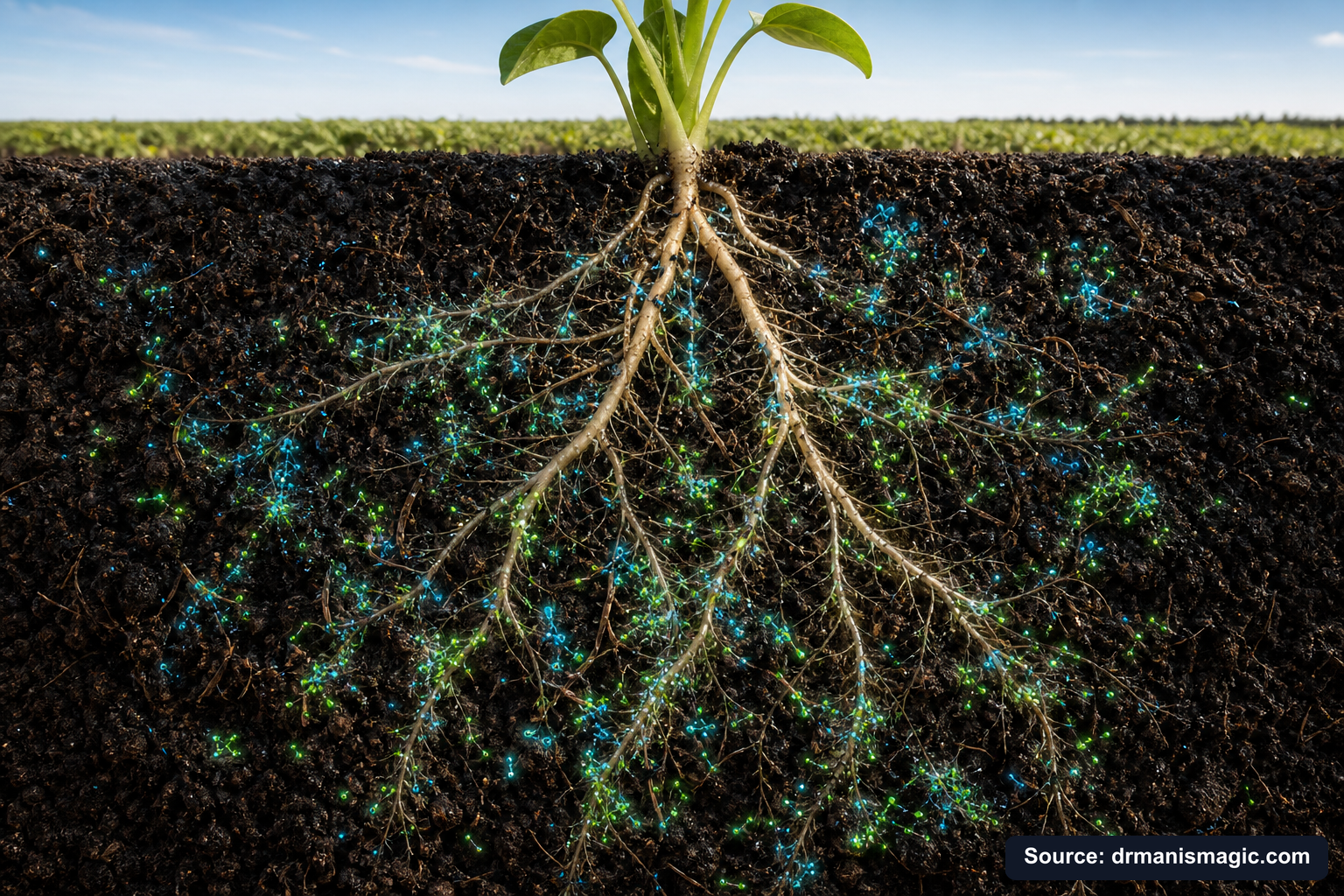
You don't need a lab to read your soil's biological health. Your plants and your soil are already telling you. You just need to know what to look for.
Signs your soil food web is alive and working:
- Earthworms present when you dig — they are the canaries of soil health
- Organic matter breaks down quickly after you add it
- Soil holds moisture without staying waterlogged
- Crumbly, loose texture — not hard, compacted clods
- Roots look white and healthy when you unpot a plant
- Fuzzy white threads visible on roots — that's mycorrhizal fungi, a great sign
- Disease pressure decreases over time without chemical inputs
- Plants need less fertilizer each season to maintain the same growth
Signs your soil food web is damaged or broken:
- Hard, compacted soil that cracks when dry
- Organic matter sits on top without breaking down
- Plants yellow between feedings but green up briefly after fertilizer
- Root rot showing up even without overwatering
- Pests and disease seem to get worse every year
- Strong response to fertilizer early in the season, then decline
- Soil smells sour, swampy, or like sulfur
That last one — the smell — tells you something important. Healthy, living soil smells like earth. Rich, dark, almost sweet. Dead or oxygen-deprived soil smells rotten. That rotten smell is anaerobic bacteria — the wrong kind — taking over because the beneficial community has collapsed.
For a deeper dive into how to read your plants and build the right foundation from the ground up, our Free Plant Care Field Guide walks you through it step by step.
Why Do Most Microbial Products Fail to Support Beneficial Nematodes?
Quick Answer: Most commercial microbial products are either dried lab cultures that barely survive or smelly liquids that have already gone anaerobic and dead. Neither can support a functioning soil food web. Beneficial nematodes need genuinely alive, diverse microbial populations to graze on. Dead microbes in a bottle cannot rebuild a living ecosystem.
Here's a truth the gardening industry doesn't want you to know. Most of the microbial products on store shelves — the ones promising to "activate your soil" — are biologically inert by the time they reach your garden. We know because we tested dozens of them at our nursery over years of research. The results were consistent and disappointing.
There are three main ways these products are made, and each has a serious flaw.
The first way is dried or powdered lab-grown microbes. These are produced in giant factory vats, dried into spores, then packaged. The idea is that the spores will "reactivate" when you add water. In our testing across 250,000 trees, we saw no meaningful results. The species diversity is narrow. The viability is low. And the soil ecosystem they're meant to rebuild is complex and vast.
The second way is liquid compost tea — microbes harvested from compost and bottled. Fresh compost tea, applied within 24 hours, can be genuinely effective. But by the time a bottle ships to you, sits in a warehouse, and lands on your doorstep? It's gone anaerobic. The microbes are dying or dead. The telltale sign? It stinks. Badly. Some bottles even fizz when you open them — that's fermentation gas, not biological activity. A smelly microbial product is not a working microbial product.
The third way — one we specifically avoid — is lactobacillus-based products. Yes, like the bacteria in yogurt. Easy to make, very vigorous. But lactobacillus outcompetes the beneficial soil microbes you actually want to establish. It belongs in your gut, not your garden.
Now here's the thing about beneficial nematodes. They need a thriving, diverse microbial population to feed on. Bacterial-feeding nematodes need living bacteria. Fungal-feeding nematodes need living fungi. If the microbial product you're applying is already dead, it cannot build the microbial population that nematodes depend on. You're not rebuilding a food web. You're putting an empty dinner plate on the table and wondering why nobody shows up.
How Does Dr. Mani's Magic Plant Super Boost Keep Microbes Alive?
Quick Answer: Plant Super Boost uses a proprietary all-natural stabilization method to keep the full spectrum of living microbes alive without going anaerobic. It contains over 2,000 bacterial species, 400-500 fungal species including mycorrhizae, plus protozoa and nematodes — harvested from real compost, not factory vats. It smells like earth, not sewage, because the microbes are alive and stable.
Dr. Mani Skaria spent decades as a Professor of Plant Pathology at the Texas A&M Citrus Center. He's a world-recognized citrus scientist. And even he had to go searching for a solution to the microbial product problem.
The breakthrough came through a remarkable meeting. A world-renowned compostologist — someone who had advised farming operations for royal families and governments across the world — had quietly developed a natural technique to stabilize living microbes from fresh compost. Not dry them. Not ferment them. Stabilize them. Keep them alive, active, and diverse, without the anaerobic decay that kills conventional compost tea.
This expert had been quietly blacklisted by large chemical companies after organic growers using his methods began outperforming conventional operations. At one point, he feared for his safety and stopped his work entirely. Years later, through what can only be described as a providential meeting, he connected with Dr. Mani and the team at US Citrus Nursery in South Texas. He joined the company. And Plant Super Boost was born.
The result is unlike anything else on the market. Take a drop of Plant Super Boost and look at it under a microscope. You will see living organisms moving. Not spores waiting to activate. Not dead cells in a liquid. Actual living microbial life. We have the lab analyses to prove it.
What does it contain? Over 2,000 bacterial species. Between 400 and 500 fungal species, including mycorrhizal fungi. Plus protozoa. Plus beneficial nematodes. The full cast of characters your soil food web needs. Not a narrow lab-grown selection — the actual diverse community that nature uses.
And because the microbes aren't dying and decomposing? It doesn't smell bad. Open a bottle of Plant Super Boost and it smells like fresh earth. That's the smell of stability. That's the smell of life. Zero PFAS. Zero biosludge. Zero synthetic salts. Made right here in the USA.
Using it is simple: mix two ounces into a gallon of water and pour it on your soil. Or pour a full bottle into a hose-end sprayer and treat a large garden bed or lawn. Apply monthly. Pair it with organic fertilizer. That's it.
What Is the Full Soil Food Web and Where Do Nematodes Fit In?
Quick Answer: The soil food web is a layered community of organisms that cycle nutrients from organic matter into plant-available forms. Bacteria and fungi are the base layer. Protozoa and nematodes graze on bacteria and fungi, releasing nutrients. Predatory nematodes regulate populations. Earthworms and insects break down larger organic matter. Each layer feeds the next and the whole web feeds your plants.
Think of your soil as a city. Not a dead pile of dirt — a living, breathing city with millions of residents who all have jobs. Here's how the neighborhoods break down.
| Soil Organism | What They Do | How They Help Your Plants | What Destroys Them |
|---|---|---|---|
| Bacteria | Break down organic matter; fix nitrogen from air; produce hormones | Release nutrients; protect against pathogens; build soil structure | Synthetic fertilizer salts, herbicides, fungicides |
| Fungi (including mycorrhizae) | Extend root networks; solubilize phosphorus; improve drought resistance | Dramatically increase nutrient and water uptake | Fungicides, fumigation, compaction |
| Protozoa | Graze on bacteria; release ammonium near roots | First-line nutrient mineralizers in the rhizosphere | Fumigation, drying, chemical inputs |
| Bacterial-feeding nematodes | Graze on soil bacteria; excrete ammonium | Significant nitrogen mineralization in root zone | Pesticides, herbicides, salt fertilizers, fumigation |
| Fungal-feeding nematodes | Graze on soil fungi; release nutrients from fungal biomass | Nutrient cycling from fungal community | Fungicides, fumigation, soil disturbance |
| Predatory nematodes | Eat other nematodes and protozoa | Regulate populations; maintain food web balance | Fumigation, broad-spectrum pesticides |
| Entomopathogenic nematodes | Kill soil-dwelling insect larvae | Protect roots from physical pest damage | UV light, dryness, certain pesticides |
| Earthworms | Break down organic matter; create channels for air and water | Improve drainage, aeration, and nutrient availability | Synthetic pesticides, compaction, bare soil |
Every single one of these organisms plays a role. Remove one, and the others are weakened. Remove several — which is exactly what happens in fumigated, heavily chemicalized, or long-neglected soil — and the whole system degrades. Plants become dependent. Disease pressure climbs. You spend more money on inputs that produce less and less result.
This is the system Dr. Mani built the Three Plant Pillars around. Not just feeding plants. Building the invisible ecosystem that feeds plants naturally, continuously, and with increasing efficiency over time.
How Do You Rebuild a Damaged Soil Food Web and Restore Beneficial Nematodes?
Quick Answer: Rebuilding a damaged soil food web requires stopping the inputs that kill biology, introducing genuinely live microbials, adding organic matter as microbial food, improving soil structure for air and water movement, and repeating applications consistently over months. There are no shortcuts. But the results compound. Each month of recovery builds on the last.
If you've been using synthetic fertilizers, pesticides, or herbicides for years, your soil's biological community is damaged. Maybe severely. The good news: soil biology is resilient when you give it the right conditions. Here's a practical recovery protocol we use at US Citrus Nursery for damaged soil.
- Stop the inputs that kill biology. Reduce or eliminate synthetic fertilizers with salt-based formulas. Avoid broad-spectrum pesticides and fungicides where possible. Every application of these sets your recovery back.
- Check your soil structure. Roots need oxygen to breathe. Compacted, waterlogged soil suffocates both roots and the aerobic microbes that beneficial nematodes depend on. If your soil is heavy clay or degraded potting mix, consider transitioning to a mineral-based soil that drains well and holds its structure permanently.
- Apply genuinely live microbials. This is non-negotiable. Dead microbes in a bottle cannot rebuild a food web. You need living bacteria, fungi, protozoa, and nematodes introduced into the root zone. Apply monthly, not once and hope for the best.
- Feed the microbes with organic matter. Organic fertilizer provides the food that bacteria and fungi need to multiply. When microbes multiply, nematode populations follow. Use a slow-release organic source — not salt-based chemicals that burn the very biology you're trying to build.
- Be patient and consistent. Rebuilding the full soil food web takes months, not days. The first application helps. The third application helps more. By month six, if you stay consistent, you'll see the signs: better drainage, earthworm activity, healthier roots, less disease. The momentum builds.
- Protect what you build. Once your biology is recovering, every time you spray a herbicide or reach for a synthetic quick-fix, you're knocking it back. Think of your soil biology as a bank account. Every live microbial application makes a deposit. Every chemical input makes a withdrawal.
- Read the signs. Watch for earthworms, crumbly soil, white root fuzz, faster residue breakdown, and less fertilizer response. These are your progress reports from underground.
We've watched this process work on tens of thousands of trees across our South Texas nursery. The transformation is real. And it compounds. That's the power of working with nature instead of against it.
See also: Why Most Fertilizers Are Actually Salt in Disguise
What Practical Steps Can You Take Today to Support the Nematodes That Feed Your Plants?
Quick Answer: Start by applying genuinely live microbials monthly to rebuild the bacterial and fungal populations that nutrient-cycling nematodes depend on. Switch to an organic, slow-release fertilizer that feeds microbes instead of burning them. Make sure your soil drains freely so aerobic biology can thrive. These three steps mirror the Three Plant Pillars and are the fastest path to a self-feeding soil ecosystem.
You don't need a soil science degree to grow plants the way nature intended. You just need to stop doing what's working against you, and start doing what works with the invisible workforce already trying to help you.
Here's what you can do right now, today, no matter what kind of plants you grow — trees, vegetables, flowers, grass, houseplants, or a full backyard orchard.
Step 1: Feed the invisible workforce. Apply a genuinely live, full-spectrum microbial product to your soil monthly. Not a dried powder. Not a smelly liquid. Something with verifiably alive bacteria, fungi, protozoa, and nematodes. This is the base of everything. Without a thriving microbial population, beneficial nematodes have nothing to eat and nothing to cycle.
Step 2: Give them the right home. Microbes and nematodes need soil with air in it. Oxygen. Movement. Waterlogged, compacted, decomposing potting mix suffocates aerobic biology. If your container soil is more than a couple of years old and starting to compact and drain poorly, it's time to reconsider what your roots are living in.
Step 3: Feed them the right food. Organic, slow-release fertilizers provide the nutrition that bacteria and fungi need to multiply. Crab meal, kelp, amino acids — these feed the soil ecosystem gently and completely, without the salt burn that collapses microbial communities. When microbes thrive, nematodes thrive. When nematodes thrive, your plants are fed from the inside out.
These three steps aren't random tips. They're the Three Plant Pillars — the same system we've refined across 250,000 trees at US Citrus Nursery. Mineral-based soil. Live microbials. Organic fertilizer. When all three are in sync, the food web runs. The nematodes graze. The nutrients flow. And your plants grow the way they were always meant to.
Time is the one thing you can't get back. Every season spent on the synthetic treadmill — quick green-ups followed by slow decline — is a season you could have spent watching something truly flourish. The best time to build living soil was years ago. The second best time is right now.
If you're ready to stop guessing and start growing, explore Plant Super Boost — the live, full-spectrum microbial formula we developed at US Citrus Nursery to bring the power of fresh compost biology directly to your garden, your containers, your lawn, and your trees. Every bottle is made in the USA, backed by lab analysis, and guaranteed to show you results within 30 days or your money back. No whining. No excuses. Just living soil doing what living soil does best.
Frequently Asked Questions
Most gardeners never hear about beneficial nematodes. That is a shame. These tiny soil workers are a big reason why some plants thrive and others slowly fade. Once you understand how they work, and how to protect them, everything changes. Here are the questions we hear most often.
What are the beneficial nematodes that feed plants?
Beneficial nematodes are microscopic roundworms that live in your soil. The ones that feed plants are called bacterial-feeding and fungal-feeding nematodes. They eat bacteria and fungi in the soil. When they digest those microbes, they release nitrogen as ammonium right in the root zone. Your plant roots grab it fast. This is why live soil biology matters so much. No living microbes means no nematode grazing. No grazing means no nutrients released. Dr. Mani's Plant Super Boost keeps that whole cycle alive and working.
Is there a downside to beneficial nematodes?
Yes, a few. Beneficial nematodes die fast without moisture. UV light kills them. Synthetic fertilizers and pesticides wipe them out before they can do any good. That is the real problem most gardeners face. They pour salt-based fertilizers on their soil and unknowingly destroy the very workers feeding their plants. Dr. Mani's Three Plant Pillars fix this. Mineral soil, live microbials, and organic fertilizer create conditions where nematodes and microbes survive and thrive long term.
Which beneficial nematodes are best for my garden?
It depends on what you need. For pest control, match the species to the pest. Steinernema feltiae targets fungus gnats. Heterorhabditis bacteriophora goes deep for grubs. But the nematodes that feed your plants every day are the free-living ones already in your soil. Your job is to protect them. That means ditching harsh chemicals and feeding your soil with live microbials like Plant Super Boost. We proved this across 250,000 trees at US Citrus Nursery. Healthy soil biology is not optional. It is everything.
What kills beneficial nematodes in the soil?
Synthetic fertilizers are the biggest culprit. They are salt-based. Salt scorches the microbes nematodes depend on for food. No microbes, no food, no nematodes. Pesticides, herbicides, and soil fumigation do the same damage. Even most potting mixes hurt them. Sawdust-based soils compact and suffocate the soil food web over time. That is why Pillar One of Dr. Mani's system is mineral-based Super Soil. It stays open, drains well, and gives nematodes and microbes room to do their jobs.
What plants do nematodes hate?
We are talking about the harmful, plant-parasitic kind here. Those bad nematodes hate marigolds, mustard greens, sesame, and crops like garlic and onions. Marigolds release a chemical that stops root-knot nematodes from reproducing. Mustard tilled into soil acts like a natural fumigant. But here is the bigger picture. When your soil has a thriving population of beneficial nematodes and microbes, the bad nematodes struggle to take hold. A living soil is your best defense. That is exactly what Plant Super Boost builds.
Can I apply beneficial nematodes in October?
Yes. Early to mid-October is actually a great window. Soil is still warm and young grubs are near the surface. Check that your soil temperature is between 50 and 68 degrees Fahrenheit. Apply at dusk or on a cloudy day since UV light kills nematodes fast. Keep the soil moist for at least three to four days after application. And remember, nematodes need living soil to survive long term. Without the microbial foundation that Plant Super Boost provides, even a perfect application fades quickly.
How long does it take for beneficial nematodes to work?
Pest-killing nematodes can start working in 24 to 48 hours. You will usually see a real drop in pest populations within one to two weeks. The free-living nematodes that feed your plants work every single day, quietly releasing nutrients in the root zone. You will not see them, but you will see the results. Thicker leaves. Stronger stems. Faster growth. We watched this happen across our citrus grove and nursery. Build the right soil foundation and the biology does the rest, season after season.
About the Author
Dr. Mani Skaria, PhD
Dr. Mani Skaria, PhD, is a plant pathologist and the scientific founder of Dr. Mani's Magic. He earned his doctorate at Purdue University and spent 48 years studying how plants, soil, and living microbes work together, including his years as Professor Emeritus at Texas A&M and as a member of the USDA NAREEE Advisory Board. He invented micro-budding, a method for growing healthier, stronger trees, and has grown more than 250,000 trees on the family farm in Hargill, Texas - US Citrus Nursery. His life's work takes real lab science and practical experience and turns it into simple, safe, organic plant care anyone can use at home.


