


The Underground Fungal Internet Beneath Your Plants: Real Science vs. Hype | Dr. Mani's Magic
The Underground Fungal Internet Beneath Your Plants: What Is Real, What Is Hype, and How to Feed It
Get down on your hands and knees for a second. Press your palm flat against the soil in your garden. Feel that? Cool. Slightly damp. Alive in a way you can't quite explain.
Now imagine that beneath your hand, right now, there is a city. Not a small town. A roaring, teeming, invisible city with more living creatures per teaspoon than there are people on Earth. Bacteria racing through water films between soil particles. Fungi stretching threads thinner than a spider's silk for hundreds of feet in every direction. Tiny predators hunting. Nutrients being unlocked, passed, traded, and delivered straight to your plant's roots. All of it happening in total darkness, in total silence, while you sip your morning coffee.
This is not science fiction. This is your soil. Or at least, it should be. Because here is the thing most gardening advice never tells you: the difference between a plant that thrives and a plant that struggles has almost nothing to do with the bottle of fertilizer you bought at the hardware store. It has everything to do with whether this invisible city beneath your plants is alive and working, or silent and broken.
Key Takeaways
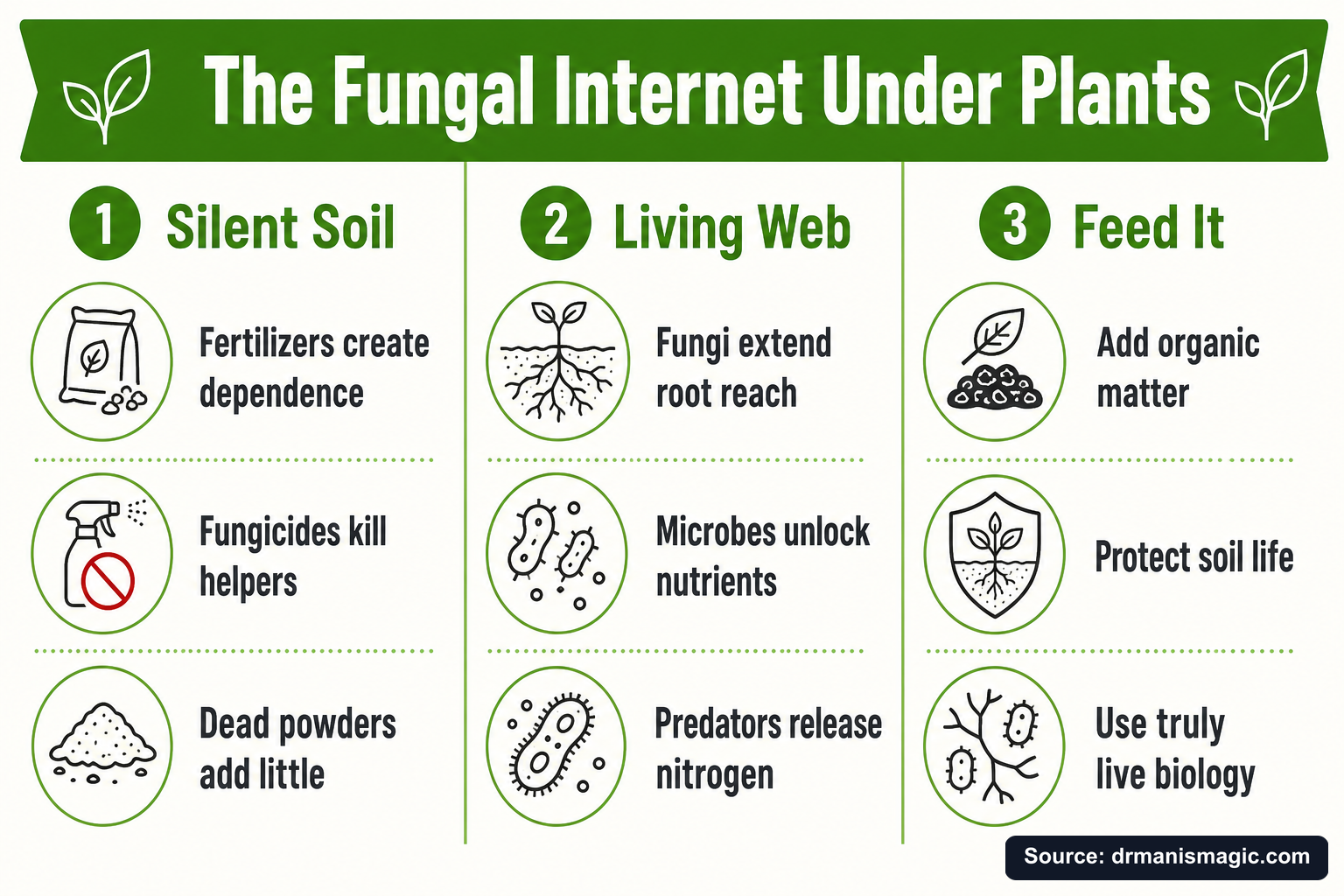
- Beneath every healthy plant is a living soil food web of bacteria, fungi, protozoa, nematodes, and more, working together to feed and protect roots.
- Mycorrhizal fungi form real partnerships with about 80% of land plants, extending root reach and improving drought tolerance, but the "wood wide web" story is more complex than most articles admit.
- Salt-based synthetic fertilizers, fungicides, and pesticides quietly destroy this invisible workforce, leaving your plants defenseless and dependent.
- Dried powder microbe products and smelly liquid inoculants are mostly dead on arrival. Genuinely live biology is rare, and it makes a measurable difference.
- You can rebuild a damaged soil food web, but it takes the right steps in the right order, not just dumping any product on the problem.
- The Three Plant Pillars system, developed and tested on over 250,000 trees at US Citrus Nursery in South Texas, gives any plant the microbial foundation it needs to thrive.
- Restoring your soil biology is one of the highest-return things you can do for any plant, lawn, garden, or orchard you care about.
What Is the Underground Fungal Internet and Is It Actually Real?
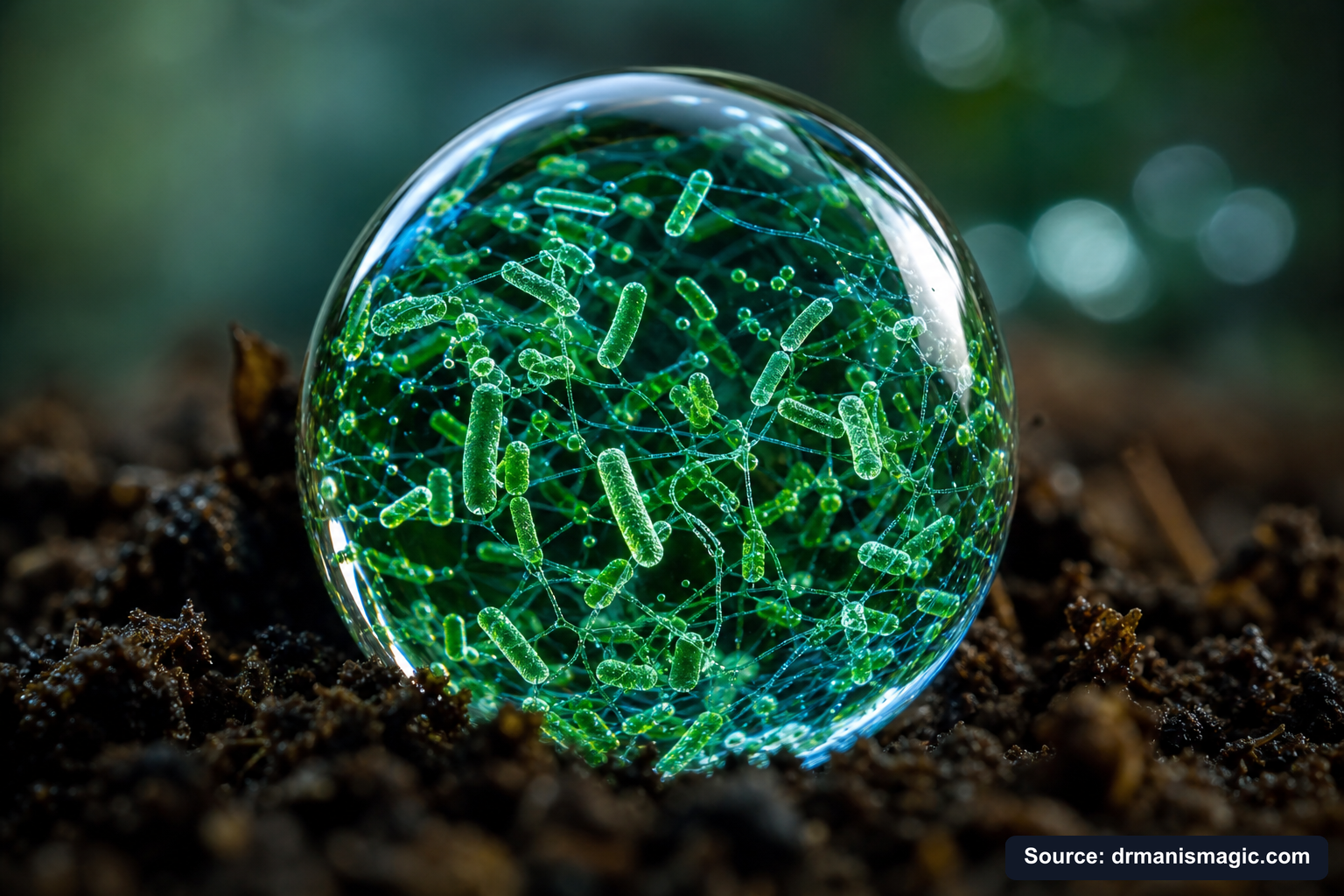
Quick Answer: Yes, fungal networks beneath plants are real. Mycorrhizal fungi form physical threads called hyphae that connect to plant roots and help move water, nutrients, and chemical signals. The "internet" label is a useful metaphor, but the science is more nuanced than viral headlines suggest. The full story involves bacteria, protozoa, nematodes, and the entire soil food web working together.
You have probably seen the headlines. "Trees talk to each other through a secret fungal network." "Forests share food underground." "Plants warn their neighbors about attack." It sounds like something from a nature documentary, and it is genuinely fascinating. But let's separate the real from the hype, because the truth is actually more useful to you as a gardener.
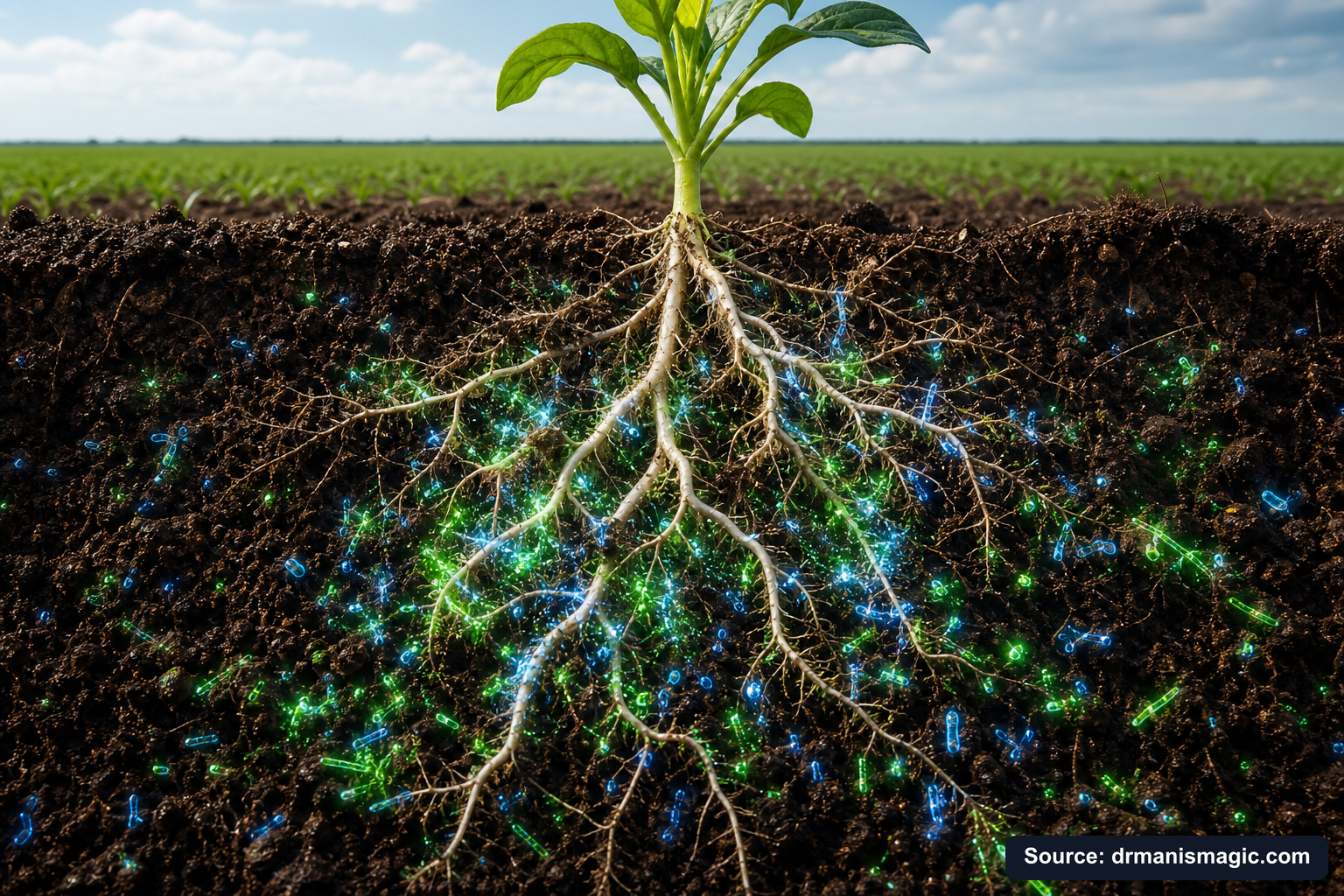
The fungal network is real. It is called a mycorrhizal network, from the Greek words for fungus and root. Tiny fungal threads called hyphae weave through the soil and physically attach to plant roots. According to University of Minnesota Extension, arbuscular mycorrhizal fungi form relationships with roughly 80% of all land plants on Earth. That is not a niche phenomenon. That is nature's default setting.
What these fungi actually do is move water and nutrients, especially phosphorus and nitrogen, from places in the soil where the root cannot reach, into the root itself. In exchange, the plant sends the fungus sugars made through photosynthesis. It is a trade. A partnership. A deal that has been running for an estimated 400 million years.
The "internet" part gets slippery. Yes, connected networks of hyphae can physically link multiple plants. There is evidence that carbon and chemical signals can travel through those connections. But whether plants are intentionally "communicating" or "sharing food" the way friends text each other is still genuinely debated among scientists. What is not debated is this: the fungal network is one layer of a much bigger, richer underground system, and most articles stop there. They miss the rest of the city.
What Else Lives in Your Soil? The Full Soil Food Web Explained
Quick Answer: Your soil holds bacteria, fungi, protozoa, nematodes, arthropods, and earthworms, all linked in a feeding chain. Bacteria and fungi break down organic matter. Protozoa and nematodes eat bacteria and release nitrogen plants can use. Fungi build soil structure. Together they form a self-running nutrient cycle that no bottle of synthetic fertilizer can replicate.
Fungi get all the press. But they are just one player in a much larger cast. Penn State Extension describes healthy soil as a dynamic community of bacteria, fungi, protozoa, nematodes, arthropods, plant roots, and organic matter all working together in a web of energy and nutrients. Pull any one of those out and the whole system gets weaker.
Here is how the cycle actually works. Your plant's roots leak sugary, carbon-rich fluids into the soil around them. This zone right around the roots is called the rhizosphere. Those sugars attract bacteria and fungi like a buffet. Bacteria and fungi then start breaking down organic matter nearby, turning it into simpler compounds. Then protozoa and nematodes move in and eat the bacteria. When they do, they release nitrogen in a form the plant can immediately absorb. It is like a nutrient delivery service that runs 24 hours a day, seven days a week, powered entirely by the plant's own root secretions.
| Soil Organism | What It Does | Why It Matters to Your Plant |
|---|---|---|
| Bacteria | Break down organic matter, fix nitrogen from the air, produce plant hormones | Makes nutrients available, stimulates root growth |
| Mycorrhizal Fungi | Extend root reach via hyphae, move phosphorus and water, produce glomalin to bind soil particles | Improves drought tolerance, nutrient uptake, and soil structure |
| Saprophytic Fungi | Decompose woody organic matter and dead plant tissue | Recycles nutrients back into the soil cycle |
| Protozoa | Graze on bacteria in the rhizosphere | Release plant-available nitrogen right at the root zone |
| Beneficial Nematodes | Prey on bacteria, fungi, pest insects, and other nematodes | Suppress root pests and release nutrients through grazing |
| Arthropods and Earthworms | Shred organic matter, create pores, move microbes through the soil profile | Improves aeration, drainage, and microbial distribution |
This is not a simple chain. It is a web. Everything feeds everything else. And the plant is not passive in this arrangement. It actively recruits the microbes it wants by releasing specific chemical signals from its roots. Think of it as the plant posting a job listing. The right microbes show up. Work gets done. The plant thrives.
After growing over 250,000 trees at our South Texas nursery, we can tell you this plainly: the plants that had a rich, living microbial community around their roots were more resistant to disease, grew faster, and needed less intervention than any plant we ever tried to prop up with synthetic inputs alone. Every single time.
What Do Mycorrhizal Fungi Actually Do for Your Roots?
Quick Answer: Mycorrhizal fungi physically extend your plant's root system, sometimes hundreds of times further than the roots alone can reach. They deliver phosphorus, water, and other minerals directly to the root. They also produce a sticky substance called glomalin that glues soil particles into aggregates, improving drainage and aeration for the entire root zone.
Picture your plant's root as a hand. Now imagine strapping on thousands of extra fingers, each one thinner than a human hair, reaching into every crack and pore in the soil for feet in every direction. That is what mycorrhizal hyphae do. A single cubic inch of healthy soil can hold miles of fungal threads.
Those threads reach mineral particles and moisture that roots simply cannot access on their own. The fungus breaks down the phosphorus locked in those minerals and carries it back to the root in exchange for carbon sugars. When drought hits, the extended fungal network keeps pulling water from deeper, drier zones long after an uninfected root would have given up.
There is also something called glomalin, a protein that mycorrhizal fungi produce almost like a glue. It binds tiny soil particles into larger clumps called aggregates. Those aggregates create the air pockets and drainage channels that roots need to breathe. This is why healthy, biologically active soil has that loose, crumbly texture. The fungi are literally building the structure of the soil as they work.
Cornell University and Boyce Thompson Institute research has revealed another layer: the hyphae of mycorrhizal fungi carry their own bacterial communities, sometimes called the hyphosphere microbiome. These bacteria help unlock additional nitrogen and phosphorus from organic matter right along the fungal thread. So the fungal network is not just a pipeline. It is a pipeline with its own crew of workers attached to it.
This is why, when you uproot a weed and see fuzzy white threads clinging to the roots, that is not mold. That is a mycorrhizal partnership. Weeds thrive partly because they are brilliant at forming these partnerships. Your garden plants deserve the same advantage.
How Does Synthetic Fertilizer Destroy the Underground Network?
Quick Answer: Salt-based synthetic fertilizers raise the salt concentration in the soil. That osmotic pressure pulls water out of microbial cells, killing beneficial bacteria and fungi. High phosphorus levels from synthetic feeds suppress mycorrhizal fungi specifically, because the plant stops partnering with fungi when phosphorus is already abundant. The invisible workforce disappears, and the plant becomes dependent on the bottle.
Here is the part nobody at the hardware store will tell you. When you pour a salt-based synthetic fertilizer on your soil, you are not just feeding your plant. You are creating conditions that kill the organisms your plant depends on for long-term health. It is like giving someone a meal by poisoning the kitchen staff.
Salt draws water out of living cells through osmosis. Your beneficial bacteria and fungi are mostly water. High salt concentrations in the soil pull that water right out of their cell walls. They die. The population crashes. The nutrient cycling stops. The disease suppression stops. The soil structure stops improving.
Your plant gets a short burst of quick energy from the synthetic feed. It looks green. It looks alive. But underneath, the city is emptying out. And when the next pest, the next drought, or the next disease shows up, your plant has no army to call on. It has only you and your next bottle of fertilizer.
This is not an accident. It is a business model. A plant that cannot build its own soil biology will always need more inputs. That is profitable for the companies selling the inputs. It is terrible for your plants, your wallet, and most importantly, your time. You can always earn more money. You cannot get back the seasons you spent watching a plant slowly lose ground.
See also: The Hidden Reason Synthetic Fertilizers Cause Root Rot
Are the White Threads in My Soil Good or Bad? A Practical Identification Guide
Quick Answer: White threads attached to roots are almost always mycorrhizal fungi, which are beneficial. White fluffy growth on the surface of potting mix may be saprophytic fungi breaking down organic matter, which is generally harmless. Truly harmful fungal pathogens usually cause root discoloration, sliminess, and plant wilting, not just surface fuzz. Context matters more than color.
One of the most common questions we hear is some version of "there's white fuzzy stuff in my pot, is my plant dying?" And the honest answer is: probably not, and it might actually be a good sign.
Here is a quick guide. White threads attached to roots, especially if the roots look healthy and cream-colored, are almost certainly mycorrhizal hyphae or beneficial fungal associations. This is what you want. Do not disturb them. Do not treat them with fungicide. They are working for your plant right now.
White or grayish surface fuzz on the top of your potting mix, especially near the base of a stem or on decomposing bark chips, is most likely a saprophytic fungus. Saprophytic fungi eat dead organic matter. They are not attacking your plant. They are recycling it. In most cases, you can ignore them or simply scratch them into the soil.
The warning signs of a genuinely harmful fungal pathogen look different. Roots that are brown, black, slimy, or smell rotten. Stems that collapse at the base. Leaves that wilt even when soil moisture is adequate. Those are signs of pathogenic fungi, often the result of poor drainage, compacted soil, or a destroyed microbial defense community. The answer is not usually more fungicide. The answer is usually better soil structure and restoring the beneficial biology that suppresses those pathogens in the first place.
You Never Had a Brown Thumb.
You were handed the wrong tools. This free guide hands you the right ones.
You watered it. You fed it. It died anyway.
It was never you. It was the dirt, the salt food, and the bad advice.
This guide shows you what really went wrong, and how to fix it for good.
- Why your plants really died, and why it was never your fault
- The salt hiding in your plant food that quietly burns the roots
- The hidden killer in almost every bag of store soil
- The tiny helpers that grow a whole forest for free
- The rescue trick that brings a half dead plant back to life

Live Microbes vs. Dead Microbes: Why Most Products on the Shelf Do Not Work
Quick Answer: Most commercial microbial products are either dried powders with low viability or liquid products that have gone anaerobic and smell foul, meaning the microbes are dead or dying. Neither works reliably in independent trials. Genuinely live, stabilized, full-spectrum biology from a compost-derived source is rare and produces measurably different results.
Walk down the garden center aisle. You will see dozens of products promising mycorrhizae, beneficial bacteria, and microbial inoculants. Most of them do not work. Not because the concept is wrong. The concept is exactly right. They fail because the biology inside the bottle is dead.
There are three main ways these products are made, and two of them are almost guaranteed to disappoint you.
The first is the dried powder approach. Large factories grow specific microbial strains in giant vats, then dry them into a powder. The idea is that the spores will reactivate when water is added. In our experience testing dozens of these products on real trees over real seasons, they rarely produce meaningful results. The drying process kills most of the organisms. The narrow spectrum of just a few lab-selected strains cannot replicate the rich diversity of a natural soil community.
The second is the smelly liquid. Some companies harvest microbes from compost or worm castings and bottle the liquid. Good intention. But by the time that liquid reaches you, it has often gone anaerobic, meaning the organisms ran out of oxygen and died, producing gases and a sulfur-like stench in the process. You might notice the bottle fizzes when you open it. That fizz is the last breath of a dying microbial community. Some benefit remains from the organic compounds like humic and fulvic acids, but the living biology is gone.
The third approach, the one that actually works, is what we use at Dr. Mani's Magic. Our compostologist partner discovered a proprietary, all-natural technique to stabilize full-spectrum microbes harvested from active compost without letting them go anaerobic. The organisms stay alive. They do not stink. And if you put a drop of Plant Super Boost under a microscope, you can watch the microbes moving. We have multiple independent lab analyses confirming viability. That is not marketing language. That is a testable, verifiable fact.
| Product Type | Microbe Viability at Use | Spectrum of Organisms | Odor | Real-World Results |
|---|---|---|---|---|
| Dried powder (lab-grown) | Very low | Narrow, 1 to 5 strains | None | Minimal; we saw no consistent improvement |
| Dried powder rehydrated in liquid | Very low | Narrow | None to slight | Same issues as above |
| Compost tea (fresh, under 24 hours) | Moderate | Broad, natural diversity | Earthy, pleasant | Good if used immediately; time-sensitive |
| Compost tea (old, over 24 hours) | Very low, anaerobic | Partial | Strong, foul | Organic compounds only; biology is gone |
| Lactobacillus-based liquids | High viability, wrong species | Single dominant strain | Sour | Outcompetes beneficial microbes; avoid |
| Plant Super Boost (stabilized, compost-derived) | High, verified by lab analysis | 2,000+ bacteria; 400-500 fungi including mycorrhizae; protozoa; nematodes | Earthy, not foul | Consistent visible improvement; microbes visible under microscope |
One more thing worth saying. Many microbial products also contain biosludge, a polite name for treated sewage waste, or are made with inputs that carry PFAS "forever chemicals." At Dr. Mani's Magic, our products contain zero biosludge, zero PFAS, and zero synthetic salts. That matters if you are growing food your family eats, or if you have children and pets who use your yard.
When Does a Mycorrhizal Inoculant Actually Work? An Honest Decision Guide
Quick Answer: Mycorrhizal inoculants work best in depleted, low-phosphorus soils with susceptible host plants and no prior fungal community. They are suppressed by high phosphorus, killed by fungicides, and unnecessary when healthy soil biology is already present. The decision to use one depends on your soil history, plant type, and product viability.
Not every situation calls for adding mycorrhizal inoculant. The truth is more useful than the marketing. Here is an honest framework for deciding whether you need it.
You probably do benefit from inoculation if your soil has been fumigated, sterilized, tilled repeatedly, or treated with broad-spectrum fungicides. You benefit if you are growing in fresh potting mix, which starts biologically empty. You benefit if your plants have been in a fallow period, because University of Minnesota Extension notes that mycorrhizal fungi need living plant roots to survive and replicate. No roots, no fungi.
You may not need inoculation if your soil already has a rich, active microbial community from years of compost application and minimal chemical use. You will see reduced benefit if your soil phosphorus is very high from past synthetic feeding, because plants stop investing in fungal partnerships when phosphorus is already abundant. And note that brassicas including broccoli, cabbage, and kale are non-host plants. Mycorrhizal inoculant will not help them at all.
Most importantly, the product itself must contain viable organisms. A product with dead microbes does nothing regardless of soil conditions. This is why we put so much emphasis on the stabilization process. A live product in the right conditions produces results you can see. A dead product in perfect conditions produces nothing.
Penn State Extension cautions that introduced microbes may not persist if the soil environment is unsuitable. This is the key insight. Adding biology is only one part of the answer. Building the habitat that keeps that biology alive is the other part. That is exactly what the Three Plant Pillars are designed to do together.
How Does Salt-Based Fertilizer Destroy the Fungal Internet?
Quick Answer: Salt-based synthetic fertilizers raise soil salinity, killing beneficial bacteria and fungi through osmotic stress. High phosphorus from synthetic feeds suppresses mycorrhizal colonization directly. Over time, repeated synthetic feeding creates a biologically depleted soil that cannot support the underground network, making plants permanently dependent on chemical inputs instead of living biology.
This is the part of the story that the big chemical companies would prefer you never hear. Their products and the soil food web are fundamentally at war with each other.
Salt draws water. That is chemistry. When salt concentrations in the soil rise above what microbial cells can handle, water moves out of those cells through their membranes by osmosis. The cells shrink. They die. A single application of a high-salt synthetic fertilizer can crash a local bacterial population significantly. Repeated applications over a growing season, repeated over years, can leave your soil biologically exhausted.
Now here is the insidious part. When the biology dies, nutrient cycling stops. The plant can no longer pull nutrients from organic matter through its microbial partners. So it becomes entirely dependent on whatever you pour on it from a bottle. You have to buy more fertilizer. More often. In higher doses. Which damages the remaining biology further. It is a cycle with only one winner, and it is not you.
We have seen this play out on trees that came to us from conventional growing operations. Roots pale, sparse, minimal branching. No mycorrhizal threads. No soil aggregation. Essentially sterile at the root zone. It takes months of consistent microbial rebuilding to bring those root systems back to life. But they do come back. We have seen it hundreds of times.
See also: Why Most Fertilizers Are Actually Salt in Disguise
How Do You Rebuild the Underground Fungal Network in Damaged or Sterile Soil?
Quick Answer: Rebuilding begins with removing the inputs that kill biology, then adding organic matter, living roots, and genuine live microbial inoculant. Recovery takes weeks to months depending on damage level. The steps below work for potting mix, garden beds, fumigated soil, and lawn areas affected by herbicide or salt buildup.
Your soil can come back. We have seen it happen in containers, in garden beds, and in large citrus groves that had been hammered by decades of conventional chemical programs. The underground city can be rebuilt. But it takes the right steps in the right order.
Here is a practical recovery checklist you can start today.
- Stop the damage first. Eliminate or dramatically reduce synthetic herbicides, broad-spectrum fungicides, and salt-based fertilizers. You cannot rebuild a community while the bombs are still falling.
- Improve your soil structure. Compacted, waterlogged, or bark-heavy potting mix that is breaking down and stealing oxygen from roots is not a habitat microbes can thrive in. Good drainage and aeration are non-negotiable. This is why we built Super Soil around a permanent mineral base that never compacts or decomposes.
- Add organic matter. Compost, aged mulch, and organic matter on the surface feed the soil food web. Microbes need carbon energy to operate. Organic matter is their fuel source.
- Keep living roots in the soil. Bare soil loses its microbial community quickly. University of Minnesota Extension notes that mycorrhizal fungi cannot survive without living plant hosts. Even cover crops or companion plants help maintain the network between seasons.
- Inoculate with genuinely live, full-spectrum biology. Apply a verified live microbial product monthly to reintroduce and reinforce the organisms that are missing. One application is a start. Consistent monthly applications rebuild population density and diversity over time.
- Switch to organic fertilizer. Your plants still need nutrients. But deliver them in a slow-release, non-salt form that works with the microbial community rather than against it. Crab, kelp, and amino acid-based organic fertilizers feed both the plant and the biology simultaneously.
- Be patient and consistent. Recovery timelines vary. A sterile potting mix can show visible improvement in four to eight weeks. Badly damaged garden soil may take a full growing season. The biology does come back. Stay consistent.
The Three Plant Pillars system addresses all of these steps together. Mineral-based soil that stays structurally open. Live microbials that genuinely work. Organic fertilizer that feeds the plant without poisoning the underground city. These three things in combination give the soil food web exactly what it needs to reestablish itself and then keep growing stronger.
What Can You Do Right Now to Feed Your Underground Fungal Network?
Quick Answer: The most impactful thing you can do today is stop using salt-based fertilizers and add a genuinely live microbial inoculant to your soil. Follow that with organic matter on the surface and a switch to organic slow-release feeding. These three actions together start rebuilding the soil food web within weeks.
You do not need a chemistry degree. You do not need a $500 soil test. You do not need to read 40 forum threads and argue with strangers online about which product is best. You need a foundation that works with nature instead of against it, applied consistently.
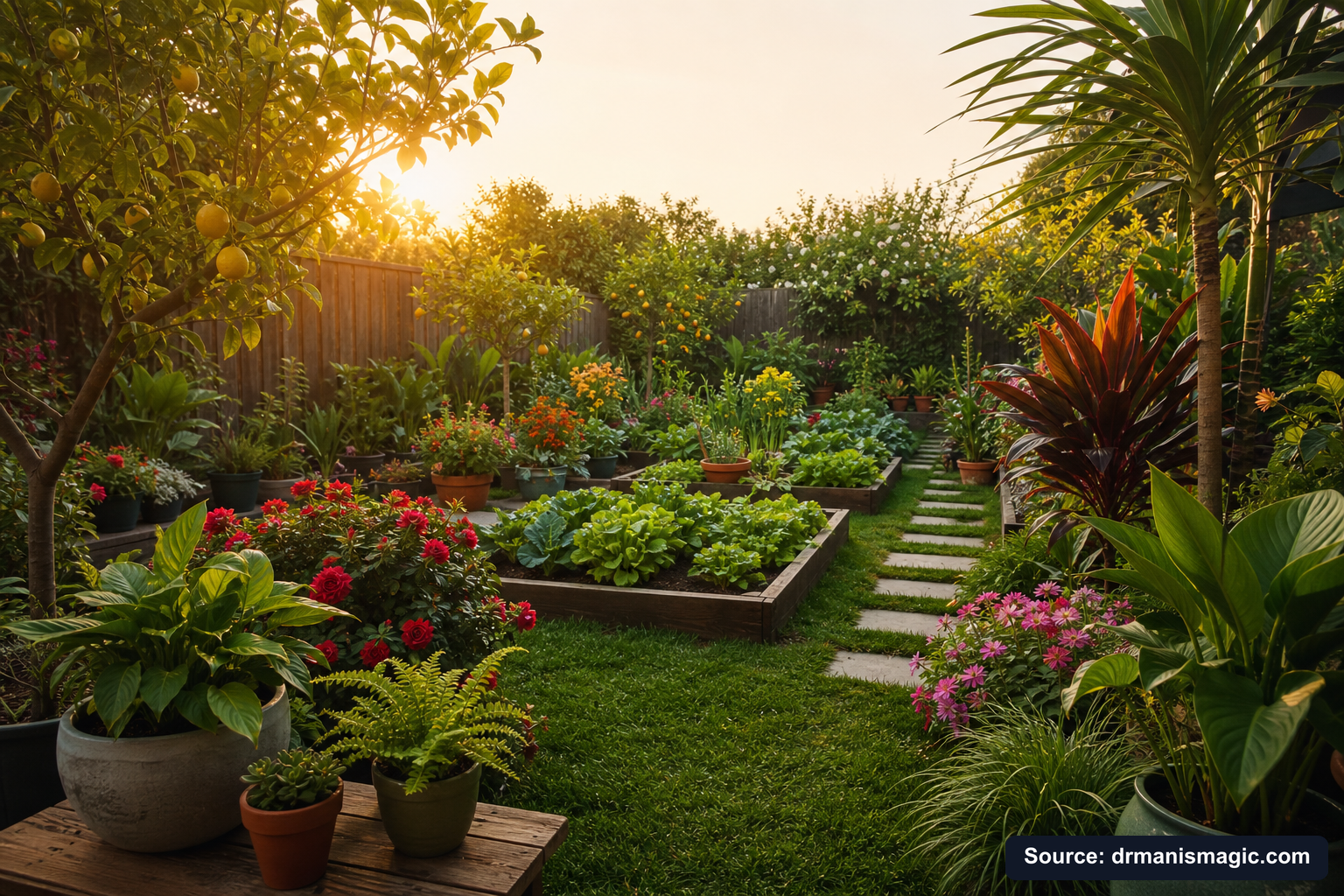
Here is what this looks like in practice for any plant you own right now, whether that is a lemon tree in a pot on your patio, a rose bed in your backyard, a vegetable garden, or an acre of lawn you want to actually walk on barefoot without worrying what chemicals are soaking into your feet.
Get your soil structure right first. If you are potting or repotting, use a mineral-based mix that stays open and drains properly. Bark-heavy potting mix breaks down, compacts, and slowly suffocates the very roots and microbes you are trying to support.
Then inoculate. Add live, full-spectrum biology to the root zone. Monthly. Consistently. Not as a one-time fix but as a regular input, just like watering. The soil community needs reinforcement because modern growing environments, chlorinated tap water, past chemical use, sterilized inputs, and salt buildup are all working against it every single day.
Then feed organically. Slow-release, non-salt nutrients that nourish your plant and simultaneously feed the microbial community. No burning. No osmotic shock. No silent massacre of the invisible workforce you just spent weeks rebuilding.
That is the Three Plant Pillars in plain language. It is not complicated. It is just the opposite of what most gardening advice tells you to do, because most gardening advice was written to sell more products, not to build a healthy plant.
We tested this system on over 250,000 trees. We watched trees that should have been written off come back to life. We watched root zones that looked like dead straw develop into dense, white, mycorrhizal-threaded networks within a single growing season. We watched people who had never successfully grown anything discover that they never had a brown thumb. They just had the wrong foundation.
The underground city is real. It is waiting beneath your plants right now, ready to go to work for you. It just needs the right conditions to thrive. And now you know exactly how to give it those conditions.
If you want the full practical guide to getting all three pillars working together, the Free Plant Care Field Guide walks you through everything step by step, from soil setup to monthly microbial feeding to organic nutrition, for any plant you are growing. No guesswork. No jargon. Just what works, in plain language, from a nursery that has grown a quarter million trees and is still at it every day in South Texas.
The best time to plant a tree was ten years ago. The second best time is today. And the best time to start feeding what is beneath it? That is right now.
Frequently Asked Questions
You just learned that there is a living city beneath your plants. Now you probably have questions. Good. These are the same questions Dr. Mani has been answering for over 30 years, tested on more than 250,000 trees at US Citrus Nursery in South Texas. Read these carefully. The answers could change everything about how your garden grows.
What is the underground fungal network beneath plants actually called?
It is called a mycorrhizal network. Fungi grow tiny threads called hyphae that weave through the soil and attach directly to plant roots. These threads act like extra roots, pulling in water and nutrients the plant cannot reach on its own. In exchange, the plant feeds the fungus sugars. It is a real partnership, and about 80% of all land plants depend on it. Without it, your plant is working alone against impossible odds.
Is the "wood wide web" real or just hype?
The fungal network is real. Plants do share nutrients and chemical signals through it. But the headlines make it sound simpler than it is. The full system includes bacteria, fungi, protozoa, and nematodes all working together. Think of it less like a single internet cable and more like a whole city with roads, workers, and trade routes. Dr. Mani calls this the soil food web, and it is the living engine behind every healthy plant he has ever grown.
What kills the fungal network in my soil?
Salt-based synthetic fertilizers are the biggest killers. They burn the microbes that build and maintain the network. Fungicides and pesticides wipe out the fungi directly. Even cheap potting mixes made from pine bark and sawdust rot over time, collapsing the structure microbes need to live. Dr. Mani watched this happen for decades before he cracked the code. The fix starts with stopping the damage first, then rebuilding with the right inputs.
How do I know if the fungal network in my soil is broken?
Look at your plant. Slow growth, yellowing leaves, poor fruit, and constant pest problems are all signs the underground city is struggling. Soil that stays soggy, crusts on top, or smells sour is another warning. If you have used synthetic fertilizers or store-bought potting mix for years, the network is likely damaged. The good news is it can be rebuilt. Dr. Mani proved that on over 250,000 citrus trees, and the same approach works for any plant you grow.
What kind of fungi actually live underground near plant roots?
The most important ones for gardeners are mycorrhizal fungi. They connect directly to roots and expand the plant's reach for water and nutrients. Below ground you also find bacteria, beneficial nematodes, and protozoa all working together. Famous underground fungi like truffles and the massive honey mushroom exist too, but the everyday heroes are the microscopic mycorrhizae quietly feeding your tomatoes, fruit trees, houseplants, and lawn grass right now, or trying to if your soil will let them.
Can I add live fungi and microbes back to damaged soil?
Yes, but most products on store shelves are dead before you open them. Dried powders and smelly liquid inoculants usually contain microbes that cannot survive the bottle. Dr. Mani spent years solving this exact problem. His Plant Super Boost uses a special all-natural stabilization method to keep live bacteria, fungi, and mycorrhizae alive and active until they reach your roots. It does not smell bad either. Just mix it with water and pour it on. Your soil food web starts rebuilding right away.
What are the Three Plant Pillars and how do they support the fungal network?
The Three Plant Pillars are the system Dr. Mani built after 30 years of real-world testing. Pillar One is mineral-based soil that drains well and never rots, so roots and fungi can breathe. Pillar Two is live microbials like Plant Super Boost that bring the fungal network back to life. Pillar Three is organic fertilizer made from crab, kelp, and amino acids that feeds plants slowly without burning the microbes. Together, all three create the living underground city your plants were always meant to have.
About the Author
Dr. Mani Skaria, PhD
Dr. Mani Skaria, PhD, is a plant pathologist and the scientific founder of Dr. Mani's Magic. He earned his doctorate at Purdue University and spent 48 years studying how plants, soil, and living microbes work together, including his years as Professor Emeritus at Texas A&M and as a member of the USDA NAREEE Advisory Board. He invented micro-budding, a method for growing healthier, stronger trees, and has grown more than 250,000 trees on the family farm in Hargill, Texas - US Citrus Nursery. His life's work takes real lab science and practical experience and turns it into simple, safe, organic plant care anyone can use at home.


