


The Role of Fungi in Compost Maturation Explained | Dr. Mani's Magic
The Role of Fungi in Compost Maturation: From Hot Pile to Living Soil
You pull back the tarp on your compost pile and stop dead in your tracks.
There it is. A thick mat of white fuzz spreading across the surface like something out of a science fiction movie. Threads of it lacing through the darker material underneath. Maybe a mushroom or two poking up near the edge. You lean in closer. It smells... earthy. Like a forest floor after rain. But you are not sure. Is this good? Is something wrong? Should you be worried?
Here is what most people do next: they Google it, get seventeen different answers, and either throw the whole pile away or ignore it and hope for the best. Neither option is right. Because what you are actually looking at is one of the most important biological events in all of gardening. Those white threads are fungi doing something that bacteria simply cannot. They are finishing the job. They are turning raw organic matter into something that can genuinely rebuild your soil. And if you understand what they are doing and why, you will never look at a compost pile the same way again.
Key Takeaways
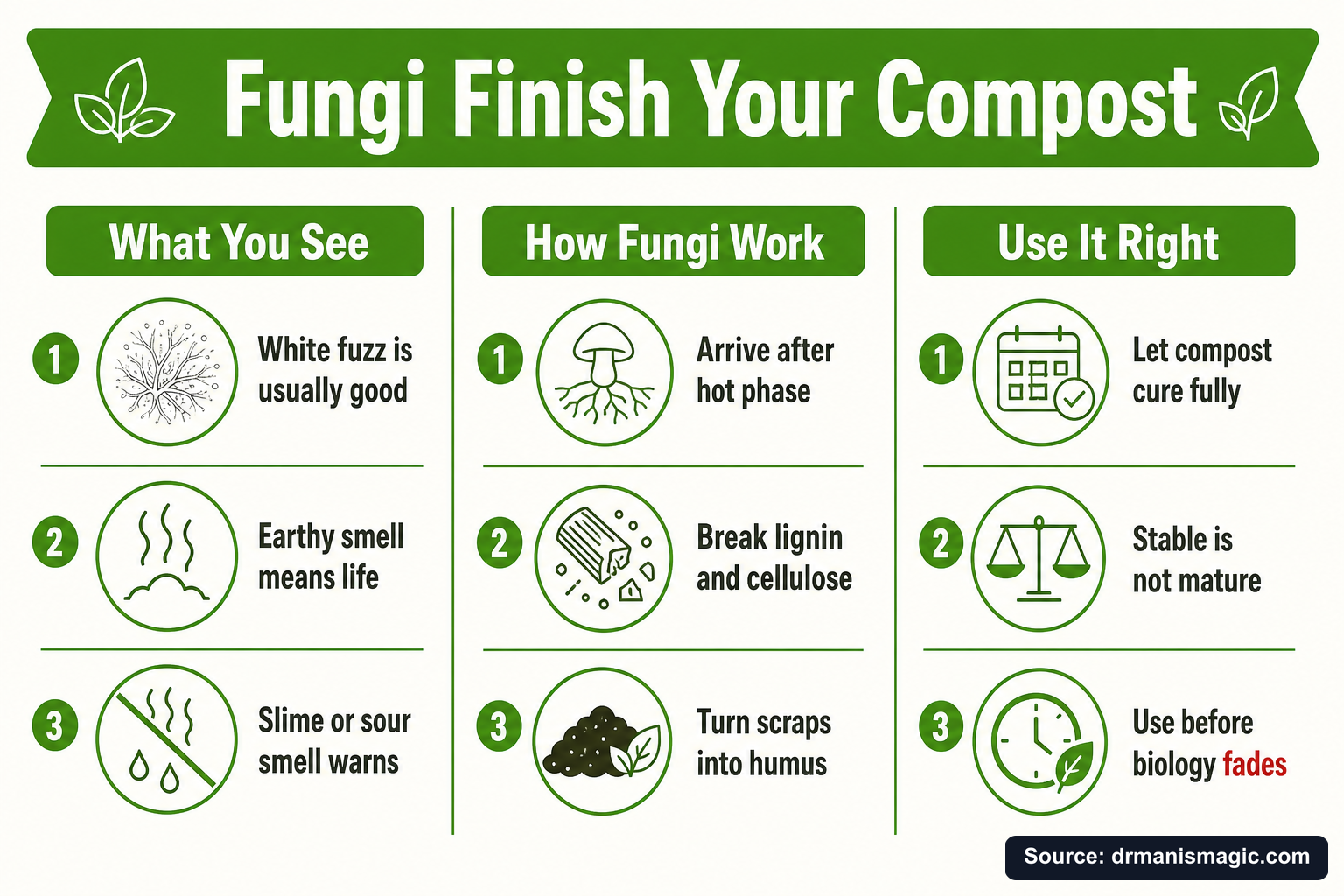
- Compost maturation is not just "cooling down." It is a living, biological succession where fungi take over after bacteria to finish the job.
- Fungi are the primary decomposers of tough plant materials like lignin, cellulose, and woody bark that bacteria cannot break down efficiently.
- White fuzz in compost is almost always a good sign. Sour smells, slime, and reheating are the real warning signs of immature compost.
- Compost "stability" and compost "maturity" are two different things. Both matter before you apply compost to seedlings or roots.
- Most compost fungi are saprophytic decomposers, not mycorrhizal fungi. Do not assume your compost is giving plant roots a mycorrhizal boost.
- Living compost biology degrades fast after bagging, drying, or exposure to heat and salts. Viability at the time of use is what matters.
- The Three Plant Pillars, including live microbials, mineral-based soil, and organic fertilizer, give every plant the biological foundation it needs to thrive.
What Is the Role of Fungi in Compost Maturation, Really?
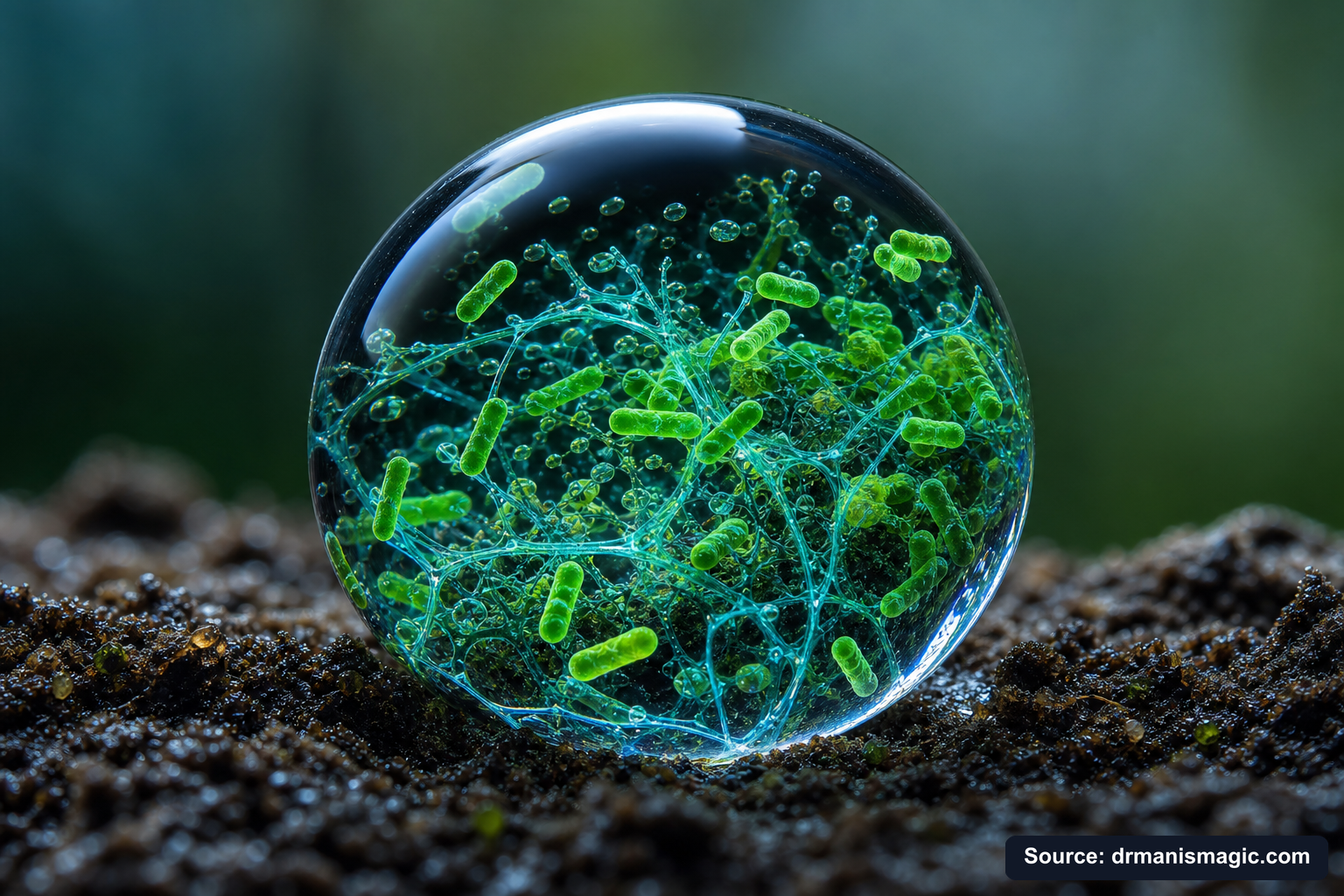
Quick Answer: Fungi break down the toughest organic materials in compost, including lignin, cellulose, and woody residues, that bacteria cannot efficiently decompose. During the curing phase, fungi transform raw, unstable organic matter into stable, humus-like material that rebuilds soil structure, suppresses disease, and feeds the wider soil food web.
Fungi are the cleanup crew that arrives after the heat dies down.
To understand why, you need to see the whole picture. Compost does not happen all at once. It moves through stages. Cornell University's composting program describes three broad phases: an early stage where bacteria devour the easy stuff like sugars and simple proteins, a hot thermophilic stage where temperatures can hit 140 degrees Fahrenheit or higher as bacteria go into overdrive, and a long, slow curing phase where the real transformation happens.
That curing phase is where fungi take the lead.
Bacteria are fast and powerful. They generate the heat that kills weed seeds and pathogens. But bacteria have a weakness. They struggle with the tough, fibrous compounds in plant material. Lignin, the compound that makes wood hard. Cellulose and hemicellulose, the structural scaffolding of leaves, stems, and bark. Bacteria tap out on these materials. Fungi do not.
Fungi produce specialized enzymes like lignin peroxidase and cellulase that physically dismantle these rigid structures. Molecule by molecule, they break down what bacteria left behind. The result is a darker, crumbly, earthy-smelling material that looks and behaves like the rich topsoil of a healthy forest floor. That material is sometimes called humus-like stabilized organic matter, and it is the gold standard of finished compost.
At our nursery in South Texas, where we have grown over 250,000 citrus trees, we watched this process play out in the compost that feeds our Plant Super Boost microbial system. The biology that works in a great compost pile is the same biology that works in a living soil. Fungi are not optional players. They are essential to the final act.
What Are the Three Stages of Compost and When Do Fungi Appear?
Quick Answer: Compost moves through a mesophilic warm-up stage, a thermophilic hot stage dominated by bacteria, and a curing stage where fungi and actinomycetes take over. Fungi become most active and visible during and after the curing stage, especially when woody or fibrous materials are present.
Think of compost like a relay race. Different runners carry the baton at different points.
Stage one is the starting gun. Mesophilic bacteria, the kind that prefer moderate temperatures, flood in first. They eat the fast, easy food. Sugars. Simple starches. Soft green plant material. The pile heats up fast.
Stage two is the sprint. Temperatures climb above 104 degrees Fahrenheit and thermophilic bacteria take over. These heat-loving microbes are the heavy lifters of early decomposition. They break down proteins, fats, and some cellulose. The pile steams. It shrinks. Weed seeds and pathogens die. This is the phase most people think of when they think of compost.
Stage three is the long game. The heat fades. Temperatures drop back toward ambient. Most thermophilic bacteria slow down. And now, fungi and actinomycetes move to center stage.
Fungi tolerate drier conditions. They tolerate lower pH levels. And crucially, they are adapted to the tough, fibrous residues that bacteria left behind. Their thread-like structures, called hyphae, physically penetrate wood chips, bark pieces, dried leaves, and straw, threading through the material and releasing enzymes directly where they are needed. This is not surface-level decomposition. It is deep, structural breakdown at the molecular level.
According to the Cornell Composting resource on microorganisms, fungi are particularly valuable in the curing phase because they handle materials that resist bacterial decomposition, contributing to the formation of stable organic matter that improves long-term soil structure.
| Compost Stage | Temperature Range | Primary Microbes | What Gets Broken Down | Visible Signs |
|---|---|---|---|---|
| Early Mesophilic | 50 to 104°F | Mesophilic bacteria | Sugars, starches, soft green matter | Pile warms up, shrinks slightly |
| Thermophilic (Hot) | 104 to 160°F | Thermophilic bacteria | Proteins, fats, some cellulose | Steam, rapid shrinkage, dark color developing |
| Curing and Maturation | Ambient to 85°F | Fungi, actinomycetes, mesophilic bacteria return | Lignin, cellulose, hemicellulose, bark, woody residues | White fuzz, gray threads, earthy smell, mushrooms possible |
Is the White Fuzz in Compost Good or Bad?
Quick Answer: White fuzz in compost is almost always beneficial. It is most likely fungal mycelium or actinomycetes, both of which are key decomposers during the curing phase. The real warning signs are sour or ammonia smells, slimy texture, and a pile that reheats after it appeared finished.
White fuzz means biology is working. Full stop.
Those white threads are either fungal mycelium, the physical body of a fungus growing through organic matter, or actinomycetes, which are filamentous bacteria that look almost identical to fungi but are bacteria. Both are doing the same essential job: breaking down tough plant polymers and turning them into stable, plant-available organic matter.
Actinomycetes are the reason finished compost smells like a forest. That deep, rich, earthy scent comes directly from a compound called geosmin that actinomycetes produce. When your compost smells like rain on dry ground, that is actinomycetes telling you they are healthy and active.
Here is the diagnostic table you have been looking for. Use this the next time your compost looks or smells different.
| What You See or Smell | What It Means | What To Do |
|---|---|---|
| White fluffy threads or fuzz | Beneficial fungal mycelium or actinomycetes. Curing is active. | Nothing. This is exactly right. |
| Gray-white powdery threads | Actinomycetes working on tough residues | Nothing. Earthy smell confirms health. |
| Mushrooms growing in pile | Saprophytic fungi decomposing woody material | Nothing. A sign of healthy curing phase. |
| Rich, earthy forest smell | Actinomycetes and healthy fungal activity | Nothing. Your compost is maturing well. |
| Sour or vinegar smell | Anaerobic conditions, volatile fatty acids building up. Pile too wet or compacted. | Turn pile, add dry carbon material like leaves or straw, improve aeration. |
| Ammonia smell | Too much nitrogen, incomplete decomposition, immature compost | Add carbon materials. Do not use on seedlings yet. Keep curing. |
| Dark slime or wet mats | Anaerobic decomposition, not fungal growth | Turn pile immediately, add dry material, check drainage. |
| Pile reheats after cooling | Unstable compost. Easily degradable carbon remains. Not mature. | Continue curing. Do not apply to seedling roots yet. |
| Salt crust on surface | Excess soluble salts from inputs or over-concentrated urine, manure | Leach with water. Check electrical conductivity before using near sensitive plants. |
What Is the Difference Between Compost Stability and Compost Maturity?
Quick Answer: Stability means the compost has stopped actively heating because easily degradable carbon has been consumed. Maturity means it is also free of compounds that harm plant roots, like ammonia, volatile fatty acids, and unstable organic acids. Stable compost can still be immature and phytotoxic to seedlings.
This is the part that trips up even experienced gardeners.
You can have compost that looks done. It is dark. It does not smell terrible. It stopped heating up weeks ago. And if you use it on young seedlings, they die.
That happens because stability and maturity are not the same thing.
Stability is a measure of biological activity. A stable compost pile is not generating significant heat because bacteria have consumed most of the easily available carbon. Think of it like a fire burning down to coals. The intense flames are gone, but things are still happening.
Maturity is a measure of chemical safety. Mature compost has low levels of compounds that are toxic to plant roots. These include volatile fatty acids, free ammonia, unstable organic acids, and in some cases, excessive soluble salts. These compounds build up during active decomposition and break down only during extended curing. They are invisible. You cannot see them. But roots can feel them.
According to the University of Maryland Extension, a simple seed germination test remains one of the most reliable indicators of compost maturity. If seeds germinate and grow normally in a compost-amended mix, the compost is likely mature enough for use.
Here is a practical maturity checklist before you apply compost to any seedlings, vegetables, or container plants:
- Temperature test: The pile should not reheat more than 10 degrees above ambient after being turned and moistened.
- Smell test: Should smell earthy, like a forest floor. Not sour. Not like ammonia. Not like sewage.
- Texture test: Should be dark, crumbly, and loose. Not slimy, not clumped, not stringy with undecomposed material.
- Seed germination test: Radish or cress seeds should germinate at the same rate in a compost-amended mix as in clean potting medium.
- Time check: Has the pile been curing for at least four to eight weeks after the thermophilic phase ended? Longer is better for high-wood or high-manure inputs.
- Moisture check: Should feel like a wrung-out sponge. Not dripping wet. Not bone dry.
- Intended use check: Seedlings and roots of young plants need fully mature compost. Established trees and lawn areas can tolerate slightly less mature material applied as top dressing.
Do Compost Fungi Include Mycorrhizal Fungi That Benefit Plant Roots?
Quick Answer: Most fungi active in compost are saprophytic decomposers, not mycorrhizal fungi. Saprophytic fungi break down dead organic matter. Mycorrhizal fungi form living partnerships with plant roots. These are different species with different jobs. Finished compost does not reliably deliver meaningful mycorrhizal colonies to your plants.
This is one of the biggest misconceptions in gardening, and it costs people real results.
When you see white mycelium in your compost pile and assume it is mycorrhizal fungi that will colonize your plant roots, you are making a logical but incorrect leap. Most fungal species active in a compost pile are saprophytes. Their job is to decompose dead material. They live in the compost. They are adapted to compost. They do not necessarily form the root-colonizing partnerships that mycorrhizal fungi form.
Mycorrhizal fungi, like the species in the Glomus and Rhizophagus families, need living plant roots to survive. They form a physical connection with root cells and extend the root network dramatically, sometimes by 700 times the surface area of the roots alone. They mine phosphorus, zinc, and other minerals from the soil in exchange for sugars from the plant. It is one of nature's most powerful partnerships.
But this partnership requires specific, living mycorrhizal inoculant applied directly to the root zone. Finished compost, while excellent for soil structure and general microbial diversity, does not reliably deliver this.
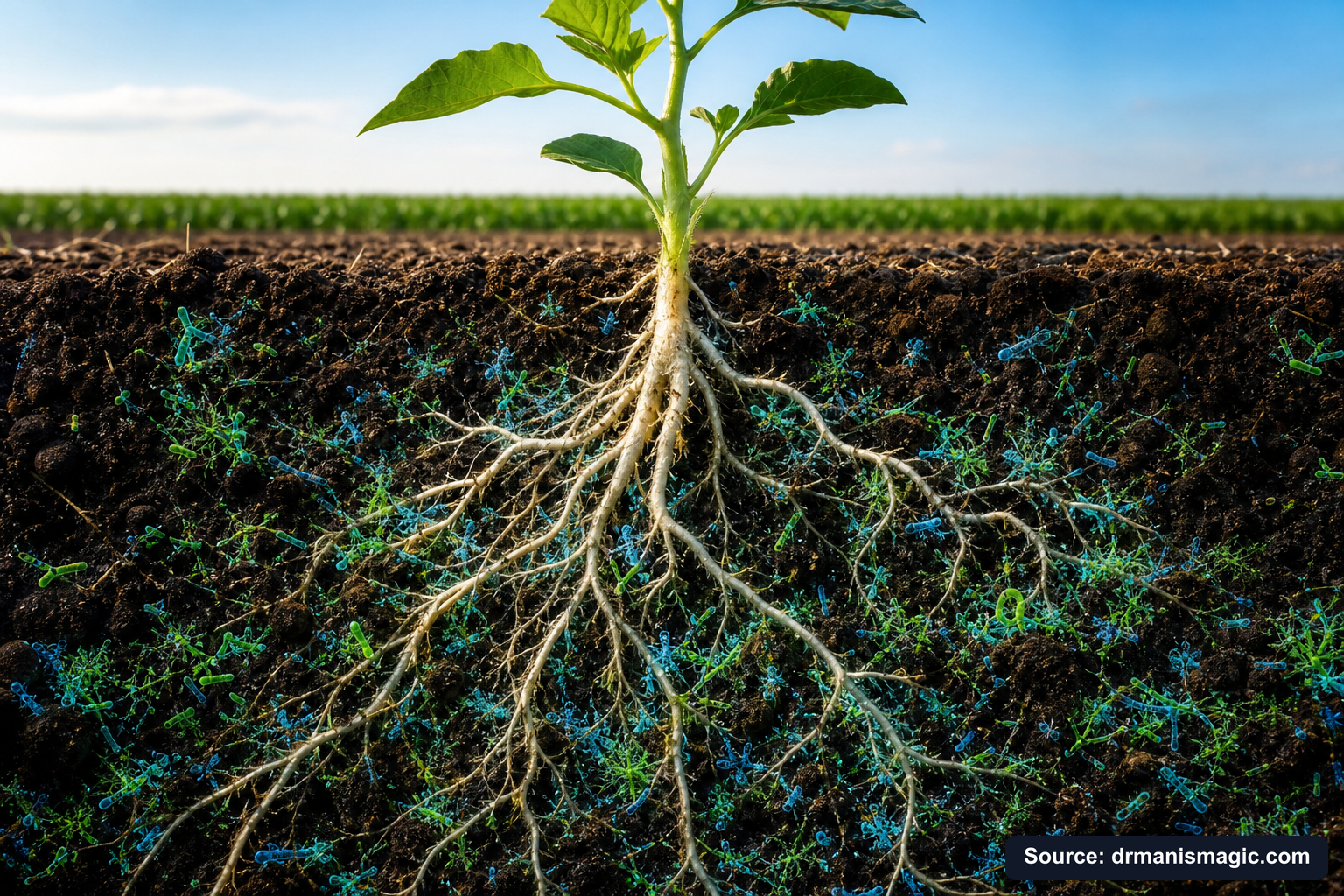
If you want white fuzz around your plant roots like you see on weeds that grow without any help at all, you need to introduce mycorrhizal fungi directly. That is exactly why Plant Super Boost contains 400 to 500 species of fungi including mycorrhizae, harvested from living compost and stabilized using an all-natural method so they arrive at your plant roots genuinely alive and ready to work.
See also: The Hidden Reason Synthetic Fertilizers Cause Root Rot
You Never Had a Brown Thumb.
You were handed the wrong tools. This free guide hands you the right ones.
You watered it. You fed it. It died anyway.
It was never you. It was the dirt, the salt food, and the bad advice.
This guide shows you what really went wrong, and how to fix it for good.
- Why your plants really died, and why it was never your fault
- The salt hiding in your plant food that quietly burns the roots
- The hidden killer in almost every bag of store soil
- The tiny helpers that grow a whole forest for free
- The rescue trick that brings a half dead plant back to life

How Do Fungi Connect to the Broader Soil Food Web?
Quick Answer: Fungi are not working alone. They are one layer of a living food web that includes bacteria, protozoa, and nematodes, all cycling nutrients, suppressing pathogens, and building soil structure together. Compost that has been fully matured by fungi feeds and reactivates this entire web when applied to soil.
Picture a city. Not a quiet suburb. A real, loud, living city with workers at every level doing specific jobs.
That is your soil food web.
Bacteria are the foundation workers. They decompose organic matter, fix nitrogen from the air, and cycle nutrients into plant-available forms. A single teaspoon of healthy soil can contain over a billion bacterial cells. They are everywhere and they do almost everything at the base level.
Fungi are the architects. Their hyphae thread through the soil, physically binding particles together into aggregates. Those aggregates create air pockets and drainage channels that roots need to breathe. One specific compound that mycorrhizal fungi produce, called glomalin, acts like a biological glue that holds soil structure together for decades. No fungi, no structure. Compacted, waterlogged soil is almost always a sign of missing fungal biology.
Protozoa are the recyclers. They eat bacteria. When they do, they release nitrogen in a form that plants can absorb immediately. Without protozoa grazing on bacteria, nitrogen stays locked inside bacterial cells instead of flowing to roots.
Nematodes, the beneficial kind, are the regulators. They eat bacteria, fungi, and other nematodes, keeping populations balanced and releasing nutrients as they feed. They also suppress certain root pathogens by competing with them for space and resources.
| Soil Web Member | Primary Job | What They Give Your Plant | What Destroys Them |
|---|---|---|---|
| Bacteria | Decompose organic matter, fix nitrogen, cycle nutrients | Available nitrogen, phosphorus, micronutrients | Salt-based fertilizers, herbicides, fungicides |
| Fungi (saprophytic) | Break down lignin, cellulose, woody residues | Stable humus, soil structure, carbon cycling | Synthetic antifungals, tillage, compaction, drought |
| Fungi (mycorrhizal) | Colonize roots, extend root network, mine minerals | Phosphorus, zinc, water, disease resistance | Phosphorus overload, salt fertilizers, fungicides |
| Actinomycetes | Break down chitin, cellulose, tough residues | Earthy-smelling, mature compost. Pathogen suppression. | Waterlogging, highly acidic conditions |
| Protozoa | Graze on bacteria, release nitrogen | Immediately plant-available nitrogen near roots | Pesticides, drying out, salt stress |
| Beneficial Nematodes | Regulate populations, suppress root pathogens | Nutrient cycling, pest suppression | Nematicides, heavy tillage, salt accumulation |
Mature compost, the kind that has gone through full fungal and actinomycete curing, does not just add organic matter to your soil. It reseeds all of these trophic levels. It feeds the bacteria that feed the protozoa that feed the plants. It reactivates a system that salt-based fertilizers and synthetic chemicals have been quietly dismantling for decades.
At US Citrus Nursery, where we have grown and shipped over 250,000 trees to home growers across America, we watched this play out in real time. Trees in living, biologically active soil grew faster, fruited earlier, and resisted disease without chemical intervention. Trees in sterile, salt-treated soil stalled out. They looked okay on the surface. But they were not thriving. They were surviving. There is a massive difference.
Why Does Live Microbial Biology Die Before It Reaches Your Plants?
Quick Answer: Most commercial microbe products are either dried lab-grown powders with poor survival rates or liquid products that go anaerobic and smelly during shipping. Heat, salt, oxygen deprivation, and time all kill microbial viability. The only way to deliver genuine benefit is genuinely live biology stabilized by a method that keeps microbes active without letting them decompose.
Here is the ugly truth the microbe product industry does not want you to think about.
There are three ways most microbial products are made. None of them work as well as they claim.
The first is dried or powdered lab-grown microbes. A factory brews specific bacteria or fungi in a vat, dries them into a powder, and hopes the spores reactivate when you add water. We have tested dozens of batches of these products on our citrus trees. We have seen no meaningful results. The organisms simply do not survive the process in sufficient numbers or vitality to make a difference in the root zone.
The second is liquid compost tea, either fresh or bottled. Fresh compost tea, made within 24 hours and actively aerated, can be excellent. But it is time-sensitive. After about 24 hours, oxygen runs out. The microbes shift into anaerobic mode. They start dying. The liquid starts to smell. By the time a bottled product ships from a warehouse, travels across the country, and sits on your shelf, the biology that was supposed to help your plant is mostly dead. The telltale sign is the smell. If a liquid microbial product smells like sewage, you are essentially pouring a bottle of rotting organic matter on your plants.
The third is lactobacillus, the same bacteria in your yogurt. Easy to grow. Stays alive. But it crowds out the beneficial microbes you actually need. It does not belong in soil.
This is the gap that Dr. Mani Skaria and a world-renowned compostologist, who was actually blacklisted by major chemical companies for getting results they could not explain, solved together. Through a proprietary, all-natural stabilization method, the full spectrum of living microbes harvested from active compost can be captured and kept alive without going anaerobic. No stench. No dying organisms. Just genuinely active biology that you can see moving under a microscope.
That is the foundation of the Plant Super Boost formula. Over 2,000 species of bacteria. 400 to 500 fungal species including mycorrhizae. Plus protozoa and beneficial nematodes. Harvested from compost, not a laboratory checklist. Stabilized to stay alive in your hands.
| Microbe Product Type | Viability at Use | Microbial Spectrum | Smell | Real-World Results |
|---|---|---|---|---|
| Dried or powdered lab microbes | Very low | Narrow, selected species | Minimal | Little to no benefit observed in testing |
| Rehydrated dried microbes in liquid | Low | Narrow | Minimal | Same issue as powder; avoid |
| Compost tea, fresh under 24 hours, aerated | Moderate | Broad but variable | Earthy to slightly sour | Good when used immediately; impractical for most growers |
| Bottled compost tea, older than 24 hours | Low, mostly anaerobic | Partial, degraded | Strong, foul odor | Some humic/fulvic acid benefit but biology largely dead |
| Lactobacillus-based products | High | Very narrow | Sour | Crowds out beneficial microbes; not recommended for soil |
| Plant Super Boost (stabilized, full-spectrum) | High, genuinely live | 2,000+ bacteria, 400-500 fungi including mycorrhizae, protozoa, nematodes | Earthy, not foul | Visible under microscope; proven across 250,000+ trees |
Can Compost and Live Microbes Help Restore Damaged, Sterile, or Salt-Burned Soil?
Quick Answer: Yes, but recovery takes time and repeated application. One dose of biology into severely depleted soil is not enough. Damaged soil needs consistent microbial inputs, removal of salt-based fertilizers and synthetic chemicals, and the right physical soil structure to let the food web rebuild. Recovery is real, but it is a process, not an event.
Imagine you have been given a dried-out, sun-cracked piece of land. Nothing grows. The soil is gray, compacted, and it smells like nothing at all. No earthy scent. No life. Just mineral dust.
That is what decades of synthetic fertilizer use does to a garden.
Salt-based fertilizers, the kind that dominate big box store shelves and professional lawn care programs, are essentially dissolved mineral salts. When you apply them, they create a high-salt environment around roots and in the soil. Bacteria and fungi cannot survive high salt concentrations. They die. And when the microbes die, the soil structure collapses. Glomalin stops being produced. Aggregates break apart. Water ponds instead of draining. Roots suffocate.
The plants look green for a few weeks because the salt forces a quick nutrient hit. But the foundation is crumbling underneath. Within months, the plant stalls. Within a year or two, it is circling the drain. And the gardener buys more fertilizer, wondering why nothing is working.
This is not a gardening failure. It is a biology failure. And the fix is not more chemicals. It is biology back in the soil.
Here is a practical recovery plan for soil that has been chemically damaged, compacted, or biologically depleted:
- Stop the damage first. Eliminate or dramatically reduce synthetic salt-based fertilizers, herbicides, and broad-spectrum fungicides. You cannot rebuild a biology you are actively destroying.
- Improve physical structure. If the soil is compacted, aerate it. If you are in containers, evaluate whether the potting mix has broken down into a dense, waterlogged sludge. A mineral-based soil that does not decompose gives roots air to breathe and microbes a habitat to colonize. Learn about Super Soil and what a permanent, mineral-based growing medium does for root health.
- Introduce full-spectrum live biology. Apply a genuine, living microbial inoculant monthly. Not dried powder. Not a stinky anaerobic liquid. Genuinely alive, full-spectrum biology that includes bacteria, fungi, mycorrhizae, protozoa, and nematodes.
- Feed the biology with organic inputs. Organic fertilizers from sources like crab meal, kelp, and amino acids feed both the plant and the microbes simultaneously. Salt-based synthetics feed the plant while killing the biology that the plant depends on long-term.
- Be consistent and patient. Heavily damaged soils, especially those treated with herbicides like glyphosate or drenched with synthetic fungicides, need multiple months of consistent microbial input before diversity rebounds meaningfully. Think of it like rebuilding your gut after a course of antibiotics. One probiotic is not enough. A sustained, daily habit is what shifts the system.
- Apply mature compost as a top dressing. Fully matured compost, the kind that has gone through complete fungal and actinomycete curing, seeds the soil with diverse organic matter and microbial populations. Apply two to three inches to garden beds in spring and fall.
- Monitor results, not just with your eyes. Watch for earthworm activity. Look for the earthy smell returning. Notice whether water infiltrates or ponds. These are biological indicators that the food web is coming back online.
The truth that the big chemical companies spent decades trying to bury is simple. Plants do not need us to feed them directly. Plants need us to feed the soil, and the soil feeds them. That is how a forest grows millions of tons of biomass every year without a single bag of granular fertilizer. The Three Plant Pillars, mineral soil that does not decompose, live microbials that replicate the natural underground economy, and organic fertilizer that feeds biology instead of burning it, are the practical framework Dr. Mani developed after 35 years of testing, first in academic research, then on 250,000 trees at US Citrus Nursery.
To see exactly how the Pillars work together as a complete system, visit the Three Plant Pillars bundle builder.
What Can You Do Right Now to Put Fungal Biology to Work in Your Garden?
Quick Answer: Start by stopping what kills biology: salt fertilizers, synthetic fungicides, and compacted soil. Then add genuinely live microbials to your root zone monthly, apply mature compost as a top dressing, and switch to an organic fertilizer that feeds your biology instead of burning it. Results start within weeks when the foundation is right.
You do not need to build your own compost pile to access the power of fungi and the soil food web.
You do not need to brew compost tea at midnight and apply it within the hour before it goes anaerobic. You do not need a PhD in soil science or a barn full of equipment.
What you need is a system that mirrors what healthy natural soil already does, delivered in a practical form you can use on any plant, in any container, in any garden, on any lawn.
That is exactly what Dr. Mani built. And it works on your lemon tree in a pot on the back porch. It works on the rose bed along your fence. It works on the tomatoes in your raised bed and the grass in your front yard. Because the biology is universal. The Three Plant Pillars are universal. The fungi, bacteria, protozoa, and nematodes do not care what kind of plant they are helping. They just need the right conditions to thrive.
One more thing worth saying plainly. People ask Dr. Mani all the time what the number one thing is they want from their garden. The answer is almost always the same. They want to harvest something from a tree or a garden they planted with their own hands. They want to see it happen while they still can. That is not a trivial desire. That is something primal. Something real. And the cruel truth is that years spent with the wrong inputs, the wrong soil, the wrong approach, are years you cannot get back. Money lost on cheap fertilizers can be replaced. Time cannot.
The second best time to get the biology right in your soil is today.
If you want the complete picture of how mineral soil, live microbials, and organic fertilizer work together to give any plant the foundation it needs, download the free Plant Care Field Guide from Dr. Mani's Magic. It is the same knowledge we use in our nursery, written in plain language, and it is yours at no cost. Because the goal has always been the same: help you grow something beautiful, and make it last.
Frequently Asked Questions
Fungi in your compost pile are doing something incredible. They are finishing the job that bacteria started. Understanding what they do, and why it matters, is the key to building soil that actually makes your plants thrive. These are the questions gardeners ask most when they see that white fuzz and wonder what is really going on.
What is the role of fungi in compost maturation?
Fungi are the cleanup crew that arrives after the heat dies down. Bacteria break down the easy stuff fast. But fungi do the heavy lifting on tough materials like lignin, cellulose, and woody bark. They use special enzymes to break those hard compounds apart piece by piece. The result is dark, crumbly, earthy compost that rebuilds soil structure and feeds your plants from the ground up. Without fungi, your compost never truly finishes.
Is white mold in compost a good or bad sign?
White mold in your compost pile is almost always a great sign. Those white threads are fungal mycelium doing exactly what they should. They are breaking down tough organic matter and turning it into something rich and alive. The smell tells you a lot too. Earthy and forest-like means things are going well. Sour, slimy, or rotten smells are the real warning signs. White fuzz is your compost pile working the way nature intended.
What are the four stages of composting?
Composting moves through four stages. First, mesophilic bacteria start breaking down simple sugars and starches at moderate temperatures. Second, the pile heats up fast in the thermophilic stage, killing pathogens and weed seeds. Third, the pile cools and tougher materials start breaking down. Fourth, the curing stage begins. This is where fungi take over and slowly transform raw material into stable, humus-like soil. That final stage is where the real magic happens for your plants.
How do you introduce fungi into a compost pile?
The best way to encourage fungi is to give them the right conditions. Add woody, carbon-rich materials like dry leaves, straw, and small wood chips. Keep the pile moist but not soaking wet. Let it cool down before you expect fungi to show up, because they thrive after the hot phase ends. You can also mix in finished compost from a previous batch to seed new fungal activity. Healthy fungi follow healthy inputs. Synthetic fertilizers and salt-based chemicals will kill them off fast.
Do fungi in compost become mycorrhizal fungi for plant roots?
This is one of the biggest misunderstandings in gardening. Most fungi in a compost pile are saprophytic decomposers. They break down dead organic matter. They are not the same as mycorrhizal fungi that bond with living plant roots. Finished compost adds organic matter and feeds the soil food web, but it does not deliver the live mycorrhizal fungi your roots actually need. That is why Dr. Mani's Plant Super Boost exists. It delivers live, stabilized bacteria, fungi, and mycorrhizae directly to your plant's root zone.
Do potato peels and food scraps in compost attract rats?
Yes, food scraps like potato peels can attract rodents if your pile is open and poorly managed. The key is to bury scraps deep in the center of the pile, at least six to twelve inches down. Use a closed bin or a tumbler with a solid base if rodents are a concern in your area. Hot composting speeds up decomposition so food scraps break down before pests find them. A well-balanced pile with plenty of carbon-rich browns heats up fast and leaves less for rodents to find.
Why does finished compost still fail to grow healthy plants?
Compost improves soil, but it does not cover all three of what Dr. Mani calls the Plant Pillars. Compost alone does not give you a mineral-based soil structure that drains perfectly and never compacts. It does not deliver live, stabilized microbials that bond with roots and fight off disease. And it does not replace a slow-release organic fertilizer built from crab, kelp, and amino acids. Dr. Mani tested this system across more than 250,000 trees. Compost is a piece of the puzzle, not the whole answer.
About the Author
Dr. Mani Skaria, PhD
Dr. Mani Skaria, PhD, is a plant pathologist and the scientific founder of Dr. Mani's Magic. He earned his doctorate at Purdue University and spent 48 years studying how plants, soil, and living microbes work together, including his years as Professor Emeritus at Texas A&M and as a member of the USDA NAREEE Advisory Board. He invented micro-budding, a method for growing healthier, stronger trees, and has grown more than 250,000 trees on the family farm in Hargill, Texas - US Citrus Nursery. His life's work takes real lab science and practical experience and turns it into simple, safe, organic plant care anyone can use at home.


