


Saprophytic vs Mycorrhizal Fungi: What Every Gardener Must Know | Dr. Mani's Magic
The Difference Between Saprophytic and Mycorrhizal Fungi (And Why It Changes Everything About How You Grow)
You pull a plant out of its pot. Maybe it's been struggling for weeks. Yellow leaves. Weak stems. Fruit that never came. And there, clinging to the roots, you notice something strange. A white, fuzzy web. Threads so fine they almost look like cobwebs.
Is that killing your plant? Saving it? Is it the reason your plant is sick — or the reason it's still alive at all?
Most gardeners freeze right there. They Google "white fungus in soil." They get ten different answers. Some say dump it. Some say it's fine. Nobody explains why. Here's the truth: not all fungi do the same job. Some fungi break down dead stuff in your soil. Others form a living partnership directly with your roots. And some — a small but important group — are outright killers. Knowing the difference isn't just interesting. It's the reason some plants explode with growth while others slowly die no matter how much you water and fertilize them.

Plant Super Boost
Key Takeaways
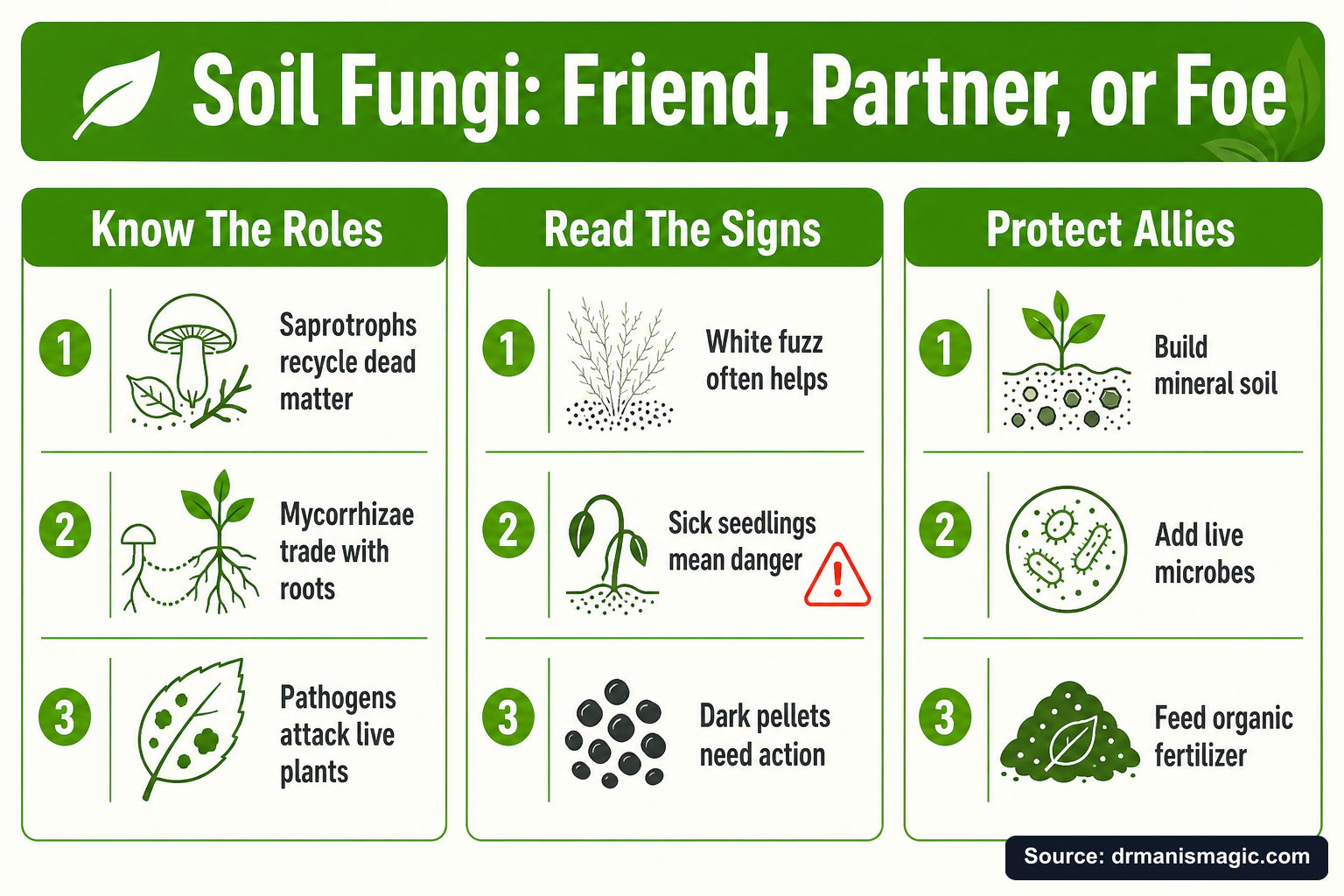
- Saprophytic (saprotrophic) fungi eat dead organic matter and recycle nutrients. They do not partner with living roots.
- Mycorrhizal fungi form a living trade relationship directly with plant roots, extending their reach and delivering nutrients and water in exchange for sugars.
- Pathogenic fungi infect and damage living plants. White fuzz in soil is not automatically a disease — context matters.
- Roughly 80% of all land plants form mycorrhizal partnerships, including most trees, vegetables, and flowers.
- Synthetic fertilizers, fungicides, and herbicides can wipe out beneficial fungi, leaving roots defenseless.
- Most bottled microbe products on the market contain dead or dying organisms and deliver little real benefit to your plants.
- The Three Plant Pillars — mineral-based soil, live microbials, and organic fertilizer — work together to rebuild and protect the invisible workforce your plants depend on.
What Is the Actual Difference Between Saprophytic and Mycorrhizal Fungi?
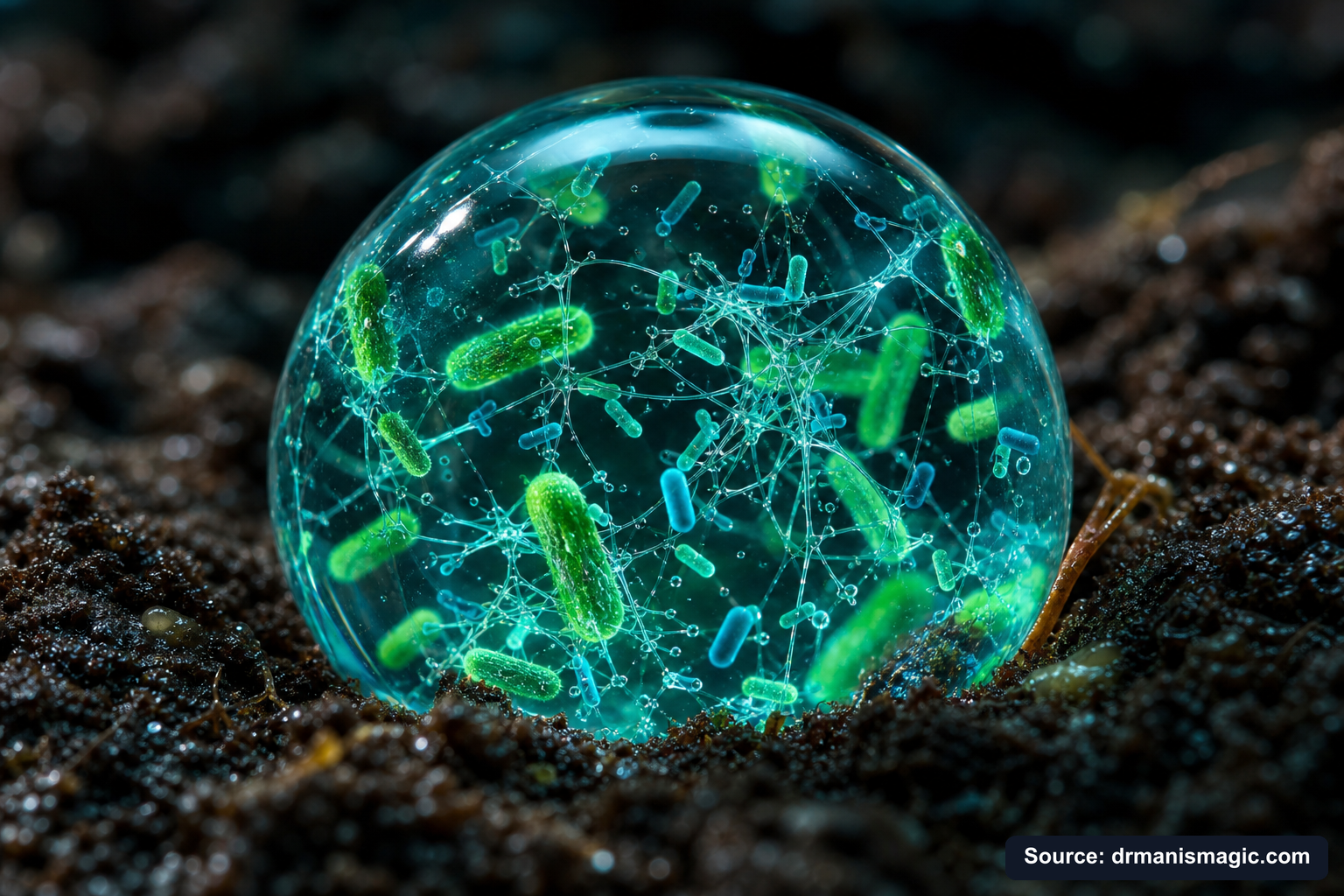
Quick Answer: Saprophytic fungi (more precisely called saprotrophic fungi) feed on dead organic matter and help decompose it into plant-available nutrients. Mycorrhizal fungi bond directly with living plant roots and trade soil minerals and water for plant sugars. One is a recycler. The other is a root partner. Both are beneficial, but they do completely different jobs.
Think of it this way. Your soil is a city. It needs both garbage collectors and delivery drivers to function.
Saprotrophic fungi are the garbage collectors. They show up wherever something is dead or decaying — a fallen leaf, a wood chip, a piece of bark. They release enzymes that break that dead material apart and turn it back into simple minerals and nutrients the rest of the soil can use. Without them, organic matter just piles up. Nothing gets recycled. The city grinds to a halt.
Mycorrhizal fungi are the delivery drivers. They attach to living roots and build an underground highway system made of microscopic threads called hyphae. These threads reach far beyond where roots could ever grow on their own — sometimes extending the effective root zone by ten times or more. Through this network, they deliver phosphorus, potassium, zinc, copper, magnesium, calcium, iron, and water directly to the plant. In return, the plant sends sugars back down through the roots as payment. It is a genuine trade deal that has been running for over 400 million years, according to research from the University of Minnesota Extension.
One important note on terminology: you will often hear the word "saprophyte" used in gardening. Technically, that word means "rotten plant" in Greek — and it was coined back when scientists thought fungi were a type of plant. They are not. Fungi have their own kingdom entirely. The more accurate modern word is saprotrophic or saprobe. You will still see "saprophytic" everywhere, including on product labels and in garden centers. Just know the precise term is saprotrophic. We will use both throughout this article so you recognize either one.
Is the White Fungus in Your Soil Good or Bad?
Quick Answer: White fungal threads (mycelium) in soil or mulch are almost always saprotrophic fungi doing harmless, helpful decomposition work. They are not the same as mycorrhizae, which are invisible inside roots. The dangerous fungi show different signs: collapsed seedlings, slimy roots, cottony mold with small dark pellets, or sudden wilting in established plants.
This is the question that sends more gardeners spiraling into confusion than almost any other. You see white fuzz in your potting mix or under your wood chip mulch and you panic.
Do not panic. Here is a simple guide.
If the white threads are growing through mulch, compost, or decomposing wood chips and your plant looks fine — that is almost certainly saprotrophic fungi doing their job. They are breaking down the organic matter in your mulch. This is good. It means your mulch is alive and working. The mushrooms that pop up in your garden bed after rain? Same thing. Decomposers. Harmless, often helpful.
If you see white cottony growth at the base of seedlings and the seedlings are falling over and collapsing at the soil line — that is likely damping-off disease, caused by pathogens like Pythium or Rhizoctonia. This is a problem. It signals overwatering, poor drainage, or sterile potting mix with no beneficial biology to compete with the bad guys. The Utah State University Extension notes that damping-off thrives in wet, poorly drained conditions with little microbial competition.
If you see cottony white growth on top of soil with small dark pellets that look like rat droppings — that could be Sclerotinia, a fungal disease that affects many vegetables and flowers. That one needs attention.
Use this quick decision guide:
| What You See | What It Likely Is | Is It a Problem? | What To Do |
|---|---|---|---|
| White threads in mulch or wood chips | Saprotrophic fungi (decomposers) | No — beneficial decomposition | Leave it alone. Add live microbials to support the food web. |
| Mushrooms in garden bed after rain | Saprotrophic fungi fruiting bodies | No — sign of active biology | Leave them. Remove if cosmetically unwanted. |
| Seedlings collapsing at soil line | Damping-off (Pythium, Rhizoctonia) | Yes — pathogenic | Improve drainage. Reduce watering. Add beneficial biology. |
| Cottony growth with small dark pellets | Possible Sclerotinia | Yes — pathogenic | Remove infected material. Improve airflow and drainage. |
| Healthy roots with fuzzy white coating | Possibly mycorrhizal fungi | No — extremely beneficial | Protect it. Never drench with synthetic fungicides. |
| Brown, slimy roots with no white threads | Root rot (Phytophthora, Pythium) | Yes — pathogenic | Fix drainage immediately. Check soil for compaction. See soil recovery steps below. |
What Is the Full Cast of Characters in Your Soil Food Web?
Quick Answer: Your soil is home to bacteria, fungi (both saprotrophic and mycorrhizal), protozoa, nematodes, arthropods, and earthworms, all connected in a living food web. Each group plays a different role. Together they cycle nutrients, suppress disease, build soil structure, and keep roots healthy. Remove any one group and the whole system weakens.
Here is what most gardening content never tells you: fungi do not work alone. They are one part of a massive underground team.
After growing and testing more than 250,000 citrus trees at US Citrus Nursery in South Texas, Dr. Mani Skaria — Professor Emeritus of Plant Pathology, inventor of micro-budding, and founder of Texas's Clean Citrus Program — saw this truth play out in real soil over decades. The plants that thrived were not the ones with the most fertilizer. They were the ones with the most life in the root zone.
Here is a plain-English map of the whole team:
| Organism | What It Eats | Main Job | Key Benefit to Your Plant | Killed By |
|---|---|---|---|---|
| Saprotrophic (saprophytic) fungi | Dead organic matter | Decompose residues, recycle carbon and nutrients | Releases locked-up nutrients for plant use | Synthetic fungicides, soil sterilization |
| Mycorrhizal fungi | Plant sugars (from roots) | Extend root reach, mine minerals and water | Delivers phosphorus, potassium, zinc, water; builds drought and disease resistance | High-phosphorus fertilizers, synthetic fungicides, salt-based inputs |
| Pathogenic fungi | Living plant tissue | Infect and damage roots, stems, leaves | None — these are the enemy | Suppressed by beneficial biology when soil is healthy |
| Beneficial bacteria | Organic compounds, root exudates | Fix nitrogen, solubilize phosphorus, suppress pathogens | Feeds plant, protects roots, builds soil aggregates | Salt-based fertilizers, herbicides, pesticides |
| Protozoa | Bacteria | Graze on bacteria, release nutrients in plant-available form | Acts as nutrient pump — mineralizes nitrogen near roots | Pesticides, soil compaction, waterlogging |
| Beneficial nematodes | Bacteria, fungi, other nematodes, insect larvae | Regulate bacterial and fungal populations, suppress soil pests | Pest suppression, nutrient cycling, food web balance | Soil fumigation, broad-spectrum pesticides |
| Earthworms | Organic matter, microbes | Aerate soil, produce castings, move organic matter deeper | Improves drainage, releases nutrients, builds structure | Compaction, synthetic chemicals, tilling |
Every single one of these organisms is part of the same system. Knock out the bacteria with a salt-based fertilizer, and the protozoa that feed on bacteria have nothing to eat. The nitrogen cycling slows down. The plant gets hungry. You add more fertilizer. The cycle gets worse. You can learn more about how this connects to the Three Plant Pillars — the framework Dr. Mani built from 40 years of watching this play out in real soil.
How Do Mycorrhizal Fungi Actually Work With Plant Roots?
Quick Answer: Mycorrhizal fungi attach to root cells and grow a web of fine threads (hyphae) that reach far beyond the root zone. The plant sends sugars down to feed the fungi. The fungi send minerals, water, and protection back up. It is a fair trade that has kept land plants alive and thriving for hundreds of millions of years.
Here is a picture worth holding in your mind.
Imagine your plant's roots are your arms. You can only reach as far as your arms extend. Now imagine you had a team of billions of tiny workers, each with threads finer than a human hair, fanning out in every direction — through pockets of soil your roots could never touch, dissolving minerals locked in rock, pulling water from places that seem bone dry.
That is exactly what mycorrhizal fungi do. The word mycorrhiza literally means "fungus root." There are two main types:
Arbuscular mycorrhizal fungi (AMF) are the most common. They actually grow inside root cells, forming tiny branched structures called arbuscules. This is where the nutrient exchange happens face to face, cell to cell. About 80% of all land plants — including most vegetables, fruits, grasses, and flowers — use this type. You cannot see them with the naked eye. But you can feel their impact in the size of your fruit and the depth of your green.
Ectomycorrhizal fungi wrap around the outside of root cells rather than entering them. These are more common on trees like oaks, pines, and birches. They also form the vast underground networks — sometimes called the "wood wide web" — through which forests share nutrients and even chemical signals.
Both types are invisible partnerships. Both are irreplaceable. And both are destroyed by many common garden inputs.
If you have ever used a broad-spectrum fungicide to fight root rot and then wondered why the plant still declined — this is why. The fungicide could not tell the difference between Phytophthora (bad) and mycorrhizae (absolutely essential). It killed both.
What Do Saprotrophic Fungi Actually Do for Your Soil?
Quick Answer: Saprotrophic fungi break down dead leaves, wood, bark, and organic residues into simple minerals and nutrients that living plants can use. They are nature's recycling system. Without them, nutrients stay locked in dead matter and never return to the soil. They also help build soil structure through a sticky protein called glomalin.
Think about a forest floor for a moment. Every autumn, millions of leaves fall. Every year, giant trees drop branches. Animals die. And yet the forest floor never becomes a mountain of debris that buries everything. Why? Saprotrophic fungi.
They release powerful enzymes — cellulases, ligninases, proteases — that break apart the toughest organic structures. Cellulose. Lignin. Protein. Things that bacteria alone cannot easily digest. The fungi break it all down into simple pieces. Carbon, nitrogen, phosphorus, potassium, calcium, and dozens of trace minerals go back into the soil in forms that plant roots and bacteria can absorb.
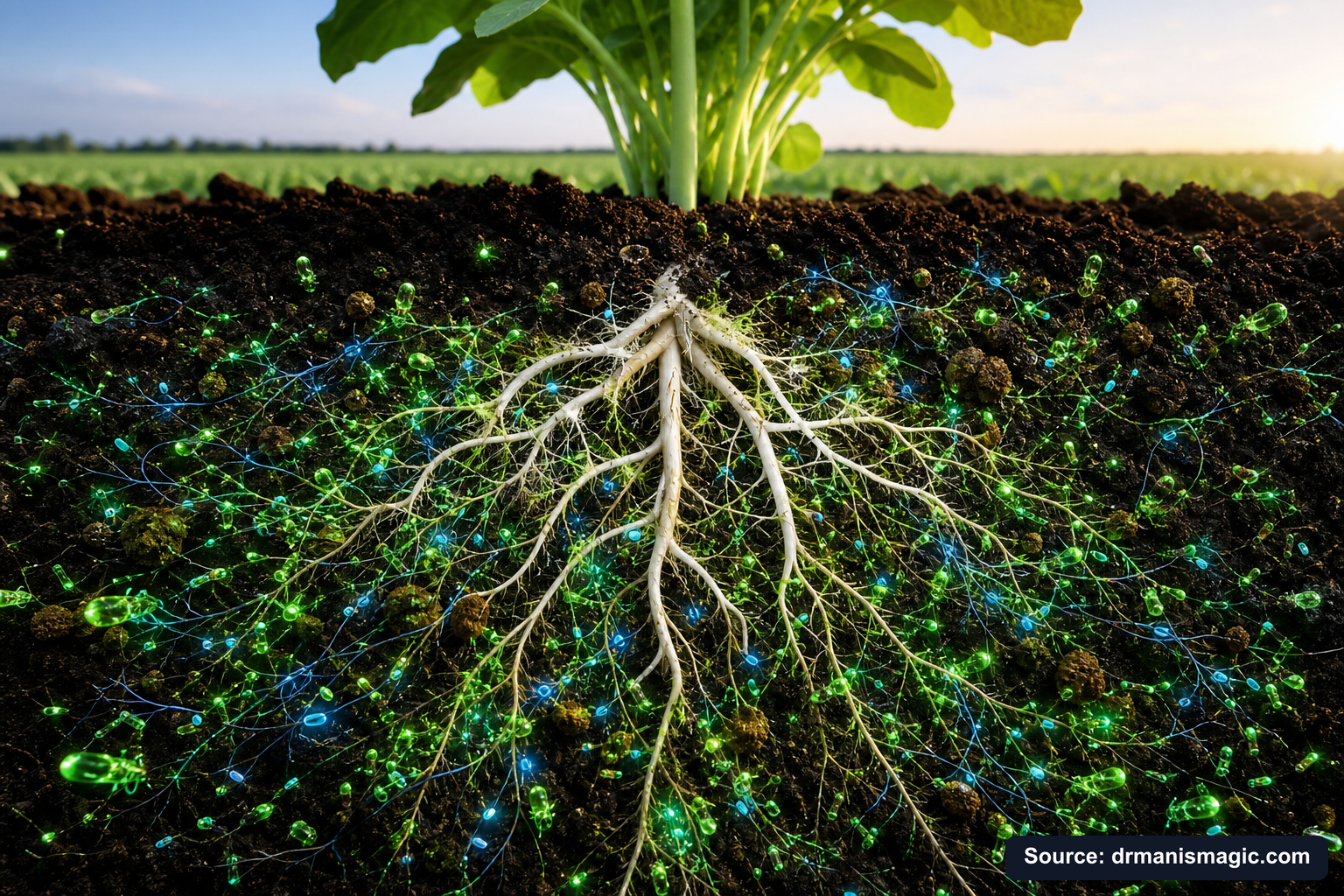
This is why the white mycelium you see threading through your wood chip mulch is actually a gift. Your mulch is actively becoming soil. The saprotrophic fungi are doing in weeks what would otherwise take years.
They also produce a remarkable substance called glomalin. Glomalin is a sticky protein that glues soil particles together into small clumps called aggregates. These aggregates create the crumbly, open texture that lets air and water move through soil. Without it, soil compacts. Roots suffocate. Drainage fails. Root rot follows.
This is a big reason why standard commercial potting mixes — loaded with pine bark and sawdust — eventually become problems. They start out fluffy. But as the bark breaks down (without a healthy saprotrophic community to manage the process properly), the structure collapses. The mix compacts. Oxygen disappears from the root zone. And a healthy plant slowly suffocates.
See also: The Hidden Reason Synthetic Fertilizers Cause Root Rot
You Never Had a Brown Thumb.
You were handed the wrong tools. This free guide hands you the right ones.
You watered it. You fed it. It died anyway.
It was never you. It was the dirt, the salt food, and the bad advice.
This guide shows you what really went wrong, and how to fix it for good.
- Why your plants really died, and why it was never your fault
- The salt hiding in your plant food that quietly burns the roots
- The hidden killer in almost every bag of store soil
- The tiny helpers that grow a whole forest for free
- The rescue trick that brings a half dead plant back to life
What Is the Difference Between Saprophytic Fungi vs Mycorrhizal Fungi vs Pathogenic Fungi?
Quick Answer: Saprophytic (saprotrophic) fungi eat dead matter and are almost always helpful. Mycorrhizal fungi partner with living roots and are essential. Pathogenic fungi infect living tissue and cause disease. The key difference is what they eat and who they work with. Most fungi you encounter in healthy soil are the good kind.
People often lump all fungi together. That is like lumping sharks, goldfish, and dolphins together because they all live in water. Let's draw the lines clearly.
Saprotrophic fungi: Feed on what is already dead. They do not attack living tissue. They are decomposers, recyclers, and structure builders. Mushrooms growing in your mulch or lawn after rain are almost always the fruiting bodies of saprotrophic species. They are the visible tip of a massive underground recycling operation.
Mycorrhizal fungi: Form living partnerships with roots. They do not decompose things. They are traders. They need a living root host to survive. You cannot eat your way through dead wood and be mycorrhizal at the same time — the two strategies are fundamentally different. Some gardeners ask whether mycorrhizae can help break down their compost. They cannot. That is not their job. Their job is to work hand in hand with living roots.
Pathogenic fungi: These are the ones that cause problems. Phytophthora causes root rot. Fusarium causes wilt. Verticillium causes sudden collapse. Rhizoctonia causes damping-off in seedlings. Sclerotinia rots stems and leaves. These pathogens are suppressed — held in check — when beneficial biology is abundant. When you wipe out your beneficial fungi and bacteria with repeated fungicide applications or salt-based fertilizers, you remove the competition. Pathogens fill the vacuum. This is the part the big chemical companies never want you to understand.
Endophytic fungi are a fourth group worth knowing. They live quietly inside plant tissue — in leaves, stems, and roots — without causing disease. Many help the plant tolerate drought, salt, and pest pressure. They are part of the full picture of plant health, even though they are rarely discussed in consumer gardening content.
Why Do Salt-Based Fertilizers Destroy the Fungi Your Plants Need?
Quick Answer: Salt draws water out of microbial cells by osmosis, essentially dehydrating and killing beneficial bacteria and fungi in the root zone. High-salt fertilizers also trigger plants to produce less root sugar, starving mycorrhizal partners. Over time, repeated salt applications leave soil biologically dead — vulnerable to compaction, nutrient lockup, and disease.
Here is something nobody at the garden center will tell you.
Every time you pour a synthetic, salt-based fertilizer onto your soil, you are not just feeding your plant. You are poisoning the invisible workforce that was already feeding your plant for free.
Salt works by a process called osmosis. Water moves from areas of low salt concentration to areas of high salt concentration. When you dump salt-heavy fertilizer into your soil, water rushes out of microbial cells — bacteria, fungi, protozoa — to try to balance the concentration. The cells shrink. They stop functioning. Many die.
Mycorrhizal fungi are especially sensitive. They are also suppressed when phosphorus levels in soil are very high. Here is the cruel irony: when you flood the soil with phosphorus from synthetic fertilizer, the plant has no reason to maintain its mycorrhizal partnership. It stops feeding the fungi sugar. The fungi retreat. The network collapses. And the next time drought hits, or a pathogen shows up, your plant has no underground defense system left.
This is not a fringe theory. It is basic soil biology. And it is why plants that grow for a season on synthetic fertilizer often look fantastic at first — and then stall, yellow, and collapse.
The money you spent on that fertilizer is gone. But worse, the time is gone too. Months. Sometimes years. And you cannot get time back.
See also: Why Most Fertilizers Are Actually Salt in Disguise
Why Do Most Bottled Mycorrhizal and Microbial Products Fail to Work?
Quick Answer: Most bottled microbial products contain microbes that were grown in a factory, then dried into powder. The "spores" rarely reactivate properly in real soil. Others are liquid compost teas that go anaerobic (oxygen-starved) during shipping, killing the organisms and creating the sour, rotten smell you may have noticed. Dead microbes cannot help living plants.
Walk into any garden center today and you will find shelves of mycorrhizal inoculants, beneficial bacteria powders, and "soil activators." The marketing is compelling. The results are usually disappointing.
Here is why, straight from what we learned testing product after product on our 250,000+ trees at US Citrus Nursery:
Problem 1: Dried powder products. Most beneficial microbes sold in powder form were grown in giant factory vats, then dried into powder with the hope that the "spores" will reactivate when water is added. We tested dozens of batches. Again and again, the plants showed no measurable response. The organisms either never fully reactivated or were not the right species for the job.
Problem 2: Liquid compost tea products that have gone anaerobic. Some companies harvest microbes from compost and bottle them as a liquid. This sounds better in theory. The problem is that once bottled and shipped, these liquids go anaerobic — meaning the oxygen runs out, the wrong microbes take over, and the beneficial ones die. You can identify these products immediately. They stink. Sometimes the bottle even makes a hissing sound when you open it — that is fermentation gas escaping from dying organisms.
Problem 3: Lactobacillus-heavy formulas. Lactobacillus — the same bacteria in your yogurt — is extremely easy to grow and stays alive in a bottle. Some companies load their products with it. The trouble is, lactobacillus is so aggressive it out-competes the beneficial fungi and bacteria that your roots actually need. We keep it out of Plant Super Boost entirely, because it belongs in your stomach, not your soil.
The solution Dr. Mani found came through a providential meeting with a world-renowned compostologist — an expert whose methods were so effective that large citrus groves using his approach began outperforming conventional operations, and he was subsequently blacklisted by major chemical interests. This expert shared a proprietary, all-natural technique to stabilize a full-spectrum microbial community — harvested from real, living compost — without the organisms dying or going anaerobic. The result is a product that smells earthy (not rotten), contains visible live organisms under a microscope, and carries lab analyses confirming microbial viability. That technique is now the foundation of Plant Super Boost.
How Do You Rebuild Fungal Life in Dead or Damaged Soil?
Quick Answer: You cannot just pour mycorrhizal inoculant onto dead, compacted, salt-damaged, or waterlogged soil and expect results. Microbes need a livable habitat first. Fix drainage, salinity, pH, and aeration. Add organic matter. Keep living roots in the ground. Then introduce full-spectrum live microbials and repeat monthly. Rebuilding takes time — but it works.
If your soil has been through years of synthetic fertilizer, herbicide applications, or fungicide drenches — or if you are starting with sterilized commercial potting mix — the biological community is either severely depleted or completely absent.
Pouring a mycorrhizal inoculant into that environment is like dropping a fish into an empty aquarium. The fish needs water first.
Here is a practical recovery protocol, in order:
- Fix drainage and aeration first. If roots are sitting in waterlogged soil, no amount of biology will save them. Check your soil structure. If it compacts easily or holds standing water, consider switching to a mineral-based growing medium. Organic-heavy potting mixes that have broken down are often the root cause of ongoing root rot problems.
- Test and address salinity and pH. Heavily fertilized or chemically treated soil often has a high salt load. Flush containers thoroughly with clean water. For garden beds, a deep watering followed by a rest period helps move salts down and away from roots.
- Add organic matter — but the right kind. Finished compost is excellent. Fresh, mature compost is even better. Avoid wood chips that are too fresh and raw, which can temporarily tie up nitrogen as they decompose.
- Keep living roots in the ground. Mycorrhizal fungi need a living root host to survive. Bare soil between crops or seasonal gaps mean the fungal network collapses. Plant cover crops or keep perennial plants growing whenever possible.
- Introduce full-spectrum live microbials. This is where a genuinely live product matters. Apply it as a soil drench, monthly. The organisms need repeated applications because damaged soils have competing pathogens and environmental pressures that deplete populations between treatments.
- Switch to organic, non-salt fertilizer. Every salt-based fertilizer application undoes biological progress. Slow-release organic fertilizers — made from ingredients like crab meal, kelp, and amino acids — feed the soil food web while feeding the plant, instead of destroying it.
- Monitor plant response, not just soil tests. Healthier leaf color, stronger new growth, improved flowering and fruiting, and better drought tolerance are the real signs that biology is recovering. Give it at least one full growing season before judging results.
The Free Plant Care Field Guide from Dr. Mani's Magic walks through this process step by step for any plant type — from container citrus to backyard gardens to houseplants.
How Do the Three Plant Pillars Protect Both Saprophytic and Mycorrhizal Fungi?
Quick Answer: The Three Plant Pillars — mineral-based soil, live microbials, and organic fertilizer — create the habitat conditions where all beneficial fungi can survive and work. Mineral soil provides drainage and oxygen so fungi are not drowned. Live microbials restore and restock the biological community. Organic fertilizer feeds the soil food web without the salt damage that kills fungi.
Dr. Mani did not develop the Three Plant Pillars as a marketing concept. He developed them because 40 years of watching plants live and die in real growing conditions taught him one inescapable truth: plants thrive when you replicate what nature already does. Every element of a healthy natural ecosystem points back to the same three things.
Pillar 1 — Mineral-Based Soil: A silica-rich, mineral-based growing medium does not break down. It does not compact. It does not go anaerobic. It gives roots — and the fungal networks around those roots — the oxygen and open structure they need to function. Standard bark-heavy potting mixes start decomposing from day one. As they compact, saprotrophic fungi cannot process residues properly, mycorrhizal threads cannot penetrate, and root rot pathogens move in. Mineral soil removes that problem at the foundation.
Pillar 2 — Live Microbials: A full-spectrum living microbial community — bacteria, saprotrophic fungi, mycorrhizal fungi, protozoa, and beneficial nematodes — is what turns soil from a growing medium into a living ecosystem. These organisms protect roots, cycle nutrients, build structure, and suppress pathogens. You cannot fake this with a dried powder. You need genuinely live organisms applied consistently.
Pillar 3 — Organic Fertilizer: Organic, slow-release fertilizer feeds both the plant and the soil food web. It introduces no salt shock. It does not trigger the plant to abandon its mycorrhizal partnerships. It does not contain biosludge or PFAS chemicals. It works with biology instead of against it.
When all three pillars are in place together, you stop fighting soil and start working with it. The fungi — both the decomposers and the root partners — get the habitat they need to do what they have been doing for hundreds of millions of years.

What Can You Do Right Now to Protect and Rebuild Your Soil's Fungal Life?
Quick Answer: Stop applying synthetic fungicides broadly, switch from salt-based fertilizers to organic alternatives, ensure your growing medium has real drainage, and begin monthly applications of a genuinely live full-spectrum microbial inoculant. Results are visible within weeks in healthy conditions and within a full growing season in damaged soils.
You now know something most gardeners — and honestly, most garden center employees — do not know. The fungi in your soil are not all the same. Some are recycling dead matter. Some are building root partnerships that deliver nutrients and water your plant could never find alone. And some are waiting for the right moment to cause disease, held back only by the beneficial community around them.
The time you have already spent on plants that struggled, stalled, or died without explanation — that time is gone. But the time ahead is yours. Every month you wait to restore your soil biology is another month your plants are running without their underground team.
Imagine pulling fruit from your own tree. Smelling your own flowers. Walking barefoot on grass so thick and green it feels like carpet. Not because you worked harder — but because you finally gave the invisible workforce the conditions it needed to do its job.
The difference between saprophytic and mycorrhizal fungi is the difference between knowing what is happening underground — and being at the mercy of it.
If you want to see what genuinely live, full-spectrum biology can do for any plant you own — lawn, garden, houseplant, fruit tree, or flower bed — the Plant Super Boost is where we recommend starting. It contains zero PFAS, zero biosludge, and zero synthetic salts. It is backed by a 30-day money-back guarantee. And it smells like fresh earth — because the microbes inside it are alive, not rotting.
Your soil is ready. The fungi are waiting. All they need is a chance.
Frequently Asked Questions
Most gardeners never learn what is actually happening underground. That gap in knowledge is exactly why plants struggle, stall, and die. These questions come up again and again from real growers, and the answers will change the way you see your soil forever.
What is the difference between saprophytic and mycorrhizal fungi?
Saprophytic fungi eat dead and decaying matter in your soil. They break it down and recycle nutrients back into the ground. Mycorrhizal fungi do something totally different. They attach directly to living roots and form a trade deal with your plant. The fungi bring water and minerals. The plant sends back sugars. One is a recycler. The other is a root partner. Both matter. Neither is a disease.
What kills mycorrhizal fungi?
Synthetic fertilizers are the biggest killer. Salt-based products burn the delicate fungal threads that connect to your roots. Fungicides wipe them out fast too, even the ones marketed as safe. Heavy tilling shreds the underground network apart. And when you flood soil with synthetic phosphorus, the plant actually stops feeding the fungi on purpose. That is the hidden cost of chemical gardening. You kill your plant's best partners without even knowing it. Dr. Mani proved this across 250,000 citrus trees at US Citrus Nursery. The plants that got live microbes and organic fertilizer thrived. The ones hit with salt-based synthetics slowly fell apart.
Are saprophytic fungi bad for plants?
No. Saprophytic fungi are your soil's cleanup crew. They show up where something is dead or rotting, like old wood chips or bark, and they break it all down into simple nutrients your plant can actually use. Without them, dead matter just piles up and nothing gets recycled. The trouble comes when people see white fuzz in their soil and panic. That white fuzz is often beneficial. Context matters more than color.
What is the difference between saprophytes and parasitic fungi?
Saprophytic fungi only eat dead matter. They do not attack living plants. Parasitic fungi are the opposite. They latch onto living tissue and feed off it, causing real damage and disease. If your plant is rotting from the roots up or showing strange spots and die-off, that is more likely a pathogenic or parasitic fungus at work, not a saprophyte. Knowing which one you are dealing with changes everything about how you respond.
Does hydrogen peroxide work as a fungicide for plants?
It works fast as a contact treatment, but it has a serious downside. Hydrogen peroxide does not know the difference between bad fungi and good fungi. It kills both. Pour it into your soil and you can wipe out the very mycorrhizal partners your roots depend on. It also has no staying power once it breaks down. If you have a root rot problem, the real fix is getting live beneficial microbes back into your soil, not pouring chemicals through it. That is exactly what Plant Super Boost was built to do.
What eats mycorrhizal fungi?
Small soil animals like mites, springtails, and nematodes feed on fungal threads underground. Small mammals sometimes eat the fruiting bodies above ground and spread spores in the process. That is actually helpful for the forest. In your garden, the bigger threat is not animals eating your fungi. It is chemicals and compacted soil killing them off silently. Loose, mineral-based soil like Dr. Mani's Magic Super Soil gives fungal networks the room and oxygen they need to grow and survive.
What is the best way to protect beneficial fungi in houseplant soil?
Stop using synthetic fertilizers and chemical fungicides indoors. Both destroy the microbial life your roots need. Use a mineral-based soil that drains well and does not compact or rot over time. Add live microbes that are actually alive when they reach your plant. Most bottled products on store shelves contain dead organisms that do nothing. Plant Super Boost uses a special stabilization process so the bacteria, fungi, and mycorrhizae arrive alive and ready to work. That is the second pillar of the Three Plant Pillars system, and it is the one most indoor growers never even knew they were missing.
About the Author
Dr. Mani Skaria, PhD
Dr. Mani Skaria, PhD, is a plant pathologist and the scientific founder of Dr. Mani's Magic. He earned his doctorate at Purdue University and spent 48 years studying how plants, soil, and living microbes work together, including his years as Professor Emeritus at Texas A&M and as a member of the USDA NAREEE Advisory Board. He invented micro-budding, a method for growing healthier, stronger trees, and has grown more than 250,000 trees on the family farm in Hargill, Texas - US Citrus Nursery. His life's work takes real lab science and practical experience and turns it into simple, safe, organic plant care anyone can use at home.


