


How Soil Bacteria Turn Organic Matter into Plant Food | Dr. Mani's Magic
How Soil Bacteria Turn Organic Matter into Plant Food: The Soil Food Web Explained
Picture this. You walk outside after a rainstorm and stop near the garden bed. You lean down and breathe in. That rich, dark, earthy smell after rain hits you right in the nose. Not rot. Not chemicals. Something alive. Something ancient. You have been smelling that your whole life and never knew what it was.
That smell is the scent of billions of soil bacteria waking up and going to work. Right now, in every healthy handful of garden soil, there are more living organisms than there are people on Earth. They are breaking down a dead leaf. They are unlocking minerals locked in clay particles. They are passing nutrients up through a chain of tiny creatures until those nutrients arrive, in exactly the right form, right at your plant's roots. No factory. No chemicals. No monthly bill. Just a system so perfect it has been running for 450 million years.
But here is what nobody told you. Bacteria do not do this alone. And in most backyards, pots, and raised beds across America, this invisible workforce has been wiped out. Synthetic fertilizers burned them. Fungicides killed their partners. Cheap potting mix gave them nothing to eat. The result? You keep buying products. Your plants keep struggling. And nobody connects the dots. Until now. After growing more than 250,000 trees at our South Texas nursery, we finally cracked this wide open. Let us show you exactly how the magic works.

Plant Super Boost
Key Takeaways
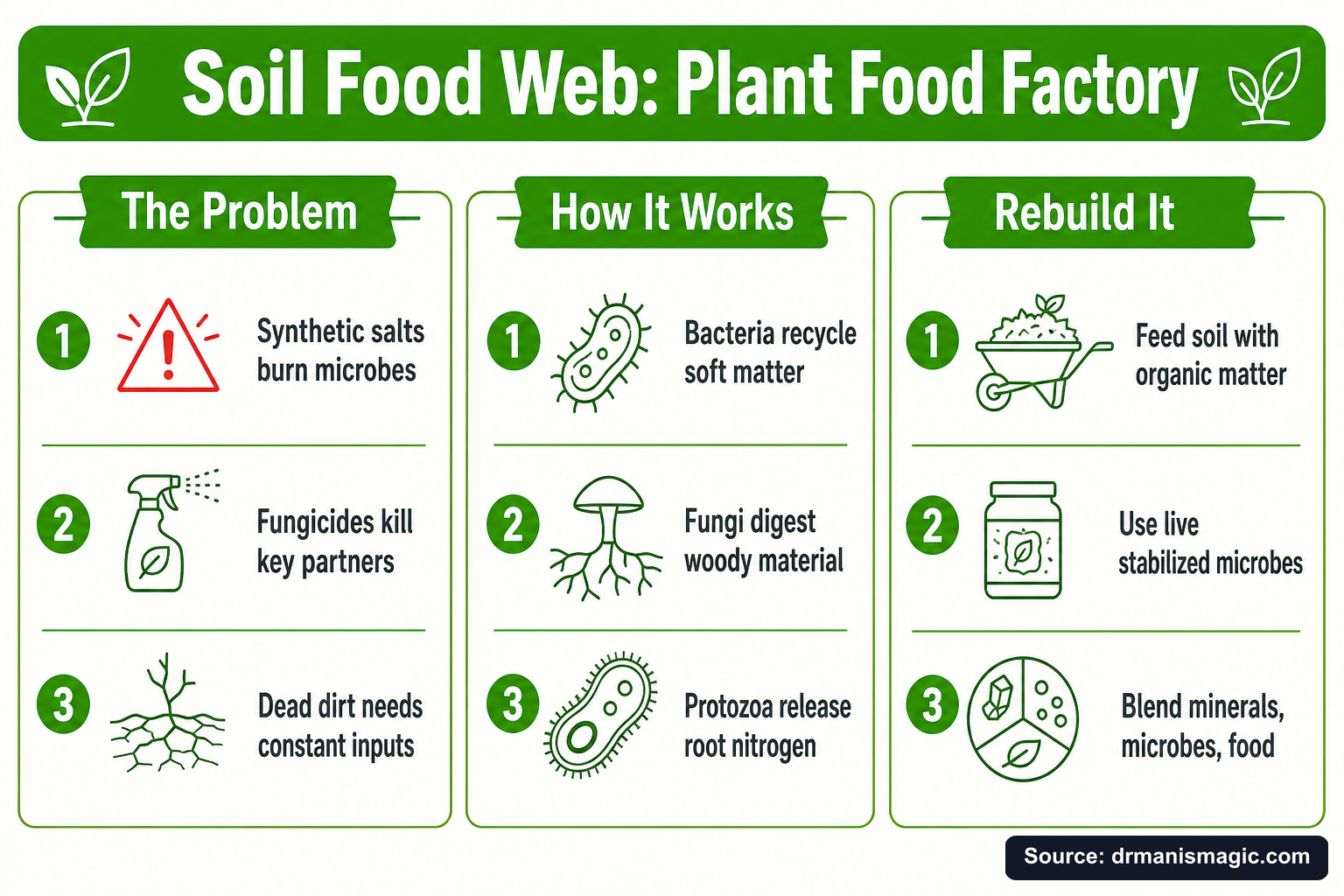
- Soil bacteria are the fast recyclers. They break down simple organic matter and lock up nutrients inside their bodies first, before releasing them to plants.
- Fungi handle the tough jobs. They break down woody, lignin-rich material and extend root systems far beyond what roots can reach alone.
- Protozoa and nematodes are the nutrient releasers. They eat bacteria and fungi, and the excess nitrogen they cannot use gets excreted as ammonium right next to plant roots.
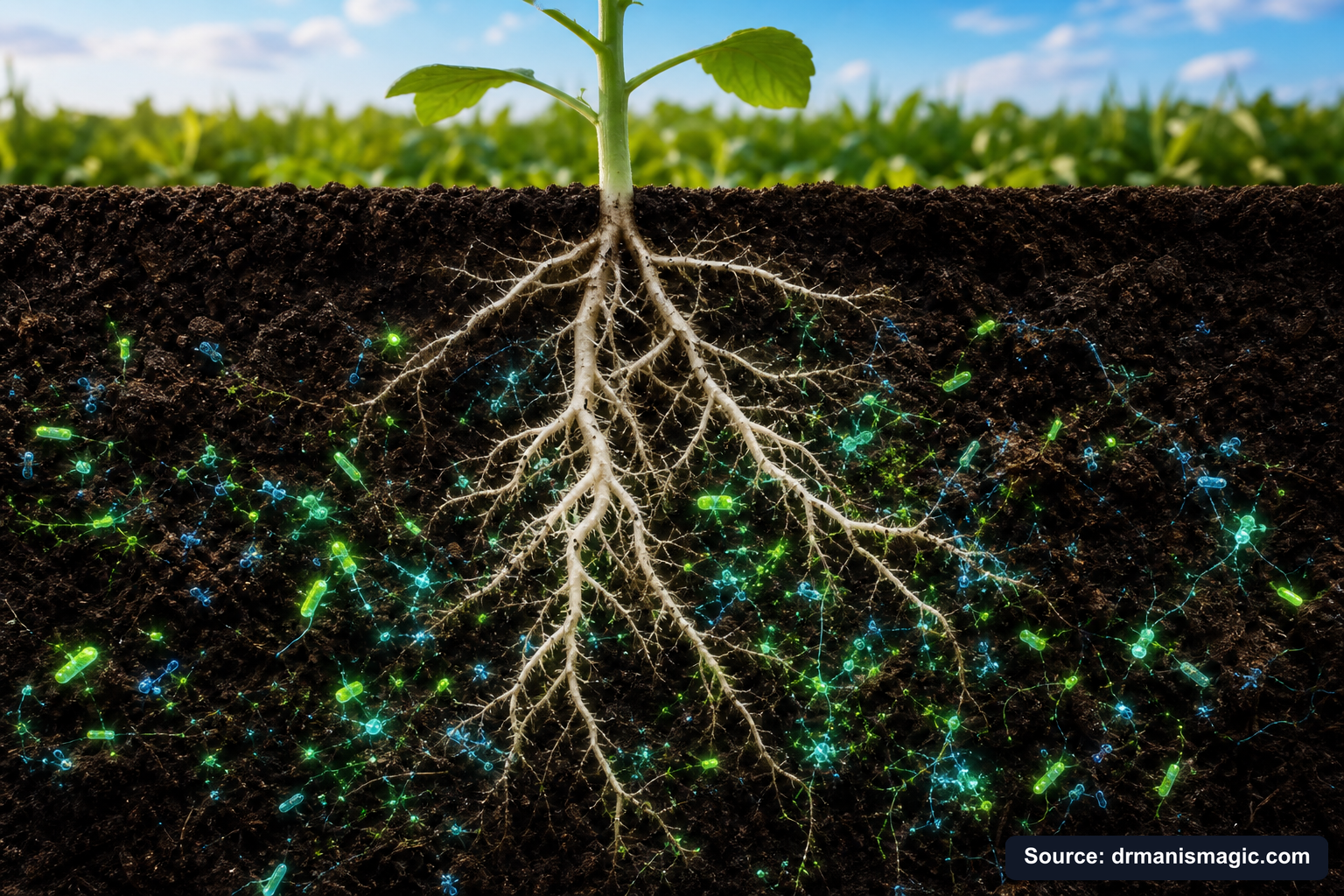
- Your plant roots are not passive passengers. They pump sugars and signals into the soil to feed and direct the microbes they need most.
- Salt-based synthetic fertilizers, fungicides, and herbicides kill this living system, trapping you in a cycle of dependency and wasted time.
- Dead, dried, or smelly bottled microbes do not replace a living soil food web. Live, stabilized microbes applied consistently are what actually rebuild it.
- The Three Plant Pillars — mineral-based soil, live microbials, and organic fertilizer — work together to restore and protect this underground system for any plant you grow.
What Is the Soil Food Web and Why Does It Matter for Your Plants?
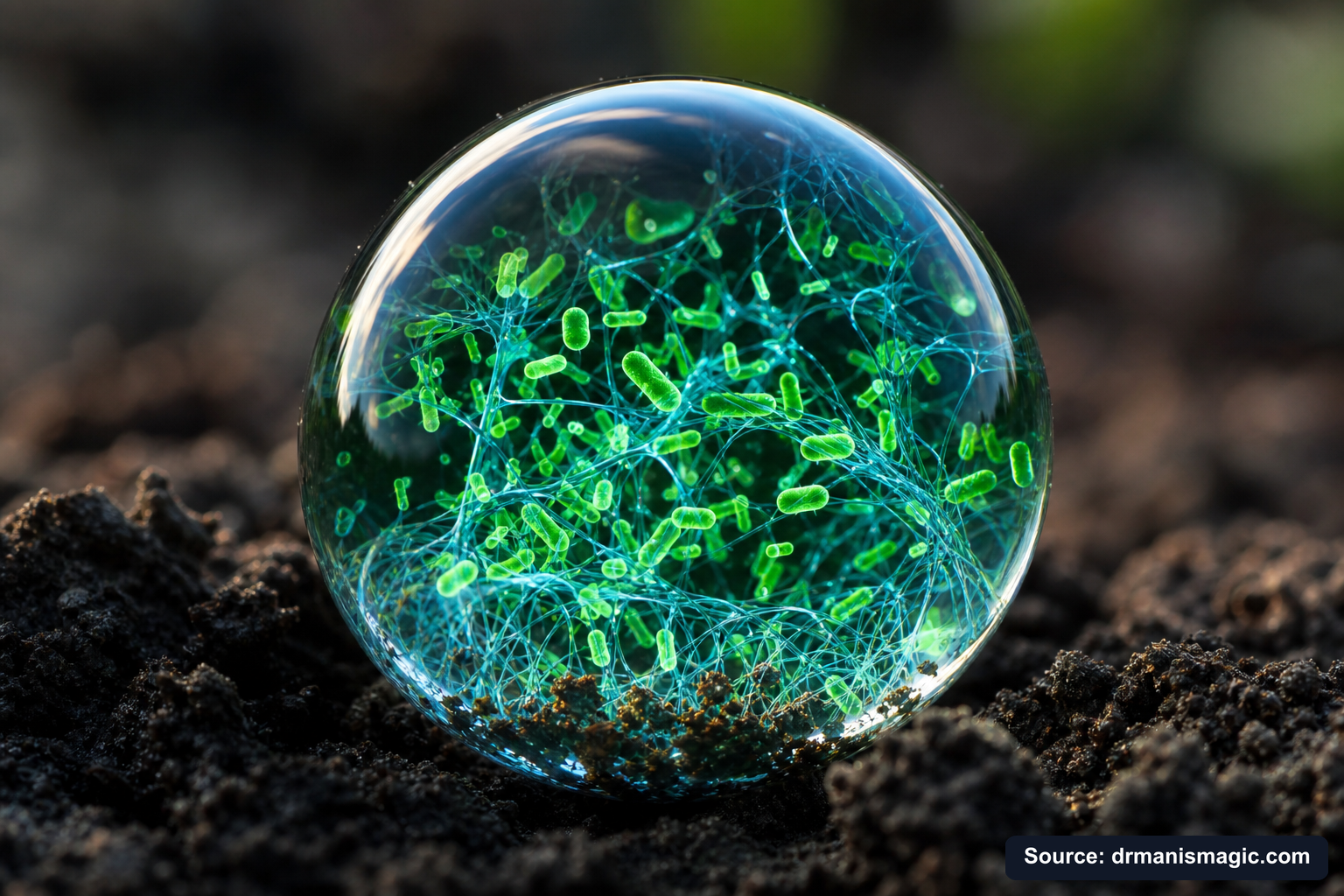
Quick Answer: The soil food web is the living community of bacteria, fungi, protozoa, nematodes, earthworms, and other organisms that work together to break down organic matter and release plant-available nutrients. Without this web, even the best fertilizer cannot fully feed your plants. It is the engine behind all natural plant growth.
The soil food web is the living chain that turns a dead leaf into food your plant can actually use. Think of it like a city. Bacteria and fungi are the workers on the ground floor. Protozoa and nematodes are the supervisors eating the workers and releasing nutrients. Earthworms and insects are the heavy equipment, physically moving and grinding material. And your plant roots sit at the center of it all, quietly directing the whole operation.
According to the USDA Natural Resources Conservation Service, healthy soil is one of the most complex ecosystems on the planet. A single teaspoon of productive soil can contain up to one billion bacteria, several yards of fungal threads, and thousands of protozoa. The USDA Soil Biology Primer describes this as a food web, not a simple chain, because every organism feeds on and is fed by multiple others at once.
This is why plants in an old-growth forest never need fertilizer. The web is intact. Every organism is doing its job. Nutrients cycle continuously. Remove one layer of the web and the whole system slows down. Remove several layers and your soil becomes what most people have in their backyards today: biologically dead dirt that needs constant chemical inputs just to limp along.
| Organism | Size | Primary Job in the Web | What They Release to Plants |
|---|---|---|---|
| Bacteria | Microscopic | Break down simple organic compounds; fix nitrogen; solubilize phosphorus | Ammonium, phosphate, micronutrients |
| Fungi (including mycorrhizae) | Microscopic to visible threads | Decompose lignin-rich residues; extend root networks; aggregate soil particles | Phosphorus, water, micronutrients |
| Protozoa | Microscopic | Graze on bacteria; release excess nitrogen as ammonium next to roots | Ammonium (plant-available nitrogen) |
| Beneficial Nematodes | Microscopic worms | Graze on bacteria and fungi; regulate populations; release nutrients | Ammonium, nutrients from microbial biomass |
| Earthworms | Visible | Physically break down and mix organic matter; create pore channels | Casts rich in available nutrients and microbes |
| Arthropods and insects | Visible | Shred large residues into smaller pieces for bacteria and fungi to work on | Fragmented material that accelerates decomposition |
How Do Soil Bacteria Actually Turn Organic Matter into Plant Food?
Quick Answer: Bacteria break organic matter into simpler compounds through decomposition, then lock those nutrients inside their own bodies. When protozoa and nematodes eat the bacteria, they excrete the excess nitrogen as ammonium right in the root zone. That ammonium is one of the main forms of nitrogen plants absorb. This is called the microbial loop.
Here is the step-by-step conversion chain that most gardening content never explains clearly.
Step one: Input. A dead leaf falls. A root dies. You add compost or mulch. Organic matter enters the system. It looks like garbage. To the soil food web, it looks like a feast.
Step two: Shredding. Earthworms, beetles, and other small critters physically chew and tear the material into smaller pieces. This massively increases the surface area available for bacteria and fungi to attack.
Step three: Bacterial decomposition. Bacteria move in fast on the smaller, easier-to-digest pieces. They secrete enzymes that break complex molecules into simpler ones. Sugars, amino acids, and other carbon compounds get consumed. The bacteria multiply rapidly. Here is the part most people miss: the bacteria do NOT immediately release nutrients to the plant. They lock the nutrients inside their own bodies. Scientists call this immobilization. The nitrogen is temporarily unavailable to plant roots.
Step four: Fungal decomposition. Fungi take on the harder work. Woody stems, bark, and lignin-rich material that bacteria cannot easily digest are broken down by fungal enzymes. Colorado State University Extension notes that fungi are especially critical for decomposing complex carbon compounds, and that bacteria and fungi work as complementary processors rather than competitors. CSU Extension's Living Soil resource describes how this partnership creates soil structure and nutrient retention that neither organism could achieve alone.
Step five: The microbial loop. Now comes the most important mechanism that almost nobody talks about. Protozoa and bacterial-feeding nematodes graze on the bacteria and fungi. They eat them. A protozoan cell eats a bacterial cell but can only use a portion of the nitrogen inside. The rest is too much. So it excretes the excess as ammonium. That ammonium lands directly in the root zone. Right where the plant needs it. This is the microbial loop, and it is the primary pathway by which nitrogen becomes plant-available in natural soils.
Step six: Mineralization. As nutrients move through the grazing chain, they transform from organic forms locked in microbial bodies into mineral ions: ammonium, nitrate, phosphate, sulfate, and soluble micronutrients. These are the forms plant roots can actually absorb.
Step seven: Root uptake. Your plant's roots sit in this nutrient-rich zone and absorb the mineral ions. The plant uses them to build leaves, stems, fruit, and flowers. Some of the processed organic matter becomes stable humus, a long-lasting form of organic carbon that holds water and nutrients for future cycles.
That entire chain. From dead leaf to fruit on your tree. Powered by invisible life.
What Role Do Your Plant Roots Play in Directing Soil Biology?
Quick Answer: Plant roots are not passive. They actively release sugars, amino acids, and chemical signals into the surrounding soil to feed and recruit the specific microbes they need. This zone around the roots is called the rhizosphere, and it is the most biologically active environment on Earth, ounce for ounce.
Your plant is not just sitting there waiting for nutrients to show up. It is running a hiring operation underground. Penn State University Extension explains that plant roots release a rich mix of exudates including sugars, amino acids, phenolic acids, and flavonoids into the rhizosphere. Penn State's guide on soil microbes describes how these exudates attract and feed specific microbial communities, essentially allowing the plant to recruit the workers it needs most at any given moment.
When a plant is low on phosphorus, it releases different signals than when it is low on nitrogen. The microbial community responds. Phosphorus-solubilizing bacteria multiply. Mycorrhizal fungi extend their threads toward phosphorus-rich zones. The plant gets what it asked for.
This is why feeding your plants directly with synthetic salt-based fertilizers breaks the system. The plant no longer needs to recruit microbes. It stops sending exudates. The microbial community collapses from lack of food. And now your plant is completely dependent on the next dose of synthetic fertilizer. You have replaced a free, self-sustaining system with a paid subscription you can never cancel.
We saw this over and over across 250,000 trees at our South Texas nursery. Trees fed exclusively with salt-based fertilizers looked green for a while. Then they plateaued. Then they declined. The biology was gone. And without the biology, no amount of fertilizer could fully substitute for what nature designed.
What Is the Difference Between Bacteria and Fungi in Nutrient Cycling?
Quick Answer: Bacteria are fast recyclers that handle simple, easy-to-digest organic material and cycle nutrients quickly. Fungi are slow, deep processors that break down tough woody material, build soil structure, and extend plant root systems by hundreds of times their natural reach. You need both working together.
Think of bacteria as the short-order cooks and fungi as the master chefs. Bacteria get to work immediately on fresh, soft organic matter. They multiply fast, cycle nutrients quickly, and dominate in moist, nitrogen-rich conditions. They are your front-line decomposers.
Fungi take the slow road. They send out long threads called hyphae that physically penetrate woody tissue and break it apart with powerful enzymes. A single fungal network in healthy soil can extend for miles through the earth. Mycorrhizal fungi form a direct physical connection with plant roots, essentially becoming an extension of the root system itself. They deliver water and phosphorus directly to the plant in exchange for sugars. It is a partnership so old and so proven that roughly 90 percent of all plant species on Earth depend on it.
Here is why this matters for you. If you have ever used a fungicide to treat a disease problem on your plant, you may have also wiped out your mycorrhizal partners. Broad-spectrum fungicides do not discriminate. They kill the pathogen and the ally at the same time. The plant survives the disease but loses its nutrient and water delivery network. Two months later you wonder why growth stalled.
See also: The Hidden Reason Synthetic Fertilizers Cause Root Rot
Why Does the Microbial Loop Matter for Releasing Nitrogen to Roots?
Quick Answer: The microbial loop is the process where protozoa and nematodes eat bacteria, keeping more nitrogen than they need, and excrete the rest as ammonium directly in the root zone. This is one of the most important nitrogen delivery mechanisms in living soil, yet almost no mainstream gardening content explains it.
This is the secret hiding in plain sight. Most people think bacteria directly feed plants. They do not, at least not in the way most people imagine. Bacteria first lock nutrients inside themselves during decomposition. They are like a savings account. The nutrients are in there but not accessible yet.
The withdrawal happens when protozoa arrive to graze. A protozoan is a single-celled organism slightly larger than a bacterium. It eats bacteria the way a whale eats krill. Constantly, relentlessly, in enormous quantities. The protozoan absorbs some nitrogen for its own growth but excretes the excess as ammonium. That ammonium drops right in the soil water surrounding the root zone. The plant absorbs it within hours.
This is why soil that looks biologically active, full of earthworms, with that rich earthy smell after rain, grows plants so much more vigorously than chemically managed soil. The whole loop is running. The nutrient bank is constantly being opened. The delivery is happening automatically, at the pace the plant needs it, in the forms the plant can use.
When the loop breaks down, which happens when you apply synthetic herbicides, broad-spectrum pesticides, or salt-heavy fertilizers, the nutrients get locked up with nobody to release them. Plants starve even when sitting in soil full of organic matter. The matter is there. The workers are not.
How Do Salt-Based Fertilizers Destroy Soil Biology Over Time?
Quick Answer: Salt-based synthetic fertilizers create high-salt conditions in soil that dehydrate and kill beneficial bacteria and fungi through osmotic stress. Over time, the microbial community collapses, organic matter stops cycling, nutrients get locked up, and the plant becomes completely dependent on the next synthetic application to survive.
Here is a picture. You pour a pile of table salt on a slug. You have seen what happens. The same process happens to soil bacteria when high concentrations of synthetic fertilizer salts are applied. Water is pulled out of bacterial cells through osmosis. The cells shrink and die. The fungi, already slower to recover, take even longer to come back. The protozoa that depended on the bacteria for food have nothing to eat. The whole chain collapses in sequence.
And here is the cruel irony. Your plant turns green for a few weeks because the mineral ions are directly available without needing the biological chain. It looks like success. But underground, the system that would have fed your plant for free, forever, is being destroyed. Three months later you need to apply again. Six months later you need more than last time. A year later the soil is so depleted of biology that any interruption in feeding causes rapid decline.
We are not the first to notice this. Growers have watched it happen for decades. The salt-based fertilizer model, which became the industry standard starting in the 1950s, was never designed to build soil biology. It was designed to deliver a quick nutrient hit and sell the next bag. As Dr. Mani says plainly: the system was rigged, and it was not rigged in your favor.
This is exactly why Crab, Kelp and Amino Acids is formulated without synthetic salts. It feeds your plant in slow-release organic forms that microbes can process naturally, the way the soil food web was designed to handle nutrients. No salt shock. No microbial massacre. Just steady, steady nourishment that builds on itself over time.
See also: Why Most Fertilizers Are Actually Salt in Disguise
You Never Had a Brown Thumb.
You were handed the wrong tools. This free guide hands you the right ones.
You watered it. You fed it. It died anyway.
It was never you. It was the dirt, the salt food, and the bad advice.
This guide shows you what really went wrong, and how to fix it for good.
- Why your plants really died, and why it was never your fault
- The salt hiding in your plant food that quietly burns the roots
- The hidden killer in almost every bag of store soil
- The tiny helpers that grow a whole forest for free
- The rescue trick that brings a half dead plant back to life

Are All Bottled Microbe Products the Same? Live vs. Dead Microbials Explained
Quick Answer: No. Most bottled microbial products contain dried, lab-grown spores that show little to no activity when applied to soil. Others are liquid compost teas that have gone anaerobic and smell rotten, meaning the microbes are already dying. Genuinely live, stabilized, full-spectrum microbes are rare and are what actually produce results in real soil.
This is where most gardeners get fooled, and the industry lets it happen because there is no incentive to tell you the truth.
Walk down any nursery aisle. You will see dozens of bottles and bags claiming to contain beneficial bacteria and mycorrhizal fungi. Some list impressive species names. Some show colony-forming unit counts in the billions. They look scientific. They feel like a solution. But after testing dozens of these products on our own trees, the results were consistently disappointing. The plants did not respond.
Here is why.
Most powdered and dried microbial products are manufactured in large commercial factories. Living organisms are grown in giant vats, then dried into powder form. The hope is that dormant spores will reactivate when water is added and they reach soil. The problem is that many of these organisms do not survive the drying process in viable form, or they reactivate briefly and die before establishing in the soil environment. The label lists impressive numbers. The product delivers very little living biology.
The second category is liquid compost-tea style products. These smell bad. Sometimes the bottle even hisses when opened. That fizzing sound is fermentation gas, which means the microbes are going anaerobic and dying. Some benefit exists from the humic acids and organic compounds in the base material, but the living biology you are paying for is largely gone by the time the bottle reaches your door.
The third category is lactobacillus-based products, like fermented rice water preparations. Lactobacillus is vigorous and easy to grow. But it outcompetes and crowds out the broader beneficial microbial community rather than supporting it. It belongs in your yogurt, not your garden soil.
What actually works is a different story entirely, and it starts with compost.
| Product Type | Microbial Viability at Use | Spectrum of Organisms | Odor | Real-World Results | Our Recommendation |
|---|---|---|---|---|---|
| Dry/powdered lab-grown microbes | Very low | Narrow (selected species only) | None to faint | Little to no measurable response | Avoid |
| Dry microbes rehydrated in liquid | Very low | Narrow | None | Same issues; avoid | Avoid |
| Compost tea, fresh under 24 hours | Moderate (requires active aeration) | Partial, depends on compost source | Earthy to mildly sour | Good if applied immediately | Use only if truly fresh |
| Compost tea, over 24 hours old | Low, going anaerobic | Partial | Strong, sewage-like | Biology mostly dead; some organic compound benefit remains | Not recommended |
| Lactobacillus-based products | High, but wrong organisms | Very narrow | Sour/fermented | Outcompetes beneficial microbes | Avoid for soil use |
| Fresh active compost (on-site) | High | Broad and natural | Earthy | Excellent when fresh and applied directly | Great if you have the time and space |
| Plant Super Boost (stabilized, full-spectrum) | High, verified by lab analysis | 2,000+ bacteria species; 400-500 fungi including mycorrhizae; protozoa and nematodes | Earthy, not foul | Visible microbial activity under microscope; consistent plant response across 250,000+ trees tested | Recommended |
What Makes Plant Super Boost Different From Every Other Microbial Product?
Quick Answer: Plant Super Boost is harvested from real hand-crafted compost, not grown in a factory vat, and stabilized through an all-natural proprietary technique that keeps microbes alive without going anaerobic. It contains over 2,000 species of bacteria, 400 to 500 fungal species including mycorrhizae, plus protozoa and nematodes. You can see the living organisms move under a microscope.
The origin of Plant Super Boost is a story worth knowing. Dr. Mani Skaria, founder of US Citrus Nursery, spent decades testing products on his citrus trees in South Texas. He tried the powdered microbes. He tried the compost teas. He kept seeing the same disappointing results.
Then, through what he describes as a providential meeting, he connected with a world-renowned compostologist. This was someone who had advised the farming operations of royal families and governments. He had been quietly blacklisted by large chemical companies after his techniques produced extraordinary results in commercial citrus groves, results the chemical industry had no interest in repeating or publicizing.
This compostologist had developed a natural technique for stabilizing the full spectrum of living microbes from active compost without allowing them to go anaerobic and die. He joined the US Citrus Nursery team. Together, they developed Plant Super Boost.
What came out of that partnership is genuinely different. The microbes in Plant Super Boost are harvested from real compost, not lab-grown from a checklist. They are stabilized naturally so they stay alive, shelf-stable, and active without stinking. The smell is earthy, not foul, because the product is not rotting. And if you take a drop and look at it under a microscope, you will see movement. Living organisms, not dormant spores.
No PFAS. No biosludge. No synthetic salts. Made in the USA, right here in South Texas, by the family that tested it on a quarter million trees first.
Why Is Soil Biology Weak in Most Pots, Raised Beds, and Suburban Yards?
Quick Answer: Most potting mixes are sold sterile and contain little to no living biology. Suburban soils have typically been damaged by decades of synthetic herbicides, pesticides, fungicides, and salt-based fertilizers. Without regular reintroduction of living microbes and organic matter, these environments cannot support the soil food web needed for healthy plant growth.
Nature never intended for plants to grow in sterilized pine bark mixed in a plastic pot, sitting on a concrete patio. Nature never intended for suburban lawns to be drenched in Roundup twice a year. But that is the reality for most plant owners in America today.
Every synthetic herbicide application disrupts microbial communities. Glyphosate, the active ingredient in the most widely used herbicides, has been shown in multiple studies to alter soil microbial diversity and reduce beneficial populations. Every broad-spectrum pesticide does the same. Every bag of salt-based fertilizer slowly depletes the organisms that would otherwise make fertilizer unnecessary.
And then there is potting mix. Commercial potting mix is almost always sold biologically sterile. It has been heated or treated to kill pathogens, which sounds good. But it also eliminates all beneficial bacteria, fungi, protozoa, and nematodes. You are starting with biological zero. Without adding life back into that mix, your plant will grow only as well as the synthetic inputs you provide. It will never develop the self-sustaining root ecosystem that makes plants in the ground so resilient.
Container gardening is especially vulnerable because it lacks the vast underground fungal networks that connect plants in natural soil. There are no earthworms cycling nutrients. There is no organic matter layer decomposing on the surface. The system that nature runs for free has to be rebuilt intentionally, every time you pot a plant.
This is why the Three Plant Pillars exist as a complete system. Mineral-based soil that does not collapse and suffocate roots. Live microbials that rebuild the food web. Organic fertilizer that feeds both plant and microbe without salt damage. Each pillar supports the others. Remove one and the system weakens. Use all three and you have something that works the way nature intended, for any plant you grow.
How Do You Know If Your Soil Biology Is Weak or Damaged?
Quick Answer: Signs of weak soil biology include yellowing leaves despite feeding, slow growth, persistent root rot, soil that repels water or crusts on top, plants that decline after initial growth, and repeated pest and disease problems. These are often symptoms of a collapsed microbial community, not just nutrient deficiency.
Your soil is trying to tell you something. You just need to know the language.
Look at your soil surface after watering. Does the water soak in quickly or pool and run off? Water-repellent soil has lost the fungal glue called glomalin that holds soil particles into aggregates with pore space. No fungal activity, no glomalin, no drainage.
Look at your plant's growth pattern. Did it push hard for a month or two after planting, then stall? That initial burst often comes from residual nutrients in the potting mix or from the stress response of a newly transplanted root system. Once those reserves are gone, a plant in dead soil has nothing left to draw on.
Smell your soil. Healthy living soil smells rich and earthy after watering. Soil with anaerobic conditions from compaction or overwatering smells sour or like rotten eggs. That sulfur smell means oxygen is gone and the wrong microbes are winning.
Look at your roots when you repot. Brown, mushy roots are not just a watering problem. Root rot pathogens thrive in biologically depleted soil because there are no beneficial organisms to compete with and suppress them. Healthy soil biology is one of the most powerful root rot defenses nature ever developed.
What Can You Do Right Now to Rebuild Soil Biology in Any Garden or Pot?
Quick Answer: Rebuilding soil biology requires adding live microbials consistently, feeding them with organic matter, improving soil structure to ensure oxygen and water flow, and stopping inputs that kill them. It takes repeated application over months because damaged soils need time to rebuild the full food web, not just the bacteria layer.
Here is a practical recovery checklist you can start today, whether you have a potted houseplant, a backyard garden bed, a container fruit tree, or a lawn that has not responded to anything you have tried.
- Stop the killers first. Pause synthetic herbicides, broad-spectrum pesticides, and salt-based fertilizers. Every application you make while trying to restore biology is working against you. You cannot fill a bucket while the drain is open.
- Fix the soil structure. If you are in a container, consider whether your potting mix is compacted, waterlogged, or oxygen-deprived. Microbes need oxygen to function. They die in anaerobic conditions just like your plant roots do. Mineral-based soil with proper drainage gives microbes the habitat they need to survive and multiply.
- Add live microbials right away. Mix 2 ounces of Plant Super Boost into a gallon of water and drench your soil. For larger areas like garden beds or lawns, fill a hose-end sprayer with 32 ounces and spray the entire area. Apply monthly without fail. One application will not rebuild a collapsed food web. Consistent monthly inoculation does.
- Feed the microbes, not just the plant. Switch to an organic, slow-release fertilizer that gives microbial communities the carbon and nitrogen they need without salt shock. Crab, kelp, and amino acid-based formulas provide a complete nutrient profile that feeds both plant and biology simultaneously.
- Add organic matter to the surface. A layer of compost, aged wood chips, or shredded leaves on top of your soil acts as both a food source for microbes and a protective habitat layer. You are recreating the forest floor effect that nature uses to keep biology thriving.
- Keep living roots in the soil. Bare soil loses biology fast. Plant roots release the exudates that feed and recruit microbes. Cover crops in garden beds, groundcovers around trees, and even weeds between harvests help maintain a living root system that keeps the microbial community active between plantings.
- Be patient and consistent. Rebuilding a fully functional soil food web, complete with protozoa, beneficial nematodes, mycorrhizal networks, and a diverse bacterial community, takes months of consistent inputs. But you will see changes within weeks. Better color. Stronger growth. Plants that stop asking for more and more input because the system is feeding them from within.
One more thing about time. You can always earn more money. You cannot get back the season you lost because your plant stalled in dead soil. You cannot get back the years you watched a tree sit unchanged because the biology was never there to drive growth. The number one thing we hear from gardeners who finally find us is that they wish they had known this sooner. The second best time to start is right now.
A Warm Closing: The Invisible Workforce Is Waiting to Work for You
Every great garden, every thriving fruit tree, every lush lawn you have ever admired had one thing in common. Not a special fertilizer. Not a perfect watering schedule. Not a secret technique. It had a living soil food web doing the invisible lifting below ground while the plant did the visible growing above it.
You have been handed incomplete information for decades. The salt-based fertilizer industry was built on selling you a substitute for a free system that nature already perfected. The result is a generation of gardeners who blame themselves for brown thumbs that were never really brown at all. The deck was just stacked against them.
Now you know the full story. Bacteria decompose organic matter. They lock up nutrients. Protozoa and nematodes eat the bacteria and release that nitrogen right at the root zone. Fungi extend the root system and build soil structure. The plant directs the whole operation through its root exudates. And when all of it is working together, plants grow the way they were designed to grow: vigorously, resiliently, and almost effortlessly.
The Free Plant Care Field Guide walks you through the Three Plant Pillars step by step for any plant you are growing, with practical guidance you can use today. No jargon. No guesswork. Just the foundation that 250,000 trees and decades of nursery work taught us was the only thing that actually works long-term.
If you are ready to put a living soil food web to work for your plants, Plant Super Boost is the simplest way to start. Real living microbes, stabilized naturally, harvested from genuine compost, and proven on more trees than most nurseries will ever grow. Mix it with water. Pour it on your soil. Then step back and let the invisible workforce do what it has always done best.
Frequently Asked Questions
You just learned how soil bacteria turn dead leaves into plant food. Now you probably have some real questions. Good. These are the exact questions gardeners ask us every day, and the answers might change how you think about every plant you own.
How do soil bacteria actually feed my plants?
Soil bacteria eat organic matter like dead leaves and old roots. As they eat, they break that material down into simple nutrients your plant roots can drink up. Think of bacteria as tiny chefs. They take raw ingredients and cook them into something your plant can actually use. Without enough bacteria in your soil, your plant goes hungry even if you keep adding fertilizer. We proved this growing over 250,000 trees in South Texas.
What happens to my plants when soil bacteria are wiped out?
Your plants stop getting fed the right way. Nutrients get locked up in the soil where roots cannot reach them. Disease moves in fast because nothing is fighting it off. Your plant looks okay for a little while, then slowly falls apart. Salt-based synthetic fertilizers are the number one killer of soil bacteria. That is the dirty secret the big chemical companies never told you. Your brown thumb was not your fault.
What are the most important jobs bacteria do in the soil?
Bacteria do four big things. First, they break down organic matter and release nutrients. Second, they fix nitrogen from the air and turn it into a form your plant roots can absorb. Third, they dissolve locked-up minerals like phosphorus so your plant can actually get them. Fourth, they glue tiny soil particles together, which keeps your soil loose, airy, and easy for roots to push through. Lose your bacteria and you lose all four of those jobs at once.
Does the type of soil I use affect how well bacteria work?
Absolutely. Most potting mixes are made from pine bark and wood that rot fast. As they rot, they steal oxygen from your roots and give bacteria nothing good to live in. Dr. Mani's Magic Super Soil uses mineral-based sandy loam from South Texas. It does not break down. It stays loose and airy. Bacteria and fungi thrive in it because they have the structure and oxygen they need to do their jobs right.
Can I just add fertilizer instead of worrying about soil bacteria?
You can try. But here is what happens. Synthetic fertilizers are salt-based. Salt kills bacteria. So every time you feed your plant with a chemical fertilizer, you wipe out more of the living system that was doing the real feeding work. You get a short green burst, then a slow decline. You end up buying more and more while your soil gets deader and deader. That cycle costs you money, but worse, it costs you time you can never get back.
What is Plant Super Boost and how does it bring bacteria back to my soil?
Plant Super Boost is a bottle of live bacteria, fungi, and mycorrhizae that Dr. Mani developed after 35 years of plant science research. Most bottled microbes are dead by the time they reach you. Plant Super Boost uses a special stabilizing process so the microbes arrive alive and ready to work. You mix it with water and pour it on. The microbes move into your soil, start breaking down organic matter, and begin feeding your plant roots within weeks. It does not smell bad either.
How do the Three Plant Pillars work together to protect my soil bacteria?
The Three Plant Pillars are mineral-based soil, live microbials, and organic fertilizer. Each one protects the others. Mineral soil gives bacteria the right structure and oxygen to live in. Live microbials like Plant Super Boost put the right bacteria and fungi back in the ground. Organic fertilizer from crab, kelp, and amino acids feeds your plant slowly without burning or killing the bacteria. All three working together is how your plants stop struggling and start thriving the way nature intended.
About the Author
Dr. Mani Skaria, PhD
Dr. Mani Skaria, PhD, is a plant pathologist and the scientific founder of Dr. Mani's Magic. He earned his doctorate at Purdue University and spent 48 years studying how plants, soil, and living microbes work together, including his years as Professor Emeritus at Texas A&M and as a member of the USDA NAREEE Advisory Board. He invented micro-budding, a method for growing healthier, stronger trees, and has grown more than 250,000 trees on the family farm in Hargill, Texas - US Citrus Nursery. His life's work takes real lab science and practical experience and turns it into simple, safe, organic plant care anyone can use at home.


