


How Nitrogen-Fixing Bacteria Feed Plants for Free (And When They Don't) | Dr. Mani's Magic
How Nitrogen-Fixing Bacteria Feed Plants for Free — and When They Don't
You pull up a clover plant from your lawn. Just a little weed, right? But look closer at the roots. See those tiny pink-white bumps? Those are nodules. And inside each one, invisible bacteria are pulling nitrogen straight out of the air and turning it into plant food. For free. No bag of fertilizer. No trip to the store. Just pure, silent biology doing what it has done for hundreds of millions of years.
Now picture your citrus tree, your tomatoes, your corn — sitting right next to that clover. You wonder: are they getting that free nitrogen too? Are the bacteria feeding everything in your garden? The internet says yes. The fertilizer companies say buy more. And you're standing there with a dead plant and an empty wallet, wondering who to believe.
Here's the truth. Nitrogen-fixing bacteria are real. The free plant food is real. But it only works under very specific conditions — with very specific plants. And most gardeners never know this. After growing over 250,000 trees at our South Texas nursery, we've watched what living soil actually does. We're going to show you the whole story. The parts nobody tells you. And exactly what you can do to put living biology to work in your garden today.
Key Takeaways
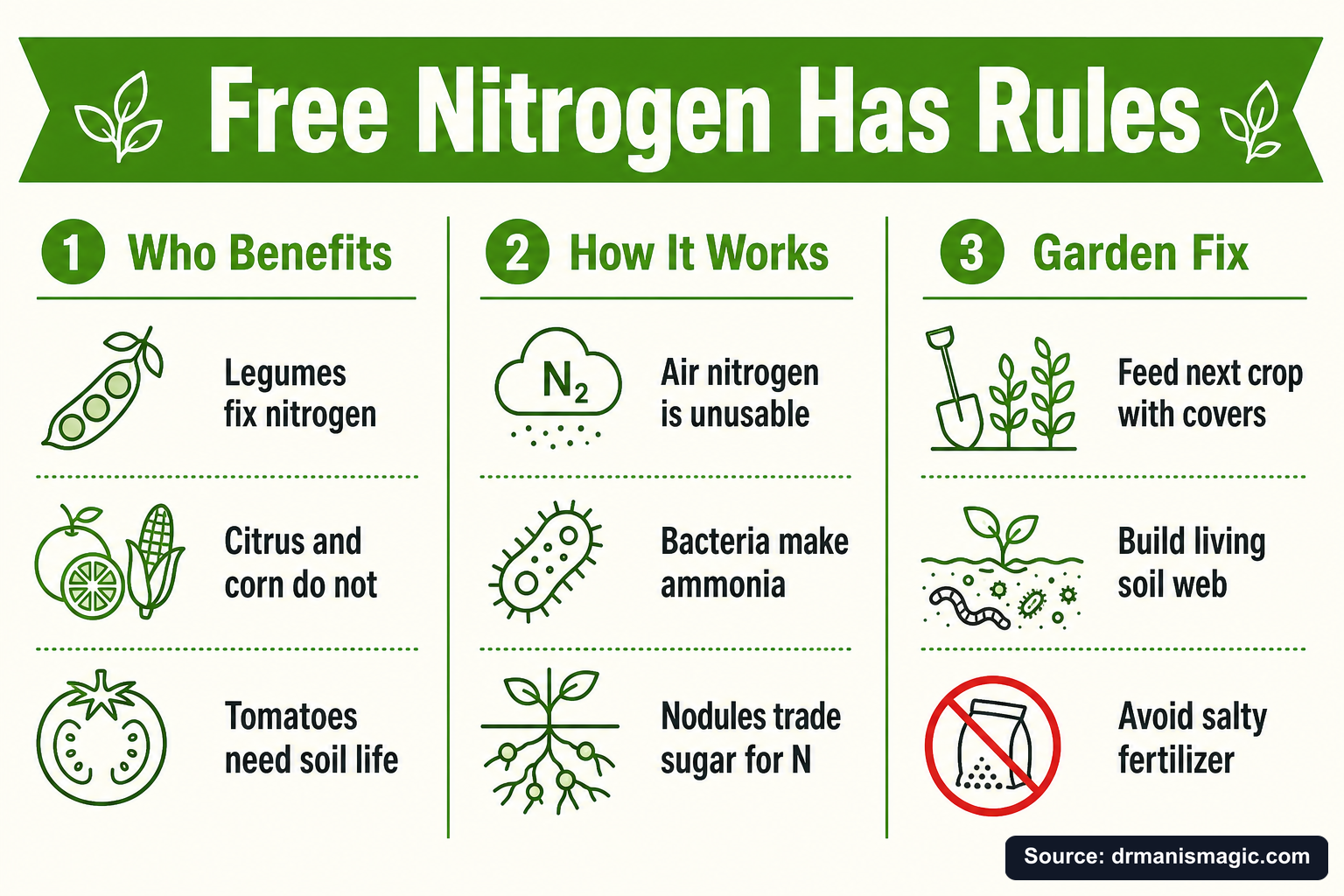
- Nitrogen-fixing bacteria convert atmospheric nitrogen into plant food, but only certain plants — mainly legumes — can use them directly through root nodules.
- Your citrus trees, tomatoes, corn, and most vegetables do not fix nitrogen on their own. They need a different kind of soil food web support.
- The real "free fertilizer" story is the soil food web — bacteria, fungi, protozoa, and nematodes working together to release nutrients near roots.
- Dead, dried, or foul-smelling microbial products fail because the microbes inside are no longer alive enough to do the job.
- Salt-based synthetic fertilizers kill the very bacteria that make free nitrogen possible.
- Cover crops fix nitrogen for the next crop, not the current one — timing matters enormously.
- The Three Plant Pillars — mineral soil, live microbes, and organic fertilizer — create the conditions where soil biology can thrive and feed your plants naturally.
What Do Nitrogen-Fixing Bacteria Actually Do?
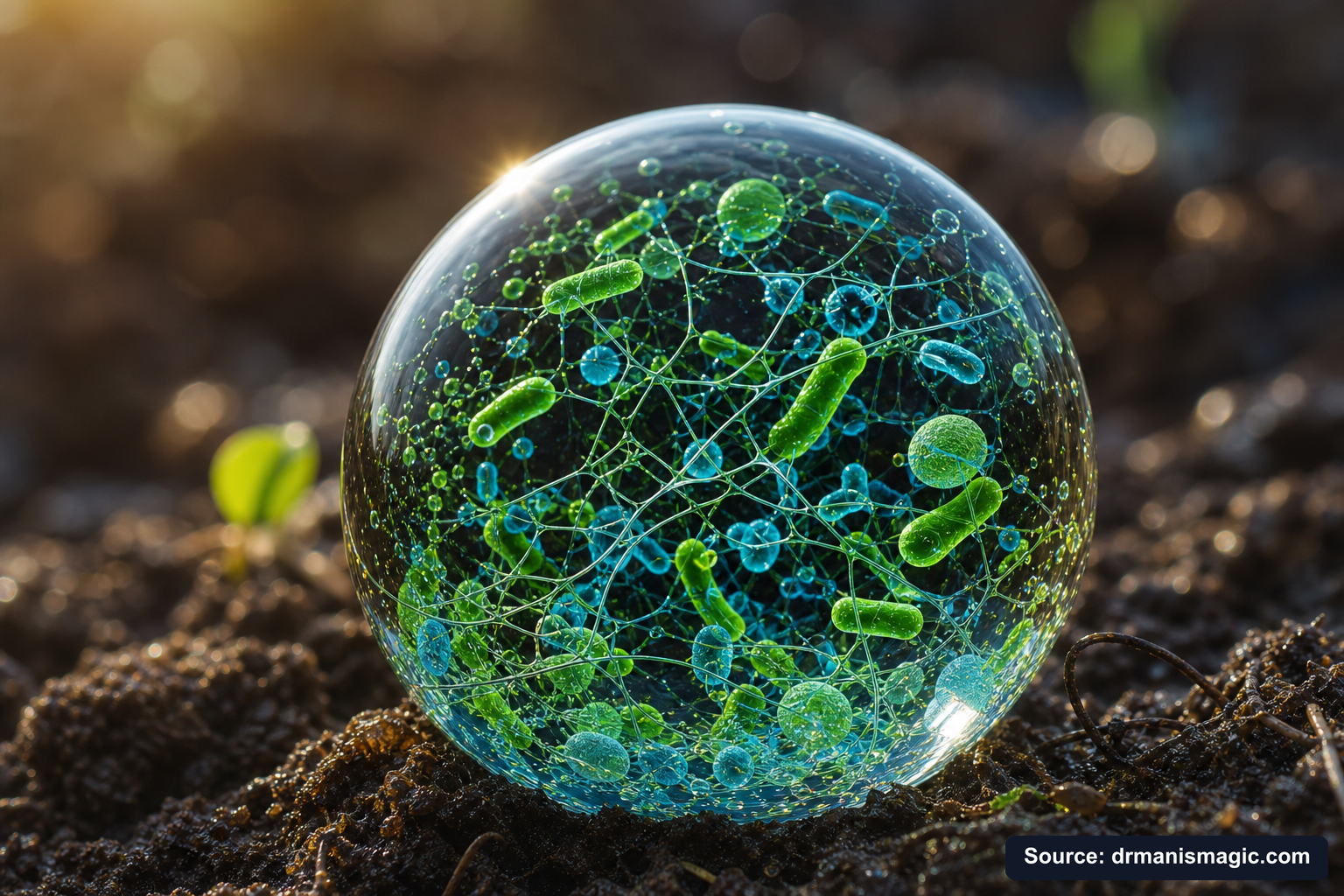
Quick Answer: Nitrogen-fixing bacteria take nitrogen gas from the air — which makes up 78% of the atmosphere but is useless to plants in that form — and convert it into ammonia, a form plants can actually absorb and use for growth. This process is called biological nitrogen fixation, and it is one of the most powerful natural fertility systems on Earth.
Here is something wild. The air above every square foot of your garden holds about 35,000 pounds of nitrogen. Thirty-five thousand pounds. But your plants cannot touch it. Not even a molecule. Because nitrogen gas (N2) is two nitrogen atoms locked together so tightly that almost nothing can break them apart.
Almost nothing. But certain bacteria can.
These bacteria carry a special enzyme called nitrogenase. Think of it like a tiny pair of molecular scissors. It snips that N2 bond and combines the nitrogen with hydrogen to make ammonia (NH3). Ammonia dissolves into the soil water. Plant roots drink it up. And suddenly, a plant that had no fertilizer has plenty of nitrogen to build leaves, stems, and fruit.
This is not a new trick. Scientists at the University of Minnesota Extension have documented how this single process drives natural ecosystem fertility across grasslands, forests, and wetlands — entirely without human input. University of Minnesota Extension explains biological nitrogen fixation in plain detail, and the numbers are staggering: legume-bacteria partnerships can fix anywhere from 50 to 200 pounds of nitrogen per acre per year.
That is a lot of free fertilizer. But here is the catch nobody tells you about.
Which Plants Actually Fix Nitrogen — and Which Ones Don't?
Quick Answer: Legumes — peas, beans, clover, alfalfa, soybeans, vetch, and lupine — fix nitrogen through a partnership with Rhizobium bacteria in their roots. Most other plants, including citrus, tomatoes, corn, peppers, and lawn grasses, do not fix nitrogen this way. They rely on a completely different set of soil microbe strategies to get their nutrients.
This is the biggest myth in backyard gardening. People plant a row of beans next to their tomatoes and expect the tomatoes to get fed. It does not work that way.
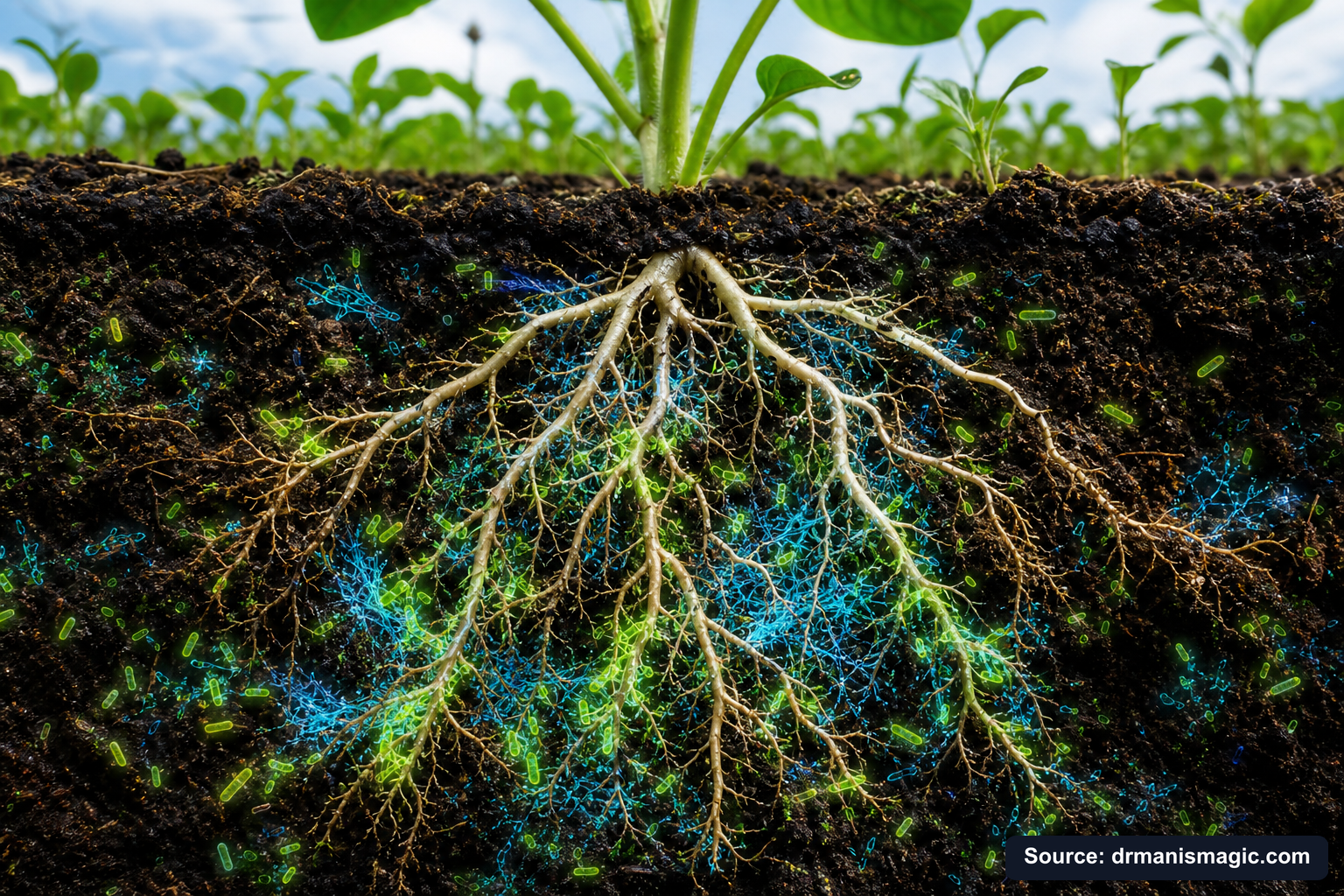
Here is how it actually works. Legume roots release chemical signals into the soil. Specific Rhizobium or Bradyrhizobium bacteria smell those signals and swim toward the root. The root lets them in. The root forms a nodule — that little pink bump. Inside the nodule, the bacteria get sugars from the plant. In return, they fix nitrogen and hand it back. It is a closed deal. A private partnership.
Your tomato plant next door does not get invited to that deal.
And your citrus tree? Definitely not. Citrus, corn, peppers, most vegetables, and lawn grasses do not form nodules. They do not fix nitrogen. They depend entirely on the soil food web — the invisible army of bacteria, fungi, protozoa, and nematodes — to unlock nutrients from organic matter in the soil.
| Plant Type | Fixes Nitrogen? | How | Examples |
|---|---|---|---|
| Legumes | Yes | Root nodules with Rhizobium bacteria | Peas, beans, clover, alfalfa, soybeans, vetch, lupine |
| Actinorhizal plants | Yes | Root nodules with Frankia bacteria | Alder trees, bayberry, sea buckthorn |
| Wetland plants | Partially | Cyanobacteria in water or surface soil | Rice paddies, wetland grasses |
| Most vegetables and fruit trees | No | Must rely on soil food web | Citrus, tomatoes, corn, peppers, cucumbers |
| Lawn grasses | No | Must rely on soil food web | Bermuda, St. Augustine, fescue, zoysia |
There are some free-living bacteria — like Azotobacter and Azospirillum — that fix small amounts of nitrogen without needing a plant partner. But their contribution is much smaller than the legume-nodule system. Penn State Extension notes that free-living fixers typically contribute only 2 to 5 pounds of nitrogen per acre per year, compared to the 50 to 200 pounds legumes can deliver. Penn State Extension covers the differences clearly and is worth a read if you want to go deeper.
What Is the Soil Food Web and Why Does It Feed Your Plants?
Quick Answer: The soil food web is the community of living organisms — bacteria, fungi, protozoa, and nematodes — that cycle nutrients through the soil. Bacteria and fungi lock up nutrients in their bodies. Protozoa and nematodes eat those bacteria and fungi and release plant-available nitrogen near the roots. This microbial loop is how most plants actually get fed in nature, not through nitrogen fixation alone.
Imagine a tiny city under your feet. Bacteria are the factory workers. Fungi are the highway system. Protozoa are the hungry predators roaming the streets. Nematodes are the bigger hunters. And at the center of it all are plant roots, pumping sugars out to keep the whole city alive.
This is not a metaphor. This is real biology happening in every healthy handful of soil.
Here is how the nutrient loop works. Bacteria and fungi eat dead organic matter — old leaves, root debris, dead insects — and lock the nutrients inside their own bodies. A protozoan comes along, eats a thousand bacteria for breakfast, and can only use about 30% of the nitrogen it just ate. The other 70%? It releases it as ammonium — right next to the plant root. The plant drinks it up.
This is why healthy soil feeds plants. Not because bacteria hand nitrogen to plants directly. But because the whole web is cycling nutrients constantly, releasing them right where roots need them most.
And roots are not passive in this. They pump sugars — called exudates — out into the soil on purpose. Those sugars feed specific bacteria and fungi. The plant is essentially farming its own microbes. It feeds them so they will feed it back.
Ask yourself this: how do plants in an old-growth forest grow so tall and strong with no fertilizer bags, no garden center, and no irrigation? This is the answer. The soil food web. Running 24 hours a day. Seven days a week. Completely invisible. Completely free.
| Organism | What It Does | Benefit to Your Plant |
|---|---|---|
| Nitrogen-fixing bacteria (Rhizobium, Azotobacter) | Converts atmospheric N2 into plant-usable ammonia | Free nitrogen for legumes; small amounts for other plants |
| Decomposer bacteria | Breaks down organic matter; stores nutrients in their bodies | Releases nutrients when eaten by protozoa or nematodes |
| Phosphorus-solubilizing bacteria | Unlocks tied-up phosphorus in soil minerals | More phosphorus available for root growth and flowering |
| Mycorrhizal fungi | Extends root system up to 100x; mines phosphorus, zinc, micronutrients | Dramatically improved nutrient and water uptake; drought resistance |
| Protozoa | Eats bacteria; releases excess nitrogen as ammonium near roots | The single biggest driver of plant-available nitrogen in healthy soil |
| Beneficial nematodes | Eats bacteria, fungi, and pest insects; releases nutrients | Nutrient cycling plus natural pest control (not all nematodes are bad) |
| Fungi (general decomposers) | Breaks down tough organic matter; builds soil structure with glomalin | Better drainage, aeration, and long-term soil health |
Do Legume Cover Crops Feed Your Current Plants or the Next Ones?
Quick Answer: Cover crops mostly feed the next crop, not the current one. While the legume is alive and growing, it keeps most of the fixed nitrogen inside its own tissues. That nitrogen only becomes available to your other plants after the cover crop is cut down, left to decompose, and broken apart by soil microbes. This can take weeks to months depending on your soil temperature and biology.
This is one of the most common mistakes gardeners make. They plant crimson clover between their fruit trees, expecting the trees to start thriving immediately. Then they get frustrated when nothing changes.
The clover is not being selfish. It is just keeping its nitrogen locked inside its own leaves and stems while it is alive. Once you cut it, chop it, or let it die naturally, the decomposer bacteria and fungi get to work. They break down the plant tissue. The nutrients inside get released. Protozoa graze on the bacteria. Ammonium flows into the root zone. And then your trees start benefiting.
Timing matters enormously. If you want cover-crop nitrogen to help your spring vegetable garden, terminate the cover crop in fall or early winter. Give the soil food web time to do its work before you plant.
Also important: if your soil is heavy in synthetic fertilizers, the nitrogen fixation system actually slows down. When there is already plenty of mineral nitrogen in the soil, Rhizobium bacteria stop working so hard. The plant stops feeding the nodules as many sugars. The partnership weakens. This is another reason why chasing quick chemical fixes actually makes your soil biology weaker over time.
Why Do Salt-Based Fertilizers Destroy the Free-Nitrogen System?
Quick Answer: Salt-based synthetic fertilizers kill or suppress the bacteria and fungi that make biological nitrogen fixation and nutrient cycling possible. High salt levels in the root zone dehydrate microbial cells, disrupt nitrogen-fixing nodules, and wipe out mycorrhizal fungi. Every time you pour a salt-based fertilizer on your soil, you are removing the very workforce that feeds your plants for free.
Picture squeezing a sponge. Salt in the soil does something similar to a bacterial cell. It pulls the water right out through the cell wall. The bacteria shrinks. It shuts down. In high enough concentrations, it dies. And it does not matter whether that bacterium was a nitrogen fixer, a decomposer, or a mycorrhizal fungus. Salt is an equal-opportunity killer.
Big chemical companies have known this for decades. They sell you a bag of quick-release fertilizer. Your plant greens up fast. You feel like a genius. But underneath the surface, the salt is quietly burning through your microbial community. Six months later, the soil is more dependent on fertilizer than ever. So you buy another bag. And another.
That is not a coincidence. That is a business model.
Here at Dr. Mani's Magic, we call this the cycle you never asked to be in. Salt fertilizers do not build soil. They mine it. Every bag pulls a little more biology out of the ground and replaces it with dependency.
See also: Why Most Fertilizers Are Actually Salt in Disguise
See also: The Hidden Reason Synthetic Fertilizers Cause Root Rot
You Never Had a Brown Thumb.
You were handed the wrong tools. This free guide hands you the right ones.
You watered it. You fed it. It died anyway.
It was never you. It was the dirt, the salt food, and the bad advice.
This guide shows you what really went wrong, and how to fix it for good.
- Why your plants really died, and why it was never your fault
- The salt hiding in your plant food that quietly burns the roots
- The hidden killer in almost every bag of store soil
- The tiny helpers that grow a whole forest for free
- The rescue trick that brings a half dead plant back to life

What Is the Difference Between Living and Dead Microbial Products?
Quick Answer: Most microbial inoculants on store shelves contain bacteria and fungi that were dried, powdered, or stored improperly and are no longer alive enough to colonize your soil. A truly live microbial product contains active, thriving organisms that you can actually see moving under a microscope. Dead microbes cannot fix nitrogen, cycle nutrients, or protect roots — no matter what the label says.
You have probably seen the bottles. Microbial inoculant. Billions of CFUs. Sounds impressive. But here is what the label does not tell you.
Most of those microbes were grown in a factory, dried into a powder, and packed into a bottle months or years before you bought them. The hope is that when you add water, they wake up and go to work. But after growing and testing dozens of these products on our citrus trees, we can tell you plainly: most of them do not work. The microbes are either dead or too weak to compete with the biology already in your soil.
Then there is the other category — liquid compost teas that smell absolutely terrible. Like sewage. Like something died in the bottle. Because something did. Those products started with real, live microbes from compost. But without oxygen and proper stabilization, the microbes went anaerobic and started dying within 24 to 48 hours. You get some humic acid and fulvic acid from the organic base, which helps a little. But the living biology? Gone.
And please — keep lactobacillus bacteria in your yogurt. Yes, it is easy to grow and stays alive. But in soil, it crowds out the beneficial microbes you actually need. It does not belong in your garden.
| Product Type | Microbe Viability | Microbial Spectrum | Odor | Does It Work? |
|---|---|---|---|---|
| Dry powder inoculants (lab-grown) | Very low | Narrow (1-5 species) | Minimal | Rarely. We tested dozens. Results were poor. |
| Liquid with dried powder rehydrated | Low | Narrow | Minimal | Same problem as above |
| Compost tea (fresh, under 24 hours) | Moderate | Broad but inconsistent | Earthy to slightly sour | Yes, if truly fresh. Hard to get right. |
| Compost tea (old, over 24 hours) | Very low | Dying | Strong sewage smell | No. Microbes are gone. Avoid. |
| Lactobacillus products | High (but wrong species) | Very narrow | Sour | No. Outcompetes beneficial microbes. |
| Plant Super Boost (stabilized, full-spectrum) | High | 2,000+ bacteria species; 400-500 fungi including mycorrhizae; protozoa and nematodes | Earthy, not foul | Yes. Verified by microscope and lab analysis. |
This is why we built Plant Super Boost the way we did. Our partner — a world-renowned compostologist who has advised royal families and governments on farming practices — developed a natural stabilization method that keeps the full spectrum of microbes alive without refrigeration, without going anaerobic, and without that horrible smell. You can take a single drop of Plant Super Boost, put it under a microscope, and watch the microbes moving. That is life. Real, working, soil-building life in a bottle.
Zero PFAS. Zero biosludge. Zero synthetic salts. And a 30-day money-back guarantee because we know it works.
Why Does Mycorrhizal Fungi Matter Even Though It Does Not Fix Nitrogen?
Quick Answer: Mycorrhizal fungi do not fix nitrogen, but they dramatically expand what your plant's roots can reach. They extend the root system up to 100 times its normal surface area, pulling in phosphorus, zinc, water, and micronutrients that roots alone could never access. Without mycorrhizae, your plant is functionally blind to most of the nutrition sitting right there in the soil.
Have you ever pulled up a weed and noticed white fuzzy threads wrapping around the roots? That is mycorrhizal fungi. And it is the reason weeds are so hard to kill. They are plugged into the underground network.
Mycorrhizae do not just feed plants — they protect them. Research from USDA NRCS shows that mycorrhizal fungi produce a sticky protein called glomalin that literally glues soil particles together into aggregates. Those aggregates create air pockets. Air pockets mean drainage. Drainage means roots can breathe. And roots that can breathe resist rot.
When you uproot a weed and see those white threads, you are looking at one of the most powerful plant tools on Earth. And most store-bought potting mixes are completely sterile — no fungi, no bacteria, no protozoa. You plant your tree in what is essentially biological concrete and wonder why it struggles.
This is why Pillar 2 of the Three Plant Pillars is live microbials. Not just nitrogen-fixing bacteria. The full spectrum. Because your plant does not just need nitrogen. It needs the whole invisible workforce.
How Do You Actually Rebuild Soil Biology After Damage?
Quick Answer: Rebuilding damaged soil biology takes consistent action over time. You cannot fix years of salt fertilizer damage or herbicide use in one watering. But with the right inputs — stopping the damage, adding live microbes, feeding them with organic matter, and giving them a mineral soil structure to thrive in — you will start seeing improvement within weeks and major change within months.
If your soil has been treated with herbicides, pesticides, synthetic fungicides, or salt-based fertilizers, the microbial community has taken hits. Some species are gone. Others are severely weakened. The nitrogen-fixing bacteria that could be working for you are either absent or too stressed to build nodules.
This is not a death sentence for your garden. But it does mean you need a plan.
Here is a simple recovery checklist you can start this week:
- Stop adding salt-based fertilizers. Every bag you pour disrupts the biology you are trying to rebuild. Switch to an organic, slow-release option like crab, kelp, and amino acids — which feeds the soil without burning the microbes.
- Add live microbes immediately. Not dried powder. Not stinky compost tea. A genuinely live, full-spectrum microbial product applied monthly. This is the fastest way to reintroduce the soil food web.
- Feed the microbes with organic matter. Compost, mulch, and organic fertilizers give bacteria and fungi something to eat and decompose. A living soil needs food just like your plants do.
- Check your soil structure. If your potting mix is compacted, soggy, or smells musty, it is suffocating roots and killing microbes. Mineral-based soil that drains properly is not optional — it is the foundation everything else stands on.
- Plant a legume cover crop if you have space. Crimson clover, vetch, or field peas will start rebuilding nitrogen-fixing biology in your soil. Terminate them before they go to seed and let them decompose as a nitrogen source for your next crop.
- Be patient — and consistent. One application will not undo years of damage. Monthly microbial applications over a full growing season will produce visible, measurable results in soil health, root growth, and plant vigor.
- Protect your biology going forward. Avoid broad-spectrum pesticides and fungicides where possible. Every chemical that kills the bad guys also kills some of the good ones. Healthy soil biology is your best long-term pest defense anyway.
We have seen this work on thousands of trees. Growers who had yellowing, struggling citrus on dead soil — brought back to full productivity within one growing season. Not with more chemicals. With biology. With the Three Plant Pillars working together the way nature designed them to.
You can explore the complete Three Plant Pillars system here and see exactly how mineral soil, live microbes, and organic fertilizer work together as one system.
The "Free Fertilizer" Myth vs. The Real Soil Biology Strategy
Quick Answer: Nitrogen-fixing bacteria are real and powerful, but they are only one part of a much bigger story. The real free-fertilizer system is the entire soil food web — bacteria, fungi, protozoa, and nematodes working together to cycle nutrients, protect roots, and feed plants continuously. Building that system is the actual goal.
Let's put this head to head. Here is what the myth says versus what the biology actually shows.
Myth: All bacteria fix nitrogen.
Truth: Only specific nitrogen-fixing species do this. Most soil bacteria are decomposers, nutrient cyclers, or plant-growth promoters. They are all valuable — but for different reasons.
Myth: Citrus trees fix nitrogen.
Truth: Citrus does not form nodules and does not fix nitrogen. Citrus benefits from the soil food web — especially mycorrhizal fungi for phosphorus and micronutrient uptake, and decomposer bacteria for nitrogen mineralization.
Myth: Plant a legume and all your neighbors get free nitrogen immediately.
Truth: The legume keeps its fixed nitrogen while alive. The nitrogen releases for neighbors only after the legume dies and decomposes. Plan for the next season, not this one.
Myth: Microbial inoculants are magic dust — just sprinkle and win.
Truth: Dead microbes do nothing. Inoculant strain must match the specific plant. Freshness matters enormously. Cold-chain storage, sunlight sensitivity, and seed-treatment compatibility all affect whether any living biology reaches your soil at all.
Myth: Sterile soil is better — no pathogens.
Truth: Sterile soil has no beneficial biology either. It is biologically empty. In a sterile environment, the first microbe to arrive — often a pathogen — wins unopposed. Living, diverse soil biology is your best defense against disease.
Myth: All nematodes are bad.
Truth: Beneficial nematodes are key players in the soil food web. They eat harmful bacteria, pest larvae, and fungi, and they release nutrients as they do. Broad-spectrum pesticides kill them along with the pests.
The real strategy — the one that works in forests, grasslands, orchards, and backyard gardens — is to build a living soil that cycles nutrients continuously. That means mineral structure so roots can breathe. Live microbes to do the invisible lifting. And organic nutrition that feeds the soil food web without burning it down.
That is not a new idea. That is what soil has been doing since before humans existed. We are just finally learning to get out of its way.
For a deeper look at how your soil structure affects everything above, visit our guide to Super Soil — the mineral-based foundation that makes biological nitrogen work better.
What Can You Do Right Now to Make Soil Biology Work for You?
Quick Answer: Start by stopping what kills biology — salt fertilizers and broad-spectrum chemicals. Then add live, full-spectrum microbes monthly, feed them with organic matter, and make sure your soil drains and aerates properly. Do this consistently for one full growing season and you will see a soil that feeds your plants the way nature intended.
You cannot get back the time you spent on dead soil and struggling plants. But you can start today.
Here is the clearest picture we can give you. Somewhere in your garden right now, there is nitrogen locked in the soil organic matter that your plants cannot use. There is phosphorus bound to mineral particles that roots cannot reach. There is water sitting in compacted pockets instead of flowing through. And there are pathogens waiting for a weakened root to attack.
All of that changes when the soil food web comes alive.
When the bacteria start decomposing organic matter, the protozoa start releasing nitrogen near roots, the mycorrhizal fungi start extending the root system, and the beneficial nematodes start hunting pest larvae — your plant is no longer alone. It has an entire invisible workforce doing the heavy lifting.
The nitrogen-fixing bacteria are part of that crew. The legumes in your garden can absolutely contribute free nitrogen to your soil over time. But the full power of living soil is so much bigger than one type of bacteria and one type of plant.
Dr. Mani Skaria — Professor Emeritus of Plant Pathology, inventor of microbudding, and founder of the Clean Citrus Program in Texas — spent 40 years figuring this out on real trees in real soil. We tested it on over 250,000 citrus trees at US Citrus Nursery in South Texas. We tested it on houseplants, tropical trees, gardens, and our own grove. The results were not subtle. When the Three Plant Pillars are in place — mineral soil, live microbes, organic fertilizer — plants do not just survive. They thrive like they were built to.
If you are ready to stop guessing and start growing with biology on your side, download our Free Plant Care Field Guide and see the complete system laid out in plain language. It is the same guide we give to every grower who wants to stop fighting nature and start working with it.
The soil is alive. It has always been alive. You just need to give it the right conditions to do its best work — and then watch what happens.
Frequently Asked Questions
Nitrogen-fixing bacteria sound like magic. And in a way, they are. But most gardeners never learn the full story. These questions cut through the confusion so you can stop guessing and start growing with real biology on your side.
How do plants actually benefit from nitrogen-fixing bacteria?
Certain bacteria pull nitrogen gas right out of the air and turn it into ammonia. Plant roots can drink ammonia up and use it to build leaves, stems, and fruit. The catch is that most plants cannot do this on their own. They need a living soil full of helpful microbes working around their roots. That is exactly what the Three Plant Pillars are designed to create. At our South Texas nursery, we watched living soil biology transform over 250,000 trees. The results were not subtle.
Can I buy nitrogen-fixing bacteria for my garden?
Yes. But here is the problem nobody talks about. Most bottled microbial products sit on a shelf for months. The bacteria inside die or go dormant. You pour dead water on your plants and wonder why nothing changes. Dr. Mani's Magic Plant Super Boost uses a special stabilization process to keep live bacteria, fungi, and mycorrhizae alive right up until they hit your soil. Live microbes work. Dead ones do not. That difference is everything.
How do I add nitrogen-fixing bacteria to my soil?
Start with the right foundation. Mineral-based soil that drains well and holds oxygen gives bacteria a place to breathe and multiply. Synthetic fertilizers kill them fast, so swap those out for a slow-release organic fertilizer made from crab, kelp, and amino acids. Then add live microbials directly to your soil or mix them into your watering can. That is the Three Plant Pillars working together. Skip one pillar and the whole system gets weaker.
Which plants do not like too much nitrogen?
Root vegetables like carrots and beets want low nitrogen. Too much pushes all growth into leaves and ignores the root you actually want to eat. Fruiting crops like tomatoes and strawberries also suffer. High nitrogen makes them grow big leafy vines with almost no fruit. Legumes like beans and peas fix their own nitrogen from the air, so adding more just throws them off balance. Organic slow-release fertilizer helps you avoid overloading any of these plants.
Can nitrogen fix yellow leaves on my plants?
Sometimes. Nitrogen deficiency is one of the most common reasons leaves turn yellow, starting with the older leaves at the bottom of the plant. But here is what most people miss. If your soil is dead, adding nitrogen fertilizer is like pouring water into a broken bucket. The microbes that help roots actually absorb nitrogen are gone. Fix the soil biology first with live microbials. Then feed with organic fertilizer. Yellow leaves caused by deficiency usually start greening up within a few weeks.
How does nitrogen actually help plants grow?
Nitrogen is the engine behind green growth. It builds chlorophyll, which lets leaves capture sunlight and turn it into food. It also builds proteins and enzymes that run almost every process inside a plant. Without enough nitrogen, plants look pale, grow slowly, and struggle to fight off pests and disease. With the right amount delivered through organic slow-release fertilizer and a living soil food web, plants grow strong, green, and resilient. That is nature working the way it was designed to work.
Is too much nitrogen bad for my plants?
Too much nitrogen is one of the fastest ways to wreck a garden. Salt-based synthetic fertilizers dump a flood of nitrogen all at once. Leaves turn dark and waxy. Stems go weak. Flowers and fruit disappear because the plant just keeps making leaves. Roots can burn. Pests love the soft, nitrogen-rich tissue. Slow-release organic fertilizer from crab, kelp, and amino acids feeds plants gradually the way nature intended. No flood. No burn. No crash. Just steady, healthy growth that builds over time.
About the Author
Dr. Mani Skaria, PhD
Dr. Mani Skaria, PhD, is a plant pathologist and the scientific founder of Dr. Mani's Magic. He earned his doctorate at Purdue University and spent 48 years studying how plants, soil, and living microbes work together, including his years as Professor Emeritus at Texas A&M and as a member of the USDA NAREEE Advisory Board. He invented micro-budding, a method for growing healthier, stronger trees, and has grown more than 250,000 trees on the family farm in Hargill, Texas - US Citrus Nursery. His life's work takes real lab science and practical experience and turns it into simple, safe, organic plant care anyone can use at home.


