


How Micro-Arthropods Shred Organic Matter in Your Soil | Dr. Mani's Magic
How Micro-Arthropods Shred Organic Matter (And Why Your Soil Desperately Needs Them)
Picture this. You rake a pile of dead leaves off your lawn. You bag them up. You haul them to the curb. Done and done, right?
Now imagine if instead you left those leaves right there on the soil. Within days, something invisible starts happening. Tiny creatures no bigger than a grain of sand begin tearing those leaves apart. Shredding them. Grinding them into smaller and smaller pieces. Opening up every surface to an army of bacteria and fungi that convert that crumbled leaf into something your plant roots can actually drink. That pile of "dead" leaves? It was never dead. It was the beginning of the most powerful nutrient recycling system on Earth.
Most gardeners never see this happening. They never connect the tiny crawling things in their compost or mulch to the reason their neighbor's garden explodes while theirs just sits there. But after growing over 250,000 trees at our South Texas nursery, we learned that the real magic of soil starts not with fertilizer from a bottle, but with a workforce so small you need a magnifying glass to see them. They are called micro-arthropods. And once you understand what they do, you will never look at a leaf pile, a compost bin, or a handful of dark crumbly soil the same way again.
Key Takeaways
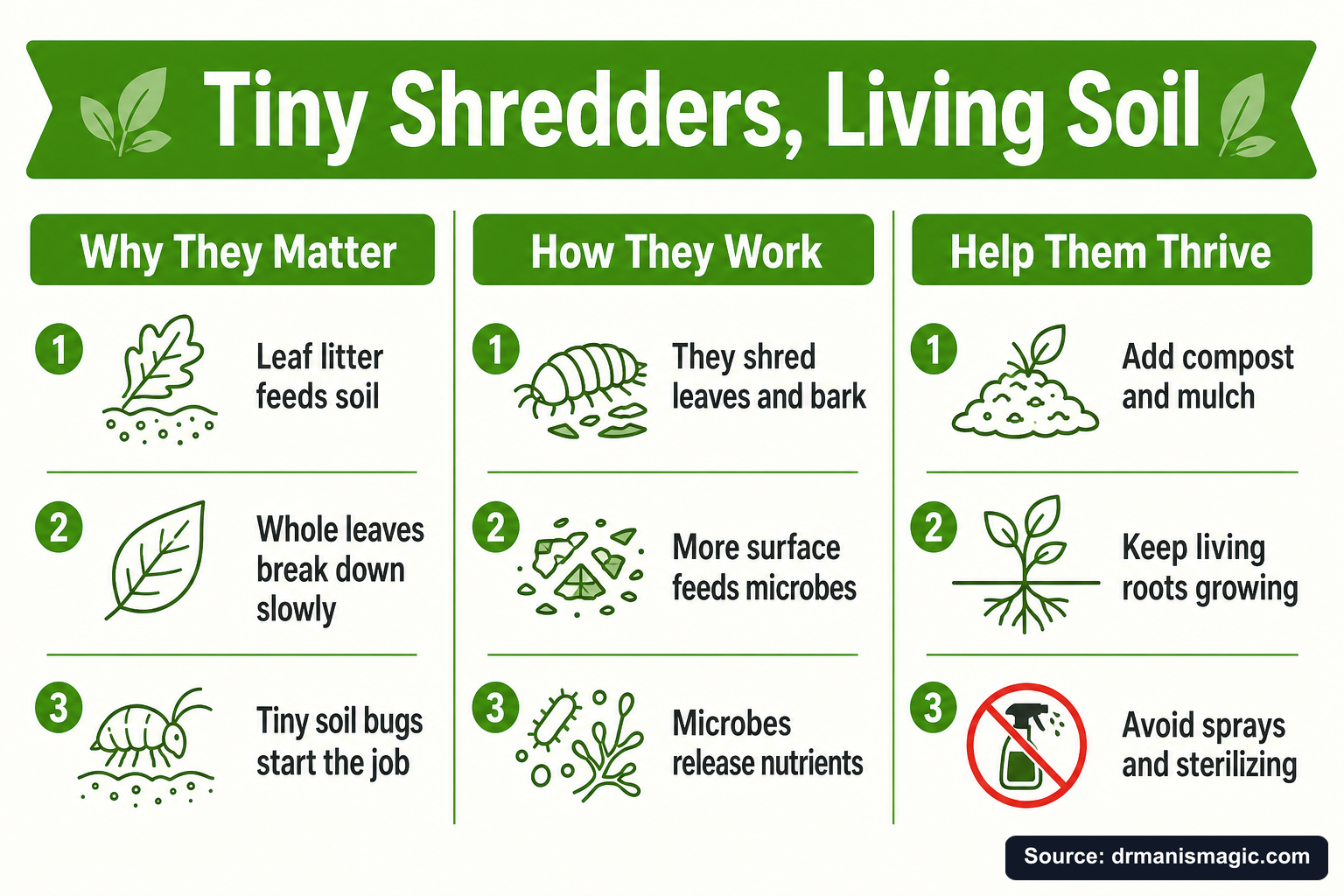
- Micro-arthropods do not fully digest organic matter alone. Their main job is shredding it into smaller pieces so bacteria and fungi can do the heavy lifting.
- This shredding exposes more surface area to microbes, which dramatically speeds up decomposition and nutrient release for your plants.
- The soil food web is a handoff system: plants feed microbes, microbes feed plants, micro-arthropods shred and spread biology, and everything works together.
- Springtails, soil mites, isopods, millipedes, and insect larvae are the most common shredders in healthy garden soil and compost.
- Pesticides, synthetic fertilizers, fungicides, and soil sterilization wipe out micro-arthropods and collapse the entire decomposition chain.
- You can rebuild a damaged soil food web by adding compost, mulch, living roots, and genuinely live microbial products like Plant Super Boost.
- Visible tiny creatures in your compost, potting mix, or raised bed are almost always beneficial. The instinct to spray them is usually the wrong move.
What Exactly Are Micro-Arthropods and Why Should You Care?
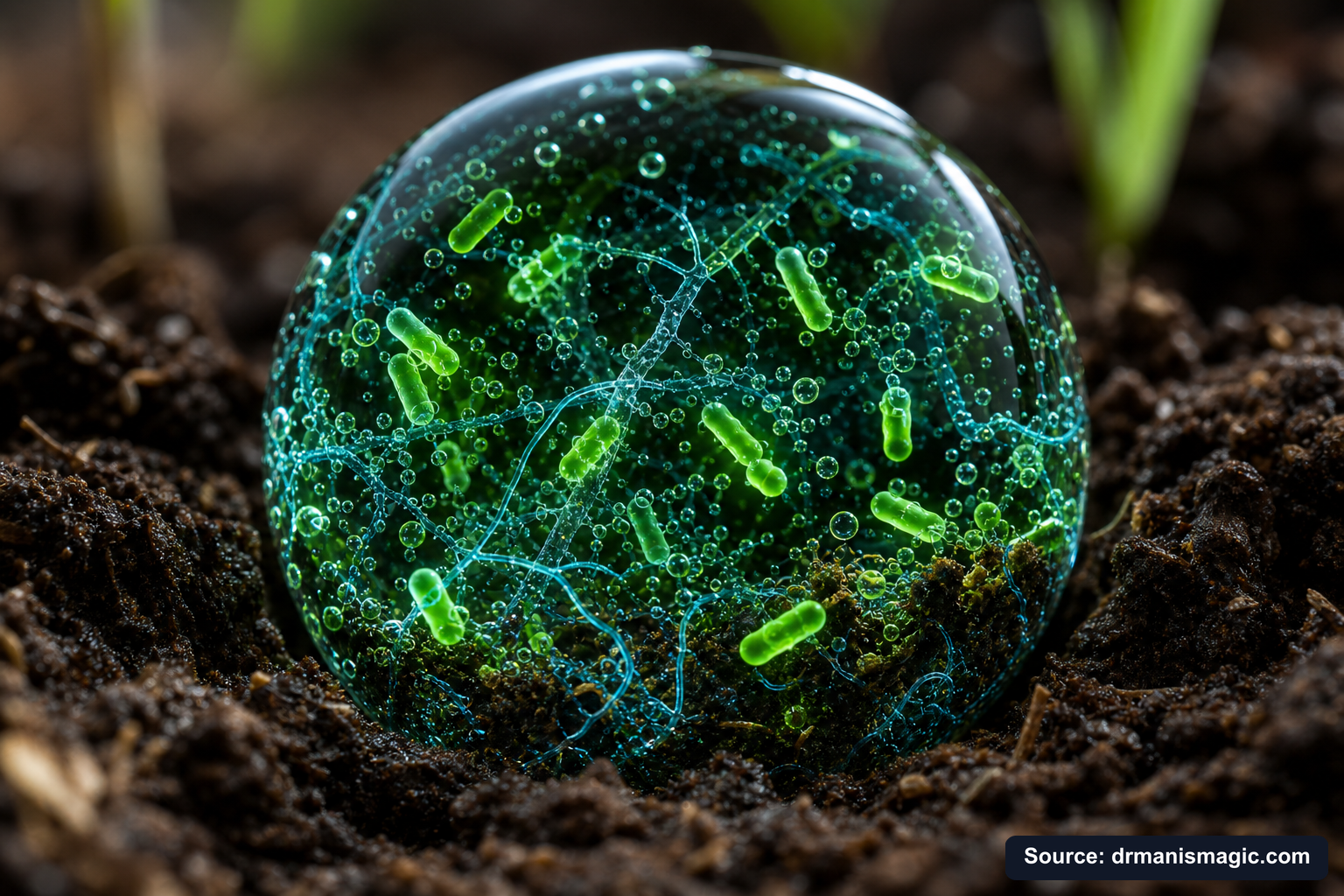
Quick Answer: Micro-arthropods are tiny soil-dwelling animals, including mites, springtails, millipedes, and isopods, that physically shred leaves, bark, and other organic residues into smaller pieces. This shredding is the critical first step in turning dead plant material into the living, nutrient-rich soil your plants feed from.
Micro-arthropods are animals with jointed legs and segmented bodies. They live in soil, compost, mulch, leaf litter, and even potting mix. Most are so small you can barely see them. But they are everywhere in healthy soil, sometimes millions of them in a single square foot.
The word "arthropod" covers a huge family. Insects are arthropods. So are spiders and crabs. Micro-arthropods are just the tiny members of that family who spend their lives in the soil.
The most important ones for your garden are these:
- Oribatid mites — the most numerous soil arthropods on Earth. They chew through leaf litter and fungal threads constantly.
- Springtails — tiny jumping insects that graze on fungi and shred soft organic material. A healthy sign in any potting mix or raised bed.
- Isopods (sowbugs and pillbugs) — the gray rolly-pollies you find under pots and logs. They are champion shredders of tough plant material.
- Millipedes — slow-moving shredders that tear through leaves and wood chips.
- Small insect larvae — many beetle and fly larvae live in soil and compost, breaking down organic residues as they feed.
- Symphylans — pale, centipede-like creatures that feed on fine roots and organic matter in compost-rich soils.
These creatures are not pests. They are the opening act of decomposition. Without them, the whole show slows down.
How Do Micro-Arthropods Actually Shred Organic Matter Step by Step?
Quick Answer: Micro-arthropods shred organic matter by biting, scraping, and grinding leaves, bark, roots, and dead fungi into tiny fragments. This exposes fresh surfaces to bacterial and fungal attack, speeds up decomposition by orders of magnitude, and creates fecal pellets packed with microbes that become hotspots for nutrient cycling.
Here is the step-by-step process that happens in your soil and compost right now, whether you know it or not.
- Fresh residue lands on or in the soil. A leaf falls. A root dies. A handful of compost gets added. This organic material is tough. It has thick cell walls, waxy coatings, and in the case of woody material, it contains lignin, one of the hardest natural substances on Earth.
- Fungi move in first. Fungal threads called hyphae begin colonizing the residue. Fungi are the specialists for tough, carbon-rich material. They secrete enzymes that start breaking down lignin and cellulose. But they cannot do this fast enough on their own. The surface area is too limited. According to research from University of Maryland Extension, decomposition rates increase dramatically when physical fragmentation combines with microbial action.
- Micro-arthropods start shredding. Mites and springtails begin grazing on the fungal hyphae. Isopods and millipedes bite into the softened leaf tissue. Every bite fragments the material. Every scrape opens new surfaces. A single leaf goes from one large piece to hundreds of tiny fragments. That is not a small change. It multiplies the available surface area by hundreds of times.
- Bacteria swarm the exposed surfaces. Bacteria prefer fresh, nitrogen-rich material and the newly exposed inner tissue of shredded residues. They explode in population on every freshly cut surface. They secrete enzymes that dissolve nutrients from the material. This is where most of the actual chemical decomposition happens.
- Micro-arthropods spread microbes like a living postal service. As mites and springtails move through the soil, they carry bacteria and fungal spores on their bodies and in their guts. Every step they take deposits biology into new areas of the soil. This is how beneficial microbes spread through a garden bed or compost pile far faster than they could on their own.
- Gut passage inoculates the material. When organic matter passes through the gut of a micro-arthropod, it gets bathed in digestive enzymes and microbial cultures. What comes out as a fecal pellet is pre-digested, microbe-rich, and much more available to the next layer of the soil food web.
- Fecal pellets become microbial hotspots. The tiny pellets dropped by mites, springtails, and isopods are dense with bacteria, fungi, and organic compounds. They become the most biologically active spots in the soil. This is where nutrients get converted into forms plant roots can absorb.
- Protozoa and nematodes graze on the microbial bloom. Single-celled protozoa and microscopic nematodes eat the bacteria and fungi that explode in population on shredded residues and fecal pellets. When they eat a microbe, they release the nutrients locked inside that microbial cell as plant-available nitrogen, phosphorus, and other minerals. This is the nutrient release step. This is what actually feeds your plant.
- Aggregates form and soil structure builds. Fungal threads and bacterial glues bind the shredded particles and fecal pellets together into stable clumps called aggregates. These aggregates create the crumbly, dark, spongy texture of great soil. They hold air. They hold water. They give roots room to breathe and grow.
That nine-step chain is how a dead leaf becomes living plant nutrition. Every single step depends on the one before it. And micro-arthropods are the key that unlocks steps three through seven.
What Is the Soil Food Web and Where Do Micro-Arthropods Fit In?
Quick Answer: The soil food web is a layered system of organisms that pass energy and nutrients from one to the next. Plants feed microbes through their roots. Microbes decompose organic matter. Micro-arthropods shred residues and graze fungi, spreading microbes and releasing nutrients. Protozoa and nematodes eat microbes, releasing plant-available nutrients. Micro-arthropods are the middle layer that keeps the whole chain moving.
Think of the soil food web like a company with different departments. Each department does one job. Together they produce something none of them could make alone.
| Organism | Size | Main Job | What They Produce for Plants |
|---|---|---|---|
| Plant roots | Visible | Release sugars into soil to feed microbes | Fuel for the entire food web |
| Bacteria | Microscopic | Decompose fresh residues, fix nitrogen, solubilize minerals | Plant-available nitrogen, phosphorus, trace minerals |
| Fungi (including mycorrhizae) | Microscopic threads | Break down tough lignin-rich material, extend root reach | Phosphorus, water access, disease suppression |
| Micro-arthropods (mites, springtails, isopods) | Barely visible | Shred residues, graze fungi, spread microbes, create fecal pellets | Accelerated decomposition, microbial inoculation, soil aggregates |
| Protozoa | Microscopic | Eat bacteria and fungi | Release nutrients locked in microbial cells |
| Nematodes (beneficial) | Barely visible | Graze on bacteria, fungi, and pest organisms | Nutrient mineralization, pest suppression |
| Earthworms | Visible | Mix soil layers, create channels, digest large amounts of organic matter | Castings rich in plant-available nutrients, improved soil structure |
Notice that micro-arthropods sit in the middle. They are not the start of the chain and they are not the end. They are the critical relay point. When they disappear, the chain breaks. Decomposition slows. Nutrients get locked up. Plants struggle. And the gardener reaches for a synthetic fertilizer, which makes things worse. We will get to that in a moment.
Research from soil ecologists at the University of Wisconsin has long confirmed that the soil food web's predator-prey relationships, including micro-arthropod grazing on fungi, drive nutrient cycling rates in ways that synthetic inputs simply cannot replicate.
Are the Tiny Bugs in My Compost, Potting Mix, or Raised Bed Good or Bad?
Quick Answer: Almost always good. Springtails, oribatid mites, isopods, pot worms, and millipedes in your compost or soil are signs of a healthy biological system doing exactly what it should. The instinct to spray them is the wrong move. The only soil organisms to watch carefully are fungus gnat larvae near plant roots, root aphids, and symphylans in large numbers.
This is the question we get all the time. Someone lifts a pot or opens a bag of compost and sees things crawling. The first reaction is panic. The second reaction is to reach for a spray bottle.
Stop. Put the spray down.
Here is a simple diagnostic table to help you know what you are looking at.
| Organism | What It Looks Like | Status | What It Does | When to Act |
|---|---|---|---|---|
| Springtails | Tiny white or gray jumping dots | Beneficial | Graze fungi, shred organic matter, spread microbes | Almost never. They signal good biology. |
| Oribatid mites | Tiny brown or black rounded specks | Beneficial | Shred litter, graze fungi, create fecal pellets | Never. These are gold. |
| Predatory mites | Fast-moving reddish or orange specks | Beneficial | Eat pest mites and small harmful insects | Never. They protect your plants. |
| Isopods (pillbugs, sowbugs) | Gray oval rolly-pollies | Beneficial | Shred tough plant material, improve soil structure | Rarely. Only if plant damage is visible and confirmed. |
| Millipedes | Long segmented, many legs, slow-moving | Beneficial | Shred leaves and woody material | Almost never. |
| Pot worms (enchytraeids) | Tiny white threadlike worms | Beneficial | Process organic matter alongside earthworms | Never. Sign of active decomposition. |
| Fungus gnat larvae | Tiny white maggots near soil surface | Watch carefully | Feed on fungi and fine roots in large numbers | If plant wilting or root damage is confirmed. Reduce overwatering first. |
| Root aphids | Pale, waxy, clustered near roots | Pest | Suck plant sap from roots | Yes. Confirm with root inspection before treating. |
| Symphylans (in high numbers) | Fast white centipede-like, very small | Watch carefully | Feed on root tips in large populations | Only if root feeding damage is confirmed and populations are very high. |
The single biggest mistake gardeners make is spraying a broad-spectrum pesticide the moment they see something crawling in their soil. That one decision wipes out the very organisms doing the decomposition work. It collapses the food web. And then they wonder why their plants start struggling a few weeks later.
You Never Had a Brown Thumb.
You were handed the wrong tools. This free guide hands you the right ones.
You watered it. You fed it. It died anyway.
It was never you. It was the dirt, the salt food, and the bad advice.
This guide shows you what really went wrong, and how to fix it for good.
- Why your plants really died, and why it was never your fault
- The salt hiding in your plant food that quietly burns the roots
- The hidden killer in almost every bag of store soil
- The tiny helpers that grow a whole forest for free
- The rescue trick that brings a half dead plant back to life

What Happens When Micro-Arthropods Disappear From Your Soil?
Quick Answer: When micro-arthropods are killed or driven out, organic matter stops breaking down efficiently. Nutrients get locked up. Soil structure collapses. Plants become dependent on synthetic inputs to survive. The whole underground ecosystem that evolved over millions of years to feed plant roots grinds to a halt.
Imagine a factory where the shredding department goes on strike. Raw material piles up. Nothing moves. Everything downstream stops.
That is exactly what happens to your soil when micro-arthropod populations crash.
And here is what crashes them:
- Broad-spectrum pesticides — designed to kill insects. They are not selective. They kill the beneficial ones too.
- Synthetic fungicides — kill the fungi that micro-arthropods depend on for food. No fungi means no food for springtails and mites. They leave or die.
- Salt-based fertilizers — the salts create a toxic environment in the soil. Micro-arthropods avoid high-salt zones. The microbial populations they depend on also crash under salt pressure.
- Soil sterilization — steam or chemical sterilization kills everything. Every mite, every springtail, every nematode, every protozoan. The soil becomes biologically dead.
- Heavy tilling — destroys the physical habitat of soil organisms. Breaks up fungal networks. Exposes micro-arthropods to predators and drying conditions.
- Flooding and drought extremes — both wipe out populations, especially in container soil where there is no reservoir of biology to draw from.
Here is the part that stings. Most of the advice from big box garden centers steers you toward the exact products and practices that destroy micro-arthropods. Salt-based fertilizers. Broad-spectrum sprays. Sterile potting mix. The cycle keeps your plants dependent and your wallet open.
We are not bitter about it. We are just honest. After thirty years of growing in South Texas, Dr. Mani Skaria figured out that the system being sold to American gardeners was not built to grow healthy plants. It was built to sell more products.
See also: The Hidden Reason Synthetic Fertilizers Cause Root Rot
How Do Fungi and Bacteria Split the Decomposition Work, and Why Does Shredding Bridge Them?
Quick Answer: Fungi specialize in breaking down tough, carbon-rich material like wood, bark, and mature leaves. Bacteria rapidly process fresh, nitrogen-rich material. Micro-arthropod shredding physically opens tough residues, making them accessible to both fungi and bacteria at once and dramatically accelerating the entire decomposition cycle.
Fungi and bacteria are not competitors. They are specialists with different tools working on different parts of the problem.
Think of fungi as the heavy machinery. They secrete powerful enzymes that can dissolve lignin, the woody compound that makes bark and dead wood so tough. Fungi work slowly. But they get where bacteria cannot reach.
Think of bacteria as the fast crew. They process soft, nitrogen-rich material rapidly. Fresh grass clippings, vegetable scraps, animal manures. They multiply fast and release nutrients quickly.
Micro-arthropods bridge these two crews. When a mite bites into a tough leaf that fungi have started colonizing, it tears open the waxy surface. Now bacteria can get inside. Both fungi and bacteria can attack from every angle simultaneously. What would take weeks now takes days.
This is why compost piles with good populations of micro-arthropods heat up faster and produce finished compost that is darker, crumblier, and richer in available nutrients than piles without them.
And this is why the quality of your compost, mulch, and potting mix matters so much. A sterile potting mix has no micro-arthropods. No fungi. No bacteria. No protozoa. No nematodes. It is biologically empty. You add an organic fertilizer and nothing processes it. You add a plant and it sits in a dead medium, slowly starving for the nutrient handoffs that only a living soil can provide.
This is exactly why the Three Plant Pillars framework that Dr. Mani developed after decades of growing at US Citrus Nursery starts with live biology as a non-negotiable foundation.
How Do You Rebuild Soil Biology After Pesticides, Sterilization, Salt, or Compaction Damage?
Quick Answer: Rebuilding damaged soil biology is a succession process. It requires stopping the disturbance, restoring organic matter, reintroducing live microbes, and giving the system time to rebuild from pioneer bacteria and fungi up through micro-arthropods and the full food web. This takes weeks to months depending on damage severity. Here is a practical step-by-step protocol.
Sterile or damaged soil does not recover overnight. But it does recover. It follows a predictable sequence, the same way a burned forest comes back. First come the pioneers. Then the more complex communities follow.
Here is how to help that process along:
- Stop the damage first. No more broad-spectrum pesticides, synthetic fungicides, or salt-based fertilizers. You cannot rebuild biology while continuing to destroy it. This is step one and it is non-negotiable.
- Test your soil conditions. Check pH and salinity if possible. High salt levels from synthetic fertilizer buildup block microbial recolonization. If salts are high, flush with clean water over several waterings before adding any biology.
- Add mature compost generously. Compost is the primary source of micro-arthropod recolonization in a damaged soil. The organisms ride in with the compost. Spread two to three inches on top of the soil or mix into the top layer of a container.
- Apply live microbials immediately. This is where genuinely live biology matters. Most products on the shelf are dried, dead, or dying by the time you use them. We learned this the hard way testing dozens of microbial products at US Citrus Nursery over years. Dead powder does not restart a dead soil food web. You need live organisms that are actively working at the moment of application. That is the whole reason we developed Plant Super Boost. Its full-spectrum microbes, including over 2,000 bacteria strains, 400 to 500 fungi species, mycorrhizae, protozoa, and nematodes, are stabilized through an all-natural technique so they arrive alive. You can see them moving under a microscope. That is the difference between a product that restarts biology and one that just sits in the soil doing nothing.
- Mulch the surface. A two to four inch layer of wood chip mulch or leaf litter over the soil surface is habitat. Micro-arthropods need moisture and organic material to move through. Bare soil dries out fast and gives them nowhere to live. Mulch also moderates temperature swings that kill microbial populations.
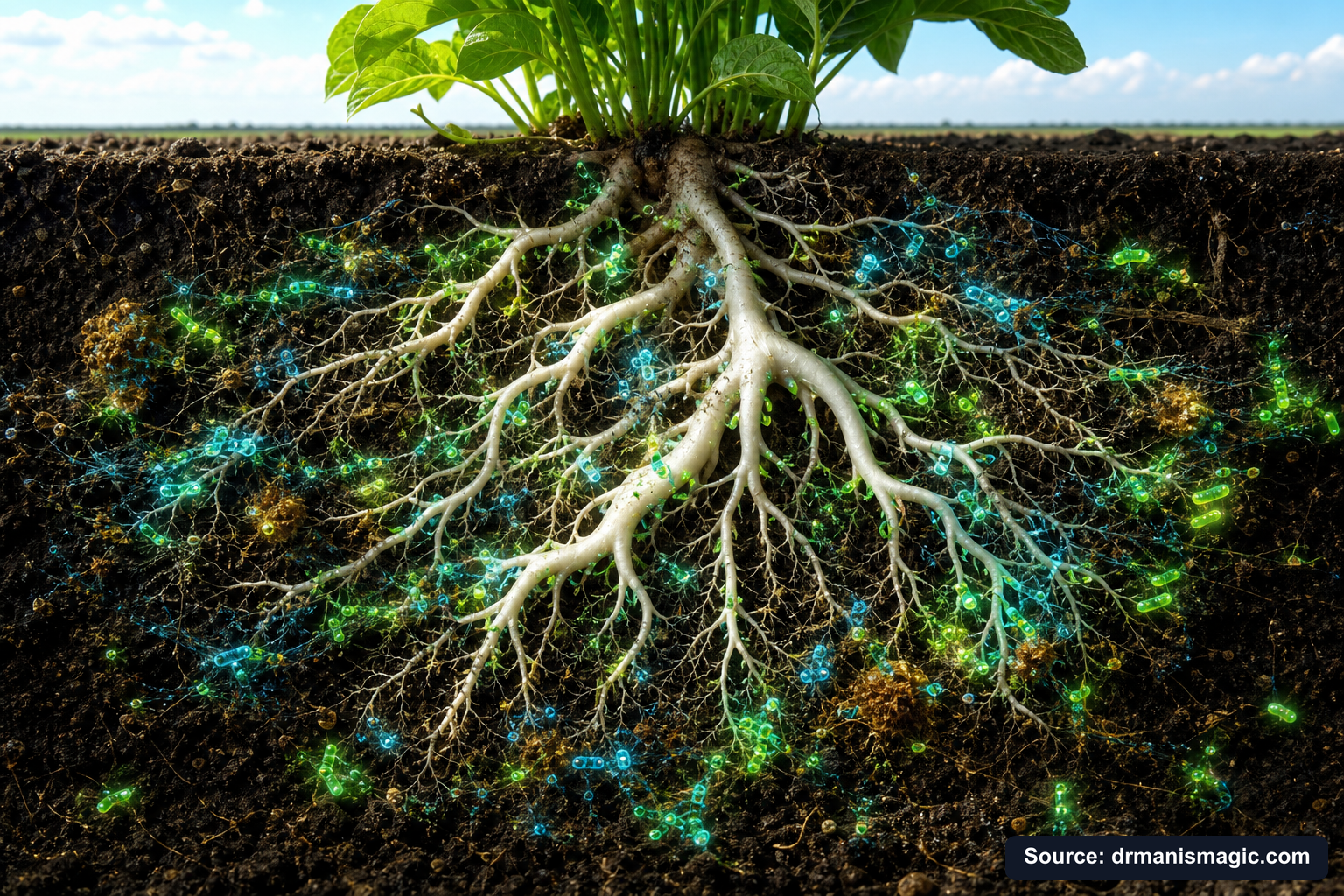
- Keep living roots in the soil. Plant roots release sugars that feed bacteria. Bacteria feed the food web. No living roots means no fuel for the microbial engine. Cover crops, companion plants, or even a thick layer of perennial grass helps maintain the root-microbe relationship that drives the whole system.
- Be patient and keep applying biology. A badly damaged soil does not fully recover in one application. Apply live microbials monthly. Add compost seasonally. Reduce disturbance. Over two to four growing seasons, biological complexity rebuilds itself from the ground up.
The key insight here is that you are not just adding products. You are creating the conditions for life to return on its own terms. Once the habitat is right, the organisms will build the community themselves.
Live Microbes vs. Dead or Dried Products: What Is the Real Difference?
Quick Answer: Live microbial products contain actively functioning organisms that immediately begin colonizing soil, competing with pathogens, and feeding the food web. Dried or dead products contain organisms that may have been alive at packaging but are largely inactive or dead at application. The difference in results is dramatic. Live biology restarts the soil food web. Dead powder does almost nothing.
This is the part of the microbial product market that most companies do not want to talk about.
Here is how most microbial products on the market are made. A factory grows specific bacteria or fungi in giant vats. They dry them into a powder. They package that powder and ship it to a store shelf where it sits for months. The hope is that when you add water, dormant spores will reactivate and start working.
We tested dozens of these products at US Citrus Nursery across real growing conditions. The results were consistently disappointing. The plants showed little to no response compared to controls.
The second category is compost-tea style liquids. These start with real biology but go anaerobic during shipping and storage. You open the bottle and the smell hits you first. That smell is not organic goodness. It is decomposing microbes. They are dying. Some value remains from the humic and fulvic acids, but the living biology is largely gone.
Here is a clear comparison so you can see exactly what you are choosing between.
| Product Type | Viability at Use | Biological Spectrum | Odor | Real-World Result |
|---|---|---|---|---|
| Dry/powdered lab microbes | Very low | Narrow (1-5 species) | Minimal | Little to no measurable benefit observed in our testing |
| Dry powder rehydrated into liquid | Very low | Narrow | Minimal | Same poor results as powder form |
| Compost tea (fresh, under 24 hours) | Moderate | Broad but inconsistent | Earthy, pleasant | Good if you make it yourself and use immediately. Time-sensitive. |
| Compost tea (old, over 24 hours) | Low. Anaerobic | Partial | Strong, foul | Microbes dying. Some humic acid benefit only. Not recommended. |
| Lactobacillus-based products | High viability, wrong organisms | Narrow. Lactobacillus only | Sour | Overtakes beneficial microbes. Belongs in yogurt, not soil. |
| Plant Super Boost (stabilized, full-spectrum, compost-harvested) | High. Visibly active under microscope | 2,000+ bacteria strains, 400-500 fungi including mycorrhizae, protozoa, nematodes | Earthy, not foul | Measurable improvement in root development, plant vigor, disease resistance |
Plant Super Boost does not smell bad because it is not going anaerobic. The microbes are alive and stable. That stability comes from a proprietary all-natural technique developed by a world-renowned compost expert who partnered with Dr. Mani after being effectively blacklisted by large chemical companies when his methods started showing results in commercial citrus groves.
The biology in Plant Super Boost comes from hand-crafted compost, not a factory checklist. When you look at a drop under a microscope, you see movement. Living organisms. That is the standard every microbial product should meet but almost none do.
Zero PFAS. Zero biosludge. Zero synthetic salts. That is what goes into every bottle.
See also: Why Most Fertilizers Are Actually Salt in Disguise
How Do You Encourage Micro-Arthropods to Thrive in Your Garden, Containers, or Raised Beds?
Quick Answer: Micro-arthropods need three things to thrive: food (fungi and organic matter to shred), moisture (they dry out quickly), and habitat (undisturbed soil layers with physical complexity). Provide these through mulch, compost, living roots, reduced tilling, and live microbial additions. Avoid broad-spectrum pesticides and salt-based fertilizers that wipe out both food sources and populations directly.
You do not need to buy micro-arthropods. They will colonize your soil on their own once the conditions are right. Your job is to build the habitat and then get out of the way.
Here is what creates thriving micro-arthropod populations:
- Consistent mulch layer. Wood chips, leaf litter, or straw on the soil surface keeps moisture in and gives mites and springtails the cool, damp environment they need. This one practice alone can transform a depleted garden bed over a single season.
- Regular compost additions. Every time you add mature compost, you add organisms. They spread from there. Think of compost as an inoculation, not just a nutrient source.
- Living roots year-round. Roots feed bacteria. Bacteria feed the food web. No roots means the engine shuts down in winter or between plantings. Cover crops or perennial plantings keep the biology alive through gaps in your growing season.
- Minimal soil disturbance. Every time you till or dig, you destroy the physical structure that micro-arthropods live in. Fungal networks get severed. Habitat gets scrambled. Reduce tilling as much as possible. Top-dress instead of digging in.
- Water management. Micro-arthropods cannot survive in bone-dry or waterlogged conditions. Consistent moderate moisture is the sweet spot. Good drainage matters here. This is one of the reasons our Super Soil mineral-based blend matters so much. It drains perfectly while holding enough moisture for biological activity without becoming waterlogged and anaerobic.
- Stop broad-spectrum spraying. Every time a broad-spectrum pesticide or fungicide hits your soil, it sets back the micro-arthropod population. It removes their food. It kills them directly. The short-term pest fix creates a long-term biology problem.
For container plants and potted trees, this is especially important. A container has no reservoir of biology to draw from. The organisms you put in are the organisms you have. This is why monthly applications of genuinely live microbials matter so much more in a pot than in an in-ground garden.
What Should You Do Right Now to Start Building Living Soil?
Quick Answer: Start with three practical moves: add a mulch layer, apply a live full-spectrum microbial product, and stop any broad-spectrum pesticide or synthetic fertilizer use. These three actions together begin rebuilding the soil food web from the bottom up, creating conditions where micro-arthropods, bacteria, fungi, protozoa, and nematodes can all begin reestablishing their roles.
You have read the whole chain now. Leaves fall. Fungi colonize. Micro-arthropods shred. Bacteria swarm. Protozoa and nematodes graze. Nutrients release. Plants feed. Roots grow strong. Fruit forms. The tree you planted actually produces something you can hold in your hand.
That chain does not happen in a sterile potting mix. It does not happen in soil that has been drenched with salt-based fertilizers. It does not happen in ground that has been sprayed with broad-spectrum pesticides every season.
It happens in living soil. And living soil is something you can build, starting today.
We have watched this process work across 250,000 trees at our South Texas nursery. We have watched citrus trees, tropical houseplants, vegetable gardens, and ornamental beds all respond the same way when the biology is right. Faster growth. Better color. Stronger root systems. More fruit. Less disease. Less dependency on products that cost money and time to apply every few weeks.
The time investment piece matters more than most people realize. You can earn more money. You cannot earn more time. Every season you spend fighting a dead soil food web with synthetic inputs is a season your plants are not building toward the canopy of fruit you imagined when you first put that tree in the ground. The second best time to start building living soil is right now.
If you want to understand the complete system we use, from mineral-based soil to live microbials to organic slow-release nutrition, the Free Plant Care Field Guide walks through everything in plain language. No jargon. No sales pressure. Just the same foundation we built our nursery on, handed straight to you.
Build the habitat. Add the life. Give the micro-arthropods somewhere to work. Then watch what living soil can actually do.
Frequently Asked Questions
You just learned how micro-arthropods shred organic matter and kick off the whole nutrient recycling chain in your soil. Now the big questions start bubbling up. Here are the answers that matter most, grounded in over 30 years of real growing experience and more than 250,000 trees tested at our South Texas nursery.
How do insects and tiny soil creatures break down organic matter?
They chew it. That is really what it comes down to. Mites, springtails, isopods, and millipedes physically tear leaves, bark, and dead roots into smaller and smaller pieces. This is called fragmentation. It is not glamorous, but it is critical. All that shredding opens up more surface area so bacteria and fungi can move in and finish the job. No shredders, no fast decomposition. It is that simple.
Who breaks down organic matter first?
The micro-arthropods go first. They are the first crew on the scene. They physically rip apart the raw material. Then bacteria and fungi swarm the shredded pieces and do the chemical breakdown. Think of it like a two-shift factory. The shredders work the first shift. The microbes work the second. Skip the first shift and the whole factory slows to a crawl. That is why living soil biology matters so much.
Do microbes actually decompose organic matter?
Yes, but they need help getting started. Microbes are the heavy lifters in decomposition. They secrete enzymes that break complex molecules down into forms plant roots can actually absorb. But here is the catch. Microbes work best on small pieces. That is why micro-arthropods shred first. At Dr. Mani's Magic, our Plant Super Boost delivers live bacteria and fungi directly to your soil so that second shift is fully staffed and ready to go the moment organic matter arrives.
How is organic matter fully decomposed?
It happens in stages. First, tiny creatures shred it into small pieces. Then water carries soluble nutrients deeper into the soil. Then bacteria and fungi break those pieces down chemically. Then the material transforms into dark, rich humus. Finally, microbes release locked nutrients like nitrogen and phosphorus back into the soil for your plants to drink up. The Three Plant Pillars that Dr. Mani built his system around support every single one of these stages naturally.
What happens to your soil when you kill off micro-arthropods?
The whole chain collapses. Synthetic fertilizers, pesticides, and fungicides do not just target the bad guys. They wipe out the shredders and the microbes too. When that happens, organic matter just sits there. It does not break down. Nutrients lock up. Roots struggle. This is exactly the trap the big chemical companies set without telling you. We saw it play out on trees at our nursery before Dr. Mani cracked the code with the Three Plant Pillars.
How do worms help decompose organic matter?
Worms eat organic material and grind it into much smaller pieces inside their bodies. When it comes out the other end, it is packed with bacteria and nutrients. Worms also tunnel through soil, mixing layers together and pulling organic matter deeper where roots can reach it. They are one of the most powerful decomposers you can have working for you. Healthy worm populations are a sign that your soil food web is alive and thriving the way nature intended.
How can you rebuild soil that has lost its micro-arthropods and microbes?
Start with the Three Plant Pillars. First, get your soil right with a mineral-based mix that drains well and lets roots breathe. Second, add live microbials like Plant Super Boost to reintroduce the bacterial and fungal workforce your soil is missing. Third, feed with slow-release organic fertilizer so you are not burning out the biology you just brought back. Add compost and mulch on top. Stop the synthetic sprays. Your soil food web will rebuild faster than you think.
About the Author
Dr. Mani Skaria, PhD
Dr. Mani Skaria, PhD, is a plant pathologist and the scientific founder of Dr. Mani's Magic. He earned his doctorate at Purdue University and spent 48 years studying how plants, soil, and living microbes work together, including his years as Professor Emeritus at Texas A&M and as a member of the USDA NAREEE Advisory Board. He invented micro-budding, a method for growing healthier, stronger trees, and has grown more than 250,000 trees on the family farm in Hargill, Texas - US Citrus Nursery. His life's work takes real lab science and practical experience and turns it into simple, safe, organic plant care anyone can use at home.


