


The Most Misunderstood Organisms in Gardening Revealed | Dr. Mani's Magic
The Most Misunderstood Organisms in Gardening: The Hidden Soil Food Web Your Plants Are Starving For
Picture this. You walk out to your backyard on a Saturday morning, coffee in hand, and stop in front of your favorite tree. Something is wrong. The leaves are pale. A few are yellowing at the edges. You watered it. You fertilized it. You did everything the bag said to do. And still, it looks like it is giving up on you.
So you go back inside and start searching. Forum after forum. Video after video. Everyone has a different answer. Add more fertilizer. Add less fertilizer. Change the soil. Try this spray. Try that powder. You spend more money. You invest more weekends. And still, in the back of your mind, the fear creeps in: what if I never figure this out? What if I never get to taste fruit from my own tree? What if this is just who I am — a person with a brown thumb?
Here is the truth they never told you. The problem was never you. The problem was that nobody ever introduced you to the most misunderstood organisms in gardening. The ones living invisibly in your soil right now. The ones that, when working properly, make plants explode with life — and when destroyed, make even the most expensive tree slowly fade and die. We are talking about the hidden soil food web. And once you understand it, everything about gardening changes.
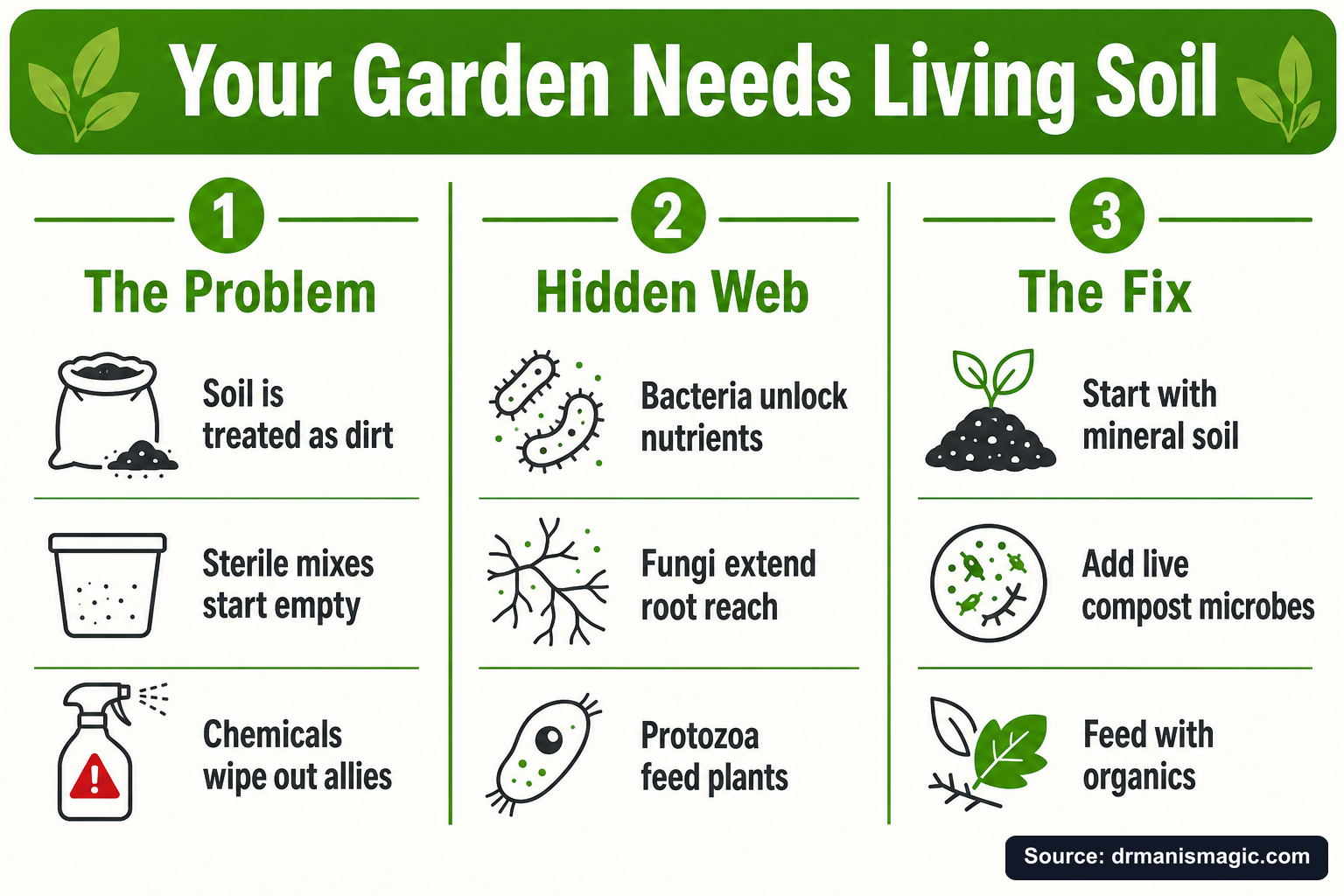
Key Takeaways
- Healthy soil is not dirt. It is a living ecosystem packed with bacteria, fungi, protozoa, nematodes, and more — and most gardeners never know it exists.
- Most feared soil organisms like fungi and nematodes are actually your plant's best allies. Only a small fraction cause disease.
- Salt-based synthetic fertilizers, fungicides, herbicides, and pesticides silently wipe out the very microbes your plants depend on to survive.
- Lab-dried or foul-smelling microbial products rarely work. Live, stabilized microbes from a compost-based source are what actually colonize your soil.
- The Three Plant Pillars — mineral-based soil, live microbials, and organic fertilizer — work together as a system, tested across 250,000+ trees at US Citrus Nursery in South Texas.
- Potting mix and raised bed soil start nearly sterile. Without a live microbial boost, your plants are fighting alone.
- You can recover damaged or sterile soil. It takes the right steps and consistent reintroduction of biology — not more chemicals.
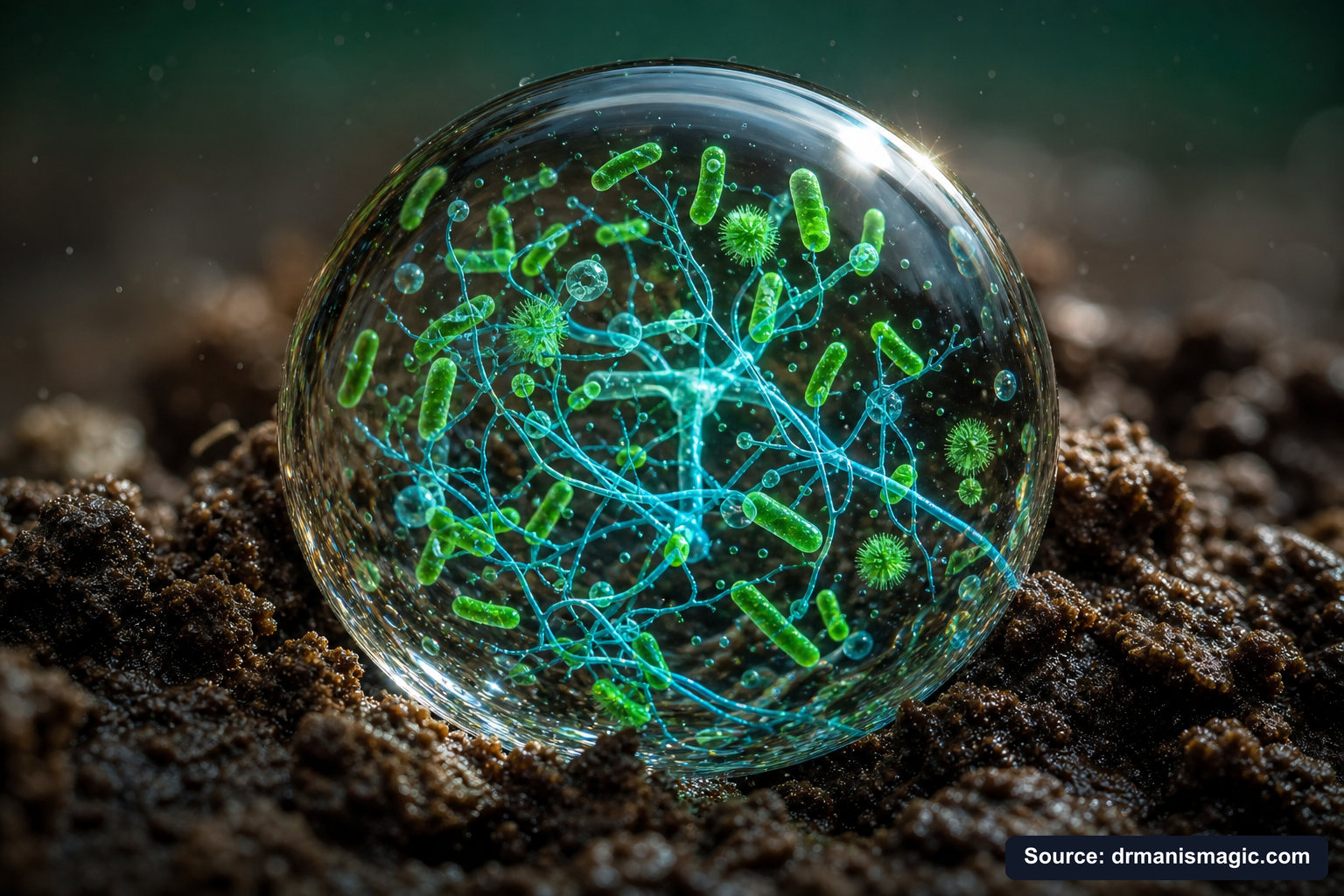
What Is the Soil Food Web and Why Does It Matter for Your Garden?
Quick Answer: The soil food web is the living community of bacteria, fungi, protozoa, nematodes, and other organisms that break down organic matter, release nutrients, and protect plant roots. Without it, soil is just a dead anchor for roots — and plants struggle no matter how much fertilizer you add.
The soil food web is the invisible engine underneath every healthy plant on earth. Think of it like your gut microbiome. When your gut bacteria are balanced, you feel strong, energized, and healthy. When they are wiped out — say, after a round of antibiotics — everything goes sideways. Same thing happens in your soil.
The USDA Natural Resources Conservation Service describes soil as a living ecosystem, not an inert growing medium. A single teaspoon of healthy soil can contain millions of bacteria, thousands of fungi, and hundreds of other organisms — all working together in a chain reaction that feeds your plants.
Here is the chain in plain English. Bacteria and fungi break down dead leaves and organic matter. Protozoa eat the bacteria. When they do, they release nitrogen that plants can actually absorb. Nematodes eat the protozoa. Earthworms and arthropods shred litter and move everything through the soil. And at the center of it all? Plant roots. They pump out sugars to feed the microbes. The microbes deliver nutrients and protection in return. It is a deal that has been running for hundreds of millions of years — until modern gardening came along and broke it.
| Soil Organism | What It Actually Does | What People Think It Does | Is It Beneficial? |
|---|---|---|---|
| Bacteria | Breaks down organic matter, fixes nitrogen from air, suppresses disease, unlocks nutrients | Causes infection and disease | Yes — vast majority are helpful or neutral |
| Mycorrhizal Fungi | Extends root reach up to 100x, delivers phosphorus, zinc, and water, builds soil structure | Causes plant disease or mold | Yes — one of the most powerful plant allies |
| Protozoa | Eats bacteria, releases plant-available nitrogen, regulates microbial populations | Unknown or feared | Yes — critical link in nutrient cycling |
| Beneficial Nematodes | Hunts and kills pest larvae and harmful bacteria, releases nutrients | All nematodes destroy plant roots | Yes — most species are neutral or beneficial |
| Earthworms | Shreds organic matter, improves aeration and drainage, deposits nutrient-rich castings | Just a sign of wet soil | Yes — nature's best soil engineers |
| Arthropods | Shreds litter, accelerates decomposition, aerates soil | Garden pests | Mostly yes — most are decomposers, not pests |
After growing more than 250,000 trees at our South Texas nursery, we can tell you with certainty: the plants that thrived were always the ones with a living, breathing soil ecosystem beneath them. The ones that struggled had dead soil — no matter how much fertilizer we poured on top.
Are Fungi in Soil Good or Dangerous for Your Plants?
Quick Answer: Most soil fungi are beneficial or neutral. Mycorrhizal fungi are among the most powerful plant allies in nature, extending root systems and delivering nutrients plants cannot reach on their own. Only a small group of fungal species cause disease — and a healthy microbial community naturally suppresses them.
Fungi get a bad reputation. You see a white fuzzy coating on soil, or a mushroom pop up near your tree, and your first instinct is to reach for the fungicide. We understand. But here is what most gardening advice never tells you: that white fuzz you see wrapped around roots? That is mycorrhizae at work. And it is one of the best things that can happen to your plant.
Mycorrhizal fungi form a symbiotic bond with plant roots. The fungal threads — called hyphae — extend far out into the soil, sometimes hundreds of times farther than the roots alone could reach. They pull in phosphorus, zinc, iron, and water, then deliver it straight to the plant. In exchange, the plant feeds the fungus sugar through its roots. It is one of nature's most elegant deals.
Here is what NC State University Extension confirms: mycorrhizal fungi improve phosphorus uptake, increase drought tolerance, and support disease resistance. But they also note something most product sellers skip: if your soil already has high phosphorus, the plant may not form strong mycorrhizal connections. The fungi show up when they are needed. And if you have been applying synthetic fertilizer — which is essentially concentrated salt — you may have already killed off the fungi your plants were relying on.
Pull a weed from healthy soil sometime. Look at the roots. If you see white fuzzy threads clinging to them, that is mycorrhizae in action. That is why weeds grow like crazy in undisturbed ground — they have the full microbial army working for them. Your garden plants deserve the same.
See also: The Hidden Reason Synthetic Fertilizers Cause Root Rot
Are Nematodes Bad for Your Garden Soil?
Quick Answer: Most nematodes in garden soil are beneficial or neutral. Beneficial nematodes hunt pest larvae underground, killing grubs, fungus gnats, and harmful insects before they damage your roots. Only a small group of plant-parasitic nematodes cause harm — and healthy soil biology naturally keeps them in check.
Nematodes are the most misunderstood creatures in the entire soil food web. The word alone sounds like a threat. But out of the thousands of nematode species in your soil, only a small fraction attack plants. The majority are predators — and they are hunting the things that hurt your garden.
Beneficial nematodes move through the soil hunting grubs, fungus gnat larvae, root weevils, and other underground pests. They enter the pest, release bacteria that kill the host within 24 to 48 hours, and then multiply inside it. They are nature's underground pest control squad. And they cost you nothing when your soil biology is intact.
Protozoa work the same way. They eat bacteria. As they eat, they excrete nitrogen in a form plants can absorb immediately. This is called the microbial loop — and it is the reason a forest floor feeds itself with zero fertilizer. Protozoa and nematodes are the regulators of this system. Remove them — with pesticides, fungicides, or salt-based inputs — and the whole loop breaks down. Nutrients get locked up. Disease organisms move in. Your plant starts to look sick even though you have been "feeding" it.
The Clemson University Home and Garden Information Center confirms that bacteria, fungi, protozoa, nematodes, and earthworms all work together to support nutrient cycling, disease suppression, water movement, and long-term soil resilience. They are not separate parts. They are one system.
What Kills Soil Microbes — and Why Your Fertilizer Might Be the Problem?
Quick Answer: Salt-based synthetic fertilizers, broad-spectrum fungicides, herbicides like glyphosate, and pesticides all damage or destroy the beneficial microbial community in soil. Even one application of the wrong input can set back your soil biology by months — and repeated use can leave soil functionally dead.
This is the part of the story that the big chemical companies and big box stores would rather you not know. Because if you knew this, you might stop buying their products.
Salt-based synthetic fertilizers work by flooding the root zone with concentrated mineral salts. Those salts draw water out of the soil through osmosis. They can force-feed nutrients to a plant in the short term. But those same salts are toxic to the beneficial bacteria and fungi living in the soil. They disrupt the microbial community the same way antibiotics disrupt your gut — indiscriminately. The helpful organisms die alongside the harmful ones. And with them gone, the plant becomes defenseless.
Fungicides are even more direct. They are designed to kill fungi. They do not distinguish between the fungus causing disease and the mycorrhizal fungi delivering phosphorus to your roots. One application can wipe out years of fungal community development in your soil.
Herbicides like glyphosate do not just kill weeds. Research has shown they disrupt microbial communities in the soil, reducing the diversity and abundance of beneficial organisms. Pesticides do the same thing — they are broad-spectrum killers that do not stop at the surface.
| Input or Practice | How It Harms Soil Biology | What Happens to Your Plant | What to Do Instead |
|---|---|---|---|
| Salt-based synthetic fertilizers | High salt concentration kills beneficial bacteria and fungi | Root damage, nutrient lockout, increased disease risk | Switch to organic slow-release fertilizer; flush soil; reintroduce live microbes |
| Broad-spectrum fungicides | Kills mycorrhizal fungi along with disease-causing species | Loss of nutrient uptake partners, reduced drought tolerance | Use targeted biological controls; restore fungi with live microbial inoculant |
| Herbicides (e.g., glyphosate) | Disrupts microbial community diversity and function | Reduced nutrient cycling, weakened plant defenses | Mechanical weed control; targeted spot treatment; reintroduce soil biology |
| Broad-spectrum pesticides | Kills beneficial soil insects, nematodes, and bacteria | Loss of natural pest control, reduced soil aeration | Integrated pest management; organic alternatives; restore biology after use |
| Overwatering in poor-draining soil | Creates anaerobic conditions that suffocate aerobic beneficial microbes | Root rot, fungal disease, plant death | Improve drainage with mineral-based soil; reduce watering frequency |
| Compaction and heavy tilling | Destroys fungal networks, crushes soil structure, reduces oxygen | Stunted root growth, waterlogging, nutrient deficiency | Minimize tillage; mulch; use cover crops; add organic matter |
The theme we see repeated over and over — after 30+ years of growing at US Citrus Nursery — is that gardeners are not failing because they are careless. They are failing because they were handed the wrong tools. Tools designed to keep them buying, not to help their plants thrive.
See also: Why Most Fertilizers Are Actually Salt in Disguise
Does Sterile Potting Mix or a New Raised Bed Need Live Microbes?
Quick Answer: Yes. Potting mix and most raised bed soils start nearly biologically dead. They contain little to no beneficial microbial life. Without a live microbial inoculant, your plants are growing in a sterile medium with no soil food web to support them — which is why so many container plants and raised beds underperform despite good watering and fertilizing.
This one surprises almost everyone. You buy a bag of premium potting mix. It looks rich and dark. It feels fluffy and light. Surely it is full of life, right?
Not even close. Most commercial potting mixes are sterilized during production to kill pathogens. That is a smart step. But it also kills every beneficial organism in the mix. What you are left with is a growing medium with good physical structure and zero biological activity. It is like a brand-new kitchen with no chef. The equipment is there. But nothing is cooking.
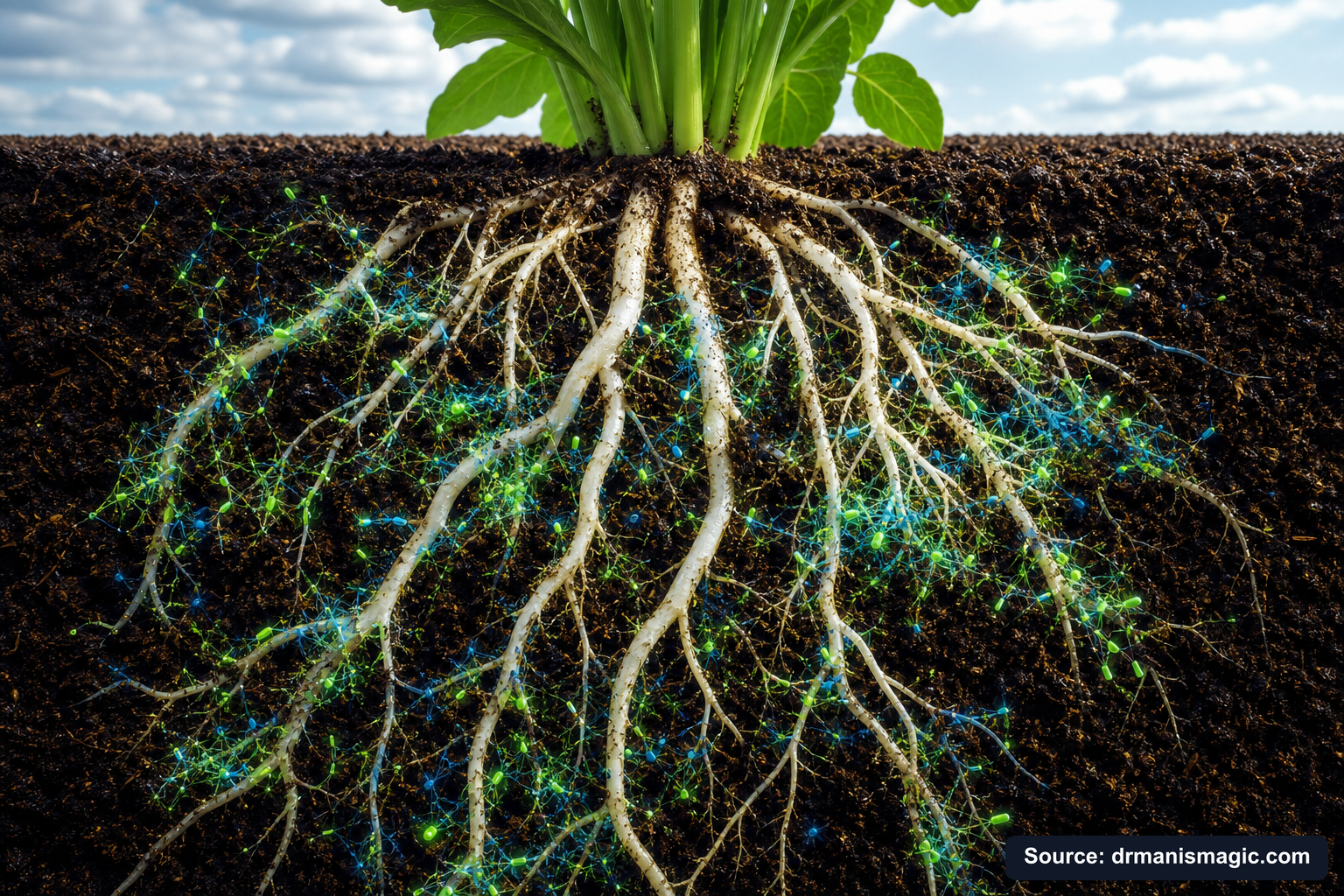
Raised beds filled with purchased soil, construction fill, or heavily amended but sterilized compost have the same problem. They may have excellent nutrients locked into the organic matter — but without the microbial community to break that matter down and release those nutrients, your plant cannot access them. It sits on top of a locked treasure chest with no key.
The same goes for any soil that has been fumigated, solarized, or heavily treated with fungicides. The biology has been reset to near zero. And until you reintroduce it — through compost, live microbial inoculants, or both — your plants are flying without instruments.
This is why we built the Three Plant Pillars system. Mineral-based soil for structure. Live microbials for biology. Organic fertilizer for nutrition. All three working together the way nature designed them to work — because missing any one of them leaves a gap that the other two cannot fill.
You Never Had a Brown Thumb.
You were handed the wrong tools. This free guide hands you the right ones.
You watered it. You fed it. It died anyway.
It was never you. It was the dirt, the salt food, and the bad advice.
This guide shows you what really went wrong, and how to fix it for good.
- Why your plants really died, and why it was never your fault
- The salt hiding in your plant food that quietly burns the roots
- The hidden killer in almost every bag of store soil
- The tiny helpers that grow a whole forest for free
- The rescue trick that brings a half dead plant back to life

Live vs. Dead: Why Most Microbial Products on the Shelf Do Not Work?
Quick Answer: Most commercial microbial products are either dried powders with dormant spores that rarely reactivate in soil, or liquid compost teas that have gone anaerobic and smell like sewage because the microbes are already dying. Neither delivers the full-spectrum, living biology your plant roots actually need.
This is the conversation the microbial product industry does not want to have. Because when you understand how most of these products are made, you realize why they sit on store shelves for months and still claim to be "alive."
Here is what actually happens. Most commercial microbe products are made in large factory vats. A handful of bacterial or fungal strains are grown in bulk, then spray-dried into a powder. The hope is that when you add water and pour the powder into your soil, the dormant spores will "wake up" and colonize the root zone. After testing dozens of batches on our trees at US Citrus Nursery, we found that in practice, this rarely happens. The dried organisms either do not reactivate or do not establish in meaningful numbers.
The second type is liquid compost tea products. These start better — they come from an organic base, and they may contain humic acid and fulvic acid, which do provide some benefit. But here is the fatal flaw. Once compost tea sits in a sealed bottle for days or weeks in shipping, it goes anaerobic. The oxygen runs out. The beneficial aerobic microbes start dying. Anaerobic bacteria take over and produce gas and sulfur compounds. You open the bottle and it smells like rotting sewage. That smell is not a quirk. It is a death certificate for the organisms inside.
The third type is lactobacillus-based products — the same bacteria in your yogurt. They survive well in bottles. But they are so aggressive that they crowd out the beneficial organisms you actually need in soil. They belong in fermented food, not in your garden.
| Microbial Product Type | How It Is Made | Viability When You Use It | Does It Work? | Odor |
|---|---|---|---|---|
| Dry/powdered lab-grown microbes | Factory vat fermentation, spray-dried to powder | Low — spores rarely reactivate | Rarely | None |
| Dry powder rehydrated in liquid | Same as above, diluted | Low — same dormancy problem | Rarely | Minimal |
| Compost tea (fresh, under 24 hours) | Brewed from active compost, aerated | Moderate — works if applied immediately | Yes, if fresh | Earthy |
| Compost tea (bottled, shipped) | Brewed from compost, goes anaerobic in transit | Low — organisms dying on arrival | Weakly | Strong and foul |
| Lactobacillus-based liquid | Simple fermentation (similar to yogurt production) | High — survives well but wrong organisms | No — crowds out beneficial microbes | Mild sour |
| Plant Super Boost (stabilized, full-spectrum) | Harvested from active compost using a natural stabilization method | High — live microbes visible under microscope | Yes — 2,000+ bacterial species, 400-500 fungal species including mycorrhizae, plus protozoa and nematodes | Earthy — no foul odor |
The story behind how we solved this problem is one of our favorites to tell. Dr. Mani Skaria — plant pathologist, Professor Emeritus, inventor of micro-budding, and founder of the Texas Clean Citrus Program — discovered the secret through what can only be described as a providential meeting. A world-renowned compostologist, who had advised royal families and governments on farming practices across the globe, had been quietly blacklisted by large chemical companies after his methods started producing extraordinary results in major citrus groves.
This man eventually teamed up with Dr. Mani and US Citrus Nursery. Together, they developed a proprietary, all-natural stabilization technique that keeps the full spectrum of living microbes — bacteria, fungi, mycorrhizae, protozoa, and nematodes — alive inside a bottle without going anaerobic. You can literally take a drop of Plant Super Boost and see the microbes moving under a microscope. We have lab analyses confirming it. This is not marketing language. It is documented biology.
And because the microbes are stable and not decomposing, Plant Super Boost smells like fresh earth. Not sewage. Not fish emulsion. Just clean, living soil.
Live Microbes vs. Synthetic Fertilizer: Which One Actually Builds a Healthy Plant?
Quick Answer: Synthetic fertilizers deliver a short-term nutrient spike by forcing salt-concentrated minerals into the root zone. Live microbials build long-term plant health by restoring the soil food web that naturally cycles nutrients, suppresses disease, and strengthens roots. Used together incorrectly, synthetic salts kill the microbes you need. Used correctly, organic fertilizer and live microbes amplify each other.
Think of it this way. Synthetic fertilizer is like giving your plant an energy drink. There is a quick surge. The leaves green up. You feel like it worked. But underneath the surface, the salt concentration is damaging root hairs, suppressing beneficial organisms, and setting up a cycle of dependency. The plant needs more and more to maintain what should happen naturally.
Live microbials are like hiring a permanent kitchen crew. They break down organic matter. They mine nutrients from the soil and air. They deliver those nutrients to the root zone in gentle, plant-ready forms. They fight off disease organisms. They build soil structure. And they multiply when conditions are right. You do not have to keep doing their job for them — you just have to stop killing them.
The organic fertilizer component — like our Crab, Kelp and Amino Acids blend — works hand in hand with the microbes. It is slow-release, salt-free, and feeds both the plant and the soil biology. No osmotic shock to the roots. No microbial massacre. Just steady, consistent nourishment that builds on itself over time.
This is the Three Plant Pillars working as a system: mineral-based soil for structure and drainage, live microbes for biology and resilience, and organic fertilizer for complete nutrition. When all three are aligned, something remarkable happens. Plants stop struggling and start thriving. They look different. They smell different. They produce differently. We have seen it across 250,000+ trees. It is not magic — though it certainly feels that way.
How Do You Recover Soil That Has Been Damaged by Chemicals, Salt, or Sterilization?
Quick Answer: Recovering damaged soil is possible but takes consistent effort. Stop the inputs that are harming the biology, flush accumulated salts if needed, add mature compost and live microbials, keep living roots in the soil, and reduce tillage. Recovery happens in stages — expect meaningful improvement within weeks and continued gains over months.
The good news is that soil biology is resilient. Given the right conditions, it recovers. The bad news is that you cannot rush it with more chemicals. Recovery requires removing the cause of damage and rebuilding from the ground up.
Here is a practical recovery checklist we have refined through decades of growing at US Citrus Nursery:
- Stop the stressor. Identify and eliminate what is killing your soil biology. Synthetic herbicide? Stop. Salt-based fertilizer? Stop. Overuse of fungicide? Stop. You cannot fill a bucket with the drain open.
- Flush accumulated salts. If you have been using salt-based inputs for a long time, water deeply and thoroughly several times to leach excess salts out of the root zone before adding anything new.
- Test your soil if possible. A basic soil test tells you pH, existing nutrients, and organic matter levels. Most extension offices offer affordable testing. You want pH between 6.0 and 7.0 for most plants. Outside that range, microbial activity drops significantly.
- Add mature compost. Even two to three inches of good compost worked gently into the top layer of soil introduces a diversity of organisms and feeds the biology you are trying to rebuild. This is not optional — it is the foundation of recovery.
- Apply a full-spectrum live microbial inoculant monthly. This is where a stabilized, broad-spectrum product makes a real difference. You are not just adding one or two strains — you are reintroducing an entire community of bacteria, fungi, protozoa, and nematodes that your soil is missing.
- Keep living roots in the soil. Roots feed microbes through sugar exudates. Bare soil starves the biology. Plant a cover crop, keep a ground cover, or at minimum mulch the surface to protect what is rebuilding underneath.
- Be consistent and patient. Soil biology does not recover in a day. You are rebuilding an ecosystem. But within four to six weeks of applying the right inputs, most gardeners start to notice a visible difference — richer soil color, better water absorption, and plants that simply look more alive.
We have watched this process work on lawns that looked like concrete, on container plants that were circling the drain, and on orchard trees that had been fertilized with synthetic inputs for years. The biology comes back. It just needs the chance.
Should You Buy Microbial Inoculants for Your Garden or Raised Bed?
Quick Answer: Yes, if your soil is sterile, heavily disturbed, fumigated, container-grown, or has been treated with fungicides or synthetic fertilizers for an extended period. In undisturbed native soil with rich organic matter, existing biology may be adequate — but most modern garden and container situations benefit significantly from a live, full-spectrum microbial inoculant.
Not every garden needs a microbial product. But most modern gardening situations do. Here is how to think about it simply.
If your plant is in a container with potting mix, your soil is biologically sterile. No debate. Add live microbes. If your raised bed was filled with purchased soil or topsoil, the biology is minimal at best. Add live microbes. If you have been using synthetic fertilizer, herbicide, fungicide, or pesticide for more than one season, your soil biology has been compromised. Add live microbes. If your soil was fumigated, solarized, or came from a construction site or excavated fill, it is effectively biologically dead. Add live microbes.
The situations where you might not need an inoculant are rare in the modern garden: undisturbed native soil with years of leaf litter, no chemical inputs, and established plant communities. Even then, a monthly application of live microbes does no harm and often accelerates the existing biology.
The key word is live. Not dried. Not fermented into an anaerobic mess. Live, stabilized, full-spectrum biology that can actually colonize your root zone and start working immediately. That distinction is everything.
You can read the reviews from real gardeners — from apartment balcony growers to small orchard owners — on our customer reviews page. The feedback is consistent: within a month, something changes. The plants look different. The soil feels different. That is the soil food web coming back to life.
What Can You Do Right Now to Start Building a Living Soil?
Quick Answer: Start by stopping the inputs that harm your soil biology, then add mature compost and a live full-spectrum microbial inoculant. Pair that with an organic, salt-free fertilizer and well-draining mineral-based soil. Apply microbes monthly. Give the system six to eight weeks and watch what changes.
You do not need to overhaul everything at once. Start with what you have and add the missing piece. Here is the simplest path forward.
If you have been using synthetic fertilizer, switch to an organic slow-release option. Our Crab, Kelp and Amino Acids blend is a good example — no synthetic salts, no biosludge, no PFAS contamination, just complete nutrition that works with your soil biology instead of against it. You can learn more about it at Crab, Kelp and Amino Acids.
If your soil drains poorly or your roots are sitting in soggy organic matter that is breaking down into mush — which describes most commercial potting mix after six to twelve months — consider transitioning to a mineral-based soil blend. Our Super Soil uses sandy loam from the Rio Grande Valley with rice hulls and biochar. It does not compact. It does not steal oxygen from roots. It provides the permanent, breathable structure roots need to push deep and grow strong.
And for the invisible workforce — the bacteria, fungi, mycorrhizae, protozoa, and nematodes that do the actual heavy lifting — apply a live full-spectrum microbial product monthly. Mix two ounces of Plant Super Boost into a gallon of water and pour it at the base of your plants. Or fill a hose-end sprayer and cover your lawn, garden beds, or orchard in one pass. Simple, fast, and effective.
You can also grab our free Plant Care Field Guide to see how the Three Plant Pillars come together in a practical, step-by-step system for any plant — from a potted lemon tree on your patio to a full backyard garden.
Time is the one thing none of us get back. Money can be replaced. Time cannot. Every season you spend fighting your plants instead of enjoying them is a season you will not get again. The fruit you have been imagining on your own tree, in your own yard, harvested with your own hands — that does not have to stay a daydream. It starts with the soil. And the soil starts with the organisms most gardeners never knew existed.
The invisible workforce has been waiting for you. Give them a home, and watch what they build.
Frequently Asked Questions
Most gardeners never get the full picture about what is actually happening beneath their feet. These questions come up again and again from real plant owners who are tired of guessing and losing time. The answers below are grounded in over 30 years of hands-on growing experience and lessons learned from more than 250,000 trees at US Citrus Nursery in South Texas.
What are the most misunderstood organisms in gardening?
Soil microbes are the most misunderstood organisms in gardening by a long shot. Most people think fungi and bacteria are the enemy. They are not. Bacteria, fungi, and mycorrhizae are your plant's best allies. They unlock nutrients, fight disease, and build root strength. Dr. Mani's Magic Plant Super Boost puts live versions of these microbes directly into your soil so they can get to work right away.
What is the most common mistake first-time gardeners make?
The biggest mistake is not bad watering or bad sunlight. It is starting with dead soil. Most potting mixes and raised bed soils have almost no living biology in them. Without live microbes, your plant is fighting completely alone. You can water perfectly and still watch it fade. That is why the Three Plant Pillars start with mineral-based soil and live microbials before anything else.
What is the most harmful thing you can do to your garden soil?
Pouring salt-based synthetic fertilizer on your soil is one of the most damaging things you can do. It gives a quick green flush and then quietly wipes out the bacteria and fungi your plants depend on. Once those microbes are gone, your plant loses its natural defense system and nutrient pipeline. You end up buying more and more product just to keep things alive. That is the cycle big chemical companies profit from.
What are the most destructive plant pests and how do microbes help fight them?
Aphids, spider mites, whiteflies, and root rot pathogens are some of the worst offenders. Here is what most gardeners do not know. A soil packed with the right bacteria and fungi fights many of these threats from the inside out. Healthy microbial life crowds out harmful pathogens and strengthens roots so pests have a much harder time getting a foothold. Dr. Mani proved this across decades of citrus growing in South Texas.
What is the rule of three in gardening and how does Dr. Mani's Magic use it?
The classic rule of three is about planting in odd clusters for a natural look. Dr. Mani's version goes deeper. His Three Plant Pillars are the real rule of three. Pillar one is mineral-based soil that drains and breathes. Pillar two is live microbials that feed and protect. Pillar three is organic fertilizer that fuels growth without burning roots. All three work together as a system. Take one away and the whole thing weakens.
What is the three year rule in gardening and can you speed it up?
The old saying goes year one it sleeps, year two it creeps, year three it leaps. That timeline assumes average soil with average inputs. When you build on the Three Plant Pillars from day one, you give your plant a head start that most gardeners never get. Live microbes, proper mineral soil, and organic slow-release fertilizer working together can compress that timeline significantly. Time is the one thing you cannot get back, so starting right matters more than anything.
What is the best way to recover soil that has been damaged by synthetic fertilizers?
Stop adding salt-based chemicals first. Then reintroduce live biology. That means using a stabilized microbial product with real living bacteria, fungi, and mycorrhizae, not a dried powder that lost its punch sitting on a shelf. Pair it with organic fertilizer that feeds the microbes and the plant at the same time. Dr. Mani's Magic Plant Super Boost uses a special stabilization method so the microbes arrive alive and ready to rebuild your soil from the ground up.
About the Author
Dr. Mani Skaria, PhD
Dr. Mani Skaria, PhD, is a plant pathologist and the scientific founder of Dr. Mani's Magic. He earned his doctorate at Purdue University and spent 48 years studying how plants, soil, and living microbes work together, including his years as Professor Emeritus at Texas A&M and as a member of the USDA NAREEE Advisory Board. He invented micro-budding, a method for growing healthier, stronger trees, and has grown more than 250,000 trees on the family farm in Hargill, Texas - US Citrus Nursery. His life's work takes real lab science and practical experience and turns it into simple, safe, organic plant care anyone can use at home.


