


The Physics of Soil That Works: Why Roots Suffocate in Potting Mix | Dr. Mani's Magic
The Physics of Soil That Works: Why Your Potting Mix Is Slowly Suffocating Your Roots
You're standing on your back patio. The sun is warm on your face. You've got a beautiful container plant — maybe a lemon tree, maybe a fig, maybe that gardenia your wife loves — and something is wrong. The leaves are yellowing. The soil smells a little sour. You watered it perfectly. You fertilized it. You did everything right.
But the plant is dying anyway.
Here's what nobody told you: the problem isn't you. The problem is physics. Specifically, it's the physics happening inside that bag of "premium potting mix" you bought at the hardware store. Right now, at this very moment, the stuff your plant is living in is decomposing. Collapsing. Stealing oxygen from the roots that need it most. And the plant can't tell you. It just turns yellow, drops leaves, and eventually gives up.

Plant Super Boost
What if soil wasn't just "dirt you put in a pot"? What if it was architecture? A structure as precise and deliberate as the frame of a house? After growing over 250,000 trees at our South Texas nursery, we learned that the difference between a thriving plant and a dying one almost always starts in the same place. Not the leaves. Not the branches. Not even the fertilizer. It starts with the pore space in your soil — and whether oxygen can reach the roots that are counting on it.
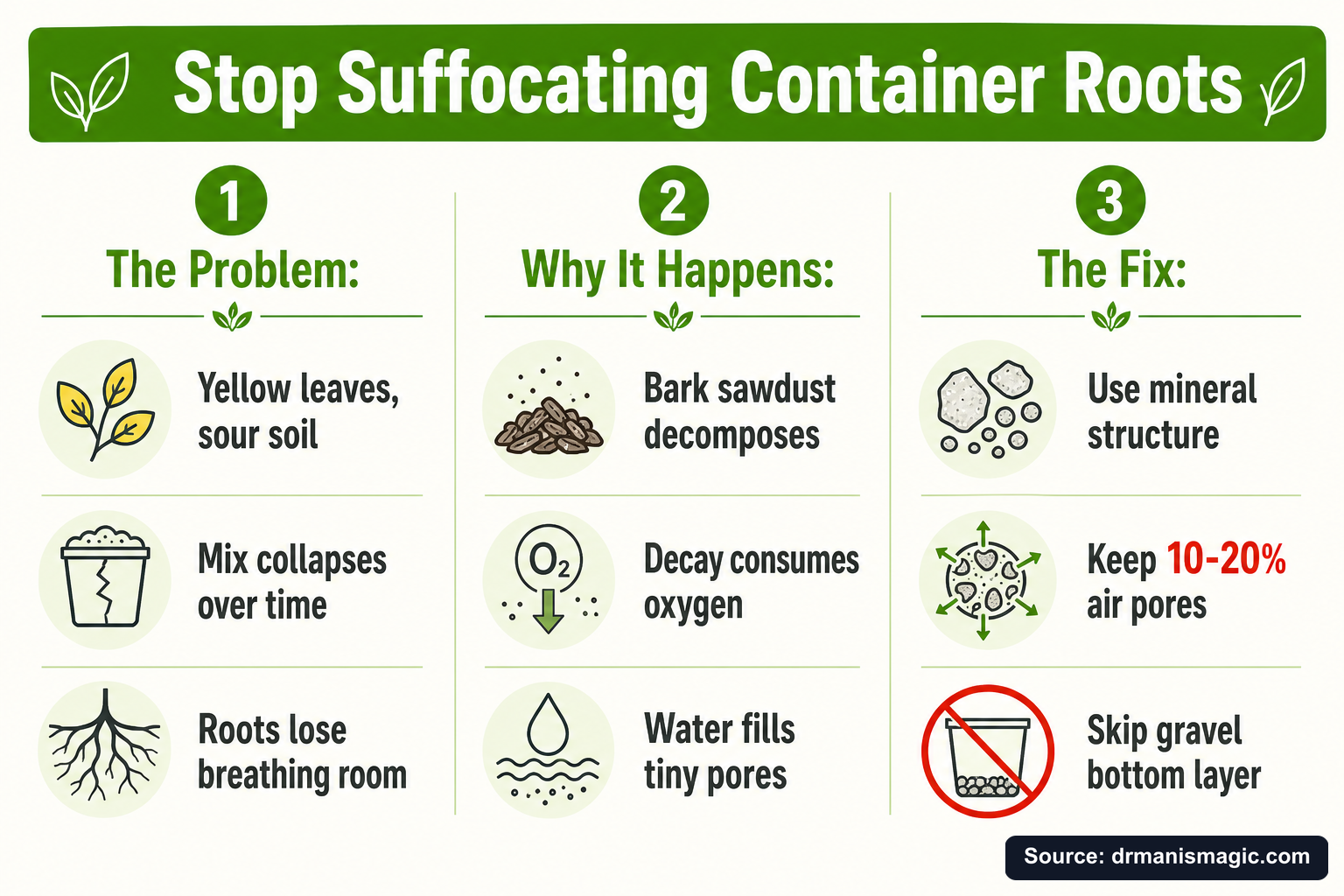
Key Takeaways
- Roots need oxygen just as much as they need water — and most potting mixes block that oxygen over time.
- Standard potting mix is made from pine bark sawdust. It is carbon-based and decomposes. Decomposition consumes oxygen. That is root rot's silent engine.
- Mineral-based soils (silica, sand, pumice, lava rock) do not decompose. They hold their pore structure for years — even decades.
- The physics target that matters most: air-filled porosity of at least 10–20% in any container mix, according to university extension research from UC ANR and Rutgers.
- The perched water table is real. Gravel at the bottom of a pot does not help drainage — it actually makes it worse.
- Big box stores sell plants in cheap sawdust-based media because it is lightweight and profitable. Not because it keeps your plant alive long-term.
- The Three Plant Pillars — mineral soil, live microbes, and organic fertilizer — work together as a system. Miss one and the whole thing wobbles.
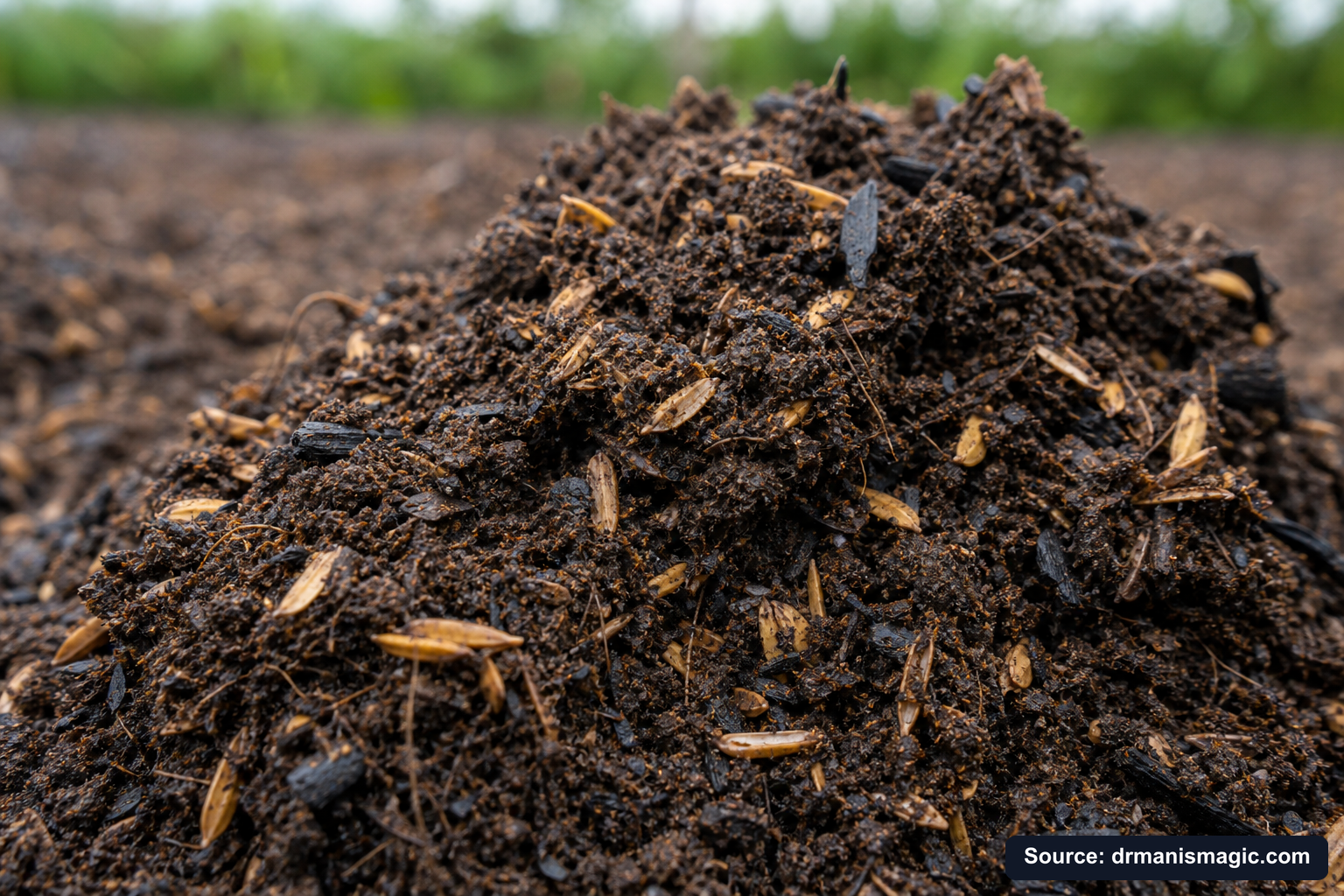
What Does Soil Actually Do (And Why Most People Have It Wrong)?
Quick Answer: Soil is not just a place to stick roots. It is a physical structure that must deliver water, oxygen, and nutrients to roots simultaneously. When that structure collapses — through decomposition, compaction, or particle breakdown — roots suffocate even when the plant looks like it is being cared for perfectly.
Most people think soil is the stuff that holds nutrients. Pour fertilizer in, roots drink it up, plant grows. Simple.
That model is wrong. And it is costing you plants.
Soil has four jobs. All four must work at the same time.
| Soil Function | What It Does | What Fails When It Is Gone |
|---|---|---|
| Structural Support | Holds the plant upright and anchors the root system | Plant tips, roots tear, instability under wind or watering |
| Water Retention and Drainage | Holds moisture for roots while letting excess escape | Waterlogging, perched water table, root death |
| Nutrient Holding and Exchange | Stores nutrients in forms roots can absorb | Nutrient lockout, deficiency symptoms, poor growth |
| Gas Exchange and Aeration | Delivers oxygen to roots and releases carbon dioxide | Root rot, anaerobic conditions, pathogen explosion |
That last row is the one nobody talks about. And it is the one that kills the most plants.
Roots breathe. Just like you do. They pull oxygen from the air pockets inside the soil. No air pockets? No oxygen. No oxygen? The roots turn brown, slimy, and rotten. Then a fungal pathogen moves in and finishes the job. And you think you "overwatered."
You did not overwater. Your soil ran out of air.
Why Do Roots Need Oxygen If Plants Breathe Carbon Dioxide?
Quick Answer: The leaves use carbon dioxide for photosynthesis, but roots are not leaves. Roots are living tissue that burn energy through cellular respiration — a process that requires oxygen, just like your muscles do. Cut off root oxygen and you cut off root function, nutrient uptake, and plant life.
This is the most common confusion in gardening. And it is completely understandable.
You learned in school that plants breathe carbon dioxide. Trees are good for the air. Photosynthesis takes in CO2 and releases oxygen. So why would roots need oxygen?
Here is the thing: leaves are not roots.
Leaves photosynthesize. Roots respire. Respiration is the process every living cell uses to convert sugar into energy. And respiration — just like in your own body — requires oxygen.
When roots run out of oxygen, they cannot make energy. They cannot absorb water. They cannot absorb nutrients. They go into crisis mode. And that crisis looks exactly like overwatering, drought stress, and nutrient deficiency all at once. Because it is all three, happening simultaneously.
University extension research from UC Agriculture and Natural Resources confirms that container media need a minimum air-filled porosity of 10% after drainage — and ideally 10–20% — for roots to stay healthy. Below that threshold, oxygen diffusion slows to a crawl. Roots begin to die within hours, not days.
This is not a gardening opinion. It is physics.
What Is Air-Filled Porosity and Why Should You Care?
Quick Answer: Air-filled porosity is the percentage of your soil's volume that holds air after water drains away. Think of it as your soil's breathing room. University research targets at least 10–20% for healthy roots. Most decomposed potting mix falls far below that. When air-filled porosity collapses, roots suffocate — even if you water perfectly.
Imagine squeezing a kitchen sponge under water. While it is submerged, every pore is filled with water. No air. Now lift it out and let it drain. Some water drips away. The pores that empty out — those are your air-filled pores. That is the oxygen reservoir roots live in.
Now imagine that sponge has been sitting in a warm, damp pot for two years. It has broken down. It has compacted. The pores are smaller now, or gone entirely. When you squeeze it, almost nothing drips out. The water just stays. Everywhere. No air pockets left.
That is your old potting mix. That is why your plant is struggling.
Researchers at Rutgers University describe the ideal container medium as having 60–75% total porosity, 10–20% air capacity after drainage, and more than 30% available water. That balance is what keeps roots both hydrated and breathing at the same time.
Most bagged potting mix starts close to that range. Fresh out of the bag, it feels light and fluffy. But give it six months. Give it a year. The pine bark breaks down. Fine particles fill the spaces. The mix compacts. Air-filled porosity crashes. And your plant starts its slow decline.
Why Does Potting Mix Compact and Collapse Over Time?
Quick Answer: Potting mix is made mostly from pine bark, sawdust, peat, or coir — all organic, carbon-based materials. Carbon-based materials decompose. As they break down, large particles become fine particles. Fine particles fill air pockets. Pore space disappears. The media gets denser, wetter, and less oxygenated. This is not a flaw. It is chemistry.
Here is something nobody tells you at the garden center.
When you buy potting mix, you are buying other dead plants. Mostly pine trees. Shredded, ground up, and piled into a bag.
Pine bark is a waste byproduct from the timber industry. The southeastern United States has enormous pine forests, and the sawmill industry generates mountains of shredded bark it cannot use. Potting mix manufacturers buy it cheap. They let it decompose in giant piles for a year or two to burn off the harshest chemical compounds. Then they bag it and sell it to you as "premium growing media."
We are not making this up.
And here is where it gets interesting from a chemistry standpoint. Pine trees are loaded with compounds called terpenes and terpenoids. You already know some of them. Pine-Sol, the cleaning product, gets its name from pine terpenes. Turpentine — the paint thinner — is distilled from pine resin.
These are not gentle compounds. They are powerful enough to strip varnish off wood. And fresh pine bark still carries them. That is why manufacturers let it decompose first — to reduce the concentration of these compounds before they put it near plant roots.
But decomposing is exactly the problem. That decomposition process consumes oxygen. The same oxygen your roots need.
And the decomposition does not stop when you put the mix in a pot. It continues. Month after month. Every watering speeds it up. The bacteria working on that organic matter are competing with your plant roots for the same oxygen supply. Slowly, quietly, the structure collapses.
To make the problem worse, fresh potting mix is treated with surfactants — chemicals that help the hydrophobic wood particles absorb water instead of repelling it. Those surfactants wash out over time. Once they are gone, dried-out potting mix becomes almost impossible to re-wet. It pulls away from the pot edges. Water runs straight down the sides and out the drainage hole without ever reaching the roots.
So you water more. The surface looks dry, so you pour on more water. And now the little oxygen that remained gets displaced. The cycle accelerates.
This is not your fault. The product was never designed to last. It was designed to be cheap, lightweight, and easy to ship. Big box stores and nursery chains need high turnover. They sell fast-growing annuals and seasonal plants that will be replaced within months anyway. For that business model, cheap decomposing media works perfectly.
Potting Mix vs. Mineral-Based Soil: What Is the Real Difference?
Quick Answer: Potting mix is organic, carbon-based, and temporary. It decomposes, collapses, and loses its structure within months. Mineral-based soil is inorganic, silica-based, and permanent. It does not decompose. It holds its pore structure for years. That structural permanence is what keeps roots oxygenated, draining correctly, and healthy long-term.
Let us put this side by side.
| Property | Organic Potting Mix (Pine Bark / Peat) | Mineral-Based Soil (Silica / Sandy Loam) |
|---|---|---|
| Base Material | Pine bark, sawdust, peat, coir, compost | Silica sand, sandy loam, pumice, lava rock, calcined clay |
| Decomposes Over Time? | Yes — constantly and progressively | No — structure is permanent |
| Oxygen Consumption | High — decomposition consumes available oxygen | None — silica does not oxidize |
| Pore Structure Longevity | 6–12 months before significant collapse | Years to decades with proper management |
| Air-Filled Porosity Over Time | Drops steadily as particles break down | Stays consistent; determined by particle size |
| Re-Wettability After Drying | Becomes hydrophobic once surfactants wash out | Wets consistently; no surfactant dependency |
| Nitrogen Immobilization Risk | High — decomposing wood ties up nitrogen | Low to none |
| Sterilization Required? | Rarely done; often carries fungal pathogens | Yes — steam sterilization removes pathogens |
| Ideal For | Annuals, short-cycle crops, seasonal containers | Perennials, fruit trees, long-term containers |
| Long-Term Cost | Requires replacement every season | One-time investment; does not need replacing |
Notice that last row. Potting mix is a recurring expense. You buy it. It collapses. You buy it again. The plant declines in the meantime. You buy a new plant. The cycle continues.
This is not a minor difference. For a perennial plant — a lemon tree, a fig, a rosemary bush, a mature houseplant — it is the difference between a plant that thrives for a decade and one that quietly declines after its first season.
What Is the Perched Water Table and Why Does Gravel at the Bottom of a Pot Make Things Worse?
Quick Answer: The perched water table is a layer of saturated soil that forms at the bottom of any container, regardless of drainage holes. Water stops moving down when it hits a layer of coarser material — like gravel. Adding gravel to the bottom of a pot does not help. It actually raises the saturated zone higher into the root space. This is basic soil physics.
This one surprises almost everyone. Including experienced gardeners.
Somewhere along the way, gardening culture decided that putting gravel — or rocks, or broken pottery — at the bottom of a pot would improve drainage. It sounds logical. Water drains down, hits the rocks, escapes faster. Right?
Wrong. The physics work in exactly the opposite direction.
Here is what actually happens. Water in a fine-textured medium does not flow freely downward like water in a pipe. It is held in place by capillary tension — the same force that pulls water up a paper towel. That capillary tension holds water in the fine pores of your potting mix until the weight of the water column above it is strong enough to push it down.
When water in fine-textured potting mix reaches a coarser layer — like gravel — it stops. The capillary tension that was holding it in the fine pores cannot bridge the larger pore spaces in the gravel below. So the water just sits there, right at the boundary between the two materials. The saturated zone — the perched water table — forms above the gravel layer, not below it.
By adding gravel, you made the saturated zone higher in the pot. You reduced the amount of root space that stays oxygenated. You made drainage worse, not better.
The fix is not gravel. The fix is using a uniform, well-structured medium from top to bottom — one with enough large, stable particles that water moves through consistently and air-filled porosity is maintained throughout the root zone.
Why Does Sand Help in Some Mixes but Hurt in Others?
Quick Answer: Coarse sand with large, uniform particles creates stable macropores that improve drainage and aeration. Fine sand — play sand, beach sand, fine river sand — fills the gaps between existing particles and makes the mix denser, not lighter. The particle size determines whether sand helps or hurts. This is why "add sand for drainage" is advice that can go very wrong.
Not all sand is the same. And this is where a lot of well-meaning gardeners get into trouble.
When someone says "add sand to improve drainage," they are picturing coarse builder's sand or horticultural sand — particles large enough to create real air pockets between them. That kind of sand does help. It acts like tiny rocks, creating macropores that water moves through quickly and air fills after drainage.
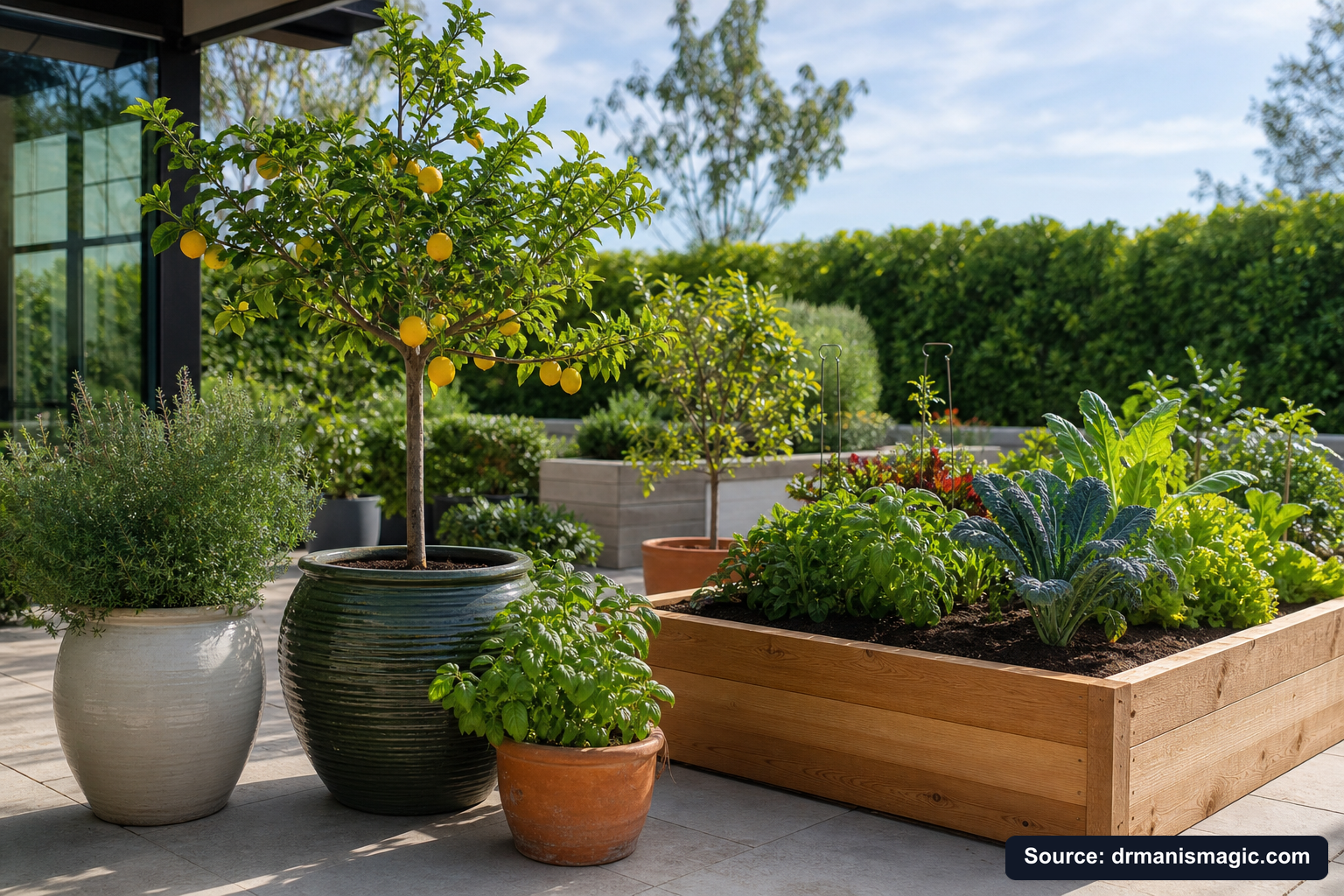
But if you grab a bag of play sand — or fine river sand, or anything with a silky texture — those particles are small enough to slip right into the existing pores in your potting mix. Instead of adding air space, they fill it. You end up with a denser, heavier medium with less oxygen than you started with. You tried to fix drainage and made it worse.
The rule of thumb: if the sand feels smooth and silky between your fingers, it is too fine. You want to feel grit. Individual particles you can almost see. That is coarse sand. That is what builds pore architecture instead of destroying it.
Now here is the deeper principle. Sand is not magic. What matters is particle size, particle shape, and the consistency of those particles throughout your mix. A medium built from coarse, non-decomposing particles — silica sand, pumice, lava rock, calcined clay — creates stable macropores that stay open for years. That is the foundation Dr. Mani built his Super Soil philosophy on: a mineral-based, silica-rich sandy loam from the Rio Grande Valley, steam-sterilized, and engineered to hold its structure permanently.
You Never Had a Brown Thumb.
You were handed the wrong tools. This free guide hands you the right ones.
You watered it. You fed it. It died anyway.
It was never you. It was the dirt, the salt food, and the bad advice.
This guide shows you what really went wrong, and how to fix it for good.
- Why your plants really died, and why it was never your fault
- The salt hiding in your plant food that quietly burns the roots
- The hidden killer in almost every bag of store soil
- The tiny helpers that grow a whole forest for free
- The rescue trick that brings a half dead plant back to life

What Are the Early Warning Signs That Your Soil's Physics Have Failed?
Quick Answer: Yellowing leaves, sour or rotten smell from the soil, water pooling on the surface, a mix that pulls away from the pot edges, fungus gnats, and soft or discolored roots are all signs that your potting mix has lost its physical structure. These symptoms look like nutrient deficiency or overwatering — but the root cause is oxygen starvation from collapsed pore space.
Your plant is telling you something. You just have to know the language.
Here is a diagnostic guide for what you are actually seeing.
| Symptom | What It Looks Like | What the Physics Are Saying |
|---|---|---|
| Yellow leaves | Leaves pale, then yellow, often from the bottom up | Root oxygen starvation blocking nutrient uptake |
| Sour or rotten soil smell | Musty, sewage-like odor when you water | Anaerobic bacteria — the kind that thrive without oxygen — are active |
| Water pools on surface | Water sits on top instead of absorbing | Surfactants gone; media is hydrophobic or completely saturated |
| Soil pulls from pot edges | Gap forms between mix and pot wall | Media has shrunk through decomposition and drying; water now bypasses roots |
| Fungus gnats | Tiny flies around the soil surface | Decomposing organic matter + moisture = gnat paradise |
| Brown, slimy roots | Roots dark, mushy, smell bad when removed from pot | Root rot — oxygen was gone long enough for pathogens to colonize |
| Wilting despite wet soil | Plant droops even though mix feels moist | Roots cannot uptake water because they are dying from oxygen deprivation |
If you are seeing two or more of these at the same time, the problem is almost certainly the media — not your watering technique, not the fertilizer, not the light.
The good news: this is fixable. But you have to fix it at the root level. Literally.
How Do You Recover a Plant Whose Soil Has Collapsed?
Quick Answer: Recovery requires removing the collapsed media, pruning dead roots, and replanting into a well-structured mineral-based medium. Treating the symptoms — adjusting watering, adding fertilizer — without fixing the physical root environment will not save the plant. The structure must be restored first.
Here is a step-by-step recovery checklist if your plant is showing signs of collapsed media and root oxygen starvation.
- Remove the plant from its pot. Gently tip it out. Do not just water differently and hope. You need to see what is happening underground.
- Examine the roots. Healthy roots are white or light tan, firm, and smell earthy. Rotten roots are brown or black, mushy, and smell sour or rotten.
- Prune the dead roots. Use clean scissors or pruning shears. Cut back to healthy tissue. If more than half the root system is rotten, the plant will need significant top pruning too to reduce the water demand on the remaining roots.
- Let the roots air briefly. Set the plant in a shaded spot for 30–60 minutes to let cut surfaces dry slightly before replanting.
- Repot into a fresh, mineral-based medium. This is the non-negotiable step. Putting the plant back into collapsed, decomposed potting mix will restart the cycle. You need a medium with stable particle size and genuine air-filled porosity. This is the logic behind Super Soil — a steam-sterilized, silica-rich sandy loam blend that holds its structure permanently instead of decomposing under your plant.
- Drench with live microbes. Beneficial bacteria and fungi colonize the root zone and create a biological defense against the pathogens that caused the rot. Reintroducing them at the time of repotting gives the recovering plant its best chance. See the Plant Super Boost page for how live microbials fit into the recovery process.
- Hold fertilizer for two weeks. Let the roots stabilize first. Once you see new growth — new leaf buds, fresh root tips — that is your signal to begin gentle, organic feeding. No synthetic salts. No quick-release chemical fertilizers. Those burn recovering roots.
Plants are resilient. We have seen citrus trees that looked completely finished come back strong once the root environment was corrected. But the correction has to happen at the foundation, not the surface.
Why Do Bonsai Growers and Ancient Farmers Already Know This?
Quick Answer: Bonsai masters have used mineral-based, granular media — pumice, lava rock, akadama clay — for centuries because they need root health to survive in tiny containers for decades. Ancient Mediterranean and Middle Eastern farmers built raised beds with gravel and sand to ensure drainage. Both traditions discovered the same physics long before modern soil science named it.
Here is a surprising piece of history.
Bonsai culture — which dates back over a thousand years in China and Japan — figured out mineral-based media long before Western horticulture caught up. Bonsai masters need their trees to live in small containers for decades. Sometimes for generations. The tree is passed down like an heirloom.
To do that, they cannot use media that collapses. So they use akadama — a fired Japanese clay that holds structure and breaks down very slowly. They use pumice. Lava rock. Coarse calcined clay. Pure mineral materials with no organic content that could decompose and steal oxygen from roots living in a pot the size of a dinner plate.
They were not following university extension guidelines. They were following results. They observed what kept trees alive for fifty years in a small container and built a tradition around it.
The physics they discovered are the same physics university researchers have since confirmed. Roots need oxygen. Stable particles create stable pores. Stable pores hold oxygen. Organic materials break down and collapse those pores. Mineral materials do not.
The same principle shows up in ancient agriculture. Early farmers in arid regions — the Levant, North Africa, pre-Columbian Peru — built raised growing areas with sand and gravel bases to ensure water moved through and roots stayed oxygenated. Not because they had soil science textbooks. Because the plants told them what worked, and they listened.
We are just catching up with what good growers have always known.
How Do the Three Plant Pillars Connect to Soil Physics?
Quick Answer: The Three Plant Pillars — mineral-based soil, live microbes, and organic fertilizer — are designed to work as a system. Mineral soil creates the physical structure roots need to breathe. Microbes colonize that structure and protect it. Organic fertilizer feeds the plant without burning the microbes. Remove any one pillar and the system weakens. All three together create a root environment that is nearly self-sustaining.
Soil physics is Pillar One. But it does not work in isolation.
Think about what happens when you build a perfect mineral-based medium. Stable pore structure. Great drainage. Excellent air-filled porosity. The roots can breathe. Water moves through correctly. The physical foundation is solid.
But there are no microbes.
In nature, healthy soil is alive. Billions of bacteria, fungi, and other microorganisms live in the pore spaces of mineral soil, forming relationships with plant roots that took hundreds of millions of years to evolve. They unlock nutrients that are chemically bound to soil particles. They produce compounds that strengthen root cell walls. They form protective colonies that out-compete pathogens. They essentially serve as the plant's immune system.
A sterile mineral medium — no matter how perfect its physics — is like a house with a great foundation and no electricity. Structurally sound. But not fully alive.
And then there is Pillar Three: organic fertilizer. Not salt-based synthetic chemicals. Those salts kill microbes. They are the enemy of Pillar Two. A synthetic fertilizer in a mineral medium with healthy microbes is like spraying pesticide on your immune system. You get a temporary green flush, the microbes die, the roots lose their protection, and the long-term decline begins.
Organic fertilizer — slow-release, crab and kelp-based, amino acid-rich — feeds the plant in a way that works with the microbes instead of against them. The nutrients are released gradually as microbes break down the organic compounds. The plant gets what it needs. The microbes stay alive and do their job. The soil remains healthy.
This is the system Dr. Mani Skaria — Professor Emeritus of Plant Pathology, inventor of microbudding, founder of the Clean Citrus Program in Texas — spent decades developing. Not from a theoretical model. From 30-plus years of growing 250,000 trees in South Texas, watching what worked and what did not, and building a three-part system that addressed the root cause of plant failure instead of chasing symptoms.
You can explore the full Three Plant Pillars system and see how mineral soil, live microbes, and organic fertilizer work together as a complete plant care framework.
See also: The Hidden Reason Synthetic Fertilizers Cause Root Rot — for a deeper look at how salt-based feeding quietly destroys the microbial life that mineral soil depends on.
How Long Does It Actually Take for Potting Mix to Fail?
Quick Answer: Practical degradation begins within three to six months in most organic potting mixes. By twelve months, air-filled porosity has typically fallen well below the minimum threshold for healthy roots. By two years, the mix is often anaerobic, hydrophobic, and pathogen-rich. Most people never connect the timeline to their plant's decline because it happens gradually.
Here is the uncomfortable timeline nobody puts on the bag.
Month one: fresh, fluffy, great drainage. Your new plant looks happy. You feel good about your purchase.
Month three: the mix has settled and compressed slightly. Air-filled porosity is dropping. The surfactants are starting to wash out. The plant still looks okay. You water and fertilize.
Month six: the mix has noticeably compacted. Water takes longer to drain. The smell is slightly different — a little musty. Leaves are not quite as vibrant. You wonder if it needs more fertilizer.
Month twelve: the mix is dense. Hydrophobic patches have formed. Water runs down the sides of the pot. The plant is yellowing. You think you are overwatering. You water less. The plant gets worse.
Month eighteen: there are fungus gnats. The roots are brown at the tips. You buy a new bag of potting mix and repot. The plant recovers briefly. Then the cycle starts again.
This is not a worst-case scenario. This is the standard trajectory for an organic potting mix in a container perennial. The product was never designed to last longer than a season. And the big box stores count on that cycle. They need you to come back. They need plants to fail at a rate that keeps their shelves moving.
We do not say this to be cynical. We say it because understanding the incentive structure helps you see why the solution was never offered to you in that store. The solution — a permanent, mineral-based medium that holds its structure for years — removes you from the repurchase cycle. That is not good for their business model. It is excellent for your plant.
You cannot get that time back. The year your lemon tree spent in collapsing potting mix, putting out weak growth, fighting oxygen starvation — that is a year of fruit it did not produce. A year of the lush, fragrant, living backyard you pictured that you did not get to enjoy. Time spent the wrong way does not refund.
What Makes a Soil Mix Work for the Long Term in Containers?
Quick Answer: Long-term container mixes need stable, non-decomposing particles that hold their size and shape over years. The best mixes combine coarse mineral materials for aeration and drainage with a modest organic fraction for water retention and nutrient exchange. The key is that the mineral fraction dominates and the organic fraction does not decompose fast enough to collapse the pore structure.
If you want to build a long-life container mix — or understand what to look for when buying one — here is the framework.
The mineral fraction is the backbone. This is coarse silica sand, pumice, lava rock, calcined clay, or a combination. These materials set the particle size, create the macropores, and give the mix its structural permanence. They do not break down. They do not consume oxygen. They simply hold space.
The organic fraction is the support system. A small amount of coco coir, aged bark, or biochar adds water retention, some nutrient buffering, and a habitat for beneficial microbes. The key word is small. When organic material dominates a mix, it drives decomposition. When it is a supporting fraction inside a mineral structure, it adds benefit without the structural cost.
Particle size consistency matters. A mix with widely varying particle sizes — very fine and very coarse mixed together — tends to segregate. Fines settle to the bottom and block drainage. Aim for a relatively consistent coarse range so water moves uniformly through the entire profile.
Sterilization is not optional. Backyard dirt and locally sourced sand can carry pathogenic fungi, nematodes, and protozoa. If you are sourcing your own mineral materials, solarize them first — cover with clear plastic in full sun for two to three weeks until the soil temperature reaches 140–160°F. Or use a steam-sterilized product where the work is already done for you.
This is exactly the design logic behind Dr. Mani's Magic Super Soil — a steam-sterilized, silica-rich sandy loam from South Texas blended with rice hulls and biochar, built to hold its structure permanently. Zero PFAS. Zero biosludge. Zero synthetic salts. Made in the USA. It is the soil Dr. Mani's nursery uses for its own trees, tested across 250,000 citrus plants before it was offered to anyone else.
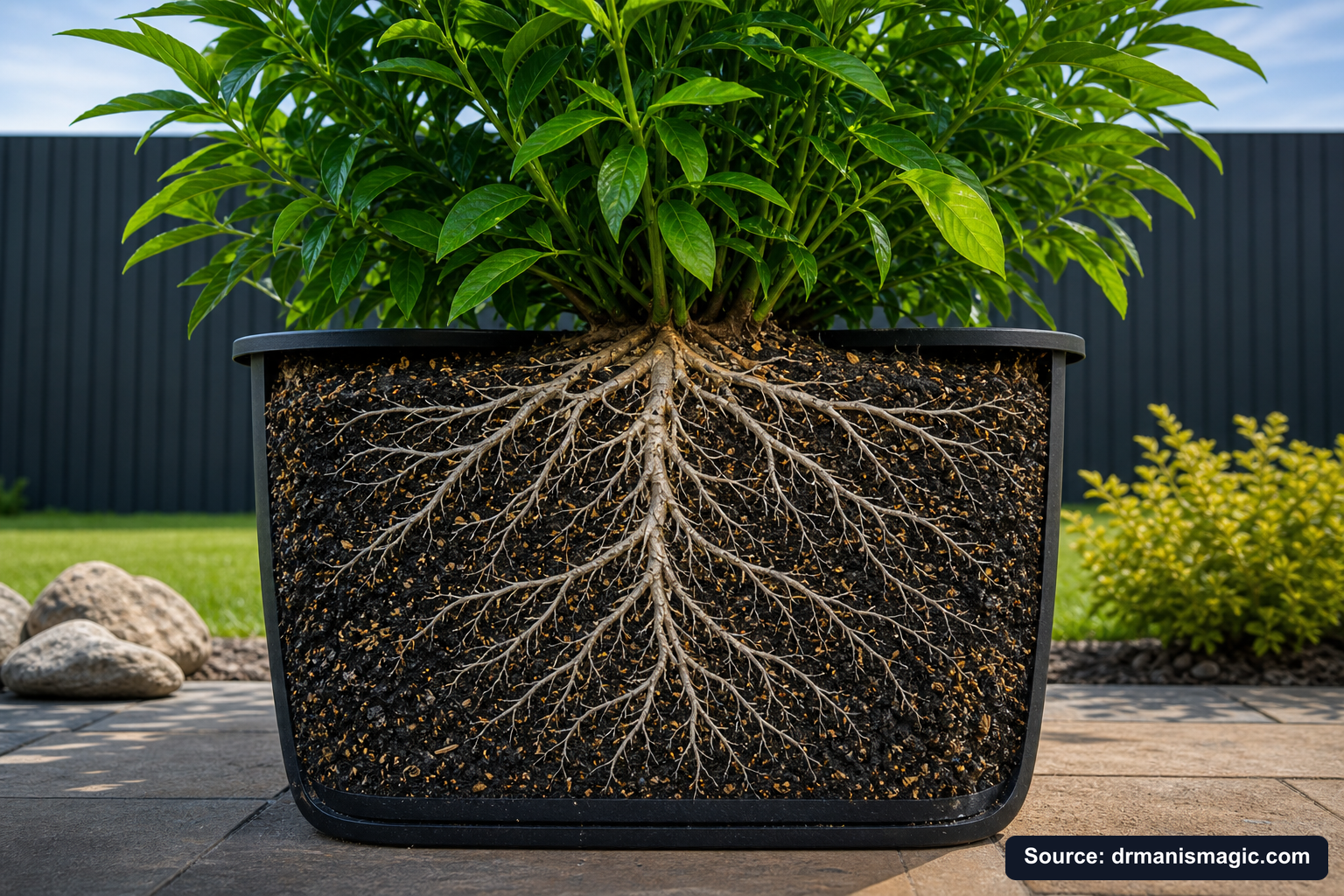
The Physics Were Always There. You Just Needed Someone to Show You.
Your plant does not struggle because you have a brown thumb. It struggles because the system it was put in was designed for convenience and profit, not for long-term root health.
The physics have always been the same. Roots need oxygen. Oxygen lives in pore space. Pore space requires stable particles. Stable particles come from mineral materials. Mineral materials do not decompose. Decomposing materials collapse pore space. Collapsed pore space kills roots.
That is the whole story. Six sentences. But nobody put them in order for you.
When the pore structure is right — when the mineral foundation holds, when the microbes are alive and working, when the fertilizer feeds the plant without burning the biology — gardening stops being a frustrating guessing game. It becomes something closer to what it was always supposed to be. Watching living things grow. Smelling flowers. Picking fruit off a branch you tended yourself. Feeling the soil in your hands and knowing it is healthy.
That is not luck. That is physics. And now you know how it works.
If you are ready to build that foundation for your own plants, start with the Free Plant Care Field Guide — a complete, plain-language walkthrough of the Three Plant Pillars that Dr. Mani's team put together for growers at every level. No jargon. No guesswork. Just the system that has worked for 250,000 trees and counting.
Frequently Asked Questions
Your plant is struggling, and you are doing everything right. The watering is good. The fertilizer is there. But something under the surface is working against you. These questions get to the root of why most potting mixes quietly kill plants, and what the physics of real soil actually looks like.
Why does standard potting mix slowly kill container plants?
Most potting mixes are made from pine bark and sawdust. Those materials decompose over time. As they break down, they collapse inward and block the tiny air pockets roots need to breathe. No air pockets means no oxygen. No oxygen means roots rot, even when you water perfectly. Dr. Mani saw this destroy plants at his South Texas nursery for years before he built a better solution around mineral-based soil that never breaks down.
What does healthy soil actually do for a plant?
Healthy soil does four things at once. It holds the plant upright. It holds water without drowning roots. It stores nutrients roots can actually absorb. And it delivers oxygen into the root zone while letting carbon dioxide escape. Most people only think about nutrients. But that fourth job, gas exchange, is the one that kills the most plants when it fails. All four jobs must work together, every single day.
What is air-filled porosity and why does it matter for my plants?
Air-filled porosity is the percentage of empty space in your soil that holds air instead of water. University research from UC ANR and Rutgers points to at least 10 to 20 percent air-filled porosity as the target for healthy container growing. When decomposing potting mix collapses, that number drops toward zero. Roots suffocate. Dr. Mani's mineral-based Super Soil holds its pore structure for years because silica-rich sand does not decompose the way wood products do.
Does putting gravel at the bottom of a pot improve drainage?
No. This is one of the most common gardening myths out there. When you put gravel under fine soil, you actually create what scientists call a perched water table. Water stops moving down at the boundary between the fine soil and the coarse gravel. That means water pools right at the root zone instead of draining away. The fix is not gravel. The fix is a soil structure that drains freely from top to bottom because the particles themselves do not compact.
Why do microbes matter in soil, and what happens when they are gone?
Microbes are the living workforce inside healthy soil. Bacteria, fungi, and mycorrhizae break down organic matter into nutrients roots can use. They also fight off disease-causing pathogens. When you use salt-based synthetic fertilizers, you wipe those microbes out. Without them, nutrients lock up, diseases move in, and your plant becomes completely dependent on whatever you pour in next. Dr. Mani tested live microbial inputs across more than 250,000 citrus trees and watched roots and immunity strengthen every time.
What are the Three Plant Pillars and why do all three matter?
The Three Plant Pillars are mineral-based soil, live microbes, and organic fertilizer. Think of them as a three-legged stool. Pull one leg away and the whole thing falls. Mineral soil gives roots the structure and oxygen they need. Live microbes turn the soil into a living, self-feeding ecosystem. Organic fertilizer from crab, kelp, and amino acids feeds the plant slowly without burning roots or killing the microbes. Miss any one pillar and the other two cannot do their jobs fully.
Can I fix my soil without starting completely over?
Yes, and the sooner you start, the better. You cannot get back the months or years a plant spent struggling in bad soil. But you can add live microbes right now with Plant Super Boost, mixed into water and poured straight in. When you repot, swap the old decomposing mix for Super Soil, a mineral-based blend that holds its structure permanently. Most gardeners see a visible difference within 30 days. The best time to fix your soil was last year. The second best time is today.
About the Author
Ron Skaria, MD
Ron Skaria, MD, is the co-founder of Dr. Mani's Magic and the son of Dr. Mani. He trained as a medical doctor at Baylor College of Medicine, did his residency at UT Health Science Center - San Antonio and fellowship training at Texas Tech University. He now works full time on the family farm at US Citrus and US Citrus Nursery in Hargill, Texas, building Dr. Mani's Magic alongside his dad. He wrote the Brown Thumb Field Guide to put his father's 48 years of plant science into plain words any gardener can use. His belief is simple. You never had a brown thumb. You just never had the right help.


