


Why Roots Fail Before Leaves Show Symptoms | Dr. Mani's Magic
Why Roots Fail Before Leaves Show Symptoms (And What to Do Before It's Too Late)
Picture this. You walk outside on a Saturday morning, coffee in hand. Your tree looks fine. Maybe a little tired, but fine. You water it. You give it some fertilizer. You go back inside feeling like a good plant parent.
Then, three weeks later, the leaves start yellowing. Then they curl. Then they drop. And you stand there, confused, thinking: what did I do wrong? You watered it. You fed it. You did everything right. Except here is the thing nobody told you. By the time those leaves turned yellow, the real damage was already weeks old. It happened underground. In the dark. Where you could not see it. The roots were already failing while the leaves still looked fine.
That gap between what is happening below the soil and what you finally see above it is the most misunderstood thing in all of gardening. It has cost people thousands of dollars in lost plants, wasted fertilizer, and heartbreak. More than money, it has cost them time. Time they cannot get back. After growing and studying over 250,000 trees at our South Texas nursery, we have seen this pattern over and over. And we want to make sure it stops happening to you.

Plant Super Boost
Key Takeaways
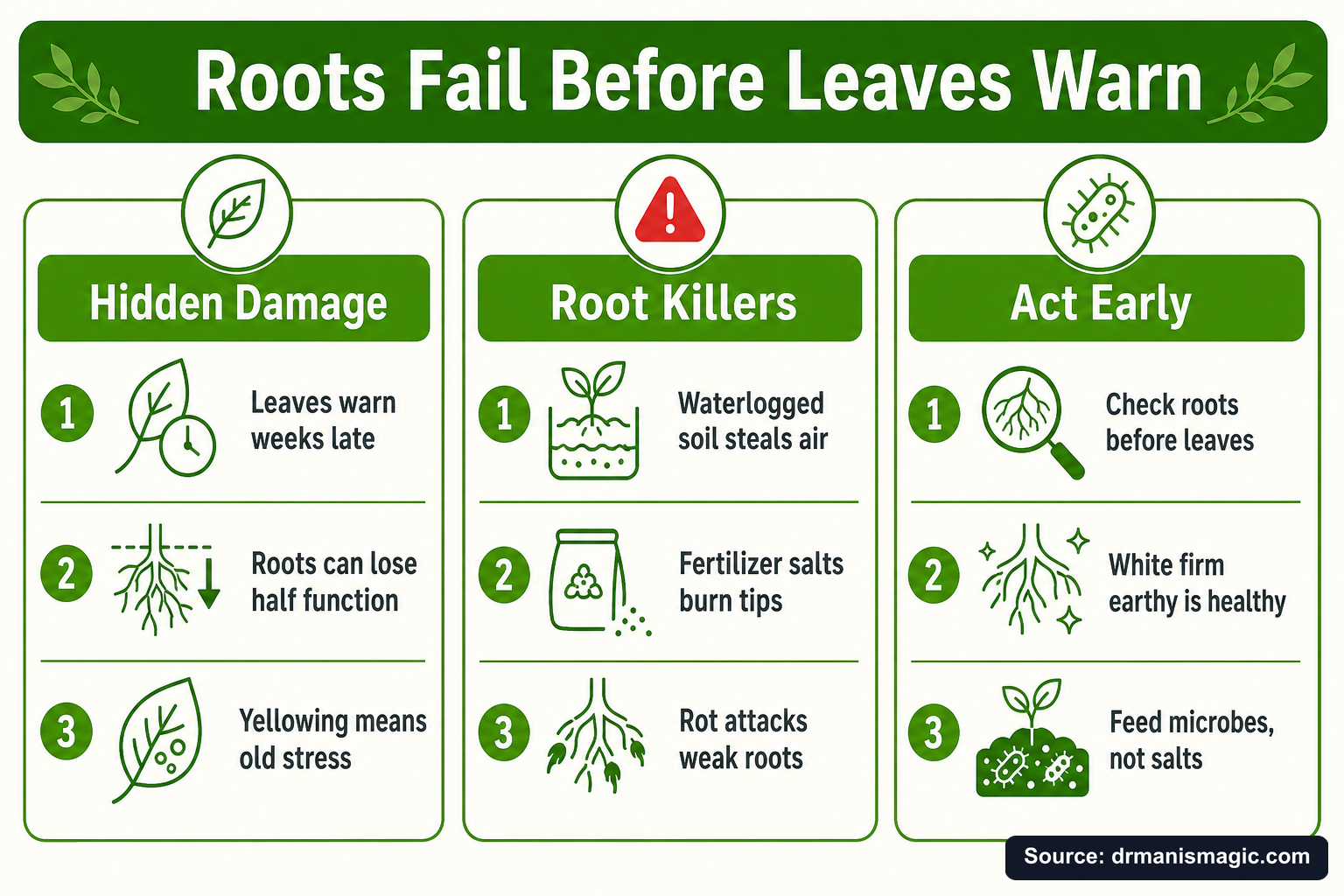
- Roots fail first. Leaves show symptoms weeks or even months later. By the time you see yellow or wilting, the root damage is already done.
- The three biggest underground killers are oxygen starvation, salt buildup, and root rot pathogens like Pythium and Phytophthora.
- Salt-based synthetic fertilizers are a root-zone problem, not a leaf problem. They dehydrate root cells and kill the beneficial microbes your plant depends on.
- Overwatering and underwatering can look identical above ground. The cause lives in the root zone.
- Healthy roots are white, firm, and smell earthy. Sick roots are brown, mushy, or smell sour. Checking the roots early can save your plant.
- Organic, slow-release nutrition feeds the microbes first, which then feed the plant. This natural cycle never burns roots.
- The Three Plant Pillars, mineral soil, live microbes, and organic fertilizer, prevent root failure before it starts.
Why Do Roots Fail Before You See Any Leaf Symptoms?
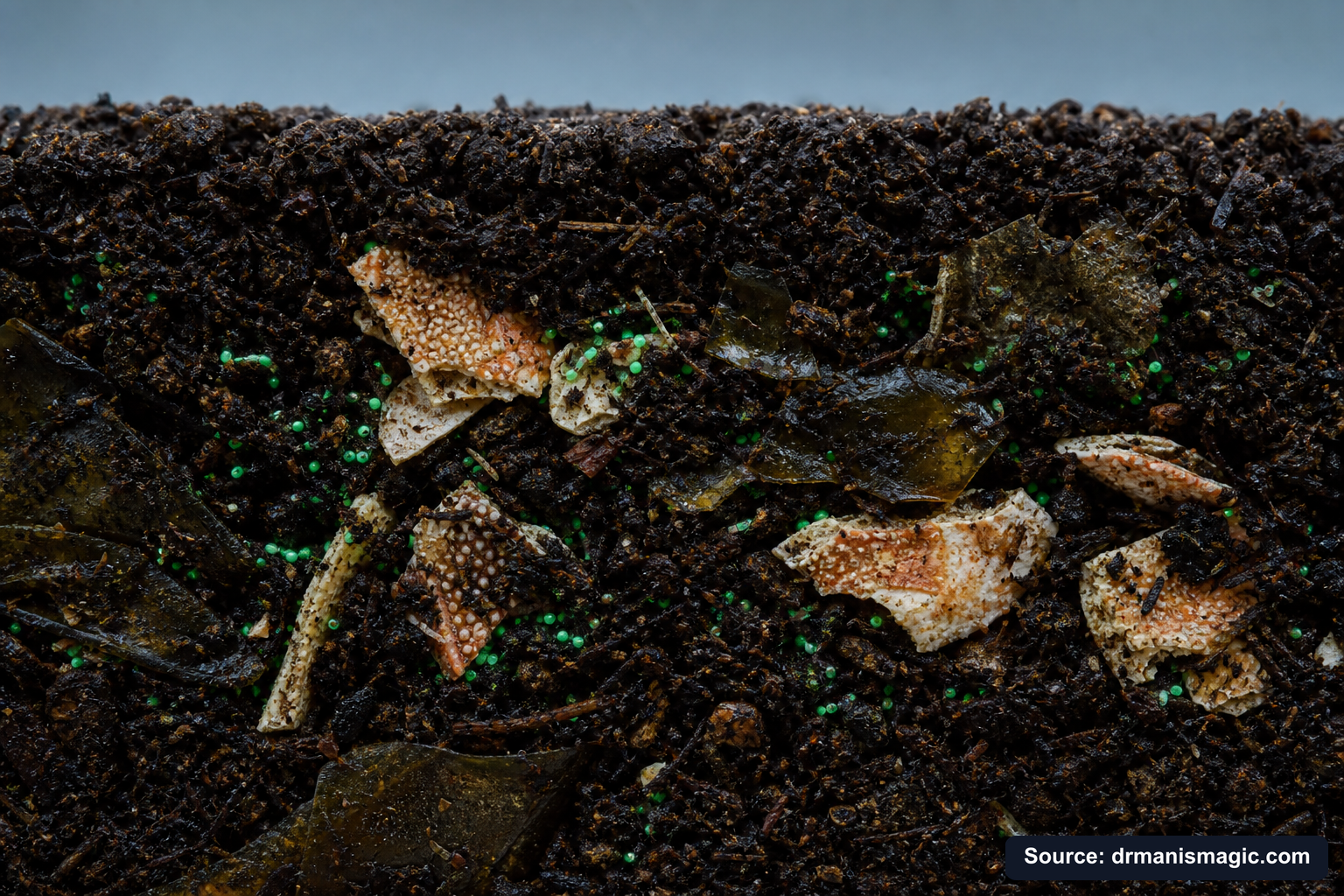
Roots are the first part of the plant to experience stress from poor drainage, salt, low oxygen, or pathogens. They can lose 50 percent or more of their function before leaves show a single symptom. Leaves only react after the root system can no longer deliver enough water and nutrients to keep them going.
Roots do not announce their trouble. They just quietly stop working.
Here is why the delay happens. Roots are responsible for pulling water and nutrients out of the soil and pushing them up into the rest of the plant. They also make hormones that signal the leaves to stay green and keep growing. When roots start dying, the plant uses whatever water and nutrients are already stored in its stems and leaves to keep running. Like a car burning the last of its fuel. For a while, everything looks normal. The leaves are still green. The stems are still firm. But the tank is draining.
Then one day the reserves run out. And that is the day you see the yellow leaves, the wilting, the leaf drop. That is the day most people start trying to fix the problem. But the clock on root damage started weeks or even months earlier.
University extension researchers at the University of Florida have documented this same pattern in citrus, ornamentals, and vegetable crops. Root function drops dramatically before any canopy symptom appears. By the time foliage looks sick, the grower is already behind. UF/IFAS Extension consistently reports that root health diagnosis must come before any surface-level treatment will work.
The lesson here is simple. Leaves are late. Roots are early. If you want to save your plant, you have to think underground first.
What Actually Kills Roots Underground?
The four main root killers are low oxygen from waterlogged or compacted soil, high soluble salts from synthetic fertilizers or deicing chemicals, root rot pathogens like Pythium and Phytophthora that attack oxygen-starved roots, and physical damage from compaction or girdling. All four can be present at the same time.
Let us walk through each one. Not in textbook language. In plain English.
Root Killer 1: Oxygen Starvation
Roots need to breathe. Most people do not know that. We think of roots as water-drinkers, but they actually need oxygen just like you do. They use it to power the cellular work of absorbing nutrients and pushing water upward.
When soil stays waterlogged, oxygen gets pushed out of the pore spaces. The roots start suffocating. They cannot respire. Growth slows. Cells begin to die. And as the root tissue starts breaking down, it releases toxic compounds into the surrounding soil.
This is why overwatering kills plants. Not because of too much water. Because of too little oxygen.
Compacted soil does the same thing without the water. Packed-down soil has almost no air space. Roots in compacted ground are always running low on oxygen, even when the surface looks dry and normal.
Root Killer 2: Soluble Salt Buildup
This one is sneaky. And it is the one most tied to the products sold at every big box store in America.
When you apply a salt-based synthetic fertilizer, you are adding dissolved salts to the root zone. Plants absorb water through their roots using a process called osmosis. Water moves from an area of low salt concentration into an area of high salt concentration. Your plant's roots naturally have more water inside them than the soil outside.
But when you dump synthetic fertilizer into that soil, the salt concentration outside the root goes up. Sometimes it goes higher than inside the root. Now water starts moving the wrong direction. It pulls out of the root and into the salty soil. The root cells dehydrate. They shrivel. The tips get burned.
Scientists call this osmotic stress. Farmers call it fertilizer burn. Whatever you call it, the result is the same. The roots cannot absorb water. The plant starts wilting even if the soil is wet. That is what researchers at Utah State University Extension describe as physiological drought. The plant is surrounded by water and still dying of thirst because the salt is blocking entry.
And there is another layer to this. Salt kills microbes. The beneficial bacteria and fungi that live in healthy soil cannot survive in a high-salt environment. When they die, the natural nutrient cycle breaks down. The plant loses its best allies right when it needs them most.
Root Killer 3: Root Rot Pathogens
Pythium. Phytophthora. Rhizoctonia. Fusarium. These are the names of the root rot organisms that move in after roots are already weakened.
Healthy, oxygenated roots with a thriving microbial community can fight off these pathogens. But stressed roots cannot. Once oxygen levels drop and salt damage begins, the door opens. These water molds and fungi move in fast. They colonize the damaged tissue. They spread. And now you have both the original stress and an active infection working at the same time.
This is why fertilizing a sick plant often makes things worse. You add more salt, increase the stress, wipe out more microbes, and give the pathogens an even better environment to spread.
Root Killer 4: Compaction, Girdling, and Physical Damage
Soil compaction from foot traffic, heavy equipment, or cheap potting mix that breaks down over time crushes the air pockets roots need. Girdling roots wrap around the base of a tree and slowly strangle it over years. Construction near established trees cuts major roots without anyone realizing the tree is now on borrowed time.
All of these create the same result. Less water and nutrient uptake. Less hormone production. Eventually, leaf symptoms that look like drought or disease but are actually structural root damage that started long before.
Can You Tell Overwatering From Underwatering Just By Looking at the Leaves?
No. Overwatering and underwatering can look almost identical above ground. Both cause wilting, yellowing, curling, and leaf drop. The only reliable way to tell them apart is to check the soil moisture level and inspect the roots. Overwatered roots are brown and mushy. Underwatered roots are dry, brittle, and tan.
This is one of the most common traps gardeners fall into.
Your plant is wilting. You think it is thirsty. You water it more. But it was already drowning. You just made it worse.
Or your plant is yellowing. You think it is overwatered. You let it dry out. But it was actually salt-stressed and needed a good flush of clean water to wash the salts away.
Leaves cannot tell you the cause. They can only tell you the plant is stressed. To find the cause, you have to look at two things. The soil and the roots.
Push your finger two inches into the soil. If it is wet, you are not dealing with drought. If it is bone dry, you might be. Then, if you can, gently pull the root ball and look. Healthy roots are white or cream-colored. Firm. They smell like clean earth. Sick roots from overwatering or root rot are brown or black. Mushy. They may smell sour or like rotting leaves. Dry-stressed roots are tan or grey. Brittle. They break instead of bending.
That smell and color check is something we do constantly at our nursery. It takes thirty seconds. It tells you more than any leaf symptom ever could.
How Do Salt-Based Fertilizers Damage Roots Long Before Leaves Turn Brown?
Salt-based synthetic fertilizers raise the electrical conductivity of the soil, pulling water out of root cells through osmotic stress. Root tips get burned. Beneficial microbes die. Water and nutrient uptake drops. All of this happens in the root zone days or weeks before leaves show any sign of stress or burn.
Here is something most fertilizer companies do not want you to think about.
Every bag of conventional synthetic fertilizer is essentially a salt delivery system. The nitrogen, phosphorus, and potassium in those products are bound to salt compounds. Ammonium nitrate. Muriate of potash. Superphosphate. All salts.
When you apply them, you are raising what scientists call the electrical conductivity, or EC, of your soil. High EC means high salt. High salt means osmotic stress. Osmotic stress means the roots cannot pull in water. And when roots cannot pull in water, the plant starts using up its stored reserves.
That is why you sometimes see a burst of green growth right after applying synthetic fertilizer, followed by a slow decline weeks later. The flush of available nutrients created a quick response. But underneath, the roots were being damaged and the microbial community was being wiped out. The plant looked great for a moment. Then it started circling the drain.
We have seen this pattern on thousands of trees at our South Texas nursery. The slow-release synthetic products are sometimes even worse. Many of them are coated pellets, and those coatings are plastic. They break down in the soil and leave behind microplastics. Some fertilizers, both synthetic and organic, use biosludge as a filler. Biosludge is treated municipal waste, and it can carry PFAS, the so-called forever chemicals. These accumulate in soil and in the food you grow.
Our Crab, Kelp & Amino Acids fertilizer contains zero biosludge, zero PFAS, zero synthetic salts, and zero plastic coatings. It is the clean input we developed for our own trees because we could not find anything on the market that met that standard.
See also: The Hidden Reason Synthetic Fertilizers Cause Root Rot
What Does a Root Inspection Actually Look Like? (A Beginner's Checklist)
A root inspection takes about two minutes. You gently lift or probe the root ball, look at the color and texture of the roots, smell them, and check the surrounding soil for salt crust, waterlogging, or compaction. Healthy roots are white and firm. Damaged roots are brown, mushy, brittle, or smell sour.
You do not need a lab. You need your eyes, your nose, and your fingers.
Here is a simple checklist you can use any time a plant starts acting strange.
- Check the soil moisture first. Push a finger or a wooden chopstick two inches deep. Note whether it comes out wet, damp, or dry. Dry soil with a wilting plant points to drought stress. Wet soil with a wilting plant points to root rot or oxygen starvation.
- Look for a salt crust on the surface. A white, crusty layer on top of the potting mix or soil is a classic sign of salt buildup. This means soluble salts are accumulating faster than they are being flushed out.
- Gently expose the roots. For potted plants, tip the container sideways and slide the root ball out. For in-ground plants, carefully dig near the drip line of the canopy to expose feeder roots.
- Check the color. White or cream equals healthy. Tan or grey and dry equals drought or drought recovery. Brown or black equals rot or salt damage.
- Check the texture. Firm roots are healthy. Mushy roots indicate rot. Brittle roots that snap instead of bend indicate dehydration or salt burn.
- Smell the root zone. Healthy soil smells like earth after rain. Rotting roots smell sour or like old compost gone wrong. A sharp, chemical smell can indicate fertilizer salt buildup.
- Look for root tip dieback. The very tips of roots are the most sensitive. Brown, dead tips on otherwise white roots often mean recent salt stress or a pathogen just beginning to move in.
This checklist works for container plants, raised beds, in-ground trees, and even lawn grass. The biology is the same everywhere.
Why Does Wet Soil Sometimes Cause the Same Wilting as Dry Soil?
When soil stays saturated, oxygen disappears from the root zone. Roots cannot respire without oxygen, so they stop absorbing water even though they are surrounded by it. The plant wilts from physiological drought, meaning the water is there but the roots cannot access it. This is the signature of oxygen starvation and early root rot.
Imagine holding your breath underwater. The water is all around you, but you still cannot breathe. That is what a root feels like in waterlogged soil.
Roots pull in water through a pressure gradient powered by cellular respiration. No oxygen, no respiration. No respiration, no gradient. No gradient, no water movement. The plant sits in a wet pot and still wilts because the machinery that pulls water upward has stopped working.
This is why drainage is not optional. It is not a nice-to-have. It is a core biological requirement.
Most cheap potting mixes make this worse over time. They start fluffy. But the bark, wood fiber, and organic matter in them break down. Within six to twelve months, they compact into a dense, airless sludge. Water pools at the bottom. Oxygen disappears. And the root rot organisms that were waiting for exactly this moment start moving in.
This is exactly why the first of the Three Plant Pillars at Dr. Mani's Magic is mineral-based soil. Not organic potting mix. Mineral soil made from silica-rich sandy loam from the Rio Grande Valley. Sand and mineral particles do not decompose. They do not compact into sludge. They hold their structure for years, keeping air channels open and water draining freely. Roots stay oxygenated. Pathogens stay out.
See also: Why Most Potting Mix Collapses Within 6-12 Months
You can explore the full Three Plant Pillars framework at our bundle builder page, where we put together the complete system for any plant.
You Never Had a Brown Thumb.
You were handed the wrong tools. This free guide hands you the right ones.
You watered it. You fed it. It died anyway.
It was never you. It was the dirt, the salt food, and the bad advice.
This guide shows you what really went wrong, and how to fix it for good.
- Why your plants really died, and why it was never your fault
- The salt hiding in your plant food that quietly burns the roots
- The hidden killer in almost every bag of store soil
- The tiny helpers that grow a whole forest for free
- The rescue trick that brings a half dead plant back to life

What Is the Difference Between Salt Damage, Overwatering, and True Root Rot?
Salt damage shows as crispy leaf margins and white soil crust with wet or normal soil. Overwatering causes yellow lower leaves, mushy roots, and soupy soil. True root rot from Pythium or Phytophthora causes sudden wilting, brown-black mushy roots, and a foul smell even when the plant looked healthy just days before. All three can overlap.
This is where most gardeners get stuck. The symptoms overlap. The treatments are different. Getting it wrong makes things worse.
Use this table to start narrowing it down.
| Symptom | Salt Damage (Osmotic Stress) | Overwatering (Oxygen Starvation) | True Root Rot (Pythium / Phytophthora) |
|---|---|---|---|
| Leaf wilting | Yes, especially midday | Yes, lower leaves first | Yes, sudden and severe |
| Leaf color change | Brown edges and tips, otherwise green | Yellow lower leaves, then upward | Pale green to yellow, rapid decline |
| Soil condition | Can be dry or moist; white crust common | Consistently wet, poor drainage | Wet, warm, may smell foul |
| Root appearance | Brown tips, otherwise tan or white | Brown, soft, starting to break down | Black, mushy, collapses when touched |
| Root smell | Slightly sharp or chemical | Sour or stale | Strong rot, foul, like sewage |
| Speed of onset | Gradual, over weeks | Gradual, over weeks | Can be very fast, days to a week |
| White crust on soil surface | Very common | Sometimes | Rare |
| Prior fertilizer application | Often yes | Not required | More common after fertilizer weakens roots |
The important thing to remember is that these three problems often show up together. Salt stress weakens roots. Weakened roots absorb less water. You water more to compensate. The soil gets wetter. Oxygen drops. Pythium moves in. One problem feeds the next. That cascade is exactly what we see when gardeners have been using synthetic fertilizers on plants in compacted or poorly draining soil for years.
How Does Organic Fertilizer Actually Work in the Root Zone?
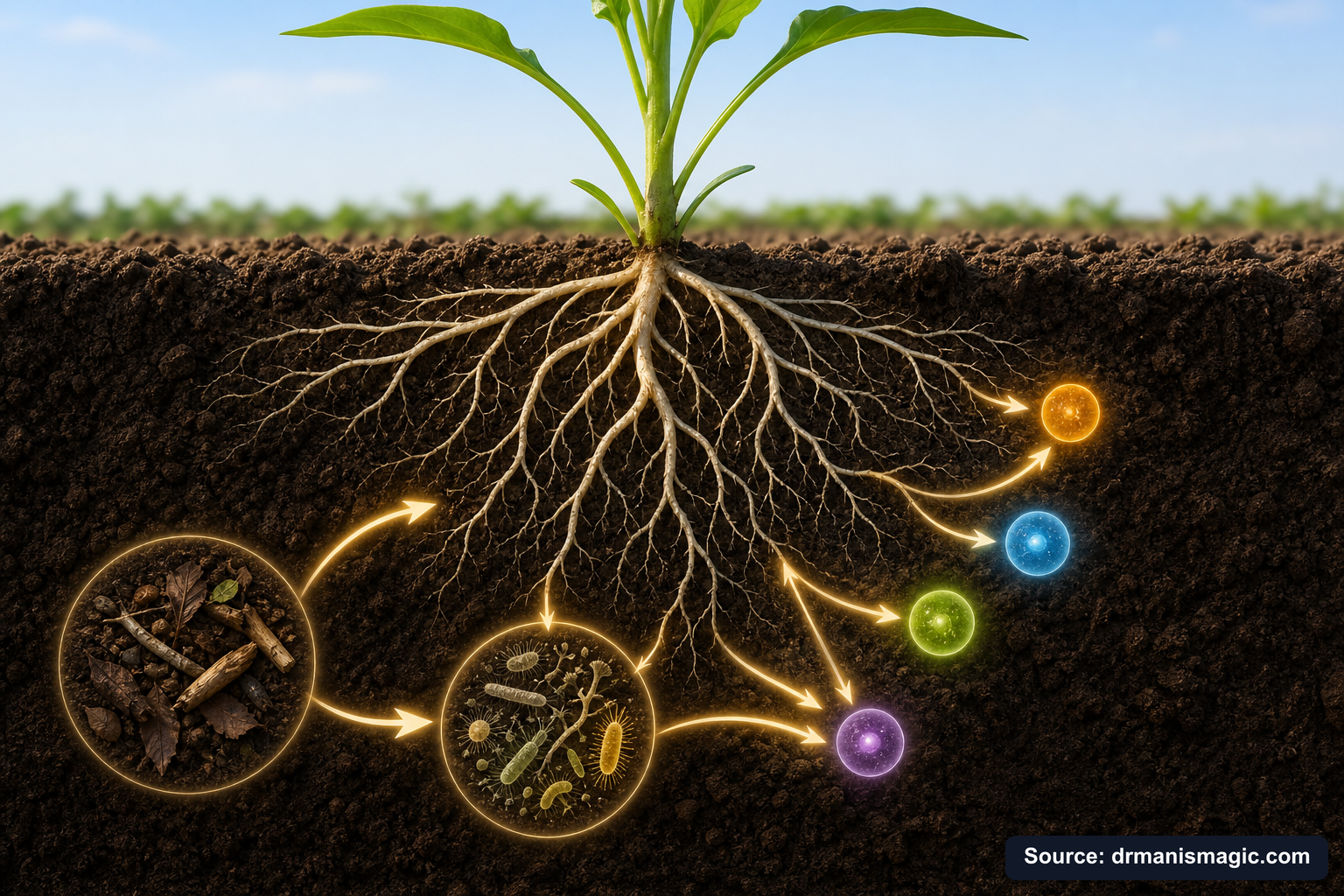
Organic fertilizer does not go straight into the root the way synthetic fertilizer does. Soil microbes eat the organic matter first, break it down, and release nutrients in a gentle, slow trickle the root can absorb safely. When those microbes die, they release even more nutrition. The whole process is a living, self-renewing feeding system that never burns roots.
Most people think fertilizer is just plant food. Like pouring vitamins into the soil. But that is not quite right, and understanding the difference changes everything.
A plant's real food is sunlight, water, and carbon dioxide. That is what photosynthesis runs on. Fertilizer is more like the vitamins and minerals a human body needs to function. You cannot live on vitamins alone. But without them, your systems start breaking down.
Now here is the part most fertilizer companies never explain.
When you apply an organic fertilizer like our Crab, Kelp & Amino Acids blend, the nutrients do not rush straight into the root. They go to the microbes first. The bacteria and fungi in the soil eat the organic particles. They digest them. They convert them into forms the root can absorb. Then, slowly, steadily, they release those nutrients into the soil water right next to the root tips.
And when those microbes eventually die, as all living things do, their bodies decompose and release even more nutrition directly into the root zone. It is a living, self-refilling feeding system. Nature built it. We just have to stop killing it with salt.
That is the slow-release mechanism. Not a plastic coating timing the release. A living food chain doing it naturally. The root gets fed at the pace it actually wants. Never a flood. Never a famine. Just a steady trickle that mirrors how plants have eaten for millions of years.
This is why you almost cannot over-apply organic fertilizer the way you can with synthetic. There is no sudden salt spike. There is no osmotic shock. The microbes regulate the rate. The plant controls how much it takes. The system is self-balancing in a way that synthetic chemistry simply cannot replicate.
What Makes Crab, Kelp, and Amino Acids Different From Other Organic Fertilizers?
Most organic fertilizers use biosludge or fish emulsion as their base, which can carry PFAS forever chemicals and smell terrible. Crab, kelp, and amino acid fertilizer uses clean marine and plant-derived ingredients that feed both the plant and its microbial partners, support root immunity through chitin, and deliver natural growth hormones from kelp, all without synthetic salts or contaminated fillers.
Not all organic fertilizers are created equal. And this is important if you are growing food or letting children play in the garden.
Some organic fertilizers use biosludge as a base ingredient. Biosludge is treated municipal waste, essentially processed sewage. It can contain PFAS compounds, which are synthetic chemicals that do not break down in soil or in the human body. They accumulate. Researchers at multiple universities are actively studying PFAS contamination in garden soils from biosolids-based fertilizers. If you are growing food, this matters enormously.
Fish emulsion is another common organic option. It is real nutrition. But it goes anaerobic quickly, especially in warm weather. When it ferments in the bottle or in the soil, it produces a smell that is difficult to describe politely. We have heard from customers whose dogs vomited from the smell of fish emulsion in the garden. Not exactly what you want around your backyard barbecue.
Our formulation uses a completely different set of ingredients. Let us walk through each one and what it actually does in the root zone.
Crab Shell and Chitin
Crab shells are rich in chitin. Chitin is a structural carbohydrate, and it does something remarkable in the soil. When soil microbes detect chitin, they recognize it as the outer shell material of many harmful insects and fungal pathogens. They go on high alert. They produce enzymes that break chitin down. And in doing so, they naturally suppress the kinds of root-attacking organisms that cause damping-off and crown rot.
Chitin essentially trains the soil biology to stay on defense. It is one of nature's most elegant pest and disease resistance mechanisms. And it delivers calcium and magnesium alongside those benefits, both critical for strong cell walls and woody stem development.
Cold-Processed Kelp
Kelp is one of the fastest-growing plants on Earth. It accumulates a remarkable range of trace minerals from seawater. It also contains natural plant growth hormones called auxins and cytokinins that stimulate root elongation, cell division, and stress recovery. Cold processing matters here. Heat destroys those hormones. Cold processing keeps them intact and active.
The carbohydrates in kelp also feed soil bacteria directly. So the kelp is feeding both the plant and the microbial community at the same time.
Amino Acids
Amino acids are the building blocks of proteins. When plants make their own amino acids, it takes a lot of energy. When you supply them directly through fertilizer, the plant can skip several energy-intensive steps and use those amino acids immediately for growth, enzyme production, and stress response.
The nitrogen in amino acid form is also gentler on roots than the ammonium or nitrate nitrogen in synthetic fertilizers. It does not spike the salt index of the soil. It does not create osmotic stress. The microbes process it slowly and release it at the pace the plant prefers.
Volcanic Ash and Trace Minerals
Volcanic ash adds silica and a full spectrum of trace minerals that strengthen cell walls, increase drought resistance, and support the dozens of enzyme systems that run quietly in the background of every healthy plant. Silica in particular helps plants stand up straighter, resist pest damage, and move water more efficiently through their tissues.
Together, these four ingredients create a complete, clean nutrition profile. The NPK ratio of 7-4-4 supports leafy growth, root development, and fruit quality. The 6 percent calcium supports the woody structure of stems and trunks. And the entire formula works with soil microbes rather than against them.
Synthetic vs. Organic vs. Chitin-Kelp Fertilizer: A Direct Comparison
Synthetic fertilizers deliver fast nutrients but at the cost of root damage, microbial death, and salt accumulation. Standard organic fertilizers are better but can still carry contamination risks. Chitin and kelp-based organic fertilizers like our 7-4-4 blend deliver complete nutrition with no salt spike, no PFAS risk, and active support for the microbial community that makes roots thrive long-term.
| Feature | Synthetic Fast-Release | Synthetic Slow-Release (Coated) | Organic Chitin-Kelp-Amino (7-4-4) |
|---|---|---|---|
| Salt index (root damage risk) | High | Moderate to high | Very low |
| Microbial impact | Kills beneficial microbes | Suppresses microbes | Feeds and supports microbes |
| Nutrient release speed | Immediate spike | Timed by plastic coating | Slow, biology-paced |
| Root burn risk | High at normal rates | Moderate | Near zero |
| PFAS / biosludge risk | Possible in some products | Possible in some products | None (zero biosludge) |
| Plastic residue in soil | No | Yes (coating shells) | No |
| Chitin-based disease suppression | No | No | Yes |
| Natural growth hormones (kelp) | No | No | Yes |
| Supports Three Plant Pillars | No (works against Pillar 2) | No (works against Pillar 2) | Yes (all three pillars) |
| Safe for food gardens | Caution advised | Caution advised | Yes |
What Are the Three Plant Pillars and Why Do They Prevent Root Failure?
The Three Plant Pillars are mineral-based soil for drainage and oxygen, live microbes to protect and feed roots biologically, and organic fertilizer to deliver clean nutrition without salt damage. Together they create the conditions roots need to stay healthy. Without all three, root failure is eventually guaranteed no matter how much you water or feed.
Dr. Mani Skaria did not invent gardening. But after four decades of plant pathology research, leading the Clean Citrus Program for Texas, teaching at the Texas A&M Citrus Center, and growing over 250,000 trees at our South Texas nursery, he did crack the code on why most plants fail.
It almost always comes back to one or more of three missing foundations. The soil does not drain and breathe properly. The microbial community has been wiped out or never established. The fertilizer is salt-based and slowly poisoning the root zone.
Fix all three and you have what Dr. Mani calls a bulletproof plant. Miss even one and you are always one bad week away from a decline.
Pillar 1: Mineral-Based Soil. Silica-rich sandy loam that does not decompose, does not compact, and keeps oxygen flowing to roots indefinitely. Not pine bark. Not sawdust. Not the fluffy stuff from the big box store that turns to sludge in eight months.
Pillar 2: Live Microbes. Bacteria, fungi, and mycorrhizae that form a protective network around the root zone. They unlock nutrients. They fight pathogens. They create the living ecosystem that plants evolved in over millions of years. Without them, your plant is defenseless. With them, it is practically armored.
Pillar 3: Organic Fertilizer. Slow-release, biology-friendly nutrition that feeds the microbes first, then feeds the plant through them. No salt spikes. No root burn. No PFAS. Just the steady, nature-paced feeding that keeps roots healthy and leaves green.
You can download the full Three Plant Pillars system in our Free Plant Care Field Guide, which walks through every step for any plant, from houseplants to orchards to lawn grass.
What Should You Do Right Now If You Think Your Roots Are Already Failing?
Stop fertilizing immediately. Improve drainage. Flush accumulated salts with clean water. Inspect the roots. Remove dead root tissue if possible. Reintroduce live beneficial microbes to help the root zone recover. Then rebuild the soil foundation using the Three Plant Pillars so the same failure does not repeat.
Here is a step-by-step recovery plan for any plant showing stress symptoms.
- Stop all synthetic fertilizer immediately. Adding more salt to a stressed root system is like pouring gasoline on a fire. Even if the plant looks like it needs feeding, stop. The roots cannot absorb nutrients right now anyway. More fertilizer will only make the salt buildup worse.
- Improve drainage if the soil is staying wet. For container plants, check that drainage holes are not blocked. For in-ground plants, consider aerating the soil or adding a drainage channel. If the plant is in a pot, consider repotting into mineral-based soil with proper drainage structure.
- Flush accumulated salts with clean water. For potted plants, water slowly and deeply until water runs freely from the bottom. Do this two or three times over a few days. This dilutes and moves salt out of the root zone. For in-ground plants, a slow, deep soaking over several hours helps move salts below the root zone.
- Inspect the roots. Use the checklist above. Remove any black, mushy, foul-smelling root tissue with clean scissors. Healthy root tissue left intact will try to regenerate. Dead tissue left in place continues to host pathogens.
- Let the soil partially dry before watering again. Oxygen needs to return to the root zone. Give the soil time between waterings to breathe. Check moisture two inches deep before adding more water.
- Reintroduce live beneficial microbes. This is the step most people skip, and it is one of the most important. The microbial community that protects roots and processes nutrition has likely been wiped out or severely reduced. Reintroducing live bacteria, fungi, and mycorrhizae through a quality liquid microbial drench gives the root zone its biological immune system back. You can find our Plant Super Boost microbial formula here.
- Rebuild the foundation with the Three Plant Pillars. Once the plant stabilizes, think about the long-term structure. Is the soil draining freely and staying oxygenated? Are microbes present and active? Is the fertilizer organic, slow-release, and salt-free? If all three answers are yes, your plant has what it needs to recover and stay healthy.
How Much Time Are You Losing by Waiting to Fix This?
Root damage compounds over time. A plant with compromised roots grows slower, fruits less, and is more vulnerable to every stress it encounters. The longer the root zone stays damaged, the harder the recovery. Months of declining root function can mean years of stunted growth before the plant returns to full productivity.
Here is the hardest truth we share with every new customer.
You can always get money back. You cannot get time back.
The number one thing people tell Dr. Mani they want is to see fruit on the tree they planted. To pick something from their own backyard. To taste what they grew. It is a deep, primal drive. We were made to tend gardens. And when plants struggle year after year without producing, that dream quietly fades.
Most people who come to us have already lost one, two, maybe three years to the old way. Salt fertilizers. Sawdust potting mix. No microbes. They spent money on products that were designed to keep them coming back, not designed to actually work. And every year the plant stalled or declined, they lost another season they could have been harvesting.
When the Three Plant Pillars are in place, when the roots can breathe, when the microbes are alive and working, when the nutrition is clean and steady, plants do not just survive. They move fast. They establish. They push growth the way nature intended.
We have proven it across 250,000 citrus trees, across houseplants, tropical trees, and garden beds. The biology is the same whether you are growing lemons in South Texas or tomatoes in a pot on a Chicago balcony. Give the roots what they actually need and stop giving them what hurts them. The results follow reliably.
The second best time to start is today.
If you want to go deeper on building a root system that never fails, start with our Free Plant Care Field Guide. It walks through the Three Plant Pillars step by step for any plant you are growing. No jargon. No guesswork. Just the system we use on our own trees, written in plain language so anyone can follow it.
See also: How Salt-Based Feeding Quietly Destroys Root Systems
Frequently Asked Questions
Root problems are sneaky. They start underground and stay hidden for weeks before you see a single yellow leaf. These are the questions we hear most from gardeners who want to catch trouble early and keep their plants alive and thriving for the long haul.
What happens to leaves when roots are already failing underground?
Leaves are the last to know. When roots start dying, your plant burns through whatever water and nutrients are stored in its stems and leaves. For a while, everything looks fine. Then the reserves run out. You see yellowing, wilting, and leaf drop. But here is the hard truth: by that point, the root damage started weeks or even months ago. Leaves are late reporters. Roots are where the real story begins.
What do unhealthy roots actually look like?
Healthy roots are white or cream colored, firm to the touch, and smell like fresh earth. Sick roots tell a different story. They turn brown or black. They feel mushy when you press them. And they smell sour or rotten. At our South Texas nursery, we have checked the roots of over 250,000 trees. That smell and color change is your first real warning sign. Do not wait for the leaves to confirm what the roots are already screaming.
Can damaged roots recover and grow back?
Yes, but only if the conditions change fast. Roots need three things to bounce back: oxygen, living soil microbes, and clean nutrition. That is exactly what the Three Plant Pillars deliver. Our mineral-based Super Soil keeps oxygen flowing to the root zone. Plant Super Boost floods the soil with live bacteria and fungi that help roots regenerate. And our organic fertilizer feeds those microbes without burning the tender new roots trying to regrow. Give roots the right environment and they fight back hard.
What are the three biggest things that kill roots before you see any leaf symptoms?
Number one is oxygen starvation. Most cheap potting mixes are made from pine bark and sawdust that compact and rot over time, cutting off airflow to roots. Number two is salt buildup from synthetic fertilizers. Those salt-based products dehydrate root cells and wipe out the beneficial microbes your plant depends on. Number three is root rot pathogens like Pythium and Phytophthora, which thrive in wet, compacted, low-oxygen soil. Fix the soil first and you stop all three at the source.
Does overwatering or underwatering cause root failure?
Both do. And here is the frustrating part: they can look identical above ground. Wilting leaves could mean too much water or too little. You cannot tell by looking at the leaves. You have to look at the roots and the soil. Waterlogged soil with poor drainage drowns roots by cutting off oxygen. Bone dry soil starves them. Our mineral-based Super Soil solves both problems at once because it drains fast but still holds just enough moisture for roots to drink without sitting in a puddle.
Is there anything safe I can use to clean my plant leaves without harming the roots?
Keep it simple. A soft damp cloth works great for wiping dust off leaves. If you want to go a step further, a very diluted mix of water and a tiny drop of mild soap can work on some plants. But always test a small area first. Some plants are sensitive. Skip the rubbing alcohol on most plants since it can dry out leaf tissue fast. And whatever you spray on leaves, remember the bigger battle is always underground. Healthy roots make leaves naturally resilient.
What does calcium deficiency look like and how does it connect to root health?
Calcium deficiency shows up as brown, curled edges on young leaves, stunted new growth, and sometimes dying root tips. Here is the connection most people miss: calcium does not move easily inside a plant. Roots have to actively pull it up through healthy tissue. When roots are damaged or clogged, calcium delivery stops even if your soil has plenty of it. Our organic fertilizer includes trace minerals that support this uptake naturally. Fix the root zone first and your plant can finally use the nutrients that are already there.
About the Author
Ron Skaria, MD
Ron Skaria, MD, is the co-founder of Dr. Mani's Magic and the son of Dr. Mani. He trained as a medical doctor and now works full time on the family farm in Hargill, Texas, building Dr. Mani's Magic alongside his dad. He wrote the Brown Thumb Field Guide to put his father's 48 years of plant science into plain words any gardener can use. His belief is simple. You never had a brown thumb. You just never had the right help.


