


Why Sand Is the Unsung Hero of Healthy Soil | Dr. Mani's Magic
Why Sand Is the Unsung Hero of Healthy Soil (And Why Your Roots Are Begging for It)
Picture this. You're standing on your back patio, staring at a plant you've watered faithfully for months. The leaves are yellow. The soil smells a little sour. You've done everything right — or so you thought. You watered it. You fed it. You even talked to it once or twice. And it's still struggling.
Here's what nobody told you. The problem probably started before you ever brought that plant home. It started with what was already in the pot. That dark, fluffy stuff that looks so rich and promising? Most of it is pine bark. Sawdust, basically. The leftover scraps from a timber mill, pressed into a bag and sold to you as "premium potting mix." You've been growing your plants in other dead plants. And those dead plants are slowly stealing the one thing your roots need most — oxygen.
Sand doesn't look exciting. It doesn't smell like earth after rain. It doesn't come in a shiny bag with a picture of enormous tomatoes on the front. But sand — the right kind of sand — is what keeps the air flowing, the water moving, and your roots alive. It's been doing this job for thousands of years. Bonsai masters knew it. Ancient farmers knew it. And after growing more than 250,000 trees at our South Texas nursery, we know it too. This article is going to show you exactly why.
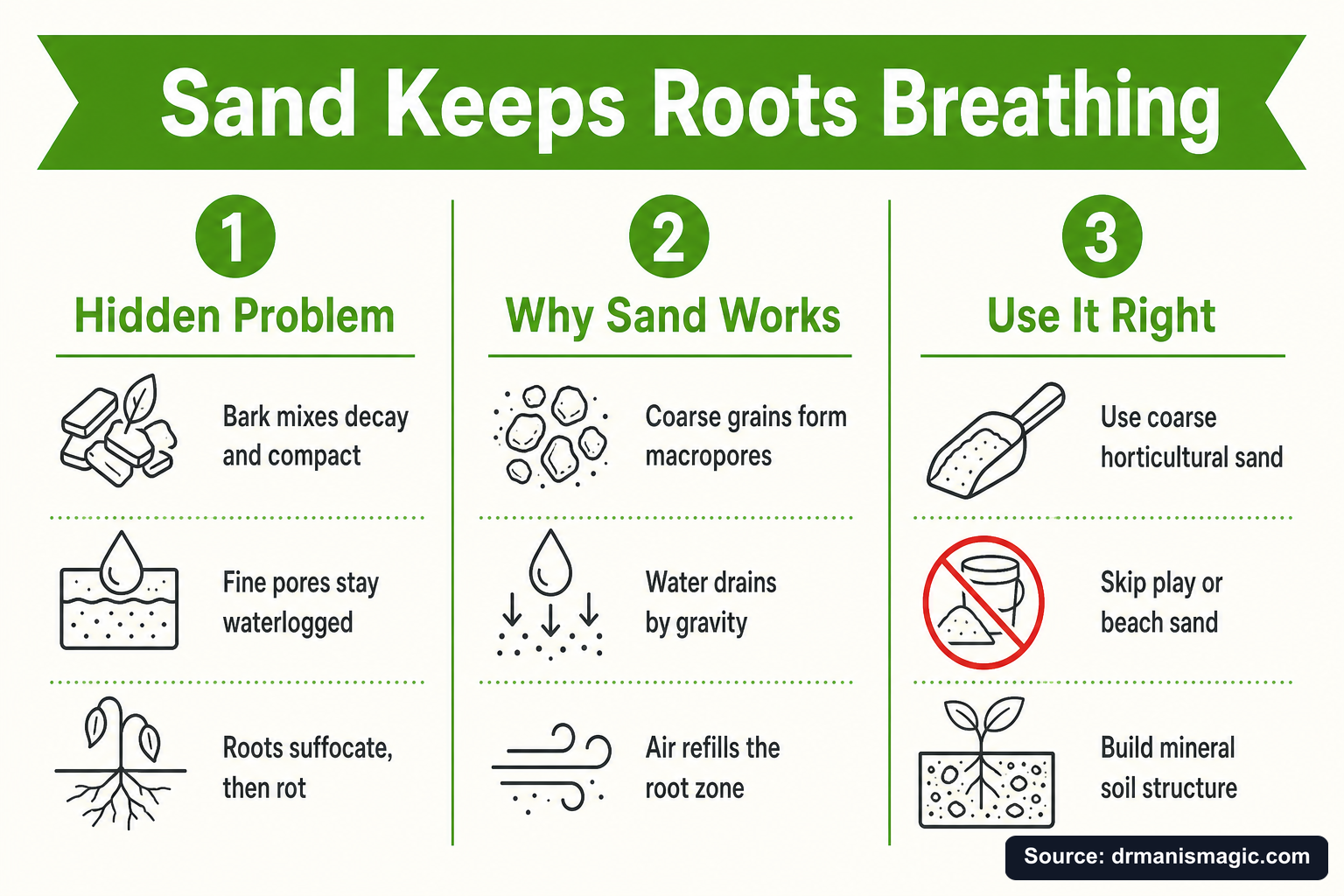
Key Takeaways
- Sand's superpower is physical, not nutritional — coarse particles create air pockets that let roots breathe.
- Roots need oxygen just like you do. Waterlogged soil suffocates them, and that's what causes root rot.
- Most potting mix is pine bark sawdust — it decomposes, steals oxygen, and collapses over time.
- The wrong kind of sand (fine play sand, beach sand) can make drainage worse, not better.
- Coarse horticultural sand or silica-rich mineral particles are what build lasting soil structure.
- Container plants are especially vulnerable because of a phenomenon called a perched water table.
- The fix is not just sand alone — it's mineral-based soil architecture as the foundation of healthy plant growth.
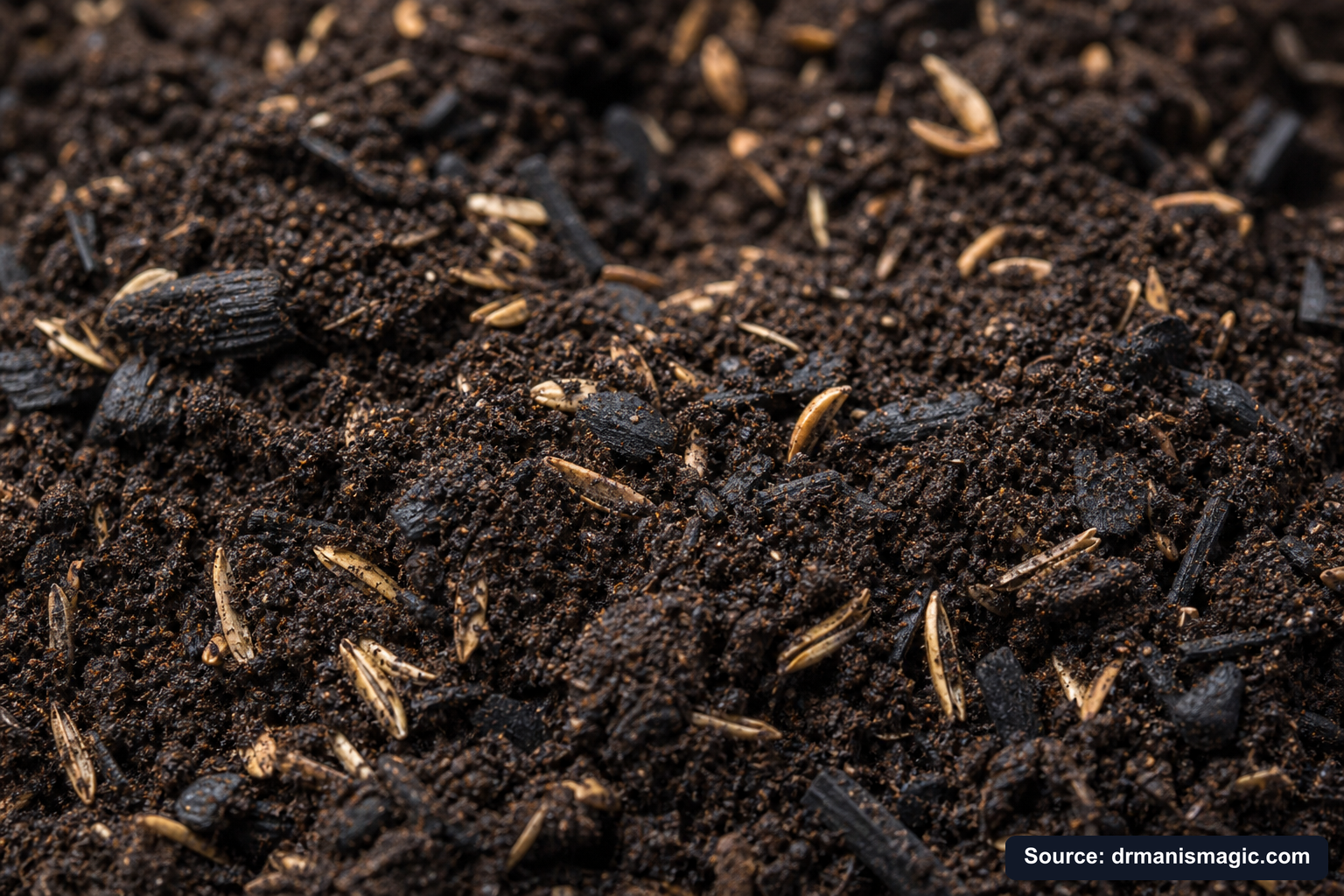
Why Do Plant Roots Need Oxygen in the First Place?
Quick Answer: Roots need oxygen to breathe, absorb water, and take up nutrients. Without oxygen in the soil, roots suffocate, turn brown and slimy, and eventually die. This process is called root asphyxiation, and it is one of the most common hidden causes of struggling container plants.
Roots breathe. That's the fact most gardening advice skips right over.
You already know that the leaves of a plant take in carbon dioxide and release oxygen. That's photosynthesis. But below the soil? The roots are doing the opposite. They are consuming oxygen and releasing carbon dioxide, just like you do when you breathe. This process is called root respiration, and it powers everything — nutrient uptake, water absorption, disease resistance, and growth.
When oxygen can't reach the roots, everything shuts down. The plant can't pull water up. It can't absorb nutrients. The roots start to die. And when roots start dying, they become easy targets for pathogens — the fungi and bacteria that cause root rot.
Colorado State University Extension notes that oxygen is critical for root function and that waterlogged soils deprive roots of the air they need to survive. CSU Extension recommends improving soil structure and drainage as a primary strategy for root health.
This is not a minor detail. This is the whole game. And sand — coarse, mineral sand — is one of the most powerful tools for keeping oxygen in the root zone.
What Does Sand Actually Do for Soil Structure?
Quick Answer: Coarse sand creates macropores — large air spaces between particles. These spaces drain gravitational water quickly and then refill with fresh oxygen. This keeps roots breathing between waterings. Sand does not feed plants. It builds the physical architecture that makes feeding possible.
Think of soil as a building. The nutrients are the furniture. The microbes are the workers. But sand? Sand is the hallways and the ventilation system. Without it, nobody can move. Nobody can breathe. The whole building shuts down.
Coarse sand particles are large enough that they don't pack tightly together. The gaps between them — called macropores — are wide enough for water to drain through quickly under gravity. Once the water drains, air rushes in to fill those same spaces. That air carries the oxygen your roots are desperately waiting for.
Fine sand particles are a different story. They are small enough to slip into the existing pores of your soil and plug them up. Instead of creating air space, fine sand fills it. This is why adding the wrong kind of sand to potting mix can actually make drainage worse. The particle size is everything.
According to Rutgers New Jersey Agricultural Experiment Station, desirable horticultural sand is dominated by particles in the 0.25 to 1 millimeter range, with very little silt or clay mixed in. This is what creates reliable air-filled porosity — the actual breathing room your roots need.
Sand is not a fertilizer. It will never be a fertilizer. But without the structure sand provides, your fertilizer has nowhere to go and your roots have no air to breathe.
What Is a Perched Water Table and Why Is It Killing Container Plants?
Quick Answer: A perched water table is a layer of saturated soil that forms at the bottom of any container, even one with drainage holes. Water stops draining there because of physics, not clogged holes. This wet zone suffocates roots from below. Coarser, well-structured media raises this zone and shrinks it.
Here is the thing that trips up almost every container gardener. You look at your pot. It has drainage holes. You water it. Water comes out the bottom. You think: drainage is working. But inside that pot, there is still a zone of completely saturated soil sitting right above those holes.
This is called a perched water table. It is not a clog. It is physics.
Water clings to small particles. In a container, water keeps holding onto those fine particles until the weight of the water column above is strong enough to pull it through. In a small pot with fine media, that saturation zone can take up a large portion of the root zone. Roots sitting in that zone have no oxygen. They slowly suffocate.
This is why plants get root rot even when you think you're watering correctly. The hole at the bottom is not enough. The media itself has to be coarse enough to let water move freely. When you add coarser mineral particles — like sand, perlite, pumice, or crushed lava rock — you shrink the perched water table. You give your roots drier, more aerated space to grow into.
Container plants are uniquely vulnerable to this problem. In the ground, roots can escape downward and sideways to find drier, more aerated zones. In a pot, they are trapped. The media you choose is their entire world. Get it wrong and there is nowhere for them to go.
Why Is Potting Mix the Enemy of Long-Lived Plants?
Quick Answer: Potting mix is mostly pine bark sawdust — a carbon-based, organic material that decomposes. As it breaks down, it steals oxygen from the root zone, collapses into a dense sludge, and loses its ability to drain. For plants that stay in containers for more than a season, this collapse is slow death.
Let's talk about what is actually in that bag of potting mix.
It is not soil. It is not even close to soil. It is mostly pine bark — the waste product left over when timber mills strip logs. The Southeast United States has vast pine forests, and the mills had mountains of bark scraps with nowhere to send them. Someone figured out they could pile it up, let it rot a little, put it in a bag, and sell it as "premium potting mix." And because it was cheap, light, and available, the whole nursery industry adopted it.
Pine bark has a real chemistry problem too. Pine trees contain powerful compounds called terpenes and terpenoids — the same chemicals that give us Pine-Sol and turpentine. These compounds are genuinely harsh on root zones. So the industry lets the bark sit in enormous piles for years, decomposing, to break those chemicals down before it gets bagged and sold.
There is the first problem. That decomposition does not stop when the bark goes into your bag. It keeps going. And decomposition — the breakdown of organic, carbon-based material — consumes oxygen. The same oxygen your roots need. Every week your plant sits in potting mix, that mix is breaking down, getting denser, and stealing more air from the root zone.
By the six-month mark, most potting mixes have already lost significant structure. By a year, you are dealing with a compressed, airless sludge that drains poorly and smells faintly sour. Big box stores love this, by the way. When your plant declines and dies, you come back and buy another one. The cycle keeps going. Nobody ever stops to ask whether the soil itself was the problem.
Here is the phrase worth remembering: you have been planting your precious trees and flowers into other dead plants.
See also: The Hidden Reason Synthetic Fertilizers Cause Root Rot
Coarse Sand vs. Fine Sand vs. Everything Else: What Actually Works?
Quick Answer: Coarse horticultural sand with particles 0.25–1 mm creates air space. Fine play sand and beach sand fill pores and make compaction worse. Perlite, pumice, and lava rock perform similarly to coarse sand. The goal is durable, coarse, mineral particles that do not decompose — not just any sand from any bag.
Not all sand is the same. This is the mistake that sends people down the wrong path.
Fine play sand — the kind in sandboxes — has tiny particles. When you mix it into potting soil, those particles slip into the existing pore spaces and fill them up. You end up with a denser mix, not a more aerated one. You have made things worse.
Beach sand carries salt residue and contamination. That salt will stress your roots and kill the beneficial microbes your soil depends on. Never use beach sand in a garden mix.
Coarse horticultural sand — also called sharp sand — is what you want. The particles are large enough to create real macropores. They are gritty to the touch. They do not pack down under pressure. Mixed into a growing medium at the right ratio, they keep air channels open for the long term.
The even better news? Sand is not the only mineral particle that does this job. Pumice, perlite, lava rock, and even rice hulls (made of silica) all create similar aeration effects. They are all inorganic or nearly inorganic, meaning they do not decompose. They hold their structure for years. Some, like pumice and lava rock, can last essentially forever in a container.
This is what mineral-based soil architecture looks like in practice: durable, coarse particles that create and maintain pore space over time, so roots have oxygen not just when the mix is new, but a year, three years, ten years from now.
| Amendment | Drainage | Aeration | Water Retention | Decomposes? | Weight | Best Use |
|---|---|---|---|---|---|---|
| Coarse Horticultural Sand | Excellent | Good | Low | No | Heavy | Structure builder for containers and beds |
| Fine Play Sand | Poor | Poor | Low | No | Heavy | Avoid — fills pores, increases compaction |
| Beach Sand | Variable | Variable | Low | No | Heavy | Avoid — salt contamination kills microbes |
| Perlite | Excellent | Excellent | Low-Medium | No | Very Light | Aeration in containers, seed starts |
| Pumice | Excellent | Excellent | Medium | No | Medium | Succulents, bonsai, long-term containers |
| Lava Rock | Excellent | Excellent | Low | No | Medium | Bonsai, perennial containers, top dressing |
| Pine Bark / Potting Mix | Good (when new) | Good (when new) | Medium | Yes — fast | Light | Short-cycle annuals only |
| Peat Moss | Poor when dry | Poor | Very High | Yes — slow | Light | Short-term seed starting only |
| Coco Coir | Good | Good | High | Slow | Light | Blended mixes, improves water distribution |
| Rice Hulls (Silica) | Good | Good | Low | Very Slow | Very Light | Aeration, mulch, long-lasting structure |
| Biochar | Good | Good | High | No | Light | Microbial housing, nutrient retention |
Mineral-Based Soil vs. Potting Mix: What's the Real Difference?
Quick Answer: Mineral-based soil is built on silica — inorganic particles that do not decompose, do not steal oxygen, and do not collapse over time. Potting mix is built on pine bark — an organic material that decomposes within months, robbing roots of oxygen and turning into airless sludge. For any plant you want to keep alive for more than one season, the difference is enormous.
Here is the core contrast, laid out plainly.
Organic materials are carbon-based. They come from things that were once alive — trees, bark, peat moss, wood chips. All of them decompose. Decomposition is a natural process, and in a compost pile or a forest floor, it is wonderful. But in a container root zone, decomposition is a slow catastrophe. It consumes the oxygen your roots need. It causes the mix to compress and lose structure. And it happens whether you water too much or too little.
Inorganic materials — sand, silica, pumice, lava rock, minerals — do not decompose. They hold their structure. They do not steal oxygen. The air pockets they create on day one are still there on day one thousand.
This is why Dr. Mani Skaria, plant pathologist and founder of the Clean Citrus Program in Texas, built his growing system around mineral-based soil from the Rio Grande Valley. After 40 years of research and growing more than 250,000 trees at the US Citrus Nursery, the conclusion was clear. Organic-heavy media is a short-term solution. Mineral-based media is a permanent foundation.
| Factor | Mineral-Based Soil | Standard Potting Mix (Pine Bark) |
|---|---|---|
| Primary ingredient | Silica-rich sandy loam, mineral particles | Pine bark sawdust |
| Decomposes over time? | No | Yes — within 6–12 months in containers |
| Oxygen availability to roots | Sustained — pore structure is permanent | Declining — compression reduces air space |
| Drainage after 1 year | Unchanged | Significantly reduced |
| Root rot risk | Low | High — especially after 6 months |
| Pine chemistry (terpenes) | None | Present — harsh on root zone |
| Hydrophobic when dry? | No | Yes — surfactants wash out over time |
| Lifespan in a container | Permanent | 6–18 months before significant decline |
| Best for long-lived container plants? | Yes | No — designed for short-cycle annuals |
| Sterilization needed? | Yes (steam sterilization recommended) | Partially treated, but inconsistent |
You Never Had a Brown Thumb.
You were handed the wrong tools. This free guide hands you the right ones.
You watered it. You fed it. It died anyway.
It was never you. It was the dirt, the salt food, and the bad advice.
This guide shows you what really went wrong, and how to fix it for good.
- Why your plants really died, and why it was never your fault
- The salt hiding in your plant food that quietly burns the roots
- The hidden killer in almost every bag of store soil
- The tiny helpers that grow a whole forest for free
- The rescue trick that brings a half dead plant back to life

Why Have Bonsai Masters and Ancient Growers Always Used Gritty, Sandy Mixes?
Quick Answer: For thousands of years, skilled growers have used coarse, mineral-heavy media for their most prized plants. Bonsai masters use akadama, pumice, and lava rock. Ancient Mediterranean farmers grew olives and figs in rocky, sandy soil. The wisdom was the same: coarse mineral structure keeps roots alive for decades.
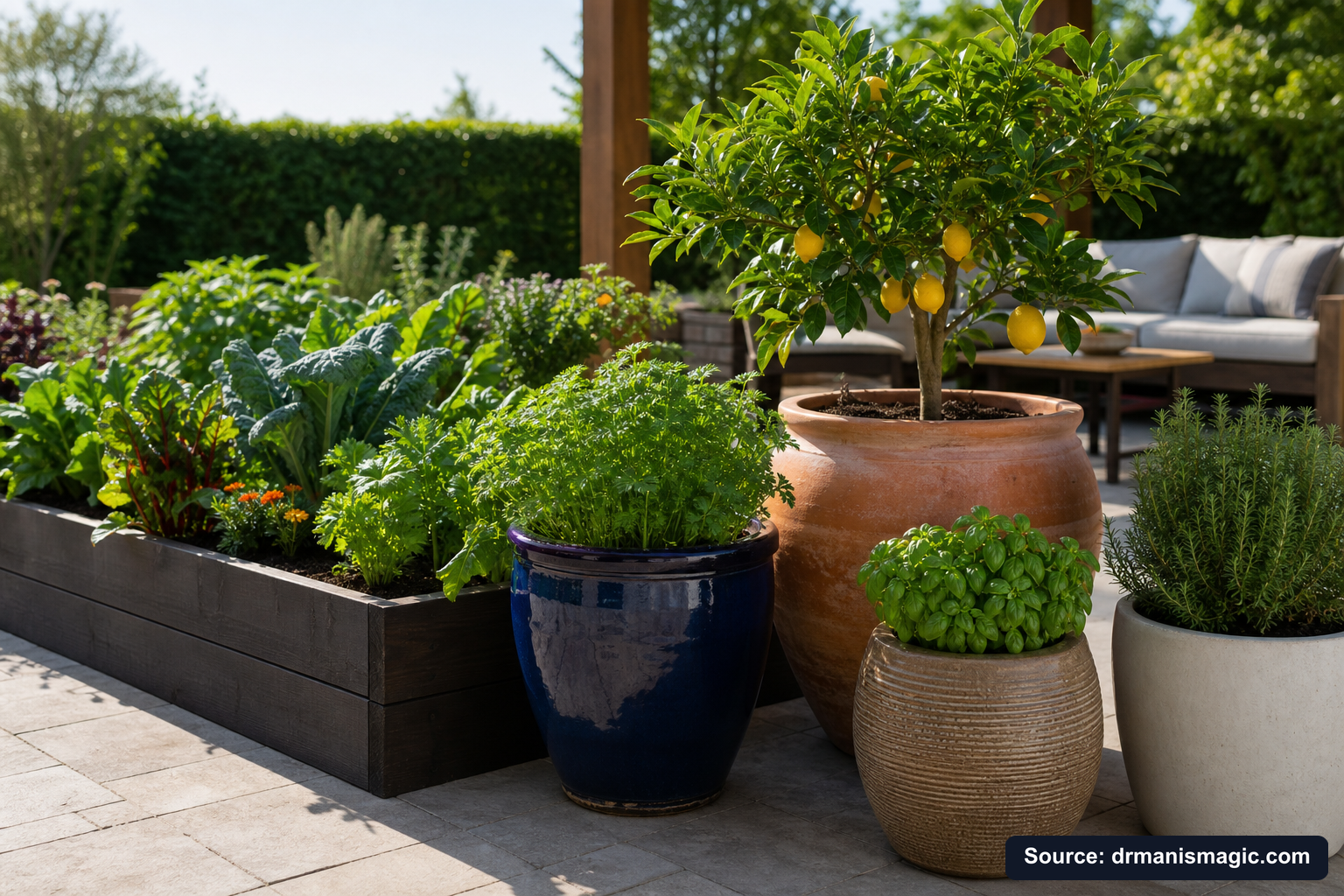
Bonsai is one of the oldest horticultural art forms in the world. Trees kept alive and thriving in tiny containers for fifty, a hundred, even two hundred years. How do bonsai masters do it?
They do not use potting mix. They use akadama clay, pumice, and crushed lava rock. All coarse. All mineral. All essentially inorganic. They have been doing this for centuries, long before any university published a paper on air-filled porosity.
The ancient farmers of the Mediterranean basin grew olive trees and fig trees in the same rocky, sandy hillside soil for generations. The soil was not rich or dark. It was gritty and well-drained. But those trees lived for hundreds of years. Some still do.
Modern container gardeners are just rediscovering what experienced growers have always known. You cannot keep a long-lived plant in a fast-decomposing, organic-heavy medium. It collapses. The plant collapses with it. The solution — coarse mineral structure — is ancient. It is just not what the big box stores sell, because it does not need to be replaced every season.
The University of Minnesota's soil science open textbook describes how soil texture and particle size directly determine pore space, drainage, and aeration. Coarser particles create larger pores. Larger pores drain faster and allow oxygen to diffuse back in more quickly after watering. This is not new science. It is basic physics that has been applied in gardens for millennia.
What Happens to Your Plant When the Soil Runs Out of Air?
Quick Answer: When soil loses its air space — through decomposition, compaction, or overwatering — roots begin to suffocate. They turn brown and slimy. Fungal pathogens move in and accelerate the decay. Leaves yellow. Growth stalls. The plant enters a slow decline that looks like a hundred different problems but has one root cause: no oxygen at the roots.
You have probably seen the symptoms without knowing the cause.
Yellow leaves. Drooping despite wet soil. A faint sour or musty smell from the pot. Leaves dropping for no obvious reason. Fungus gnats hovering around the soil surface. These are all signs of the same underlying problem — the root zone has run out of oxygen.
When roots cannot breathe, they cannot absorb water properly. So even though the soil is wet, the plant looks thirsty. You water more. The soil gets wetter. The oxygen problem gets worse. This is the overwatering spiral, and it is almost never about how much water you used. It is about whether the media can drain and re-aerate fast enough to give roots a breath between waterings.
Root rot is not caused by water alone. It is caused by root damage — and the number one cause of root damage is oxygen starvation. Once roots are damaged and dying, opportunistic pathogens like Phytophthora and Pythium fungi move in and finish the job. By the time you see brown, slimy roots at the surface, the problem has been building for weeks or months underground.
Here is a quick recovery checklist if you suspect your plant is in oxygen-starved soil right now:
- Lift the plant out of its pot and check the roots. Healthy roots are white or light tan and firm. Damaged roots are brown, gray, or black and feel mushy.
- Trim away any dead or slimy roots with clean scissors. This stops the rot from spreading.
- Let the root ball air out for 30 to 60 minutes before repotting. Fresh air helps.
- Repot into a coarser, more mineral-heavy mix with real drainage. Do not reuse the old collapsed potting mix.
- Water lightly at first — just enough to settle the new media. Let it partially dry before the next watering.
- Add a live microbial inoculant to help the root zone recover and recolonize with beneficial organisms. Plant Super Boost is what we use after any root stress event at our nursery.
- Be patient. New root growth takes two to four weeks to become visible. Trust the process.
What Is the Three Plant Pillars Framework and How Does Sand Fit Into It?
Quick Answer: The Three Plant Pillars are Dr. Mani's framework for growing any plant successfully: mineral-based soil, live microbials, and organic fertilizer. Sand and coarse mineral particles are the foundation of Pillar One. Without the physical structure they provide, microbes have nowhere to live and nutrients have no way to reach the roots.
After 40 years of research, teaching at the Texas A&M Citrus Center, and growing hundreds of thousands of trees, Dr. Mani Skaria arrived at a simple truth. Plants fail for three connected reasons. The soil has no structure. The soil has no life. The soil has no food. Fix all three and the plant becomes almost bulletproof.
He called this the Three Plant Pillars.
Pillar One is mineral-based soil. This is where sand lives. Coarse mineral particles — silica-rich sandy loam from South Texas, rice hulls, pumice, lava rock — create the physical architecture that makes everything else possible. Roots need space to grow. Microbes need air pockets to colonize. Water needs channels to drain through. Without mineral structure, all of that collapses.
Pillar Two is live microbials — the bacteria, fungi, and mycorrhizae that colonize the root zone and create a living ecosystem. These organisms unlock nutrients that are chemically bound in the soil. They protect roots from pathogens. They extend the reach of the root system dramatically. But they need oxygen to survive too. They need the pore space that mineral structure provides. Kill the air, and you kill the microbes.
Pillar Three is organic fertilizer — slow-release, salt-free nutrition that works with the microbial ecosystem instead of burning through it. When synthetic, salt-based fertilizers are used, they damage the same microbial community that keeps roots healthy. See also: Why Most Fertilizers Are Actually Salt in Disguise.
Sand — the right kind of sand — is not a standalone solution. It is the first piece of a three-part system. Get the structure right, and the biology and nutrition can do their jobs.
How Do You Know If Your Soil Has Enough Air Space?
Quick Answer: You can do a simple drainage test: water thoroughly and watch how fast the water moves through. If water pools on the surface for more than 30 seconds before soaking in, or if the bottom of the pot stays wet for more than two days, your media does not have enough air-filled porosity. Your roots are likely struggling.
You do not need a lab test to check your soil's aeration. Your eyes and hands will tell you most of what you need to know.
Pick up a handful of your growing mix when it is slightly damp. Squeeze it into a ball. Open your hand. If it crumbles apart quickly when you tap it with a finger, the structure is still decent. If it holds together in a dense, sticky lump and leaves a wet mark on your palm, the media is too fine and too dense. It is holding water in a way that will starve roots of oxygen.
Pour water slowly onto the surface of your potted plant. Healthy, coarse media will absorb it within five to ten seconds. Water should appear at the drainage holes within 30 to 60 seconds. If water sits on the surface for longer, the media has become hydrophobic — it is repelling water rather than channeling it. This is common in old, decomposed potting mix that has lost its surfactant treatment and collapsed into a tight mat.
Smell the soil. Healthy, well-aerated soil smells like earth — clean, faintly mineral, maybe slightly sweet. Anaerobic soil — soil that has been waterlogged and oxygen-deprived — smells sour, musty, or like something rotting. That smell is the byproduct of anaerobic bacteria breaking down organic matter without oxygen. It is the smell of roots in trouble.
| Symptom | Likely Cause | Root Zone Status |
|---|---|---|
| Yellowing leaves despite regular watering | Oxygen starvation, root damage | Compromised — check drainage immediately |
| Water pools on soil surface for 30+ seconds | Compacted, hydrophobic media | Poor — media has collapsed |
| Sour or musty smell from pot | Anaerobic decomposition | Danger — roots likely already stressed |
| Fungus gnats flying around soil | Consistently wet, organic-rich media | Poor — overwatering enabled by bad structure |
| Plant wilts even when soil is wet | Root rot, roots cannot uptake water | Critical — repot and treat immediately |
| Soil shrinks away from pot edges when dry | Potting mix decomposition and shrinkage | Poor — media at end of useful life |
| Roots white, firm, visible at drainage holes | Healthy root mass, looking for more space | Excellent — plant is thriving |
| Water drains freely within 30–60 seconds | Good macropore structure in media | Good — oxygen is reaching roots |
Does Sand Provide Any Nutritional Value to Plants?
Quick Answer: Pure sand provides almost no direct nutrition. However, silica — the mineral that makes up most natural sand — does offer some plant benefits including stronger cell walls, improved drought resistance, and better pest resistance. But sand's primary role is always structural, not nutritional. Nutrition comes from organic fertilizer and the microbial ecosystem that lives in the pore spaces sand creates.
Sand does not feed plants. Let's be honest about that.
But silica — the mineral compound that makes up most of the sand we are talking about — is not entirely without benefit. Plants can absorb silica through their roots, and research suggests it contributes to stronger cell walls, improved resistance to fungal pathogens, and better tolerance of drought stress. The University of Minnesota Open Textbook on soil science covers how silica participates in mineral weathering and the long-term building of soil structure.
For our purposes though, the nutritional angle is a distraction. Sand's value is in what it builds, not what it provides. It builds the hallways that let oxygen in. It builds the channels that let water out. It builds the permanent scaffolding that keeps the root zone functional for years.
Once that structure is in place, organic fertilizer — made from ingredients like crab meal, kelp, and amino acids — can deliver real nutrition to the root zone in a slow, gentle form that does not burn roots or destroy beneficial microbes. That is how the system is supposed to work: structure first, then biology, then nutrition. Sand is the start of that chain.
Why Does This Matter More for Container Growers Than Anyone Else?
Quick Answer: Container plants live in a closed system with no escape. In the ground, roots can migrate to find better-aerated soil. In a pot, they are confined to whatever media you put them in. When that media collapses, there is nowhere to go. Long-lived container plants — citrus, figs, bonsai, blueberries, woody herbs, tropical trees — are especially vulnerable because they spend years in the same mix.
A tomato plant does not care much about long-term soil structure. It lives for one season. By the time the potting mix starts to seriously collapse, the tomato is already done.
But a lemon tree? A fig tree? A jade plant you've had for fifteen years? These plants live in their containers for years and sometimes decades. Every month that passes in a decomposing, organic-heavy mix is another month of declining oxygen, declining drainage, and declining root health. The plant does not die overnight. It declines slowly. Growth slows. Fruiting drops off. Leaves become pale. You try more fertilizer. You try different watering schedules. Nothing sticks because the root system is quietly suffocating.
This is the exact scenario Dr. Mani spent years studying at the US Citrus Nursery. Trees that looked fine from the outside but were struggling at the root level because the media they were planted in had already started to fail. The fix was not a new fertilizer or a different watering schedule. The fix was mineral-based soil — a permanent foundation that would not decompose and would not steal oxygen from the roots year after year.
The Super Soil that came out of that research is built on silica-rich sandy loam from South Texas — the same mineral foundation that native plants in that region have thrived in for thousands of years. It is steam-sterilized so it arrives clean and pathogen-free. And because it is mineral-based, it does not decompose. You do not need to replace it every year. It is a permanent investment in your plant's home.
You can get money back. You cannot get time back. Every month your long-lived plant spends in collapsing, oxygen-poor media is a month of growth lost forever. People ask us all the time — they want to see fruit on a tree they planted with their own hands. They want to harvest something. They want to know it was worth the effort. The answer to that question starts at the root zone, with a media that will still be doing its job five years from now.
For the full picture of how mineral-based soil, live microbials, and organic fertilizer work together, take a look at our Free Plant Care Field Guide — it walks through all three pillars in plain language, with no jargon and no guesswork.
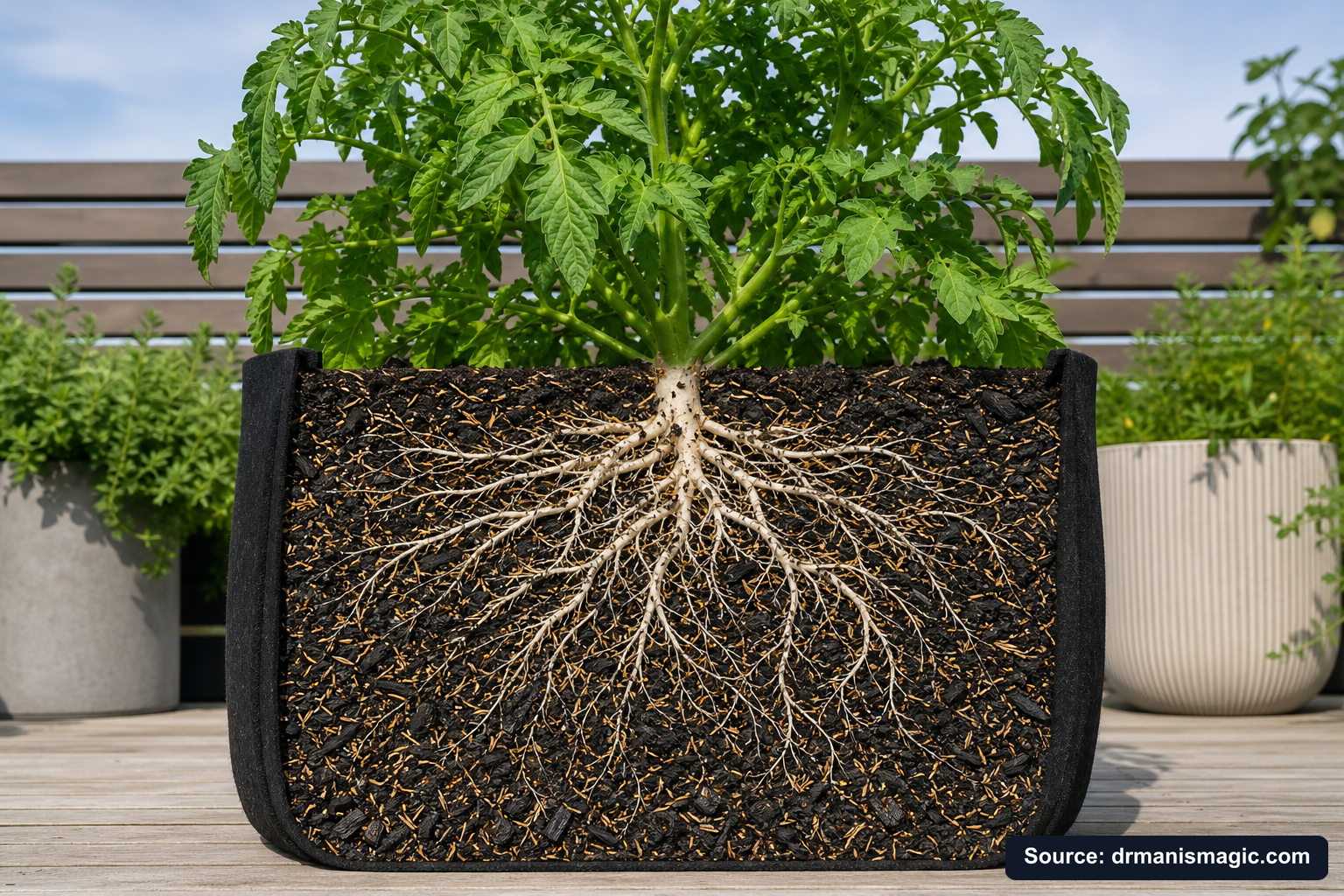
The Bottom Line: Sand Is Architecture, Not Nutrition
Sand will never win a beauty contest. It will never make your garden magazine-worthy on its own. Nobody is going to put "contains sand" on the front of a bag and sell it for twenty dollars at a boutique garden center.
But sand — coarse, silica-rich, mineral sand — is doing the quiet, essential work that makes everything else possible. It is holding open the hallways that oxygen travels through. It is draining the water that would otherwise sit and suffocate your roots. It is refusing to decompose, refusing to collapse, refusing to steal the air your plant worked so hard to reach.
The right soil is not about nutrients. It is about architecture. It is about building a physical space where roots can breathe, microbes can live, water can move, and nutrition can actually be absorbed. Get that architecture right and your plant has a real foundation. Get it wrong and every other thing you do — every watering, every feeding, every careful bit of pruning — is fighting against a losing battle underground.
Coarse mineral particles are the unsung heroes because their job is invisible. You never see oxygen diffusing into a macropore. You never watch a root cell complete respiration. But you see the results. You see a plant that is green and vigorous six months after you bought it, and again at a year, and again at five years. You see fruit. You see flowers. You see a living thing that is genuinely thriving, not just surviving.
That is what the right soil structure gives you. And it all starts with understanding what sand — real, coarse, mineral sand — actually does.
If you want to see what mineral-based soil architecture looks like in a product tested on over 250,000 trees, start with our Super Soil — built on South Texas sandy loam, steam-sterilized, and formulated to last. Zero synthetic salts. Zero PFAS. Zero biosludge. Backed by a 30-day guarantee. Your roots have been waiting for this.
Frequently Asked Questions
If your plants keep struggling no matter what you do, the answer is probably hiding right under your feet. These are the questions we hear most from gardeners who are tired of guessing and ready to get real results. The truth about soil is simpler than you think, and it starts with understanding what your roots actually need.
What is the healthiest type of soil for plants?
The healthiest soil drains fast, holds air, and stays alive with microbes. A mineral-based sandy loam hits all three marks. It does not compact or rot like pine bark potting mixes do. At Dr. Mani's Magic, we built our Super Soil on silica-rich sandy loam from the Rio Grande Valley. We have proven it works across more than 250,000 trees. Healthy soil is not just about nutrients. It is about structure, air, and living biology working together.
Why does soil structure matter more than nutrients alone?
Nutrients cannot reach your roots if the soil is suffocating them. Most potting mixes are made from decomposing pine bark. Over time that bark breaks down, collapses, and blocks oxygen from getting to the roots. Roots need air just like you do. Without air pockets in the soil, roots rot and die no matter how much fertilizer you pour on. Sand creates those air pockets. That is why soil structure is the first of Dr. Mani's Three Plant Pillars.
Where is the richest, most productive soil found in the USA?
The Midwest gets a lot of praise for deep, dark topsoil. But rich does not always mean right for your containers or raised beds. Dr. Mani found that silica-rich sandy loam from South Texas outperforms heavy organic soils for drainage and root health in pots. Organic matter helps, but mineral structure is what keeps roots breathing long term. That is the foundation of Super Soil, and it works for lawns, fruit trees, houseplants, and gardens alike.
Which soil has the most nutrients available to plant roots?
Loam holds a strong balance of nutrients and drains well enough to let roots absorb them. But here is the part most people miss. Nutrients locked in the wrong soil never reach your plant. That is where Pillar Two comes in. The live microbes in Dr. Mani's Plant Super Boost unlock bound nutrients and deliver them straight to the root zone. Without those microbes, even the most nutrient-dense soil leaves your plant hungry.
What does healthy soil need most to stay alive and productive?
Healthy soil needs three things working together. First, a mineral base that holds its structure and drains well. Second, living microbes that break down organic matter and fight off disease. Third, slow-release organic food that feeds the plant without burning the biology. That is exactly what Dr. Mani's Three Plant Pillars deliver. Take away any one of those three and the whole system breaks down. Add all three and your plants become practically bulletproof.
What are the real pillars of soil health every gardener should know?
The USDA talks about minimizing disturbance and keeping living roots in the ground. Dr. Mani agrees with the spirit of that but goes further. His Three Plant Pillars are mineral-based soil, live microbials, and organic fertilizer. These three work together the way nature intended. We did not guess at this. We tested it on over 250,000 citrus trees and across houseplants, tropical trees, lawns, and gardens. It works every time when all three pillars are in place.
Is sand actually good for garden soil or does it make drainage worse?
The wrong sand makes things worse. Fine play sand and beach sand pack tightly and can actually trap water. But coarse, silica-rich sand is completely different. It creates large pore spaces that let water drain fast and pull fresh oxygen back into the root zone. That is why Dr. Mani chose silica-rich sandy loam from South Texas as the base of Super Soil. It does not decompose, it does not compact, and it keeps roots breathing for years without needing to be replaced.
About the Author
Ron Skaria, MD
Ron Skaria, MD, is the co-founder of Dr. Mani's Magic and the son of Dr. Mani. He trained as a medical doctor at Baylor College of Medicine, did his residency at UT Health Science Center - San Antonio and fellowship training at Texas Tech University. He now works full time on the family farm at US Citrus and US Citrus Nursery in Hargill, Texas, building Dr. Mani's Magic alongside his dad. He wrote the Brown Thumb Field Guide to put his father's 48 years of plant science into plain words any gardener can use. His belief is simple. You never had a brown thumb. You just never had the right help.


