


How Anaerobic Breakdown Creates Offensive Odors in Soil | Dr. Mani's Magic
Why Your Soil Smells Like Rotten Eggs (And What That Odor Is Actually Telling You)
You pull open the bag of compost. Or you stick your finger into a pot that has been sitting a little too wet for a little too long. And there it is. That smell. Rotten eggs. Sour milk. Something you can only describe as sewage mixed with old fish.
Your stomach turns. You hold the bag at arm's length. And the question hits you: Is this stuff going to help my plants, or kill them? That smell is not just unpleasant. It is a warning signal. Your soil is sending you a message in the only language it has. And most people miss it entirely. They either throw the material away without understanding what went wrong, or worse, they dump it on their plants anyway and wonder why things go downhill fast.
Here at US Citrus Nursery, we have grown over 250,000 trees in South Texas. We have smelled every version of wrong that soil can produce. And we want to teach you something most garden centers will never tell you, because understanding this one thing will change how you see every bag of fertilizer, every pot of soil, and every struggling plant you have ever owned. That smell is not random. It has a name. It has a cause. And it has a fix.

Plant Super Boost
Key Takeaways
- Foul odors from soil, compost, or fertilizer are a direct sign that oxygen has run out and the wrong microbes have taken over.
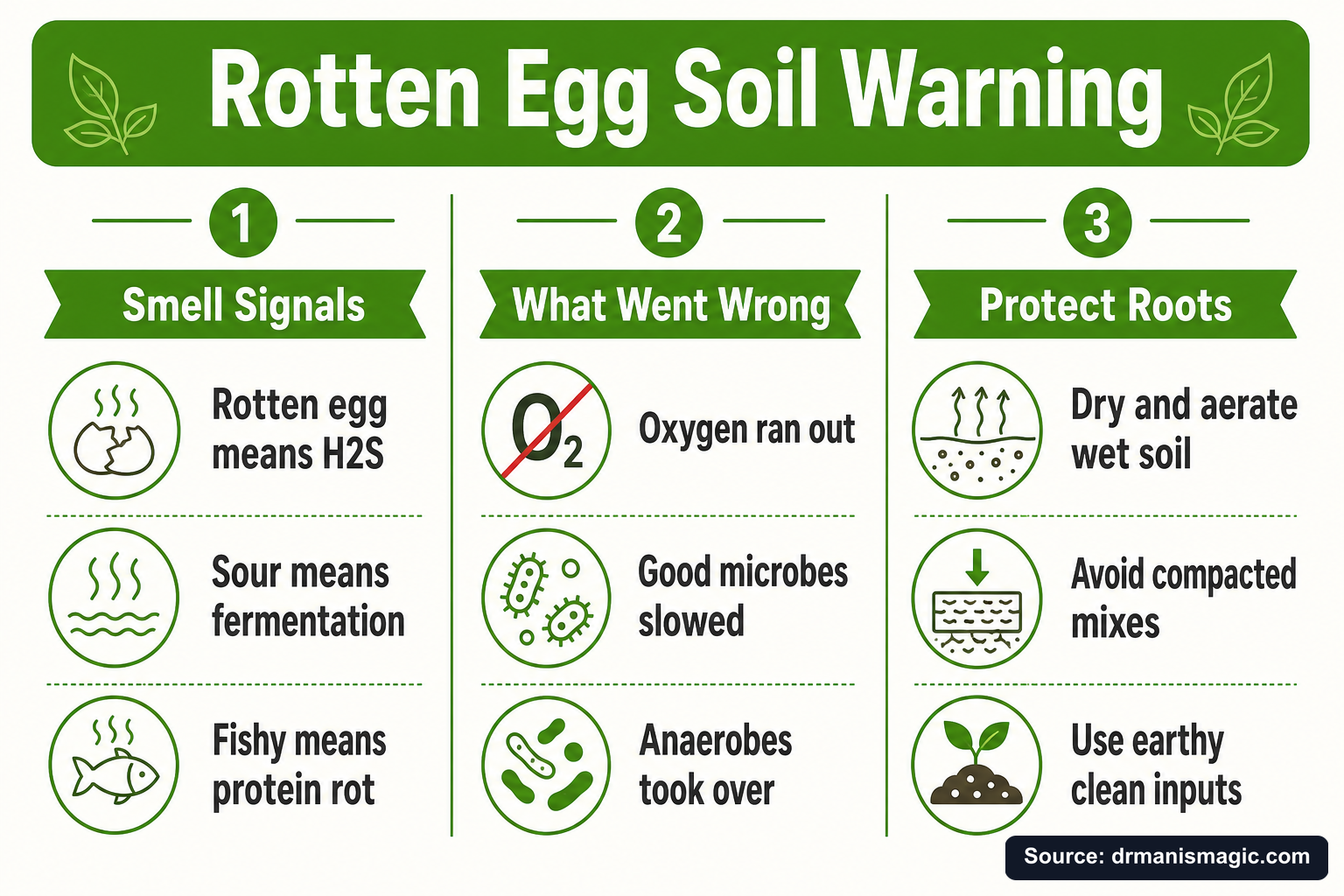
- Different smells mean different things: rotten egg means hydrogen sulfide, sour or vomit-like means volatile fatty acids, fishy means amines, sharp burning means ammonia.
- Anaerobic breakdown does not just smell bad. It actively robs your plants of nutrients and suffocates roots.
- Salt-based synthetic fertilizers make anaerobic conditions worse by killing the beneficial microbes that keep soil aerobic and healthy.
- Foul-smelling material applied to plants, lawns, or containers can cause the same root damage as overwatering or root rot.
- Some organic fertilizers use biosludge fillers that carry PFAS "forever chemicals." Smell and sourcing both matter.
- Clean, biology-friendly inputs that smell earthy, not offensive, are a sign that aerobic life is doing its job.
What Is Anaerobic Breakdown and Why Does It Smell So Bad?
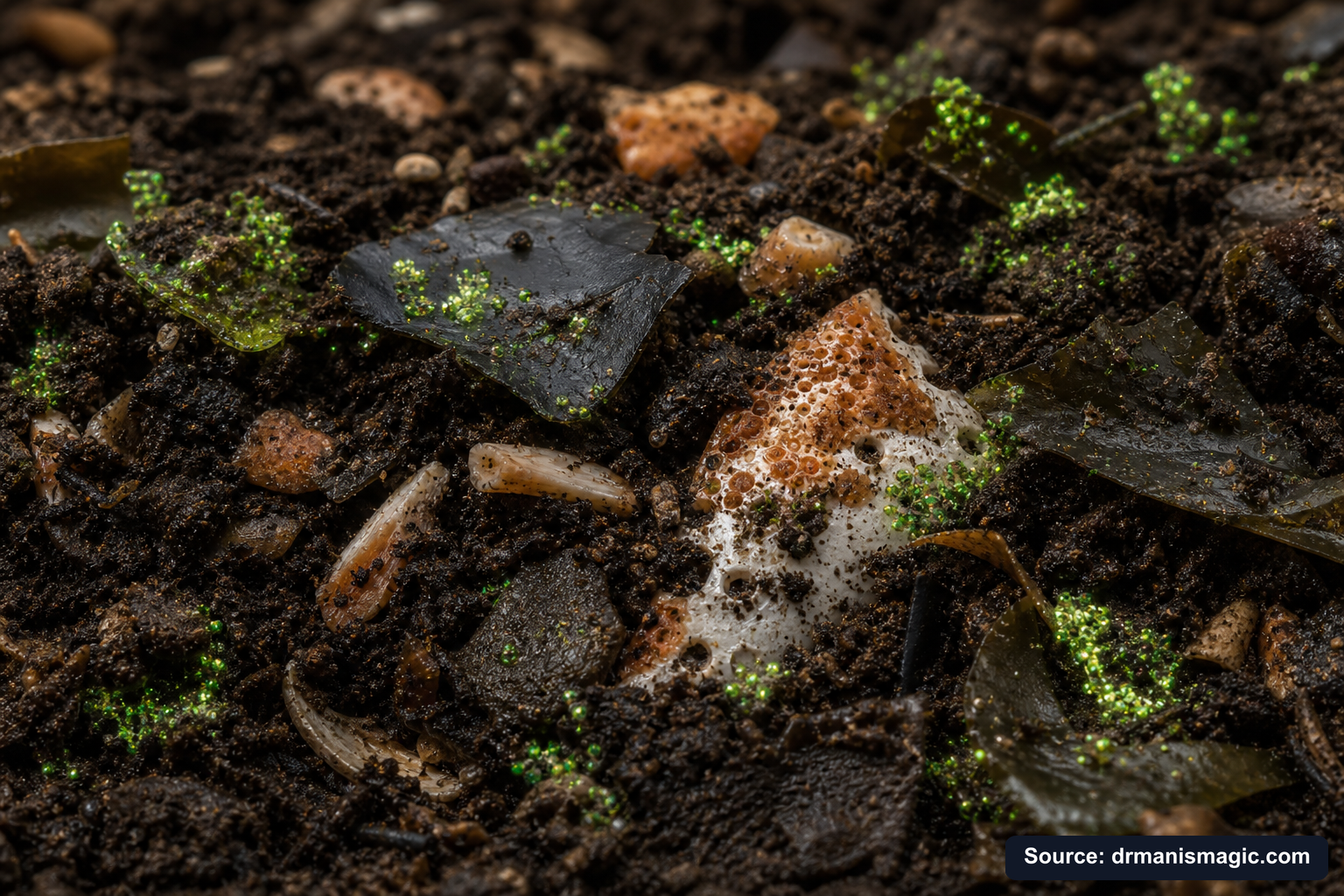
Quick Answer: Anaerobic breakdown happens when oxygen runs out in soil, compost, or organic matter. Bacteria that do not need oxygen take over. They produce gases like hydrogen sulfide, volatile fatty acids, and ammonia. These gases smell like rotten eggs, sewage, sour milk, and fish. The smell tells you oxygen is gone and healthy microbial activity has collapsed.
Anaerobic means "without oxygen." Every time you water too much, compact your soil, or leave organic material sitting in a wet, airless pile, you set the stage for anaerobic breakdown.
Here is what happens inside that wet, stinky soil. Aerobic bacteria, the good guys, need oxygen to live and work. They break down organic matter cleanly. They produce carbon dioxide, water, and nutrients that plants can use. They smell like fresh dirt after rain. That earthy smell has a name. It comes from a compound called geosmin, made by healthy aerobic bacteria called actinomycetes. That smell is life.
But when oxygen disappears, those good bacteria slow down and die off. A completely different crew moves in. Anaerobic bacteria do not need oxygen. They ferment and putrefy organic matter instead of breaking it down cleanly. And the byproducts they produce are the source of every terrible smell you have ever noticed in your garden.
According to Cornell Composting Science, the main odor compounds from anaerobic breakdown include:
- Hydrogen sulfide — rotten egg, sulfur, sewage
- Dimethyl sulfide and dimethyl disulfide — rotting cabbage, garlic, swamp gas
- Methanethiol — decaying meat, fecal odor
- Volatile fatty acids (VFAs) — sour milk, vomit, body odor
- Amines — rotting fish, putrid, ammonia-like
- Ammonia — sharp, burning, eye-watering
Each of those smells is a chemical compound being made by bacteria that are eating your organic matter in the absence of oxygen. And here is the part most gardening advice skips completely: those same bacteria are destroying the nutrients your plants need while producing those smells.
What Does Each Smell Actually Mean For Your Plants and Soil?
Quick Answer: Each odor maps to a specific chemical process happening underground. Rotten egg means sulfur-reducing bacteria are active. Sour or vomit-like means fatty acids are building up from fermentation. Fishy or putrid means protein is rotting into amines. Sharp ammonia means nitrogen is being lost to the air instead of feeding your plants.
Think of soil odors as your plant's version of a check-engine light. They are not random. Each one tells you exactly what is going wrong.
| What You Smell | Chemical Cause | What Is Happening in the Soil | Plant Risk |
|---|---|---|---|
| Rotten eggs, sulfur, sewage | Hydrogen sulfide (H₂S) | Anaerobic sulfur-reducing bacteria active; oxygen depleted | Root suffocation, root rot, Pythium and Phytophthora invasion |
| Sour milk, vomit, body odor | Volatile fatty acids (VFAs) | Fermentation replacing aerobic decomposition; organic matter souring | Nutrient lockup, pH disruption, root damage |
| Rotting fish, putrid, fecal | Amines (putrescine, cadaverine) | Proteins rotting without oxygen; microbial diversity collapsing | Soil biology crash, nutrient cycling failure |
| Sharp, burning, eye-watering ammonia | Ammonia (NH₃) | Nitrogen volatilizing off into the air instead of feeding plants | Nitrogen loss, potential root burn if concentrated |
| Swampy, rotting cabbage, garlic | Dimethyl sulfide, methanethiol | Deep anaerobic conditions; reduced sulfur compounds accumulating | Severe root oxygen deprivation, soil toxicity |
| Fresh earth, forest floor, after rain | Geosmin from actinomycetes | Healthy aerobic bacteria working; good microbial activity | No risk. This is what you want. |
That last row is the target. Earthy. Clean. Like the forest floor after a summer rain. That smell means aerobic microbes are alive and working. Nutrients are cycling. Roots can breathe.
Everything above that last row is a sign the opposite is happening.
How Does Oxygen Disappear From Soil in the First Place?
Quick Answer: Soil loses oxygen when pore spaces fill with water and stay full, when soil is compacted into a dense mass, or when organic matter breaks down into a thick sludge that blocks air flow. Without open pore spaces, oxygen cannot reach roots or the aerobic bacteria that protect them. This is how healthy soil turns anaerobic.
Soil is not just dirt. Healthy soil is more like a sponge full of tiny air tunnels and water channels. University of Minnesota Extension notes that most beneficial soil microbes and soil processes are aerobic. They need those air-filled pores to survive.
When those pores collapse, oxygen disappears fast. Roots stop absorbing water and nutrients. Aerobic bacteria die off. Anaerobic bacteria take over. And the smell begins.
Here is what causes pore collapse most often:
- Overwatering. Water fills every pore and stays there. Roots literally drown.
- Compaction. Heavy foot traffic, dense clay, or the wrong soil mix crushes the pore structure flat.
- Decomposing organic potting mix. Pine bark, sawdust, and wood-based mixes break down over time and collapse into an airless sludge. This is why most potting mix fails within 6 to 12 months.
- Salt accumulation from synthetic fertilizers. Salt pulls water out of roots and microbes through osmotic stress, and it destroys the soil structure that keeps pores open.
That last point is the one most gardeners never hear. We will come back to it. Because the fertilizer in your garage might be making anaerobic conditions more likely every single time you use it.
See also: Why Most Potting Mix Collapses Within 6-12 Months
What Happens to Your Plant When the Soil Goes Anaerobic?
Quick Answer: When soil goes anaerobic, roots are cut off from oxygen and beneficial microbes. Roots cannot absorb water or nutrients even if both are present. Root rot pathogens like Pythium and Phytophthora move in. The plant shows yellowing leaves, wilting, and dieback even though the soil feels wet. The problem is not lack of water. It is lack of oxygen.
This is the cruelest trick in gardening. Your plant looks thirsty. You water more. But the roots are already drowning. Adding more water makes everything worse.
When roots sit in anaerobic conditions, several terrible things happen at once.
First, the roots stop breathing. Roots need oxygen just like you do. Without it, root cells begin to die.
Second, root rot pathogens move in. Pythium and Phytophthora are water molds that love anaerobic, waterlogged conditions. They attack the soft root tissue and spread fast. Once they take hold, they are hard to stop.
Third, nutrient uptake shuts down. Even if nitrogen, phosphorus, and potassium are all sitting right next to the roots, the plant cannot absorb them without healthy root function and oxygen-driven metabolic processes.
Fourth, the beneficial microbes that protect and feed your plant die off. Without those microbial allies, the plant is defenseless against pathogens and starved of the slow, steady nutrition that healthy biology provides.
The plant above the soil tells you the story with yellow leaves, wilting on a wet day, dropping leaves, and slow decline. Most people reach for fertilizer at this point. That is usually the worst thing you can do. Adding more salt-based nutrition to a root system that cannot function yet is like pouring gasoline on a fire.
Synthetic Fertilizer vs. Organic Fertilizer: Which One Makes Anaerobic Problems Worse?
Quick Answer: Synthetic fertilizers are salt-based. Salt draws water out of root cells and kills beneficial microbes through osmotic stress. This weakens the soil biology that keeps conditions aerobic. Organic fertilizers feed the microbes first and release nutrients slowly. They work with the biology instead of against it, making anaerobic breakdown less likely over time.
Here is the thing about synthetic fertilizers that almost nobody talks about plainly. They are salt. Not table salt exactly, but chemically, they are salt compounds. Ammonium nitrate. Ammonium sulfate. Potassium chloride. All salts.
Salt has a high salt index. That means it pulls water out of nearby cells by osmosis. When you pour a salt-based fertilizer into your soil, it pulls water away from root tips and beneficial microbes. This is called osmotic stress, or physiological drought. Your plant can be sitting in wet soil and still be dying of thirst because the salt is blocking water movement into the roots.
Salt also kills the microbial community. And here is why that matters so much for anaerobic breakdown. The beneficial aerobic bacteria and fungi in your soil are what keep the pore structure open, cycle nutrients cleanly, and compete against anaerobic pathogens. Kill them with salt, and you remove the biological system that was keeping things aerobic in the first place.
The result over time is a soil that smells worse every season, produces less every year, and needs more and more fertilizer just to stay even. The plant becomes addicted to the chemical input because the natural nutrient cycling system has been destroyed.
| Feature | Synthetic Fast-Release | Synthetic Slow-Release (Coated) | Organic (Crab, Kelp, Amino Acids) |
|---|---|---|---|
| Salt content | High — immediate osmotic stress | Moderate — releases salts over time, plastic coating leaches | Very low — protein-based, no salt shock |
| Microbial impact | Burns and kills beneficial microbes | Less acute, but still harmful over time; plastic residue in soil | Feeds microbes first; microbes convert nutrients for plant uptake |
| Nutrient release | Instant spike then crash | Timed release, but driven by temperature and moisture, not biology | Slow, steady, biology-mediated; mirrors how nature feeds plants |
| Root rot risk | High — salt index causes osmotic stress and root tip burn | Moderate — lower acute risk but cumulative salt and plastic concern | Very low — no osmotic shock; supports root health |
| PFAS / biosludge risk | Some products use municipal biosolids with PFAS | Some products use biosolids filler; plastic shell concern | Clean sources only (no biosludge, no PFAS in clean formulations) |
| Long-term soil health | Degrades biology and structure over seasons | Neutral to negative over time | Builds biology, structure, and long-term fertility |
See also: Why Most Fertilizers Are Actually Salt in Disguise
You Never Had a Brown Thumb.
You were handed the wrong tools. This free guide hands you the right ones.
You watered it. You fed it. It died anyway.
It was never you. It was the dirt, the salt food, and the bad advice.
This guide shows you what really went wrong, and how to fix it for good.
- Why your plants really died, and why it was never your fault
- The salt hiding in your plant food that quietly burns the roots
- The hidden killer in almost every bag of store soil
- The tiny helpers that grow a whole forest for free
- The rescue trick that brings a half dead plant back to life

Does Smelly Organic Fertilizer Mean It Is Safer Than Synthetic? Not Always.
Quick Answer: Some organic fertilizers are made from municipal biosolids, which is treated sewage sludge. These materials can carry PFAS "forever chemicals" and heavy metals. They also go anaerobic easily, producing the same foul odors. A strong offensive smell from an organic fertilizer is not a sign of quality. It is a sign of anaerobic breakdown in the product itself, which means nutrients are being lost before the product ever reaches your soil.
This is one of the most important things we teach at Dr. Mani's Magic. The word "organic" on a bag does not automatically mean clean or safe.
Fish emulsion, for example, is a widely used organic nitrogen source. Browse any gardening forum and you will find story after story of pets vomiting from the smell. Neighbors complaining. Indoor plant owners banishing it from their homes. That smell is anaerobic breakdown in a bottle. The fish material has gone putrid. The amines and volatile fatty acids are already forming before the product ever touches your soil.
And some fertilizers labeled organic are actually made with biosludge, which is treated municipal waste, also known as sewage sludge. Research from the Penn State Extension acknowledges that biosolids can contain PFAS compounds, heavy metals, and other contaminants that accumulate in soil over time. These are sometimes called "forever chemicals" because they do not break down. They stay in your soil. They move into your food.
You have every right to ask where your fertilizer comes from. A foul smell is one clue. The ingredient list is another.
Dr. Mani's Magic Crab, Kelp & Amino Acids contains zero biosludge, zero PFAS, and zero synthetic salts. When you open the bag, it smells earthy. Not offensive. Not like sewage. That is because the ingredients, crab shells, cold-processed kelp, volcanic ash, and amino acids, are clean biological inputs that feed your soil's aerobic life rather than shutting it down.
How Does Organic Fertilizer Actually Feed Your Plants Without Smelling Bad?
Quick Answer: Organic fertilizer works by feeding the aerobic microbes in your soil first. Those microbes eat the organic material and convert it into plant-available nutrients. When those microbes eventually die, they release everything they stored straight into the root zone. The whole process is a natural slow-release system. It does not smell bad because it is never going anaerobic. The biology is working the way it should.
This is the mechanism most fertilizer companies never explain. And it is the heart of why organic nutrition works so differently from a salt-based product.
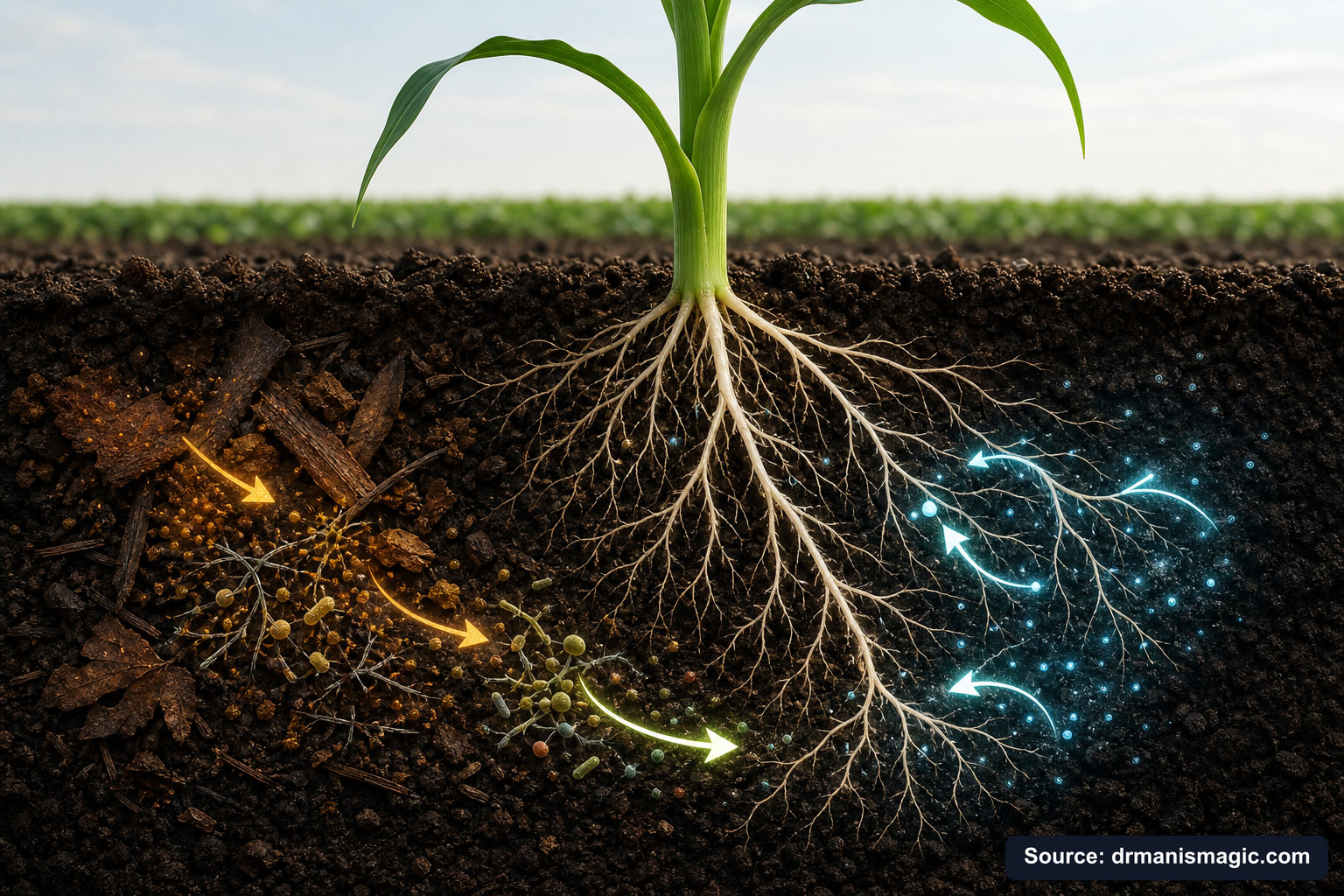
Picture it this way. You scatter granular organic fertilizer onto your soil. The aerobic bacteria and fungi in the soil smell the crab meal, the kelp, the amino acids. They move toward it. They eat it. They multiply. As they process that material, they convert it into forms of nitrogen, phosphorus, potassium, calcium, and trace minerals that plant roots can absorb directly.
Then, when those same microbes reach the end of their life cycle, they die. And when they die, they release all of the nutrients stored in their tiny bodies directly into the root zone. Right where the plant needs it. In a gentle, slow, continuous trickle.
This is nature's slow-release system. It does not spike. It does not crash. It does not burn roots. It mirrors exactly what happens in a healthy forest or meadow where no one is applying fertilizer at all. The biology does the work.
And because this process is aerobic, it never produces hydrogen sulfide or volatile fatty acids or amines. It produces geosmin. That clean, earthy smell. Life working as it should.
The amino acid nitrogen in a clean organic formulation is especially gentle. Amino acids are the building blocks of proteins. Plants can absorb certain amino acids directly through their roots without waiting for microbial conversion. This makes amino acid nitrogen one of the most efficient and non-burning nitrogen sources available. No osmotic stress. No salt shock. No root tip burn.
What Does Chitin From Crab Shells Do That Other Fertilizers Cannot?
Quick Answer: Chitin is the natural compound found in crab shells and insect exoskeletons. When added to soil, chitin activates a specific class of soil bacteria that produce chitinase enzymes. These enzymes break down the cell walls of fungal pathogens and some pest larvae. Chitin essentially programs your soil's biology to produce its own natural pest and disease resistance, without any chemical input.
Most people think of crab meal as just a nitrogen source. It is that. But it is also something far more interesting.
Chitin is a structural compound found in the shells of crustaceans and the cell walls of many fungi. When you add crab shell meal to your soil, the soil bacteria recognize the chitin. They produce enzymes called chitinases to break it down. And those same chitinase enzymes attack the cell walls of pathogenic fungi and the egg casings of certain soil pests.
In plain language: adding crab meal to your soil trains your soil's biology to fight back against the root rot fungi and nematodes that cause plant decline. It is built-in biological defense. No spray. No chemical. Just the natural chemistry of a living soil responding to chitin the way it evolved to.
This is one reason why crab meal is a core ingredient in the Dr. Mani's Magic fertilizer program. It feeds the plant, feeds the microbes, and activates natural defense systems all at the same time.
What Does Cold-Processed Kelp Add to Your Soil Biology?
Quick Answer: Cold-processed kelp is packed with natural plant growth hormones called auxins and cytokinins, plus trace minerals and carbohydrates. These compounds stimulate root branching, improve stress tolerance, and give soil microbes a rich food source. Heat-processed kelp loses most of these benefits. Cold processing preserves the biological activity that makes kelp valuable.
Kelp is not just a trace mineral source. It is a biostimulant. That word means it stimulates biological processes in the plant beyond just basic nutrition.
The growth hormones naturally present in kelp, auxins and cytokinins, signal plant roots to branch and spread. More root surface area means more water and nutrient absorption. More resilience to drought and stress. More connection with beneficial mycorrhizal fungi in the soil.
The carbohydrates in kelp feed soil microbes directly. This is important. A thriving microbial community is what keeps your soil aerobic, cycles nutrients efficiently, and suppresses the anaerobic conditions that lead to foul odors and root disease.
Processing matters. Heat destroys these biological compounds. Cold processing preserves them. This is why the source and method of production make a real difference in whether your kelp input actually does anything beyond adding a small amount of potassium.
Salt Damage vs. Overwatering vs. True Root Rot: How to Tell the Difference
Quick Answer: Salt damage, overwatering, and true root rot all look similar above ground but have different causes and fixes. Salt damage shows as crispy leaf edges with wet soil. Overwatering shows as yellowing and wilting with consistently saturated soil. True root rot shows dark, mushy, foul-smelling roots with total collapse. Checking roots and smelling the soil is the only way to know for sure.
Every one of these problems can produce a foul smell in the root zone. But they need different responses. Treating root rot like overwatering, or overwatering like salt damage, makes things worse.
| Symptom | Salt Damage (Osmotic Stress) | Overwatering (Oxygen Deprivation) | True Root Rot (Pythium / Phytophthora) |
|---|---|---|---|
| Leaf appearance | Brown crispy edges, tip burn, curling | Yellowing, soft, drooping even when wet | Rapid yellowing, wilting, leaf drop |
| Soil moisture | Can be normal or dry | Consistently wet, saturated | Often wet; sometimes normal after initial event |
| Soil smell | May smell chemical or salty | Earthy turning sour; early anaerobic signs | Rotten egg, sewage, strong sulfur |
| Root appearance | Fine root tips brown and dead; main roots intact | Roots pale, mushy at outer edges, oxygen-starved | Roots dark brown to black, slimy, foul-smelling |
| Soil drainage | Often normal | Poor, slow, waterlogged | Poor; compacted or decomposed potting mix |
| Fix priority | Flush salts, stop synthetic fertilizer, restore microbes | Improve drainage, reduce watering, aerate soil | Remove rotted roots, treat with biology, repot in mineral soil |
How to Recover a Plant From Anaerobic Soil Conditions: A Step-by-Step Checklist
Quick Answer: Recovery starts with restoring oxygen to the root zone. Stop adding fertilizer until roots can function again. Fix drainage. Introduce live aerobic microbes to outcompete the anaerobic bacteria. Then, once the root zone smells earthy again, resume feeding with a clean, low-salt organic fertilizer that will not restart the cycle.
If your soil smells bad and your plant is struggling, here is the order of operations. Do not skip steps. Sequence matters.
- Stop all fertilizer immediately. Roots that cannot function cannot absorb nutrients. Adding more fertilizer, especially salt-based, will cause more root burn on already damaged tissue.
- Check your drainage. Pull the plant from its pot if possible. Look at the roots. Smell them. Dark, slimy, foul-smelling roots confirm anaerobic root rot. If you are in a garden bed, probe the soil to feel for compaction and check for standing water.
- Remove dead root tissue. Trim off any black or brown mushy roots with clean scissors. Healthy roots are white or tan and firm. Leave those intact.
- Repot or amend with mineral-based, well-draining soil. Organic decomposing potting mixes are the number one driver of collapsed pore structure. Mineral-based soil, like a sandy loam blend, stays open and drains freely. Roots can breathe. Super Soil is built exactly for this purpose.
- Drench with live aerobic microbes. Reintroduce the biological community your soil lost. Live bacteria, fungi, and mycorrhizae will colonize the root zone, outcompete anaerobic pathogens, and begin rebuilding the aerobic environment roots need. Plant Super Boost is a liquid microbial drench designed for exactly this step.
- Water correctly going forward. Water deeply but infrequently. Let the top inch or two of soil dry before watering again. This keeps the pore spaces cycling between wet and aerated.
- Resume feeding only after recovery signs appear. New growth, fresh green color, and roots that smell earthy are your signals that the aerobic biology is back. At that point, introduce a clean organic fertilizer at a gentle rate and let the biology do the slow-release work.
Is Smelly Compost or Mulch Safe to Use on Vegetables, Lawns, and Trees?
Quick Answer: Compost or mulch that smells like rotten eggs, sewage, or sour milk is actively anaerobic and should not be applied directly to plants. Applying anaerobic material introduces hydrogen sulfide and volatile fatty acids to the root zone, which can damage roots and kill beneficial soil biology. Spread it thin, let it aerate for several days, turn it to introduce oxygen, and let it complete aerobic decomposition before using it.
The smell test is the fastest and most honest quality check for any soil amendment. Fresh, finished compost smells like a forest floor. It smells earthy. Alive. That smell tells you aerobic decomposition completed successfully.
Sour compost, slimy mulch, and stinking amendments are not finished products. They are anaerobic material mid-process. Applying them to your garden, lawn, or container plants introduces those same hydrogen sulfide and volatile fatty acid compounds directly to your root zone.
Sour mulch syndrome is a real and well-documented phenomenon. Mulch stored in large, airless piles goes anaerobic. When you spread it, those anaerobic compounds, especially acetic acid and alcohol, leach into the soil and can cause rapid leaf scorch and plant death. It looks like herbicide damage. The fix is to spread the mulch thin in a sunny area, turn it, and let it off-gas for several days before using it.
For any material where you cannot verify the source or smell, the safest rule is: if it smells wrong, it is not ready.

Why Does This All Matter for Every Single Plant You Grow?
Quick Answer: Anaerobic breakdown is not a compost problem or a citrus problem. It is a universal soil health problem that affects lawns, houseplants, flower beds, vegetable gardens, fruit trees, and ornamentals. Anywhere that oxygen disappears, soil goes anaerobic. The Three Plant Pillars, mineral soil, live microbes, and clean organic fertilizer, are the system that keeps soil aerobic, biology thriving, and plants healthy across every plant type.
We tested all of this on over 250,000 trees at US Citrus Nursery. But the biology is the same whether you are growing a Meyer lemon in a pot on your patio, a rose bed in your backyard, a container vegetable garden on an apartment balcony, or an acre of lawn.
Oxygen in the root zone. Live aerobic microbes. Clean, slow-release nutrition that feeds the biology first. These are not optional extras. They are the foundation of every plant that has ever thrived without chemicals.
Dr. Mani Skaria spent 40 years as a plant pathologist at the Texas A&M Citrus Center watching plants fail and succeed. The pattern was always the same. The plants that thrived had all three pillars in place. The plants that declined had at least one missing. Most of the time, the missing pillar was the soil biology, killed off quietly by salt-based synthetic fertilizers that no one thought to question.
You can get money back. You cannot get time back. The plants you want to see fruiting, flowering, and filling your garden with life are waiting for the right foundation. Not more products piled on top of a broken system. A new foundation, built the way nature built it.
Learn more about how all three pillars work together at the Three Plant Pillars system page, or grab the Free Plant Care Field Guide to see exactly how to apply this in your garden, whatever you are growing.
See also: The Hidden Reason Synthetic Fertilizers Cause Root Rot
Frequently Asked Questions
That bad smell coming from your soil is not just gross. It is a warning your plants are in trouble right now. After growing over 250,000 trees in South Texas, Dr. Mani has seen what happens when gardeners ignore that smell. These answers will help you understand what is happening underground and what to do about it fast.
What causes that rotten egg or sewage smell in my soil or compost?
That smell means your soil has run out of oxygen. When oxygen disappears, the good bacteria die off and a different crew takes over. These anaerobic bacteria ferment and rot organic matter instead of breaking it down cleanly. They release gases like hydrogen sulfide, which smells like rotten eggs, and volatile fatty acids, which smell like sour milk or sewage. It is your soil sending you a distress signal.
How does anaerobic breakdown create offensive odors?
Anaerobic breakdown happens when organic matter sits in wet, airless conditions. Bacteria that survive without oxygen take over and produce foul gases as byproducts. Hydrogen sulfide creates the rotten egg smell. Amines create the fishy smell. Volatile fatty acids create the sour, vomit-like smell. Ammonia creates that sharp, eye-watering burn. Each smell points to a different gas being released by a different type of anaerobic bacteria doing damage underground.
Does smelly soil or fertilizer actually hurt my plants?
Yes. Foul-smelling material is not just unpleasant. It is actively harmful. Anaerobic conditions suffocate roots by blocking oxygen. The toxic gases produced can damage root tissue directly. Beneficial microbes that protect your plants from disease and unlock nutrients are wiped out. Applying stinky compost or fertilizer to your plants is like pouring the problem directly onto them. That is why Dr. Mani's Plant Super Boost smells earthy, not offensive. Live, stable microbes do not rot.
What kills the good bacteria in my soil and makes it go anaerobic?
Three big culprits. First, overwatering pushes oxygen out of soil pores and creates the airless conditions anaerobic bacteria love. Second, compacted or sawdust-based potting mixes break down and turn into a soggy sludge that blocks drainage and traps moisture. Third, salt-based synthetic fertilizers kill beneficial aerobic bacteria directly. Once the good bacteria are gone, the bad bacteria move in fast and the smell follows shortly after.
Why does my fish emulsion fertilizer smell so awful?
Fish emulsion goes anaerobic quickly. Once it is in a bottle or applied to soil without enough oxygen present, it starts to rot. That releases amines and sulfur compounds that smell like a fish market in the sun. Some organic fertilizers make this problem even worse by using biosludge fillers that carry harmful chemical residues. Dr. Mani chose crab meal, kelp, and amino acids for the Dr. Mani's Magic fertilizer specifically because they feed your soil without creating that offensive smell.
What does healthy soil actually smell like?
Healthy soil smells like fresh earth after rain. That clean, pleasant smell has a name. It comes from a compound called geosmin, produced by aerobic bacteria called actinomycetes. Those bacteria are part of the living ecosystem that makes soil work. When you smell that earthy scent, oxygen is present, good microbes are active, and your roots are getting what they need. If your soil smells like anything other than fresh earth, something has gone wrong underground.
How do I fix anaerobic soil and stop the bad smell for good?
You need to restore oxygen and rebuild the microbial ecosystem. Start with a mineral-based soil like Dr. Mani's Magic Super Soil. It drains properly and does not compact into sludge like sawdust-based mixes. Then add live beneficial microbes with Plant Super Boost to crowd out the anaerobic bacteria and rebuild a healthy soil ecosystem. Stop using salt-based synthetic fertilizers that wipe out your good bacteria. These are the first two of the Three Plant Pillars, and they work together to keep your soil smelling like earth, not sewage.
About the Author
Dr. Mani Skaria, PhD
Dr. Mani Skaria, PhD, is a plant pathologist and the scientific founder of Dr. Mani's Magic. He spent 48 years studying how plants, soil, and living microbes work together, including his years as Professor Emeritus at Texas A&M and as a member of the USDA NAREEE Advisory Board. He invented micro-budding, a method for growing healthier, stronger trees, and has grown more than 250,000 trees on the family farm in Hargill, Texas - US Citrus Nursery. His life's work takes real lab science and turns it into simple, safe, organic plant care anyone can use at home.


