


Why Traditional Gardens Worked Without Instructions | Dr. Mani's Magic
Why Traditional Gardens Worked Without Instructions (And What Modern Gardening Forgot)
Close your eyes for a second. Picture your grandmother's garden. Maybe it was out back behind the house. Rows of tomatoes heavy with fruit. Roses that bloomed every year without fail. Herbs that spread and filled the air with that sharp, green smell whenever you brushed past them. Nobody followed a fertilizer schedule. Nobody measured pH. Nobody bought a bag of microbial powder from the internet.
And yet. Those plants thrived.
Now fast-forward to today. You've spent real money. You've got the fertilizer, the potting mix, the sprays. You've read the forum posts. You've watched the YouTube videos. And still, something feels off. The leaves yellow. The roots sit soggy. The fruit never quite comes. You start to wonder if maybe you just have a brown thumb. Here's the truth: you don't. The deck was stacked against you before you even started. Because the instructions for growing healthy plants were never meant to come in a bottle. They were already in the soil. And somewhere along the way, we destroyed them.

Plant Super Boost
This article is about what those old gardens knew that we forgot. It's about the invisible workforce living under your feet. And it's about how you can bring it all back.
Key Takeaways
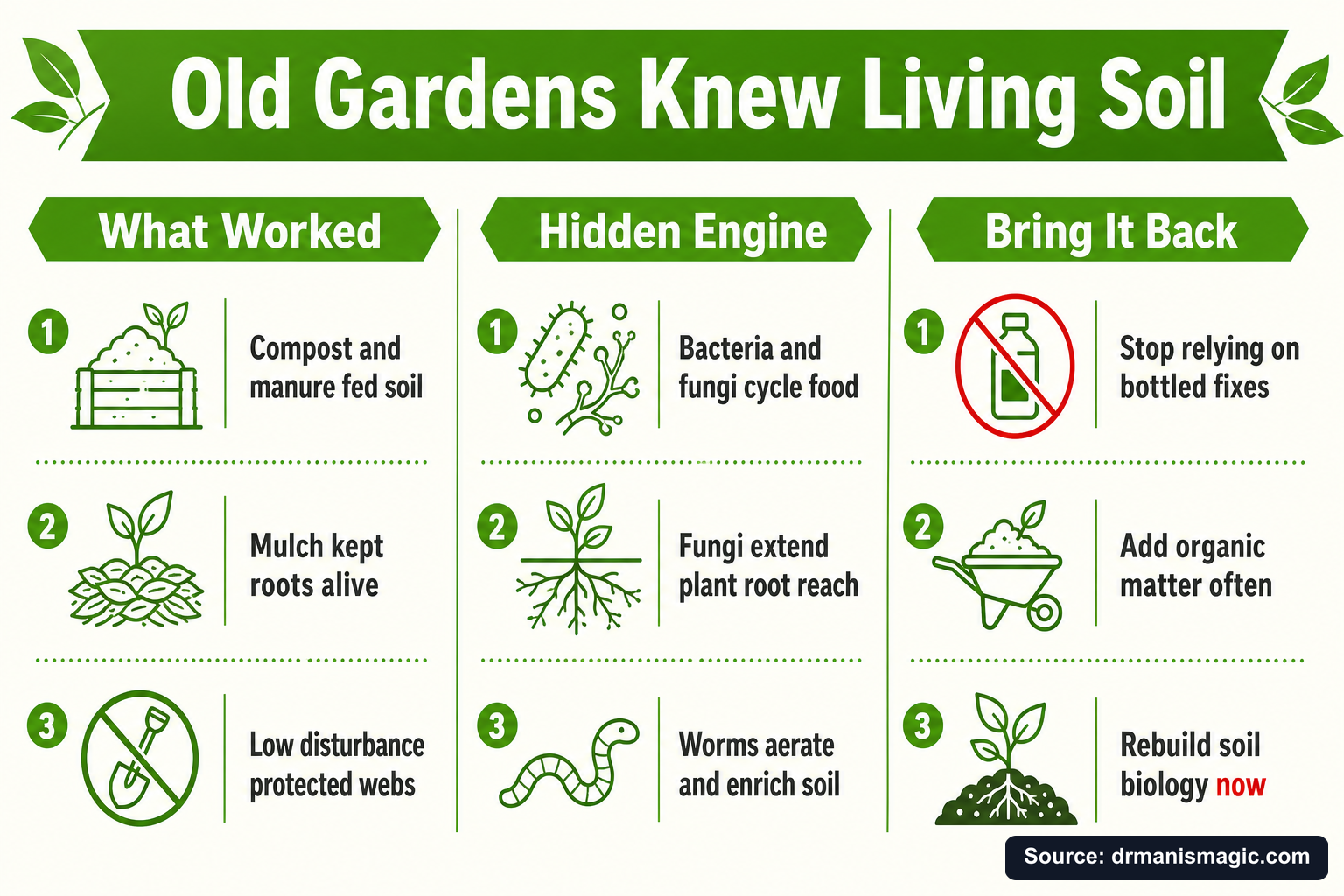
- Traditional gardens worked because they maintained a living soil food web, not because growers had better chemistry skills.
- Bacteria, fungi, protozoa, nematodes, and earthworms form a nutrient-cycling engine that runs without any human input when left undisturbed.
- Modern practices like synthetic salt-based fertilizers, herbicides, and broad-spectrum pesticides erase that biological engine quietly and quickly.
- Sterile or damaged soil can be rebuilt, but it takes time, the right inputs, and consistent biological reintroduction.
- The Three Plant Pillars, developed and proven across 250,000+ trees at US Citrus Nursery in South Texas, give any plant owner a practical roadmap back to living soil.
- Most bottled microbial products on the market are either dead powders or smelly, dying liquids that don't actually deliver the living biology your plants need.
- You can't buy time back. Every season spent fighting bad soil is a season you won't get back. The best time to fix the foundation is right now.
What Did Traditional Gardens Actually Have That Modern Gardens Often Don't?
Quick Answer: Traditional gardens maintained a living soil food web through compost, manure, mulch, mixed plantings, and low disturbance. These practices fed billions of bacteria, fungi, protozoa, and nematodes that cycled nutrients, suppressed disease, and built soil structure automatically, without any written instructions or bottled products.
The old gardens weren't simpler. They were smarter. Not because the growers were geniuses. But because they accidentally followed the rules of nature instead of fighting against them.
Think about what a traditional garden actually looked like. Kitchen scraps went back into the compost heap. Horse manure got turned into the beds every fall. Leaves were left to break down over winter. Plants grew close together. Roots stayed in the ground between seasons. Nobody tilled everything to bare dirt just because the calendar said spring.
All of those habits did one thing: they kept the soil alive.
According to the University of Minnesota Extension, a single teaspoon of healthy garden soil can contain more than one billion bacteria, thousands of species of fungi, and hundreds of miles of fungal threads. That's not background noise. That is the engine. That is what was doing the heavy lifting in your grandmother's garden while she was inside making dinner.
Modern gardening broke that engine. It replaced it with products. And then it sold us more products to fix the problems the first products caused. The result? Soil that looks like dirt but acts like sand. Plants that depend on synthetic feeding to survive instead of thriving on their own. A cycle that never ends and costs you money, time, and frustration every single season.
The good news? You can rebuild it. We'll show you exactly how.
What Is the Soil Food Web and Why Did It Run Traditional Gardens?
Quick Answer: The soil food web is the community of living organisms in healthy soil, including bacteria, fungi, protozoa, nematodes, arthropods, and earthworms, that cycle nutrients, suppress disease, and build soil structure. Traditional gardens maintained this web through organic matter and low disturbance, giving plants a self-sustaining support system that required no written instructions.
The soil food web is the real instruction manual. It just happens to be written in biology, not words.
Here is how it works in plain language.
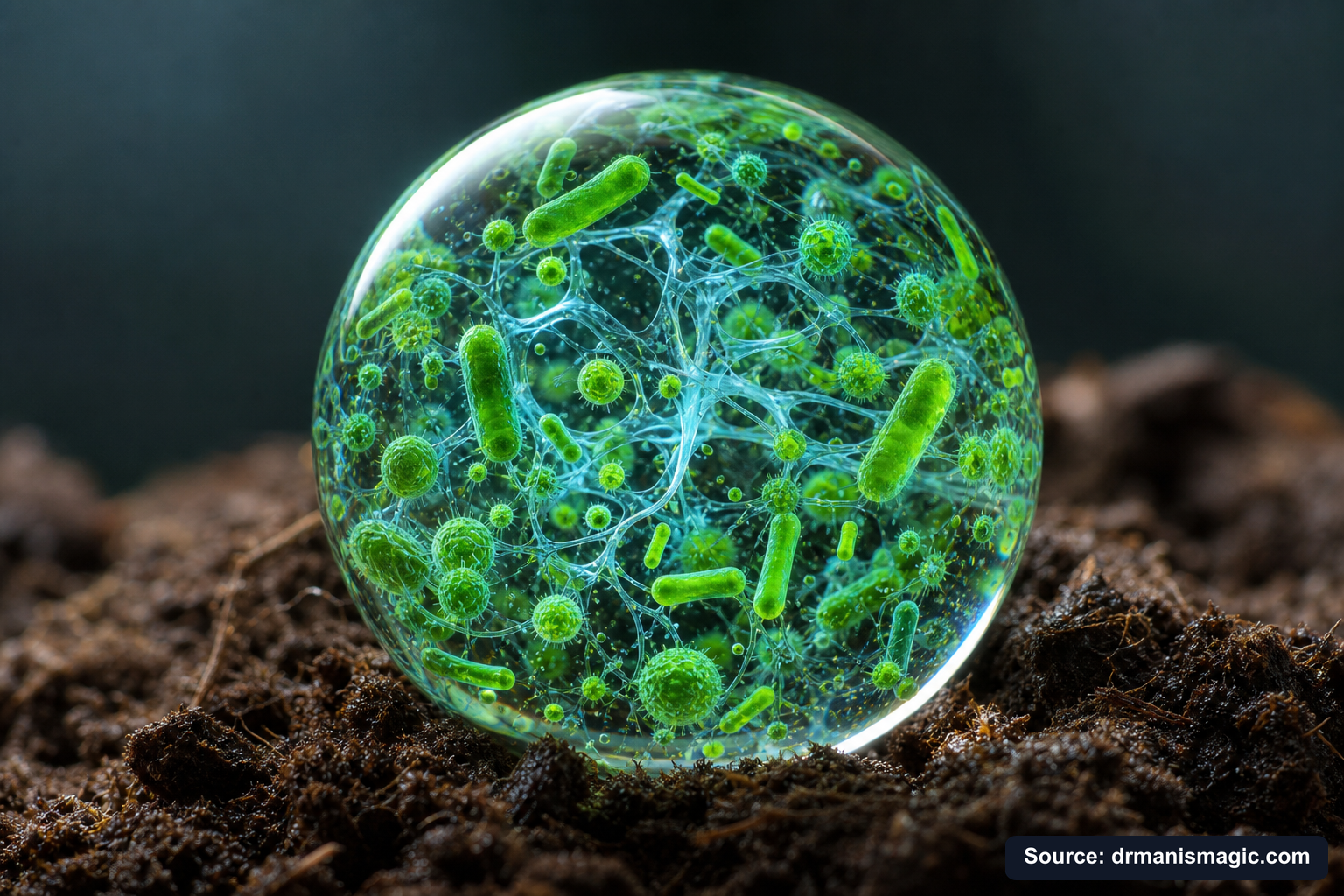
Bacteria and fungi break down dead organic matter. Leaves, roots, manure, compost. They lock the nutrients from that material inside their own tiny bodies. Then protozoa and nematodes come along and eat those bacteria and fungi. When they eat and excrete, they release those locked-up nutrients right next to plant roots in a form the plant can actually use. Mostly nitrogen, but also phosphorus and other minerals.
It's a feeding cycle. A nutrient loop. And it runs itself as long as you don't wreck it.
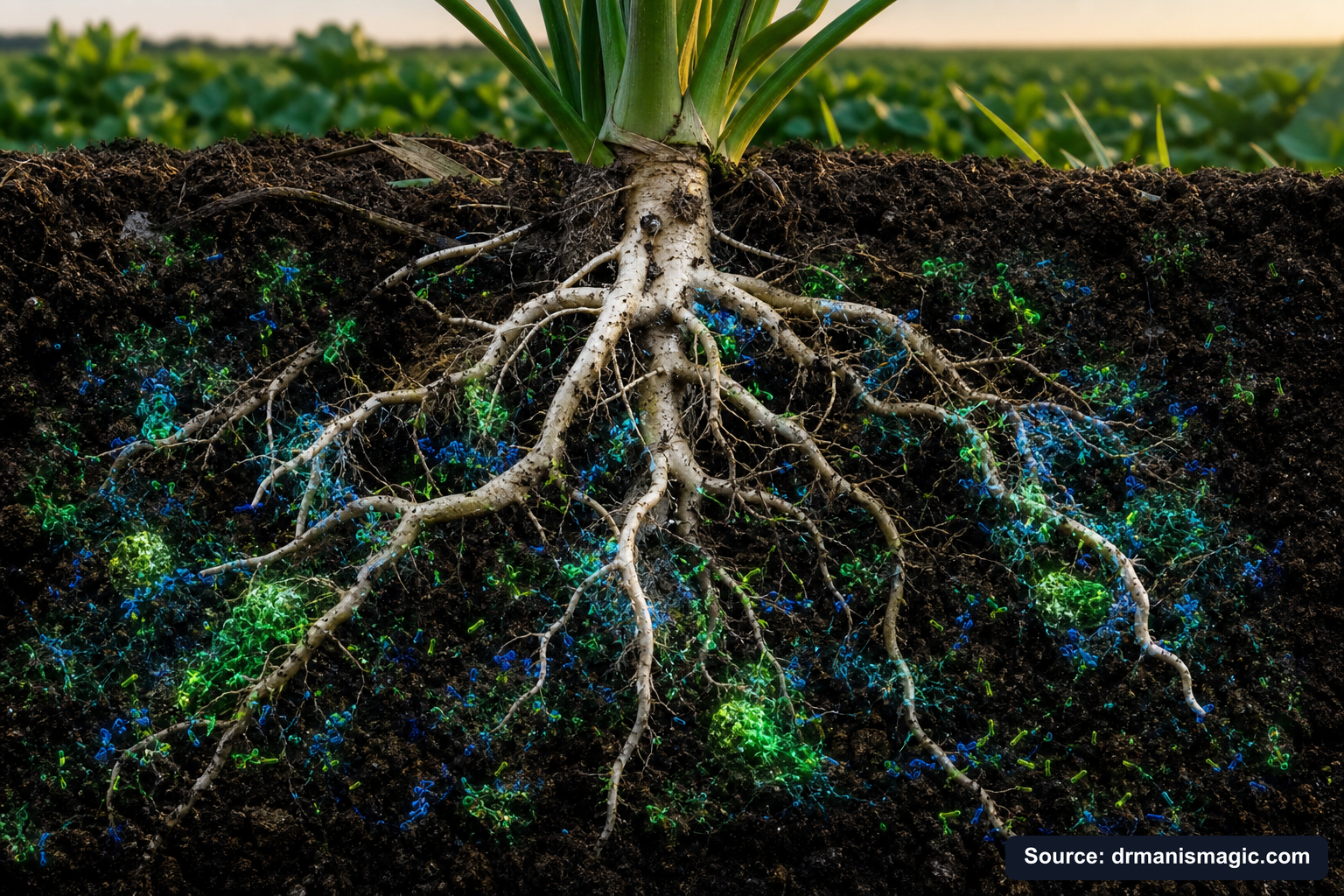
Mycorrhizal fungi take this even further. They grow into and around plant roots and extend the root system by hundreds of times its normal reach. The Colorado State University Extension describes mycorrhizal fungi as expanding the effective absorbing surface of roots by orders of magnitude, giving plants access to water and nutrients they could never reach on their own. Old gardens had this network in place. It grew undisturbed for years, decade after decade.
Then there are earthworms. They eat organic matter, mix it through the soil, and leave behind castings that are among the most nutrient-rich materials a garden can have. Their tunnels aerate the soil and let water move down instead of pooling on top.
None of this costs money. None of it requires a schedule. It just requires one thing: don't kill it.
| Organism | What It Does | Why It Matters to You |
|---|---|---|
| Bacteria | Break down organic matter, fix nitrogen from air, suppress pathogens, improve root function | Nutrients become available to roots without synthetic fertilizer |
| Fungi | Extend root reach, decompose tough organic material, produce glomalin for soil structure | Better water and nutrient access, improved soil clumping and drainage |
| Mycorrhizal Fungi | Form symbiotic bond with roots, dramatically expand absorbing surface area | Plants access water and minerals from a far larger zone than roots alone could reach |
| Protozoa | Graze on bacteria and release plant-available nitrogen near roots | The critical missing piece in most gardening articles: they are the nutrient delivery mechanism |
| Beneficial Nematodes | Graze on bacteria and fungi, suppress pest nematodes and pathogens | Natural pest control and nutrient cycling without sprays |
| Earthworms | Mix organic matter through soil, create aeration channels, produce nutrient-rich castings | Better drainage, aeration, and natural fertilization built right into the soil |
| Arthropods | Shred organic debris into smaller pieces for bacteria and fungi to process | Speed up the decomposition cycle so nutrients cycle faster |
When all of these organisms are present and working together, your soil feeds your plants. When they are gone, your soil is just a medium that holds roots in place. And you become responsible for doing everything the biology used to do for free.
How Did Traditional Garden Practices Accidentally Build Perfect Microbial Habitat?
Quick Answer: Practices like adding compost, applying manure, mulching, growing mixed crops, and leaving roots undisturbed between seasons continuously fed and sheltered bacteria, fungi, protozoa, and nematodes. Old-time gardeners were not following a microbiology textbook. They were following what worked, and it worked because it preserved living soil biology season after season.
Your great-grandparents were not soil scientists. They were practical people who noticed what worked and kept doing it.
When they piled manure into the garden every fall, they were adding a massive dose of living microorganisms along with nutrients. Hot, fresh compost can exceed 140 degrees Fahrenheit because of the intense biological activity happening inside it. That heat is millions of microbes eating, reproducing, and processing organic material at full speed. Spreading that compost on a garden bed was like pouring a living culture directly into the soil.
When they mulched with leaves or straw, they were creating a humid, protected environment where fungal threads could spread undisturbed. Fungi hate being dried out and exposed. A layer of mulch keeps moisture in and gives them the shelter they need to build those long-distance nutrient networks.
When they grew different plants close together, mixing flowers with vegetables and herbs with fruit trees, they were feeding a wider range of microbes. Different plants release different sugars and compounds through their roots. That variety feeds a more diverse microbial community, which creates a more resilient and balanced soil ecosystem.
And when they left roots in the ground between seasons instead of tilling everything bare, they were preserving the fungal networks that had taken years to build. Every time you till, you shred those networks. They have to start over from scratch.
None of this was intentional microbiology. It was accumulated wisdom passed down through generations. It worked not because those gardeners were lucky, but because they were accidentally following nature's rules.
What Broke the Old Garden System? (And Why Your Soil May Be Struggling Right Now)
Quick Answer: Salt-based synthetic fertilizers, broad-spectrum herbicides and pesticides, antifungal sprays, and repeated deep tilling all damage or destroy the soil food web. These modern inputs replaced biological nutrient cycling with chemical shortcuts that work short-term but leave soil increasingly dead and dependent on more products over time.
Here is the uncomfortable truth. The gardening industry, led by big chemical companies starting as far back as the 1950s, built a business model on your soil getting worse, not better.
When Miracle-Gro arrived, it wasn't a gardening revolution. It was a marketing campaign. And what it sold was a salt-based fertilizer that gave plants a quick green-up while quietly damaging the very biology that would have fed those plants for free. Salt pulls water away from living cells. That includes the cells of bacteria and fungi in your soil. Apply enough of it, often enough, and you don't have a living soil anymore. You have a growing medium that is almost completely dependent on whatever you add to it.
It's a dependency cycle. And it's not an accident.
Then came the herbicides and pesticides. Glyphosate, the active ingredient in the most widely used weedkiller in history, has been shown to disrupt soil microbial communities. Broad-spectrum pesticides kill beneficial insects and arthropods along with the pests. Synthetic antifungal sprays kill mycorrhizal fungi right along with the pathogenic ones. Every spray, every application, every season of chemical use chips away at the biology that your plants depend on.
See also: The Hidden Reason Synthetic Fertilizers Cause Root Rot
| What You See | Likely Biological Cause | What Probably Happened | Recovery Action |
|---|---|---|---|
| Soil crusts over after watering | Lost fungal threads and glomalin (soil glue) | Tillage, antifungal sprays, or salt buildup destroyed fungal networks | Mulch the surface, add live fungi through microbial inoculant, stop tilling |
| No earthworms when you dig | No food source, toxic inputs, or compaction | Chemical applications or lack of organic matter drove them away | Add compost, stop synthetic inputs, inoculate with live microbes |
| Plants yellow despite feeding | Nutrients locked up, biology can't cycle them | Salt accumulation or dead microbiome blocks nutrient availability | Flush salts with deep watering, switch to organic fertilizer, restore biology |
| White salt rings on soil surface or pot edges | Salt accumulation from synthetic fertilizer | Repeated use of salt-based products with inadequate flushing | Deep flush with clean water, leach if drainage allows, switch inputs |
| Persistent disease returning every season | Pathogen suppression biology is gone | Beneficial bacteria and fungi that crowded out pathogens were killed | Reintroduce full-spectrum live microbes consistently over multiple months |
| Roots brown, soft, or rotting | Anaerobic conditions, pathogens unchecked | Poor drainage from compacted or decomposed potting mix, plus dead biology | Improve drainage with mineral-based soil, restore aerobic microbial community |
| Water beads on soil surface and runs off | Hydrophobic soil, lost organic matter and fungal threads | Dried-out, dead soil with no biological structure left | Add compost, mulch, live microbes, and break the hydrophobic crust manually first |
This isn't meant to make you feel bad. The information was hidden from you on purpose. The brown thumb isn't real. It was invented by companies that needed you to keep buying products. When you understand what actually went wrong, you can fix it. And fixing it is not complicated.
Why Are Protozoa and Nematodes the Most Overlooked Players in Plant Health?
Quick Answer: Protozoa and beneficial nematodes are the nutrient delivery mechanism of the soil food web. They graze on bacteria and fungi and excrete plant-available nitrogen right next to roots. Without them, nutrients stay locked inside microbial biomass and never reach the plant, even when bacteria and fungi are present. Most gardening content completely ignores this piece.
Everyone talks about bacteria and fungi. Earthworms get a lot of credit. But protozoa and beneficial nematodes? Almost nobody mentions them. And they might be the most important piece of the nutrient delivery puzzle.
Here is what most people don't know.
Bacteria absorb nutrients from organic matter and hold those nutrients inside their own cells. The nutrients are now in the system. But they are locked up. The plant still can't access them. Something has to release them.
That something is a protozoan or nematode eating the bacteria.
When a protozoan eats a bacterium, it takes in more nitrogen than it needs. The excess gets excreted right there, next to the root, in a form the plant can absorb immediately. This is called the microbial loop, and it is the actual mechanism by which soil biology feeds plants. Without the grazers, the nutrients never complete the loop. They stay locked up in bacterial biomass that the plant cannot touch.
Traditional gardens had protozoa and nematodes in abundance because they had the organic matter and undisturbed root zones those organisms need to thrive. Modern sterile growing conditions, heavy chemical use, and constant tillage wipe those populations out. The bacteria and fungi that remain have no grazers to unlock what they've stored. The nutrient cycle stalls.
This is one reason why adding just a single type of bacterium or a narrow-spectrum product rarely produces dramatic results. You need the full community. The whole web has to be present for the cycle to run properly.
You Never Had a Brown Thumb.
You were handed the wrong tools. This free guide hands you the right ones.
You watered it. You fed it. It died anyway.
It was never you. It was the dirt, the salt food, and the bad advice.
This guide shows you what really went wrong, and how to fix it for good.
- Why your plants really died, and why it was never your fault
- The salt hiding in your plant food that quietly burns the roots
- The hidden killer in almost every bag of store soil
- The tiny helpers that grow a whole forest for free
- The rescue trick that brings a half dead plant back to life

Live Microbes vs. Dead Microbes: Why Most Products on the Shelf Don't Deliver
Quick Answer: Most commercial microbial products are either dried powders with very low survival rates or liquid products that have gone anaerobic and smell foul. Neither delivers the full-spectrum, living biology that healthy soil requires. Genuinely live microbes, stabilized from real compost without going anaerobic, are rare, and the difference in plant response is dramatic.
Walk into any garden center today and you'll find a wall of microbial products. Bags of white powder. Bottles with long lists of Latin species names. Labels that promise explosive root growth and disease suppression. It all looks very scientific.
Most of it doesn't work. And here's why.
The majority of those products start life in a giant industrial fermentation vat. A handful of microbial species get grown in massive quantities, then dried into a powder. The hope is that the dried spores will wake up when they hit wet soil. Sometimes they do. Usually the survival rate is extremely low, and the species selection is too narrow to rebuild a real soil food web. We have tried dozens of different batches at our nursery. The results were consistently disappointing.
The second type is the liquid compost tea product. These start with something real: actual compost, worm castings, organic material with genuine biological diversity. But by the time those bottles travel through a warehouse, sit on a shelf, and arrive at your door, the oxygen-loving microbes inside have run out of air. They've gone anaerobic. Dying. Fermenting. You can smell it the moment you open the bottle. That fizzing sound when you crack the cap? That's gas from microbial die-off. Some benefit remains from the humic and fulvic acids in the base material. But the living biology you paid for is largely gone.
There is a third type that gets promoted in DIY circles: lactobacillus-based products, the same bacteria found in yogurt. Easy to make, vigorous and long-lived. The problem is that lactobacillus is so aggressive it outcompetes the beneficial microbes you actually want in your soil. It belongs in your gut, not in your garden.
After growing more than 250,000 citrus trees at our South Texas nursery, we had seen enough failed products to know that the answer had to come from something different. That's when Dr. Mani Skaria connected with a world-renowned compostologist who had developed a natural stabilization technique to keep full-spectrum compost microbes alive without going anaerobic. The result became Plant Super Boost: a genuinely live, full-spectrum microbial product that doesn't stink, doesn't foam, and actually delivers living bacteria, fungi including mycorrhizae, protozoa, and nematodes that you can see moving under a microscope.
| Product Type | Microbe Viability at Use | Spectrum of Organisms | Odor | Our Verdict |
|---|---|---|---|---|
| Dry powdered lab microbes | Very low | Narrow (2-5 species) | Neutral | Avoid. We saw no meaningful results across dozens of tests. |
| Dry powder rehydrated in liquid | Low | Narrow | Neutral to mild | Same issue as above. Lab-grown spores do not rebuild a real food web. |
| Compost tea (fresh, under 24 hours) | Moderate when actively aerated | Broad and natural | Earthy, then sour quickly | Works if you make it yourself and use it immediately. Time-consuming. |
| Bottled compost tea (shelf product) | Low to none by delivery | Partial | Strong, foul smell | Anaerobic by the time it reaches you. Avoid for biological benefit. |
| Lactobacillus-based products | High (very hardy) | Narrow and aggressive | Mild fermented | Outcompetes beneficial microbes. Not appropriate for soil biology restoration. |
| Fresh active compost (on-site) | High | Broad, naturally diverse | Earthy | Excellent if you have the time, space, and know-how to maintain a proper pile. |
| Plant Super Boost (stabilized full-spectrum) | High | 2,000+ bacteria species, 400-500 fungi including mycorrhizae, protozoa, nematodes | Earthy, not foul | Harvested from real compost. Stabilized by a natural method. Verified by lab analysis and visible under microscope. |
Zero PFAS. Zero biosludge. Zero synthetic salts. That's the standard every input in the Dr. Mani's Magic line is held to. Because what you put on your soil ends up in your food, your water, and the air your children breathe in your backyard.
Can Sterile or Chemically Damaged Soil Come Back to Life?
Quick Answer: Yes, sterile or damaged soil can be biologically rebuilt, but it takes consistent effort over multiple months. The process involves stopping further damage, leaching accumulated salts, adding mature organic matter and live microbial inoculants, restoring living roots, and allowing natural biological succession to resume. There are no overnight fixes, but meaningful improvement begins within weeks.
Here is the question we hear most often from gardeners who have finally figured out what went wrong.
Can I fix it?
Yes. But let's be honest about what you're working with. Soil that has been hammered by years of synthetic fertilizer, herbicides, and tilling is not just lacking nutrients. It's lacking life. And life takes time to rebuild.
Think of it like a burned-down forest. The first plants to come back after a fire are pioneer species. Simple, tough organisms that can survive in harsh conditions. They start building organic matter. Then more complex organisms follow. Then the full ecosystem reassembles itself over time. Soil biology follows the same pattern. It's called ecological succession. You can't skip the steps. But you can speed them up.
The key is to stop doing the things that are killing the biology, and start doing the things that feed it. Every application of salt-based fertilizer sets you back. Every spray of a broad-spectrum chemical erases progress. Every deep till shreds the fungal networks that took months to rebuild. You have to get off that cycle before the biology can recover.
Then you add the raw materials: organic matter, compost, mulch, and living microbes. The biology has to have something to eat and somewhere to live before it can establish itself. And because many soils today are so depleted, that biology often has to be reintroduced directly rather than waiting for it to migrate back on its own.
This is exactly why we recommend consistent monthly applications of full-spectrum live microbes rather than a single one-time dose. The biology needs to be fed and reinforced repeatedly, especially in the early months of recovery, because you are rebuilding a community, not just adding a single ingredient.
Your 6-Step Soil Recovery Roadmap
- Stop the damage. Pause synthetic fertilizers, broad-spectrum herbicides, pesticides, and antifungal sprays. You can't rebuild biology while continuing to destroy it.
- Leach accumulated salts. Water deeply and slowly to flush salt through the soil profile. Do this two or three times before moving to the next step. Good drainage is essential here.
- Add mature, low-salt compost or organic matter. This gives the returning microbes something to eat and colonize. A two to three inch layer worked gently into the top few inches is a strong start.
- Mulch the surface. A layer of straw, wood chips, or shredded leaves protects moisture, moderates soil temperature, and creates habitat for fungi and soil arthropods.
- Inoculate with full-spectrum live microbes monthly. Add genuinely living biology back into the soil on a regular schedule. Not a one-time event. A consistent program, especially in the first six to twelve months.
- Keep living roots in the soil as much as possible. Roots feed microbes through exudates. The more time roots are present, the more food is available for your biological workforce.
For a complete foundation that addresses all three biological needs at once, the Three Plant Pillars system from Dr. Mani's Magic covers mineral-based soil structure, live microbials, and organic fertilizer together. It's the same foundation we use for every tree, garden, and houseplant at our nursery.
What Are the Three Plant Pillars and Why Do They Rebuild What Traditional Gardens Had?
Quick Answer: The Three Plant Pillars are mineral-based soil, live microbials, and organic fertilizer. Together they recreate the structural, biological, and nutritional conditions that traditional gardens maintained naturally. Dr. Mani Skaria developed and tested this framework across 250,000+ trees at US Citrus Nursery in South Texas. It works for any plant, in any container or garden bed, anywhere in the country.
Dr. Mani Skaria spent 35 years as a plant pathologist, teaching at the Texas A&M Citrus Center and running the Clean Citrus Program in Texas. He has seen more plant failures, and more plant recoveries, than almost anyone alive. And after all of that time and all of those trees, he reduced great growing down to three things.
The first pillar is the foundation: mineral-based soil. Most potting mixes are made from pine bark and wood fiber that breaks down within months. As it decomposes, it steals oxygen from roots and compacts into a dense, soggy mass that suffocates the very biology we are trying to restore. Mineral-based soil, built on silica-rich sandy loam from South Texas, doesn't decompose. It doesn't compact. It drains well, stays open, and lets roots breathe and grow freely for years. That open structure also happens to be exactly what fungi and aerobic bacteria need to thrive.
The second pillar is live microbials. Not powders. Not smelly liquids. Genuinely living, full-spectrum biology harvested from active compost and stabilized by a natural process so the microbes arrive at your door alive and ready to work. This is what plants evolved with. It's what traditional gardens maintained without knowing it. And it's what most modern growing environments are completely missing.
The third pillar is organic fertilizer. Not salt-based synthetics that burn microbial populations and create dependency cycles. Slow-release nutrition from crab meal, kelp, and amino acids that feeds plants gently and continuously, in harmony with the biological activity in the soil rather than against it. No PFAS. No biosludge. No synthetic salts. Just the nutrients plants actually evolved to use.
When all three pillars are in place, something shifts. The roots breathe. The biology cycles nutrients. The plant stops struggling and starts thriving. It's not magic, even though it feels like it. It's just nature working the way it always has, given the right conditions to do so.
See also: Why Most Fertilizers Are Actually Salt in Disguise
How Long Does It Take for Soil Biology to Recover After Chemical Damage?
Quick Answer: Most gardeners see meaningful improvement within four to eight weeks of consistent biological restoration. Full soil food web recovery, including diverse fungi, protozoa, and nematode populations, can take six to twelve months or longer depending on how depleted the soil was and how consistently live inputs are applied. The biology builds momentum over time.
We want to be honest with you here, because you deserve the truth, not a marketing promise.
You will likely notice changes within a few weeks. Roots become more active. Leaves brighten. Water moves into the soil more easily instead of running off. These are early signs that the biology is waking up.
But rebuilding a full, diverse soil food web with functioning fungal networks, active protozoa populations, and a healthy nematode community takes longer. It follows the pattern of ecological succession. You can't rush the succession. You can only support it.
The biggest mistake people make is stopping too soon. They apply live microbes once, see some improvement, and then go back to their old habits. One application of synthetic fertilizer can set the biology back weeks. One herbicide spray can undo months of fungal network building. The recovery has to be consistent. And the old habits have to stop.
Time is the one thing you cannot get back. We hear it from gardeners every week. They want to see fruit on their trees. They want to walk barefoot on grass that is green and alive. They want to pick vegetables from their own garden and know exactly what went into the soil that grew them. Every season spent fighting damaged soil is a season of that vision delayed. The best time to fix the foundation was last year. The second best time is today.
For a practical daily and monthly care routine that supports biological recovery from day one, the Free Plant Care Field Guide from Dr. Mani's Magic walks you through exactly what to do and when, without the guesswork or the overwhelming product lists.
Live Microbes vs. Synthetic Fertilizer: Which One Actually Builds Long-Term Plant Health?
Quick Answer: Live microbes build long-term plant health by restoring the nutrient cycling system that plants evolved with. Synthetic fertilizers deliver a short-term nutrient hit while damaging the biology that would otherwise make those nutrients available naturally. Over time, synthetic feeding creates dependency and increasingly depleted soil. Live biology builds resilience that compounds with each season.
This is the core comparison. The one that changes how you think about everything else.
Synthetic fertilizer works fast. You apply it, the plant goes green, you feel good. But here is what's happening underneath the surface. Those salts are pulling water away from the microbial cells in your soil. The bacteria and fungi that were starting to build a nutrient-cycling system are being stressed or killed. The plant gets the hit of nutrients it needs right now, but the infrastructure for getting nutrients naturally next month, next year, next decade gets a little weaker every time.
It's like taking a stimulant to get through the day instead of sleeping. It works today. It costs you tomorrow.
Organic fertilizer from crab meal, kelp, and amino acids works differently. It releases nutrients slowly as soil biology processes it. It feeds the microbes at the same time it feeds the plant. It builds the soil rather than depleting it. And because it doesn't rely on salt to deliver nutrients, it doesn't harm the biology you're trying to restore.
The combination of live microbials and organic fertilizer is what traditional gardens had in the form of fresh compost and manure. They were not just adding nutrients. They were adding life. That life then multiplied and did the work of feeding plants season after season, year after year, with no written instructions required.
What Can You Do Right Now to Start Bringing Your Soil Back to Life?
Quick Answer: Stop synthetic inputs, mulch the soil surface, add mature organic matter, and begin monthly applications of genuinely live full-spectrum microbes. Start with what you have and build from there. Consistent small steps rebuild soil biology faster than any single large intervention. The biology responds quickly when it gets what it needs and stops being harmed.
You now know more about your soil than most gardeners ever will. And knowledge without action doesn't grow anything.
Here is where to start, right now, this week.
Look at what you're currently putting on your soil. If it's a salt-based synthetic fertilizer, set it aside. If you've been spraying broad-spectrum chemicals, take a break. The biology can't rebuild while the things killing it are still being applied.
Add a layer of mulch to any bare soil. Two to three inches. Straw, wood chips, shredded leaves. This one step costs almost nothing and immediately starts improving moisture retention and creating habitat for fungi.
Start feeding your soil with organic matter. Compost if you have it. A slow-release organic granular fertilizer if you don't. Something that feeds the microbes as well as the plant.
And introduce living biology back into your soil on a monthly basis. Not a powder. Not a smelly bottle. Genuinely live, full-spectrum microbes that can be verified under a microscope.
The instructions for a thriving garden were never meant to come in a bag or a bottle. They were always embedded in the soil itself. Your job now is simply to stop erasing them, and start rebuilding them. Nature knows exactly what to do. Give it the right foundation and get out of the way.
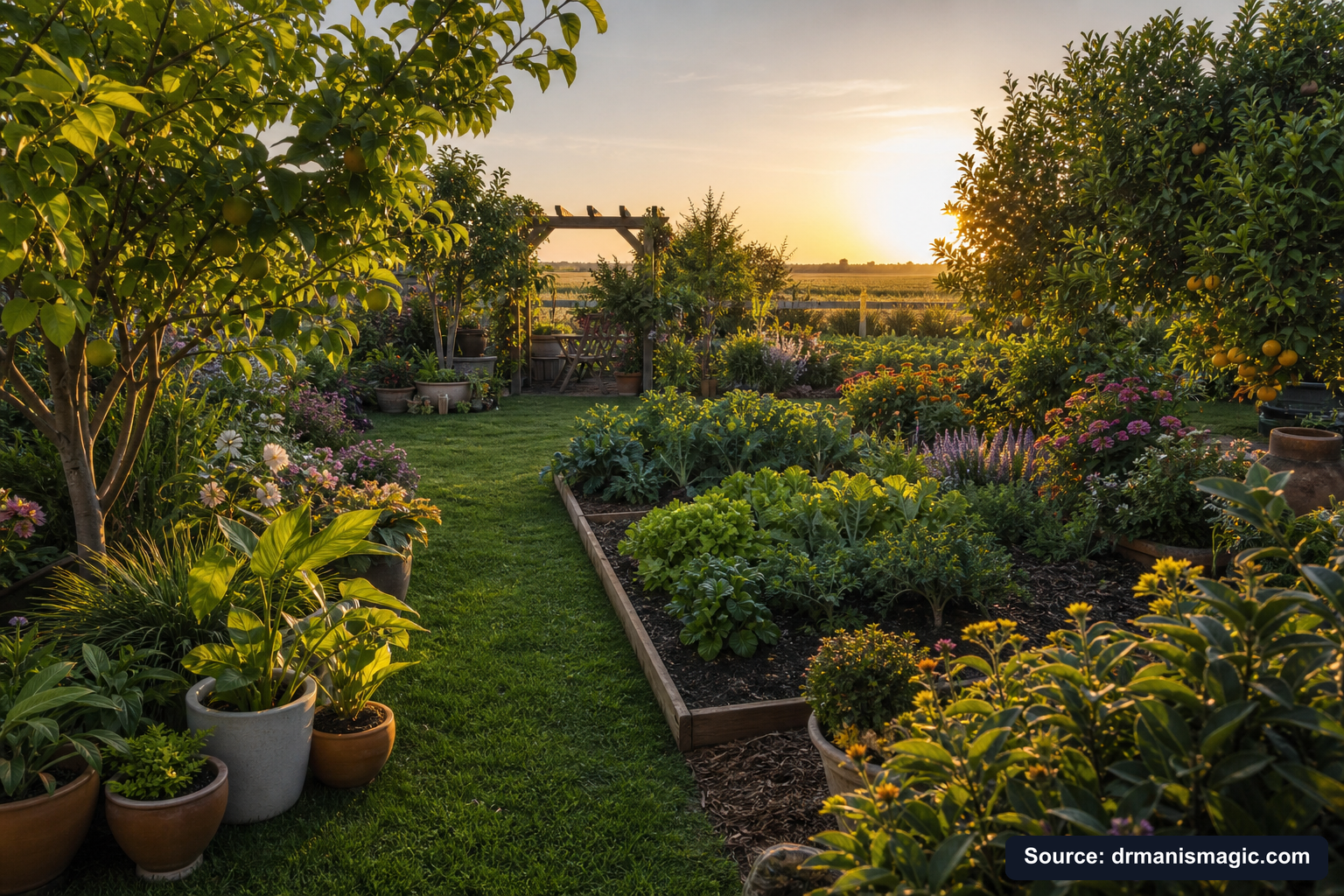
After 30 years of growing in South Texas, testing across 250,000 trees, watching what fails and watching what thrives, we built the Dr. Mani's Magic line around one belief: gardening should feel like what it was always meant to feel like. Simple. Alive. Satisfying. Like something your grandmother would recognize.
If you want a complete starting point grounded in the Three Plant Pillars, explore the Dr. Mani's Magic system here. Everything is made in the USA, backed by a 30-day money-back guarantee, and designed to work with nature instead of against it.
Your plants are waiting. And this time, the instructions are on your side.
Frequently Asked Questions
These are the questions real gardeners ask after reading about how traditional gardens thrived without instructions. The answers connect what your grandmother knew by instinct to what Dr. Mani proved across 250,000 trees in South Texas. Read these before you buy another bag of fertilizer or potting mix.
Why did old gardens grow so well without fertilizer schedules or bottled products?
Old gardens worked because the soil was alive. Compost, manure, mulch, and low disturbance kept billions of bacteria and fungi thriving underground. Those microbes cycled nutrients, fought disease, and built strong roots automatically. Nobody needed a schedule because the soil did the work. Modern gardening killed that invisible workforce with synthetic fertilizers and tilling. That is the real reason your grandmother's roses bloomed every year without a spreadsheet.
What are the Three Plant Pillars and why do they matter for any plant I grow?
The Three Plant Pillars are the foundation Dr. Mani developed after 35 years of plant science and proved across 250,000 trees at US Citrus Nursery in South Texas. Pillar one is mineral-based soil that drains well and never compacts. Pillar two is live microbes that feed roots and fight disease. Pillar three is organic fertilizer that feeds slowly without burning. Together they work for any plant, from houseplants to fruit trees to lawn grass.
What is wrong with the potting mix I buy at the big box store?
Most store-bought potting mix is loaded with pine bark and sawdust. That stuff breaks down fast. As it rots, it compacts, blocks oxygen, and chokes roots. Roots need oxygen just like you do. Dr. Mani's Super Soil uses mineral-based sandy loam from South Texas that does not decompose. It stays loose and drains perfectly for years. You never have to replace it. That is a completely different product than what sits on a shelf at the hardware store.
Why do synthetic fertilizers hurt my plants even though they say they feed them?
Synthetic fertilizers are salt-based. Salts pull water out of roots and burn the soil. Worse, they wipe out the beneficial bacteria and fungi your plant depends on. Once those microbes are gone, your plant becomes dependent on the next dose of fertilizer to survive. It is a cycle that benefits the fertilizer company, not your garden. Dr. Mani's organic fertilizer uses crab, kelp, and amino acids that release slowly and actually build soil health over time instead of destroying it.
How do I know the microbes in Plant Super Boost are actually alive when they arrive?
Most bottled microbial products are either dead powders or smelly liquids that have already gone bad. Dr. Mani's Magic Plant Super Boost uses a special stabilization method developed by a compost expert who joined the team. The microbes stay alive in the bottle without rotting. That is why it smells like fresh earth instead of sewage. Dr. Mani tested this on his own citrus trees and saw faster, healthier growth before ever selling a single bottle to anyone.
What did Martha Stewart say about gardening that every plant lover should hear?
Martha Stewart once said that if you want to be happy for the rest of your life, make a garden. She also said that if something is not working, rip it out and start over. That is exactly the mindset Dr. Mani built his system around. Stop patching problems with products that do not work. Rebuild the foundation with the right soil, live microbes, and organic fertilizer. Then watch what happens when nature finally gets what it needs.
How much time am I wasting by not fixing my soil foundation right now?
Every season you spend fighting bad soil is a season you will never get back. Money can be replaced. Time cannot. The number one thing gardeners tell Dr. Mani is that they want to see fruit on their own tree while they still can. If you keep using the same cheap fertilizer and sawdust potting mix, your plants will stall and then go backward. Nature does not bend to bad inputs. The best time to fix your foundation was years ago. The second best time is today.
About the Author
Dr. Mani Skaria, PhD
Dr. Mani Skaria, PhD, is a plant pathologist and the scientific founder of Dr. Mani's Magic. He earned his doctorate at Purdue University and spent 48 years studying how plants, soil, and living microbes work together, including his years as Professor Emeritus at Texas A&M and as a member of the USDA NAREEE Advisory Board. He invented micro-budding, a method for growing healthier, stronger trees, and has grown more than 250,000 trees on the family farm in Hargill, Texas - US Citrus Nursery. His life's work takes real lab science and practical experience and turns it into simple, safe, organic plant care anyone can use at home.


