


Why Sterile Soil Is a Death Sentence for Plants | Dr. Mani's Magic
Why Sterile Soil Is a Death Sentence for Plants (And What's Really Killing Your Garden)
Picture your favorite plant. Maybe it's a lemon tree on your back patio. Maybe it's a tomato plant in a raised bed. Maybe it's a houseplant sitting by your kitchen window that you've been babying for two years. You've watered it. You've fed it. You've done everything the bag said to do. And still, something is off. The leaves are a little yellow. The growth is slow. It just looks... tired.
Here's what nobody told you. Under your feet, in that bag of potting mix, in that garden bed you've been feeding with synthetic fertilizer for years, something is missing. Something invisible. Something alive. The soil your plant is sitting in might look perfectly fine. But if the biology is gone, your plant is living on borrowed time. It's like trying to run a car with no engine oil. Everything looks okay from the outside. Until it doesn't.
This is the story of what lives in healthy soil, what kills it, and why getting it back is the single most important thing you can do for every plant you own. We've grown over 250,000 trees at our South Texas nursery. We've killed plants the wrong way and brought them back the right way. And what we learned changed everything about how we grow. Let's open the hood and show you what's really going on down there.
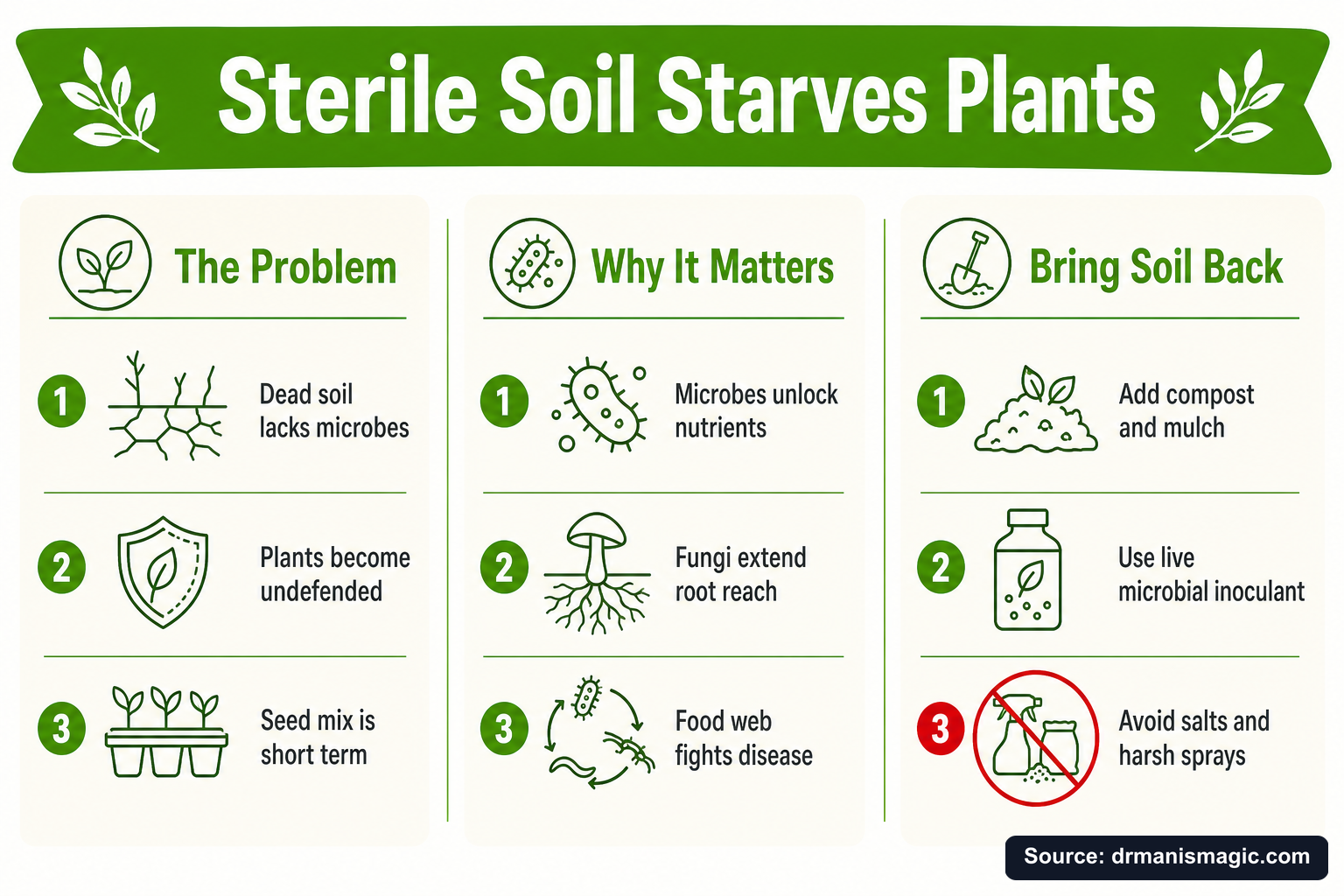
Key Takeaways
- Biologically dead soil lacks the living system that cycles nutrients, suppresses disease, and builds root-friendly structure.
- The soil food web, including bacteria, fungi, protozoa, and nematodes, is what converts organic matter into food plants can actually use.
- University of Minnesota Extension research shows soil biology supplies roughly 75% of plant-available nitrogen and 65% of available phosphorus.
- Mycorrhizal fungi can expand a plant's root surface by 100 to 1,000 times, according to Colorado State University Extension.
- Sterile seed-starting mix is fine for sprouting seeds, but biologically empty garden soil is fragile, undefended, and ultimately self-destructing.
- Salt-based fertilizers, synthetic fungicides, pesticides, and herbicides all damage or destroy the beneficial microbe communities your plants depend on.
- The Three Plant Pillars, developed and proven at US Citrus Nursery, give you the foundation to rebuild living soil and grow nearly bulletproof plants.
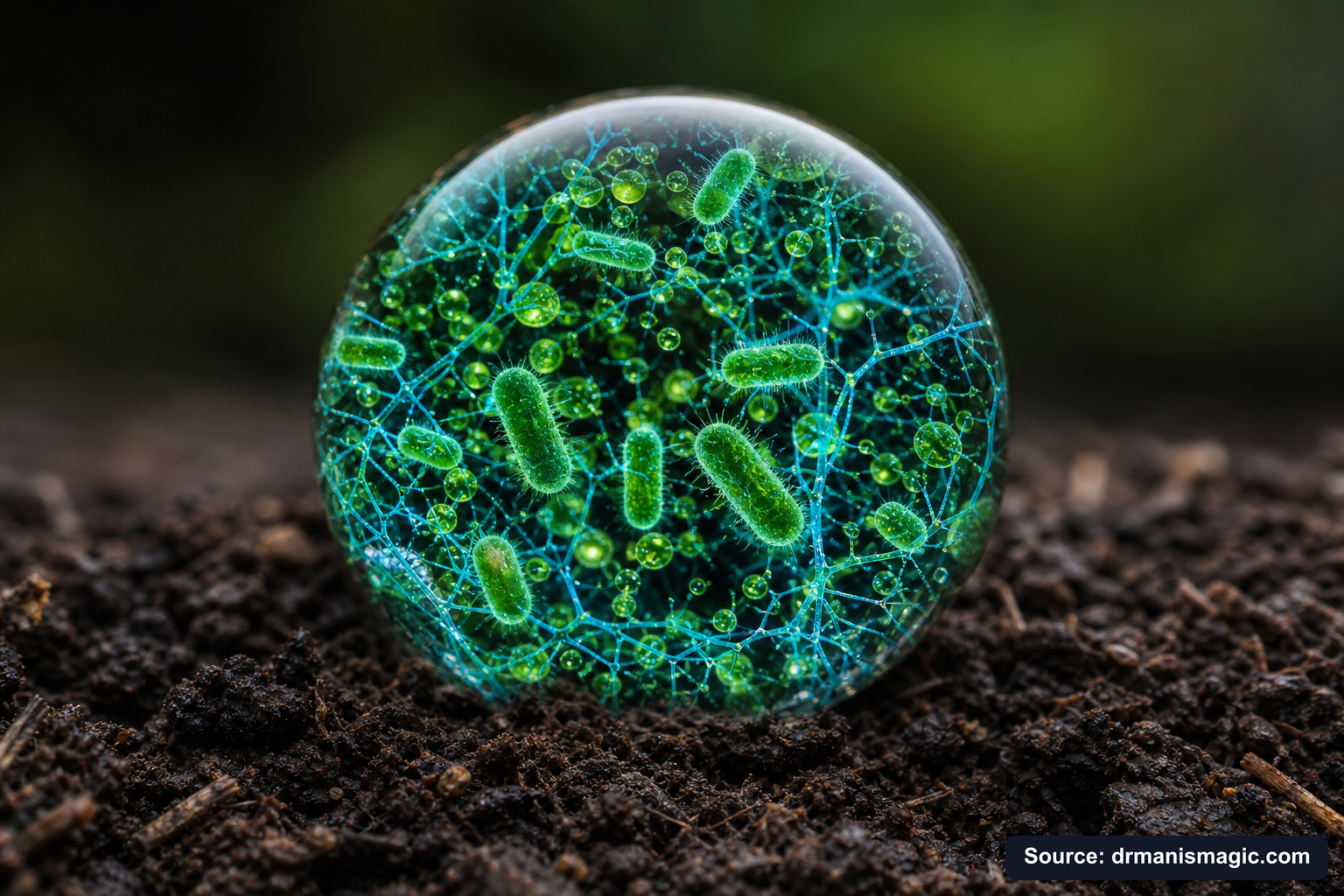
What Is Sterile Soil and Why Does It Hurt Plants?
Quick Answer: Sterile soil has had its living microbe community removed or destroyed. Without beneficial bacteria, fungi, protozoa, and nematodes, soil cannot cycle nutrients, suppress disease, or build the structure roots need. Plants can survive short-term in sterile media with added nutrients, but long-term health collapses without biology.
Sterile soil is not just "clean" soil. It is biologically empty soil. And biologically empty soil is a very different thing from safe soil.
Here is something most people do not realize. There are actually several kinds of "sterile" or "dead" soil, and they are not all the same problem.
| Soil Type | What Happened to It | What It Lacks | Is It Useful? | How to Recover It |
|---|---|---|---|---|
| Sterile seed-starting mix | Intentionally sterilized to prevent seedling disease | All microbes, good and bad | Yes, for germination only | Transplant to living soil as soon as roots develop |
| Pasteurized potting mix | Heat-treated to kill pathogens | Most biology; some spores survive | Short-term yes, long-term no | Add full-spectrum live microbial inoculant |
| Fumigated field soil | Chemical treatment to kill soil organisms | Entire food web; all biology | No; open to pathogen takeover | Add compost, organic matter, stop fumigation, re-inoculate |
| Solarized soil | Plastic-covered, solar-heated to kill organisms | Most biology; heat-sensitive organisms wiped out | Limited; vulnerable to recolonization | Add compost, organic mulch, re-inoculate |
| Salt-damaged soil | Salt-based fertilizer or road salt buildup | Beneficial bacteria and fungi; water availability | No; plant-available water reduced | Flush salts, switch to organic fertilizer, re-inoculate |
| Chemically damaged soil | Repeated herbicide, pesticide, or fungicide use | Microbial diversity; nutrient cycling | No; recovery needed | Stop chemical inputs, add organic matter, re-inoculate biology |
| Biologically healthy living soil | Undisturbed, fed with organic matter | Nothing; full ecosystem intact | Yes; this is the goal | Maintain with organic inputs and minimal disturbance |
The big confusion most gardeners have is this: seed-starting mix is supposed to be sterile. It is designed that way. Tiny seedlings are vulnerable to fungal disease. A sterile starting mix protects them. That is fine and that is the right tool for the job.
But that same sterile logic does not apply to your garden bed. Or your potted fruit tree. Or your lawn. In those places, the absence of living biology is not protection. It is a wound.
And here is the part that keeps us up at night. Freshly sterilized or biologically empty soil is not safe. It is wide open. It is undefended real estate. The first microbes to move in might not be the ones you want. Airborne fungal spores, waterborne pathogens, contaminated tools, or even the peat in a new bag of potting mix can all introduce the wrong organisms when there is no healthy community to compete against them. Empty soil does not stay empty. It just fills with whatever shows up first.
What Is the Soil Food Web and Why Should You Care?
Quick Answer: The soil food web is the invisible community of bacteria, fungi, protozoa, nematodes, and other organisms that live in healthy soil. They work together like a recycling crew that never clocks out, turning dead organic matter into the exact nutrients your plant can absorb. Without them, nutrients get locked up and your plant starves even in "fed" soil.
Think of healthy soil as a city. Not a quiet little town. A bustling, 24-hour city with millions of residents doing different jobs around the clock.
Bacteria break down organic matter. Fungi form underground networks that extend your plant's roots farther than any root could reach alone. Protozoa eat bacteria. Nematodes eat bacteria and fungi. And when they eat, they release nutrients right next to your plant's roots in a form the plant can actually absorb. This is called the microbial loop, and it is the engine that drives all plant nutrition in natural ecosystems.
According to University of Minnesota Extension, biological processes in healthy soil supply approximately 75% of plant-available nitrogen and 65% of available phosphorus. Read that again. Three quarters of the nitrogen your plant uses does not come from the bag of fertilizer you bought. It comes from microbes doing their job in living soil.
When you sterilize or damage that soil, you do not just lose some microbes. You lose the entire recycling system. Nutrients get locked up in forms plants cannot access. The plant gets hungry even if there is plenty of "stuff" in the soil. You pour on more fertilizer. The extra salt from that fertilizer kills more microbes. The plant gets weaker. You pour on more fertilizer. You see where this goes.
| Organism | What It Does for Your Plant | What Destroys It |
|---|---|---|
| Beneficial bacteria | Breaks down organic matter; fixes nitrogen from air; unlocks bound nutrients; builds soil aggregates; competes with pathogens | Salt-based fertilizers, herbicides, broad-spectrum pesticides |
| Mycorrhizal fungi | Extends root surface by up to 1,000x; delivers phosphorus, nitrogen, and water; protects roots from drought and pathogens | Synthetic fungicides, phosphorus overload, soil disturbance |
| Other beneficial fungi | Decomposes tough plant residues; builds soil structure through glomalin protein | Synthetic fungicides, tillage, waterlogging |
| Protozoa | Eats bacteria; releases nitrogen in plant-available form right at the root zone; regulates bacterial populations | Drying out, pesticides, fumigants |
| Beneficial nematodes | Eats bacteria and fungi; releases nutrients near roots; preys on harmful pest insects underground | Fumigation, broad-spectrum pesticides, solarization |
| Earthworms | Shreds organic matter; mixes soil layers; creates channels for water and air; deposits nutrient-rich castings | Compaction, tillage, pesticides, waterlogging |
Most gardening articles talk about bacteria and fungi. They skip the protozoa and nematodes entirely. But those two groups are essential. They are the predators in the system. They eat the bacteria and fungi, and when they do, they release nitrogen directly into the root zone in a form your plant can grab immediately. No protozoa, no nematodes, and the nutrient release cycle breaks down. This is the part of the soil food web that most people never hear about.
You can learn more about how we build this system into every plant we grow by visiting our Free Plant Care Field Guide.
What Do Mycorrhizal Fungi Actually Do for Your Roots?
Quick Answer: Mycorrhizal fungi attach to plant roots and grow a web of threads called hyphae that extend far beyond where roots can reach. They deliver phosphorus, water, and other nutrients back to the plant in exchange for sugars. Colorado State University Extension notes they can expand a root's absorbing area by 100 to 1,000 times.
Have you ever pulled up a weed and seen fuzzy white threads wrapped around the roots? That white fuzz is mycorrhizae. That is the reason weeds are so hard to kill. They have a fungal partner expanding their root system in every direction, pulling in water and nutrients from soil the plant's own roots could never reach.
Your fruit trees, your garden vegetables, your houseplants, your lawn, all of them want that same partnership. Oklahoma State University Extension reports that mycorrhizal fungi form beneficial relationships with 80 to 90% of all plant species on earth. This is not a niche feature of exotic plants. It is the default operating system for almost everything that grows.
When your soil is biologically depleted, that partnership cannot form. Your plant's root system is limited to what its own roots can physically reach. In a pot or a garden bed that has been treated with synthetic fungicides or left biologically empty, that reach is very small. The plant struggles for water during dry spells. It cannot access phosphorus that is locked in soil particles just a few inches away. It becomes fragile.
Restore the mycorrhizae, and you give your plant a superpower it was always supposed to have.
What Kills the Biology in Your Soil?
Quick Answer: Salt-based synthetic fertilizers, herbicides like glyphosate, broad-spectrum pesticides, synthetic fungicides, fumigation, compaction, and even the wrong potting mix all damage or destroy beneficial soil microbes. Each one strips away part of the living system your plant depends on, often without any visible warning sign until the plant starts to decline.
Here is the ugly truth. Most of what gets sold at big box garden centers is quietly working against the biology your plants need most.
Salt-based synthetic fertilizers are the biggest offender. They push nutrients into the plant fast, which gives you a quick green-up. But salts in high concentrations are toxic to the very bacteria and fungi that your soil depends on. The microbes get wiped out. The soil structure falls apart. And then the plant becomes completely dependent on whatever you pour on next, because the natural nutrient cycling system is gone. It is a cycle designed to make you keep buying.
Herbicides like glyphosate do not just kill weeds. Research continues to show they disrupt soil microbial communities, particularly bacteria involved in nutrient cycling. Synthetic fungicides kill pathogens, yes, but they also kill the beneficial fungi, including mycorrhizae, that your plant needs to thrive. Pesticides knock out the protozoa and nematodes that release nutrients near roots. And broad fumigation essentially scorches the earth underground.
See also: The Hidden Reason Synthetic Fertilizers Cause Root Rot
Even conventional potting mix is part of the problem. Most bags are made from pine bark, peat, or wood chips. These organic materials break down over time, compacting into a dense, oxygen-stealing sludge. They start biologically empty. And as they decompose, they create the perfect conditions for root rot to move in. We saw this pattern in our own nursery for years before we built a better system.
What Happens When Sterile Soil Gets Recolonized by Pathogens?
Quick Answer: Freshly sterilized or biologically empty soil has no healthy microbial community to defend it. Harmful pathogens arriving by water, wind, contaminated tools, or new pots can colonize unchallenged. Without beneficial bacteria and fungi competing for space, disease can take hold much faster than in healthy living soil.
This is the part nobody talks about. People sterilize their soil to kill the bad guys. What they do not realize is that they also killed the good guys. And now the soil is completely undefended.
In healthy living soil, beneficial bacteria and fungi compete aggressively for space and food. When a pathogen tries to move in, it runs into a crowded neighborhood. There is nowhere to set up. The good microbes crowd it out, produce compounds that suppress it, and keep the whole system balanced.
In sterile soil, that pathogen walks into an empty building. It can set up wherever it wants. It can multiply without competition. And by the time you see symptoms on your plant, the problem is already well established underground.
This is why fumigated farm fields often see disease outbreaks within a season or two of treatment. The good biology was killed right along with the bad. Whatever pathogen arrived first after fumigation, whether it came in on irrigation water, a contaminated tool, a new transplant, or windblown spores, had the run of the place.
The defense against pathogens is not sterilization. It is a thriving, diverse, competitive community of beneficial microbes that simply does not leave room for the bad guys to win.
You Never Had a Brown Thumb.
You were handed the wrong tools. This free guide hands you the right ones.
You watered it. You fed it. It died anyway.
It was never you. It was the dirt, the salt food, and the bad advice.
This guide shows you what really went wrong, and how to fix it for good.
- Why your plants really died, and why it was never your fault
- The salt hiding in your plant food that quietly burns the roots
- The hidden killer in almost every bag of store soil
- The tiny helpers that grow a whole forest for free
- The rescue trick that brings a half dead plant back to life

Live Microbes vs. Dead Microbe Products: What Is the Real Difference?
Quick Answer: Most microbial products on shelves are lab-grown, then dried into powder. When rehydrated, the majority of those microbes are no longer viable. Liquid products made from compost often go anaerobic in transit, killing the biology and producing a strong rotten smell. Genuinely live, stabilized, full-spectrum microbes are rare, and they are what actually work.
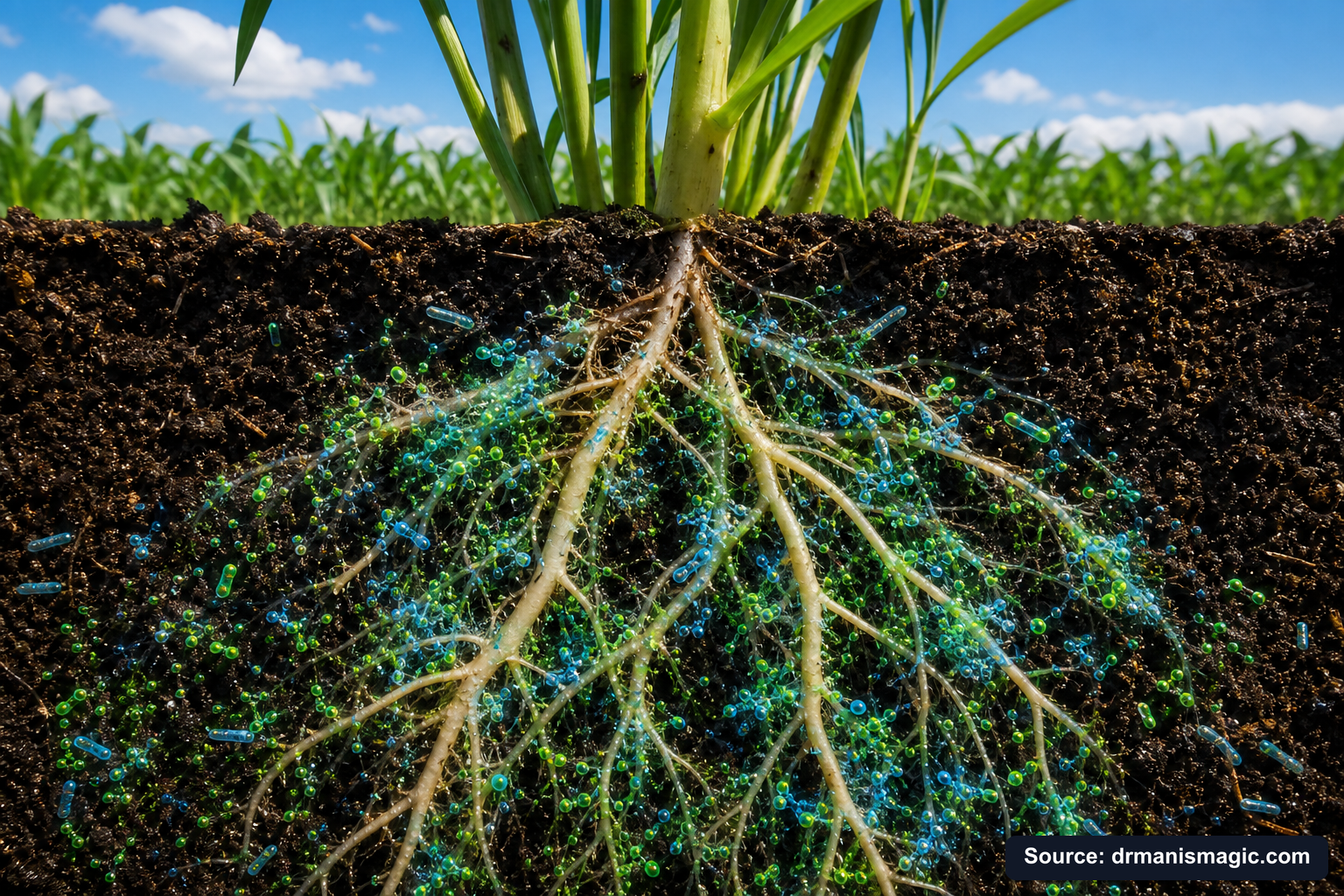
The microbial product market is booming right now. Walk into any garden center and you will see bottles and bags promising bacteria, fungi, and mycorrhizae. And most of them are not doing what the label says.
Here is what is actually happening inside most of those products.
The majority are produced in giant factory vats. Companies grow specific strains of bacteria or fungi in large batches, then dry them into a powder. The idea is that the dormant spores will "wake up" when you add water and pour them into soil. After testing dozens of batches over years at our nursery, we can tell you honestly: we saw no measurable results. The reactivation rate is poor. The spectrum of organisms is narrow. And the organisms that do survive are often not the ones most beneficial to your specific plant environment.
Liquid products made from compost extracts or earthworm castings are a different story, but they have their own problem. Once the liquid is brewed and bottled, the microbes begin consuming the available oxygen. Within about 24 hours, the environment goes anaerobic, meaning the oxygen is gone and the biology starts dying. By the time that bottle reaches you, it may smell like rotten sewage. The beneficial organisms are largely dead. Some value remains from humic and fulvic acids in the base material, but the living biology you paid for? Gone.
| Product Type | How It Is Made | Viability When You Use It | Smell | Spectrum | Our Assessment |
|---|---|---|---|---|---|
| Dry powdered lab microbes | Grown in factory vats, spray-dried | Low; most spores do not reactivate well | Neutral | Narrow; a few selected strains | Avoid; we saw no results in our nursery testing |
| Dry microbes added to liquid | Factory-dried powder suspended in water | Low; same reactivation problems | Neutral | Narrow | Avoid; same issues as dry powder |
| Compost tea, fresh under 24 hours | Brewed from compost with aeration | Moderate; must be used immediately | Earthy | Broad, natural | Effective if applied fresh; impractical for most gardeners |
| Compost tea, older than 24 hours | Same as above but gone anaerobic | Low; biology dying or dead | Strong rotten smell | Partial; declining | Not recommended; the microbes are already dying |
| Lactobacillus products | Fermented rice water or similar | High; vigorous survivors | Slightly sour | Very narrow; one organism type | Avoid in soil; lactobacillus crowds out beneficial microbes |
| Fresh hot compost applied directly | Naturally decomposed organic matter | High when fresh and hot | Earthy | Broad, natural | Excellent; requires space, time, and physical effort |
| Plant Super Boost (stabilized full-spectrum) | Harvested from hand-crafted compost; stabilized by all-natural proprietary method | High; confirmed by lab analysis and microscope-visible living organisms | Earthy; not rotten | 2,000+ bacteria strains; 400 to 500 fungi including mycorrhizae; plus protozoa and nematodes | The only product we use on our own 250,000+ trees |
The reason Plant Super Boost smells earthy instead of foul is simple. It has not gone anaerobic. The microbes are still alive and doing what living things do. You can place a single drop under a microscope and see them moving. We have the lab analyses to prove it. This is not a marketing claim. This is biology you can verify.
And unlike most products on the market, the organisms in Plant Super Boost were not selected from a factory checklist. They were harvested from real compost, the same way nature builds living soil, then stabilized so that living community stays intact inside the bottle until you pour it on your plant. Zero PFAS. Zero biosludge. Zero synthetic salts.
Does Sterile Soil Versus Living Soil Actually Produce Different Plants?
Quick Answer: Yes. Plants in living soil with an intact microbial community consistently show stronger root systems, better nutrient uptake, improved drought resistance, and lower disease pressure compared to plants grown in biologically empty soil with synthetic nutrients alone. The difference becomes most visible under stress, when a biologically supported plant recovers and a biologically empty plant collapses.
Think about a forest. No one fertilizes it. No one waters it. No one sprays it with fungicide. And yet it grows taller, lives longer, and produces more biomass than almost any managed landscape. The trees in that forest are not lucky. They are supported. Beneath every tree is a web of living relationships that has been building for decades or centuries.
Now think about a big box store plant. It grew up in a plastic pot filled with sterile pine bark mix. It was fed salt-based liquid fertilizer on a schedule. It looks okay in the store. You bring it home. You plant it. And six months later it is struggling.
The difference is not sunlight. It is not water. It is the invisible workforce underground. The forest tree has it. The store plant does not.
We saw this firsthand growing citrus in South Texas. Trees in living, biologically active soil handled drought better. They resisted disease longer. They fruited sooner and more abundantly. Trees in depleted or chemically damaged soil needed constant intervention. They were fragile. One bad week of heat or a missed watering and they declined fast. We have tested this on over 250,000 trees. The biology matters more than almost anything else.
See also: How Salt-Based Feeding Quietly Destroys Root Systems
How Do You Know If Your Soil Is Biologically Dead?
Quick Answer: Signs of biologically depleted soil include slow or stalled plant growth, yellowing leaves despite feeding, poor water drainage or waterlogging, a rotten or chemical smell, salt crust on the soil surface, and plants that decline after any stress. Healthy living soil smells earthy, drains well, and supports steady, resilient growth.
Your soil is telling you something. You just need to know what to listen for.
If you dig into your garden bed and it smells like rotten eggs or sewage, that is an anaerobic signal. The soil has gone without oxygen. The good aerobic bacteria are dead or dormant. The ones that thrive without oxygen are producing that smell, and those are not the microbes your plant wants.
If you see a white crust on the surface of your potting mix or garden soil, that is salt buildup. Every application of synthetic fertilizer leaves behind salt residue. Over time, it builds up. It pulls water away from roots through osmotic pressure. It kills the bacteria in the rhizosphere. And it leaves your plant essentially dying of thirst even when the soil is wet.
If your plant feeds well for a season and then stalls, or starts declining even though you have not changed anything, the biology is likely gone. The synthetic fertilizer gave the plant a short-term boost but degraded the soil system at the same time. Now there is nothing left to cycle nutrients naturally, and the plant is running on empty.
If earthworms have vanished from your garden beds, take that seriously. Earthworms need organic matter, moisture, and a living microbial community. When they leave, it is because the conditions that support life underground have deteriorated.
How Do You Bring Dead or Sterile Soil Back to Life?
Quick Answer: Soil recovery starts with stopping the inputs that caused the damage, then rebuilding organic matter, restoring aeration, re-inoculating with live full-spectrum microbes, and giving the system time. Recovery in a container can begin within weeks. Recovery in a damaged garden bed takes months to a full growing season, sometimes longer depending on depth of damage.
Good news. Soil can recover. It takes time, and it takes the right steps in the right order. But we have seen severely depleted soil come back to life. Here is the recovery process we use and recommend.
- Stop the damage first. If you are using salt-based synthetic fertilizers, synthetic fungicides, herbicides, or broad-spectrum pesticides, stop. You cannot rebuild biology while continuing to destroy it. This is the hardest step for most people because the alternatives feel less familiar. But it is the most important one.
- Flush the salts. If salt buildup is present, water deeply and slowly several times to push salts down and out of the root zone. For containers, water until it drains freely from the bottom. Rainwater is ideal for flushing because it is naturally low in dissolved minerals.
- Fix the physical structure. If your soil is compacted, waterlogged, or made of decomposing pine bark, this is the time to address it. For containers, consider repotting into a mineral-based soil that does not compact or decompose. Our Super Soil is built from mineral-based sandy loam from the Rio Grande Valley. It does not break down, does not steal oxygen from roots, and does not need to be replaced year after year.
- Add organic matter. Compost, aged mulch, or organic amendments feed the soil food web. Add a two to three inch layer of compost to garden beds. This gives incoming microbes something to eat and work with.
- Re-inoculate with live, full-spectrum microbes. This is the step that most people either skip or get wrong. Do not buy a powder off the shelf and hope for the best. Use genuinely live biology. Apply monthly and consistently, because damaged soils need repeated re-inoculation, especially in the first recovery season.
- Switch to organic fertilizer. Organic slow-release fertilizers feed the plant gently without the salt spike that kills microbes. They work with the biology instead of against it. Look for formulations that include a full spectrum of macronutrients, micronutrients, and biostimulants without synthetic salts, biosludge, or PFAS-contaminated ingredients.
- Give it time and do not panic. Recovery is not instant. In a container, you may see improvement within four to six weeks. In a garden bed, expect three to six months before the biology is meaningfully rebuilt. During that period, your plant may look static. Trust the process. The work is happening underground where you cannot see it yet.
This recovery framework is the foundation of what we call the Three Plant Pillars: mineral-based soil that lets roots breathe, live microbials that rebuild the underground ecosystem, and organic fertilizer that feeds the plant without poisoning the biology. When all three are working together, the transformation is not subtle. It is dramatic.
What Is the Three Plant Pillars System and Why Was It Built?
Quick Answer: The Three Plant Pillars is a framework developed by Dr. Mani Skaria at US Citrus Nursery after decades of growing citrus in South Texas. It identifies the three non-negotiable foundations of plant health: mineral-based soil for structure and oxygen, live full-spectrum microbes for nutrient cycling and disease suppression, and organic fertilizer that feeds the plant without destroying the biology underneath it.
Dr. Mani Skaria did not start out trying to sell products. He started out trying to solve a problem. He had trees. He had the best intentions. And he kept running into the same wall that every serious grower eventually hits: the standard advice was not working. The synthetic fertilizers gave quick results and then the trees would plateau or decline. The potting mixes broke down within a season. The disease pressure kept coming back.
He spent years testing. He traveled internationally studying plant pathology. He ran the Clean Citrus Program in Texas through Texas A&M. And eventually, through a providential meeting with a world-renowned compost expert who had been essentially blacklisted by big chemical companies for getting too effective results, he found the missing piece.
The missing piece was living biology. Not the dried powder version. Not the bottled-and-dying version. Real, living, full-spectrum microbial biology stabilized in a way that kept it viable until it reached the plant's root zone.
That discovery, combined with decades of soil science and 250,000 trees worth of real-world testing, became the Three Plant Pillars. It is not a marketing concept. It is the actual operating system that nature uses. We just figured out how to replicate it reliably, at scale, for any plant a home gardener might own.
Lawns respond to it. Flower gardens respond to it. Houseplants respond to it. Raised beds respond to it. Orchards respond to it. The biology is universal because the soil food web is universal. The plants you are growing today evolved alongside these microbes over millions of years. Give them back what they evolved with, and watch what happens.
How Much Time Are You Losing by Doing This the Old Way?
Quick Answer: Every season you spend with biologically depleted soil is a season your plants are underperforming. Salt-based fertilizers and sterile growing conditions buy you a few months of visible growth before the system stalls. Meanwhile, a plant growing in living soil is building roots, resilience, and productive capacity that compounds year over year.
Here is something that hits different when you really sit with it. You can always make more money. You cannot make more time.
The number one thing people tell us they want is to actually see their trees and plants do what they were supposed to do. To pick fruit off a branch they planted themselves. To walk barefoot across a lawn that feels like velvet. To cut flowers from a garden that is genuinely, visibly thriving. To sit on the patio and smell something real growing nearby.
That is not a small dream. That is one of the most human things there is. We were put here to tend things. And the frustration of doing it wrong, of losing plants, of watching them stall and decline after all that money and effort, that frustration is not just financial. It is deeply personal.
The old way steals time. You pour on synthetic fertilizer. Things green up. You feel hopeful. Three months later the plant stalls. Six months later it starts going backward. You try something else. Another product. Another bag of soil. Another Google search at eleven at night. And the plant sits there, not dead, not alive, just sort of existing. That is the slow cost nobody puts on the label.
When the biology is right, plants do not just survive. They build. Every month the root system gets more extensive. Every month the microbial community gets more established. Every month the plant gets more resilient, more productive, more capable of handling whatever Texas summer or cold snap or drought comes next. That compounding is what the old way never gives you.
What Can You Do Right Now to Start Fixing Your Soil?
You do not need to overhaul everything today. You just need to start in the right direction.
If your plants are struggling, yellowing, stalling, or just never quite thriving despite everything you have tried, the answer is almost certainly underground. The biology is depleted. The nutrient cycling is broken. The root system is working with one hand tied behind its back.
The fix is not more fertilizer. The fix is restoring what was always supposed to be there: living soil full of bacteria, fungi, protozoa, nematodes, and the entire underground food web that converts ordinary organic matter into the exact nutrition your plant can use.
At US Citrus Nursery, we built the Three Plant Pillars system because we needed it ourselves. We tested it on over 250,000 trees. We refined it through real failures and real recoveries. And then we made it available to every gardener in America because no one should have to go through the years of trial and error we did.
If you want a clear, simple starting point that covers everything from soil to microbes to organic feeding with no guesswork and no complicated chemical regimens, the Free Plant Care Field Guide is the place to begin. It is the same system we use on our own trees, written in plain language for any plant, any garden, any experience level.
The soil under your plants is either working for you or against you right now. The good news is, you can change that. And when you do, you will not just see healthier plants. You will feel the difference every time you walk outside.
Frequently Asked Questions
If your plants look tired no matter what you do, the answer is probably hiding in your soil. These are the questions we hear most from gardeners who are finally ready to stop guessing and start growing the right way. Dr. Mani has tested these answers on over 250,000 trees in South Texas, so you can trust what you read here.
Is sterile soil good for plants long-term?
No. Sterile soil might seem safe and clean, but it is biologically empty. Without live bacteria, fungi, and other microbes, your plant cannot cycle nutrients, fight off disease, or build strong roots. It can survive short-term, but it will slowly fall apart. That is exactly why Dr. Mani built Plant Super Boost, to put living microbes back where they belong, in your soil, working hard for your plant every single day.
Why do my plants grow slow for the first few years after planting?
Most gardeners have heard the old saying: the first year a plant sleeps, the second year it creeps, and the third year it leaps. That timeline assumes average soil with average biology. When you use the Three Plant Pillars, which means mineral-based soil, live microbes, and organic fertilizer, you stop waiting and start growing. Roots get oxygen, microbes unlock nutrients, and your plant stops crawling and starts climbing much faster than that old three-year rule predicts.
Is two-year-old potting soil still good to use?
Here is the ugly truth about most bagged potting mix. It starts breaking down the moment you open it. After two years, the wood bark and organic matter inside have compacted and rotted. Roots suffocate. Drainage fails. That is not a soil problem you can fix by adding fertilizer. Dr. Mani's Super Soil is built on mineral-based sandy loam that does not break down, so it stays light, airy, and alive for your plant year after year without replacement.
Can I pour boiling water on soil to sterilize it?
You can, but you should not do it to soil you want to grow in. Boiling water wipes out the beneficial bacteria and fungi your plant depends on. It also leaches nutrients and can leave your soil wide open for bad pathogens to move in first. Instead of sterilizing your soil and starting with nothing, start with Dr. Mani's Super Soil, which is steam-sterilized at the source to remove pathogens, then paired with Plant Super Boost to bring the right biology back in.
Does baking soda sterilize soil?
No. Baking soda does not sterilize soil. It raises pH temporarily and can slow some fungal spread on leaf surfaces, but used in soil it causes salt buildup over time. Salt is exactly what Dr. Mani warns against. Synthetic fertilizers are salt-based, and they wreck your microbial community the same way. If you have a fungal problem in your soil, the real fix is adding live beneficial microbes that outcompete the bad ones naturally, which is what Plant Super Boost is designed to do.
How do farmers sterilize soil, and is it safe?
Farmers have used chemicals like methyl bromide, heat treatment, and fumigation for decades. These methods kill pathogens but also destroy every beneficial organism in the soil. After fumigation, the soil is essentially a blank slate with no defense system. Diseases and pests that come back first have no competition. Dr. Mani saw this problem up close working in Texas citrus for over 30 years. The answer is not to sterilize and leave it empty. The answer is to build a living soil that defends itself.
What is the fastest way to bring dead soil back to life?
Stop adding synthetic fertilizers. They are salt-based and they keep killing the microbes you need. Then hit your soil with all three of Dr. Mani's Plant Pillars at once. Start with Super Soil for structure and drainage. Add Plant Super Boost for live bacteria, fungi, and mycorrhizae that multiply and go to work immediately. Feed with the Crab, Kelp, and Amino Acids organic fertilizer for slow-release nutrition that does not burn. Most growers see a real difference within 30 days, or we refund your money, no questions asked.
About the Author
Ron Skaria, MD
Ron Skaria, MD, is the co-founder of Dr. Mani's Magic and the son of Dr. Mani. He trained as a medical doctor at Baylor College of Medicine, did his residency at UT Health Science Center - San Antonio and fellowship training at Texas Tech University. He now works full time on the family farm at US Citrus and US Citrus Nursery in Hargill, Texas, building Dr. Mani's Magic alongside his dad. He wrote the Brown Thumb Field Guide to put his father's 48 years of plant science into plain words any gardener can use. His belief is simple. You never had a brown thumb. You just never had the right help.


