


Why Plants Prefer Amino Acids Over Raw Nutrients | Dr. Mani's Magic
Why Plants Prefer Amino Acids Over Raw Nutrients: What Soil Science Actually Says
Picture this. You're standing at the garden center, staring at a wall of fertilizer bags. Blue crystals. White granules. Bright green liquid in a squeeze bottle. Every bag promises lush green leaves and bumper crops. One of them even says "instant results." So you grab it, go home, mix it up, and pour it on your struggling tomato plant or your potted citrus tree.
A week later? The tips of the leaves look scorched. The plant seems worse. You pour more water on it, hoping that helps. It doesn't. You go back online and search for answers, and now you're three hours deep in a rabbit hole of contradicting advice. Sound familiar? Here's what nobody at that garden center told you: that bright blue fertilizer is basically a bag of salt. And salt, poured directly onto a plant's roots, does the same thing it does to a slug. It pulls the water right out of the cells. Your plant wasn't hungry. It was getting burned.
At our South Texas nursery, after growing over 250,000 trees, we learned the hard way what works and what quietly destroys plants over time. The answer isn't more fertilizer. It's the right kind, delivered the right way, through a living soil that does the heavy lifting for you. That's what this article is about. We're going to show you exactly how nitrogen moves from the soil into your plant, why amino acids matter in that journey, and why the "raw nutrients" approach that most companies sell you is actually working against nature instead of with it.

Plant Super Boost
Key Takeaways
- Plants are literally built from amino acids. Every protein, every enzyme, every strand of DNA inside your plant starts with amino acids.
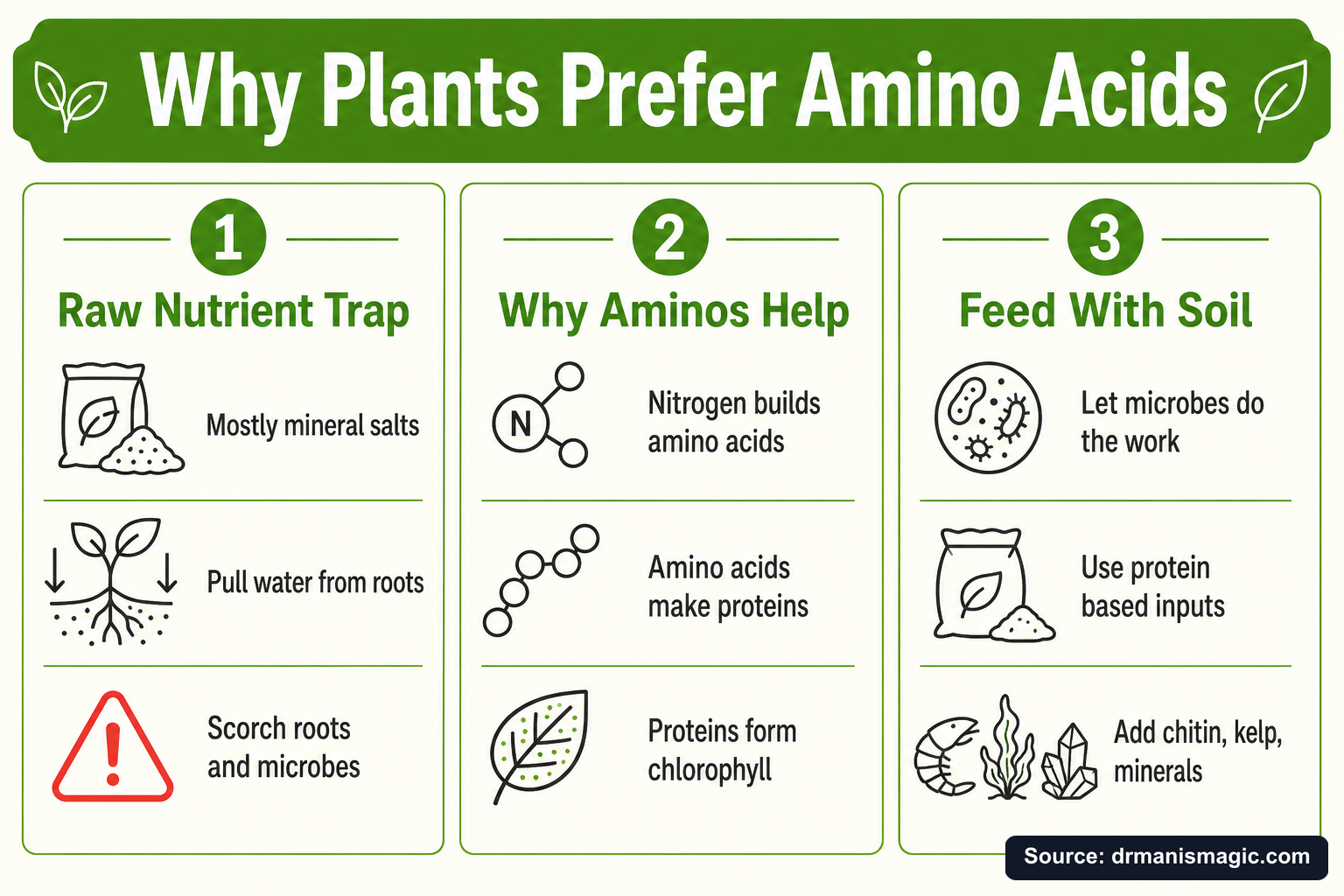
- The phrase "raw nutrients" usually means concentrated mineral salts. These salts can burn roots, kill microbes, and cause physiological drought in your plant even when the soil is wet.
- Soil microbes are the real middlemen. They break down organic inputs into amino acids, then into ammonium and nitrate, which roots absorb. Healthy microbes mean steady, gentle nutrition.
- Amino-acid-based and protein-derived fertilizers are gentler, lower in salt, and biologically synchronized with the natural nitrogen cycle.
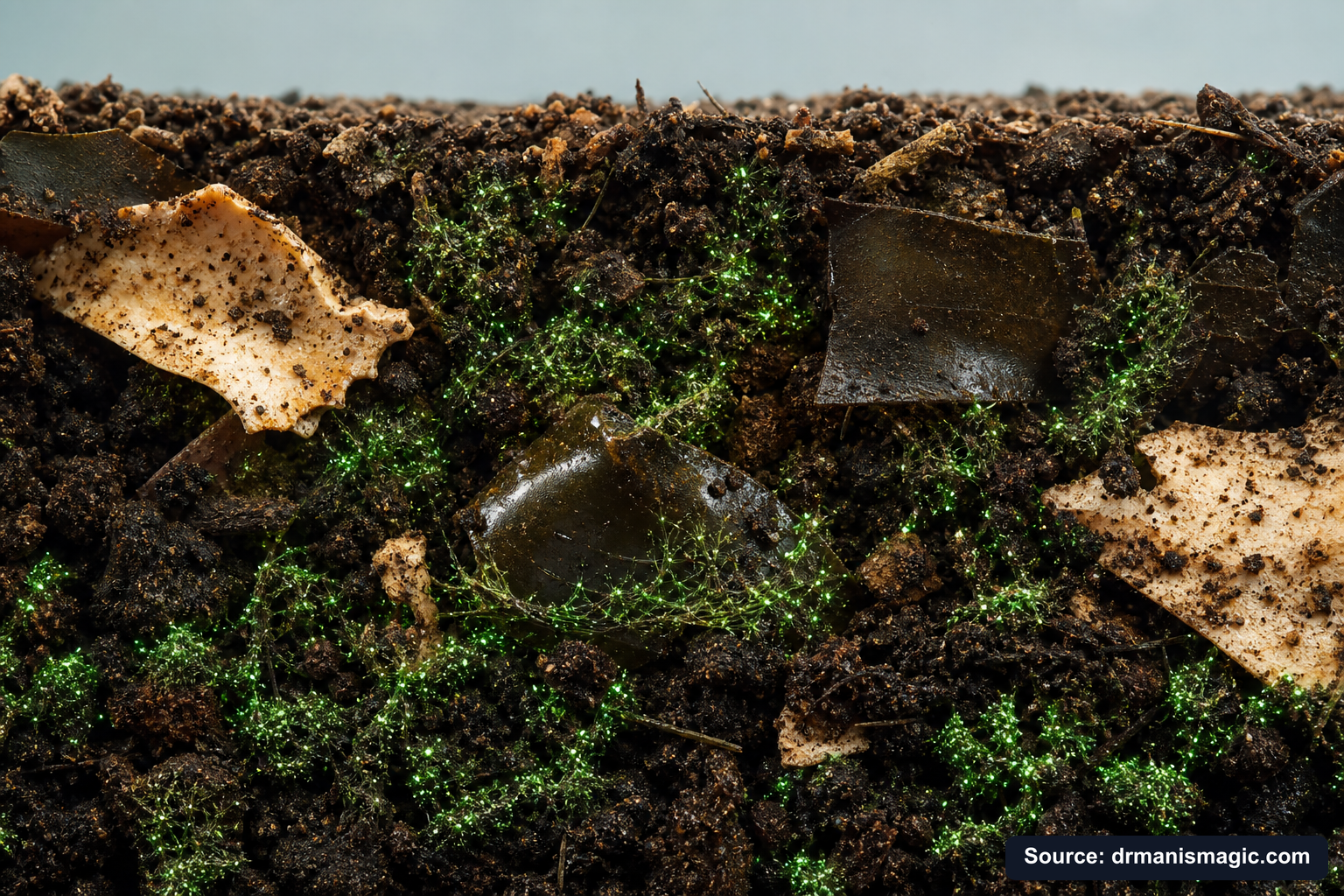
- Chitin from crab shells activates your plant's natural immune system and feeds beneficial soil microbes.
- Kelp adds natural growth hormones and trace minerals that synthetic fertilizers never contain.
- The Three Plant Pillars, developed by Dr. Mani Skaria at US Citrus Nursery, give any plant the foundation it needs: mineral soil, live microbes, and clean organic fertilizer.
What Are "Raw Nutrients" and Why Does the Term Matter?
Quick Answer: "Raw nutrients" is a marketing phrase, not a scientific term. It usually refers to concentrated, water-soluble mineral salts like ammonium nitrate or potassium chloride. These deliver nitrogen, phosphorus, and potassium fast, but at a high salt cost that can scorch roots, kill soil microbes, and create long-term soil problems.
You won't find the phrase "raw nutrients" in a university soil science textbook. It's a consumer term. What it usually describes is conventional synthetic fertilizer: concentrated mineral ions dissolved in water or pressed into granules, derived from salt compounds.
Think of it this way. Table salt is sodium chloride. It's a mineral. Ammonium nitrate, the nitrogen in most synthetic fertilizers, is also a salt. Potassium chloride, another common fertilizer ingredient, is a salt too. When you dissolve these salts in water and pour them into the soil, they create what scientists call osmotic stress.
Here's the simple version. Your plant roots move water from the soil into the plant by osmosis. That process only works when the water in the soil has fewer dissolved particles than the water inside the root cells. When you dump a load of mineral salts into the soil, you reverse that gradient. Now the soil water is saltier than the root cells. Water moves the wrong direction. Right out of the roots. Your plant is sitting in wet soil and still dying of thirst. That's physiological drought. And it's one of the most common reasons plants decline after fertilizing, even when you're watering them faithfully.
The other casualty? Your soil microbes. The same osmotic stress that pulls water from root cells also kills bacteria and fungi. One heavy dose of synthetic fertilizer can wipe out entire communities of beneficial organisms that took months or years to build. And without those organisms, the whole nutrient cycle breaks down. We'll explain why that matters in the next section.
See also: Why Most Fertilizers Are Actually Salt in Disguise
What Does Nitrogen Actually Do Inside a Plant?
Quick Answer: Nitrogen is the raw material your plant uses to build amino acids, proteins, chlorophyll, enzymes, and DNA. Without enough nitrogen, leaves turn pale yellow and growth slows. But the form nitrogen arrives in matters enormously. Amino-acid nitrogen is gentler, lower in salt, and already partially processed for the plant.
Nitrogen is the most important nutrient in the garden. But here's the thing most fertilizer labels never bother to explain. Your plant cannot use nitrogen as nitrogen. It has to convert it. Every gram of nitrogen that enters a root cell gets assembled into something. Amino acids. Proteins. Chlorophyll. Enzymes. The hormones that tell your plant when to flower, when to grow, and when to defend itself against insects and disease.
When you look at a leaf and it's dark green and shiny, that's chlorophyll. Chlorophyll is a protein. Proteins are chains of amino acids. Amino acids contain nitrogen. So when someone says "nitrogen makes plants green," what they really mean is: nitrogen gets turned into amino acids, which get assembled into chlorophyll, which captures sunlight and makes the whole system run.
This is why the question "why do plants prefer amino acids over raw nutrients" is such a good one. It gets at something real. Plants don't have to do the conversion work when amino acids are already present in the soil. The building blocks are closer to finished. According to research from Utah State University Extension, plants in certain ecosystems can absorb intact amino acids like glycine and glutamate directly through their roots. That's real. It happens.
But here's the honest part, the part most amino-acid fertilizer companies leave out. In most garden soils, ammonium and nitrate are still the dominant forms of nitrogen that roots absorb. The bigger advantage of amino-acid-based fertilizers isn't that they bypass the whole system. It's that they work with the system instead of burning it down.
How Does the Nitrogen Cycle Actually Work in Healthy Soil?
Quick Answer: Organic matter and protein inputs get broken down by soil microbes into amino acids, then into ammonium, then into nitrate. Plants absorb the ammonium and nitrate. The whole cycle is slow, steady, and self-regulating. It's nothing like the instant salt spike of synthetic fertilizers, and that slower pace is actually better for your plant's long-term health.
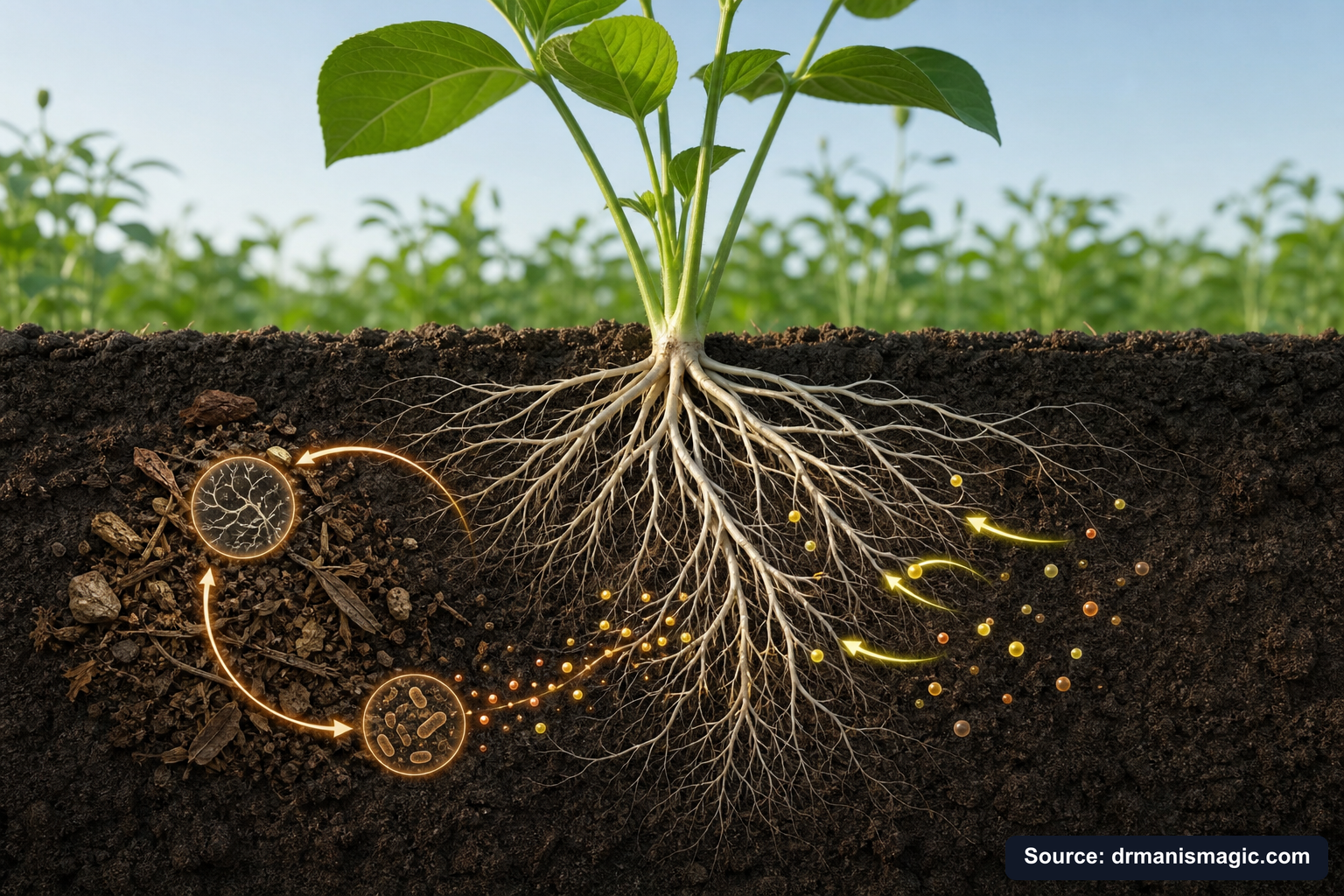
Imagine your soil is a kitchen. And the microbes are the cooks. You bring in the ingredients: organic matter, compost, or an organic fertilizer made from crab shells, feather meal, and kelp. The microbial cooks get to work. They produce enzymes called proteases that break proteins down into amino acids. Then other microbes break those amino acids down further into ammonium. Then a third group of microbes, called nitrifiers, convert ammonium into nitrate.
Roots absorb both ammonium and nitrate. The plant takes those nitrogen forms and reassembles them back into amino acids inside the leaf tissue. Then those amino acids get chained together into proteins, enzymes, and chlorophyll. The cycle is complete.
Now here's the beautiful part. When soil microbes die, which they do constantly as part of their natural life cycle, they release all the nitrogen they were holding directly into the root zone. Every dead microbe is a little packet of nutrition. This is the slow-release mechanism that organic fertilizers rely on. And it's not a gimmick. It's how every forest, every prairie, and every untouched garden on Earth has fed itself for millions of years.
According to University of Florida IFAS Extension, nitrogen mineralization, which is the process of microbes converting organic nitrogen into plant-available forms, is the engine that drives long-term soil fertility. Synthetic fertilizers skip this engine entirely. They deliver nitrogen directly as soluble salts. Fast, yes. But at the cost of the microbes who would have kept feeding your plant for months.
See also: The Hidden Reason Synthetic Fertilizers Cause Root Rot
Do Microbes Compete With Plants for Amino Acids?
Quick Answer: Yes, and that's actually fine. When microbes consume amino acids and other organic nitrogen, they hold onto it temporarily. When those microbes die, they release that nitrogen right back into the soil for plant roots. It's a living recycling loop, not a competition your plant loses.
Here's a nuance that most amino-acid fertilizer content on the internet gets wrong. When you apply an amino-acid-based fertilizer to your soil, the microbes get first dibs. They are aggressive competitors for free amino acids and other nitrogen in the soil. Scientists call this "microbial immobilization." The microbes grab the nitrogen and hold it inside their cells.
Does that mean the plant loses out? No. It means the plant waits a little while. And that wait is actually a feature, not a bug.
When those microbes die and decompose, every nutrient they were holding gets released in a bioavailable form right into the root zone. The plant gets a steady, gentle trickle of nutrition over weeks and months instead of one giant salt spike. This is why organic fertilizers are described as slow-release. It's not a coating or a chemical trick. It's the natural life-and-death cycle of the microbial community feeding your roots.
And here's the part that changes everything. Synthetic salt fertilizers kill the microbes. So when you pour in a dose of blue crystal fertilizer, you're eliminating the very organisms that would have fed your plant for the next three months. You get a quick green burst. Then the plant stalls. Then it declines. Then you buy more fertilizer. That cycle is not an accident. It's a business model.
What Is Salt Index and Why Should Every Plant Owner Know It?
Quick Answer: Salt index measures how much osmotic stress a fertilizer puts on soil water. High-salt-index fertilizers pull water away from roots and kill microbes. Low-salt-index fertilizers, like those made from organic proteins and amino acids, feed the soil gently without burning roots or wiping out beneficial biology.
Every fertilizer has what soil scientists call a salt index. It's a measure of how much that fertilizer raises the osmotic pressure of soil water. The higher the salt index, the more it disrupts the water balance in the root zone. Potassium chloride has one of the highest salt indexes of any common fertilizer. Ammonium nitrate is also high. Apply these near roots without enough water to dilute them, and you get fertilizer burn.
Fertilizer burn is not a mystery. It's osmotic stress. The same process we described earlier. The soil becomes saltier than the root cells. Water flows out. Roots shrivel. Leaves scorch at the tips. In severe cases, root tissue dies and creates entry points for pathogens like Pythium and Phytophthora, two of the most common causes of root rot in container plants and garden beds.
Amino-acid-based fertilizers, protein hydrolysates, and organic inputs like crab meal and kelp have low salt indexes. They don't spike the osmotic pressure. They don't torch the microbes. They feed the living system gently, the way nature does.
This matters for every plant you own. Lawns. Flower beds. Container trees. Vegetable gardens. Houseplants. Any root zone that gets hit with a high-salt-index fertilizer is a root zone under stress.
| Fertilizer Type | Salt Index | Microbial Impact | Release Speed | Burn Risk | PFAS / Biosludge Risk |
|---|---|---|---|---|---|
| Synthetic fast-release (e.g. ammonium nitrate, blue crystals) | High | Kills or suppresses microbes | Immediate salt spike | High | Low (but plastic-coated slow-release prills leave residue) |
| Synthetic slow-release (plastic-coated prills) | Medium | Moderate suppression over time | Weeks to months | Medium | Yes (plastic shell residue in soil) |
| Biosludge-based "organic" fertilizers | Low to medium | Mixed, depends on product | Slow | Low | High (PFAS "forever chemicals" from municipal waste) |
| Crab, kelp, and amino-acid organic fertilizer | Low | Feeds and supports microbes | Slow, microbe-mediated | Very low | Zero PFAS, Zero Biosludge, Zero Synthetic Salts |
What Does Chitin From Crab Shells Actually Do for Your Plants?
Quick Answer: Chitin is a natural compound found in crab shells. When added to soil, it feeds beneficial microbes that produce chitinase enzymes. Those enzymes break down the exoskeletons of harmful insects and disease pathogens. Chitin also delivers calcium and magnesium and helps build woody, resilient plant structure.
When Dr. Mani first started testing crab meal on his citrus trees at the nursery, the result that surprised him most wasn't the nitrogen. It was the disease resistance. Trees treated with crab-shell-based fertilizer were fighting off fungal problems and insect pressure better than untreated trees. The reason is chitin.
Chitin is the structural material in crab and shrimp shells. It's also the material in the exoskeletons of insects and in the cell walls of many harmful fungi like Pythium and Phytophthora. When you add chitin to the soil, a specific group of beneficial microbes called chitinolytic bacteria bloom. They produce enzymes that break down chitin. And since harmful fungi and insects are made of chitin, your plant's root zone essentially becomes hostile territory for them.
Think of it as your soil's immune system getting activated. No spray needed. No chemical contact. Just a natural biological response triggered by the crab shells in the fertilizer.
Crab meal also delivers calcium, one of the most important structural nutrients in any plant. A large portion of the woody mass of stems and branches is calcium. Strong cell walls. Firm fruit. Resilient structure. All of that starts with calcium, and crab shells deliver it in a slow, bioavailable form that won't burn your roots.
What Does Cold-Processed Kelp Do That Synthetic Fertilizers Cannot?
Quick Answer: Kelp is packed with natural plant growth hormones called cytokinins and auxins, plus dozens of trace minerals, carbohydrates, and biostimulants. These compounds help plants handle heat, drought, and transplant stress. No synthetic fertilizer contains these hormones. Kelp delivers them in a form plants recognize and use immediately.
Here's something most fertilizer labels never mention. Plants don't just need nitrogen, phosphorus, and potassium. They need hormones. Signaling compounds that tell roots to grow, tell buds to open, tell the plant to toughen up when drought hits. Kelp contains these compounds naturally.
Auxins promote root elongation. More root surface area means more nutrient and water uptake. Cytokinins signal the plant to push new growth and delay aging in leaves. Both of these are found in cold-processed kelp. The "cold-processed" part matters because heat destroys these delicate compounds. If kelp is dried at high temperatures, you lose much of what makes it valuable.
Kelp also brings dozens of trace minerals that most fertilizers skip entirely. Iron. Manganese. Zinc. Copper. Boron. Molybdenum. These micronutrients are needed in tiny amounts, but if even one of them is missing, growth stalls. This is called the Law of the Minimum. Your plant grows only as well as its most deficient nutrient allows. Kelp is one of the most mineral-dense substances on Earth, and it delivers those minerals in forms that soil microbes and plant roots can use right away.
You Never Had a Brown Thumb.
You were handed the wrong tools. This free guide hands you the right ones.
You watered it. You fed it. It died anyway.
It was never you. It was the dirt, the salt food, and the bad advice.
This guide shows you what really went wrong, and how to fix it for good.
- Why your plants really died, and why it was never your fault
- The salt hiding in your plant food that quietly burns the roots
- The hidden killer in almost every bag of store soil
- The tiny helpers that grow a whole forest for free
- The rescue trick that brings a half dead plant back to life

What Is the Real Danger of Biosludge and PFAS in Fertilizers?
Quick Answer: Some fertilizers, both synthetic and organic, are made with biosludge, which is treated municipal sewage waste. Biosludge often contains PFAS, known as "forever chemicals," that accumulate in soil and plant tissue and never break down. This is a serious concern for any garden where children, pets, or food crops are present.
This is the part of the fertilizer industry that almost nobody talks about. Some of the most popular "organic" fertilizers on the market are bulked up with biosludge. That's the polite industry term for treated municipal wastewater solids. Human waste, processed and dried, sold as fertilizer filler.
The problem isn't just the idea of it. The real problem is PFAS. Per- and polyfluoroalkyl substances are synthetic chemicals used in everything from non-stick cookware to firefighting foam. They end up in wastewater. They get concentrated in biosludge. And when that biosludge goes into your garden, the PFAS goes with it. They don't break down. That's why they're called "forever chemicals." They accumulate in soil, move into plant tissue, and can enter the food chain.
If you're growing food, if your kids play in the yard, if your dog rolls in the grass, this matters. A lot.
Dr. Mani's Magic Crab, Kelp & Amino Acids contains zero biosludge, zero PFAS, and zero synthetic salts. Every ingredient is clean, traceable, and American-sourced. That's not a marketing promise. It's a line we drew from the beginning and never crossed.
How Does Organic Fertilizer Feed Microbes and Then Feed Your Plant?
Quick Answer: Organic fertilizers made from proteins and amino acids get broken down by soil microbes first. The microbes eat the organic inputs, hold the nutrients inside their cells, and then release those nutrients slowly as they die and decompose. This creates a natural, self-regulating slow-release system that keeps feeding your plant for weeks after a single application.
This is the mechanism we want you to really picture. Because once you understand it, synthetic fertilizers never look the same again.
You apply an organic fertilizer made from crab shells, kelp, and amino acids. The granules hit the soil. Immediately, the microbial community responds. Bacteria and fungi that live in the root zone start producing enzymes that break down the proteins and chitin into amino acids. They consume those amino acids. The nitrogen, phosphorus, and other nutrients get locked inside the microbial cells.
From that point, two things happen. First, some of the amino acids and ammonium leaking from the microbial activity get absorbed directly by plant roots. Second, as those microbes live out their short lives and die, every nutrient they were holding gets released directly into the root zone in a plant-available form. It's a living, breathing, self-regulating delivery system.
No plastic coating. No chemical trickery. Just biology doing what biology has always done.
Now compare that to a synthetic fertilizer. You dissolve blue crystals in water. The nitrogen is immediately available as ammonium nitrate. It spikes. The plant gets a burst. But that salt spike also raises the osmotic pressure in the soil, stresses the roots, and kills the microbes. Next month, the soil is quieter. Fewer microbes. Less natural fertility. More dependent on the next dose. The cycle repeats. The soil gets weaker. The plant gets more dependent. And the company that sold you the blue crystals sells you more next season.
We've watched this play out across 250,000 trees. The ones raised on clean organic inputs, live microbes, and mineral soil? They get stronger every year. The ones treated with synthetic salt fertilizers? They plateau, then decline.
Amino Acids vs. Raw NPK Salts: A Side-by-Side Look
Quick Answer: Amino-acid-based nitrogen arrives in a low-salt, biologically active form that feeds microbes, supports slow release, and rarely burns roots. Synthetic NPK salts arrive fast and cheap but spike osmotic pressure, kill microbes, and leave the soil weaker after every application. Both deliver nitrogen, but the biological aftermath is completely different.
Let's put these two approaches side by side so the difference is crystal clear.
| Factor | Amino-Acid / Organic Nitrogen | Synthetic NPK Salt Nitrogen |
|---|---|---|
| Salt index | Low | High |
| Burn risk | Very low | High, especially in containers |
| Microbial impact | Feeds and supports microbial populations | Kills or suppresses microbes through osmotic stress |
| Release pattern | Slow, steady, microbe-mediated over weeks | Immediate spike, then nothing |
| Root health over time | Improves as microbes build soil biology | Declines as salt accumulates and microbes die |
| Osmotic stress risk | Minimal | High, causes physiological drought |
| Soil long-term | Gets richer with each application | Gets more dependent and depleted over time |
| PFAS / biosludge risk | None (when sourced clean) | Low to moderate (plastic coatings; some products use biosludge) |
| Hormone and trace mineral content | Yes (kelp provides cytokinins, auxins, micronutrients) | No (only N, P, K, sometimes a few micronutrients) |
How Do You Know If Your Plant Has Salt Damage vs. Overwatering vs. Root Rot?
Quick Answer: Salt damage usually shows as brown leaf tips and margins, starting on the outer edges of leaves. Overwatering causes yellowing and soft, mushy stems. True root rot, often caused by Pythium or Phytophthora, produces black, slimy roots and rapid collapse. Salt damage and overwatering can both lead to root rot if left uncorrected.
These three problems look similar on the surface. Yellow leaves. Drooping. Poor growth. But the causes are different, and so are the fixes.
| Symptom | Salt / Fertilizer Burn | Overwatering | Root Rot (Pythium / Phytophthora) |
|---|---|---|---|
| Leaf color change | Brown tips and edges, green center | Pale yellow, uniform | Yellow to brown, rapid decline |
| Leaf texture | Crispy, dry at margins | Soft, limp, waterlogged | Wilted even in wet soil |
| Root appearance | Dry, shrunken fine roots | White roots but soggy soil | Black, slimy, foul-smelling roots |
| Soil condition | White crusty deposits on surface | Constantly wet, poor drainage | Wet, compacted, oxygen-starved |
| Speed of decline | Gradual, worsens with each feeding | Slow, over weeks | Fast, can collapse in days |
| Common cause | Synthetic salt fertilizer, accumulated salts | Too frequent watering, poor drainage | Oxygen-starved roots + pathogen entry |
| First fix | Flush soil with clean water, switch to organic inputs | Improve drainage, reduce watering frequency | Repot into mineral-based soil, add live microbes |
Here's what ties all three together. Salt damage stresses roots. Stressed roots are vulnerable to overwatering because they can't move oxygen efficiently. And oxygen-starved roots are the perfect entry point for Pythium and Phytophthora. These three problems don't just look similar. They often cause each other. Salt damage leads to root stress leads to root rot. That's why switching to low-salt, organic fertilizer isn't just about nutrition. It's about keeping your root zone safe.
See also: How Salt-Based Feeding Quietly Destroys Root Systems
What Is a Simple Recovery Plan If Your Plant Has Been Damaged by Synthetic Fertilizers?
Quick Answer: Recovery is possible. The priority is flushing salts, restoring oxygen to the root zone, and reintroducing live microbes as fast as possible. Then switch to clean, organic inputs and give the plant time. Most plants respond within 4 to 8 weeks when the Three Plant Pillars are properly in place.
If your plant has been on synthetic salt fertilizers for a while and is struggling, here's a simple recovery checklist.
- Flush the root zone. Water the plant deeply and slowly three times over two days with plain, clean water. This dilutes and drains accumulated salt from the root zone. You may see white residue crust on the soil surface. That's salt. Flush it out.
- Check your soil. If you're in a container and the potting mix is old, compacted, or bark-heavy, it may be decomposing and stealing oxygen from the roots. Organic potting mix breaks down into a dense, airless sludge within 6 to 12 months. Mineral-based soil does not decompose. Consider repotting into a permanent, mineral-based mix. See also: Why Most Potting Mix Collapses Within 6-12 Months
- Add live microbes to the root zone. A liquid microbial drench with bacteria, fungi, and mycorrhizae will begin rebuilding the biological community in the soil. Apply it as a soil drench, not a foliar spray. You want those microbes in the root zone.
- Wait two weeks before fertilizing again. Give the roots time to recover before adding any nutrient inputs. Injured roots are more sensitive to osmotic stress. Let the microbes get established first.
- Switch to a clean, organic, low-salt fertilizer. When you're ready to feed again, choose an amino-acid-based, chitin-containing, kelp-enriched organic fertilizer. Apply at the recommended rate. Less is more during recovery.
- Monitor leaves, not the calendar. Watch for new green growth, firm leaves, and improved color. These are signs the root zone is recovering. Don't rush back to a heavy feeding schedule.
- Stay consistent with the Three Plant Pillars. Mineral soil, live microbes, and clean organic fertilizer. When all three are in place together, plants become nearly bulletproof. Miss one pillar, and you'll keep chasing problems.
Why Do the Three Plant Pillars Matter More Than Any Single Fertilizer?
Quick Answer: The Three Plant Pillars, developed by Dr. Mani Skaria at US Citrus Nursery, address the three root causes of plant failure: suffocating soil, dead biology, and salt-based nutrition. No fertilizer, no matter how good, can compensate for roots that can't breathe or a soil with no living microbes. All three pillars must work together.
Dr. Mani spent 35 years as a plant pathologist. He taught at the Texas A&M Citrus Center. He ran the Clean Citrus Program for the state of Texas. And after all of that, after all the lab work and the trial plots and the thousands of trees, he came to the same conclusion every time.
The plants that thrived weren't the ones with the most fertilizer. They were the ones with the right foundation. Soil that drains and breathes. A living microbial community in the root zone. And clean, biologically compatible nutrition that fed the microbes and the plant together.
That's the Three Plant Pillars. And it applies to every plant you'll ever grow. Grass. Roses. Tomatoes. Citrus trees. Orchids in a windowsill. Oaks in a front yard. The biology is the same. The principles are the same. The results, when you follow all three pillars, are the same. Strong, resilient plants that get better every season instead of slowly declining.
Pillar one is mineral-based soil that doesn't decompose and doesn't steal oxygen from roots. Pillar two is live bacteria, fungi, and mycorrhizae that unlock nutrients, fight pathogens, and build a self-sustaining ecosystem. Pillar three is organic fertilizer with amino acids, chitin, kelp, and trace minerals that feeds the microbes and the plant in a gentle, continuous slow-release cycle.
You can learn more about how all three work together in our Free Plant Care Field Guide, which walks you through the complete system in plain, simple language.
What Is the Real Cost of Doing Things the Old Way?
Quick Answer: The real cost of synthetic fertilizers isn't just money. It's time. Every season you spend on a salt-based program is a season your soil gets weaker, your plants get more dependent, and your results get worse. You can buy more fertilizer. You cannot buy back the years you spent going backward.
We hear it constantly from people who call our nursery. They've been gardening for five years. Ten years. And they feel like they're no further along than when they started. The lawn looks the same. The fruit tree hasn't produced. The roses bloom for a week and then struggle all summer. They've spent a fortune on products. They've tried every trick they found online. And nothing sticks.
Here's the truth. Money is replaceable. Time is not. Every year you spend fighting your soil instead of working with it is a year you don't get back. And the most heartbreaking thing we hear, the request that comes in more than any other, is from someone who just wants to see their tree bear fruit while they still can. Not someday. Now. Before too many more seasons slip by.
That's not a small thing. That's everything. And it's why we built this system the way we did. Not to sell you more products every season. But to set you up correctly once, with the right soil, the right biology, and the right nutrition, so that your plants build momentum instead of losing it.
When the Three Plant Pillars are in place, plants don't plateau. They compound. The microbes multiply. The soil gets richer. The roots go deeper. The fruit gets sweeter. And you spend less time troubleshooting and more time actually enjoying the garden you always pictured.

A Warm Note Before You Go
You didn't end up with a struggling plant because you have a brown thumb. You ended up there because the information you were given was designed to sell more product, not to grow a better garden. The salt-based fertilizer model keeps plants just healthy enough to need the next bag. That's not gardening. That's a subscription you never signed up for.
The science is clear. Amino-acid-based, chitin-rich, kelp-enhanced organic fertilizers are gentler on roots, friendlier to microbes, and more aligned with the natural nitrogen cycle than any synthetic salt product. They won't give you an instant green spike. But they will build something real. Something that gets stronger every month instead of weaker.
At US Citrus Nursery, we tested this across 250,000 trees. At Dr. Mani's Magic, we made those same inputs available to every plant owner in the country, not just citrus growers. Lawns. Flower beds. Vegetable gardens. Houseplants. Container trees. The Three Plant Pillars work for all of it.
If you're ready to stop chasing problems and start building a foundation that actually lasts, the Plant Super Boost live microbial drench and our full Three Plant Pillars system are a good place to start. And if you want to see what real gardeners are experiencing with this approach, our customer reviews tell the story better than we ever could.
Your plants are waiting. And so is the garden you've been picturing.
Frequently Asked Questions
After growing over 250,000 trees at our South Texas nursery, we get the same questions about amino acids and plant nutrition again and again. These answers cut through the noise and tell you exactly what your plants need and why. If you have ever poured fertilizer on a struggling plant and watched it get worse, read every word below.
Why do plants prefer amino acids over raw mineral nutrients?
Mineral salt fertilizers force your plant to fight osmotic stress just to survive. Amino acids skip that fight entirely. They deliver nitrogen in a form plants already recognize and use, without the salt burn. At Dr. Mani's Magic, our Crab, Kelp, and Amino Acids fertilizer feeds your plant the way nature intended. We proved this works across 250,000 citrus trees. Your plant spends less energy surviving and more energy growing, flowering, and fruiting.
Why are amino acids good for plants?
Amino acids are the building blocks of every protein inside your plant. When you give your plant ready-made amino acids, it stops spending energy building them from scratch. That saved energy goes straight into root growth, fruit production, and flowering. Specific amino acids also help plants handle heat, drought, and stress without shutting down. Think of it as giving your plant a head start every single day instead of making it run the race with extra weight.
What is the best amino acid for plants?
There is no single winner because different amino acids do different jobs. Proline protects plants during heat and drought. Tryptophan builds the hormones that drive root growth. Glycine helps roots grab iron, zinc, and other minerals they would otherwise miss. Glutamate powers dozens of growth pathways at once. That is why our Crab, Kelp, and Amino Acids fertilizer uses a full-spectrum blend. You get all the players working together, not just one.
Do plants absorb amino acids directly from the soil?
Yes. Plant roots can absorb amino acids directly, not just nitrate and ammonium. This is a newer discovery that most fertilizer companies ignore completely. When your soil has live microbes, like the ones in our Plant Super Boost, they break down organic matter into amino acids first. Roots grab those amino acids fast. This is a gentler, more efficient delivery system than dumping dissolved salt into the ground and hoping for the best.
Can plants make all their own amino acids?
Plants can produce all 20 amino acids on their own, but making them costs a lot of energy. When your soil is depleted or packed with synthetic salts, your plant burns through that energy just staying alive. Supplementing with organic amino acid fertilizer gives your plant a shortcut. It stops manufacturing what it already has and redirects that energy toward the things you actually want to see, like bigger fruit, brighter flowers, and thicker roots.
How do you use amino acids for plants?
You can apply amino acid fertilizer through the soil or as a foliar spray directly on leaves. Soil application feeds the microbes first, and those microbes then feed your plant steadily over time. That is the approach we use with our Three Plant Pillars system. Mineral-based soil from Super Soil, live microbes from Plant Super Boost, and clean organic nutrition from our Crab, Kelp, and Amino Acids fertilizer all work together. No complicated schedule. No chemical mixing warnings. Just water it in and watch what happens.
What are the most common amino acids in plants?
Glutamic acid and aspartic acid are the most abundant amino acids found inside plant tissue. They drive core metabolic processes that keep your plant growing and healthy. This is exactly why our organic fertilizer formula includes crab meal, kelp, and amino acid concentrates. These natural sources deliver the exact amino acid profile your plant already uses. No synthetic shortcuts, no salt bombs, no plastic-coated slow-release pellets leaching toxins into your backyard. Just clean, earth-born nutrition your plant recognizes on contact.
About the Author
Ron Skaria, MD
Ron Skaria, MD, is the co-founder of Dr. Mani's Magic and the son of Dr. Mani. He trained as a medical doctor at Baylor College of Medicine, did his residency at UT Health Science Center - San Antonio and fellowship training at Texas Tech University. He now works full time on the family farm at US Citrus and US Citrus Nursery in Hargill, Texas, building Dr. Mani's Magic alongside his dad. He wrote the Brown Thumb Field Guide to put his father's 48 years of plant science into plain words any gardener can use. His belief is simple. You never had a brown thumb. You just never had the right help.


