


Why Nature Never Uses Potting Mix (And What It Reveals About Soil) | Dr. Mani's Magic
Why Nature Never Uses Potting Mix (And What That Tells You About Growing Anything)
Picture a forest. No one is out there. No one is watering. No one is spreading fertilizer. No one bought a bag of anything at the garden center. And yet the trees are enormous. The ferns are lush. The mushrooms are pushing up through the leaf litter. The whole place smells alive — that rich, dark, almost sweet smell that hits you when you walk into the woods on a cool morning.
Now picture your potted lemon tree. You watered it. You fed it. You repotted it last spring into fresh bagged mix from the big box store. And it still looks... tired. A little yellow. Not dead, but not exactly thriving either. Something is missing. You just do not know what.
Here is the thing nobody at the garden center told you. The forest is not lucky. The forest is not magic. The forest is alive in a way that most store-bought potting mix simply is not. Understanding why is the key to changing everything about the way you grow plants — in pots, in beds, in your backyard, anywhere. Let us go there together.

Plant Super Boost
Key Takeaways
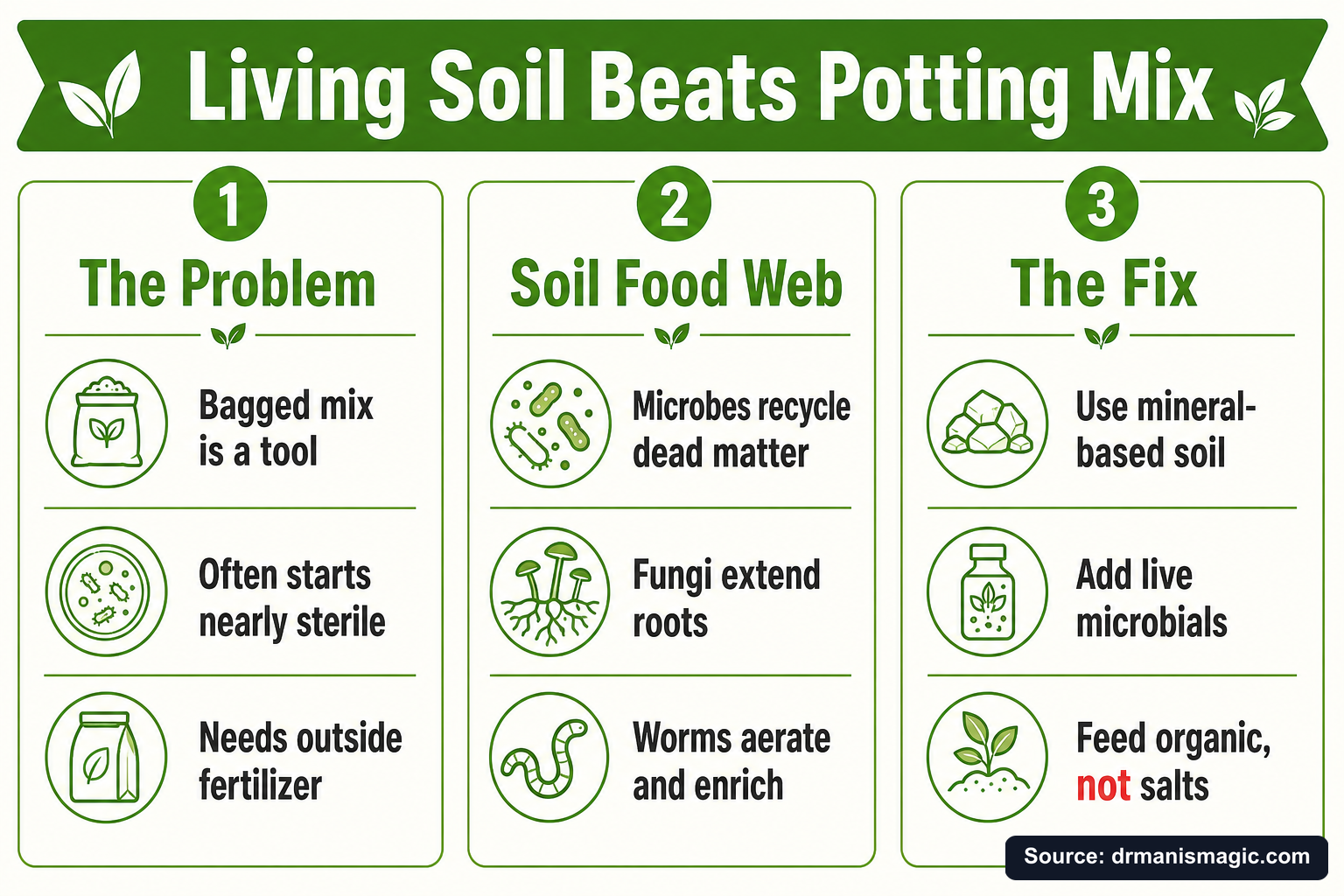
- Natural soil is a living ecosystem with trillions of microbes, fungi, and organisms cycling nutrients automatically.
- Potting mix is an engineered tool designed for containers — it trades ecosystem complexity for drainage, weight, and consistency.
- The soil food web (bacteria, fungi, protozoa, nematodes, worms) is how nature feeds plants for free, forever.
- Most potting mixes start sterile and stay that way — they cannot feed your plant without you adding fertilizer from a bag.
- Salt-based synthetic fertilizers kill the very microbes that make natural soil so powerful.
- The Three Plant Pillars — mineral-based soil, live microbials, and organic fertilizer — are the way to bring nature's system back to your garden or container.
- You can see fruit on a tree you plant this year. But only if you build the right foundation right now.
What Is the Soil Food Web and Why Does It Feed Plants for Free?
Quick Answer: The soil food web is a chain of living creatures — bacteria, fungi, protozoa, nematodes, earthworms, and more — that break down organic matter and release plant-available nutrients automatically. This is how wild plants get fed without anyone buying a bag of anything. It is nature's free, self-renewing fertility system.
Walk into that forest again. Pick up a handful of soil. It is dark. It smells like earth. It feels spongy and alive. That is not just dirt. That is a civilization.
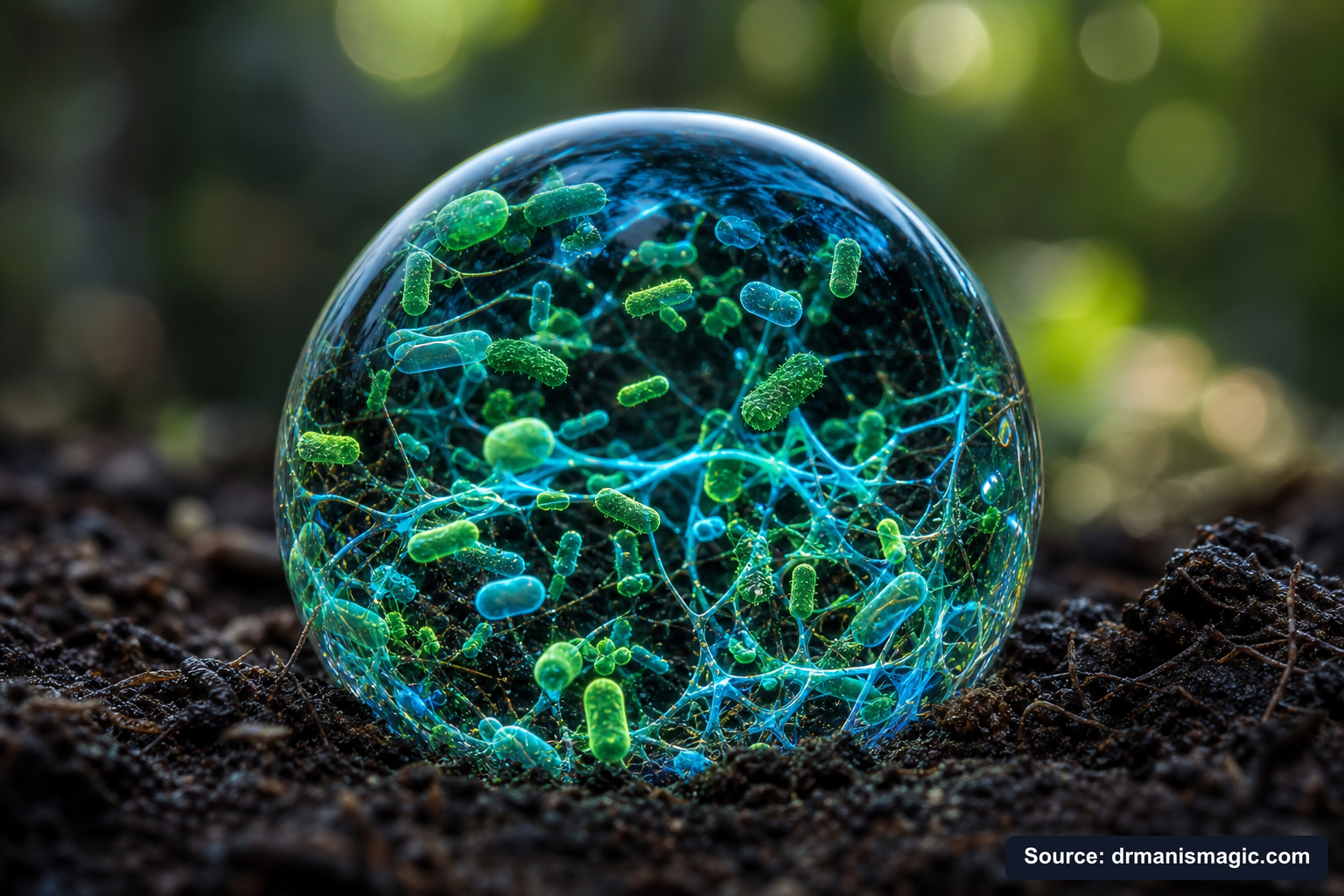
One teaspoon of healthy forest soil holds more living organisms than there are people on Earth. According to the USDA Natural Resources Conservation Service, a single gram of healthy soil can contain over one billion bacteria and hundreds of yards of fungal threads. One gram. The size of a paper clip.
These creatures are not just hanging around. They are working. Here is how the system runs:
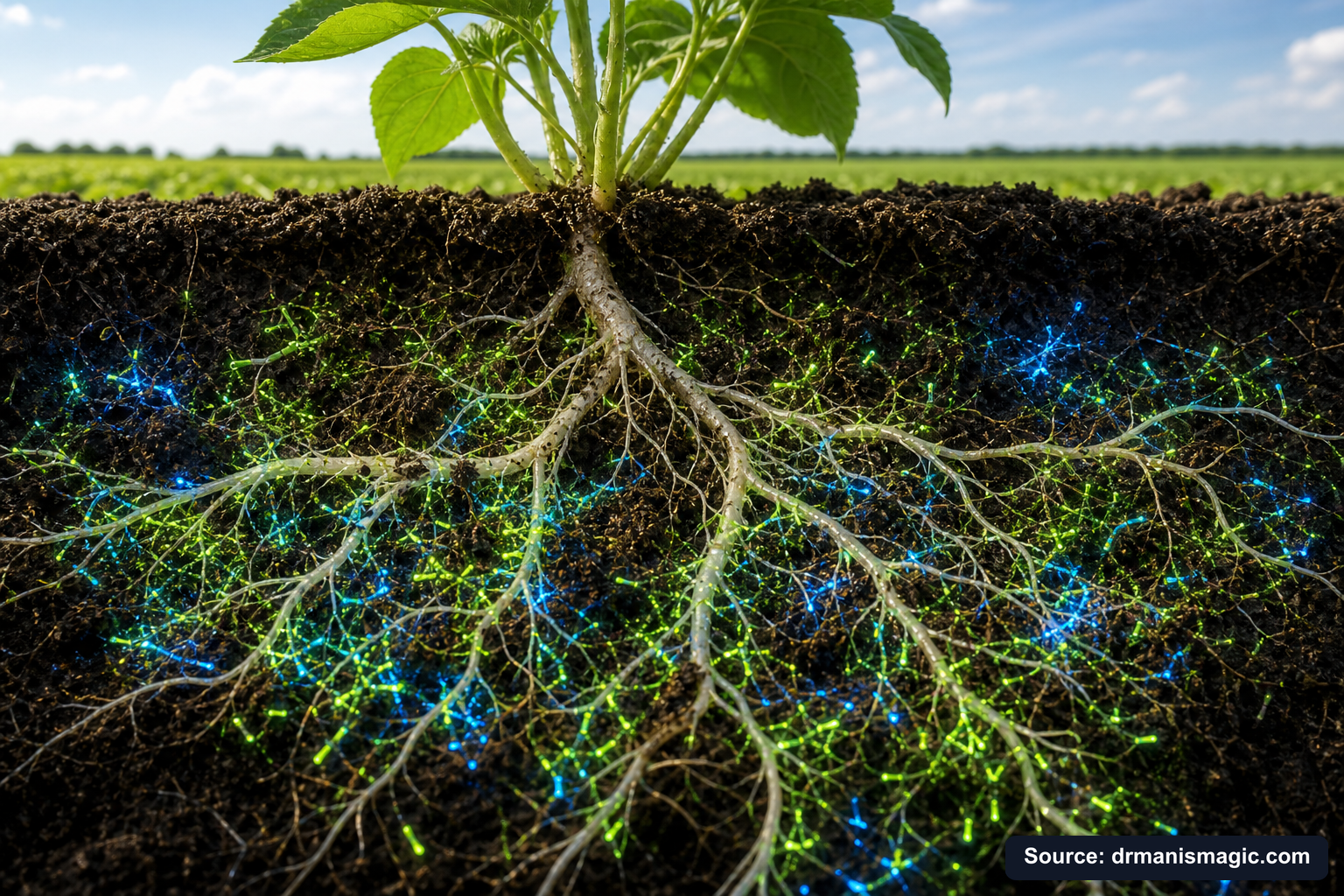
Dead leaves fall. Bacteria and fungi get to work breaking them down. Tiny animals called protozoa eat the bacteria. When protozoa eat bacteria, they release extra nitrogen — right next to plant roots, right when the plant needs it. Nematodes eat the protozoa. Earthworms eat everything and tunnel through the soil, creating air pockets and depositing rich castings. Mycorrhizal fungi weave into plant roots and extend out into the soil like a second root system, pulling in water and minerals the roots could never reach alone. The plant feeds the fungi sugar through its roots. The fungi feed the plant phosphorus, zinc, and water in return.
This is not a coincidence. This is a deal. A partnership built over hundreds of millions of years.
The University of Minnesota Extension describes this beautifully: soil biology drives soil health. When the biology is intact, the system feeds itself. When the biology is gone, you have to feed it yourself. Forever.
Nature never uses potting mix because nature already has something better. A living system that never runs out, never needs to be purchased, and never forgets to show up.
| Organism | What It Does | Benefit to Your Plant |
|---|---|---|
| Bacteria | Break down organic matter; fix nitrogen from the air; suppress pathogens | Releases nutrients; protects roots; improves soil structure |
| Mycorrhizal Fungi | Extend root network; trade minerals and water for plant sugars | Bigger effective root system; better drought resistance; more phosphorus |
| Protozoa | Eat bacteria; release nitrogen in plant-available form | Slow, steady nutrient delivery right at the root zone |
| Nematodes (beneficial) | Eat bacteria, fungi, protozoa; keep populations balanced | Prevents any one organism from taking over; cycles more nutrients |
| Earthworms | Shred organic matter; create channels; deposit castings | Better aeration; improved drainage; concentrated fertility |
| Arthropods | Shred leaves and wood into smaller pieces for bacteria and fungi | Speeds up decomposition; creates diverse habitat |
What Is Potting Mix Actually Made Of (And Why Was It Never Meant to Be an Ecosystem)?
Quick Answer: Potting mix is an engineered growing medium built for containers — typically made from peat or coir, bark, perlite, and vermiculite. It drains well and weighs little, but it starts with almost no living biology. It is a tool, not an ecosystem. It was never designed to feed your plant on its own.
Here is what most people do not know about that bag of potting mix on the shelf.
It was not designed to grow plants forever. It was designed to hold roots in place inside a container while you add water and fertilizer from the outside. That is it. That is the whole job description.
Open a fresh bag. Smell it. It smells like wood chips or peat. Maybe a little musty. It does not smell like forest floor. It does not smell alive. That is because it mostly is not.
Standard potting mixes are built from peat moss or coconut coir for moisture retention, bark or wood chips for structure, perlite (tiny white volcanic beads) for drainage, and sometimes a little starter fertilizer to get you going. They are light. They drain well. They resist soil-borne diseases because there is almost nothing alive in there to cause disease — or to help your plant, either.
And here is the part that really stings. That bark and wood chips? They break down. Slowly at first. Then faster. Within six to twelve months, a typical potting mix compacts. It gets dense. The little air pockets close up. Roots start to suffocate. Water sits in pools instead of draining. The mix that looked so fluffy and perfect in spring becomes a dense, airless slab by the following year.
We have grown over 250,000 trees at the US Citrus Nursery in South Texas. We know exactly what potting mix does over time. It collapses. And when it collapses, your roots do too.
See also: Why Most Potting Mix Collapses Within 6-12 Months
What Is the Difference Between Living Soil and Potting Mix?
Quick Answer: Living soil is a biological ecosystem that recycles nutrients, suppresses disease, builds structure, and feeds plants automatically through microbial activity. Potting mix is a lightweight, well-drained substrate for containers that needs outside inputs to function. One is alive. One is a tool. Both have a place — but only one can sustain a plant long-term without constant intervention.
Think of it this way.
A forest floor is like a city. Millions of residents. Everyone has a job. The city runs itself — infrastructure, food supply, waste management, security. You do not need to manage it. The system manages itself.
A bag of potting mix is like an empty room. Clean. Neat. Nothing in it. You can put furniture in it. You can pipe in water and food from outside. But left alone, nothing happens. Nothing grows. Nothing cycles. Nothing lives.
That is not a criticism of potting mix. It is just the truth about what it is and what it is not. When you understand that, you stop expecting it to do things it was never built to do.
| Feature | Living Natural Soil | Bagged Potting Mix |
|---|---|---|
| Microbial life | Billions of organisms per teaspoon | Minimal to none (starts near sterile) |
| Nutrient cycling | Self-renewing through decomposition and food web | Depends entirely on added fertilizer |
| Disease suppression | Biological competition and predation | Passive (low biology = fewer pathogens, but also no protection) |
| Structure over time | Improves as organisms build aggregates and channels | Degrades as bark and peat break down and compact |
| Drainage and aeration | Created by worm tunnels, fungal channels, and aggregates | Engineered with perlite and bark; declines over time |
| Mycorrhizal networks | Extensive natural networks connecting plants | Absent unless inoculated |
| Long-term viability | Self-sustaining indefinitely | Needs replacement every 1-2 years |
| Best use case | In-ground planting, garden beds, established orchards | Containers, seed starting, greenhouse propagation |
Why Do Synthetic Fertilizers Kill the Microbes That Make Natural Soil Work?
Quick Answer: Most synthetic fertilizers are salt-based. High salt concentrations dehydrate and kill beneficial bacteria and fungi in the soil. Every time you use a salt-based fertilizer, you are wiping out the invisible workforce that natural soil depends on — and making yourself more dependent on the next bag of fertilizer to keep your plant alive.
This is the part of the story that the big chemical companies do not want printed on the label.
When you pour a salt-based synthetic fertilizer on your soil, your plant gets a quick green-up. You feel good. It looks like it is working. But underneath the surface, something else is happening.
The salts in that fertilizer are pulling water away from the microscopic organisms in the soil. The bacteria dry out. The fungi retreat. The protozoa disappear. The mycorrhizal networks go quiet. The living city you were trying to build just got hit by a flood of salt.
Now your plant has no biological support. Its roots are alone. No microbes delivering nutrients. No fungi extending its reach. No bacteria suppressing disease. Just a plant, sitting in damaged soil, waiting for the next hit of synthetic fertilizer to keep it going.
You are not growing a plant anymore. You are maintaining a dependency.
We watched this happen on our own nursery land. We grew over 250,000 citrus trees in South Texas. We tried every input on the market. The trees that got salt-based fertilizers looked fine at first. Then they got weaker. Then they needed more fertilizer. Then they got sick. It was a cycle that kept the fertilizer companies very happy and kept our trees in trouble.
That is why Dr. Mani Skaria, Professor Emeritus of Plant Pathology and founder of the Clean Citrus Program in Texas, spent decades looking for a better way. And that is why the Three Plant Pillars exist.
See also: The Hidden Reason Synthetic Fertilizers Cause Root Rot
Why Is Most Potting Mix Missing the One Thing Plants Actually Need?
Quick Answer: Most potting mix is pasteurized or steam-treated to eliminate disease, which also eliminates beneficial microbes. The result is a sterile growing medium that cannot cycle nutrients, suppress pathogens, or support root health on its own. Without added biology, your plant is working alone in a dead substrate.
Here is something that will change how you look at every bag of potting mix you ever buy again.
That mix was sterilized before it got to you. On purpose. The manufacturers heat it to kill off any pathogens that might harm young seedlings. Smart move for a nursery operation. But here is what also dies in that heat: every beneficial bacterium, every mycorrhizal spore, every protozoa, every living thread of helpful fungi.
The mix arrives at your door cleaner than clean. Biologically empty.
You pot your plant. You water it. You wait. And for a while it grows — on whatever starter fertilizer was baked in. Then that runs out. And your plant is sitting in an airless, lifeless medium with nowhere to turn.
This is not a manufacturing flaw. It is just what potting mix is. The problem is that nobody tells you to add the biology back. Nobody at the big box store explains that your plant evolved over millions of years in partnership with trillions of microbes — and that without those microbes, it is operating at maybe ten percent of its potential.
After growing and testing on 250,000-plus trees at US Citrus Nursery, we learned this the hard way. When we added live, full-spectrum microbials back to sterile growing conditions, everything changed. Root systems doubled. Plants resisted disease better. Fruits set earlier and heavier. It was not magic. It was just biology restored.
You Never Had a Brown Thumb.
You were handed the wrong tools. This free guide hands you the right ones.
You watered it. You fed it. It died anyway.
It was never you. It was the dirt, the salt food, and the bad advice.
This guide shows you what really went wrong, and how to fix it for good.
- Why your plants really died, and why it was never your fault
- The salt hiding in your plant food that quietly burns the roots
- The hidden killer in almost every bag of store soil
- The tiny helpers that grow a whole forest for free
- The rescue trick that brings a half dead plant back to life

What Are the Three Plant Pillars and How Do They Rebuild What Potting Mix Removes?
Quick Answer: The Three Plant Pillars are the framework Dr. Mani Skaria developed after 40-plus years of plant science. Pillar 1 is mineral-based soil that does not compact or suffocate roots. Pillar 2 is live microbials that rebuild the soil food web. Pillar 3 is organic fertilizer that feeds both the plant and the microbes without salt damage. Together, they replicate what nature does automatically.
Dr. Mani did not invent these three things. Nature did. He just figured out how to give them back to you in a practical, usable form.
Pillar One: Mineral-Based Soil
Most potting mixes are primarily organic matter — bark, peat, wood chips. Organic matter is great in a living ecosystem where it gets broken down by microbes. In a container or a managed bed, it just breaks down. It compacts. It steals oxygen from your roots as it decomposes. It turns into sludge.
Super Soil is built on a mineral base — silica-rich sandy loam from the Rio Grande Valley in South Texas. Minerals do not decompose. They do not compact. They do not steal oxygen. They hold their structure for years. Roots breathe. Water drains. The foundation stays firm.
Pillar Two: Live Microbials
This is where most gardeners are missing the single biggest thing. The microbes. The invisible workforce that natural soil has and your container does not.
We will go deep on this in the next section. But the short version: without live bacteria, fungi, and mycorrhizae around your roots, your plant cannot access most of the nutrients in its soil, cannot suppress disease, and cannot build the root strength it needs to thrive.
Pillar Three: Organic Fertilizer
Organic fertilizer feeds the plant slowly and gently. No salt. No shock. No microbial massacre. Our Crab, Kelp and Amino Acids formula delivers nitrogen, phosphorus, and potassium in a slow-release form that works with the microbes, not against them. The microbes break it down. The plant absorbs it. The cycle runs.
When all three pillars are in place together, something remarkable happens. The plant stops struggling. It starts thriving. Not because you worked harder. Because the system underneath it finally works the way nature intended.
Why Do Most Bottled Microbe Products Fail to Work Like Real Soil Biology?
Quick Answer: Most bottled microbe products are either dried lab-grown powders with low viability, or liquid compost teas that have gone anaerobic and smell like sewage. Dead or dying microbes cannot rebuild a soil food web. The only microbe product that works is one with genuinely alive, full-spectrum biology — stabilized so the microbes stay active until they reach your plant's roots.
This is the part of the story that gets a little uncomfortable for the industry.
Walk down any garden center aisle and you will see bottles and packets with pictures of roots and words like "beneficial microbes" and "mycorrhizal inoculant." They look promising. Some of them cost a lot of money. And most of them do not work the way you hope.
Here is why.
Most commercial microbe products are made in giant vats — the same few contract manufacturers making the same dried bacterial powders for dozens of different labels. The microbes get dried into spores, packaged, shipped, and put on a shelf under fluorescent lights for weeks or months. By the time you pour them on your soil, you are hoping those dormant spores will wake up and get to work. In our testing across 250,000-plus trees, we found they mostly do not. Not at the level that moves the needle.
The second type is compost-based liquid products. These start with real biology. But here is the problem: once live microbes are put in a bottle and sealed up, they run out of oxygen. They go anaerobic. They start to die and ferment. You know this kind of product when you smell it. It smells like a sewer. That fizzing sound when you open the cap? That is fermentation gas. The microbes are not sleeping. They are dying.
There is a third category — lactobacillus-based products, like the bacteria in yogurt. These stay alive, all right. But they are so aggressive they crowd out the beneficial organisms you actually want. Lactobacillus belongs in your gut, not your garden soil.
| Product Type | How It Is Made | Viability at Use | Smell | Does It Work? |
|---|---|---|---|---|
| Dried/powdered lab microbes | Grown in vats, dried into spores, packaged | Low | Neutral | Rarely — spores struggle to reactivate |
| Dried microbes rehydrated in liquid | Same as above, suspended in water | Low | Neutral | Rarely — same problem as dry form |
| Fresh compost tea (under 24 hours, aerated) | Brewed from active compost | Moderate | Earthy | Yes — but requires time, equipment, and immediate use |
| Old compost tea (over 24 hours) | Same — but gone anaerobic | Very low | Strong stench | No — biology has collapsed |
| Lactobacillus-based liquid | Simple fermentation (rice water, etc.) | High | Sour | No — crowds out beneficial organisms |
| Plant Super Boost (stabilized full-spectrum) | Harvested from hand-crafted compost; stabilized by all-natural method | High | Earthy, not foul | Yes — 2,000+ bacteria, 400-500 fungi including mycorrhizae, plus protozoa and nematodes; visibly alive under microscope |
The story behind Plant Super Boost is worth telling. Dr. Mani did not figure out the stabilization method himself. He met a world-renowned compost expert — a man who had advised royal families and governments on farming practices — who had been quietly blacklisted by big chemical companies after citrus groves started thriving without their products. This man actually feared for his life at one point and stopped his work. Years later, through what Dr. Mani describes as a providential meeting, they joined forces at US Citrus Nursery.
The result is a product that keeps a full spectrum of compost-harvested microbes alive and active — not dried, not going anaerobic, not smelling like sewage — all the way to your plant's roots. You can take a drop of Plant Super Boost and look at it under a microscope. You will see the microbes moving. That is not marketing. That is biology you can see with your own eyes.
And because it is stabilized properly, it does not smell bad. Put your nose near an open bottle. It smells like earth. Like the forest floor we started with. That is what alive smells like.
When Should You Actually Use Potting Mix (And When Should You Use Something Better)?
Quick Answer: Potting mix is the right tool for containers, seed starting, and situations where drainage, low weight, and disease control matter more than long-term ecology. But it should be treated as a starting point, not a complete solution. Adding live microbials and organic fertilizer bridges the gap between engineered substrate and living soil — giving you the best of both worlds.
Let us be fair here. Potting mix is not the enemy.
If you are starting seeds, you want a sterile, lightweight medium. Potting mix is perfect. If you are growing on a balcony or a rooftop, you cannot use heavy field soil. Potting mix makes sense. If you are shipping trees from a nursery and need consistent, lightweight, disease-free media, potting mix does its job well.
The problem is not potting mix itself. The problem is thinking potting mix is a long-term growing solution — when it is actually a short-term holding substrate.
Here is the distinction that matters:
Potting mix handles the physical environment. It gives roots something to hold onto, lets water move through, and keeps the medium light enough to lift. What it cannot do is feed your plant biologically, suppress disease over time, or sustain itself without your constant intervention.
The good news? You can give it what it is missing. When you add live microbials, you give even a sterile container mix the biological backbone it was born without. When you use organic fertilizer instead of salt-based synthetics, you feed the biology you just added instead of killing it. When you use a mineral-based soil like Super Soil instead of bark-heavy mixes, your structure holds up for years instead of months.
That is the Three Plant Pillars applied to container growing. Not a replacement for potting mix. An upgrade of everything potting mix cannot do on its own.
What Can You Do Right Now to Bring Your Soil Back to Life?
Quick Answer: You can start restoring soil biology today with a few targeted steps: stop adding salt-based fertilizers, add live full-spectrum microbials, switch to organic slow-release fertilizer, improve your soil structure, and mulch your surface. Each step removes a barrier that was keeping your soil from functioning the way nature designed it to.
Here is the honest truth about time.
You can always earn more money. You cannot earn more time. Every season you spend growing plants the old way — salt fertilizers, sterile potting mix, no biology — is a season of results you will never get back. We hear from people every week who say the same thing: they just want to see fruit on a tree they planted with their own hands. Not someday. In their lifetime. While they can still walk out to the backyard and pick it.
That is not a small wish. That is something primal. Something that connects you to the land and to the cycle of life that humans were made to participate in. And it is absolutely achievable — when the foundation is right.
Here is your recovery checklist. Use it whether you have a pot on a balcony, a raised bed, a backyard orchard, or an acre of lawn.
- Stop the salt. Put down whatever synthetic, salt-based fertilizer you have been using. Even for a month. Give your soil a break. The microbes that are left need a chance to recover.
- Leach accumulated salts. Water deeply and let it drain completely. Do this two or three times over a week. You are flushing out the salt crust that has built up in your soil.
- Check your soil structure. Is it compacted? Dense? Does water pool instead of drain? If so, your organic-matter-heavy potting mix has broken down. Consider repotting into a mineral-based mix that holds its structure permanently.
- Add live microbials. This is the most important step. Mix two ounces of Plant Super Boost into a gallon of water and drench your soil. Do this monthly. You are restocking the invisible workforce your plant has been missing. Every monthly application re-introduces 2,000-plus species of bacteria and 400-500 species of fungi including mycorrhizae — plus protozoa and nematodes.
- Feed with organic fertilizer. Use a slow-release organic formula — crab, kelp, and amino acids work beautifully. It delivers nutrients gently, feeds the microbes you just added, and does not burn or disrupt. Zero synthetic salts. Zero biosludge. Zero PFAS.
- Mulch the surface. A layer of organic mulch on top of your soil keeps moisture in, moderates temperature, and feeds surface organisms as it slowly breaks down. Think of it as feeding the top of the food web while your microbials work on the bottom.
- Be patient and consistent. Biology does not bounce back overnight. Your soil has been managed by chemicals for years — possibly decades. Give it three to four monthly cycles of live microbials and organic feeding. You will see the change in how your plants look, feel, and produce.
One more thing worth knowing. Most of the damage done to soil biology comes from products that were sold to you as solutions. The salt fertilizers. The synthetic fungicides. The broad-spectrum pesticides. These were not bad purchases because you made a bad decision. They were bad purchases because the companies selling them profit when your plants stay weak. When you keep coming back to buy more. When the cycle never ends.
We built the Three Plant Pillars because we were tired of that cycle on our own nursery land. We needed something that actually worked — not something that created dependency. And after 250,000-plus trees, multiple lab analyses, and more growing seasons than we can count, we know what works.
See also: Why Most Fertilizers Are Actually Salt in Disguise
What Does a Truly Healthy Plant Root Zone Look, Smell, and Feel Like?
Quick Answer: A healthy root zone smells earthy and alive — like a forest floor after rain. The soil feels loose and spongy, not compacted or soggy. Roots are white or cream-colored, firm, and branching. You may see white fuzzy threads around roots — that is mycorrhizal fungi doing exactly what it should. This is what you are working toward.
Close your eyes for a second and imagine it.
You tip a pot gently. The roots slide out cleanly — a white network of branching threads, dense and healthy. Wrapped around the root ball, you can see faint white fuzz. That is mycorrhizae. That is your plant's second root system. That is the partnership that wild plants have always had — and that you just gave back to your tree in a container.
You put your nose near the soil. It smells like morning in the woods. That deep, rich, earthy smell that gardeners chase their whole lives. That smell is alive. It is the smell of billions of bacteria working. It is the smell of fungi threading through mineral particles. It is the smell of a system that is running the way nature built it to run.
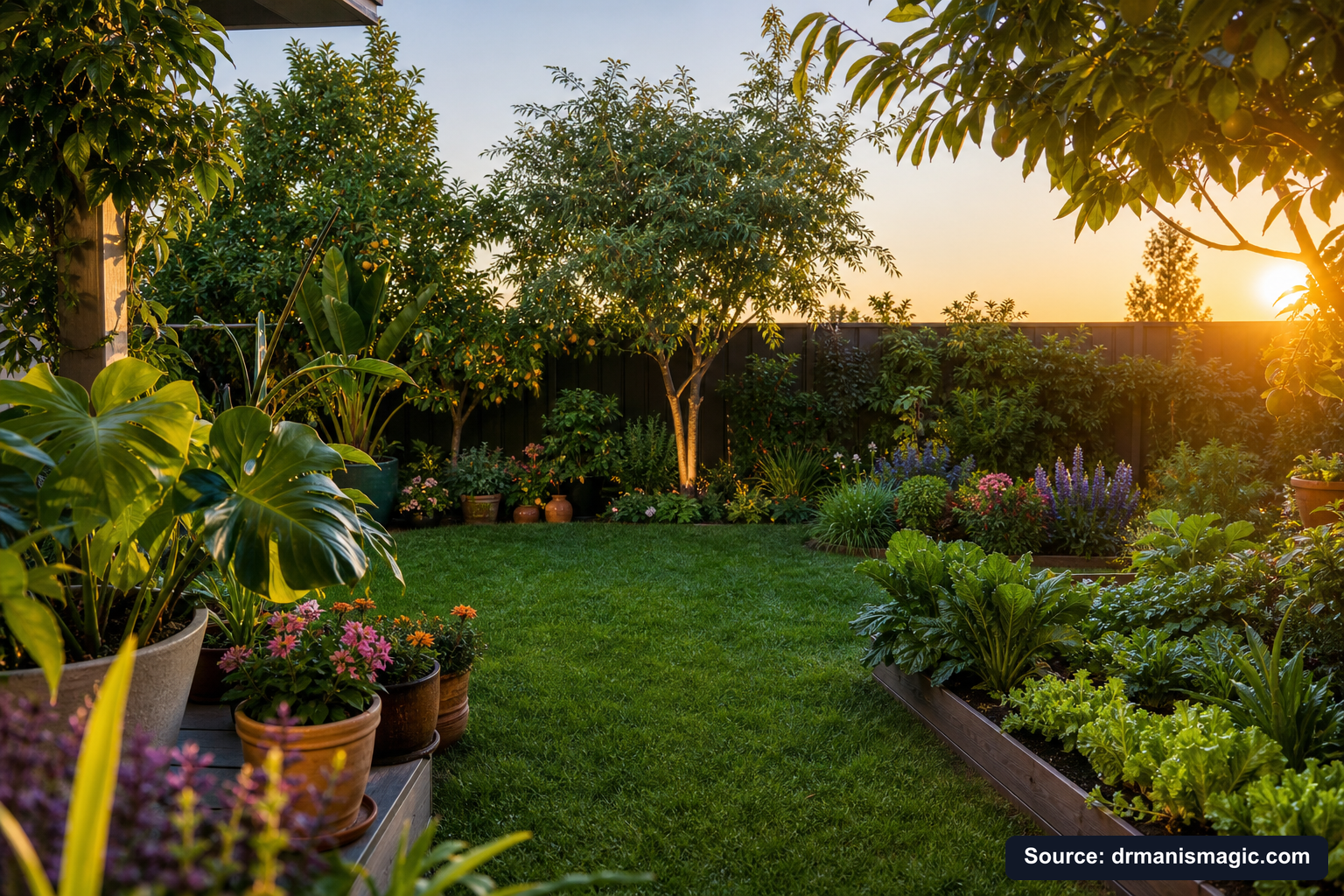
Now imagine walking out to your backyard six months from now. There is fruit on a branch that you planted. Real fruit. Fruit you can pick and eat. Fruit that grew because you stopped fighting nature and started working with it.
That is not a fantasy. That is what happens when the Three Plant Pillars are in place. We have seen it on 250,000-plus trees. We have seen it in pots and in the ground, in Texas heat and in cooler climates, in citrus and tropicals and houseplants and garden beds. The biology works every time — when it is actually alive.
You can learn everything about the Three Plant Pillars and get the complete growing system in our Free Plant Care Field Guide. It covers everything from soil setup to monthly microbe application to fertilizer timing — all in plain language, no guesswork.
And if you want to take the first step right now, start with the microbials. Start with the biology. Because once the invisible workforce is in place, everything else in your garden gets easier. Faster. More alive.
Nature never uses potting mix. But nature always uses microbes. And now, so can you.
Frequently Asked Questions
Most gardeners have used bagged potting mix and wondered why their plants still look tired. These are the questions we hear most often. The answers might surprise you, and they will change the way you think about soil forever.
Do I really need potting mix for my container plants?
You need something in that pot, but standard bagged potting mix is not your best option. Most potting mixes are made from pine bark and peat that break down fast, compact into a soggy mess, and choke roots. Dr. Mani's Magic Super Soil uses mineral-based sandy loam from the Rio Grande Valley. It does not decompose. It drains perfectly. Roots breathe. That is Pillar One of the Three Plant Pillars, and it is the foundation everything else is built on. We proved it across 250,000-plus citrus trees before we ever sold a single bag.
What is the difference between potting mix and potting soil?
Standard potting mix is soilless and lightweight, made for containers. Standard potting soil has actual dirt in it and works better in raised beds or in-ground gardens. But here is what nobody tells you: both options are missing the living biology that makes wild soil so powerful. Dr. Mani's Super Soil is mineral-based, not organic sawdust, and it stays loose and airy permanently. Add Plant Super Boost for live microbes and you have something neither potting mix nor potting soil can come close to matching.
Why does regular soil get so compacted in pots?
Regular soil is designed for the ground, where worms and weather keep it loose. Stick it in a pot and it packs tight fast. Roots run out of oxygen. Water sits and rots. This is exactly why Dr. Mani built Super Soil around silica-rich mineral sandy loam that does not break down. It stays open and fluffy. Roots push deep and breathe freely. No compaction. No suffocation. Your plant gets the air it needs to actually grow instead of just survive.
Why does potting mix attract bugs and gnats?
Most potting mixes are loaded with decomposing organic matter like peat, bark, and compost. That wet, rotting material is a buffet for fungus gnats and other pests. Dr. Mani's Super Soil is steam-sterilized mineral soil. There is very little decomposing organic matter for bugs to feed on. Better drainage also means the top layer dries out faster, which breaks the gnat breeding cycle. Fewer bugs, healthier roots, and no more swatting gnats away from your indoor plants.
Why is the biology in soil so important for plant growth?
One teaspoon of healthy forest soil holds more living organisms than there are people on Earth. Those organisms, bacteria, fungi, protozoa, and mycorrhizae, feed your plants for free. Most potting mixes start sterile and stay that way. Without biology, you have to hand-feed your plant forever with synthetic fertilizers that burn the soil and kill any microbes trying to move in. Dr. Mani's Plant Super Boost puts live bacteria, fungi, and mycorrhizae right into your soil. That is Pillar Two. It is the muscle that makes everything else work.
Can I reuse potting mix from last year?
You can, but old potting mix has usually broken down, compacted, and lost whatever biology it started with. If you refresh it, pull out old roots, loosen it up, and add fresh amendments. A better long-term move is starting with Dr. Mani's Super Soil, which does not break down the way organic mixes do. You do not need to replace it every season. Add Plant Super Boost to restore the living biology and Crab, Kelp, and Amino Acids fertilizer for slow-release feeding. That is the Three Plant Pillars working together, season after season.
What happens if I keep using synthetic fertilizer instead of going organic?
Synthetic fertilizers are salt-based. They give your plant a quick jolt but burn the soil and wipe out beneficial microbes with every application. Over time your soil goes dead. You have to use more and more fertilizer just to get the same results. Months pass. Then a year. Then two. Your plant stalls and starts going backward. You lose money, but worse, you lose time you cannot get back. Dr. Mani's Crab, Kelp, and Amino Acids fertilizer feeds slowly and naturally, builds soil health instead of destroying it, and works with your microbes instead of killing them. That is Pillar Three, and it is the difference between a plant that thrives for decades and one that slowly gives up.
About the Author
Dr. Mani Skaria, PhD
Dr. Mani Skaria, PhD, is a plant pathologist and the scientific founder of Dr. Mani's Magic. He earned his doctorate at Purdue University and spent 48 years studying how plants, soil, and living microbes work together, including his years as Professor Emeritus at Texas A&M and as a member of the USDA NAREEE Advisory Board. He invented micro-budding, a method for growing healthier, stronger trees, and has grown more than 250,000 trees on the family farm in Hargill, Texas - US Citrus Nursery. His life's work takes real lab science and practical experience and turns it into simple, safe, organic plant care anyone can use at home.


