


Why Heirloom Plants Depend on Living Soil to Thrive | Dr. Mani's Magic
Why Heirloom Plants Depend on Living Soil (And Why Most Gardens Are Working Against Them)
Picture this. You're kneeling in your garden on a warm Saturday morning. The soil smells rich and dark. You've got a packet of heirloom tomato seeds in your hand — the kind your grandmother grew, the kind that burst with flavor you can't find in any grocery store. You've done everything "right." Good fertilizer. Fresh bagged potting mix. Plenty of sun and water.
But by midsummer, something is off. The leaves are pale. The fruit is small. The plant looks tired. You start Googling. You try another fertilizer. You add more water. Nothing works. Meanwhile, your neighbor's scraggly old heirloom tomato — planted in a beat-up raised bed with nothing but old garden soil — is dripping with fruit so heavy the cages are bending.
What does your neighbor know that you don't? Here's the secret nobody at the garden center will tell you: your heirloom plant doesn't just need soil. It needs living soil. There's a whole invisible world under your feet — billions of bacteria, fungi, protozoa, and nematodes working together — and when that world goes quiet, your heirloom plants go quiet right along with it. This is the story of why that happens, and exactly what you can do about it.

Plant Super Boost
Key Takeaways
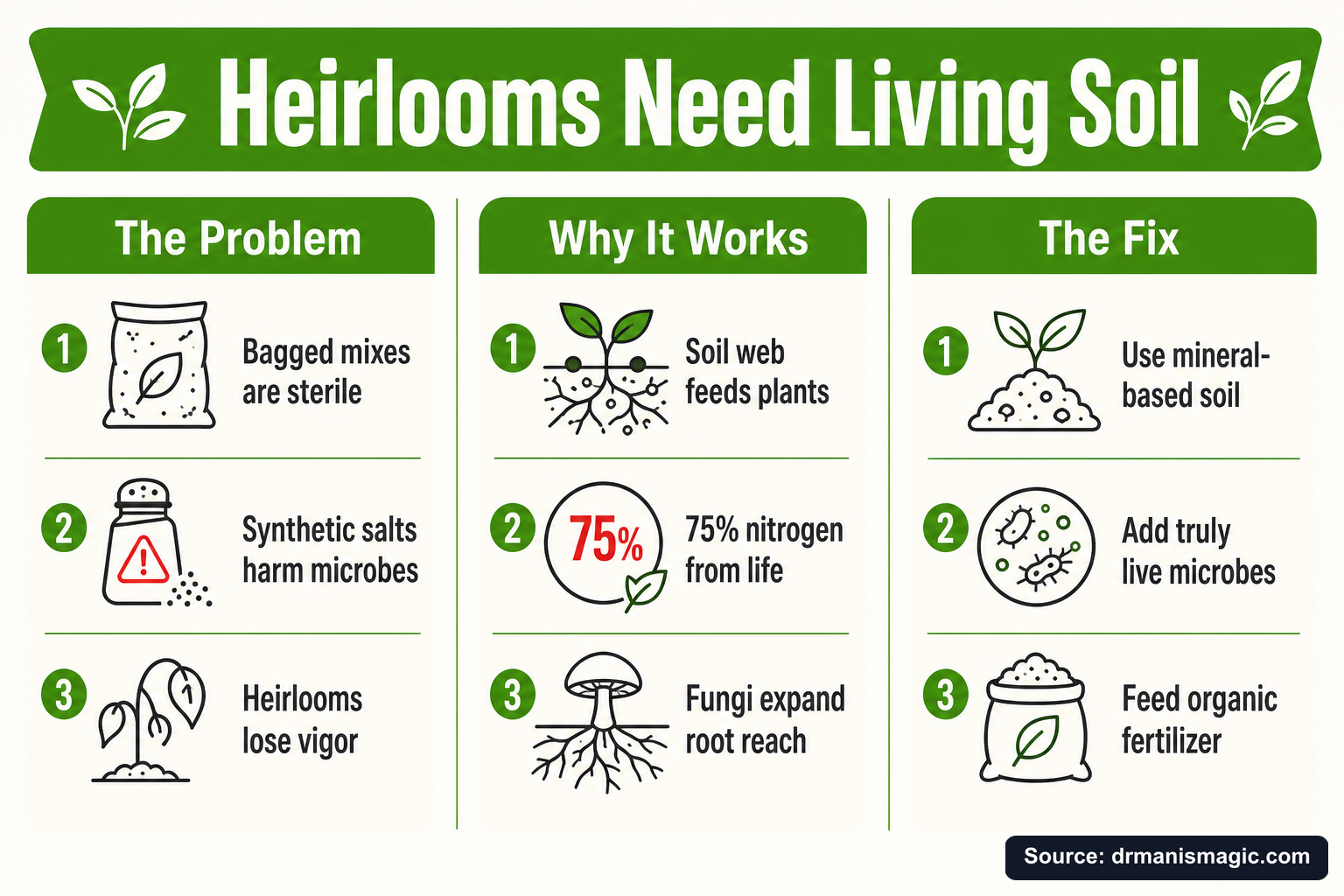
- Heirloom plants evolved over centuries with living soil as their partner — not sterile bagged mixes or salt-based fertilizers.
- The soil food web supplies roughly 75% of plant-available nitrogen and 65% of available phosphorus through biological processes, not chemical inputs.
- Sterile potting mix, synthetic fertilizers, pesticides, and herbicides all damage or destroy the microbial life heirloom plants depend on.
- Bacteria, fungi, protozoa, nematodes, and earthworms each play a specific job in feeding and protecting your plants — losing any one of them weakens the whole system.
- Dried or foul-smelling microbial products are often dead before they reach your plants; genuinely live microbes are what move the needle.
- Depleted or chemically disrupted soil can be rebuilt — but it takes the right steps in the right order.
- The Three Plant Pillars — mineral-based soil, live microbials, and organic fertilizer — are the foundation that lets heirloom plants express their full genetic potential.
What Is Living Soil and Why Does It Matter for Heirloom Plants?
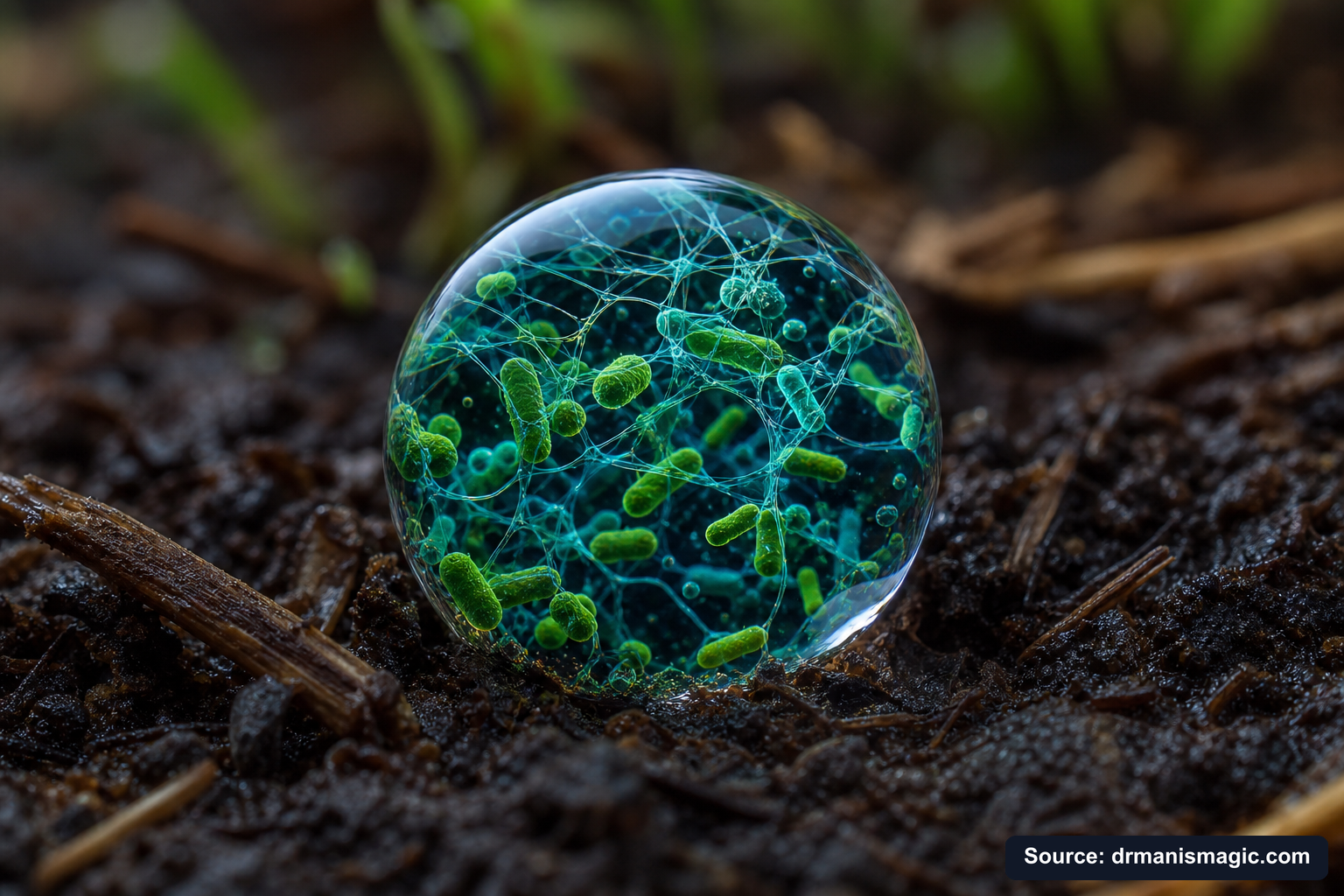
Quick Answer: Living soil is soil that contains a thriving community of bacteria, fungi, protozoa, nematodes, earthworms, and other organisms that cycle nutrients, suppress disease, and build structure. Heirloom plants evolved alongside these organisms for thousands of years, so without them, even well-fed plants struggle to reach their potential.
Living soil is not just dirt with some fertilizer mixed in. It is a full ecosystem — almost like a tiny rainforest under your feet. Every tablespoon of healthy garden soil can contain over a billion bacteria and several feet of fungal threads. These organisms are not just passengers. They are workers.
Heirloom plants are special because they carry the genetic memory of hundreds of growing seasons. Open-pollinated seeds, saved year after year, adapted to local soils, local climates, local microbes. That's the part most seed catalogs forget to mention. The flavor, the vigor, the disease resistance — those traits did not develop in a vacuum. They developed in partnership with the living soil around them.
When you plant an heirloom tomato or an heirloom pepper into sterile bagged potting mix, you are handing that plant a beautiful seed with no microbial partners. It's like sending a gifted musician on stage with no band. The talent is there. But the music doesn't quite happen.
The University of Minnesota Extension reports that biological processes in living soil supply approximately 75% of plant-available nitrogen and 65% of available phosphorus. Think about that. Most of what your heirloom plant needs to thrive does not come from a fertilizer bag. It comes from the invisible workforce in your soil.
What Is the Soil Food Web and What Does Each Organism Actually Do?
Quick Answer: The soil food web is the community of organisms — bacteria, fungi, protozoa, nematodes, earthworms, and arthropods — that work together to cycle nutrients, build soil structure, and suppress plant disease. Each one has a specific job, and together they create a self-sustaining system that feeds and protects your heirloom plants naturally.
Think of the soil food web like a company with different departments. Each department has a job. When all departments are working, the whole business runs smoothly. When one shuts down, the others start falling behind.
Here is what each member of that invisible team does for your heirloom plants:
| Soil Organism | Job Title | What It Does for Your Heirloom Plants |
|---|---|---|
| Bacteria | Rapid Recyclers | Break down organic matter fast, release nitrogen and phosphorus into plant-available forms, crowd out harmful pathogens, some fix nitrogen directly from the air |
| Mycorrhizal Fungi | Miners and Architects | Extend root reach up to 100x, mine phosphorus and water from deep in the soil, build soil aggregates with a sticky protein called glomalin, protect roots from rot and drought |
| Protozoa | Nitrogen Releasers | Eat bacteria and release the nitrogen stored inside — this is one of the biggest moments of nutrient cycling in the whole food web |
| Beneficial Nematodes | Population Regulators | Keep bacterial and fungal populations balanced, prey on harmful organisms, help regulate disease pressure in the rhizosphere |
| Earthworms | Soil Engineers | Till and aerate soil with their tunnels, produce castings rich in available nutrients, drag organic matter deeper into the profile |
| Arthropods | Shredders | Break large organic debris into smaller pieces that bacteria and fungi can process faster |
| Roots | Sugar Brokers | Release sugars (exudates) into the soil to feed and attract beneficial microbes, creating a thriving zone called the rhizosphere |
Every time you water your heirloom tomato or pepper or citrus tree, those roots are quietly pumping sugars into the soil. They are feeding the microbes on purpose. In return, those microbes unlock nutrients, fight off disease, and build the spongy, aerated structure that lets roots breathe. This is a deal that evolved over millions of years. It works brilliantly — when the microbes are actually there.
After growing over 250,000 trees at our South Texas nursery, we can tell you with confidence: the plants that thrive are always the ones with a living root zone. The ones that struggle almost always have dead or disrupted biology underneath.
Why Do Heirloom Plants Fail in Sterile Potting Mix Even With Fertilizer?
Quick Answer: Sterile bagged potting mix contains no living microbes. Without bacteria and fungi in the root zone, heirloom plants cannot unlock nutrients efficiently, cannot suppress disease, and cannot build the root structure they need. Adding fertilizer helps short-term but does not replace the biological partnerships the plant evolved to depend on.
Here is the part that catches most gardeners off guard. You buy a bag of potting mix. The label says "premium." It smells earthy. It looks dark and fluffy. But it is biologically empty.
Most bagged mixes are steam-sterilized to kill weed seeds and pathogens. That sounds good. The problem is it kills everything — the beneficial bacteria, the mycorrhizal fungi, the protozoa, all of it. You are planting your heirloom seed into a biological desert.
Now add a salt-based synthetic fertilizer on top of that. Salts pull water away from root cells through osmotic pressure. They also kill or suppress the few microbes that might have survived or drifted in from the air. You're not feeding your plant. You're feeding it a jolt of chemicals in a soil that has no life to process and deliver those nutrients properly.
The plant might green up fast. That's the illusion. But the roots are not building the deep, branching network they need. The flavor compounds in heirloom tomatoes — those complex sugars, acids, and volatile aromatics — depend on a full spectrum of mineral nutrition that only living soil can deliver in the right balance and timing. Synthetic fertilizer gives you N, P, and K. Living soil gives you 60-plus trace elements, plant hormones, enzymes, and a disease-suppression system all at once.
That's why your heirloom looks fine in May and exhausted by July. The sterile mix runs out of tricks. And when a pathogen shows up — Fusarium, Pythium, root rot — there is nothing in the soil to fight back.
See also: The Hidden Reason Synthetic Fertilizers Cause Root Rot
Living Soil vs. Sterile Potting Mix: An Honest Comparison
Quick Answer: Living soil actively feeds, protects, and supports plant roots through billions of microorganisms. Sterile potting mix provides physical structure but no biological activity — it degrades over time, collapses into a root-choking sludge, and leaves plants vulnerable to disease and nutrient lockup.
Let's put them side by side so you can see exactly what you're working with.
| Factor | Living Soil | Sterile Potting Mix |
|---|---|---|
| Microbial life | Billions of bacteria, fungi, protozoa, nematodes | Near zero — sterilized before packaging |
| Nutrient cycling | Continuous — microbes release nutrients as plants need them | None — depends entirely on added fertilizer |
| Disease suppression | Strong — beneficial microbes crowd out pathogens | None — sterile soil is actually easy for pathogens to colonize |
| Soil structure over time | Improves — fungi build aggregates, earthworms aerate | Degrades — bark and organic matter break down into sludge |
| Water retention | Balanced — glomalin and organic matter hold moisture without waterlogging | Unpredictable — either too dry or too wet as structure collapses |
| Root development | Deep and branching — fungi extend root reach dramatically | Shallow and restricted — no fungal partners to extend the network |
| Flavor and nutrient density | High — full mineral spectrum delivered through biological cycling | Lower — limited to what fertilizer provides |
| Long-term cost | Lower — soil improves and self-sustains over time | Higher — must replace degraded mix every 6-12 months |
The comparison is not even close. Sterile mix is a short-term convenience that becomes a long-term problem. Living soil is the environment heirloom plants actually evolved in. One of the most important things we learned growing trees in South Texas is that you cannot fake biology. You can only restore it or destroy it.
See also: Why Most Fertilizers Are Actually Salt in Disguise
What Damages Living Soil and Quietly Kills Heirloom Plant Performance?
Quick Answer: Synthetic herbicides, salt-based fertilizers, broad-spectrum pesticides, and fungicides all damage or destroy beneficial soil microbes. Over time, this leaves heirloom plants without their natural support system — making them weaker, more disease-prone, and less flavorful even when nutrient levels appear adequate.
This is the part most gardeners never hear. Because the companies that sell these products don't profit when your soil is healthy and self-sustaining. They profit when your plants struggle and you keep buying more.
Here is what quietly destroys the living soil your heirloom plants depend on:
- Salt-based synthetic fertilizers: The salts pull water away from microbial cells the same way they pull water from roots. Beneficial bacteria and fungi die or go dormant. The short-term green-up hides the long-term damage.
- Herbicides (especially glyphosate): Research from UC Cooperative Extension and multiple university sources shows that glyphosate disrupts microbial community diversity in the soil, reducing populations of beneficial bacteria and mycorrhizal fungi.
- Broad-spectrum pesticides: Many kill beneficial insects and soil arthropods, breaking the shredder layer of the food web and slowing decomposition and nutrient cycling.
- Synthetic fungicides: Designed to kill fungi, they often cannot tell the difference between the pathogenic fungus on your leaves and the mycorrhizal fungus in your roots. Both get wiped out.
- Compaction and tillage: Rototilling breaks up the long fungal hyphal networks that took months to build. Compaction cuts off the oxygen that aerobic microbes need to survive.
- Salt buildup in containers: In pots and raised beds, salts accumulate over time with no rain to flush them. This creates a hostile environment for microbes and roots alike.
The tragic irony is this: the more aggressively you try to "fix" a struggling heirloom plant with conventional products, the more you damage the biological foundation it needs to recover. You're not solving the problem. You're deepening it.
How Do You Know If Your Soil Is Biologically Dead or Damaged?
Quick Answer: Signs of biologically damaged soil include compaction, poor drainage, persistent disease problems, plants that look healthy but never thrive, yellowing despite fertilizer, and soil that dries out fast then stays soggy. If your heirloom plants are struggling despite adequate water and fertilizer, the problem is almost always below the surface.
Your soil is telling you something. You just need to know how to listen.
Pick up a handful of soil from your garden bed or container. Does it crumble easily into small, moist aggregates? That's a good sign. Does it come out in one dense, wet clump? Or does it crack and fall apart like dry sand? Both are warning signs of compromised biology.
Now smell it. Truly healthy living soil smells like rain on a summer morning — that deep, earthy scent is caused by a compound called geosmin, produced by actinobacteria. If your soil smells sour, rotten, like sulfur, or like a chemical plant, the microbial community is in trouble.
Other signs your heirloom plants are growing in dead or damaged soil:
- Yellowing leaves that don't respond to fertilizer (nutrients are present but locked up)
- Root rot even without overwatering
- The same disease problem returning every season despite treatment
- Heirloom tomatoes, peppers, or herbs that taste flat — none of that complex, layered flavor you remember
- No earthworms when you dig
- Water that pools on the surface instead of soaking in
- Weeds that grow fine but your intentional plants struggle
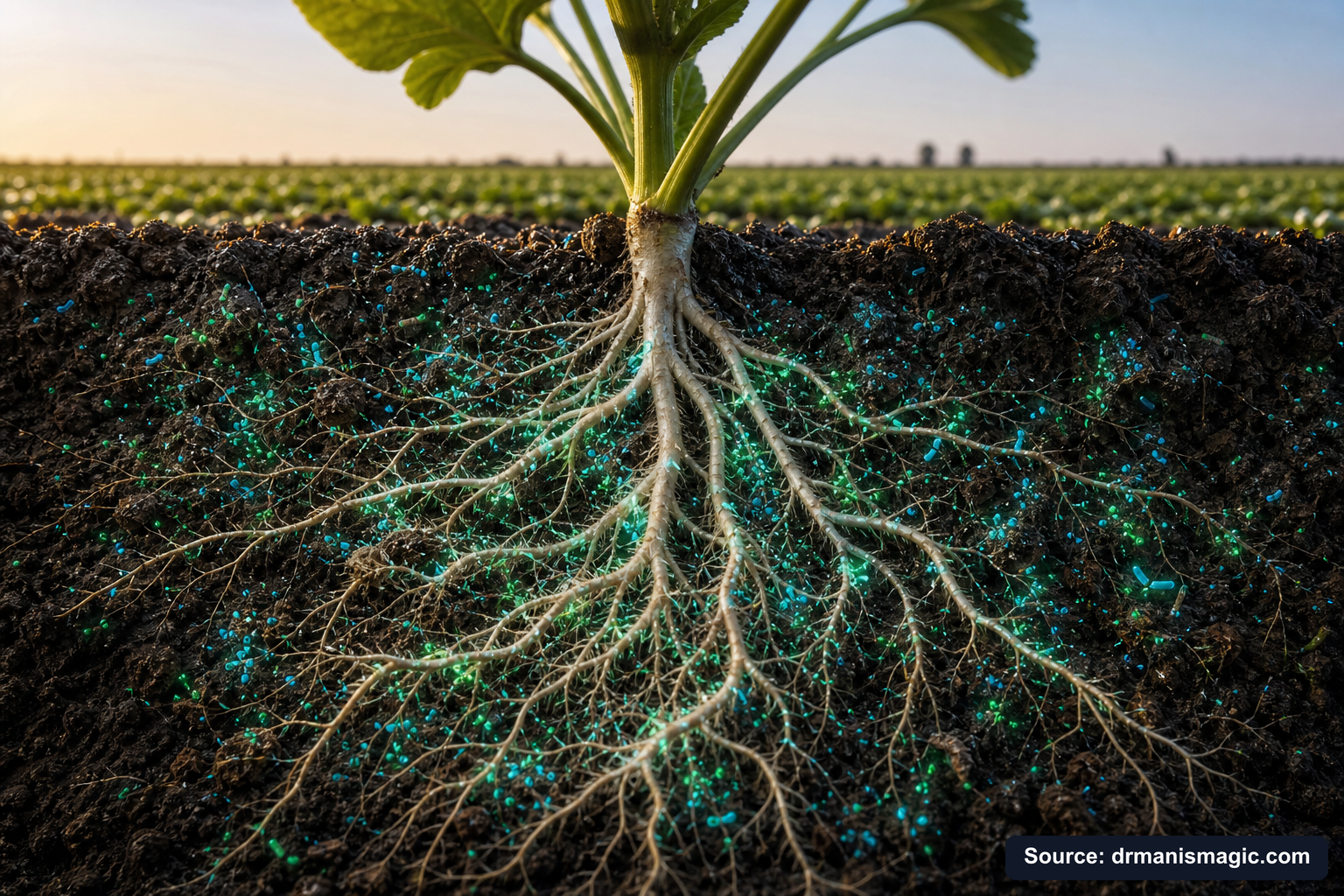
That last one is worth pausing on. Weeds are nature's colonizers. They push their roots down and release exudates that attract whatever microbes are left in the soil. Pull a weed and look at the roots. See white fuzzy threads? Those are mycorrhizal fungi — the same organisms your heirloom plants desperately need. The weeds are thriving on them. Your heirloom plants are not, because they were planted in sterile mix with no microbial inoculant.
You Never Had a Brown Thumb.
You were handed the wrong tools. This free guide hands you the right ones.
You watered it. You fed it. It died anyway.
It was never you. It was the dirt, the salt food, and the bad advice.
This guide shows you what really went wrong, and how to fix it for good.
- Why your plants really died, and why it was never your fault
- The salt hiding in your plant food that quietly burns the roots
- The hidden killer in almost every bag of store soil
- The tiny helpers that grow a whole forest for free
- The rescue trick that brings a half dead plant back to life

Why Are Most Microbial Products on the Market Basically Useless?
Quick Answer: Most commercial microbial products use dried, powdered, or lab-grown microbes that have very low survival rates in real soil. Others are liquid compost teas that go anaerobic and die before they reach you. Neither delivers the broad-spectrum, genuinely living microbial community that heirloom plants need. The smell test is your first clue — if it stinks, the microbes are dying.
Walk down the garden aisle of any big box store and you'll see a shelf full of microbial products. Bags of mycorrhizal powder. Bottles of "beneficial bacteria." Some of it costs real money. Almost none of it works the way the label implies.
Here's why.
Most of these products are made in large industrial factories. Bacteria and fungi are grown in giant vats, then dried into powder. The hope is that the dormant spores will "wake up" when you add water and pour them on your soil. The reality? After growing over 250,000 trees and testing dozens of these products at US Citrus Nursery, we saw almost no measurable improvement from dried powder products. The organisms just don't reactivate reliably under real garden conditions.
The other common type is liquid compost tea — microbes harvested from compost or earthworm castings and bottled in water. When it's fresh, this can be genuinely powerful. But here's the problem: by the time it ships from a warehouse to your door, those microbes have often gone anaerobic. The oxygen runs out. The beneficial microbes die. Harmful fermentation takes over. You can identify these products immediately — they fizz when you open the bottle and they smell like something went wrong in a drain. That's not a sign of potency. That's a sign of microbial death.
| Product Type | Microbe Viability When Used | Spectrum of Organisms | Odor | Real-World Results |
|---|---|---|---|---|
| Dried powder (lab-grown) | Very low | Narrow — usually 1-5 species | Neutral | Minimal to none in our trials |
| Dried powder rehydrated in liquid | Very low | Narrow | Neutral | Minimal to none |
| Compost tea (fresh, under 24 hours) | Moderate — good when aerated | Broad but inconsistent | Earthy | Good, but time-sensitive and labor intensive |
| Compost tea (old, over 24 hours) | Very low — anaerobic die-off | Partial | Strong stench | Poor — microbes mostly dead |
| Lactobacillus-based products | High — but wrong organisms | Very narrow | Sour | Can actually crowd out beneficial microbes |
| Plant Super Boost (stabilized, full-spectrum) | High — genuinely alive at point of use | 2,000+ bacteria strains, 400-500 fungi including mycorrhizae, protozoa, nematodes | Earthy — no stench | Measurable improvement in root zone and plant vigor |
The reason Plant Super Boost works differently is because of a proprietary natural stabilization technique developed by a world-class compostologist who spent decades advising farming programs for governments and royal families before teaming up with Dr. Mani Skaria at US Citrus Nursery. The microbes are harvested from real, active compost — not grown in a factory vat. Then they are stabilized using an all-natural method that keeps them genuinely alive without going anaerobic. No stink. No fizz. Just living biology, ready to go to work the moment you pour it on your soil. You can even see them moving under a microscope. Lab analysis confirms it.
Zero PFAS. Zero biosludge. Zero synthetic salts. That matters — especially if you are growing food for your family.
How Do You Rebuild Living Soil After It Has Been Damaged?
Quick Answer: Rebuilding living soil takes time and sequential steps. You cannot rush biological recovery, but you can accelerate it by stopping disruptive inputs, adding organic matter and living roots, inoculating with genuine full-spectrum microbes, and reducing tillage. With the right steps, meaningful improvement can begin within weeks, and real soil health builds over one to three growing seasons.
Here is the honest truth: rebuilding a damaged soil microbiome is not a one-product, one-weekend fix. Nature doesn't work that way. But it also doesn't take forever — especially when you stop doing the things that damaged it and start doing the things that restore it.
Think of it like rebuilding a gut microbiome after a round of antibiotics. You stop the antibiotics. You eat the right foods. You add probiotics consistently. Over weeks, the healthy populations grow back. Your soil works the same way.
Here is the recovery plan we use and recommend, built on years of field observation at US Citrus Nursery:
- Stop the damage first. No more salt-based synthetic fertilizers. No more broad-spectrum pesticides or herbicides if you can avoid them. No more synthetic fungicides unless absolutely necessary. Every time you apply these, you are restarting the clock on microbial recovery.
- Test your soil pH and salt levels. High salt and wrong pH both suppress microbial activity. If salts have built up in containers, flush generously with plain water. Aim for pH between 6.0 and 7.0 for most heirloom vegetables and fruits.
- Add real organic matter. Compost, aged wood chips, or leaf mulch on top of the soil feeds the biological community and gives it something to work with. Two to three inches of organic mulch on the surface is one of the most powerful things you can do for soil life.
- Inoculate with live, full-spectrum microbes. This is where most gardeners shortchange themselves by grabbing a dried powder product off a shelf. Use a genuinely living microbial inoculant — one that smells earthy, not rotten, and contains bacteria, fungi, protozoa, and nematodes together.
- Keep living roots in the soil as long as possible. Living roots feed microbes through exudates. Cover crops, companion plants, and even "weeds" left in off-season beds help maintain the microbial community between plantings.
- Reduce tillage. Every time you rototill, you shred the fungal hyphal networks that took weeks or months to build. Minimal disturbance tillage protects the structure that beneficial fungi create.
- Feed with organic fertilizer — not salt-based chemicals. Organic, slow-release fertilizers feed the soil food web as they break down. They work with microbes instead of against them. And they deliver a full spectrum of minerals and biostimulants that heirloom plants use to build flavor, color, and resilience.
Time horizons to expect:
- Immediate to 2 weeks: Stop harmful inputs, flush salts, add compost and mulch, apply live microbial inoculant
- 2 to 8 weeks: First signs of improved root zone activity, better water infiltration, plants begin responding
- One growing season: Measurable improvement in plant health, disease resistance, and flavor quality
- One to three years: Fully restored soil biology with strong aggregation, disease suppression, and self-sustaining nutrient cycling
You won't get your time back if you wait another season doing things the old way. The best time to start rebuilding your soil was years ago. The second-best time is right now.
What Are the Three Plant Pillars and Why Do Heirloom Plants Need All Three?
Quick Answer: The Three Plant Pillars — mineral-based soil, live microbials, and organic fertilizer — are the foundational system developed and proven at US Citrus Nursery over 30-plus years and 250,000 trees. Heirloom plants need all three because each pillar does something the others cannot: mineral soil provides physical structure and drainage, live microbes create biological activity, and organic fertilizer feeds both the plant and the microbial community without salt damage.
Dr. Mani Skaria spent 35 years as a plant pathologist, teaching at the Texas A&M Citrus Center, traveling the world testing every product and method he could find. He watched growers spend fortunes on fertilizers that burned their trees. He watched chemical companies push synthetic solutions that masked problems while making them worse underground. And slowly, through thousands of trials on real plants in real soil, he cracked the code.
The answer was not a new chemical. It was a return to first principles.
Plants evolved with three things: mineral-based earth that drains and breathes, a living microbial community in the root zone, and a slow steady supply of organic nutrients from decomposing matter. When all three are present, plants are nearly bulletproof. When any one is missing, the whole system wobbles.
Here is what each pillar does for your heirloom plants specifically:
- Pillar 1 — Mineral-Based Soil: Most potting mixes are packed with pine bark and organic matter that breaks down within six to twelve months. As it decomposes, it compacts, steals oxygen from roots, and creates wet, anaerobic zones where root rot pathogens thrive. Mineral-based soil — built on silica-rich sandy loam from the Rio Grande Valley — does not decompose. It stays open, drains fast, and lets roots breathe for years. This is the physical foundation that everything else depends on.
- Pillar 2 — Live Microbials: This is the invisible workforce we have been talking about throughout this article. Live bacteria, fungi, protozoa, and nematodes working together to unlock nutrients, suppress disease, extend root reach, and build soil structure. Without this pillar, your heirloom plant is fighting alone.
- Pillar 3 — Organic Fertilizer: Crab meal, kelp, and amino acids in a slow-release form that feeds both the plant and the microbial community. No synthetic salts. No PFAS. No biosludge. Just the full spectrum of macronutrients, micronutrients, plant hormones, and biostimulants that heirloom plants use to build the flavors, colors, and resilience they are known for.
Miss one pillar and the other two can only do so much. Hit all three together and the results speak for themselves — on citrus trees, heirloom tomatoes, peppers, herbs, flowers, lawns, and houseplants alike. The system works because it mirrors what nature already figured out.
Explore the full Three Plant Pillars system and see how to put all three to work for your garden.
Does All of This Apply to Citrus Trees and Container Plants Too?
Quick Answer: Yes — container-grown citrus and tropical trees face the same biological challenges as heirloom vegetables, often in a more extreme form. Containers accumulate salts faster, dry out quicker, and have no connection to natural soil food webs. Adding live microbes and organic fertilizer while growing in mineral-based soil is especially critical for trees you want to see bearing fruit for years to come.
We started at US Citrus Nursery. That is where Dr. Mani Skaria tested everything — on over 250,000 citrus trees over three decades. Lemons, limes, oranges, grapefruits, and exotic varieties that most people have never even seen in a grocery store.
And what we found applies to every plant you grow. The biology does not change because you are growing in a pot on a patio versus an open garden bed. In fact, containers make the problem more urgent. There is no underground mycorrhizal network to tap into. No earthworms tunneling up from deep soil. No rain flushing accumulated salts. Every input you add either builds the microbial community or destroys it — there is no in-between.
We hear from people all the time who have dreamed of picking fruit from their own tree. Not someday in an abstract future, but actually walking out their back door, reaching up, and pulling a ripe lemon or orange off a branch they planted with their own hands. That moment is real and possible. But not if the soil is dead and the roots are struggling in a salt-damaged, biologically empty pot.
Time is the one thing you cannot get back. Every season spent in the wrong soil with the wrong inputs is a season your tree is not building the root system it needs to produce abundantly. Start with the right foundation now, and the payoff comes faster than you think.
For a complete guide on caring for your plants with the Three Plant Pillars approach, download the Free Plant Care Field Guide — it walks you through every step in plain language, no guesswork required.
What Can You Do Right Now to Give Your Heirloom Plants Living Soil?
Quick Answer: Start by stopping the inputs that damage soil biology — salt-based fertilizers, broad-spectrum pesticides, and synthetic fungicides. Then add organic matter, inoculate with genuinely live full-spectrum microbes, and switch to organic slow-release fertilizer. These three moves together begin rebuilding the living soil your heirloom plants were born to grow in.
You do not need a chemistry degree. You do not need to spend a fortune. You do not need to tear out your garden and start over.
You need to stop fighting nature and start working with it.
The plants do the hard work. The microbes do the invisible lifting. Your job is to create the conditions where both can thrive. That means the right soil structure, the right living biology, and the right food — in forms that build rather than burn.
After 30-plus years of growing in South Texas, testing every product and method we could find, that is exactly the system we built the Three Plant Pillars around. Mineral soil that does not collapse. Live microbes that are genuinely alive when they reach your roots. Organic fertilizer with zero synthetic salts, zero PFAS, zero biosludge — just crab, kelp, and amino acids delivering slow, complete nutrition that works with your soil biology instead of against it.
We back everything with a 30-day money-back guarantee. No fine print. No runaround. Real people answer our phones — nursery experts who have grafted and grown these trees themselves, not a call center reading from a script.
Your heirloom plants carry the genetic memory of hundreds of growing seasons. Give them the living soil they evolved with, and they will reward you with the flavor, vigor, and abundance that made people save those seeds in the first place.
If you are ready to stop guessing and start growing, take a look at what genuinely live, full-spectrum microbials can do for your soil with Plant Super Boost — the same product we use on every tree at US Citrus Nursery, and the one that makes the biggest single difference in bringing dead soil back to life.
Frequently Asked Questions
Heirloom plants are special. But they need the right foundation to show you what they can really do. These are the questions gardeners ask most when their heirlooms are struggling. The answers might surprise you.
What is special about heirloom plants?
Heirloom plants carry hundreds of years of flavor, color, and strength in their seeds. They were open-pollinated and saved by real gardeners, season after season. That means the taste is richer. The variety is wilder. But here is the part most people miss. That flavor and vigor only shows up when the plant has living soil full of microbes to work with. Without that, even the best heirloom seed underperforms.
What is living soil and why do heirloom plants need it?
Living soil is packed with billions of bacteria, fungi, and other tiny organisms that feed your plants and fight off disease. Heirloom plants evolved alongside these microbes for centuries. They depend on them. When you plant an heirloom in sterile bagged potting mix, you cut it off from its natural partners. That is why it struggles. Dr. Mani proved this across 250,000 citrus trees. The same truth applies to every heirloom in your garden.
Are heirloom plants harder to grow?
No. Heirlooms are not harder to grow when you start with the right foundation. The Three Plant Pillars make it simple. Mineral-based soil that drains and breathes. Live microbes that unlock nutrients and fight disease. Organic fertilizer that feeds slowly and safely. Get those three things right and your heirloom plants have everything they need to thrive. The difficulty people feel comes from missing that foundation, not from the plant itself.
What qualifies as an heirloom plant?
An heirloom plant is an open-pollinated variety that has been grown and saved for generations, usually before the 1950s. The seeds breed true, meaning the plant you grow looks and tastes just like the parent plant. Heirlooms were developed in real soil with real microbial life. That is the growing environment they are built for. Put them back in that kind of living soil and they wake right up.
What are the disadvantages of heirloom seeds?
Heirlooms can be more sensitive to disease and may produce smaller yields than modern hybrids. They also ripen unevenly and bruise easily. But here is what most people do not realize. Many of those problems get much worse when the soil is dead. Weak, microbe-free soil leaves heirloom plants defenseless. When you add live microbials like Plant Super Boost, roots get stronger, immunity goes up, and the plant can actually fight back the way nature intended.
What is better, heirloom or organic?
These are two different things. Heirloom refers to the seed variety. Organic refers to how the plant is grown. You can grow an heirloom plant with synthetic fertilizers and still lose most of its flavor and health benefits. The real win is growing heirloom varieties in living soil using organic inputs. That is exactly what the Three Plant Pillars deliver. Slow-release crab, kelp, and amino acid fertilizer. Live microbes. Mineral-based soil. That combination lets heirlooms reach their full potential.
What plants should never be planted together?
Tomatoes and potatoes share the same diseases and should stay apart. Onions and garlic can hurt the beneficial bacteria that beans and peas need to thrive. Fennel is a loner that releases compounds harmful to almost everything nearby. Cucumbers and woody herbs like rosemary can clash too. The good news is that when your soil is full of live microbes and proper organic nutrition, your plants are stronger and more resilient. A healthy soil food web gives your garden a fighting chance even when conditions are not perfect.
About the Author
Dr. Mani Skaria, PhD
Dr. Mani Skaria, PhD, is a plant pathologist and the scientific founder of Dr. Mani's Magic. He earned his doctorate at Purdue University and spent 48 years studying how plants, soil, and living microbes work together, including his years as Professor Emeritus at Texas A&M and as a member of the USDA NAREEE Advisory Board. He invented micro-budding, a method for growing healthier, stronger trees, and has grown more than 250,000 trees on the family farm in Hargill, Texas - US Citrus Nursery. His life's work takes real lab science and practical experience and turns it into simple, safe, organic plant care anyone can use at home.


