


Why Healthy Soil Makes Gardening Easier: Less Watering, Less Work | Dr. Mani's Magic
Why Healthy Soil Makes Gardening Easier: Less Watering, Less Fertilizing, Less Work
Picture this. You walk out to your garden on a Saturday morning. Coffee in hand. The air smells like damp earth and something green and alive. You kneel down and push two fingers into the soil. It gives. It crumbles. It feels like dark chocolate cake. You smile because you know — your garden is about to do most of the work for you today.
Now picture the other Saturday. The one most gardeners know too well. You drag the hose out again. You notice yellowing leaves. Again. You sprinkle more fertilizer because nothing seems to stick. You dig a hole and the ground fights back — hard as packed clay, smelling of nothing, lifeless. You spend three hours troubleshooting a garden that should be thriving. You go inside frustrated, wondering what you are doing wrong.
Here is the truth nobody at the garden center will tell you. The difference between those two Saturdays has almost nothing to do with the plants. It has everything to do with what is living in your soil. Healthy soil is not just dirt that looks nice. It is a buzzing, invisible city of bacteria, fungi, and tiny creatures that work around the clock to feed your plants, hold water, build structure, and fight off disease — so you do not have to. After growing more than 250,000 trees at our South Texas nursery, we can tell you with full confidence: when the soil is alive, gardening gets easy. When it is dead, nothing you buy will fix it for long.
Key Takeaways
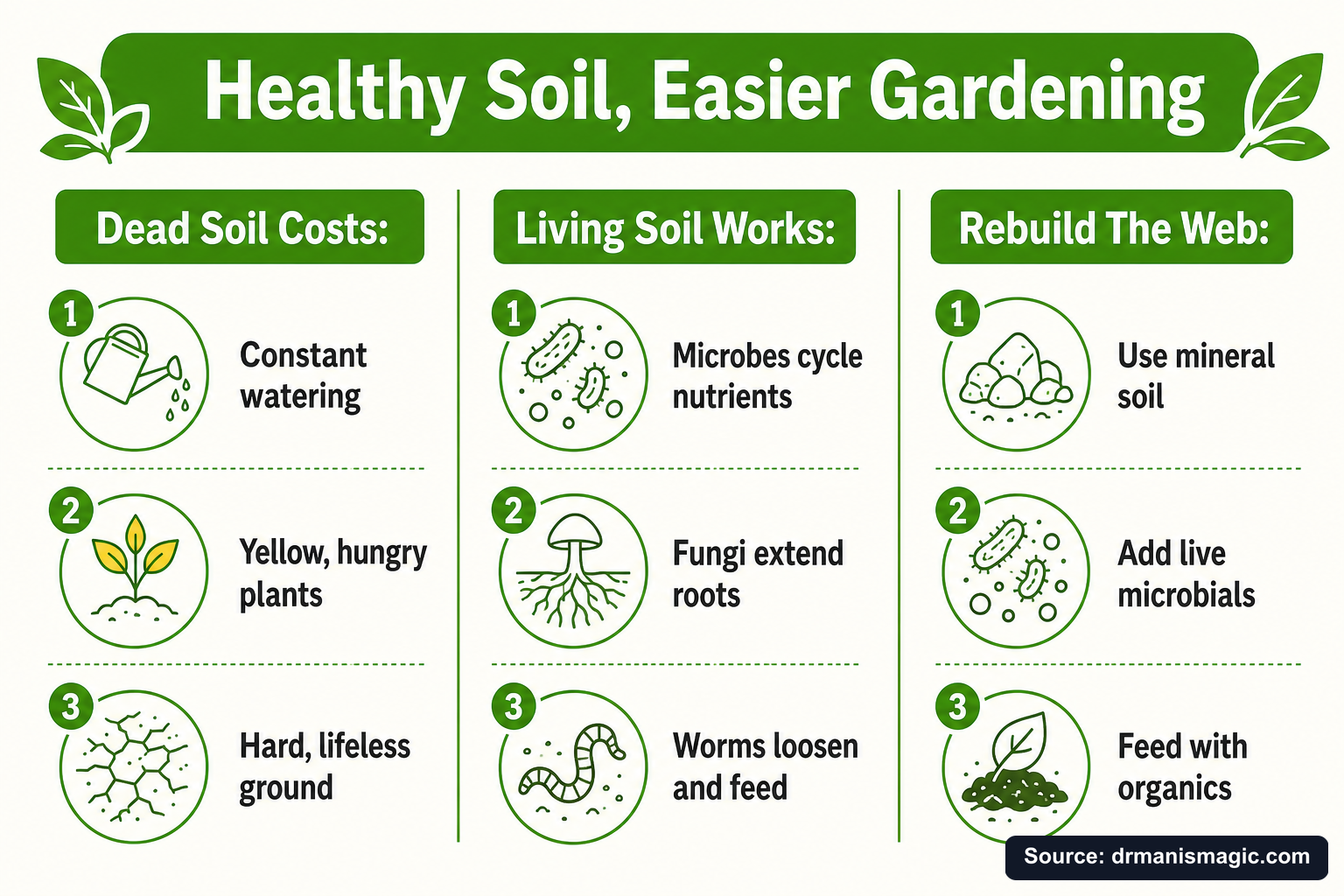
- Healthy soil is a living biological system — not just a place to stick roots.
- Bacteria, fungi, protozoa, and nematodes each do a specific job that saves you real work.
- Living soil holds more water, cycles nutrients automatically, resists disease, and stays loose and easy to dig.
- Salt-based fertilizers, synthetic herbicides, and sterile potting mixes destroy the biology your plants depend on.
- The Three Plant Pillars — mineral-based soil, live microbials, and organic fertilizer — rebuild that biology and keep it alive.
- Dried or foul-smelling microbe products are mostly dead on arrival; genuinely live biology is the only kind that works.
- You can revive damaged soil, but it takes the right inputs, consistency, and time — not more chemicals.
What Is the Soil Food Web and Why Should Gardeners Care?
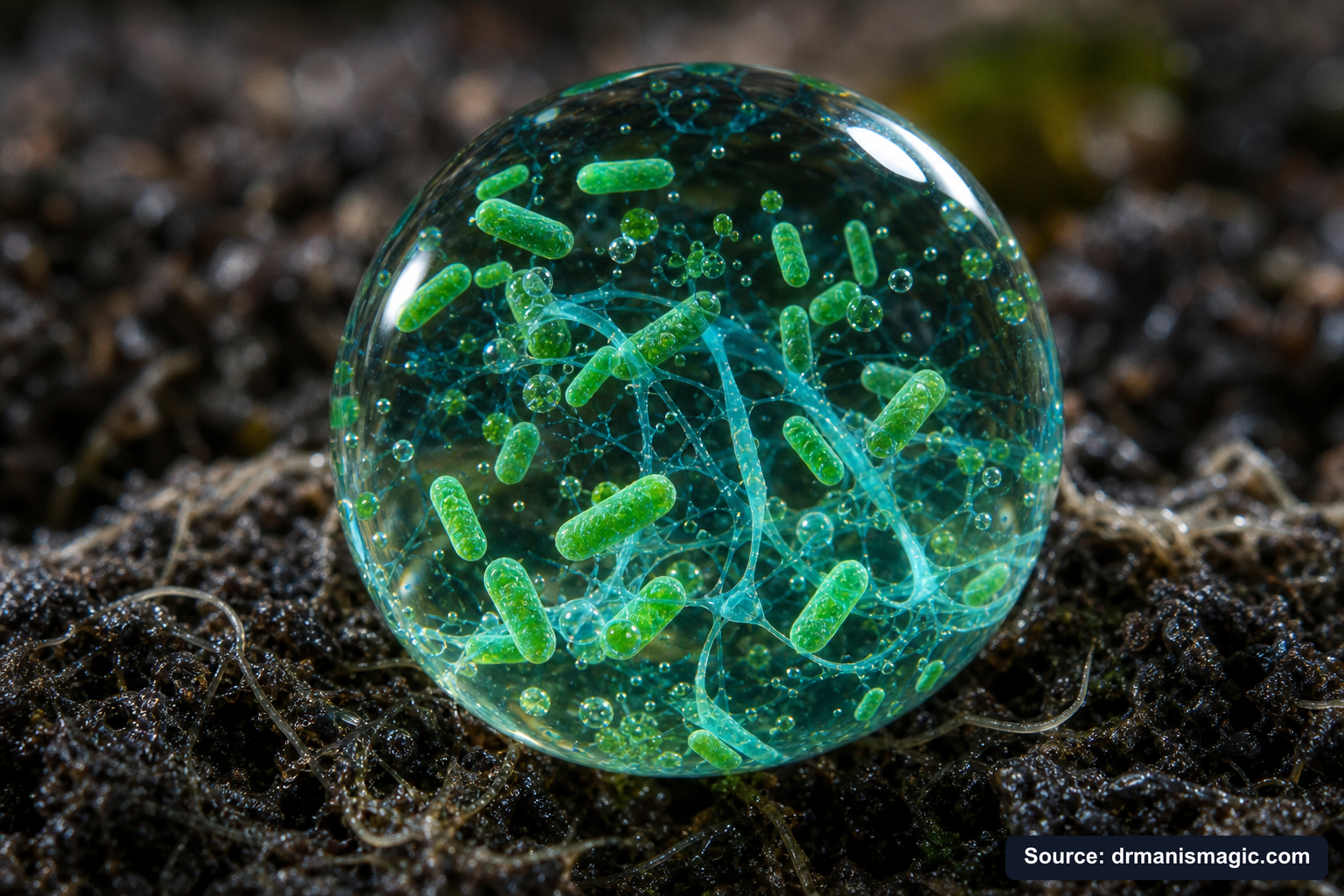
Quick Answer: The soil food web is the community of living organisms in your soil — bacteria, fungi, protozoa, nematodes, earthworms, and more — that work together to feed plants, hold water, build structure, and suppress disease. When that web is intact, your garden runs more like a self-sustaining system and less like a part-time job.
Think about a forest. No one fertilizes it. No one waters it. No one sprays it for disease. Yet trees grow tall, fruit falls to the ground, and the whole system keeps going year after year. Why? Because the soil underneath is alive with an invisible workforce doing every job your plants need done.
Scientists call this the soil food web. The USDA Natural Resources Conservation Service describes it as a complex community of organisms living all or part of their lives in the soil, working together to cycle nutrients and energy through the entire ecosystem. (USDA NRCS Soil Health)
Here is what that invisible workforce actually looks like — and what each member does for you.
| Organism | What It Does in the Soil | Gardener Benefit You Feel |
|---|---|---|
| Bacteria | Break down organic matter, cycle nitrogen, phosphorus, sulfur; glue soil particles into aggregates; fix nitrogen from air | Less fertilizer needed; looser soil; natural nutrients released slowly |
| Fungi (including mycorrhizae) | Extend root reach up to 100x; build soil structure via glomalin; suppress root pathogens; unlock phosphorus | Plants find water and nutrients farther away; fewer root rot problems; stronger structure |
| Protozoa | Graze on bacteria; release plant-available nitrogen as waste; keep bacterial populations balanced | Nutrients released right at the root zone; natural fertilizer effect |
| Beneficial nematodes | Graze on bacteria and fungi; release nutrients; suppress pest populations; regulate microbial balance | Fewer pest outbreaks; nutrient cycling without inputs; balanced biology |
| Earthworms | Shred and mix organic matter; create air pores; produce castings rich in plant-available nutrients | Easier digging; better drainage; built-in slow-release fertilizer |
| Arthropods (beetles, mites, etc.) | Shred large organic residues; mix layers; create tunnels; support decomposition chain | Organic matter breaks down faster; soil stays loose |
Notice something? Every single organism in that table is doing a job you would otherwise have to do yourself. Feed the soil food web, and the web feeds your plants. Starve it, and you become the only life support system your garden has.
How Does Healthy Soil Save Water and Reduce Watering Chores?
Quick Answer: Healthy soil holds water like a sponge and lets excess drain away. Fungal threads and bacterial glue bind soil particles into aggregates with tiny air pockets that store moisture and allow roots to breathe. Dead, compacted soil sheds water like concrete and dries out fast, forcing you to water constantly.
Have you ever watered a plant and watched the water just run straight off the surface and puddle at the sides? That is what compacted, lifeless soil does. It repels water instead of holding it.
Living soil works the opposite way. Mycorrhizal fungi — the white fuzzy threads you sometimes see when you pull a weed — produce a sticky protein called glomalin. Glomalin glues soil particles together into clumps called aggregates. Those aggregates create millions of tiny pores. Those pores hold water. They also hold air. Roots need both.
The University of Minnesota Extension notes that biologically active soils dramatically improve water infiltration and water-holding capacity, reducing both drought stress and waterlogging. (UMN Extension: Soil Health)
What does that mean on a practical Saturday? You water less often. You worry less during a dry week. Your plants bounce back faster from heat because the reservoir underneath them is full. That is not magic. That is biology doing its job.
How Do Soil Microbes Feed Your Plants Without a Bag of Fertilizer?
Quick Answer: Bacteria and fungi break down organic matter and locked-up minerals into forms plants can actually absorb. Protozoa eat bacteria and release nitrogen as waste right at the root zone. Nitrogen-fixing bacteria pull nitrogen directly from the air. Together, these processes supply a large share of what most gardeners pour from a bag.
Here is something that surprises most gardeners. Plants cannot eat fertilizer the way we eat food. They can only absorb nutrients dissolved in water, in specific forms. A pile of nutrients sitting in the soil is completely useless to a plant if nothing converts it first.
That conversion job belongs to microbes.
Bacteria decompose organic matter and release nitrogen, phosphorus, and sulfur in plant-available forms. Mycorrhizal fungi extend root systems so far that plants can mine nutrients from soil zones the roots could never reach alone. Protozoa graze on bacteria near the root zone and release nitrogen as waste — a natural, slow-release fertilizer delivery system operating inches from where the roots can grab it.
When this system is working, your soil feeds your plants for free. When it is dead, you become the only nutrient source. And no matter how much you pour on, you can never replicate the precision and efficiency of a living food web working 24 hours a day.
This is exactly why the second pillar of Dr. Mani's Three Plant Pillars is live microbials. Not dried powder. Not a smelly liquid from a shelf. Genuinely live biology, delivered alive and ready to work.
Why Is Healthy Soil Easier to Dig and Plant In?
Quick Answer: Earthworms, fungi, and bacteria physically break apart compacted soil. Worm tunnels create air channels. Fungal threads hold aggregates together loosely. Bacterial glue binds particles without sealing them solid. The result is soil that crumbles in your hand instead of fighting your shovel.
Hard, compacted soil is one of the most common complaints we hear from gardeners. Digging feels like breaking concrete. Transplanting is a battle. Roots cannot push through, so plants stay small and stressed.
That compaction almost always traces back to dead soil. Without earthworms tunneling through it, without fungal threads holding aggregates in loose clumps, and without bacteria producing the sticky substances that create structure without sealing, soil collapses on itself. Each watering packs it tighter. Each season it gets worse.
Living soil does the opposite. Earthworms digest organic matter and leave behind castings that are loaded with available nutrients and structured in loose, crumbly particles. Their tunnels create air channels that roots follow like highways. Fungal networks hold everything together in a way that stays open, not packed.
When your soil is alive, planting a new seedling takes minutes, not a workout. That is a real, felt difference — not a theory.
How Does Soil Biology Prevent Plant Disease and Pest Problems?
Quick Answer: A diverse soil community suppresses disease by crowding out pathogens, producing natural antibiotics, and competing for root space before harmful organisms can colonize. Plants in living soil also grow stronger immune systems because their nutrition is balanced and their roots are not under constant stress.
Think about your own immune system. When you are rested, well-fed, and healthy, you fight off colds easily. When you are exhausted, underfed, and stressed, every bug you encounter knocks you flat. Plants work exactly the same way.
Beneficial bacteria compete directly with pathogens for root space. They produce natural compounds that suppress harmful organisms. Protozoa and nematodes graze on and regulate microbial populations, keeping the bad actors in check. Mycorrhizal fungi wrap roots in a protective biological coat that pathogens struggle to penetrate.
Dead soil has none of that protection. A plant sitting in sterile, salt-burned ground is like a patient with no immune system — completely exposed. One bad microbe, one stress event, and the whole plant spirals.
This is why we see such a dramatic difference between plants grown in living soil versus plants grown in the typical sawdust-heavy potting mix from a big box store. Those mixes start sterile. They have no biology. They offer no protection. And the salt-based fertilizers most people use to "fix" struggling plants actually kill whatever beneficial biology might have found its way in. Salt destroys microbes. That is not an opinion — it is basic biology.
See also: The Hidden Reason Synthetic Fertilizers Cause Root Rot
Why Does Healthy Soil Make Plants More Resilient During Weather Stress?
Quick Answer: Living soil acts as a buffer during drought, flooding, and temperature swings. Water-holding aggregates reduce drought stress. Drainage pores prevent waterlogging. Mycorrhizal fungi extend the root zone so plants can find moisture deeper in the ground. Plants with a biological support system bend in storms; plants without one break.
Last summer was brutal in many parts of the country. Two weeks without rain, then a week of downpours. If your plants made it through looking healthy, you probably have living soil working for you. If half your garden wilted and never recovered, you likely have the opposite.
The difference is structure and biology working together. Healthy soil aggregates hold moisture during dry spells and drain excess during wet ones. Mycorrhizal networks reach water sources far outside the normal root zone. Bacteria and fungi produce compounds that help plants regulate their own stress responses.
Plants in dead, compacted soil have no buffer. Heat hits and they wilt immediately. Rain hits and they drown or rot. They are always one weather event away from crisis. That is exhausting for the gardener who has to respond to every emergency.
When soil is alive, the garden absorbs the weather and keeps growing. You stop chasing problems and start enjoying results.
You Never Had a Brown Thumb.
You were handed the wrong tools. This free guide hands you the right ones.
You watered it. You fed it. It died anyway.
It was never you. It was the dirt, the salt food, and the bad advice.
This guide shows you what really went wrong, and how to fix it for good.
- Why your plants really died, and why it was never your fault
- The salt hiding in your plant food that quietly burns the roots
- The hidden killer in almost every bag of store soil
- The tiny helpers that grow a whole forest for free
- The rescue trick that brings a half dead plant back to life

What Kills Soil Biology and Why Should You Stop Doing It?
Quick Answer: Synthetic salt-based fertilizers, broad-spectrum pesticides, herbicides like glyphosate, antifungal sprays, and heavy tilling all damage or destroy beneficial soil organisms. Even most commercial potting mixes start completely sterile, with no biology at all. Every time you use these inputs, you are firing the invisible workforce that does most of the real growing.
Here is the part that stings a little. Most of what the gardening industry sells you — the stuff filling the shelves at every big box store — actively destroys the soil biology you need to make gardening easier.
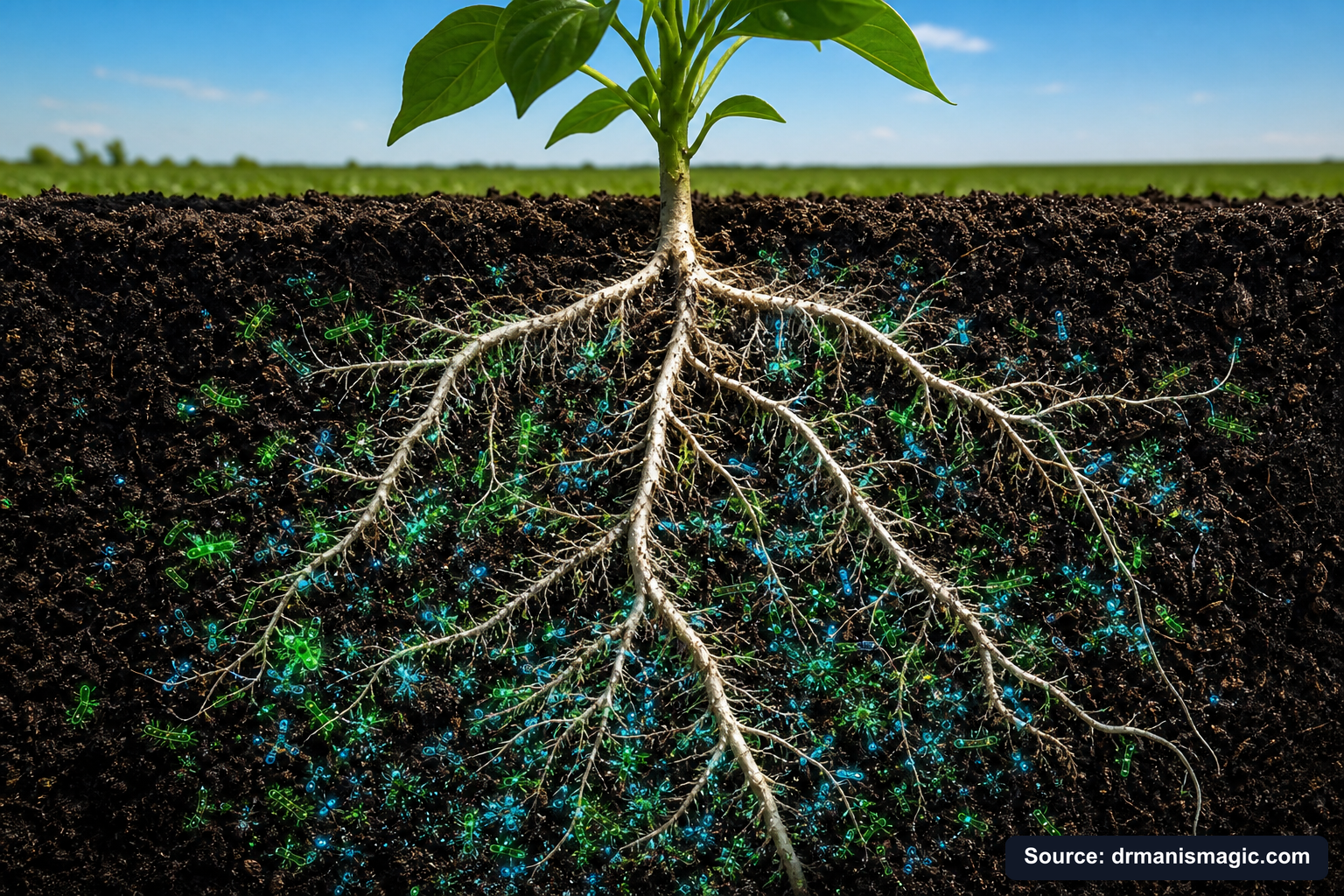
Salt-based fertilizers are the biggest offender. They deliver a quick green-up, which looks like progress. But the salt in those fertilizers kills beneficial bacteria and fungi. No microbes means no nutrient cycling. No nutrient cycling means the plant becomes completely dependent on your next purchase. That dependency is not an accident. It is a business model.
Synthetic herbicides like glyphosate do not just kill weeds. Research has shown they disrupt microbial communities throughout the soil, reducing diversity and weakening the biological safety net your plants depend on. Broad-spectrum pesticides and antifungal sprays do the same — they cannot tell the difference between the bad organisms and the good ones, so they wipe out everything.
Even standard potting mix is a problem. Most of it is pine bark and sawdust that starts sterile and stays sterile. It breaks down into a root-choking sludge within months, steals oxygen from roots as it decomposes, and offers zero biological activity. We have watched it happen across thousands of plants at our nursery. The plants go in strong and start declining within a season.
| Input or Practice | Effect on Soil Biology | What to Do Instead |
|---|---|---|
| Salt-based synthetic fertilizers | Kills beneficial bacteria and fungi; creates dependency cycle | Organic slow-release fertilizer like Crab, Kelp & Amino Acids |
| Broad-spectrum pesticides | Non-selective; kills beneficial organisms alongside pests | Targeted organic pest control; rebuild biology after use |
| Synthetic herbicides (glyphosate) | Disrupts microbial communities; lowers diversity | Mechanical weeding; mulch to suppress weeds naturally |
| Synthetic antifungal sprays | Kills beneficial fungi alongside pathogens | Live microbial inoculant to recolonize root zone |
| Bark-heavy sterile potting mixes | No biology to start; decomposes into compacted sludge | Mineral-based permanent soil that does not decompose |
| Heavy tilling | Destroys fungal networks; disrupts aggregate structure | Minimal tillage; add organic matter on surface |
| Leaving soil bare | UV exposure kills surface microbes; dries soil fast | Keep soil covered with mulch or living plants |
See also: Why Most Fertilizers Are Actually Salt in Disguise
Do Microbe Products from the Store Actually Work?
Quick Answer: Most do not. Dried powder microbe products are largely dead by the time you use them. Many liquid products from compost teas go anaerobic in transit and smell terrible because the biology is dying. Genuinely live, stabilized, full-spectrum microbes are rare — and they are what actually move the needle for your plants.
Walk down the gardening aisle at any store and you will see bags and bottles claiming to be packed with beneficial microbes. Some list impressive-sounding bacteria names. Some list colony-forming unit counts in the millions. They look scientific. They feel credible.
Most of them do not work. We know because we tried dozens of them on our own trees before we found what actually does.
Here is why most fail. There are really only three ways microbe products are made, and two of them are deeply flawed.
The first way is laboratory-grown dried powder. Giant factories brew specific bacteria strains, dry them into powder, and hope the spores reactivate when you add water. We tried batch after batch. The plants did not respond. The biology was simply too compromised to colonize and compete.
The second way is liquid compost tea. This can work beautifully — if it is fresh. Steaming hot compost is alive with activity. But once it is bottled and shipped, it goes anaerobic within 24 hours. The microbes start dying and fermenting. The bottle fizzes. It smells like sewage. Whatever benefit existed has largely degraded by the time it reaches your garden.
The third way — the one we use — is different. Plant Super Boost is harvested from our own hand-crafted compost using a proprietary all-natural stabilization technique developed by a world-renowned compostologist. The microbes stay alive without going anaerobic. The bottle does not stink because nothing is decomposing. Under a microscope, you can actually see the organisms moving. Lab analyses confirm living biology across more than 2,000 bacterial species and 400 to 500 fungal species, including mycorrhizae, protozoa, and beneficial nematodes. That is a full-spectrum biological inoculant — the real thing.
| Product Type | Viability When Applied | Biological Spectrum | Smell | Real-World Result |
|---|---|---|---|---|
| Dry powder (lab-grown) | Low — spores mostly dead | Narrow — 1 to 5 species | Neutral | Little to no effect observed |
| Liquid with dry microbes added | Low — same dead-spore issue | Narrow | Neutral | Little to no effect observed |
| Compost tea (fresh, under 24 hours) | Moderate — needs immediate use | Partial — varies by compost | Earthy | Good when used immediately; impractical to ship |
| Compost tea (old, bottled, shipped) | Low — anaerobic and dying | Partial | Strong sewage odor | Not recommended |
| Lactobacillus-based products | High — but wrong organisms | Dominated by one strain | Sour | Crowds out beneficial biology; not for soil |
| Plant Super Boost (stabilized compost-derived) | High — genuinely alive | Full spectrum — 2,000+ bacteria, 400-500 fungi, protozoa, nematodes | Earthy, not foul | Visible improvement in root zone; proven across 250,000+ trees |
Can You Revive Dead or Damaged Soil at Home?
Quick Answer: Yes, but it takes more than one bag of compost. Damaged soil needs biology reintroduced, habitat restored, chemical inputs reduced, and time for organisms to multiply and establish. Following a consistent recovery plan produces visible results within weeks and lasting improvement within a season or two.
The good news is that soil is not permanently dead just because it has been treated badly. Biology wants to return. Given the right conditions, microbes multiply fast. Fungi spread. Earthworms move in. The system can rebuild.
The bad news is that recovery takes real commitment, not just a one-time product application. Most soils that have been treated with synthetic fertilizers for years, sprayed with herbicides, or grown in sterile potting mix have been stripped of their biology repeatedly. One dose of microbes will not fix that. Consistent, repeated applications paired with better inputs will.
Here is a practical recovery checklist for damaged soil:
- Stop the bleeding first. Eliminate or dramatically reduce salt-based fertilizers, broad-spectrum pesticides, and synthetic herbicides. You cannot rebuild biology while actively destroying it.
- Switch to mineral-based soil for containers. Bark-heavy mixes that compact and decompose give biology nowhere to live. A permanent mineral-based structure like Super Soil gives microbes a stable home.
- Inoculate with genuinely live, full-spectrum microbes. Apply monthly. Consistency matters because environmental pressures keep depleting the population. Each application reinforces the colony.
- Feed the biology with organic matter. Compost, mulch on the surface, and slow-release organic fertilizer all feed the microbial workforce. Slow-release organic fertilizer does not burn microbes the way salt-based products do.
- Keep the soil covered. Bare soil loses moisture, heats up, and loses surface microbes to UV exposure. Mulch protects the community you are trying to build.
- Minimize disturbance. Heavy tilling destroys fungal networks that took months to build. Work gently and let the biology stay intact.
- Be patient and consistent. Some improvement shows up within weeks. Full biological restoration takes a full season or two. Do not quit after one application.
We have seen this recovery play out across our nursery — in container trees, in our South Texas grove, and in houseplants that looked hopeless. The biology comes back. The plants follow.
What Are the Three Plant Pillars and How Do They Make Soil Healthy?
Quick Answer: The Three Plant Pillars are the framework Dr. Mani Skaria developed after 40 years of plant science and 250,000 tested trees: mineral-based soil for structure, live microbials for biology, and organic fertilizer for slow-release nutrition without salt damage. Together they create the conditions that make healthy soil — and easy gardening — possible.
Dr. Mani Skaria spent 35 years as a Professor Emeritus of Plant Pathology at the Texas A&M Citrus Center. He traveled the world. He tested products. He watched what worked and what did not. What he found, over and over, was that gardening failures came back to the same three missing pieces.
Most soil suffocates roots. Most biology is dead or never present. Most fertilizer burns what little biology remains. Fix all three, and the garden transforms. Miss any one, and you are always chasing problems.
That is the Three Plant Pillars. Not a marketing concept. A framework earned through decades of hard-won experience.
Pillar 1: Mineral-Based Soil. Most potting mixes are organic disasters. Pine bark and sawdust decompose within months, compacting into a sludge that blocks oxygen from roots. Mineral-based, silica-rich sandy loam does not decompose. It stays permanently open, drains properly, and gives roots room to breathe. That is the foundation everything else depends on.
Pillar 2: Live Microbials. Your soil needs a living community of bacteria, fungi, protozoa, and nematodes working in the root zone. Without them, nutrients lock up, disease moves in, and roots stay weak. With them, the soil feeds the plant, protects the plant, and builds the structure that holds water and stays loose. This is not optional. It is the muscle that makes everything else work.
Pillar 3: Organic Fertilizer. Slow-release, organic nutrition from real sources like crab, kelp, and amino acids delivers what plants need without the salt that kills microbes. No plastic-coated synthetic pellets leaching chemicals into your soil. No salt accumulation burning roots and destroying biology. Just complete, gentle nutrition that works with the soil food web instead of against it. Zero PFAS. Zero biosludge. Zero synthetic salts.
When all three are in place, something changes. The garden starts doing most of the work. You water less. You fertilize less. You troubleshoot less. You just enjoy it more.
That is the whole point. Dr. Mani did not build this system to sell more products. He built it to solve his own growing problems across a 250,000-tree nursery. It worked there. It works for the more than 10,000 growers who have trusted us since 2006, earning a 4.9 out of 5-star rating across 2,414 reviews. And it will work for your garden, your containers, your lawn, your flowers, or whatever you are growing.
Download our Free Plant Care Field Guide to see exactly how to apply the Three Plant Pillars to any plant you are growing right now.
What Can You Do Right Now to Start Building Healthy Soil?
Quick Answer: Start by stopping the inputs that kill biology, then add living microbes, organic matter, and stable mineral soil. You do not need to identify every organism or buy every product on the market. You need the right foundation — and then consistency.
You do not need a chemistry degree. You do not need to spend a weekend reading academic papers. You need a simple model that works with nature instead of against it. Here is what that looks like in practice.
Stop using salt-based fertilizers. Every bag that promises a quick green-up is burning your biology. Swap to organic, slow-release nutrition that feeds the soil food web instead of bypassing it.
Add live microbes monthly. Not dried powder. Not a bottle that smells like a sewer. Genuinely alive, full-spectrum biology that colonizes your root zone and gets to work. Apply it, let it multiply, apply it again next month. Consistency builds the colony that makes everything easier.
Cover your soil. Mulch. Living roots. Anything that protects the surface community from heat, UV, and drying out.
Be patient with yourself and your soil. The gardener who sees fruit on their trees, color in their flowers, and life in their lawn within one season is not lucky. They just stopped fighting nature and started working with it. Time is the one thing you cannot buy back. Every season you spend using the old approach is a season your plants do not reach their potential. Every season you spend on the right foundation is a season that compounds — soil getting richer, plants getting stronger, work getting lighter.
We built the Three Plant Pillars system so you do not have to figure all of this out alone. The soil, the microbes, the organic fertilizer — tested across 250,000 trees, proven on every kind of plant, made right here in the USA with American materials, and backed by a 30-day money-back guarantee. If it does not work for you, we will refund you. No arguments.
Your garden wants to thrive. Give it the living foundation it needs, and it will do most of the work from here.
Frequently Asked Questions
Healthy soil is the real secret behind easy gardening. Once you understand what is actually happening underground, everything above ground starts to make sense. These questions come up again and again from gardeners who are tired of fighting their plants and ready to let nature do the heavy lifting.
What is the 70/30 rule in gardening?
The 70/30 rule says to fill about 70 percent of your garden with plants you know will grow well. Save the other 30 percent for trying new things. But here is what most people miss: even proven plants will struggle if the soil is dead. At Dr. Mani's Magic, we have seen this with over 250,000 trees. Get your Three Plant Pillars right first. Then your "reliable 70 percent" becomes practically bulletproof.
What is the 5-4-3-2-1 gardening method?
The 5-4-3-2-1 method is a planting formula: 5 herbs, 4 leafy greens, 3 root vegetables, 2 flowers, and 1 fruiting crop in a single bed. It creates variety, saves space, and keeps pests confused. The catch? Every single one of those plants pulls from the same soil. If that soil is packed with live microbes, mineral structure, and organic nutrients, the whole bed thrives together. If the soil is dead, the formula falls flat fast.
What is the rule of 3 in gardening?
The rule of 3 means planting in groups of three for a natural, full look that pollinators love and your eye finds pleasing. Three plants grouped together also share the same soil zone. That is actually great news. When you build living soil with the right microbes and mineral base, those three plants share a thriving underground ecosystem. Roots connect through fungi, nutrients flow freely, and the whole group grows stronger together than any one plant could alone.
What are three mistakes to avoid when gardening with raised beds?
Most people focus on bed width and sunlight, and those do matter. But the biggest mistake is filling raised beds with cheap potting mix loaded with pine bark and sawdust. That stuff breaks down, compacts, and chokes roots within a season. Dr. Mani's Magic Super Soil uses mineral-based sandy loam that never breaks down. It stays loose, drains perfectly, and keeps roots breathing for years. That one change fixes more raised bed problems than anything else you can do.
Is gardening good for high blood pressure?
Yes, and the research backs it up. Digging, planting, and watering burn real calories and lower cortisol, the stress hormone that drives blood pressure up. But there is a bonus most people never think about. When your soil is alive and your plants are thriving, gardening stops feeling like frustrating work. It becomes something you actually look forward to. That mental shift, from stressed-out troubleshooting to calm enjoyment, is its own kind of medicine for your heart.
Can gardening lower cortisol?
Yes. Studies show that time spent in a garden, even just 30 minutes, measurably drops cortisol levels. Your senses do a lot of that work. The smell of healthy earth, the feel of crumbly soil between your fingers, the sound of leaves in a breeze. But when your garden is dying and you are troubleshooting every week, it becomes a source of stress instead of relief. Living soil built on the Three Plant Pillars turns your garden back into the calm space it was always meant to be.
What did Audrey Hepburn say about gardening?
Audrey Hepburn said, "To plant a garden is to believe in tomorrow." That quote hits differently when you think about time. You cannot get time back. The best moment to plant was years ago. The second best moment is right now. Dr. Mani hears it constantly from gardeners who want to see fruit on their own tree while they still can. With the right soil, live microbes, and organic fertilizer working together, that tomorrow comes a whole lot faster than you think.
About the Author
Ron Skaria, MD
Ron Skaria, MD, is the co-founder of Dr. Mani's Magic and the son of Dr. Mani. He trained as a medical doctor at Baylor College of Medicine, did his residency at UT Health Science Center - San Antonio and fellowship training at Texas Tech University. He now works full time on the family farm at US Citrus and US Citrus Nursery in Hargill, Texas, building Dr. Mani's Magic alongside his dad. He wrote the Brown Thumb Field Guide to put his father's 48 years of plant science into plain words any gardener can use. His belief is simple. You never had a brown thumb. You just never had the right help.


