


What Indigenous Agriculture Knew About Soil Biology Modern Gardening Forgot | Dr. Mani's Magic
What Indigenous Agriculture Knew About Soil Biology (That Modern Gardening Forgot)
Picture a forest. No fertilizer bags. No plastic bottles of chemicals. No one amending the soil every spring. And yet the trees grow massive. The fruit is abundant. The roots run deep. The whole thing hums along like a machine that never breaks down.
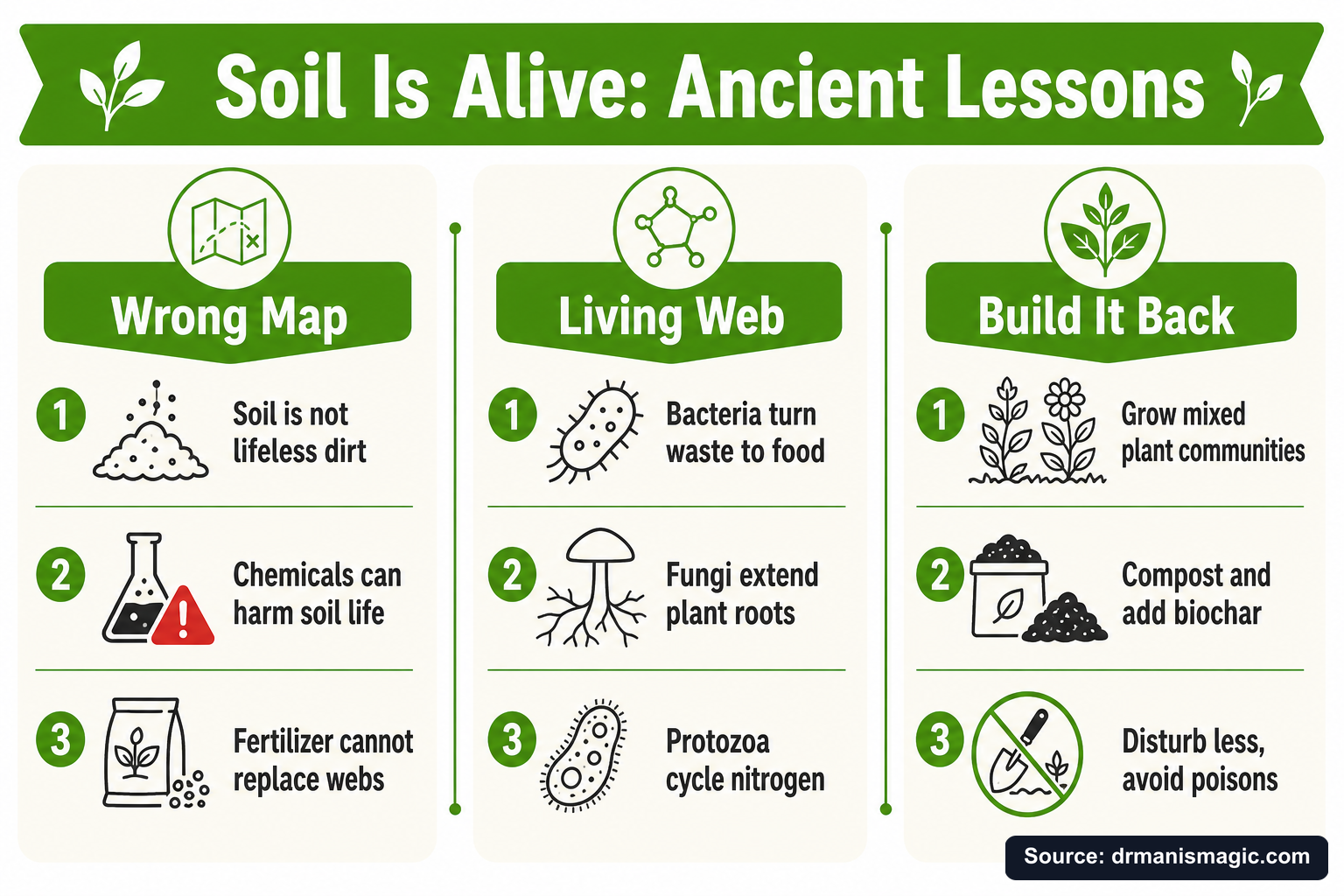
Now picture your backyard. You've tried the bags from the big box store. You've followed the instructions on the bottle. You've watered and waited and hoped. And still something feels off. The leaves yellow a little too fast. The fruit never quite shows up. The lawn looks okay until it doesn't. You start to wonder if you have a brown thumb. You don't. But you were handed the wrong map.
Here's what most people never hear: thousands of years before modern science could measure a single bacterium, Indigenous farmers around the world were already managing soil like a living, breathing ecosystem. They didn't call it the soil food web. They didn't have electron microscopes. But they understood something that took laboratories centuries to catch up to. Healthy soil is not dirt. It is a community. And when you protect that community, plants take care of themselves. This article is the bridge between what they knew and what we now measure.

Plant Super Boost
Key Takeaways
- Indigenous farming systems like the Three Sisters and Terra Preta were built on soil biology, not soil chemistry.
- The soil food web includes bacteria, fungi, protozoa, nematodes, and arthropods working together to feed plants naturally.
- Mycorrhizal fungi extend plant roots and unlock nutrients that roots alone could never reach.
- Terra Preta, an ancient Amazonian soil, proves that humans can engineer living, self-renewing soil that lasts for centuries.
- Salt-based synthetic fertilizers and broad-spectrum chemicals destroy the same soil biology that Indigenous systems spent generations building.
- Dead, dried, or foul-smelling microbial products are weak substitutes for genuinely live soil biology.
- You can restore damaged soil biology with the right steps, but it takes time, consistency, and the right inputs.
How Did Indigenous Agriculture Actually Build Healthy Soil?
Quick Answer: Indigenous farmers built healthy soil by treating it as a living system. They rotated crops, used polycultures like the Three Sisters, composted organic waste, applied biochar, and avoided practices that stripped life from the ground. They managed the invisible workforce below the surface without ever seeing it under a microscope.
Walk into a cornfield in the ancient Americas and you would not see one crop. You would see three. Corn standing tall in the center. Bean vines climbing the corn stalks. Squash leaves spreading wide across the ground below. This was the Three Sisters, one of the most sophisticated soil-building systems ever designed by human hands.
And every part of it was biology on purpose.
The corn gave the beans something to climb. The squash leaves blocked sunlight from the soil, which kept moisture in and weeds out. But the beans? The beans were doing something invisible and extraordinary. Their roots were hosting colonies of bacteria called rhizobia. These bacteria pulled nitrogen straight out of the air and converted it into a form the plants could eat. Free fertilizer. Made by microbes. Delivered to the roots by the bean plant itself.
The USDA National Agricultural Library describes the Three Sisters not just as a crop combination but as a cultural and ecological system tied to community food security, ceremony, and intergenerational knowledge. In other words, this was not accidental companion planting. It was engineered ecology.
And the Three Sisters was just one example. Across every continent, Indigenous communities were managing forests, grasslands, wetlands, and gardens in ways that kept soil alive, productive, and self-renewing. They did it through polyculture (many plants together), minimal soil disturbance, controlled burning, composting organic waste, and leaving roots in the ground between seasons. Every one of those practices has now been validated by modern soil science. They just did not have the Latin names for the mechanisms.
What Is the Soil Food Web and Why Does It Matter for Your Plants?
Quick Answer: The soil food web is a community of living organisms that work together to feed plants, protect roots, and build soil structure. It includes bacteria, fungi, protozoa, nematodes, and arthropods. When this web is healthy, plants get nutrients, fight disease, and grow strong without any chemical input. When it is destroyed, plants struggle no matter how much fertilizer you add.
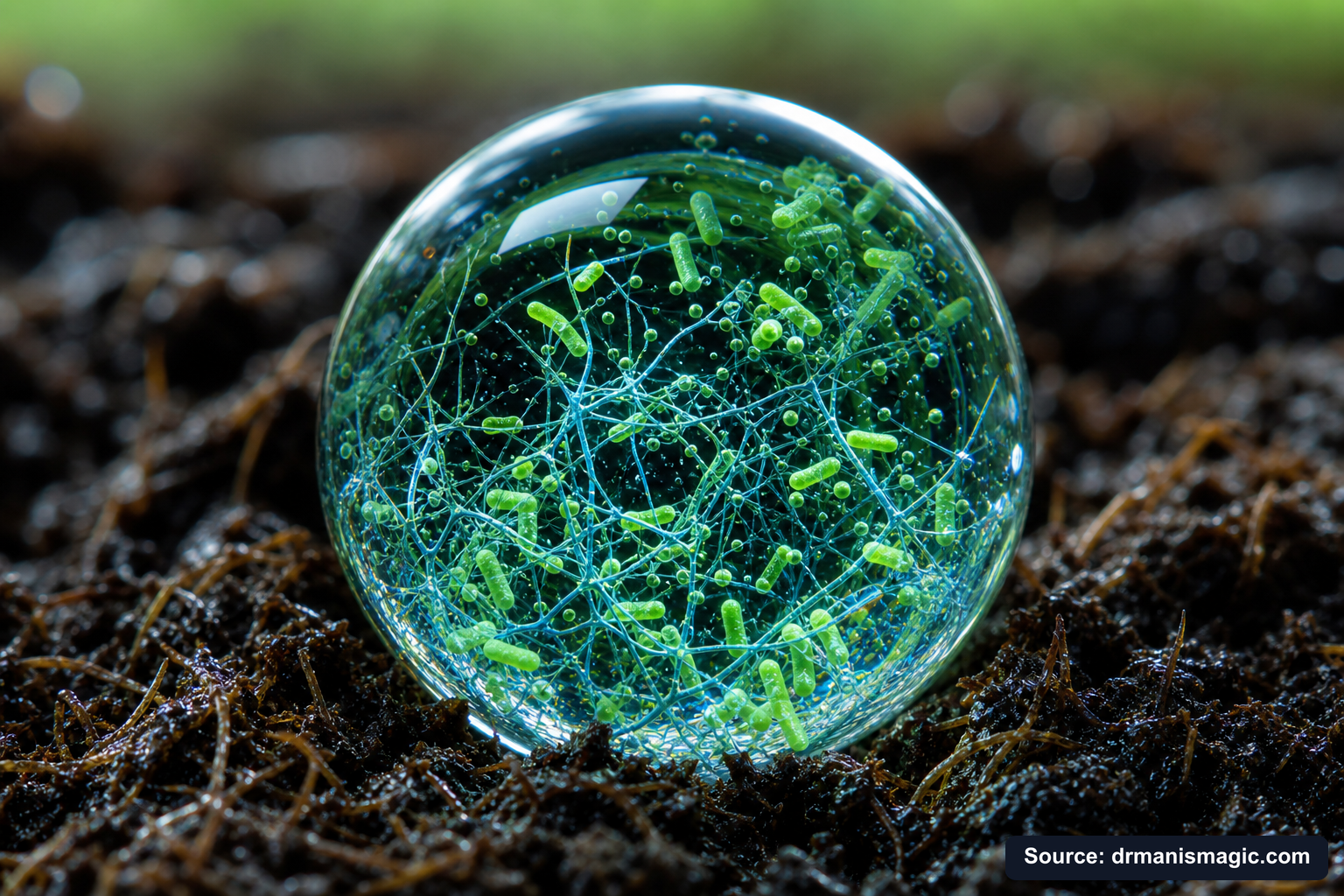
Most people think soil is just dirt. A place to stick a root. Something to hold a plant upright. But healthy soil is more like a city. A living, breathing city where trillions of tiny workers show up every single day to do jobs that make plant life possible.
According to the Utah State University Extension, a single teaspoon of healthy soil can contain up to one billion bacteria and several yards of fungal threads. That is not a typo. One teaspoon.
Here is how each member of the team does their job.
| Organism | What It Does | Why Your Plant Cares |
|---|---|---|
| Bacteria | Break down organic matter, fix nitrogen from the air, suppress pathogens | Converts dead material into plant food; protects roots from disease |
| Mycorrhizal Fungi | Extend root reach by 100x or more; mine phosphorus and water from far away | Plants access nutrients they could never reach on their own |
| Protozoa | Eat bacteria; release nitrogen when they excrete waste right near plant roots | Delivers a steady stream of plant-available nitrogen directly to the root zone |
| Nematodes | Eat bacteria, fungi, and other nematodes; release nutrients through digestion | Regulates microbial populations; keeps nutrient cycling moving |
| Arthropods (beetles, mites, etc.) | Shred dead plant material into smaller pieces for bacteria and fungi to finish | Speeds up decomposition so nutrients cycle faster |
| Plant Roots | Release sugary root exudates that feed bacteria and fungi | Plants actively recruit their own support team with food signals |
Here is the part that most gardening advice skips over completely. Protozoa and nematodes are not just passengers in the soil. They are the nutrient delivery system. When a protozoa eats a bacteria, it cannot use all the nitrogen inside that bacteria. So it excretes the excess. Right there. Right next to the root. That is called the microbial loop, and it is how plants get a slow, steady trickle of nutrients in exactly the form they can absorb.
No chemical fertilizer replicates this. Not one.
Indigenous farmers kept this web intact. They kept living roots in the ground. They added organic matter. They avoided practices that disrupted the community. They were managing the microbial loop before anyone knew it existed. This is exactly the foundation behind the Three Plant Pillars that Dr. Mani Skaria developed after 40 years of plant pathology research and testing on more than 250,000 trees at the US Citrus Nursery in South Texas.
What Did Terra Preta Teach Us About Soil Biology and Microbes?
Quick Answer: Terra Preta, or Amazonian Dark Earth, is ancient Indigenous soil that was engineered using charred biomass, bone, pottery, ash, and organic waste. It is still extraordinarily fertile after 2,000 years. Modern science has found it contains a unique microbial community and exceptional nutrient-holding capacity. It is the strongest historical proof that humans can build living soil that lasts for generations.
Imagine a soil so rich it could feed a civilization in the middle of one of the poorest ecosystems on earth. That is what you find in the Amazon basin when you dig down into the dark, almost black patches of earth scattered through the jungle. Scientists call it Terra Preta, which is Portuguese for dark earth. Indigenous communities built it. Deliberately. Over centuries.
The surrounding Amazon soil is red and thin. It leaches nutrients fast. Rain washes away everything. Most modern farmers would give up on it entirely. But pre-Columbian communities transformed it into something almost miraculous. They mixed charred plant material (what we now call biochar) with bone meal, pottery shards, ash, fish residues, and organic waste. They did this repeatedly, in the same spots, over generations.
The result is soil that is still measurably more fertile than the surrounding land today. Two thousand years later. Still producing.
Here is why the biology matters. The biochar did not just add carbon to the soil. It created a physical structure. Millions of tiny pores and chambers inside each piece of charred biomass. And those chambers became homes. Permanent, protected homes for bacteria, fungi, and other microbes. The pottery shards added calcium. The ash raised pH. The bone added phosphorus. Together, these created conditions where a unique, stable microbial community could thrive indefinitely.
Modern researchers have found that Terra Preta soils contain significantly higher microbial diversity than surrounding soils. The microbes inside the biochar matrix are protected from competition, drought, and disturbance. They multiply. They cycle nutrients. They suppress pathogens. And they keep doing it for centuries without anyone adding another input.
At Dr. Mani's Magic, we include biochar in our Super Soil blend for exactly this reason. It gives the beneficial microbes in Plant Super Boost a protected home to live, multiply, and work from. The ancient Amazonians figured this out with fire and intuition. We figured it out through decades of testing. The mechanism is the same.
How Did the Three Sisters and Milpa Systems Manage Nitrogen Without Fertilizer?
Quick Answer: The Three Sisters and milpa polyculture systems used nitrogen-fixing bacteria living on bean roots to pull nitrogen from the air and deliver it to the soil. This is called biological nitrogen fixation. It fed the entire crop system for free, with no synthetic input. Modern soil science has confirmed this exact mechanism using the same bacteria, rhizobia.
Here is something that should stop you in your tracks. The nitrogen in synthetic fertilizer is made using the Haber-Bosch process. It requires enormous amounts of natural gas and extremely high heat and pressure to pull nitrogen from the atmosphere and turn it into a usable form. It is one of the most energy-intensive industrial processes on the planet.
Beans do the same thing. For free. Using bacteria.
The bacteria involved are called rhizobia. They live in small nodules on the roots of legume plants, including beans. The plant gives them sugar. They give the plant nitrogen. A perfect trade. The nitrogen they produce does not just feed the bean. It enriches the surrounding soil. The corn and squash growing nearby benefit too. And when the bean plants die at the end of the season and their roots decompose, all that accumulated nitrogen gets released into the soil for next year's crop.
The milpa system, used across Mesoamerica for thousands of years, rotated and combined crops in ways that kept this cycle going season after season. Different plants were grown together. Residues were incorporated back into the soil. The ground was never left bare. Roots were always present. And the microbial community that powered the whole system was continuously fed, protected, and replenished.
Compare that to a monoculture field receiving synthetic nitrogen every spring. The nitrogen arrives as a salt. It dissolves fast. The plant gets a quick green-up. But the salt damages the bacteria living near the roots. The fungi get disrupted. The protozoa and nematodes lose their food source. The web weakens. Next season the farmer needs more input because the soil's ability to cycle nutrients on its own keeps declining.
See also: Why Most Fertilizers Are Actually Salt in Disguise
You Never Had a Brown Thumb.
You were handed the wrong tools. This free guide hands you the right ones.
You watered it. You fed it. It died anyway.
It was never you. It was the dirt, the salt food, and the bad advice.
This guide shows you what really went wrong, and how to fix it for good.
- Why your plants really died, and why it was never your fault
- The salt hiding in your plant food that quietly burns the roots
- The hidden killer in almost every bag of store soil
- The tiny helpers that grow a whole forest for free
- The rescue trick that brings a half dead plant back to life
How Did Indigenous Agroforestry Protect Mycorrhizal Networks?
Quick Answer: Indigenous agroforestry kept diverse trees and plants growing together in the same space, which maintained the underground mycorrhizal networks that connect plants and allow them to share nutrients and water. Modern research has confirmed that these fungal networks, sometimes called the wood wide web, are critical to forest resilience and plant health.
If you have ever pulled a weed out of your garden and noticed white fuzzy threads clinging to the roots, you have seen mycorrhizal fungi with your own eyes. Those threads are not roots. They are something even more important.
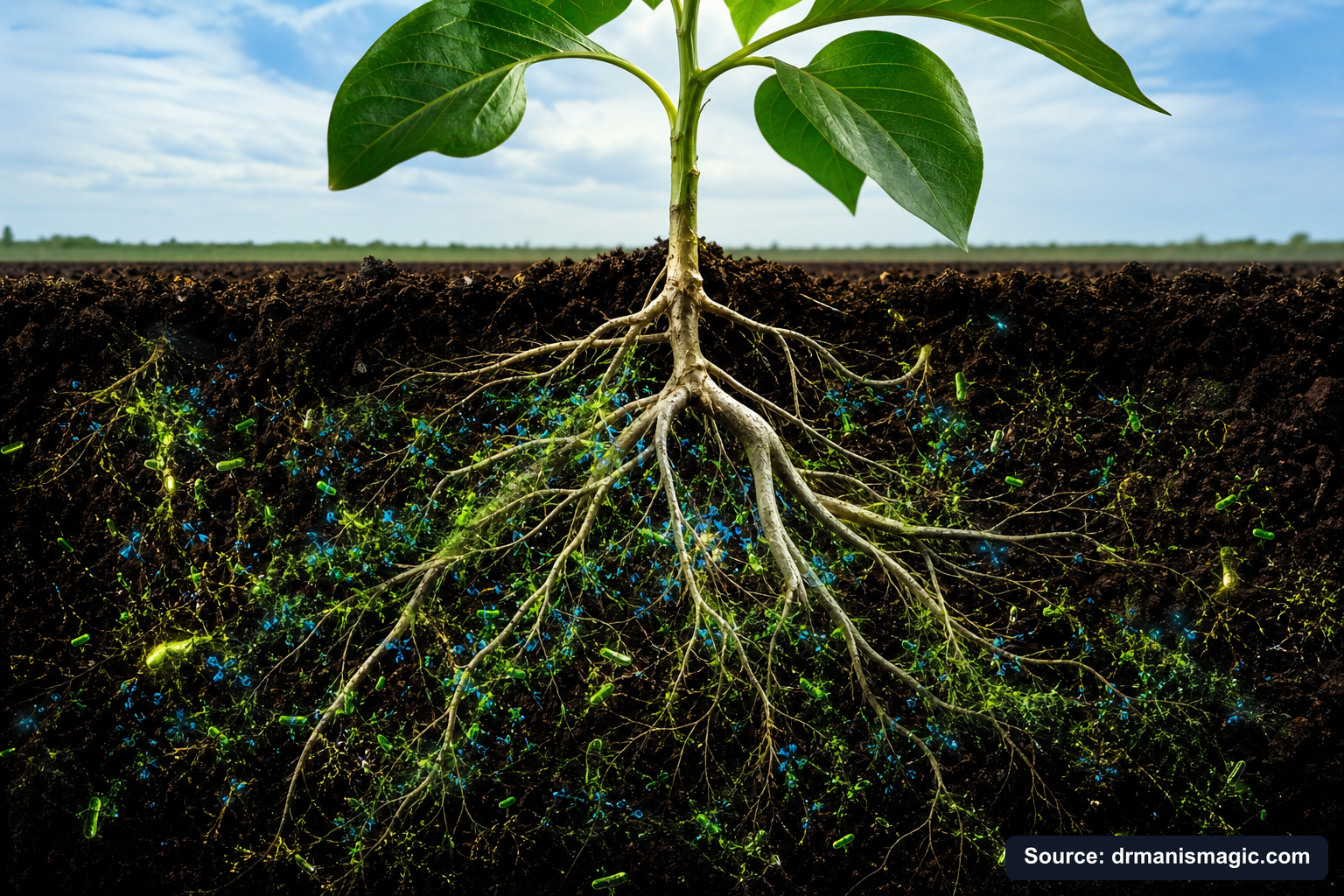
Mycorrhizal fungi attach to plant roots and then extend outward into the soil in every direction. They can reach hundreds of times farther than the root itself. They mine phosphorus, zinc, and water from pockets of soil the root could never access. They connect to neighboring plants and allow resources to flow between them. They build a network.
Indigenous agroforestry systems maintained this network. By keeping multiple species of trees and plants growing together, by not tilling the soil between rows, by leaving mulch and organic material on the surface, they protected the fungal threads that run through the top few inches of soil. Disturb those threads and the network collapses. Clear a field and the mycorrhizal community that took years to build disappears in an afternoon.
Modern industrial farming does exactly that. Tillage, fumigation, and synthetic fungicides all destroy mycorrhizal networks. The plants that follow have to start building from scratch every season. And they rarely get the chance because the next round of inputs arrives before the fungi can re-establish.
At our nursery in South Texas, after growing and studying more than 250,000 trees, we learned that re-introducing mycorrhizal fungi to plants in containers and disturbed soils is one of the highest-return actions a grower can take. That is why Plant Super Boost contains 400 to 500 strains of fungi including mycorrhizae, harvested from living compost and stabilized using a natural technique developed by a world-renowned compostologist who joined our team. Not dried. Not lab-grown from a checklist. Genuinely alive.
Why Do Most Microbial Products Fail When Indigenous Soil Biology Does Not?
Quick Answer: Most commercial microbial products are either dried powders with dead or dormant organisms, or liquids that have gone anaerobic and smell like sewage. Neither performs like the live, full-spectrum biology found in healthy soil. Indigenous systems maintained genuinely alive microbial communities through practices that modern bottled products cannot replicate unless the microbes inside are actually living at the moment of use.
Walk into any garden center today and you will find shelves full of microbial products. Bags of powder. Bottles of liquid. Impressive-sounding labels with long lists of bacteria species and colony counts. And most of them do almost nothing.
Here is why.
| Product Type | Viability at Use | Spectrum | Smell | Real-World Result |
|---|---|---|---|---|
| Dried powder (lab-grown) | Very low. Spores rarely reactivate. | Narrow. Made from a checklist of species. | Odorless | We tested dozens of batches. Plants showed no measurable response. |
| Dry powder added to liquid | Very low. Same problem. | Narrow | Low odor | Looks convincing. Does not work. |
| Compost tea (old, sitting) | Dying. Gone anaerobic. | Partial. Some humic compounds remain. | Strong stench. Bottle may fizz. | Microbes are dead. Some humic acid benefit. Not worth the smell. |
| Compost tea (fresh, under 24 hours) | Moderate. Must use immediately. | Partial. Depends on compost quality. | Earthy, fading fast | Works if you brew it yourself and apply immediately. Not practical for most. |
| Fresh active compost | High. The real thing. | Broad and natural | Earthy, warm | Excellent. Requires time, space, and muscle to maintain. |
| Plant Super Boost (stabilized, full-spectrum) | High. Visible under microscope. | 2,000+ bacteria strains; 400-500 fungi including mycorrhizae; plus protozoa and nematodes | Earthy. No stench. | Harvested from living compost. Stabilized naturally. Ships alive. Works. |
The product smelling bad is not a minor inconvenience. It is evidence that the microbes inside have gone anaerobic. They are dying. They are fermenting. The bottle fizzes from the gas of decomposition. You pour dying microbes onto your plant's roots and wonder why nothing changes.
Plant Super Boost smells earthy because it is not rotting. The microbes inside are alive and stable. You can take a drop and look at it under a microscope and see movement. We have the lab analyses to prove it. No PFAS. No biosludge. No synthetic salts. Zero of the things that quietly kill what you are trying to build. And our 30-day money-back guarantee means if you don't see and feel the difference, we refund you. No argument.
Indigenous soil biology worked because it was never separated from life. It was maintained continuously, in living soil, by living organisms, fed by living roots and organic matter. That is the standard we held ourselves to when we built Plant Super Boost. Anything less is theater.
What Happens to Soil Biology When Synthetic Chemicals Enter the Picture?
Quick Answer: Synthetic herbicides, salt-based fertilizers, fungicides, and broad-spectrum pesticides all damage or destroy the microbial community in soil. Herbicides disrupt bacterial communities. Fertilizer salts dehydrate and kill beneficial bacteria and fungi. Fungicides wipe out mycorrhizal networks. The result is soil that looks like dirt but functions like sand. Plants grown in it become dependent on chemical inputs because the natural support system is gone.
Here is a story that plays out in backyards all across America. Someone buys a beautiful plant. They plant it in store-bought potting mix. They add a synthetic fertilizer because the bag promises bigger, faster growth. The plant greens up for a few weeks. Then it slows. Then it yellows. Then they add more fertilizer. The cycle repeats. After a year, the plant looks worse than it did at the start.
That is not bad luck. That is chemistry working exactly as it was designed to work for the company selling the next bag.
Salt-based synthetic fertilizers are salts. Salts draw water out of cells through osmosis. They draw water out of bacteria cells the same way they draw water out of root cells. The bacteria near the roots get damaged or killed. The fungi get disrupted. The protozoa lose their food source. The nematodes leave. The web collapses. And when the web collapses, the plant loses its support system. It becomes dependent on the next dose of chemical input to survive. It can never become self-sustaining because the biology that would make it self-sustaining is gone.
Synthetic fungicides are even more direct. They are designed to kill fungi. They do not stop at the bad fungi. They kill the mycorrhizal fungi too. A single application can set back a fungal network by months.
Indigenous farming systems never created this dependency. They worked with the natural order. Their plants became more resilient over time, not less, because the soil biology grew richer with every season instead of poorer.
See also: The Hidden Reason Synthetic Fertilizers Cause Root Rot
Can Dead or Damaged Soil Biology Actually Recover?
Quick Answer: Yes, damaged soil biology can recover, but it takes time, the right inputs, and a commitment to stop the practices that caused the damage. Recovery is not instant. Microbial communities need weeks to months to re-establish, and repeated applications of live biology are necessary because environmental pressures, chemical residues, and compaction keep working against recovery.
This is the question we get more than almost any other. You have been using the wrong products. The soil smells off or feels dead. The plants just don't respond the way they should. Can you come back from that?
Yes. But you have to stop digging the hole first.
Here is a practical recovery checklist built from what we learned after 40 years of soil science and 250,000 tested trees.
- Stop the damage. No more synthetic herbicides, salt-based fertilizers, broad-spectrum pesticides, or synthetic fungicides. Every application resets the clock on microbial recovery.
- Leach accumulated salts. Water deeply and repeatedly to flush salt buildup out of the root zone before adding new inputs.
- Add stable organic matter. Compost, mulch, or aged organic material feeds the bacteria and fungi that are trying to re-establish. Cover bare soil so it does not bake.
- Keep living roots in the ground. Living roots release exudates that feed bacteria and fungi. Bare soil loses its microbial community fast. Plant a cover crop if needed.
- Introduce full-spectrum live microbes. This is where a genuinely alive microbial inoculant matters. Dried powders will not do this job. You need living organisms. Apply monthly and be consistent.
- Mulch the surface. A layer of organic mulch keeps moisture in, moderates temperature, feeds surface-dwelling microbes, and protects the fungal threads just below the surface.
- Give it time. Microbial succession takes weeks to months. Expect slow improvement at first, then a tipping point where the system starts to take care of itself.
The people who fail at this are the people who expect a two-week turnaround. Soil that has been damaged for years does not recover in a week. But when you stop fighting nature and start working with it, the change is real. And once the biology is back, it compounds. Every month it gets stronger. Every season the plants need less help. That is the payoff that Indigenous farmers were building toward. And it is the payoff that the Three Plant Pillars are designed to deliver.
For a deeper look at getting the complete foundation right from the start, visit our Free Plant Care Field Guide.
Live Microbes vs. Dead Microbes: What Does the Difference Actually Feel Like in Your Garden?
Quick Answer: Live microbes create visible, measurable changes in plant health within weeks. Roots develop faster, leaves hold their color longer, plants resist stress better, and soil smells earthy instead of sour. Dead or dying microbe products produce little to no change because the organisms that would cause those changes are not viable. The difference is not subtle once you experience it.
When Indigenous farmers applied fresh compost to their fields, they were not thinking about microbes. They were thinking about results. The plants responded. Visibly. Quickly. The compost was steaming hot because it was teeming with biological activity. That heat was proof of life. Pour that living material onto roots and things happen.
Fresh compost works like magic because it delivers genuinely alive biology directly to the root zone. The problem is that making and maintaining your own compost pile is a commitment. It requires space, time, physical effort, and knowledge. Most people do not have all four.
That is exactly why Dr. Mani partnered with a world-renowned compostologist who had advised royal families and large-scale farming operations across multiple continents before being quietly sidelined by big chemical interests. Together they developed the stabilization technique behind Plant Super Boost. It captures the full-spectrum biology of living compost, bacteria, fungi, protozoa, nematodes, all of it, and keeps it alive through a proprietary all-natural process that does not require refrigeration and does not go anaerobic.
It smells earthy. Not sour. Not like sewage. Earthy. Because it is not dying.
You can see the microbes move under a microscope. That is not marketing language. That is biology. When you apply it to your soil, you are delivering the same invisible workforce that Indigenous farmers maintained through centuries of careful, intuitive soil stewardship. You just get it in a bottle, with directions on the label, and a 30-day money-back guarantee if it does not perform.
What Can You Do Right Now to Rebuild the Biology in Your Soil?
Quick Answer: Stop using salt-based fertilizers and chemical fungicides. Add organic matter and mulch. Keep living roots in your soil. Introduce full-spectrum live microbes monthly. Be patient. The biology will rebuild. The plants will respond. And once the system is running, it compounds on itself every season.
You now know something that most gardeners never hear. The soil under your plants is not a passive growing medium. It is an ecosystem. A community. An invisible workforce that, when healthy, does more for your plants than any bag or bottle on a big box store shelf.
Indigenous farmers knew this not from textbooks but from watching, listening, and working with the land across generations. They built soils that lasted centuries. They grew food in places modern agriculture would abandon. They did it by protecting and feeding the biology below the surface.
You can do the same thing. You do not need acres of land. You do not need a compost operation. You need the right foundation and the right inputs applied consistently.
Start with living roots. Add organic matter. Stop the chemical inputs that reset your progress every few months. And introduce genuinely alive, full-spectrum microbiology into your soil regularly so the invisible workforce has a chance to establish, multiply, and do the work that nature designed it to do.
The best time to start was years ago. The second best time is right now. Every month you wait is a month of compounding growth you don't get back. Every season you spend fighting nature instead of working with it is time your plants spend struggling instead of thriving.
We have been doing this for over 30 years in South Texas. We have tested it on more than 250,000 trees. We have built the products, written the guides, and answered the questions. We want to see your plants thrive in your lifetime, not just survive.
If you are ready to build on the same foundation that Indigenous farmers spent generations perfecting, and that modern soil science has now confirmed, start with the Three Plant Pillars system. Mineral-based soil. Live microbials. Organic fertilizer. That is the whole system. That is the foundation. Everything else is easier once you get it right.
Frequently Asked Questions
Indigenous farmers figured out something big about soil that most modern gardeners still do not know. These questions cut straight to the heart of what was lost and how you can get it back. If your plants have ever struggled for no clear reason, the answers below will change how you see your garden forever.
What did Indigenous agriculture know about soil biology that modern gardening forgot?
Indigenous farmers knew that soil is alive. They built systems like the Three Sisters that fed the invisible workforce of bacteria and fungi living underground. Those microbes unlocked nutrients, fought disease, and kept plants strong without any chemicals. Modern gardening forgot this and replaced living soil with salt-based fertilizers that kill the very microbes plants depend on. Dr. Mani spent 35 years and 250,000 trees proving that restoring those microbes changes everything.
What kind of agriculture did Indigenous farmers practice?
Indigenous farmers grew multiple crops together in one space. Corn, beans, and squash worked as a team. The beans pulled nitrogen from the air and fed it to the soil. The squash kept moisture in and weeds out. This was not guesswork. It was a living system designed to protect and feed the soil food web. Every choice they made kept the underground community of microbes healthy and working hard for the plants above.
Did Native Americans understand soil health?
Absolutely. They managed soil as a living ecosystem for thousands of years before science could measure a single bacterium. They composted, rotated crops, used biochar, and planted in ways that kept beneficial microbes thriving. The ancient Amazonian soil called Terra Preta still produces crops today after centuries. That is not luck. That is proof that when you work with soil biology instead of against it, the results last a very long time.
What crops did Indigenous farmers grow and why did they thrive?
Indigenous farmers grew corn, beans, squash, tomatoes, potatoes, sunflowers, and much more. These crops thrived because the soil beneath them was alive. Mycorrhizal fungi stretched plant roots far beyond what roots could reach alone. Bacteria converted nutrients into forms plants could absorb. The soil fed the plants and the plants fed the soil. That cycle kept going season after season without anyone pouring chemicals on the ground.
What is the soil food web and why does it matter for your garden?
The soil food web is the community of bacteria, fungi, protozoa, nematodes, and tiny creatures that live underground and work together to feed your plants. When this community is healthy, nutrients flow freely, roots grow deep, and plants resist disease naturally. When you pour synthetic fertilizers on your soil, you burn that community out. Dr. Mani built Plant Super Boost around live bacteria, fungi, and mycorrhizae to put that community back where it belongs.
What are examples of Indigenous technical knowledge in agriculture?
Indigenous farmers used companion planting, composting, biochar application, controlled burns, crop rotation, and natural pest repellents made from plants. They selected seeds on the farm, built terraces to stop erosion, and created raised growing beds in wet areas. Every technique protected soil life and kept the growing system self-renewing. Dr. Mani's Three Plant Pillars echo this wisdom directly. Mineral-based soil, live microbes, and organic fertilizer rebuild what Indigenous farmers protected for generations.
How can you restore soil biology in your own backyard today?
You start with the foundation. Stop using salt-based synthetic fertilizers. They wipe out the microbes your plants need most. Switch to a mineral-based soil that drains well and never compacts. Add live microbes that go to work immediately. Feed your plants with slow-release organic fertilizer made from real earth ingredients. Dr. Mani tested this exact approach on over 250,000 citrus trees in South Texas. Plants that looked hopeless came back strong. Your garden can do the same thing.
About the Author
Ron Skaria, MD
Ron Skaria, MD, is the co-founder of Dr. Mani's Magic and the son of Dr. Mani. He trained as a medical doctor at Baylor College of Medicine, did his residency at UT Health Science Center - San Antonio and fellowship training at Texas Tech University. He now works full time on the family farm at US Citrus and US Citrus Nursery in Hargill, Texas, building Dr. Mani's Magic alongside his dad. He wrote the Brown Thumb Field Guide to put his father's 48 years of plant science into plain words any gardener can use. His belief is simple. You never had a brown thumb. You just never had the right help.


