


What Garden Centers Don't Explain About Soil and Its Living Food Web | Dr. Mani's Magic
What Garden Centers Don't Explain About Soil: It's Not Dirt, It's a Food Web
Picture this. You're standing in the garden center aisle. There are bags stacked to the ceiling. "Premium Garden Soil." "Living Soil." "Organic Potting Mix." "Contains Beneficial Microbes." The bags look expensive. They feel heavy. They smell earthy. So you grab two of them, toss them in the cart, and head home feeling like you've done everything right.
Then six weeks later, you're staring at a plant that looks worse than the day you bought it. Yellowing leaves. Soggy roots. Maybe some gnats hovering around the pot. You did everything the bag said. You watered. You waited. And still — nothing. That sick feeling in your stomach? You're not imagining it. Something went wrong. But it wasn't your fault. It was the bag.
Here's what nobody at that garden center told you. Healthy soil isn't something you buy in a bag. It's a living, breathing ecosystem with billions of tiny creatures working around the clock to feed your plants. When you understand what's really going on underground, everything changes. The plants you've been struggling with for years? They were never the problem. The invisible world beneath the surface was. And once you fix that, gardening stops feeling like a guessing game and starts feeling like magic.

Plant Super Boost
Key Takeaways
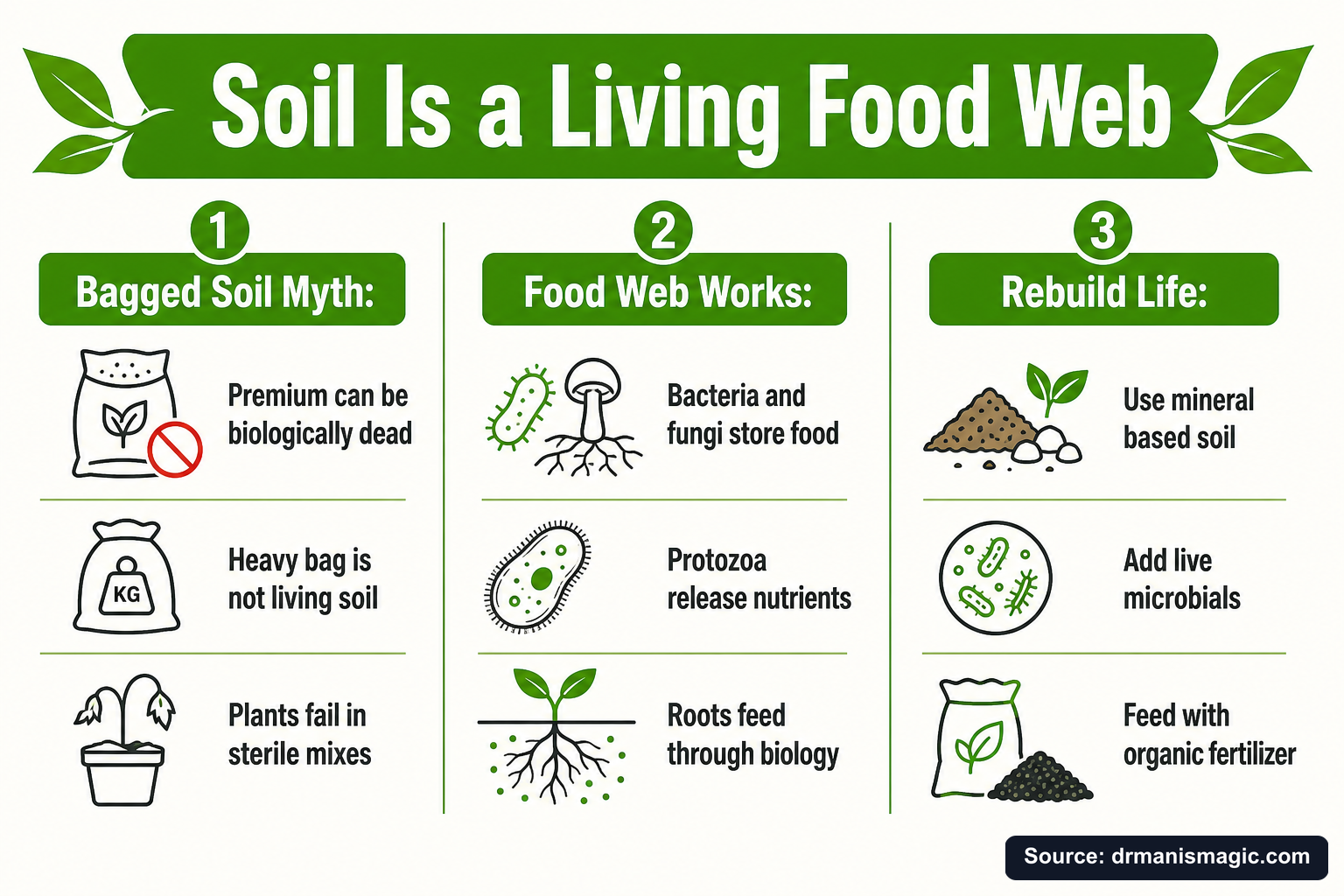
- Healthy soil is a living ecosystem, not just a growing medium. One teaspoon can hold up to 1 billion bacteria.
- Most bagged "premium soil" from garden centers is biologically dead or nearly dead by the time you open it.
- Plants get their nutrients from a predator-prey cycle involving bacteria, fungi, protozoa, and nematodes, not just fertilizer numbers on a bag.
- Salt-based synthetic fertilizers kill the beneficial microbes your plants depend on, creating a cycle of dependency and decline.
- Dried or bottled microbe products from big factories often don't work because the organisms are dormant, damaged, or dead before they reach your plant.
- The Three Plant Pillars — mineral-based soil, live microbials, and organic fertilizer — give your plants the foundation nature intended.
- You can rebuild depleted or sterile soil with the right approach, but it takes time, consistency, and living biology.
Why Is Soil Actually a Living Ecosystem and Not Just Dirt?
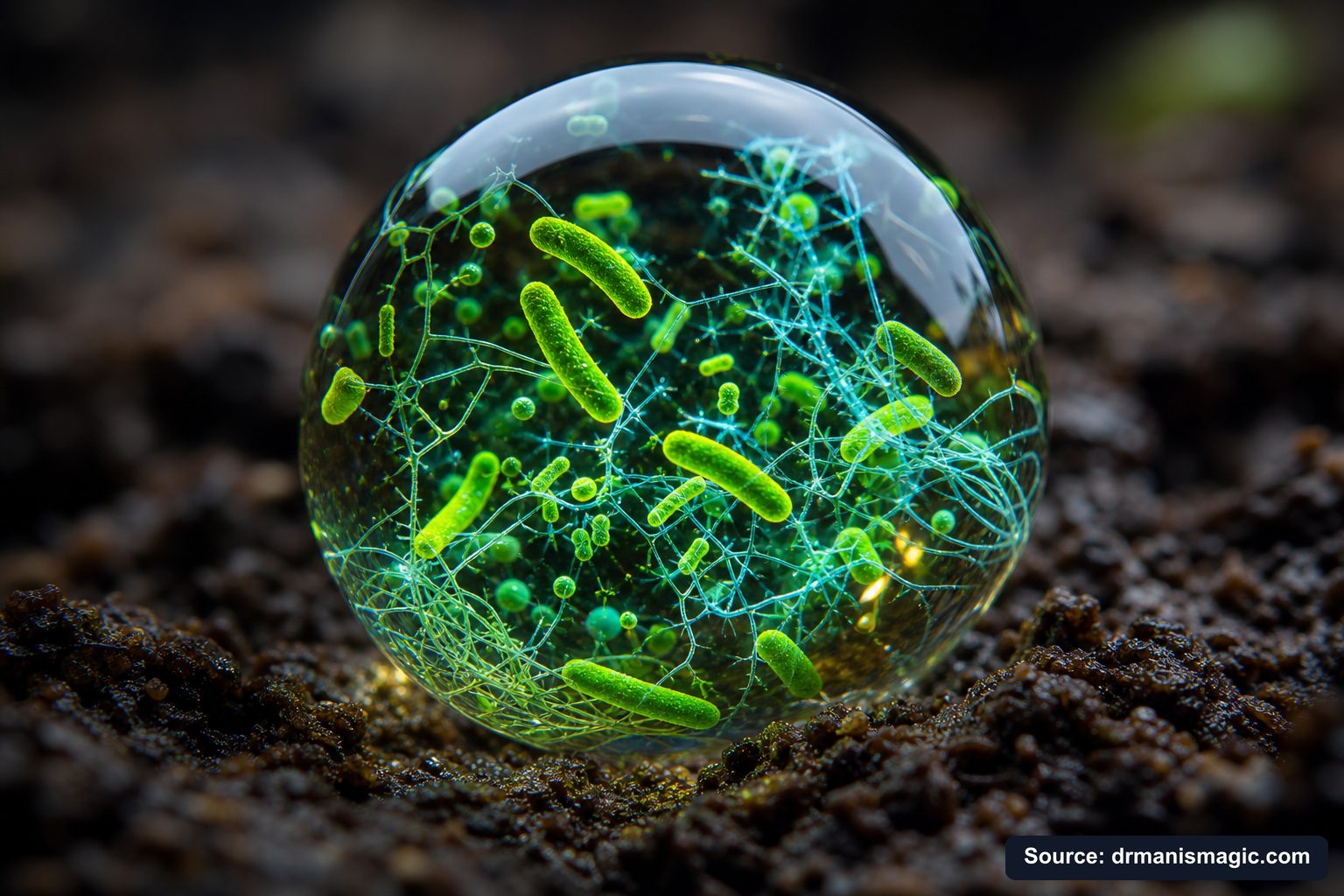
Quick Answer: Real soil is alive with bacteria, fungi, protozoa, nematodes, and more. These organisms cycle nutrients, fight disease, build soil structure, and feed your plants in ways no fertilizer bottle can replicate. A single teaspoon of healthy soil can contain up to 1 billion bacteria and thousands of fungi.
Soil is not dirt. That distinction matters more than almost anything else in gardening.
Think about a forest floor. Nobody fertilizes it. Nobody waters it. Nobody buys a bag of "premium potting mix" and dumps it around the oak trees every spring. And yet those trees grow massive. They live for hundreds of years. Their leaves are green and lush. Their roots go deep. Why?
Because the soil is alive.
According to Colorado State University Extension, healthy productive soil contains 100 million to 1 billion bacteria per teaspoon, plus fungi, protozoa, nematodes, arthropods, roots, and earthworms all working together in what scientists call the soil food web. Colorado State University Extension describes this living system as the engine behind nutrient cycling, disease suppression, and soil structure — not an optional add-on, but the core of how soil actually functions.
This is what plants evolved to grow in. Not sterile potting mix. Not pine bark sawdust. A living, breathing underground city where trillions of tiny creatures do the hard work of feeding, protecting, and supporting every root in the ground.
When Dr. Mani Skaria, Professor Emeritus of Plant Pathology and founder of the Clean Citrus Program in Texas, first started asking why some citrus trees thrived while others failed, he kept coming back to the same answer. It wasn't the variety. It wasn't the weather. It was what was happening underground.
After 40 years of research and testing on more than 250,000 trees at the US Citrus Nursery in South Texas, the answer became undeniable. The plants that thrived had living soil. The plants that struggled were sitting in biological dead zones.
What Is the Soil Food Web and Why Should Every Gardener Know It?
Quick Answer: The soil food web is the community of living organisms in soil that cycle nutrients, suppress disease, and feed plants. Bacteria and fungi capture nutrients. Protozoa and nematodes eat them and release plant-available nitrogen. This predator-prey chain is how nature delivers fertilizer — no bag required.
Here is the part most garden centers will never explain to you. Because it would change how you shop.
Nutrients don't go straight from the soil into your plant. That's not how nature works. There's a chain. A cycle. And it depends on creatures most people have never heard of.
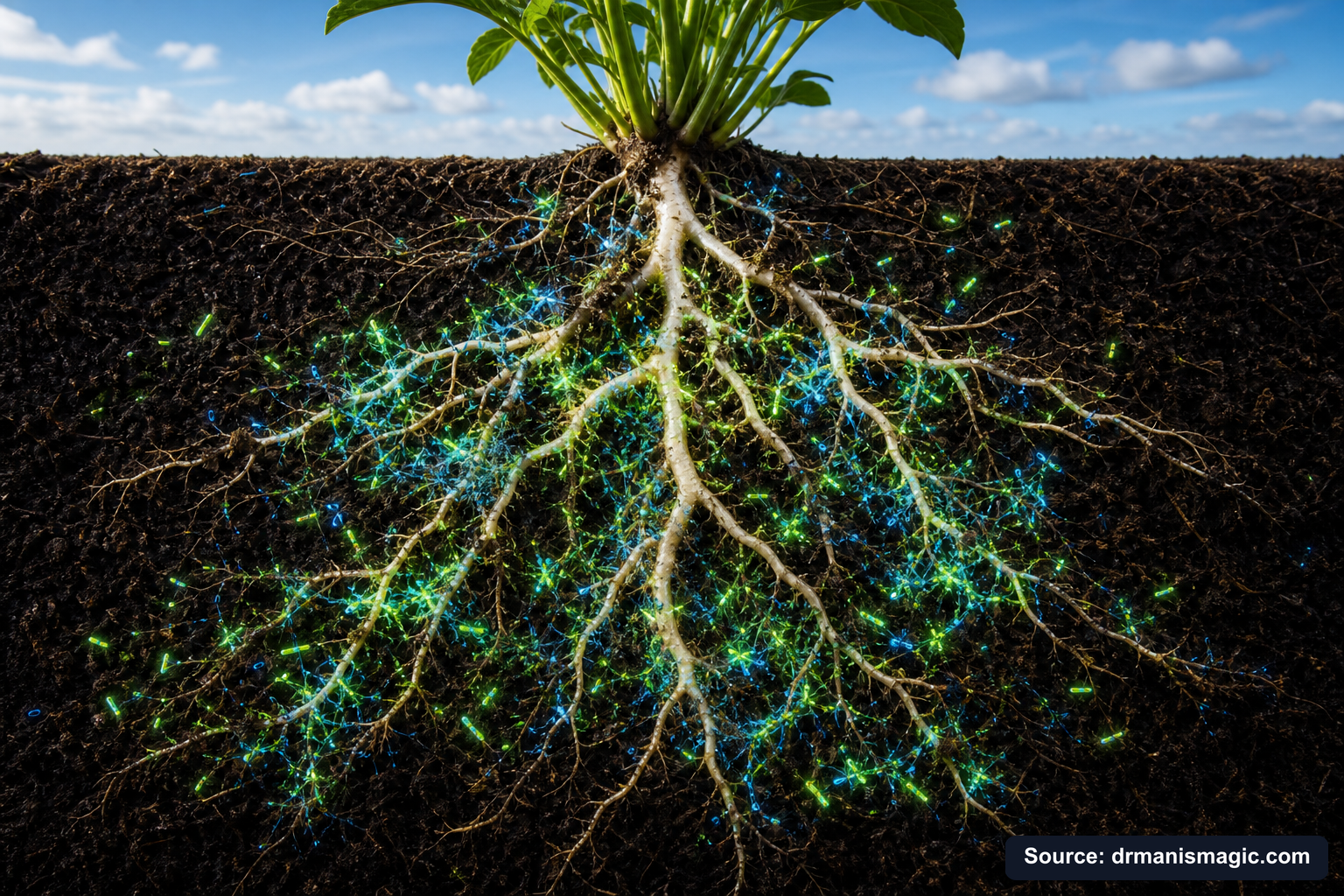
It works like this. Bacteria and fungi break down organic matter in the soil. They store nutrients inside their own tiny bodies. Then protozoa and nematodes come along and eat those bacteria and fungi. When they digest and excrete that material, the nutrients get released right next to plant roots in a form the plant can actually absorb.
That's the predator-prey nutrient cycle. It's not magic. It's biology. But it means that the availability of nutrients in your soil is partly determined by this living food chain, not just by the numbers on a fertilizer bag.
Here's a simple map of who does what underground.
| Organism | What It Does | Why Your Plant Needs It |
|---|---|---|
| Bacteria | Break down organic matter, fix nitrogen from air, solubilize minerals | Converts raw materials into plant-usable nutrients |
| Fungi (including mycorrhizae) | Extend root reach, unlock phosphorus, build soil aggregates via glomalin | Massively increases root surface area and nutrient access |
| Protozoa | Eat bacteria, release nitrogen as waste near roots | Acts as a nitrogen delivery system directly at the root zone |
| Nematodes (beneficial) | Graze on bacteria and fungi, release nutrients, suppress harmful nematodes | Keeps the food web balanced and nutrient cycle moving |
| Earthworms | Aerate soil, shred organic matter, leave nutrient-rich castings | Physical engineers of soil structure and drainage |
| Arthropods | Shred debris, create pores, stimulate microbial activity | Improves aeration and speeds up decomposition |
Every single one of these players has a job. Remove one layer and the whole system weakens. Remove most of them, which is what happens in sterile potting mix or chemically treated soil, and your plant is completely on its own. It has no army. No food chain. No support system at all.
That's why plants in "premium" bagged soil so often struggle. They're growing in a biological vacuum.
Why Do Plants Grown in Bagged Soil From Garden Centers Still Fail?
Quick Answer: Most bagged potting mixes are biologically sterile or nearly dead. They're made from pine bark and sawdust that compact over time, block oxygen from roots, and drain poorly. Even bags labeled "living soil" or "contains beneficial microbes" often have organisms that are dormant, dying, or dead by the time you open the bag.
This is the question that frustrates so many gardeners. You bought the premium bag. You followed the directions. And your plant still looks terrible. What happened?
A few things. And none of them are your fault.
Problem 1: The biology is gone. Most potting mixes are sterilized during manufacturing to prevent pathogens and weeds. That's actually reasonable. But sterilization also kills every beneficial microbe in the mix. When you plant into it, you're planting into a biological desert. There's no food web. There's no army. There's nothing alive down there to support your plant.
Problem 2: The structure collapses. Most bagged mixes are built on pine bark, wood chips, and sawdust. These materials feel light and fluffy when they're fresh. But they're organic. They decompose. Within six to twelve months, they compact down into a dense, soggy sludge that blocks oxygen from reaching roots. Roots need oxygen just as much as they need water. When the soil compacts, roots suffocate. That's how root rot starts.
Problem 3: The salts build up. Many bagged soils come pre-loaded with synthetic fertilizer. Sounds convenient. But synthetic fertilizers are salt-based. Over time, those salts accumulate in the soil. They pull water away from roots through a process called osmotic stress. They kill the few beneficial microbes that survived sterilization. And they create a plant that's chemically dependent on the next dose of fertilizer to keep going. Take it away and the plant crashes.
Problem 4: Chemical carryover. If you've used herbicides, fungicides, or broad-spectrum pesticides in your garden, those chemicals don't just disappear. Many linger in the soil for months or even years. Glyphosate, for example, is well documented for disrupting soil microbial communities. A garden that looks "clean" on the surface can be biologically devastated underground.
See also: The Hidden Reason Synthetic Fertilizers Cause Root Rot
What Is the Difference Between Living Soil, Potting Mix, and Real Mineral-Based Soil?
Quick Answer: Living soil has active biology. Potting mix is mostly sterilized organic material that compacts and decomposes. Mineral-based soil uses inorganic materials like sandy loam that don't break down, providing permanent structure, drainage, and aeration. Mineral soil is a foundation. Potting mix is a temporary patch.
Walk through any garden center and you'll see dozens of soil products. The labeling is confusing on purpose. Here's a plain-English breakdown of what you're actually looking at.
| Product Type | What It's Made Of | Does It Have Live Biology? | How Long Does It Last? | Best Use Case |
|---|---|---|---|---|
| Potting Mix | Pine bark, peat, perlite, wood chips | No. Sterilized at production. | 6-12 months before compaction | Short-term container planting |
| "Living Soil" (bagged) | Compost, peat, bark, possibly some inoculants | Minimal. Often dead by bag-opening. | Variable. Degrades like potting mix. | Marketing claims exceed performance |
| Topsoil | Dug from fields, variable quality | Sometimes. Depends heavily on source. | Long, but may compact or drain poorly | Filling raised beds or low spots |
| Mineral-Based Soil (Super Soil) | Sandy loam, coco coir, rice hulls, biochar | Steam-sterilized base, ready for microbial inoculation | Permanent. Does not decompose. | Long-term containers, trees, any potted plant |
| Compost | Decomposed organic matter | Yes, if fresh and active | Used as amendment, not standalone | Amendment to improve biology and structure |
The reason Dr. Mani developed Super Soil was simple. He watched potting mix fail over and over at the nursery. Pine bark compacts. It steals oxygen. It creates the exact conditions root rot loves. So he went back to basics. He used mineral-based sandy loam from the Rio Grande Valley. Silica-rich sand that does not decompose. That does not steal oxygen. That drains perfectly every single time.
Then he added coco coir for moisture retention, rice hulls for aeration, and biochar as a permanent home for microbes. The result is a soil that works on day one and keeps working for years without ever needing to be replaced. It's a permanent investment, not a yearly purchase.
Do Beneficial Microbes and Mycorrhizal Fungi Actually Work in Garden Soil?
Quick Answer: Yes, but only if they're alive and compatible with your plants. Mycorrhizal fungi form a real partnership with most plants, extending root reach and improving water and nutrient uptake. But inoculation only works with direct root contact, correct soil conditions, and truly living organisms. Most products on shelves don't meet that bar.
Mycorrhizae are real. The science on them is solid. University of Wisconsin Extension confirms that mycorrhizal fungi form genuine partnerships with most plant species, extending root systems and improving access to water and nutrients, especially phosphorus. This is not a marketing claim. It is documented biology that dates back hundreds of millions of years.
Have you ever pulled a weed out of the ground and seen fuzzy white threads around the roots? That's mycorrhizae. That's why weeds grow so aggressively. They have a fungal army extending their root system in every direction.
Your vegetables, fruit trees, flowers, and houseplants deserve the same advantage.
But here's where it gets complicated. Just because something says "contains mycorrhizae" on the label doesn't mean it works. In fact, most of the microbial products on store shelves fail to deliver any real benefit. And after growing more than 250,000 trees at US Citrus Nursery, Dr. Mani and his team tested dozens of these products and saw the same disappointing result again and again.
The reason comes down to one word: viability. Are the microbes actually alive?
You Never Had a Brown Thumb.
You were handed the wrong tools. This free guide hands you the right ones.
You watered it. You fed it. It died anyway.
It was never you. It was the dirt, the salt food, and the bad advice.
This guide shows you what really went wrong, and how to fix it for good.
- Why your plants really died, and why it was never your fault
- The salt hiding in your plant food that quietly burns the roots
- The hidden killer in almost every bag of store soil
- The tiny helpers that grow a whole forest for free
- The rescue trick that brings a half dead plant back to life
Why Do Most Bottled Microbe Products Fail to Help Your Plants?
Quick Answer: Most bottled microbe products are either dried lab-grown spores that don't reactivate in your soil, or liquid compost teas that went anaerobic and started dying before they reached you. If the bottle smells like sewage, the microbes are dead. Dead microbes can't help living plants.
This is one of the most important things we've learned in 30 years of growing. And the garden center will never tell you this.
There are three main ways microbial products are made. And two of them almost never work.
Type 1: Dried lab-grown powder. Giant factories brew specific strains of bacteria or fungi in huge vats. Then they dry them into a powder. The hope is that these dormant spores will "wake up" when you add water and pour them into soil. We tested dozens of batches. We watched our trees. We saw almost no response. The organisms don't survive the process well enough to establish in your root zone.
Type 2: Liquid compost tea gone bad. Some companies harvest microbes from compost or worm castings and bottle them as a liquid. When it's fresh and actively aerated, compost tea is genuinely powerful. Gardeners throughout history have called it magical. But here's the problem. After about 24 hours without oxygen, those microbes go anaerobic. They start dying. The liquid starts fermenting. By the time that bottle reaches your doorstep, you've got a smelly, dying brew. You might notice the bottle fizzes when you open it. That's gas from fermentation. The microbes are already gone.
Type 3: Lactobacillus (the yogurt bacteria). Easy to make. Very vigorous. But it aggressively outcompetes the beneficial microbes your plants actually need. It belongs in your gut, not your garden.
Here's a comparison so you can see exactly what you're dealing with at a glance.
| Source / Form | Are the Microbes Alive? | Spectrum of Organisms | Does It Smell? | Our Recommendation |
|---|---|---|---|---|
| Dry powdered lab microbes | Very low viability | Narrow (1-3 strains) | No | Avoid. We saw no results. |
| Dry microbes rehydrated in liquid | Very low viability | Narrow | No | Avoid. Same issue as above. |
| Compost tea (fresh, under 24 hours) | Moderate (if actively aerated) | Partial | Earthy when fresh, sour when old | Use immediately or not at all. |
| Bottled compost tea (sitting on shelf) | Anaerobic and dying | Partial | Strong and unpleasant | Not recommended. |
| Fresh active compost | High (when freshly made) | Broad and natural | Earthy | Excellent if you make your own. |
| Plant Super Boost (stabilized, full-spectrum) | High. Verified by lab analysis. | 2,000+ bacteria, 400-500 fungi including mycorrhizae, plus protozoa and nematodes | Earthy. Not anaerobic. | Harvested from real compost, stabilized by an all-natural method. |
The difference with Plant Super Boost is the stabilization method. Dr. Mani's team partnered with a world-renowned compost expert who developed an all-natural technique to keep microbes alive without letting them go anaerobic. The result is a full-spectrum microbial product that still smells earthy, not rotten, because the biology inside it is stable and active. You can put a drop under a microscope and actually watch the microbes move. That's how alive this product is. It carries zero PFAS, zero biosludge, and zero synthetic salts.
How Do Salt-Based Fertilizers Destroy the Soil Food Web?
Quick Answer: Salt-based synthetic fertilizers create high-salt conditions that pull water away from microbial cells and plant roots through osmotic pressure. This kills beneficial bacteria and fungi in the root zone. Without that biology, your plant becomes dependent on the next fertilizer dose to survive, setting up a cycle of chemical dependency and declining soil health.
Here's the ugly truth about the fertilizer you've probably been using.
Most synthetic fertilizers, including the fast-release granules and liquid concentrates sold at every garden center, are salt-based. They work fast. You'll see green-up within days. And that's exactly why they're so hard to stop using. The results look real.
But underground, something terrible is happening.
Those salts raise the electrical conductivity of your soil. They create a high-salt environment that pulls moisture out of microbial cells through osmosis, the same way salt dehydrates a slug. Beneficial bacteria and fungi start dying. The food web collapses. The predator-prey nutrient cycle we talked about earlier shuts down. And now your plant has no living support system left.
So it needs more fertilizer. And the cycle repeats.
Each season, the biology gets weaker. The soil structure degrades. The roots become more vulnerable to pathogens because there's no microbial defense left. You end up spending more money every year to get the same results, or worse results, because you're fighting against the laws of nature.
This isn't a small problem. It's been happening since the 1950s when synthetic fertilizer companies became the dominant voice in American gardening. You were never given the information to make a different choice. Now you have it.
See also: Why Most Fertilizers Are Actually Salt in Disguise
What Are the Three Plant Pillars and Why Do They Work Together?
Quick Answer: The Three Plant Pillars are Dr. Mani's framework for giving any plant what it needs at the root level: mineral-based soil that never compacts, live microbials that build a living food web, and organic fertilizer that feeds plants and microbes without salt damage. All three must work together. Missing one weakens the whole system.
After decades of testing at US Citrus Nursery, Dr. Mani Skaria distilled everything down to three non-negotiables. Three things that, when done right, make plants nearly bulletproof. He calls them the Three Plant Pillars.
Pillar 1: Mineral Foundation. Your soil must drain perfectly and never compact. That means using mineral-based soil, not organic material that decomposes into sludge. Sandy loam from South Texas provides permanent structure. Roots breathe. Water moves. Oxygen flows. Without this, nothing else matters because roots suffocate before they can use any nutrition you give them.
Pillar 2: Microbial Muscle. Your soil must be alive. Live bacteria, fungi, mycorrhizae, protozoa, and nematodes working in concert. They unlock nutrients, fight pathogens, build soil aggregates, extend root reach, and create the same underground ecosystem plants evolved in over millions of years. Without this, your plant is defenseless.
Pillar 3: Organic Fertilizer. Your plant needs the full spectrum of nutrients delivered slowly, gently, and without salt damage. Crab meal, kelp, and amino acids feed both the plant and the microbes. No salt burn. No chemical dependency. No plastics leaching into your soil. Just slow, steady nourishment that builds long-term health.
Miss any one of these pillars and you're going to see problems. Root rot. Yellow leaves. Weak fruit. Pest and disease pressure. Plants that start okay and then slowly circle the drain.
Get all three right, and something shifts. Plants don't just survive. They thrive. The roots go deep. The leaves stay green. The fruit actually forms. It's not luck. It's not a green thumb. It's first-principles science, tested on 250,000 trees in South Texas, now available to any gardener in America.
Can Salt Buildup, Pesticides, and Herbicides Permanently Damage Your Soil Biology?
Quick Answer: Yes. Salt-based fertilizers, synthetic herbicides like glyphosate, broad-spectrum pesticides, and synthetic fungicides all damage or kill beneficial soil organisms. The damage is not always permanent, but recovery requires stopping harmful inputs, rebuilding organic matter, and consistently reintroducing live microbial communities over multiple growing seasons.
The hard truth is that most American gardens and lawns have been biologically damaged for decades. It happened slowly. It happened quietly. And most gardeners had no idea it was happening because the plants still looked okay on the surface while the underground ecosystem was collapsing.
Glyphosate, the active ingredient in many common weed killers, is widely documented for disrupting soil microbial communities. Synthetic fungicides don't just target the bad fungi. They suppress the beneficial ones too, including the mycorrhizae your plants need most. Broad-spectrum pesticides affect the protozoa and nematodes that drive the nutrient cycle.
And the salt from synthetic fertilizers? Every application pushes the soil a little further toward a sterile, high-salt environment where beneficial biology can't survive.
The good news is that soil can recover. But it takes more than one application of microbes. It takes a sustained commitment to rebuilding the ecosystem. That means stopping the damaging inputs. Adding organic matter. Reintroducing live biology regularly. And giving your soil the time and conditions it needs to rebuild what was lost.
How Do You Rebuild Dead or Sterile Soil? A Practical Recovery Plan
Quick Answer: Rebuilding dead soil means stopping harmful inputs first, then systematically restoring organic matter, live biology, mineral structure, and correct water management. It takes multiple seasons, but improvement starts within weeks of getting the biology right.
Whether your soil came from a bag, got hit with herbicides, or has been on synthetic fertilizer for years, here's how to start the recovery. Follow these steps in order.
- Stop the damage first. No more synthetic salt-based fertilizers. No more broad-spectrum herbicides or fungicides unless absolutely necessary. You cannot rebuild a house while someone keeps knocking down the walls.
- Check your structure. If you're in containers, ask yourself honestly whether the soil has compacted. If it has, replace it with a mineral-based mix that won't compact again. Roots need oxygen. Compacted soil blocks it.
- Add mature compost or organic matter. Fresh, active compost introduces biology and feeds the organisms you're about to inoculate. Even a one-inch top dressing around plants makes a difference.
- Inoculate with live, full-spectrum microbes. This is the most critical step. Use a genuinely living microbial product, not a dried powder or a smelly bottle. Apply monthly and consistently. Biology takes time to establish and expand through the root zone.
- Switch to organic fertilizer. Feed your plants and your microbes at the same time. Slow-release organic nutrition from sources like crab meal, kelp, and amino acids works with the biology instead of burning it down.
- Mulch the surface. A layer of organic mulch on top of your soil protects the microbial community from temperature swings, moisture loss, and UV exposure. It also feeds the food web as it slowly breaks down.
- Be patient but consistent. Damaged soil doesn't recover in a week. But with the right inputs, you'll see changes within a month. Real, lasting recovery happens over one to three growing seasons. Stay the course.
You can get money back. You cannot get time back. The best time to fix your soil was last year. The second best time is today. Every season you spend fighting your soil is a season without the garden you've been dreaming about. Every year you wait is a year without fruit on the tree you could have planted.
What Should You Actually Buy at the Garden Center and What Should You Skip?
Quick Answer: Buy compost if it's fresh and earthy-smelling. Skip synthetic fertilizers, bagged "living soil" with vague claims, dried microbial powders, and anything that smells like sewage. The products worth investing in are mineral-based soil, genuinely live microbials, and organic slow-release fertilizer.
You deserve a straight answer. Here it is.
Most of what fills those garden center shelves is designed to be bought repeatedly. Not to work. There's a big difference. When your plants struggle, you come back. You buy something new. You try again. That cycle is very profitable for big-box stores and chemical companies. It is very expensive and frustrating for you.
Here's a quick guide to help you cut through the noise.
Worth buying: Fresh, earthy-smelling compost from a local source. Organic mulch. Mineral-based soil that won't compact. A genuinely live microbial product you can verify. Organic slow-release granular fertilizer with no synthetic salts.
Skip or use with caution: Any synthetic fertilizer with high NPK numbers and no organic source listed. Bagged "living soil" or "premium potting mix" based on pine bark. Dried microbial powders with no evidence of viability. Any liquid microbial product that smells unpleasant. Herbicides, synthetic fungicides, or broad-spectrum pesticides that will set your biology back months.
The simplest version of this decision? Ask one question before you buy anything for your soil. Does this product feed the living ecosystem underground, or does it replace it with a chemical shortcut? If the answer is shortcut, put it back on the shelf.
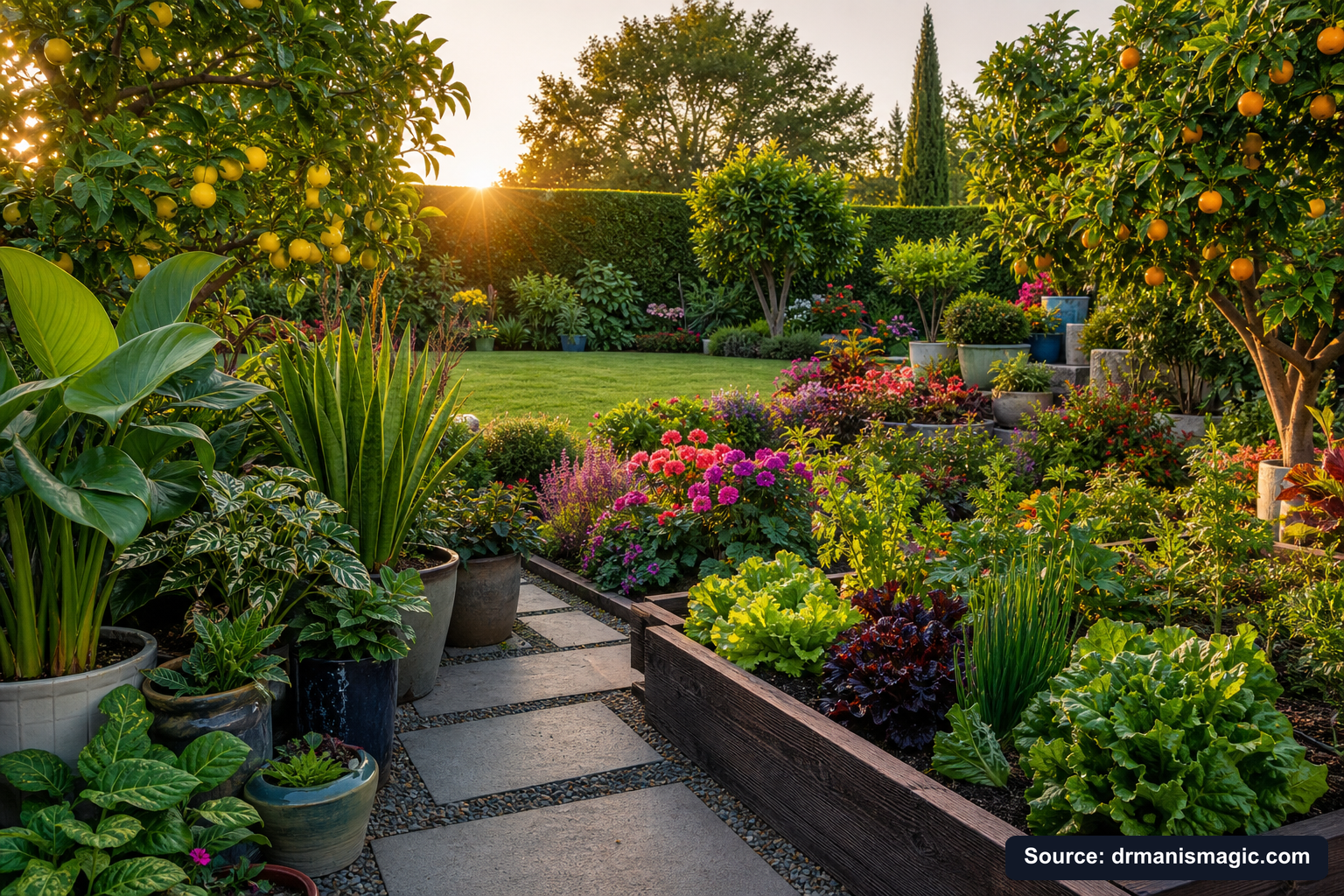
What Can You Do Right Now to Give Your Plants a Fighting Chance?
You've now seen what most garden centers don't explain. Soil is not a growing medium. It's a living world. A food web. A community of billions of invisible workers who, when they're healthy and active, do things for your plants that no fertilizer bottle can duplicate.
You've also seen why that world gets destroyed. Salt-based fertilizers. Synthetic chemicals. Compacted, decomposing potting mix. Dried or dead microbial products that look impressive on the label but deliver nothing to your roots.
The Three Plant Pillars are Dr. Mani's answer to all of it. Mineral soil that breathes and drains permanently. Live microbes that build a real food web around your roots. Organic fertilizer that feeds both the plant and the biology without burning either one. These three things, working together, are what nature provides in a healthy forest floor. And they're what your plants have been missing.
You don't need to figure this out alone. Dr. Mani and his team have spent 30 years in South Texas doing exactly this work so you don't have to. They've grown 250,000 trees. They've tested dozens of microbial products. They've watched the failures and the victories up close. And they built the Dr. Mani's Magic line specifically so any gardener, whether you have a single houseplant or half an acre of fruit trees, can start with the right foundation.
The results come faster than you'd expect. And they compound over time. Every month the biology gets stronger. Every season the soil gets richer. Every year the plants get more resilient. That's what happens when you stop fighting nature and start working with it.
If you're ready to see what your plants can actually do when they have a living, breathing foundation underneath them, start with the Plant Super Boost, our full-spectrum live microbial formula harvested from real compost, stabilized so it stays alive all the way to your garden, and proven across 250,000 trees in South Texas. It smells like earth, not sewage. It carries zero PFAS, zero biosludge, and zero synthetic salts. And it comes with a 30-day money-back guarantee, because we know it works and we want you to find out for yourself.
Your plants are waiting. The soil food web is ready to go to work. Give it the tools it needs and watch what happens.
Frequently Asked Questions
Most gardeners leave the garden center with bags of soil and a head full of hope. Then the plants struggle anyway. These questions come up again and again, and the answers most people get are wrong. Here is what Dr. Mani's 35 years of growing over 250,000 trees taught us about what really goes on underground.
What do garden centers leave out when they sell you soil?
They leave out the most important part. Healthy soil is a living food web with billions of bacteria and fungi working to feed your plants. Most bagged potting mixes are made from pine bark and wood that break down fast, compact into sludge, and choke roots. By the time you open the bag, the biology is already dead or dying. That is not soil. That is a slow-motion plant trap.
Why do my plants look worse after I use store-bought potting mix?
Because most potting mix is organic material that rots. As it breaks down, it steals oxygen from roots and holds water in all the wrong ways. Roots need air to breathe. When the mix compacts, roots suffocate. Dr. Mani built Super Soil around mineral-based sandy loam from South Texas. It does not break down. It does not compact. Roots get the air and drainage they need to grow strong from day one.
What potting mix do nurseries actually use for healthy trees?
The best nurseries use mineral-based mixes, not peat or pine bark. Dr. Mani tested this on over 250,000 citrus trees at US Citrus Nursery. The answer was clear. Sandy loam soil with silica-rich particles holds its structure permanently. It drains fast, stays loose, and lets roots push deep without hitting a wall of rotting wood pulp. That is the base of Dr. Mani's Magic Super Soil.
What are the biggest gardening mistakes that kill plants before they have a chance?
The three biggest ones are wrong soil, wrong fertilizer, and no living microbes. Planting in cheap potting mix starves roots of oxygen. Using salt-based synthetic fertilizers burns the soil and wipes out beneficial bacteria. Skipping microbes leaves your plant defenseless against disease and nutrient lockup. Dr. Mani calls these the Three Plant Pillars. Miss any one of them and your plant is already fighting uphill from the start.
Do the microbe products sold at garden centers actually work?
Most do not. Microbes need to be alive to help your plants. Most bottled microbe products from big stores sit in warehouses for months. By the time you pour them on your soil, the organisms are dormant, damaged, or completely dead. Dr. Mani's Magic Plant Super Boost uses a special stabilization method that keeps live bacteria, fungi, and mycorrhizae active right up until they hit your soil. You can even smell the difference. It smells like earth, not a chemistry lab.
What is the best gift for a serious gardener who already has every tool?
Give them something they will use up and want more of. The best gardeners know that consumables matter more than gadgets. A complete system like Dr. Mani's Magic covers all Three Plant Pillars at once. Mineral-based Super Soil, live Plant Super Boost microbials, and slow-release Crab Kelp and Amino Acids organic fertilizer. No mixing and matching from random brands. No guessing if the products work together. Just one proven system tested on 250,000 trees.
What should I skip when shopping at a garden center?
Skip any bag that lists pine bark, wood chips, or sawdust as the main ingredient. Skip synthetic fertilizers with fast-release numbers on the label. Those are salt bombs that fry your soil biology. Skip plants that are already blooming or showing yellow leaves. And skip the advice from staff who water plants while wearing headphones. Get your foundation right first with mineral soil, live microbes, and organic fertilizer. Everything else is decoration.
About the Author
Ron Skaria, MD
Ron Skaria, MD, is the co-founder of Dr. Mani's Magic and the son of Dr. Mani. He trained as a medical doctor at Baylor College of Medicine, did his residency at UT Health Science Center - San Antonio and fellowship training at Texas Tech University. He now works full time on the family farm at US Citrus and US Citrus Nursery in Hargill, Texas, building Dr. Mani's Magic alongside his dad. He wrote the Brown Thumb Field Guide to put his father's 48 years of plant science into plain words any gardener can use. His belief is simple. You never had a brown thumb. You just never had the right help.


