


What Backyard Gardeners Can Learn From Ancient Orchards | Dr. Mani's Magic
What Backyard Gardeners Can Learn From Ancient Orchards
Close your eyes for a second. Picture an orchard in ancient Persia. A thousand years ago. Maybe two thousand. The air smells like warm earth, ripe fruit, and something alive underneath your feet. No fertilizer bags. No pesticide sprayers. No big box store in sight. Just trees. Heavy with fruit. Year after year after year.
Nobody was out there with a soil test kit. Nobody was pouring synthetic salt pellets around the roots. And yet, those orchards fed entire civilizations. Some of those trees lived for centuries. The soil underneath them got richer over time, not poorer. How? What did those ancient growers know that most modern gardeners have completely forgotten?
Here is what most people never realize: those orchards did not survive because of what the growers added. They survived because of what the growers never took away. The leaves stayed on the ground. The roots stayed in the soil. The animals grazed underneath. The whole living system kept feeding itself. And deep in the dark, invisible to every farmer who ever walked those rows, trillions of tiny creatures were doing the real work. This article is about those creatures, those ancient lessons, and exactly how you can bring that same magic to your own backyard today.
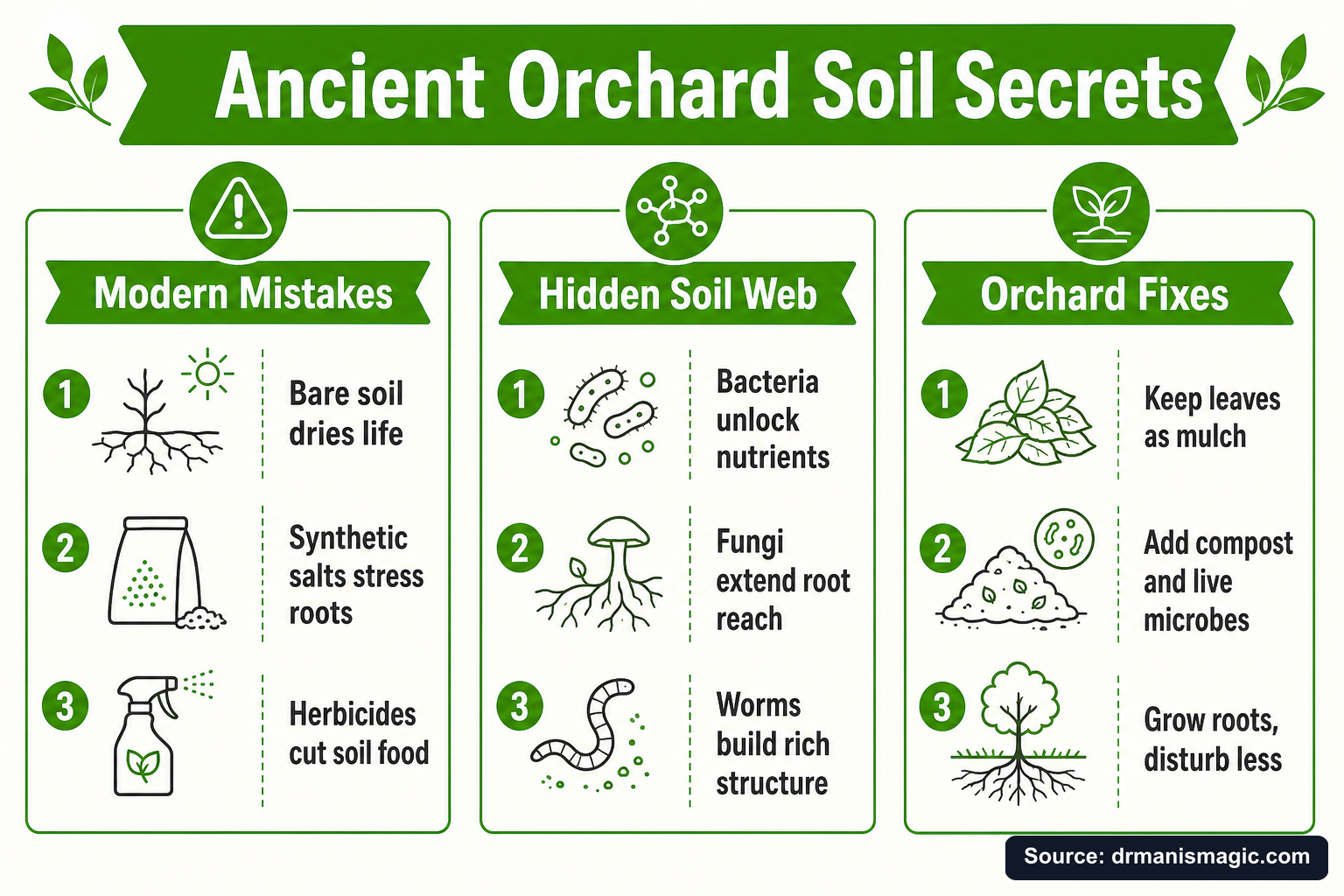
Key Takeaways
- Ancient orchards stayed productive for centuries because the soil was alive, covered, and undisturbed — not because of clever chemistry.
- The soil food web — bacteria, fungi, protozoa, nematodes, and earthworms — is the invisible workforce that made ancient orchards thrive and can do the same for your backyard.
- Modern practices like synthetic fertilizers, herbicides, and bare soil quietly kill the microbes that plants depend on most.
- You can rebuild a damaged, sterile soil over 3 to 24 months using mulch, compost, living roots, reduced disturbance, and live microbial inoculants.
- Not all microbial products work. Dried powders and smelly liquids are often dead on arrival. Live, stabilized microbes are what actually move the needle.
- The Three Plant Pillars — mineral-based soil, live microbials, and organic fertilizer — mirror exactly what ancient orchards had naturally.
- Time is the real cost of doing things the wrong way. Every season you spend fighting dead soil is a season you never get back.
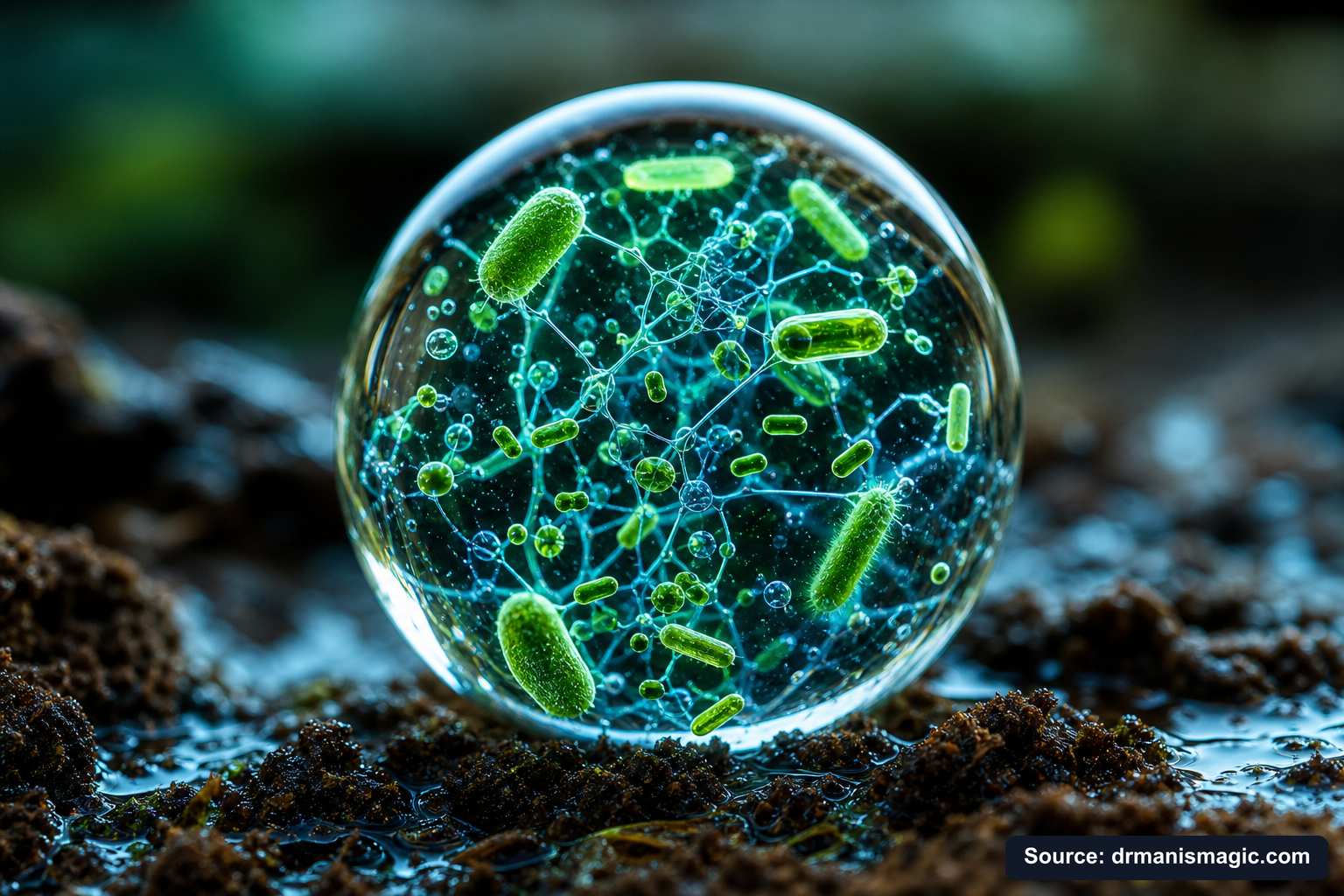
Why Did Ancient Orchards Produce Fruit for Hundreds of Years Without Fertilizer?
Quick Answer: Ancient orchards lasted because they functioned like natural ecosystems. Permanent roots, leaf litter, animal manures, mixed plants, and minimal soil disturbance all fed a living underground community of bacteria, fungi, protozoa, and nematodes that continuously recycled nutrients and protected tree roots.
Ancient orchards were not managed like a modern vegetable bed. They were not tilled every spring. They were not stripped bare. They behaved more like a forest than a farm.
Think about what happened in a traditional Persian qanat-fed orchard or an ancient Roman grove. Leaves fell and stayed on the ground. Animals wandered through and left manure. Tree roots pushed deeper and deeper every year, creating permanent underground channels. Shade from the canopy kept the soil cool and moist. Different plants grew together — fruit trees, herbs, groundcovers. Nobody called it a "polyculture." They just did what made sense.
And underneath all of it, something extraordinary was building. A living city. Invisible. Humming with activity. Scientists now call it the soil food web, and it is the real reason those ancient orchards never needed a bag of fertilizer.
The University of Minnesota Extension explains that soil biological processes supply a massive share of the nitrogen and phosphorus that plants actually use. Not from a bag. From the biology. Ancient growers did not know the science. But they accidentally created perfect conditions for that biology to thrive.
Modern gardeners, through no fault of their own, have been handed a completely different playbook. A playbook written by chemical companies, not by nature. And that playbook has quietly stripped the biology out of most backyard soils.
What Is the Soil Food Web and Why Should Backyard Gardeners Care About It?
Quick Answer: The soil food web is the living community of bacteria, fungi, protozoa, nematodes, arthropods, and earthworms that cycle nutrients, suppress disease, build soil structure, and feed plant roots. Without it, plants rely entirely on synthetic inputs. With it, the soil feeds itself, just like it did in ancient orchards for centuries.
Here is the part most gardening advice skips over completely.
The soil food web is not just bacteria and fungi. That is only the beginning. It is a whole layered community of living things, each one playing a specific role. Think of it like a city. Bacteria are the workers. Fungi are the roads. Protozoa are the managers who release nutrients when they eat bacteria. Nematodes are the security guards and the recyclers. Arthropods and earthworms are the heavy equipment operators who physically break material apart and move it through the soil.
When all of these layers are working together, something almost magical happens. Nutrients that were locked up in organic matter get released in exactly the forms plants can absorb. Disease-causing organisms get crowded out. Roots grow deeper and wider because the fungi create physical extensions — threads thinner than a human hair — that reach water and minerals the roots themselves could never find.
After growing and testing more than 250,000 trees at our US Citrus Nursery in South Texas, we saw this firsthand. Trees with a living soil food web around their roots simply performed differently. Stronger. More resistant to stress. Better fruit. The trees without it struggled no matter how much fertilizer we poured on.
| Organism | What It Does for Your Plants | Ancient Orchard Source | What Destroys It |
|---|---|---|---|
| Bacteria | Break down organic matter, fix nitrogen from air, suppress pathogens, improve root function under salt stress | Leaf litter, animal manure, compost | Synthetic herbicides, salt-based fertilizers, bare soil |
| Mycorrhizal Fungi | Extend root reach up to 100x, unlock phosphorus, improve drought resistance, produce glomalin that holds soil together | Undisturbed permanent roots, minimal tillage | Tillage, excess phosphorus fertilizer, synthetic fungicides |
| Protozoa | Graze on bacteria and release plant-available nitrogen — they are the nutrient recyclers nobody talks about | Moist soil rich in organic matter | Drying out, pesticides, chemical inputs |
| Beneficial Nematodes | Disperse bacteria and fungi through the soil, cycle nutrients, prey on pest insects and harmful nematodes | Diverse plant understory, organic mulch | Broad-spectrum pesticides, soil sterilization |
| Earthworms | Create air channels, mix organic matter deeper, leave nutrient-rich castings right at root level | Permanent mulch, animal manure, undisturbed soil | Tillage, synthetic chemicals, bare compacted soil |
| Arthropods (beetles, mites, etc.) | Shred organic material into smaller pieces so bacteria and fungi can work faster | Leaf litter, ground cover plants | Bare soil, pesticides, no surface cover |
Colorado State Extension and the University of Minnesota both point to protozoa as often overlooked but critically important. When protozoa graze on bacteria, they release nitrogen right at the root zone. This is what ancient orchardists were tapping into every time they left fallen leaves on the ground. They had no idea. But the biology rewarded them anyway.
What Ancient Orchard Practices Actually Translate to Modern Backyards?
Quick Answer: Seven ancient practices map directly onto modern soil science: keep soil covered, maintain living roots year-round, recycle organic matter, manage water wisely, diversify what grows on the orchard floor, avoid inputs that reset the biology, and let time stabilize the ecosystem. Each one feeds the soil food web that feeds your plants.
Let us break down exactly what ancient orchardists did and why it worked. These are not myths or folklore. Each one has a modern scientific explanation.
Lesson 1: Keep the Soil Covered
Ancient orchards never had bare soil. Leaf litter, grass, herbs, and fallen fruit all covered the ground constantly. Bare soil is hot, dry, and dead. Covered soil is cool, moist, and alive. The cover protects the fragile fungal threads near the surface, keeps moisture in for bacteria to work, and feeds the protozoa and nematodes that recycle nutrients.
For your backyard: mulch at least 3 to 4 inches deep around every tree, shrub, and garden bed. Wood chips, straw, shredded leaves — any organic material works. Do not pile it against the trunk. Keep it away from the stem but blanket the root zone generously.
Lesson 2: Feed the Underground Herd
Ancient orchardists did not fertilize plants. They fed the soil. Animal manures, composted plant material, and kitchen scraps all went back into the ground. The microbes ate that organic matter and turned it into plant-available nutrients slowly, steadily, and in the exact forms roots could use.
Salt-based synthetic fertilizers do the opposite. They bypass the biology entirely, deliver a chemical hit, and leave behind salt residues that damage or kill the very microbes that could have been doing that work for free. See also: The Hidden Reason Synthetic Fertilizers Cause Root Rot.
Lesson 3: Protect the Fungal Roads
Mycorrhizal fungi are one of the most remarkable things in all of nature. A single teaspoon of healthy ancient orchard soil could contain hundreds of feet of fungal threads. These threads connect tree to tree. They move water and nutrients through the soil like an underground internet. They are impossibly fragile.
One pass of a tiller destroys them completely. One dose of a synthetic fungicide wipes them out. Colorado State Extension cautions that commercial mycorrhizal inoculants are often unnecessary in established soils that already have adapted native fungi. The stronger move is to stop destroying what is already there. Reduce tillage. Stop synthetic fungicides. Add organic carbon through mulch and compost so the fungi have something to live in.
For severely disturbed or container soils, adding live mycorrhizal fungi through a product like Plant Super Boost — which contains 400 to 500 live fungal species plus 2,000-plus live bacterial species harvested from real compost, not a lab vat — can restart what chemical inputs or poor potting mix destroyed.
Lesson 4: Use Water Wisely
Ancient Persian and Roman orchards were built around careful water management. Not too much, not too little. Waterlogged soil kills the aerobic bacteria and fungi that do the most good. Dry soil kills them too. The goal is consistent moisture — what soil scientists call field capacity.
For your backyard: deep, infrequent watering beats shallow, daily watering every time. You want water to go down deep, where the roots are, not evaporate from the surface before the biology can use it.
Lesson 5: Diversify the Orchard Floor
Ancient orchards were never monocultures. Herbs, groundcovers, flowering plants, and sometimes vegetables all grew between the trees. Different plant roots feed different bacteria and fungi. Different flowers attract different beneficial insects. This diversity kept the whole system balanced. No single pest or disease could take over because no single organism dominated.
Lesson 6: Avoid Inputs That Reset the Biology
This is the one modern gardeners struggle with the most, because we have been trained to reach for a spray at the first sign of trouble.
Ancient orchardists had no choice but to work with nature. We do have a choice. And every time we spray a broad-spectrum herbicide, pesticide, or synthetic fungicide, we are setting the biological clock back to zero. The chemistry does not know the difference between a harmful fungus and a mycorrhizal fungus. Between a pest nematode and a beneficial nematode. It kills them all.
The result is a soil that looks fine on the surface but is biologically sterile underneath. A dead soil. A soil that needs more and more synthetic inputs just to keep the plant alive. That is not gardening. That is life support.
Lesson 7: Let Time Stabilize the Ecosystem
This is the hardest lesson for modern gardeners. Ancient orchards were not built in a weekend. The biology built up over years and decades. The fungal networks grew slowly. The protozoa populations stabilized. The soil structure improved incrementally.
You cannot rush nature entirely. But you can stop fighting it. And you can give it a head start.
You Never Had a Brown Thumb.
You were handed the wrong tools. This free guide hands you the right ones.
You watered it. You fed it. It died anyway.
It was never you. It was the dirt, the salt food, and the bad advice.
This guide shows you what really went wrong, and how to fix it for good.
- Why your plants really died, and why it was never your fault
- The salt hiding in your plant food that quietly burns the roots
- The hidden killer in almost every bag of store soil
- The tiny helpers that grow a whole forest for free
- The rescue trick that brings a half dead plant back to life

How Do You Rebuild Depleted Garden Soil Step by Step Over 3 to 24 Months?
Quick Answer: Rebuilding damaged or sterile garden soil is a staged process. Start by stopping the biology killers, then add organic carbon, live microbes, and organic nutrients. Keep soil covered and roots in the ground. Repeat microbial applications monthly. Most gardeners see meaningful improvement within 90 days and dramatic transformation within two growing seasons.
Here is a practical recovery checklist you can actually use this weekend.
- Stop the bleeding first. No more synthetic herbicides. No more salt-based fertilizers. No more broad-spectrum pesticides if you can avoid them. Every application resets the biology you are trying to rebuild. See also: Why Most Fertilizers Are Actually Salt in Disguise.
- Cover the soil immediately. Lay down 3 to 4 inches of wood chip mulch or straw over every root zone. This is the single fastest way to start protecting what biology remains and creating conditions for new biology to grow.
- Add live microbes within the first 30 days. Not dried powder. Not a smelly liquid that has gone anaerobic. Live, stabilized, full-spectrum microbes from a real compost source. Apply monthly and consistently.
- Feed with organic fertilizer, not synthetic salts. Use a slow-release organic fertilizer that works with the biology instead of burning it. Crab, kelp, and amino acids provide a full spectrum of macro and micronutrients in gentle, plant-ready forms that do not damage the microbes you just added.
- Keep living roots in the soil. Plant a cover crop between your trees if possible. Plant groundcovers. Even weeds are better than bare soil. Living roots feed bacteria through root exudates — liquid sugars the plant leaks on purpose to attract the microbes it needs.
- Reduce tillage to near zero. Every time you till, you shred fungal networks and flip the aerobic top layer down into the anaerobic zone below. Scratch the surface when you must. Leave the deep biology alone.
- Be patient and keep applying. In damaged soils, especially container soils or beds that have seen heavy chemical use, the biology needs repeated inoculation. Monthly applications of live microbes reinforce the community that is trying to re-establish itself.
| Timeframe | What You Do | What Is Happening Underground | What You Might See |
|---|---|---|---|
| Month 1 to 3 | Stop synthetic inputs, apply mulch, add live microbes monthly, switch to organic fertilizer | Bacterial populations begin recovering, salt levels drop, fungal threads start re-forming near surface | Soil starts to smell earthier, some improvement in leaf color, less stress response to watering |
| Month 3 to 6 | Continue monthly microbial applications, keep soil covered, diversify plantings | Protozoa and nematodes return as bacteria populations stabilize, mycorrhizal threads extend deeper | Noticeably stronger new growth, improved drought recovery, less yellowing |
| Month 6 to 12 | Maintain all practices, observe and adjust watering, add compost top dressing | Full food web beginning to cycle nutrients, soil structure improving, earthworm activity increasing | Better fruiting, stronger root systems visible if you repot or dig near plants, improved pest resistance |
| Month 12 to 24 | Continue, reduce inputs as biology self-regulates more | Stable, diverse microbial community, self-reinforcing nutrient cycles, glomalin building soil aggregates | Plants visibly more resilient, reduced disease pressure, soil holds moisture better, rich earthy smell |
Do Mycorrhizal Fungi and Beneficial Bacteria Products Actually Work, or Is It All Hype?
Quick Answer: Some microbial products genuinely work and some are essentially useless. The difference comes down to whether the microbes are actually alive when they reach your roots. Dried powders often fail to reactivate. Smelly liquids have usually gone anaerobic and the biology is dying or dead. Stabilized, live, full-spectrum microbes harvested from real compost are a different story entirely.
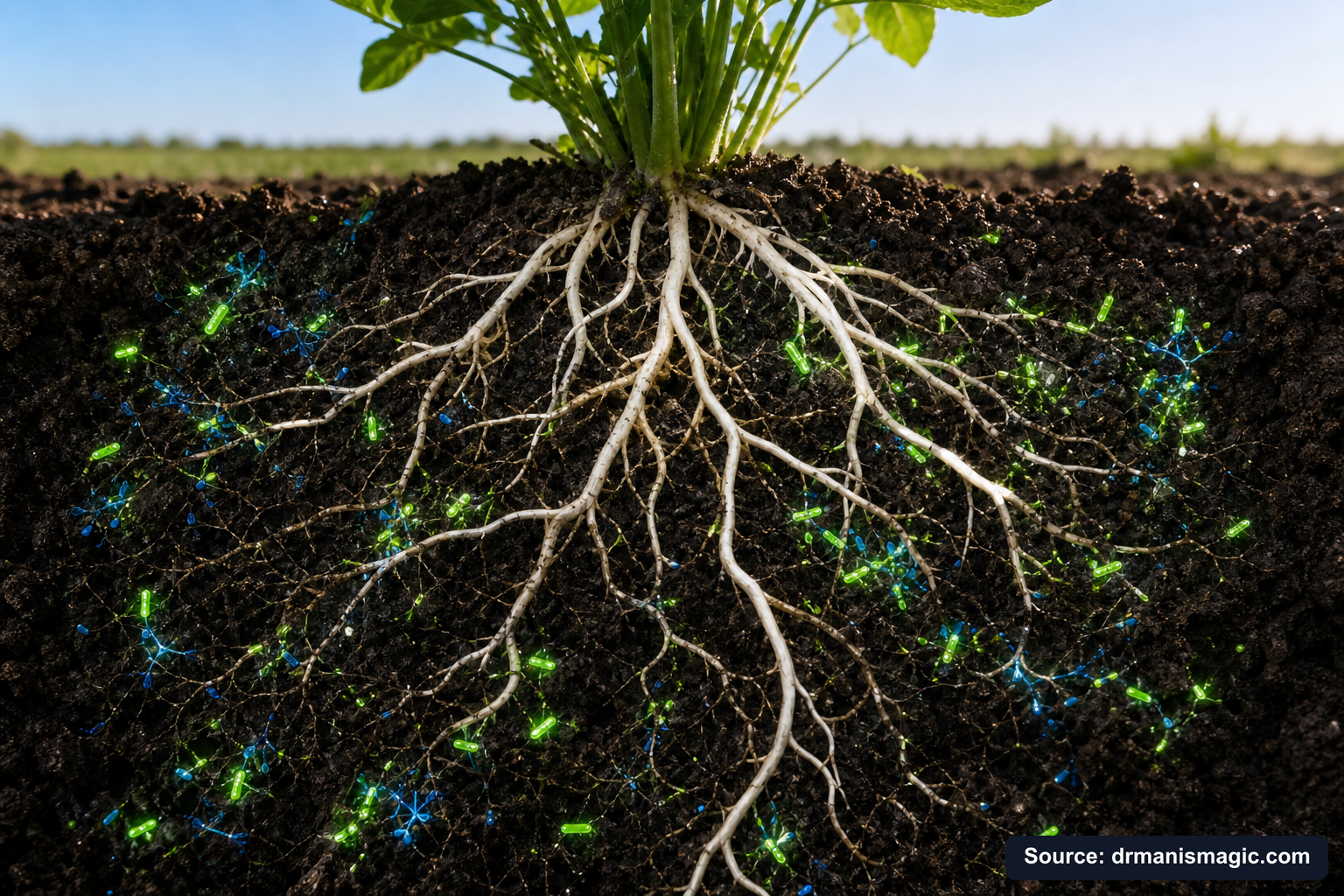
This is where the gardening industry has a serious honesty problem.
Walk through any garden center and you will find shelves full of products claiming to have beneficial bacteria or mycorrhizal fungi. Most of them are made the same way. A factory grows specific microbial strains in giant vats. The strains are dried into powder. The powder goes into a bag or bottle. You pay for it. You pour it on your plants. And nothing happens.
We tested dozens of these products at US Citrus Nursery over years of growing more than 250,000 trees. The results were consistently disappointing. Not because microbes do not work. They absolutely do. The problem is these products do not have living microbes in them by the time you use them.
The second category is liquid products that smell terrible. You open the bottle and it hits you. That smell is a warning. It means the product has gone anaerobic. The microbes are dying or already dead. Fermentation is happening. You might still get some benefit from the humic and fulvic acids in the base material, but the living biology you paid for is gone.
The third category is lactobacillus — the same bacteria in your yogurt. It is easy to keep alive. It does stay viable. But it is so aggressive it crowds out the beneficial microbes you actually want. Lactobacillus belongs in your gut, not your garden.
Then there is a fourth way. The way Dr. Mani discovered through a providential meeting with one of the world's most respected compostologists — a man who had quietly transformed farming for royal families and governments across the globe before being blacklisted by big chemical interests. The discovery was a natural, proprietary method to stabilize full-spectrum live microbes harvested from real, hot, active compost without letting them go anaerobic. The microbes stay alive. They stay active. You can see them moving under a microscope. The bottle does not stink because nothing is rotting.
That is the foundation of Plant Super Boost. It contains over 2,000 living bacterial species, 400 to 500 live fungal species including mycorrhizae, plus protozoa and nematodes — the full soil food web in a bottle. Zero PFAS. Zero biosludge. Zero synthetic salts. Made in the USA. Backed by a 30-day money-back guarantee.
| Product Type | Are Microbes Alive at Use? | Spectrum | Smell | Our Verdict |
|---|---|---|---|---|
| Dry powder (lab-grown, single or few strains) | Usually not — spores rarely reactivate in real soil | Very narrow | Low | Avoid. We saw no measurable results in our 250k tree trials. |
| Dry powder rehydrated in liquid | Rarely — same problem, harder to detect | Narrow | Low to mild | Avoid for same reasons as above. |
| Compost tea (fresh, under 24 hours, aerated) | Moderate — time-sensitive | Broad if from quality compost | Earthy | Good if you make it yourself and use it immediately. Not practical for most people. |
| Compost tea (old, over 24 hours) | No — anaerobic, biology dying | Partial | Strong, unpleasant | Do not use. Some humic acid benefit but live biology is gone. |
| Lactobacillus-based liquid | Yes — but wrong species | Very narrow (one genus) | Sour | Avoid. Crowds out beneficial microbes. |
| Plant Super Boost (stabilized, compost-harvested) | Yes — confirmed by microscope and lab analysis | 2,000+ bacteria, 400-500 fungi, protozoa, nematodes | Earthy, not unpleasant | Use monthly. The closest thing to fresh compost tea in a shelf-stable bottle. |
How Do the Three Plant Pillars Mirror What Ancient Orchards Had Naturally?
Quick Answer: The Three Plant Pillars — mineral-based soil, live microbials, and organic fertilizer — recreate the exact conditions that made ancient orchards thrive for centuries. Mineral soil provides the permanent, well-drained structure ancient orchards had from undisturbed native ground. Live microbials restore the soil food web that leaf litter and manure once fed. Organic fertilizer delivers slow-release nutrients the way decomposing matter once did, without destroying the biology.
Here is the beautiful thing about what Dr. Mani Skaria discovered after 40 years of plant pathology research and running one of the largest citrus nurseries in the USA.
Ancient orchards did not have three separate products. They had three naturally occurring conditions that worked together in perfect sync. And when Dr. Mani looked at what made plants thrive and what made them fail across a quarter million trees, he kept seeing the same three things missing in struggling plants.
First: the wrong soil. Most potting mixes are made from pine bark and wood fiber that breaks down within months, compacting into a root-strangling sludge that blocks oxygen and holds water against roots. Ancient orchard soil was mineral. Sandy. Permanent. It drained fast and let roots breathe. That is exactly what Super Soil is — a mineral-based, permanent soil from the Rio Grande Valley that does not decompose and does not compact.
Second: dead biology. Most garden soils today — and virtually all potting mixes — start sterile. No bacteria. No fungi. No protozoa. No nematodes. Just dead mineral and organic matter with nothing alive to activate it. Ancient orchards had centuries of accumulated biology. You can shortcut that process, but only with genuinely live microbes, not dried powders.
Third: the wrong food. Salt-based synthetic fertilizers kill the very microbes that should be feeding the plant naturally. They create a dependency cycle where the plant needs more and more chemical input while getting weaker and weaker. Ancient orchards had slow, steady nutrient release from composting organic matter. Organic fertilizer from crab, kelp, and amino acids replicates that — gentle, complete, and compatible with the biology instead of hostile to it.
You can explore how all three work together through our Three Plant Pillars bundle.
What Is the Real Cost of Getting This Wrong, and Why Does Time Matter More Than Money?
Quick Answer: Money can be replaced. Time cannot. Every season spent fighting dead soil with the wrong inputs is a season of fruit, flowers, and growth you never get back. The single most common request Dr. Mani hears from gardeners is that they want to see real fruit on a tree they planted — and the only way to make that happen in your lifetime is to build on a foundation that works with nature, not against it.
Let me be honest with you about something.
The number one thing people tell Dr. Mani they want is to see their own fruit tree heavy with fruit while they are still around to enjoy it. Not as a someday dream. As a real, lived experience. The smell of a lemon you grew yourself. The weight of an orange in your hand that came off your own branch. The pride of something alive and producing that you had a hand in creating.
That is not a small thing. That is ancient. That pull to tend a garden, to nurture something growing, to feed your family from your own land — that drive has never left us. We were made for it.
And here is what breaks our hearts when we see it happen: someone spends three years doing everything a big box store told them to do. Salt fertilizers. Synthetic pesticides. Bare soil. Potting mix that collapsed after the first summer. Three years later the tree is barely alive and they are ready to give up. Three years of weekends. Three years of hope. Three years of time they can never get back.
You can always get more money. You cannot get more time. And the wrong foundation does not just waste money — it wastes seasons. It wastes years. It wastes the window when you could have been harvesting.
The ancient orchardists understood this intuitively. They planted trees for their children and their grandchildren. They built soil that got better every year. They worked with time, not against it.
That is what the Three Plant Pillars are designed to do. Not a quick fix. A real foundation. One that compounds over time the way ancient orchards did. One that gets stronger every season instead of weaker.
What Can You Do Right Now to Start Rebuilding Your Soil the Ancient Orchard Way?
Quick Answer: Start this weekend by mulching your root zones, stopping synthetic inputs, and adding live microbes to the root zone. These three actions immediately begin rebuilding the soil food web. Pair them with organic fertilizer and keep living roots in the ground year-round. Repeat microbial applications monthly. The biology builds on itself — your job is to stop fighting it and start feeding it.
You do not need to overhaul your entire yard this weekend. You need to start. Today. Because the biology builds on itself and every week you give it is a week of compounding returns.
Here is your starting point:
This weekend: Lay down mulch. Thick. Cover every root zone you care about. Stop any synthetic herbicide or salt fertilizer applications. Apply live microbials to your most important plants.
This month: Switch to an organic, slow-release fertilizer. Add diversity to your garden floor — even a few flowering plants between your trees makes a difference. Check your watering habits. Are you watering deeply and infrequently, or shallow and daily?
This season: Keep a living root in the ground as much as possible. Add a cover crop if you have bare space. Notice the changes. Earthworms returning. Soil darkening. A rich, earthy smell replacing that flat, chemical-dry odor.
The ancient orchardists did not have bags of science to guide them. They just watched what nature did when left alone. They copied it. And their trees fed people for a thousand years.
You have something they did not have: the knowledge of exactly why it worked, and the tools to recreate it in a single growing season instead of a decade.
For a complete, step-by-step guide to setting up your plants on a foundation that mirrors what ancient orchards had naturally, grab our Free Plant Care Field Guide. It covers soil, microbes, feeding, and watering in plain language — no jargon, no guesswork, no products you do not need.
Ancient orchards did not survive because the growers were smarter. They survived because the soil was alive. Make your soil alive. The rest follows. And if you want to see what that looks like on real plants — citrus trees, tropical trees, gardens, and lawns tested across 250,000 plants in the South Texas heat — read what other gardeners are experiencing at our customer reviews page.
The trees are waiting. The biology is ready. The only question is whether you give it the chance it needs.
Frequently Asked Questions
Ancient orchards fed whole civilizations for centuries without a single bag of synthetic fertilizer. That raises some big questions for today's backyard gardener. These are the questions we hear most often, and the answers might surprise you.
What is the most common mistake first-time gardeners make?
The biggest mistake is starting with dead soil. Most beginners grab a bag of potting mix from the big box store, not knowing it is loaded with decomposing pine bark that chokes roots and kills the microscopic life plants depend on. Without live microbes in your soil, nothing works the way it should. That is why Dr. Mani built the Three Plant Pillars around mineral-based soil and live microbials first. Fix the foundation and almost everything else falls into place.
What are the four common mistakes landscapers make when planting?
The four big ones are planting too deep, using the wrong soil, skipping microbes, and relying on synthetic salt fertilizers. Planting too deep suffocates roots. Bad soil compacts and drowns them. No microbes means no nutrient delivery system underground. And salt-based fertilizers burn the very biology that keeps plants alive. Dr. Mani proved this across 250,000 citrus trees at US Citrus Nursery. Every one of those mistakes shortens the life of your plant and costs you time you can never get back.
What is the rule of three in landscaping?
Most people think the rule of three is about design, grouping plants in odd numbers for visual balance. That is true. But Dr. Mani discovered a deeper rule of three that actually keeps plants alive. It is the Three Plant Pillars: mineral-based soil, live microbials, and organic fertilizer. Get all three working together and your garden looks beautiful almost automatically. Miss even one pillar and you are fighting nature instead of working with it.
What plants should never be planted together?
Plants that share the same diseases or compete hard for nutrients are a bad match. Tomatoes and potatoes together invite blight. Fennel poisons almost everything nearby. But here is what most gardening guides miss. Even good plant combinations fail when the soil underneath is dead. Live microbes help neighboring plants share nutrients and fight off disease together. When your soil is alive, companion planting actually works the way nature intended it to.
What is the 5-4-3-2-1 gardening method?
The 5-4-3-2-1 method is a planting ratio using five herbs, four leafy greens, three root vegetables, two flowers, and one fruiting crop. It creates variety, deters pests naturally, and keeps beds productive. It is a smart approach. But it only delivers results when the soil underneath supports all those different plants. That means live bacteria and fungi working the root zone, mineral-based soil that drains properly, and organic fertilizer that feeds slowly without burning. The formula is the art. The Three Plant Pillars are the science underneath it.
What is the 3-hour gardening rule?
The 3-hour rule says to avoid working in your garden between 11 a.m. and 2 p.m. during peak summer heat. That window stresses both you and your plants. Water evaporates fast. Roots get scorched. Transplants go into shock. Morning is best for heavy work and watering. Evening is good for light tasks. And when your soil has the right microbes and mineral structure, your plants handle heat stress far better because their roots run deep and their immune systems are strong.
What is the 70-30 rule in gardening?
The 70-30 rule says plant 70 percent proven performers and save 30 percent for experimentation. It is a smart way to keep your garden productive while still trying new things. But most gardeners never get to the fun part because they keep losing plants in the 70 percent. That happens when the soil foundation is wrong. Once you lock in the Three Plant Pillars, your reliable plants thrive almost on autopilot. Then that 30 percent for experiments becomes the most exciting part of your whole yard.
About the Author
Ron Skaria, MD
Ron Skaria, MD, is the co-founder of Dr. Mani's Magic and the son of Dr. Mani. He trained as a medical doctor at Baylor College of Medicine, did his residency at UT Health Science Center - San Antonio and fellowship training at Texas Tech University. He now works full time on the family farm at US Citrus and US Citrus Nursery in Hargill, Texas, building Dr. Mani's Magic alongside his dad. He wrote the Brown Thumb Field Guide to put his father's 48 years of plant science into plain words any gardener can use. His belief is simple. You never had a brown thumb. You just never had the right help.


