


The Secret Life of Soil Nobody Teaches Gardeners | Dr. Mani's Magic
The Secret Life of Soil Nobody Teaches Gardeners: How to Rebuild the Living Food Web Beneath Your Plants
Picture this. You're standing in your backyard, staring at a plant that should be thriving. You watered it. You fertilized it. You followed every tip you found online. And still, the leaves are yellowing. The growth has stalled. Something is wrong, and you have no idea what.
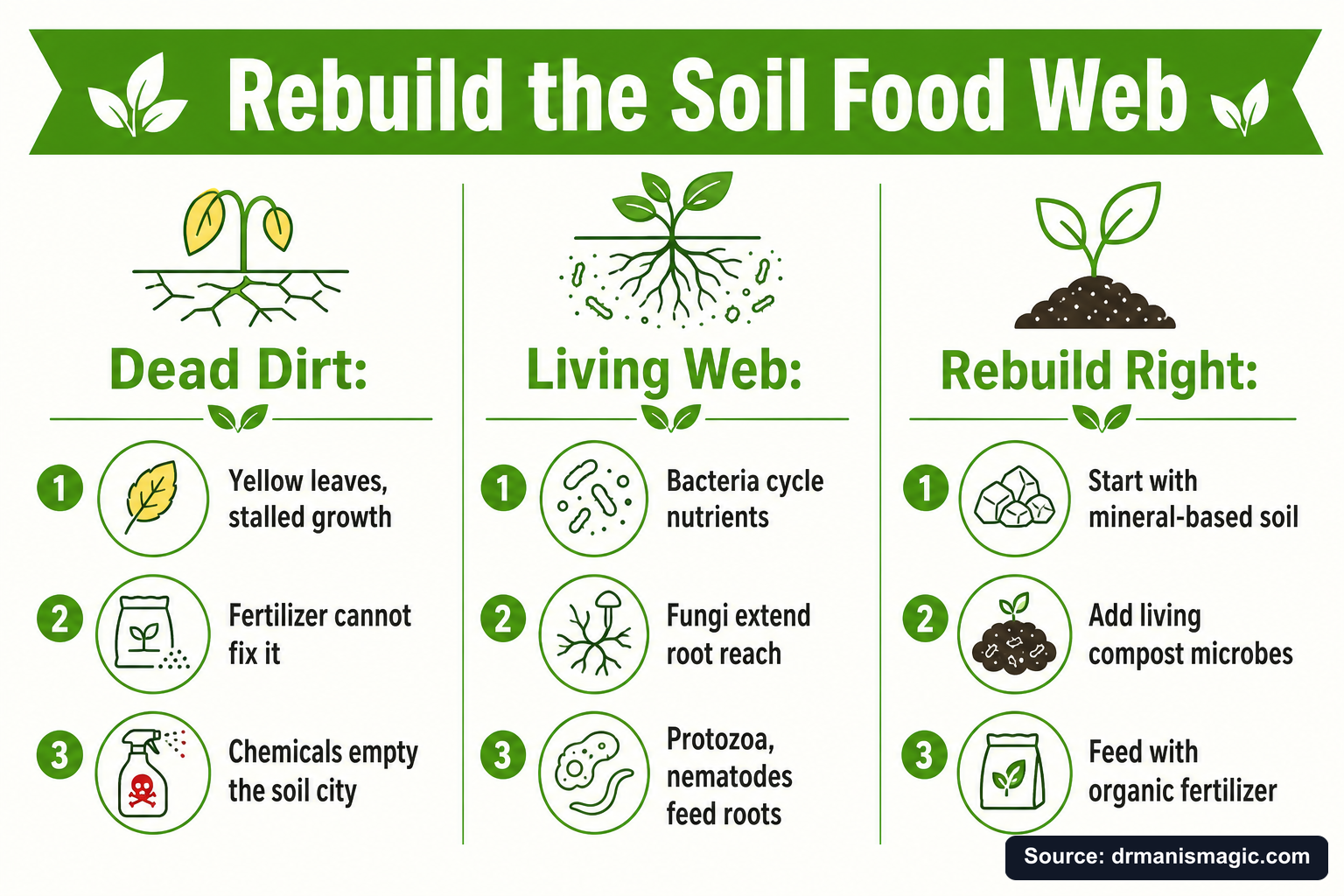
Here is what nobody told you. The problem is not above the soil. It is below it. Right now, beneath your feet, there is an entire hidden city. Billions of invisible workers are supposed to be building, digging, trading, and protecting your plants around the clock. Bacteria. Fungi. Protozoa. Nematodes. Tiny creatures that nature designed to do the hard work of growing. But in most home gardens and containers, that city is empty. The workers are gone. And without them, even the most expensive fertilizer in the world cannot save your plants.
This is the secret nobody in the gardening industry wants you to know. Not the big box stores. Not the chemical companies. Because the moment you understand what is really living in your soil, and what has been killing it, everything changes. You stop chasing symptoms. You stop buying band-aids. And you start growing the way nature always intended. Let us show you what is really going on down there.
Key Takeaways
- Healthy soil is not dirt. It is a living ecosystem packed with bacteria, fungi, protozoa, nematodes, and more, all working together to feed and protect your plants.
- Most modern gardening practices, including synthetic fertilizers, pesticides, and fungicides, silently destroy this living workforce.
- Protozoa and nematodes play a critical role in releasing nutrients to plant roots, a role almost nobody in gardening talks about.
- Dead or dried microbial products sold in powder form rarely work. Living microbes, stabilized from real compost, are what actually move the needle.
- Recovering damaged or "dead" soil follows a specific sequence. Skipping steps means starting over.
- The Three Plant Pillars, mineral-based soil, live microbials, and organic fertilizer, are the framework Dr. Mani Skaria developed and proved across 250,000+ citrus trees at US Citrus Nursery in South Texas.
- You cannot buy back the time lost to failing plants. Getting the biology right now is the fastest path to seeing fruit, flowers, and lush growth in your lifetime.
What Is the Soil Food Web and Why Should Every Gardener Care?
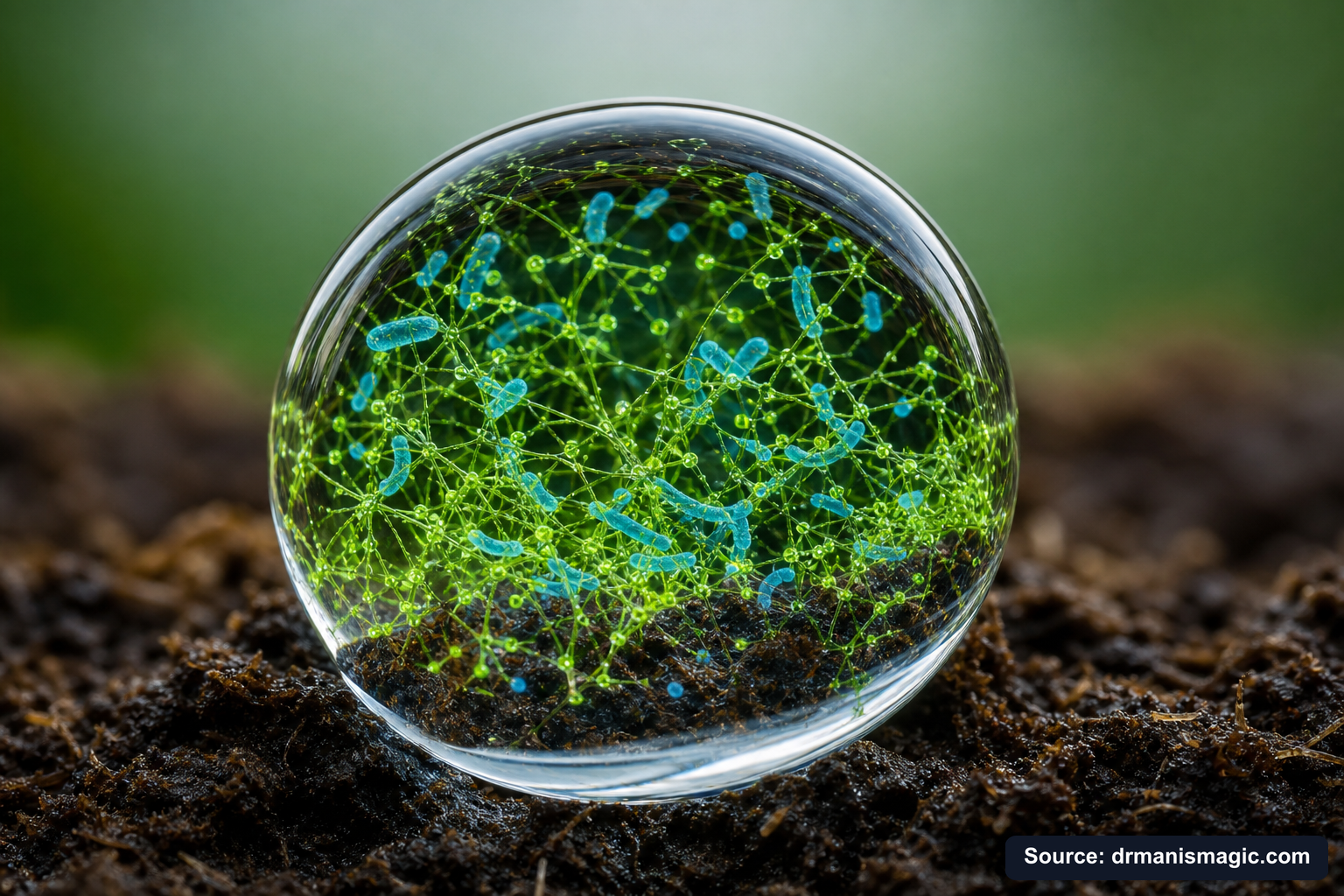
Quick Answer: The soil food web is the community of living organisms in soil, including bacteria, fungi, protozoa, nematodes, earthworms, and roots, that cycle nutrients, suppress disease, and build soil structure. When this web is healthy, plants get fed, protected, and supported automatically, without synthetic chemicals.
The soil food web is the invisible engine behind every thriving plant on earth. Think of it like a city underground. Different creatures have different jobs. Some build roads. Some mine for minerals. Some hunt predators. Some haul waste away and turn it into food. The USDA Natural Resources Conservation Service describes healthy soil as a living ecosystem where biology, chemistry, and physics work together to grow plants, filter water, and suppress disease. You can read more about this from the USDA NRCS Soil Biology Primer.
Here is the part that most gardening advice completely skips. The food web is not just bacteria and fungi. It goes deeper. There are four main layers of workers in your soil, and every single one matters.
| Organism | Size / Visibility | Primary Job in Your Soil | What Happens Without Them |
|---|---|---|---|
| Bacteria | Microscopic | Rapid decomposition, nitrogen cycling, disease suppression, root colonization | Nutrients lock up, pathogens move in, roots struggle |
| Fungi (including mycorrhizae) | Microscopic to visible threads | Extend root zone, break down tough organic matter, bind soil particles, deliver water and phosphorus | Roots stay small, soil structure collapses, drought stress increases |
| Protozoa | Microscopic | Eat bacteria, release nitrogen directly near roots in plant-available form (the microbial loop) | Nutrients cycle slowly, plants stay hungry even when fertilizer is present |
| Beneficial Nematodes | Near-microscopic | Graze on bacteria and fungi, release nutrients, hunt pest insects and harmful nematodes | Pest pressure rises, nutrient release slows, food web loses a critical predator layer |
| Earthworms | Visible | Aerate soil, move organic matter deep, deposit nutrient-rich castings | Compaction increases, drainage worsens, organic matter stays locked on surface |
| Plant Roots | Visible | Pump sugars into the soil to feed microbes, anchor the food web, take up nutrients unlocked by microbes | The whole food web loses its fuel source |
Notice something? Your plant roots are not just passengers in this system. They are active partners. Roots pump sugars down into the soil on purpose. They are feeding the microbes. And in return, the microbes unlock minerals, fight off pathogens, and extend the root zone far beyond what the root alone could reach. This is not a happy accident. This is a deal that plants and microbes have been making for over 400 million years, according to Penn State Extension's research on soil biology.
When you destroy that deal with synthetic chemicals and dead potting mix, your plant is on its own. And plants alone are not nearly as tough as plants backed by an army.
What Is the Microbial Loop and Why Do Protozoa and Nematodes Matter?
Quick Answer: The microbial loop is the process where protozoa and nematodes eat bacteria and fungi, then release nitrogen and other nutrients right next to plant roots in a form plants can instantly absorb. It is one of the most powerful nutrient delivery systems in nature, and almost nobody in gardening talks about it.
Here is the part of soil biology that almost no gardening article ever explains. Most people have heard of bacteria and fungi. Almost nobody talks about protozoa and nematodes. But these two groups are the reason nutrients actually get delivered to your plant roots.
Picture bacteria as miners. They break down organic matter and pull nutrients out of it. But those nutrients are locked inside the bacteria's body. The plant cannot touch them yet. That is where protozoa come in. Protozoa eat the bacteria. When they do, they release the nutrients locked inside, right there in the root zone, in a form the plant can absorb immediately. This release is called the microbial loop, and it is one of nature's most elegant delivery systems.
Beneficial nematodes do the same thing at a slightly larger scale. They graze on bacteria and fungi, releasing more nutrients. They also hunt and kill pest insects in the soil and can suppress harmful nematode species that attack roots.
So when someone tells you to "add bacteria to your soil," that is only part of the story. You need the whole food web. Bacteria AND fungi AND protozoa AND nematodes, all working together. A product that only contains a few strains of bacteria is like hiring one construction worker to build a skyscraper.
This is exactly why Plant Super Boost is built the way it is. It contains over 2,000 strains of bacteria, 400 to 500 species of fungi including mycorrhizae, plus protozoa and nematodes. That is a full-spectrum food web in a bottle, harvested from real compost using a proprietary natural stabilization method developed at US Citrus Nursery.
Is My Soil Dead? How Do You Know When Your Soil Biology Is Gone?
Quick Answer: Soil can lose most of its living biology through repeated use of synthetic fertilizers, herbicides, pesticides, fungicides, salt buildup, compaction, or sterile potting mix. Signs include poor drainage, yellowing leaves despite fertilizing, slow growth, frequent disease, and soil that smells flat or chemical rather than earthy.
Dead soil is more common than most gardeners realize. And it is not always obvious from the surface. Your soil might look fine. It might even be dark and crumbly. But if the biology is gone, the plant is struggling in silence.
Here are the warning signs that your soil food web has been damaged or destroyed.
- Plants that yellow even when you fertilize regularly
- Water that pools on the surface instead of soaking in quickly
- Roots that stay small and shallow instead of spreading wide and deep
- Frequent fungal disease or root rot despite good watering habits
- Soil that smells like nothing, or worse, smells like chemicals
- Mulch and organic matter that never seems to break down
- Pests that keep coming back no matter what you spray
These are not random bad luck. They are clues. They are your soil telling you the workforce has been wiped out.
The most common killers? Synthetic herbicides like glyphosate. Salt-based fertilizers that burn microbial communities the same way they burn roots. Broad-spectrum pesticides. Synthetic fungicides that do not distinguish between harmful fungi and the mycorrhizae your plant desperately needs. And the biggest silent killer of all: sterile potting mix from the big box store, loaded with decomposing bark and wood, which starts rotting almost immediately, suffocating roots and leaving no room for a living soil community to take hold.
See also: The Hidden Reason Synthetic Fertilizers Cause Root Rot
How Do Synthetic Fertilizers and Pesticides Actually Destroy Soil Life?
Quick Answer: Synthetic fertilizers are salt-based. High salt concentrations dehydrate and kill beneficial bacteria and fungi the same way salt kills a slug. Pesticides and herbicides add chemical toxicity on top of that. The result is soil that looks fed but is biologically empty, forcing plants into a cycle of chemical dependency.
This is the part the big chemical companies really do not want you thinking about.
When you pour a synthetic, salt-based fertilizer into your soil, the plant gets a short burst of nutrients. The leaves green up fast. It looks like it is working. But underneath, the salt is spreading through the soil water. And that salt is dehydrating the very bacteria and fungi that your plant depends on for long-term health. It is like drinking seawater when you are thirsty. It looks like water. It makes things worse.
Pesticides add another layer of damage. Many broad-spectrum pesticides are not selective. They kill harmful insects, yes. But they also wipe out the arthropods, beetles, and soil creatures that are part of the food web. Herbicides like glyphosate have been shown in multiple studies to disrupt microbial communities in the rhizosphere, the zone right around the roots where the most critical biological activity happens.
Synthetic fungicides are perhaps the sneakiest offender. You use them to kill a harmful fungus. But they also knock out the mycorrhizal fungi that were extending your root zone and delivering phosphorus. You solve one problem and create three more.
And then there is the contamination issue nobody wants to talk about. Many conventional fertilizers and potting mixes contain biosludge, a byproduct of municipal wastewater treatment. Biosludge can carry PFAS, the so-called "forever chemicals," along with heavy metals and pharmaceutical residues. The Dr. Mani's Magic line uses Zero PFAS, Zero Biosludge, and Zero Synthetic Salts. That is not a marketing claim. That is a design principle.
See also: Why Most Fertilizers Are Actually Salt in Disguise
You Never Had a Brown Thumb.
You were handed the wrong tools. This free guide hands you the right ones.
You watered it. You fed it. It died anyway.
It was never you. It was the dirt, the salt food, and the bad advice.
This guide shows you what really went wrong, and how to fix it for good.
- Why your plants really died, and why it was never your fault
- The salt hiding in your plant food that quietly burns the roots
- The hidden killer in almost every bag of store soil
- The tiny helpers that grow a whole forest for free
- The rescue trick that brings a half dead plant back to life

Are Mycorrhizal Fungi Worth Buying? When Do They Work and When Do They Fail?
Quick Answer: Mycorrhizal fungi products work best in sterile soil, transplant situations, or severely depleted ground. They fail when stored improperly, exposed to heat, applied to high-phosphorus soil, or used on incompatible plants. Most dry powder mycorrhizal products on store shelves have very low viable populations by the time you use them.
The word "mycorrhizae" is everywhere in gardening now. Every product has it on the label. But here is what most of those labels do not tell you.
Mycorrhizal fungi form a physical connection with plant roots. Those white fuzzy threads you sometimes see when you pull a weed from healthy ground? That is mycorrhizae. The fungus extends the root zone by hundreds of times. It delivers water and phosphorus to the plant. It produces a sticky protein called glomalin that binds soil particles together, creating the crumbly, well-aerated soil structure that healthy plants love.
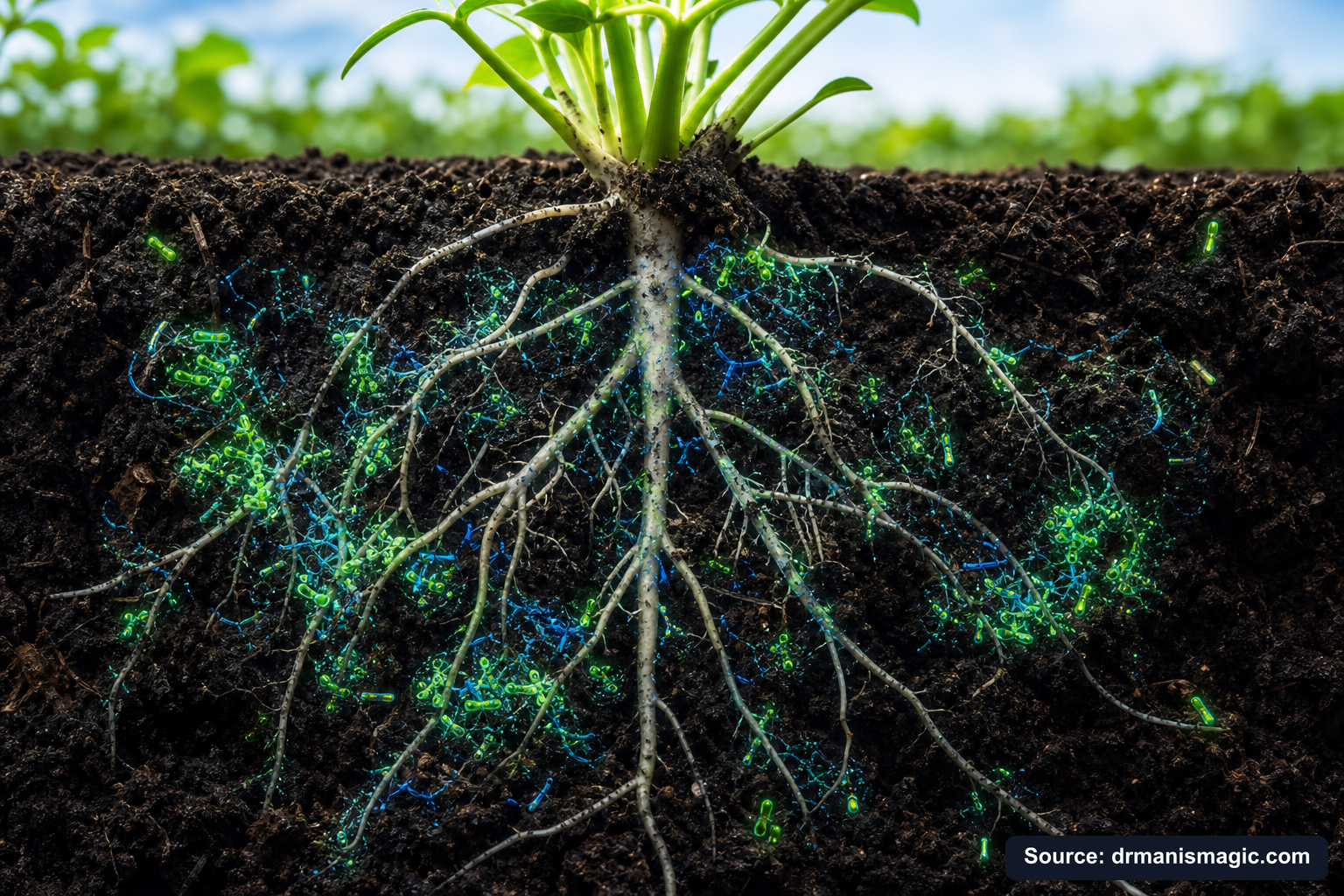
But here is the catch. Mycorrhizal fungi are living organisms. They die in heat. They die on the shelf. They die when phosphorus levels in the soil are too high, because the plant stops partnering with the fungus when phosphorus is already abundant. And they die when synthetic fungicides are present.
Most dry powdered mycorrhizal products are manufactured in large factories, dried into spore form, and shipped to stores where they may sit for months in a warm warehouse. By the time you sprinkle them on your roots, the viable population may be tiny.
The decision is not really "should I buy mycorrhizae?" The real question is "are the mycorrhizae I am buying actually alive?"
| Product Type | Microbe Viability at Use | Spectrum of Organisms | Odor | Real-World Results |
|---|---|---|---|---|
| Dry powdered lab microbes | Very low | Narrow, 3-10 strains | None | Minimal to none observed after dozens of tests |
| Dry powder rehydrated into liquid | Very low | Narrow | None | Same issues as powder; spores rarely reactivate consistently |
| Compost tea, fresh under 24 hours | Moderate (if aerated) | Partial, depends on compost quality | Earthy to slightly sour | Good when truly fresh; time-sensitive and labor-intensive |
| Compost tea, older than 24 hours | Low, going anaerobic | Partial | Strong foul odor | Microbes dying; some residual benefit from humic acids only |
| Lactobacillus-based products | High (but wrong organisms) | Narrow, single family | Sour | Outcompetes beneficial microbes; belongs in yogurt, not soil |
| Fresh active compost applied directly | High | Broad, natural spectrum | Earthy, warm | Excellent; requires time, space, and physical effort |
| Plant Super Boost (stabilized, full-spectrum) | High, visible under microscope | 2,000+ bacteria strains, 400-500 fungi including mycorrhizae, protozoa, nematodes | Clean, earthy | Consistent results across 250,000+ trees; lab-verified living populations |
How Do You Revive Dead or Sterile Soil? A Step-by-Step Recovery Protocol
Quick Answer: Reviving dead soil requires restoring physical habitat first, then introducing biology, then feeding it. You cannot skip to the microbe step without fixing drainage, compaction, and salt buildup first. Recovery takes weeks to months depending on how damaged the soil is, and regular re-application of live biology is essential.
This is the section most gardening articles never write. They tell you to "add compost" and leave you guessing. Here is the actual sequence that works, developed through decades of growing over 250,000 citrus trees at US Citrus Nursery in South Texas.
- Identify the root cause first. Is your soil compacted? Is there salt buildup from synthetic fertilizers? Was it treated with herbicides or broad-spectrum pesticides? Is it sterile potting mix that has been decomposing for years? Different problems need different starting points. Do not skip this step.
- Restore physical structure. If the soil is compacted, aerate it. If drainage is poor, fix it before anything else. Microbes need air and water moving through the soil to survive. A soggy, airless soil will kill the biology you add just as fast as chemicals will. If you are working with a container, consider Super Soil, a mineral-based, permanent soil that does not decompose and maintains the drainage and aeration microbes need to thrive.
- Flush salt buildup. If synthetic fertilizers have been used, water deeply and repeatedly to push salts down and out of the root zone. Rainwater is ideal for this. Do not add more synthetic fertilizer during recovery.
- Add mature compost or worm castings. This gives the incoming microbial population a food source and physical habitat. Think of it as building housing before moving in new workers. Apply a 2-3 inch layer on the surface, or mix into the top few inches of soil.
- Inoculate with a full-spectrum live microbial product. This is where biology gets re-introduced. A product needs to contain living organisms, not dried spores. Apply monthly, not just once. Recovering soil needs consistent reinforcement because the pathogenic organisms that moved in while the beneficials were gone are still competing for territory.
- Plant living roots or cover crops. Living roots pump sugars into the soil that feed the new microbial community. Bare soil recovers much more slowly than soil with active plant roots feeding it. Even a cover crop of clover or a simple herb works.
- Stop broad-spectrum disruption. No synthetic herbicides. No salt-based fertilizers. No synthetic fungicides. Give the biology time to rebuild without being knocked back every few weeks. Switch to an organic fertilizer that feeds the plant without harming the microbes.
Recovery does not happen overnight. Depending on how damaged the soil is, you may see meaningful improvement in 4 to 8 weeks and substantial recovery over 3 to 6 months. The most important thing is consistency. The biology needs to be fed, protected, and reinforced on a regular schedule.
You can grab our free Plant Care Field Guide for a complete breakdown of how the Three Plant Pillars work together to build this kind of soil from scratch or recover what has been damaged.
What Are the Three Plant Pillars and How Do They Rebuild Soil Biology?
Quick Answer: The Three Plant Pillars are mineral-based soil, live microbials, and organic fertilizer. Together they create the physical habitat, biological workforce, and food source that plants need to thrive. Miss one pillar and the system breaks down. Dr. Mani Skaria developed this framework over 40 years and proved it across 250,000+ trees.
Dr. Mani Skaria did not invent the idea that plants need good soil, living microbes, and proper nutrition. Nature invented that about 400 million years ago. What Dr. Mani did was decode exactly why modern gardening fails, and build a simple system that puts all three pieces back in place.
Here is how the three pillars map onto everything we have been talking about.
Pillar One: Mineral-Based Soil. Most potting mixes are made from pine bark, wood chips, and organic debris. These materials break down. As they decompose, they steal oxygen from the root zone, compact into a dense mat, and drain poorly. Roots suffocate. Microbes cannot thrive in an airless, waterlogged environment. The fix is mineral-based soil, silica-rich sandy loam from the Rio Grande Valley that does not decompose, does not compact, and provides the drainage and aeration the food web needs to function. It is a permanent home, not a disposable medium you replace every season.
Pillar Two: Live Microbials. This is the invisible workforce. Bacteria, fungi, mycorrhizae, protozoa, and nematodes, all working together in the rhizosphere to unlock nutrients, suppress pathogens, extend roots, and cycle organic matter. Without this pillar, the other two pillars cannot reach their full potential. Nutrients stay locked. Disease moves in. The plant works alone instead of with an army.
Pillar Three: Organic Fertilizer. Plants need nitrogen, phosphorus, potassium, and dozens of trace minerals. But how those nutrients are delivered matters enormously. Salt-based synthetic fertilizers deliver nutrients fast, burn microbial communities, and create a dependency cycle. Organic fertilizer from sources like crab, kelp, and amino acids delivers nutrients slowly, in forms the plant and the microbes can use together, without the salt damage. No PFAS. No biosludge. No synthetic salt burn.
When all three pillars are in place, something remarkable happens. The plant stops struggling and starts thriving. Disease resistance goes up. Growth accelerates. Fruit sets. Flowers bloom. The system becomes nearly self-sustaining because the biology is doing the work nature designed it to do.
You can explore how all three pillars work together at our Three Plant Pillars bundle page.
Live Microbes vs. Dead Microbes: Why the Difference Changes Everything
Quick Answer: Live microbes actively colonize roots, cycle nutrients, and suppress disease. Dead or dormant microbes from dried powder products cannot do any of that. The difference between a thriving garden and a struggling one often comes down to whether the biology you applied was actually alive when it hit the soil.
This is the conversation the gardening industry quietly avoids.
Walk into any garden center and you will find shelves of microbial products. Bags of mycorrhizal powder. Bottles of bacterial inoculant. They all have impressive-sounding ingredient lists. But here is the question you need to ask. Are these microbes actually alive right now?
Most microbial products sold in stores go through the same manufacturing process. Beneficial organisms are cultured in giant factory vats. Then they are dried into powder form, bottled, shipped to a warehouse, and eventually placed on a store shelf. The whole process can take months. Dried microbial spores can survive that journey under ideal conditions. But "ideal conditions" means cool, dark, dry storage. Not a warm warehouse. Not the back of a delivery truck in July. Not a shelf under fluorescent lights.
After growing and testing over 250,000 trees at US Citrus Nursery, Dr. Mani and his team tried dozens of commercial microbial products. Batch after batch showed no meaningful improvement in tree health. The organisms were simply not viable by the time they reached the root zone.
The second common option is compost-tea-style liquid products. These start with real biology from compost or worm castings. That is promising. But here is the problem. Once you brew compost tea and bottle it, the clock starts ticking. Within about 24 hours without active aeration, the mixture goes anaerobic. Oxygen runs out. The beneficial aerobic microbes start dying. Anaerobic bacteria take over. The product starts to smell. By the time you pour it on your plants, you are applying a dying culture, not a living one. You might notice some benefit from the humic acids and organic compounds in the liquid. But the microbial punch is gone.
The solution that Dr. Mani's team developed, through a providential partnership with a world-renowned compost expert, is a natural stabilization method that keeps the full spectrum of compost-derived microbes alive without going anaerobic. Plant Super Boost smells clean and earthy because the microbes are stable, not rotting. And if you take a drop and look at it under a microscope, you can actually see the microbes moving. That is not a marketing story. That is verifiable biology.
What Can You Do Right Now to Start Rebuilding Your Soil?
Quick Answer: Start by stopping the things that are killing your soil biology, then introduce living microbes and organic nutrition consistently. The fastest path to a thriving garden is aligning with the Three Plant Pillars: mineral-based soil, live microbials, and organic fertilizer, applied together on a regular schedule.
You now know more about what is happening beneath your plants than most gardeners ever learn. So let us make it practical.
Here is the honest truth about time. You can always earn more money. You cannot earn more time. Every season that passes with struggling plants, stalled growth, and disappointing harvests is a season you cannot get back. The number one thing we hear from gardeners, whether they have a single potted lemon tree on a balcony or an acre of garden beds, is that they want to see it flourish while they can still enjoy it. That desire is not a small thing. It is deeply human. We were built to tend living things and watch them grow.
The old way, the synthetic fertilizer, the dead potting mix, the chemical spray cycle, wastes money. But more than that, it wastes time. Plants struggle for a season or two, then stall, then slowly go backwards. Because you cannot grow against the grain of nature. The grain of nature is biology. And biology requires living soil.
Start here. Right now. Today.
- Stop adding salt-based synthetic fertilizers. They are burning the workforce you need.
- If you are in a container, think about your soil medium. If it is decomposing bark-based potting mix, it is working against you.
- Add living biology to your soil monthly. Not a dried powder. A genuinely live, full-spectrum microbial product.
- Switch to an organic fertilizer that feeds your plants without burning the microbes. Crab, kelp, and amino acids in a slow-release granular form is what we use on every tree and plant at our nursery.
- Be consistent. Recovery takes time. But with every application of living biology and organic nutrition, the food web gets a little stronger, the roots go a little deeper, and the plant becomes a little more bulletproof.
The plants you have been dreaming about, lush, productive, healthy, and full of life, are not a fantasy. They are what happens when the soil beneath them is alive. Nature grows forests, orchards, and meadows without a single bag of synthetic fertilizer. It does it with biology. And now you know exactly how.
If you want to see the full system that Dr. Mani Skaria built and tested across a quarter million trees, and get the exact products designed to put all three pillars in place at once, visit our customer reviews page to see what other gardeners are experiencing, then start building the soil your plants have always deserved.
Frequently Asked Questions
Most gardeners never learn what is really happening under their plants. That gap in knowledge costs them time, money, and the joy of seeing their garden truly thrive. These questions cut straight to the truth about soil, life, and what it takes to grow plants the right way.
What is the soil food web and why does it matter for my plants?
The soil food web is the hidden community of bacteria, fungi, protozoa, and nematodes living in your soil. Each one has a job. Bacteria break down nutrients. Fungi extend roots. Protozoa release food directly to plant roots. When this web is alive and healthy, your plants get fed and protected around the clock. When it is dead, even expensive fertilizer cannot save them. Dr. Mani proved this across 250,000 citrus trees at US Citrus Nursery in South Texas.
Why is soil the foundation of all plant life?
Healthy soil is not just dirt. It is a living system that stores water, cycles nutrients, fights disease, and supports roots. Wendell Berry said it best when he called tending the soil a way to cultivate a better world. Without a living foundation under your plants, nothing you do above ground will stick. That is why the first of Dr. Mani's Three Plant Pillars starts with getting the soil right before anything else.
What are the most important ingredients in healthy soil?
Healthy soil has five key ingredients. Minerals give structure. Organic matter feeds biology. Living organisms do the work. Water carries nutrients. And gas, meaning oxygen, lets roots breathe. Most store-bought potting mixes are heavy on decomposing wood and light on everything else. Dr. Mani's Magic Super Soil uses mineral-based sandy loam from the Rio Grande Valley, which does not break down or steal oxygen from your roots the way pine bark and sawdust do.
What kills the good microbes in my soil?
Synthetic fertilizers are salt-based. Salt burns microbes. Pesticides and fungicides wipe out the very organisms that protect your plants naturally. Most gardeners do not realize they are destroying their soil food web every time they reach for a chemical quick fix. Big box stores and chemical companies profit from this cycle. Dr. Mani spent decades watching this happen in nurseries across Texas before building a system designed to stop it cold.
Do the five principles of soil health apply to container gardening and houseplants too?
Yes. The core idea is the same whether you have an acre or a single pot on your windowsill. Keep living roots active. Feed the biology. Avoid chemicals that destroy microbial life. Minimize disturbance. Dr. Mani's Three Plant Pillars, mineral-based soil, live microbes, and organic fertilizer, apply this thinking to every plant situation. Containers, raised beds, orchards, lawns, and houseplants all respond to the same natural laws.
Why do most microbial products sold in stores not work?
Most powder-based microbial products on shelves are dead by the time you open them. Microbes need to be alive to work. Dr. Mani's Magic Plant Super Boost uses a special stabilization method learned from a master compost expert. The microbes stay living inside the bottle. When you mix it with water and pour it on your soil, those bacteria, fungi, and mycorrhizae go straight to work. It even smells like fresh earth, not rotting fish, because nothing inside is decaying.
How long does it take to see real results when you fix your soil biology?
Most people using the Three Plant Pillars start seeing change within the first month. Leaves get greener. Growth picks up. Roots stop struggling. The longer you stay with it, the stronger your soil becomes. Here is the hard truth though. Time lost to dead plants and failed harvests does not come back. The number one thing people tell Dr. Mani is that they want to see their tree bear fruit while they still can. Getting the biology right today is the only way to make that happen.
About the Author
Dr. Mani Skaria, PhD
Dr. Mani Skaria, PhD, is a plant pathologist and the scientific founder of Dr. Mani's Magic. He earned his doctorate at Purdue University and spent 48 years studying how plants, soil, and living microbes work together, including his years as Professor Emeritus at Texas A&M and as a member of the USDA NAREEE Advisory Board. He invented micro-budding, a method for growing healthier, stronger trees, and has grown more than 250,000 trees on the family farm in Hargill, Texas - US Citrus Nursery. His life's work takes real lab science and practical experience and turns it into simple, safe, organic plant care anyone can use at home.


