


The Real Reason Plants Suddenly Decline and What's Failing Below the Soil | Dr. Mani's Magic
The Real Reason Plants "Suddenly" Decline (And What's Actually Failing Below the Soil)
Your plant looked fine last Tuesday. You watered it. You fed it. You even talked to it a little. Then you walked outside on Saturday morning and something was wrong. The leaves were drooping. Or yellowing. Or the edges had gone crispy brown overnight. Or worse — it had just collapsed, like it gave up when you weren't watching.
You start running through the checklist in your head. Too much water? Not enough? A bug? Some disease? Did you use the wrong fertilizer? You look at the soil. You poke at the roots. Nothing makes sense. The decline felt sudden. It felt random. It felt like your fault — like you have a brown thumb and you always will.
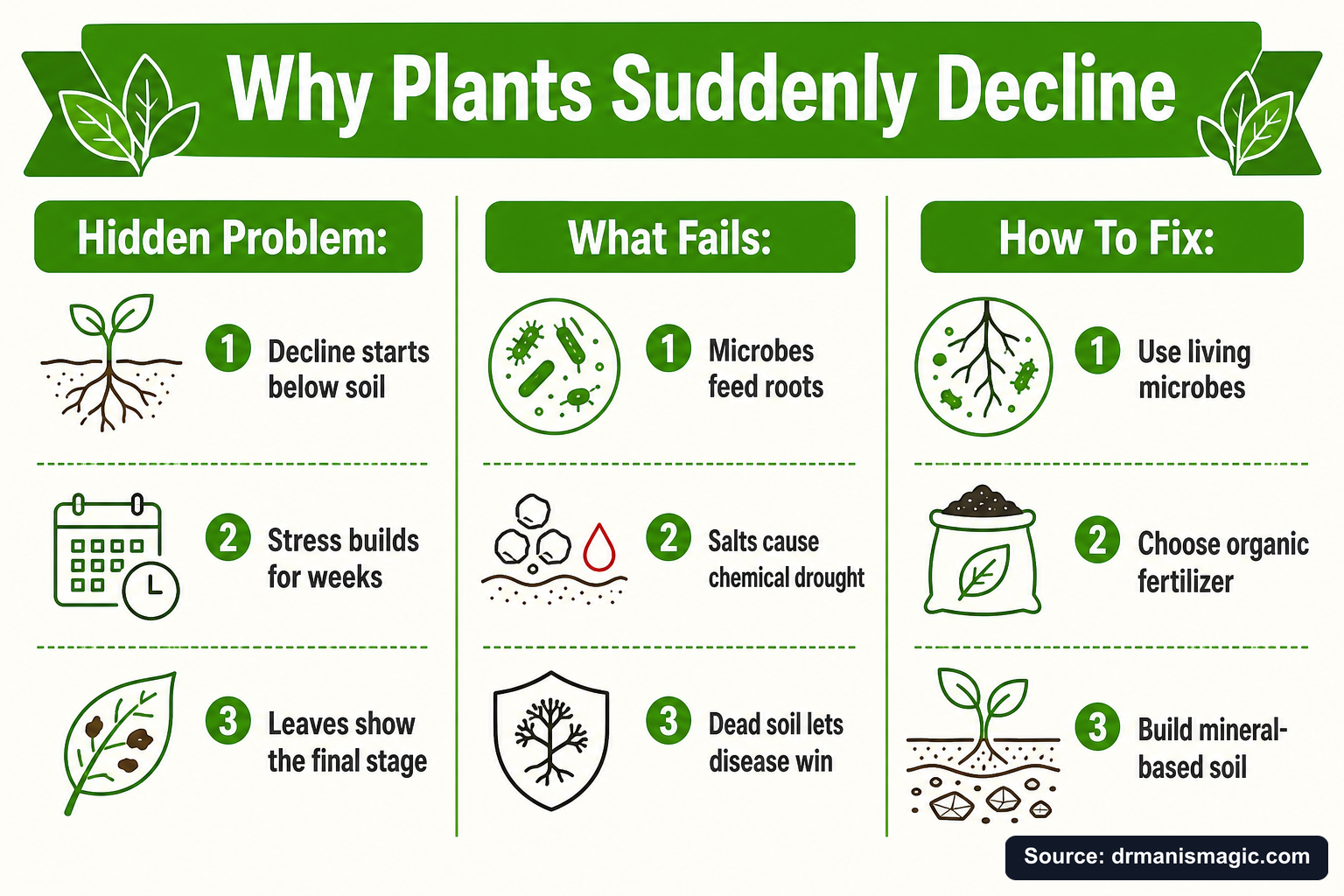
Here is the truth no one ever tells you: it was not sudden. Not even close. What you saw on Saturday had been building for weeks, maybe months, completely invisible, happening underground where you could not see it. Your plant did not crash. It tipped. And what pushed it over the edge was not one bad day of watering. It was a slow collapse of the hidden ecosystem living in your soil — a tiny, invisible world that was quietly failing long before your plant showed a single symptom.

Plant Super Boost
Key Takeaways
- Visible plant decline is almost always the final stage of a hidden root-zone problem, not the beginning of one.
- Healthy soil is a living ecosystem with bacteria, fungi, protozoa, and other microbes working together to feed and protect your plant.
- Salt-based fertilizers, synthetic fungicides, and pesticides silently destroy this ecosystem, leaving roots defenseless.
- Chemical drought — caused by salt buildup — can look identical to underwatering, root rot, or disease.
- Sterile or biologically dead soil cannot protect plants from pathogens, even if it looks clean and fresh.
- Rebuilding soil biology with genuinely live microbes is the fastest way to stop the cycle of mystery decline.
- The Three Plant Pillars — mineral-based soil, live microbials, and organic fertilizer — are the proven foundation for plants that stop struggling and start thriving.
Why Do Plants "Suddenly" Collapse When Nothing Seemed Wrong?
Quick Answer: Plant collapse is almost never truly sudden. It is the visible tipping point after weeks or months of invisible root-zone stress. Once roots lose oxygen, water, or microbial support, the plant burns through its reserves. When reserves run out, it crashes fast — making the decline look sudden when it was actually a long time coming.
Think of it like a bridge. Engineers know that bridges do not fail on the day they collapse. They fail slowly, quietly, in ways nobody sees — a little rust here, a small crack there, stress building in the metal. Then one truck goes over and the whole thing comes down. Everyone calls it sudden. But the failure started long before that truck.
Your plant works the same way.
Plants are remarkably good at hiding stress. They have reserves — sugars stored in their stems, nutrients locked in their leaves, backup systems in their roots. When something starts going wrong underground, the plant draws on those reserves to keep looking healthy. It is buying time. But reserves run out. And when they do, the decline is fast.
According to research from University of Minnesota Extension, healthy soil functions as a living ecosystem where roots, microbes, water, air, and organic matter all interact. Disrupt any one of those layers and the plant may look fine for a while — until the stress spikes and the reserves are gone.
After growing over 250,000 trees at our South Texas nursery, we saw this pattern over and over again. A tree would look good for six months. Then, almost overnight, it would yellow and stall. People blamed the weather. They blamed the pot. They blamed themselves. But the real cause was always the same: something had gone wrong in the root zone long before the leaves gave it away.
What Is the Soil Food Web and Why Does It Keep Your Plant Alive?
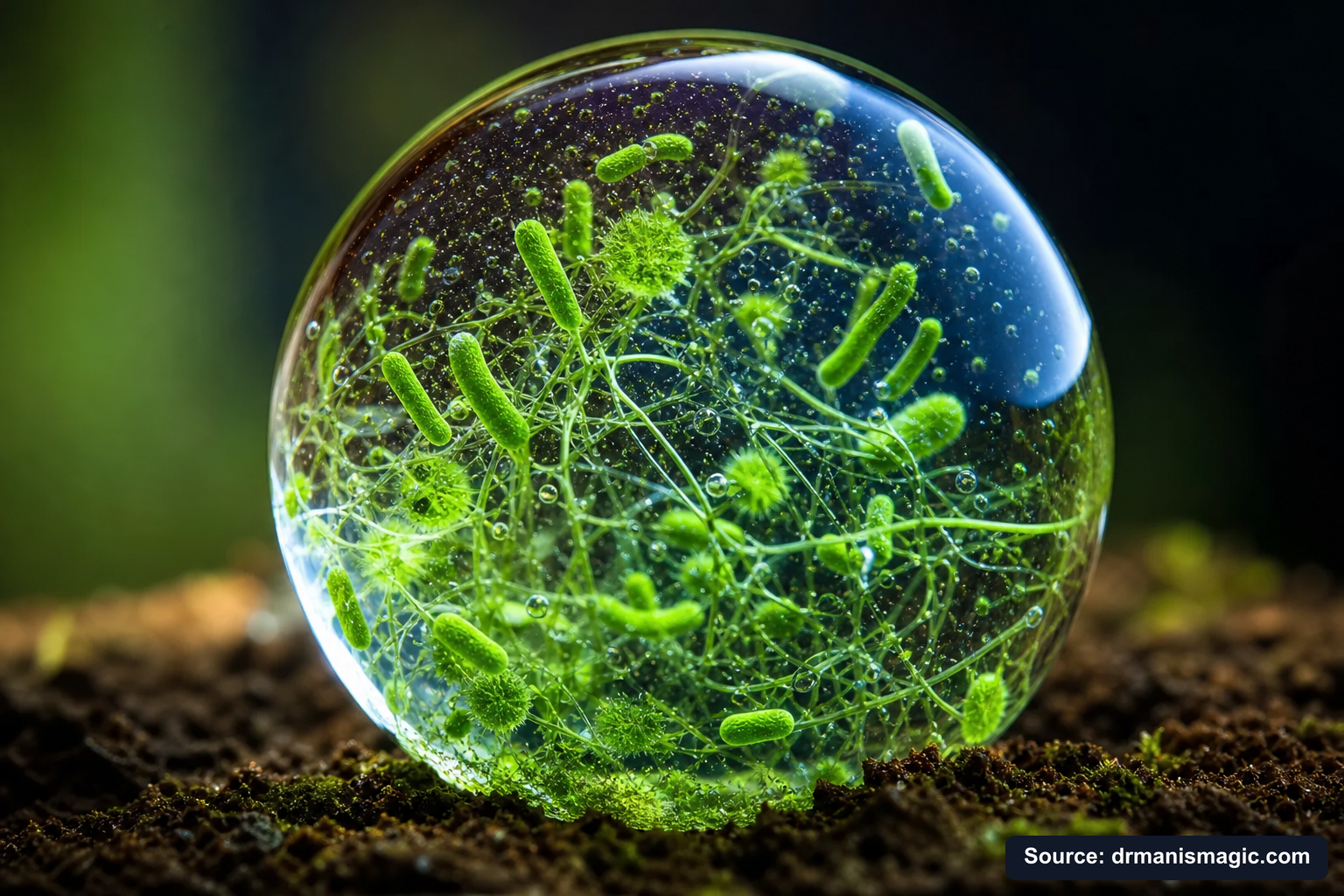
Quick Answer: The soil food web is the community of living organisms — bacteria, fungi, protozoa, nematodes, and more — that work together in healthy soil to cycle nutrients, protect roots from disease, and deliver water and minerals to your plant. Without it, your plant is on its own against everything the world throws at it.
Here is what most people never learn: your plant does not feed itself. Not really.
Out in nature — in a forest, a meadow, a field nobody has touched — plants grow without fertilizer bags, without spray bottles, without any help from humans at all. They grow because of what is living in the soil around their roots. Trillions of invisible organisms form a living network, a food web, that does the hard work of feeding and protecting every plant on the planet.
This is not a theory. The USDA Natural Resources Conservation Service describes the soil food web as the community of organisms living all or part of their lives in the soil — and it is the engine behind all nutrient cycling, disease suppression, and water availability in healthy growing systems.
Here is who is in that community and what they actually do:
| Soil Food Web Member | What They Do for Your Plant | What Happens When They Are Gone |
|---|---|---|
| Beneficial bacteria | Break down organic matter, release nutrients, fix nitrogen from the air, suppress disease pathogens | Nutrients stay locked up; disease pressure rises; roots are exposed |
| Mycorrhizal fungi | Extend the root system up to 1,000 times; deliver phosphorus, nitrogen, water, and micronutrients the roots cannot reach alone | Roots stay small; water stress spikes; nutrient deficiency sets in |
| Protozoa | Graze on bacteria and release plant-available nutrients — this is a key step in the nutrient cycle most people never hear about | Nutrient cycling stalls; plant growth slows even when fertilizer is present |
| Free-living nematodes | Graze on bacteria and fungi, releasing more nutrients; some suppress disease-causing organisms | Nutrient release slows; pathogenic nematodes face less competition |
| Earthworms and arthropods | Create pore channels for air and water; shred organic matter for bacteria to process | Soil compacts; oxygen drops; drainage fails; roots suffocate |
When this whole community is working together, your plant has everything it needs. Nutrients arrive in the right form at the right time. The roots breathe. Water moves through the soil the way it should. Disease organisms get crowded out before they get a foothold.
But when even one layer of that community gets disrupted — by salt-based fertilizers, synthetic fungicides, herbicides, or dead potting mix — the whole system starts to wobble. And eventually, it tips.
This is why the second of our Three Plant Pillars is live microbials. Not optional. Not a bonus. The living biology in your soil is the difference between a plant that thrives and one that looks fine until it doesn't.
What Is Chemical Drought and Why Does It Look Like Underwatering?
Quick Answer: Chemical drought happens when salt buildup in the soil pulls water away from roots through osmosis — the same way salt draws water out of a piece of fruit. Your plant wilts and scorches at the edges even when the soil is moist because the roots physically cannot absorb water. Most gardeners mistake this for underwatering or disease.
This is one of the most common hidden killers in American gardens. And almost nobody talks about it.
Salt-based fertilizers are the most popular fertilizers in the country. They have been since the 1950s, when a company called Miracle-Gro built an advertising empire around the idea that you could feed plants with cheap synthetic salts. The results looked fast. The marketing was brilliant. And now, seventy years later, most of the fertilizer sold in this country is still salt-based.
Here is the problem. When salts build up in your soil — from synthetic fertilizers, cheap potting mixes, or even some tap water — they change the chemistry around your roots. Water follows salt. So instead of the soil releasing moisture into your roots, it pulls moisture out of them. Your roots are thirsty even when they are sitting in wet soil. This is called osmotic stress, or chemical drought.
Your plant wilts. The leaf edges go brown and crispy. The new growth looks pale and stunted. You water more. The salt concentration gets worse. You add more fertilizer because the plant looks hungry. The cycle continues.
Meanwhile, the salt is also killing your beneficial microbes — the very organisms that would normally buffer the plant against this kind of stress. Salt-tolerant pathogens move in to fill the empty space. Root rot follows. And now what started as a fertilizer problem looks like a disease problem.
See also: How Salt-Based Feeding Quietly Destroys Root Systems
Why Does Sterile Potting Mix Make Your Plant Vulnerable?
Quick Answer: Sterile potting mix has no living biology to protect roots, cycle nutrients, or crowd out pathogens. It feels clean, but it is biologically empty. Pathogens that arrive in the air, water, or on your tools have no competition. They colonize the root zone unchecked. This is why plants in fresh, "clean" potting mix often struggle within months of being potted.
Walk into any big box garden center and look at the bags of potting mix stacked on pallets in the parking lot. They are sealed. Sterile. No bugs, no smell, no mess. They feel safe.
They are not safe.
Most commercial potting mixes are made from pine bark, sawdust, and other wood byproducts. They are steam-sterilized to kill pathogens before sale. That sounds responsible. But sterilization also kills every beneficial organism in the mix — every bacterium, every fungus, every protozoa, every living thing that would normally protect your plant's roots.
What you pour into your pot is a biological desert.
Research on sterilized soils shows that microbial disruption can reduce plant growth and increase pathogen opportunity until diverse bacteria and fungi recolonize. The problem is that recolonization from a sterile base takes a long time — and in the meantime, the first organisms to show up are often the ones you do not want. Pathogens move fast into empty biological space. Beneficial organisms are slower to establish.
There is a second problem with most potting mixes that nobody in the industry wants to talk about. The wood and bark materials break down. Within six to twelve months, they start compacting — turning from a fluffy, airy mix into a dense, soggy sludge. That sludge blocks oxygen from reaching the roots. Roots need oxygen to breathe. When oxygen disappears, roots suffocate. Root rot sets in. And again, the plant looks fine until it doesn't.
That is why Pillar One of the Three Plant Pillars is mineral-based soil — a permanent, inorganic foundation that does not break down, does not compact, and does not steal oxygen from your roots. Our Super Soil is built on silica-rich sandy loam from the Rio Grande Valley. It does not decompose. It does not compact. It stays open, draining, and breathable for the life of your plant.
What Are the Five Hidden Stages of Plant Decline?
Quick Answer: Plant decline follows a predictable hidden timeline: Stage 1 is root-zone stress (oxygen loss, salt damage, compaction). Stage 2 is microbial disruption. Stage 3 is a nutrient and water bottleneck. Stage 4 is opportunistic disease. Stage 5 is the visible collapse you finally see. Most gardeners only notice Stage 5 and treat the wrong problem.
Understanding this timeline changes everything. Once you see it, you can never unsee it.
Stage 1: Root-Zone Stress Begins. Something goes wrong underground. Maybe the potting mix has compacted and roots are losing oxygen. Maybe salt from synthetic fertilizer has built up and is pulling moisture away from roots. Maybe the soil has no drainage and water is sitting in the root zone. The plant does not show symptoms yet. It draws on its reserves.
Stage 2: Microbial Disruption. As conditions in the root zone deteriorate, beneficial microbes start to die off or go dormant. Bacteria and fungi that were cycling nutrients and protecting roots disappear. The mycorrhizal network that was extending the root system starts to break down. Pathogenic organisms — the ones that cause root rot, wilts, and rots — face less competition. They start to grow.
Stage 3: Nutrient and Water Bottleneck. Without microbes cycling nutrients, the plant cannot access what it needs — even if fertilizer has been applied. Without mycorrhizal fungi, the effective root zone shrinks. The plant starts running short on phosphorus, micronutrients, and water. Growth slows. The plant starts to look a little off, but nothing alarming yet.
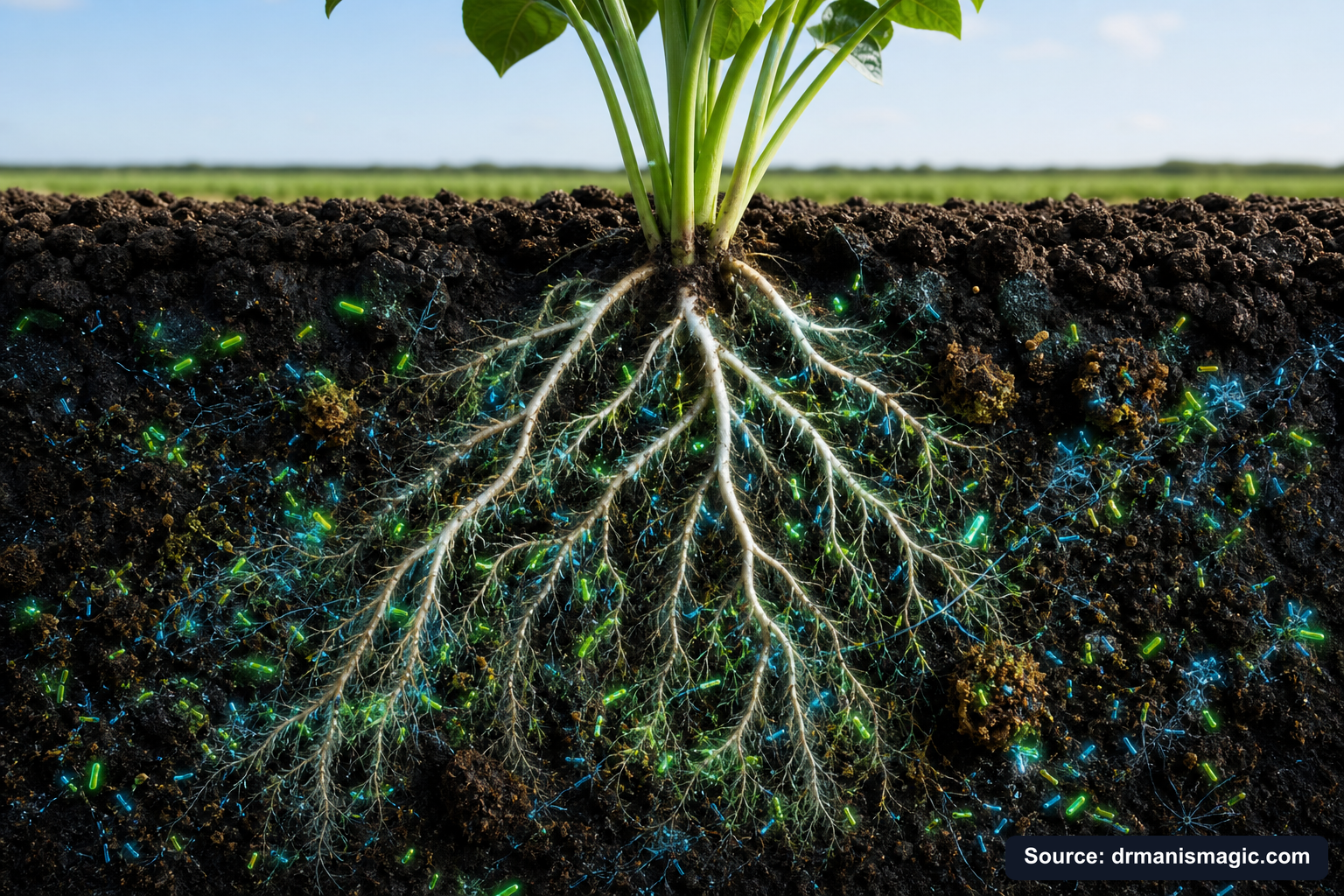
Stage 4: Opportunistic Disease. Pathogens that were being held in check by a healthy microbial community now have free rein. Root rot fungi colonize the weakened roots. Bacterial diseases find easy entry through stressed tissue. Pests that would normally be deterred by a vigorous plant move in. The plant is fighting on multiple fronts with almost no reserves left.
Stage 5: Visible Collapse. This is when you notice something is wrong. The leaves droop. The edges go brown. The whole plant yellows or wilts. You call it sudden. But it has been coming for a long time.
You Never Had a Brown Thumb.
You were handed the wrong tools. This free guide hands you the right ones.
You watered it. You fed it. It died anyway.
It was never you. It was the dirt, the salt food, and the bad advice.
This guide shows you what really went wrong, and how to fix it for good.
- Why your plants really died, and why it was never your fault
- The salt hiding in your plant food that quietly burns the roots
- The hidden killer in almost every bag of store soil
- The tiny helpers that grow a whole forest for free
- The rescue trick that brings a half dead plant back to life

How Do You Diagnose a Hidden Root-Zone Problem?
Quick Answer: Start by looking at the roots, not the leaves. Roots tell you more in thirty seconds than leaves tell you in a week. Check for brown, mushy, or foul-smelling roots (root rot), check for salt crust on the soil surface (salt damage), and check whether the soil drains freely or stays wet (compaction or poor structure). Then work backward through the timeline.
Here is a practical checklist when your plant is struggling and you cannot figure out why:
- Check the roots first. Gently remove the plant from its pot. Healthy roots are white or cream-colored and firm. Brown, mushy, or dark roots indicate root rot. Gray, wire-like roots suggest the plant has been dry for too long.
- Check soil drainage. Pour water slowly into the pot. Does it drain in a few seconds, or does it pool and sit? If it pools, the soil has compacted or has no drainage pathway. Roots are likely suffocating.
- Look for salt crust. A white or yellowish crust on the top of the soil or around the pot rim is a sign of salt buildup from synthetic fertilizers or mineral-heavy water. This is chemical drought territory.
- Smell the soil. Healthy soil smells earthy. Soil with dead, anaerobic biology smells sour, musty, or like sewage. If your potting mix smells bad, the biology is gone and pathogens are winning.
- Review recent chemical applications. Did you apply a synthetic fertilizer, a fungicide, a herbicide, or a pesticide in the last few months? Any of these can disrupt beneficial microbial communities and trigger a delayed decline.
- Assess the potting mix age. If the mix is more than six to twelve months old and is bark or wood-based, it has likely compacted significantly and may be releasing acids as it decomposes. Time for a soil upgrade.
- Consider water quality. High-mineral tap water can contribute to salt buildup over time, especially in containers with limited drainage.
Live Microbes vs. Dead Microbes: Why Most Microbial Products Do Not Work
Quick Answer: Most microbial products on shelves are either dried powder microbes that never fully reactivate, or liquid compost teas that have gone anaerobic and smell terrible. Neither delivers the live, diverse, full-spectrum biology your soil actually needs. The only way to know if a microbial product has living organisms is to check for earthy smell, visible activity under a microscope, and lab verification.
The microbial product market has exploded in the last decade. Walk into any garden center and you will see shelves full of bottles promising living bacteria and fungi. Most of them are not lying exactly — they did start with live organisms. But by the time the product reaches your hands, those organisms are either dead, dormant, or too narrow in spectrum to do much good.
Here is how most products are made, and why they fall short:
The dry powder problem. Most commercial microbial products are made in large factories. Specific strains of bacteria or fungi are grown in vats, then dried into a powder. The idea is that the spores will reactivate when you add water. In theory, this works. In practice, after growing over 250,000 trees and testing dozens of these products at our South Texas nursery, we have seen almost no measurable benefit from dried, lab-grown microbial powders. The strains are too narrow. The viability is too low. The plants do not respond.
The smelly liquid problem. Some companies take a more natural approach — harvesting microbes from compost or earthworm castings and turning them into a liquid. This is closer to the right idea. But compost-tea liquids go anaerobic quickly. Once they run out of oxygen, the beneficial aerobic organisms start dying, and the anaerobic organisms take over. The telltale sign? The bottle stinks. Sometimes it even fizzes when you open it — that is fermentation gas, a sign the biology is dying. You might get some benefit from the humic and fulvic acids that remain, but the living organisms you are paying for are mostly gone.
Here is how the options compare:
| Microbial Product Type | Organism Viability at Use | Spectrum of Biology | Odor | Real-World Results |
|---|---|---|---|---|
| Dry powder (lab-grown) | Very low | Narrow — a few selected strains | Minimal | Little to no measurable benefit in our testing |
| Dried powder rehydrated in liquid | Very low | Narrow | Low | Same issue as dry powder |
| Fresh compost tea (under 24 hours, aerated) | Moderate | Partial — depends on compost source | Earthy, mild | Good when fresh; time-sensitive and labor-intensive |
| Old compost tea (over 24 hours) | Low — anaerobic die-off | Partial | Strong, foul — sewage-like | Reduced effectiveness; some humic acid benefit remains |
| Lactobacillus-based products | High — but wrong organisms | Very narrow | Sour | Lactobacillus overtakes beneficial microbes; belongs in yogurt, not soil |
| Plant Super Boost (stabilized, full-spectrum) | High — stabilized while alive | 2,000+ bacteria strains; 400-500 fungi including mycorrhizae; protozoa and nematodes | Earthy — not foul | Visible microbial activity under microscope; lab-verified living biology |
Dr. Mani's Magic Plant Super Boost is different from everything else on that list. It is harvested from real, hand-crafted compost — not grown in a factory vat. And it is stabilized using a proprietary all-natural technique developed by a world-renowned compost expert who partnered with Dr. Mani after decades of working with farms, royal estates, and governments around the world. The microbes stay alive. They do not go anaerobic. The product does not stink. And if you put a drop under a microscope, you can actually see the organisms moving.
Zero PFAS. Zero biosludge. Zero synthetic salts. A 30-day money-back guarantee. That is how confident we are in what is inside that bottle.
Why Do Synthetic Fertilizers and Fungicides Accelerate Decline?
Quick Answer: Synthetic fertilizers are salt-based. High salt concentrations kill or impair beneficial bacteria and fungi in the root zone — the same organisms that protect your plant from disease and deliver nutrients. Synthetic fungicides are even more direct: they kill fungi indiscriminately, wiping out mycorrhizal networks along with any pathogen they were targeting. Both create a biological vacuum that pathogens fill.
There is a cruel irony at the center of most gardening advice in America.
You buy a plant. It starts to struggle. You buy fertilizer to feed it — a synthetic, salt-based product because that is what the big box store carries. The plant greens up fast. You feel good. But the salt in that fertilizer is quietly killing the bacteria and fungi in your soil. The mycorrhizal network starts to break down. The nutrient cycling slows. The plant becomes dependent on the fertilizer because the biology that would normally feed it is gone.
Then you notice a little fungal spotting on the leaves. You buy a fungicide. The fungicide kills the pathogen — but it also kills the beneficial fungi in your root zone, including the mycorrhizal networks you desperately needed. Now you have sterile soil, salt damage, no microbial protection, and a plant that is completely on its own.
This is not an accident. The system was built this way. Salt-based fertilizers create dependency. Fungicides create biological vacuums. Both get sold back to you again and again. Your plant never quite thrives. You never quite give up. And the money keeps flowing.
Dr. Mani saw this pattern for decades at the Texas A&M Citrus Center. It drove him to develop the Three Plant Pillars — a system built on organic, non-salt-based nutrition that works with soil biology instead of against it.
See also: The Hidden Reason Synthetic Fertilizers Cause Root Rot
What Can You Do Right Now to Stop the Decline?
Quick Answer: Start by addressing root-zone conditions before anything else. Fix drainage, flush salts, and get living biology back into the soil. Do not add more fertilizer to a struggling plant. Do not spray fungicide on roots that have already lost their beneficial fungi. Address the root cause, not the symptoms — and do it now, because every week of delay costs you time you cannot get back.
Here is the hard truth about time. You can get money back. You can replace a plant. But the weeks and months of lost growing time — the fruit that could have been on the branch, the flowers that should have been blooming, the garden that was supposed to be thriving — that time is gone forever.
The number one thing people tell us when they find Dr. Mani's Magic is that they want to see their plants flourish while they still have the years ahead to enjoy them. They want to pick fruit from a tree they grew. They want to walk barefoot on grass they nurtured. They want the garden they imagined. And they do not want to spend another year watching plants slowly circle the drain because they were working against nature instead of with it.
Here is what to do right now:
- Stop adding synthetic fertilizer immediately. If salts have built up, adding more will make it worse. Water deeply to flush the root zone and begin diluting the salt concentration.
- Check and fix drainage. If water pools in the pot or bed, the root zone is losing oxygen. For containers, consider repotting into a mineral-based soil with true drainage structure. For beds, add channels or amend with coarse material to open the profile.
- Smell the soil. If it smells bad, the biology is anaerobic and dying. You need to reintroduce living organisms before anything else will work.
- Reintroduce living microbial biology. Not dried powder. Not smelly liquid. Genuinely live, full-spectrum biology that can start rebuilding the soil food web from the ground up. Apply monthly and be consistent — damaged soil takes time to rebuild, but the improvement starts fast when the right organisms arrive.
- Switch to organic, non-salt-based nutrition. Your fertilizer should feed the microbes as much as it feeds the plant. Slow-release organic sources like crab, kelp, and amino acids deliver nutrients in forms that work with soil biology, not against it.
- Be patient but consistent. Soil biology does not rebuild overnight. But with every monthly application, the community grows stronger, the nutrient cycling deepens, and the plant becomes more resilient. Within thirty days, most people see a visible difference. Within a few months, the transformation is undeniable.
If you want a plain-language guide to getting all three pillars working together — the right soil, the right biology, and the right nutrition — our Free Plant Care Field Guide walks you through the whole system step by step, without the jargon.
Putting It All Together: What Healthy Soil Actually Feels Like
Imagine pulling a handful of soil from a thriving garden bed. It is dark and crumbly. It smells like rain on warm earth — that clean, deep, alive smell that makes you want to breathe it in. It feels light in your hand, almost springy. You can see tiny threads of white fungal mycelium woven through it like lace.
That is what healthy, biologically active soil looks, smells, and feels like. That is what your plant's roots want to live in.
Now think about what most commercial potting mix smells and feels like six months after you open the bag. Dense. Dark. Maybe a little sour. Heavy when wet, dusty when dry. No white threads. No living smell. Just decomposing wood byproducts slowly turning into a root-choking sludge.
The difference between those two things — between living soil and dead soil — is the difference between a plant that thrives year after year and one that looks fine until Saturday morning, when you walk outside and something is very wrong.
The Three Plant Pillars exist to close that gap. Mineral-based soil that stays open and draining. Living microbials that rebuild the soil food web. Organic nutrition that feeds both the plant and the biology that serves it. After thirty years of growing in South Texas — after 250,000 trees, a grove, a nursery, and more failed experiments than we can count — this is the system that works.
It works for citrus trees. It works for houseplants, vegetable gardens, flower beds, and lawns. It works because it is built on the same principles that nature has been using for millions of years, long before anyone invented a fertilizer bag.
If your plant is struggling right now, or if you are tired of the cycle of mystery decline and short-lived recoveries, the best place to start is the same place we always start: the root zone. Get the foundation right. Get the biology right. Everything else follows.
When you are ready to build that foundation, the complete system — mineral soil, live microbials, and organic fertilizer — is available at Dr. Mani's Magic. Every product is made in the USA, built on decades of real nursery science, and backed by a 30-day money-back guarantee. Your plants will feel the difference. And so will you.
Frequently Asked Questions
If your plant looked fine last week and is struggling today, you are not alone. These are the questions real gardeners ask when their plants start sliding downhill fast. The answers below cut through the noise and get straight to what is actually happening under the soil.
Why do plants suddenly decline even when you are watering and feeding them regularly?
The decline is almost never sudden. It just looks that way. What you see on the surface is the final stage of a problem that has been building underground for weeks or months. Roots lose oxygen. Beneficial microbes die off. The plant burns through its reserves trying to survive. When those reserves run out, it crashes fast. At Dr. Mani's Magic, we proved this pattern across 250,000 trees at our South Texas nursery. The fix starts below the soil, not above it.
What is the number one killer of houseplants?
Most people blame overwatering, and watering habits do matter. But the deeper killer is dead soil. When your potting mix is packed with decomposing pine bark and sawdust, it compacts over time, chokes roots, and blocks oxygen. Your roots suffocate. Then any extra water pushes them over the edge. Mineral-based soil with proper drainage, like Dr. Mani's Magic Super Soil, stops this cycle before it starts. Healthy soil structure is the real lifesaver.
What is the 3-year rule for plants and does it actually work?
The old saying goes: first year they sleep, second year they creep, third year they leap. That timeline assumes average soil and average conditions. With the Three Plant Pillars working together, that clock can move much faster. Mineral-based soil gives roots room to breathe. Live microbes unlock nutrients immediately. Organic fertilizer feeds the plant without burning it. You do not have to wait three years to see real results when the foundation is right from day one.
Do plants actually lower stress and cortisol?
Yes, and the science backs it up. Tending to plants, getting your hands in the soil, and being around greenery all lower cortisol, your body's main stress hormone. But here is the part nobody talks about: a thriving garden lowers stress far more than a struggling one. When your plants are healthy and your soil is alive, gardening becomes a joy instead of a source of frustration. That is exactly what Dr. Mani set out to create, gardening that feels good from start to finish.
Can you spray Dawn dish soap on plants to kill pests?
You can, but you are playing with fire. Dawn is a harsh detergent. It strips the waxy coating off leaves and can burn your plant. Worse, it wipes out the beneficial microbes living in your soil, the same microscopic warriors that protect your roots from disease and unlock nutrients. That is the opposite of what you want. If you need pest control, go with neem oil or insecticidal soap made for plants. Protect your soil biology. It is worth more than you think.
What plants should you not cut back in winter?
Leave spring-blooming shrubs like lilacs and azaleas alone in winter. They set their flower buds the season before, so cutting them now wipes out your spring show. Also skip cutting hollow-stemmed perennials like coneflowers and milkweed. Those stems shelter overwintering beneficial insects, the same kinds of creatures that help keep your garden ecosystem healthy. Strong soil biology, fed by live microbes and organic fertilizer, supports that whole ecosystem from the ground up all year long.
What is the holy grail of houseplants and can average gardeners actually grow rare plants?
Collectors call the Philodendron Spiritus Sancti the holy grail of houseplants. It is rare, dramatic, and expensive. But here is the real secret: rare plants are not hard to grow because they are rare. They are hard to grow because most people start with the wrong soil, the wrong microbes, and the wrong fertilizer. Get the Three Plant Pillars right and even exotic, hard-to-grow plants have a fighting chance. The foundation matters more than the plant itself.
About the Author
Ron Skaria, MD
Ron Skaria, MD, is the co-founder of Dr. Mani's Magic and the son of Dr. Mani. He trained as a medical doctor at Baylor College of Medicine, did his residency at UT Health Science Center - San Antonio and fellowship training at Texas Tech University. He now works full time on the family farm at US Citrus and US Citrus Nursery in Hargill, Texas, building Dr. Mani's Magic alongside his dad. He wrote the Brown Thumb Field Guide to put his father's 48 years of plant science into plain words any gardener can use. His belief is simple. You never had a brown thumb. You just never had the right help.


