


The Natural Defense System of Citrus Roots Explained | Dr. Mani's Magic
The Natural Defense System of Citrus Roots (And Why Most Gardeners Never See It Working)
Picture this. You walk outside on a warm morning, coffee in hand, and you crouch down next to your citrus tree. The leaves look a little yellow. A few are dropping. The fruit never really came in this year. You watered it. You fed it. You did everything the bag said to do. And still, something is quietly failing underground, where you can't see it.
Now picture a different scene. A wild citrus grove. No fertilizer bags. No sprays. No one out there every Saturday troubleshooting. Yet the trees are thick, green, and loaded with fruit. What do those roots have that yours don't? The answer is not a chemical. It is not a gadget. It is a living, breathing, invisible army working around the clock inside the soil. A defense system so complex and so powerful that scientists are still mapping it today.
Here is what most people are never told: the natural defense system of citrus roots is not the root itself. The root is just the anchor. The real defense is the world around that root. A living rhizosphere packed with bacteria, fungi, protozoa, nematodes, and organic matter, all working together like an underground immune system. When that system is alive, your tree is nearly bulletproof. When it is dead or damaged, every disease, pest, and stress hits harder. And the sad truth is, most common gardening products quietly kill it. Today, we are going to open up that underground world and show you exactly how it works.

Plant Super Boost
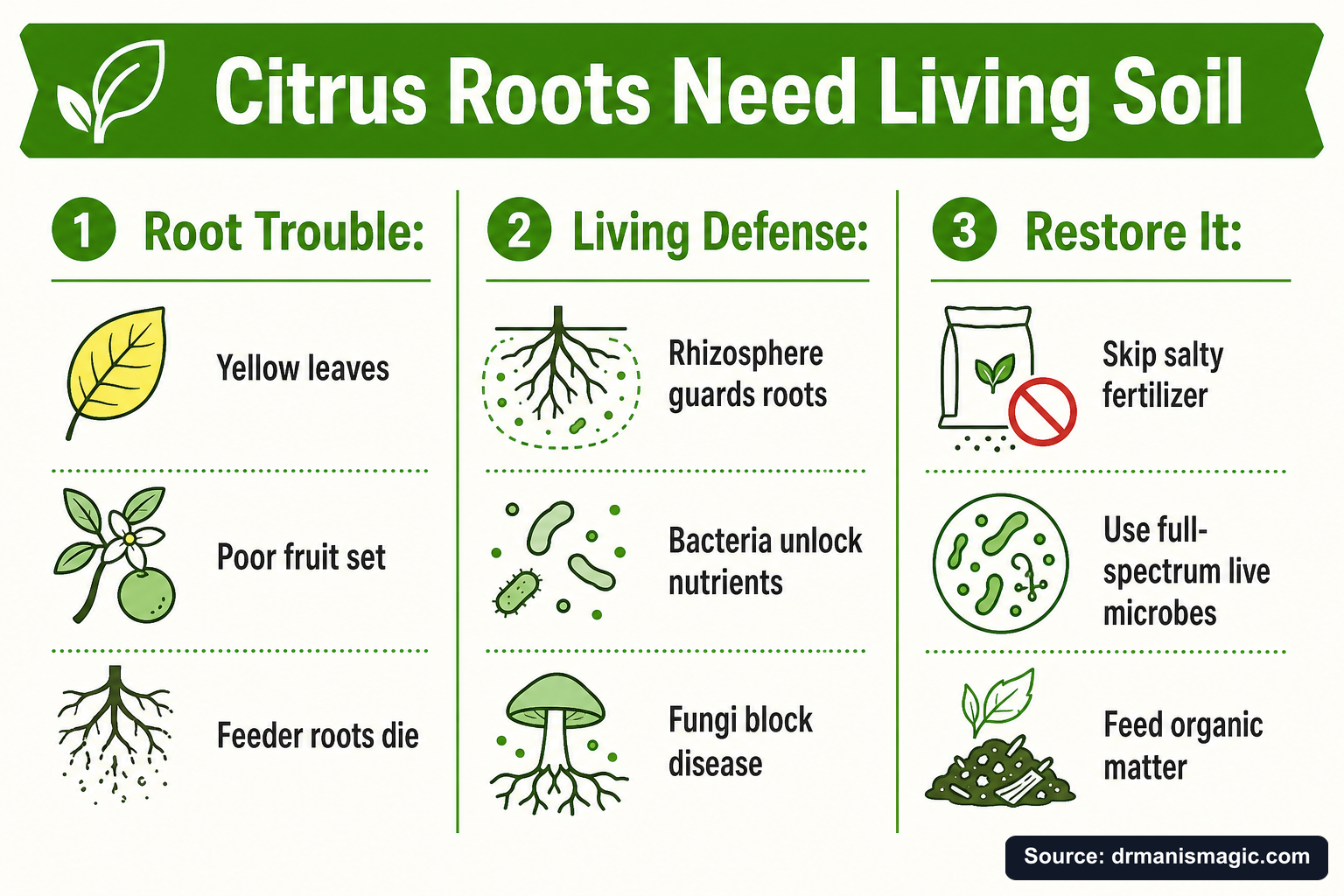
Key Takeaways
- The natural defense system of citrus roots is a living soil food web, not a single product or treatment.
- Feeder roots, beneficial bacteria, mycorrhizal fungi, protozoa, and nematodes all work together to protect and feed the tree.
- Salt-based synthetic fertilizers quietly kill this system, leaving roots defenseless against rot, pests, and disease.
- Many microbial products on the market contain dead or dying microbes that deliver little to no benefit at the root zone.
- Symptoms like yellowing leaves, root rot, and weak fruiting often trace back to a collapsed soil food web, not a single disease.
- Rebuilding the root defense system requires live, full-spectrum microbes applied consistently over time.
- The Three Plant Pillars (mineral soil, live microbials, organic fertilizer) are the proven framework for restoring and protecting citrus root health.
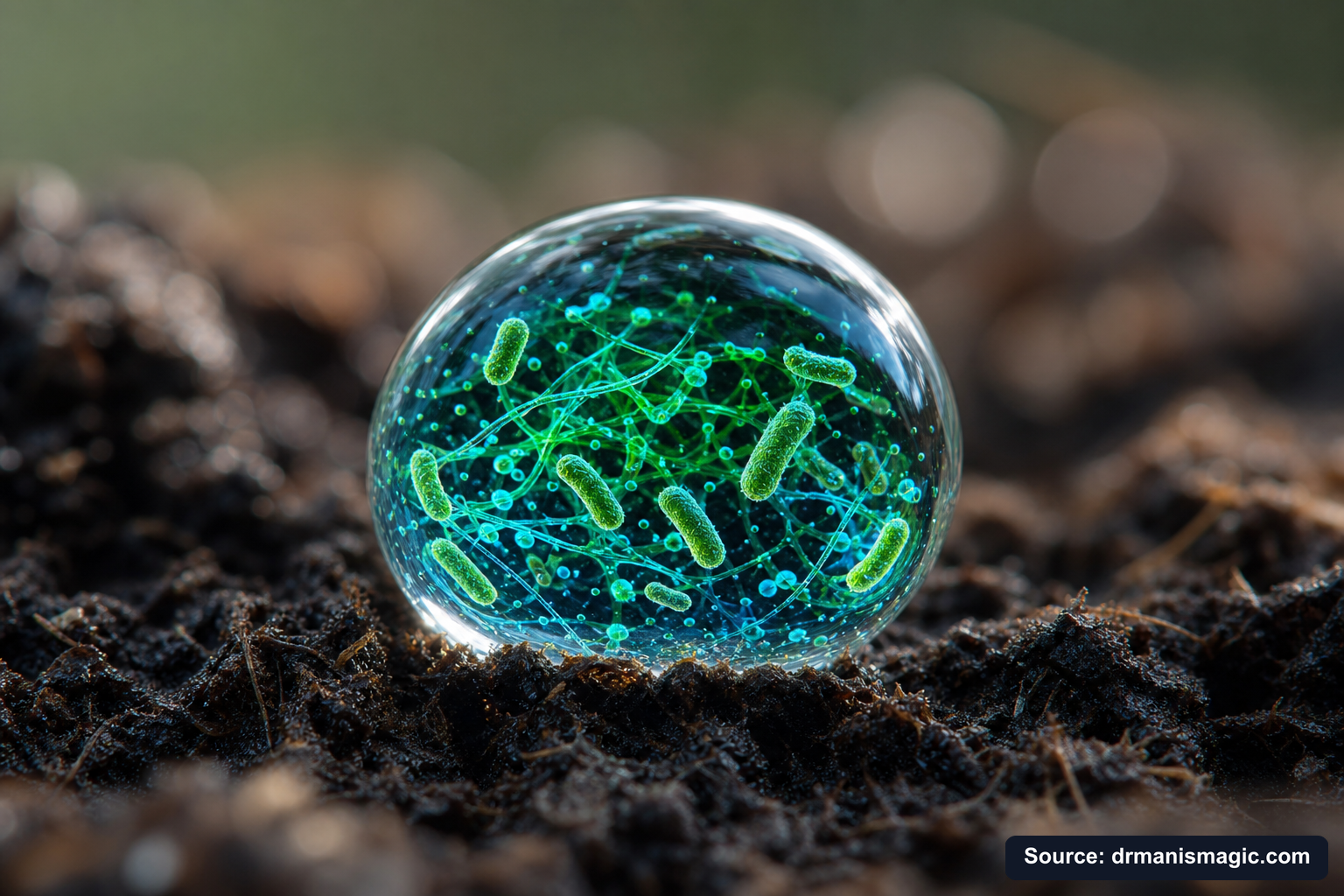
What Is the Rhizosphere and Why Does It Run the Whole Show?
Quick Answer: The rhizosphere is the thin zone of soil directly surrounding citrus roots. It is teeming with billions of microbes that feed on root sugars and in return protect the root, unlock nutrients, and fight off disease-causing organisms. Without a healthy rhizosphere, citrus roots are exposed and vulnerable.
The rhizosphere is the most biologically active spot on earth, gram for gram. We are talking about a zone just a few millimeters wide around each root tip. But inside that tiny space, there can be ten times more microbial activity than in the surrounding soil. It is a feeding frenzy, a trading floor, and a battlefield all at once.
Here is how the trade works. Your citrus tree pumps sugars, amino acids, and other compounds out through its roots. Scientists call these root exudates. The tree is essentially broadcasting a signal: "Come live here. I will feed you." In return, the microbes that show up go to work. They break down organic matter, release locked-up nutrients, produce hormones that stimulate root growth, and form a physical barrier that pathogens have to fight through just to get near the root surface.
According to UC IPM, the majority of citrus root problems, including Phytophthora root rot and feeder root loss, are directly tied to conditions in the root zone. The soil environment, not just the pathogen, determines whether a tree survives or declines. That root zone environment is the rhizosphere. And when you start thinking about it that way, every gardening decision you make is really a rhizosphere decision.
What Are Feeder Roots and Why Are They the First Thing That Dies?
Quick Answer: Feeder roots are the tiny, hair-like roots at the tips of the root system. They do almost all of the water and nutrient absorption for the tree. They are also the most fragile part of the root system and the first to die when soil conditions go wrong, whether from overwatering, salt buildup, compaction, or disease.
Most people imagine tree roots as thick, woody structures. But the roots that actually do the feeding are microscopic. They are called feeder roots, and they exist right at the growing tips of the root system. A single citrus tree can have millions of them, all constantly reaching into the soil, absorbing water and nutrients, and releasing those sugars that attract and feed the microbial community.
Feeder roots live short lives. They die and are replaced constantly. In a healthy soil food web, that cycle happens smoothly. Bacteria decompose the dead roots. Fungi bridge the gaps. New feeder roots push into fresh territory. The system is self-renewing.
But feeder roots are also the canary in the coal mine. They are the first thing to die when something goes wrong. Overwater the tree and feeder roots suffocate. Dump a salt-heavy fertilizer and feeder roots shrivel from osmotic stress. Let Phytophthora get a foothold and feeder roots rot away faster than the tree can replace them. What makes this tricky is that feeder root loss looks the same no matter what caused it. Yellowing leaves. Wilting. Poor fruit set. That is why UC IPM emphasizes that root-zone diagnosis, looking at what is actually happening underground, is central to understanding any citrus decline.
After growing over 250,000 trees at our South Texas nursery, we saw this pattern over and over. The tree above ground looks stressed, and everyone starts guessing: is it water? Is it fertilizer? Is it a bug? But the real story was always in the soil. Almost every time, the feeder roots had collapsed because the living system around them had collapsed first.
What Is the Soil Food Web and How Does It Protect Citrus Roots?
Quick Answer: The soil food web is the network of living organisms in healthy soil, including bacteria, fungi, protozoa, and nematodes, that cycle nutrients, suppress disease-causing pathogens, and build the physical structure roots need to thrive. It is the invisible engine behind every healthy citrus tree.
Think of the soil food web like an underground city. Bacteria are the workers, breaking down organic matter and releasing nutrients. Fungi are the engineers, building long networks that extend the reach of roots far beyond what roots could do alone. Protozoa are the population managers, eating bacteria and releasing nitrogen right at the root zone. Nematodes are the peacekeepers, keeping all the other populations in check.
When every layer of this city is working, the system is almost self-sustaining. Nutrients cycle. Pathogens get crowded out. Soil structure stays open and airy so roots can breathe. Water moves through properly. This is what scientists and extension researchers at Penn State Extension describe when they explain that higher soil biological diversity creates a stabilizing force against disease and pest outbreaks. More diversity means more resilience.
Here is a breakdown of what each player does for citrus roots:
| Soil Food Web Player | What It Does for Citrus Roots | What Happens When It Is Gone |
|---|---|---|
| Beneficial Bacteria | Break down organic matter, fix nitrogen from air, suppress pathogens, produce growth hormones | Nutrient lockup, poor root development, disease vulnerability |
| Mycorrhizal Fungi | Extend root reach up to 100x, improve phosphorus and water uptake, buffer against salt and drought stress | Roots stay small, tree struggles in dry or salty conditions |
| Protozoa | Graze on bacteria, release plant-available nitrogen right at the root surface | Nitrogen stays locked in bacterial biomass, unavailable to the tree |
| Beneficial Nematodes | Regulate bacterial and fungal populations, suppress pest nematodes and soil-borne pathogens | Pest nematodes multiply, pathogen pressure rises |
| Soil Fungi (general) | Build soil aggregates with glomalin, create airy structure, decompose tough organic residues | Soil compacts, drainage fails, feeder roots suffocate |
When that whole system is running, your citrus roots are wrapped in protection. When even one layer breaks down, the whole city starts to crumble. And most of the inputs people use every day are designed, whether intentionally or not, to knock these layers out.
What Do Mycorrhizal Fungi Actually Do for Citrus Roots?
Quick Answer: Mycorrhizal fungi form a partnership with citrus roots, extending the root system far beyond what the root itself can reach. They dramatically improve phosphorus and water uptake, help buffer the tree against drought and salinity stress, and physically block some root pathogens from getting in. They are one of the most powerful tools in the natural defense system.
The word "mycorrhizae" sounds complicated. It just means "fungus root." These are fungi that actually grow into the outer cells of citrus feeder roots and then extend long threads, called hyphae, out into the surrounding soil. The tree feeds the fungus sugars. The fungus feeds the tree water and minerals, especially phosphorus, which citrus is notoriously hungry for.
Oklahoma State University Extension lists citrus among the crops that respond strongly to arbuscular mycorrhizal fungi, which are the specific type of mycorrhizae that colonize citrus roots. The benefits go beyond just nutrient uptake. Mycorrhizal networks physically fill the space around roots, making it harder for pathogens like Phytophthora to move in. They also help the tree manage water stress by pulling moisture from a much larger volume of soil than the root could access on its own.
But here is something almost no one tells you. Mycorrhizae are not a magic add-and-forget solution. They are a partnership, and partnerships require the right conditions. If your soil is already loaded with phosphorus, the tree may stop feeding the fungus and the relationship can break down. If your soil has been sterilized by synthetic fungicides, there may be nothing left to colonize. And if the mycorrhizal product you bought was a dried powder made in a factory and sitting on a shelf for six months, the fungi may already be dead before you pour them on.
We will get to that last point in a minute. It is important.
See also: The Hidden Reason Synthetic Fertilizers Cause Root Rot
How Do Bacteria and Protozoa Work Together to Feed Citrus Roots?
Quick Answer: Bacteria break down organic matter and store nutrients in their own bodies. Protozoa then eat the bacteria and release that stored nitrogen directly at the root surface, where the tree can absorb it immediately. This cycle, called the microbial loop, is one of the most efficient nutrient delivery systems in nature.
This is one of the most beautiful and least talked-about stories in all of soil science. And once you understand it, you will never look at a bag of synthetic fertilizer the same way again.
Here is what happens in healthy soil. Bacteria eat organic matter and multiply. They are literally tiny bags of nutrients, packed with nitrogen and minerals. Then protozoa, single-celled organisms that are slightly larger than bacteria, come along and eat them. When a protozoan eats a bacterium, it absorbs what it needs and releases the rest as plant-available nitrogen. Right there. Right at the root surface. In exactly the right form. In exactly the right place.
This is called the microbial loop. And it is the reason a healthy citrus tree in natural soil never runs out of nitrogen, even without a single fertilizer application. The loop runs continuously, cycling nutrients from organic matter through bacteria through protozoa and then directly into the root.
Synthetic fertilizers bypass this system entirely. They dump a flood of salt-based nutrients into the soil, which the tree takes up as a short-term spike, and then the soil is left worse off than before. The salt kills or impairs the bacteria. The protozoa have less to eat. The loop slows down. And the tree becomes dependent on the next application, because the natural cycling system has been damaged or destroyed.
After decades of watching this happen to trees in our South Texas nursery, we stopped calling it gardening. We started calling it what it really is: a subscription service that benefits the fertilizer company, not the tree.
What Kills the Natural Defense System of Citrus Roots?
Quick Answer: The biggest killers of the citrus root defense system are salt-based synthetic fertilizers, synthetic fungicides and pesticides, herbicides like glyphosate, and compacted or oxygen-starved soil. Each of these either directly kills beneficial microbes or creates conditions where pathogens win and the soil food web collapses.
Let us be direct here. The system is fragile in ways that most gardening advice never acknowledges. And several of the most commonly sold products actively destroy it.
Salt-based synthetic fertilizers are the biggest offender. When you pour a salt-heavy fertilizer onto soil, the salt creates an environment that is hostile to bacteria and fungi. The microbes either die outright or go dormant. The microbial loop slows. The mycorrhizal network weakens. And the feeder roots, now stripped of their microbial partners, are exposed to every pathogen in the soil. This is the hidden reason root rot so often follows heavy fertilizer applications.
Synthetic fungicides create a different but equally serious problem. They are designed to kill fungi. But they cannot tell the difference between Phytophthora, which you want dead, and the mycorrhizal fungi that are feeding your tree. Broad-spectrum fungicides often wipe out both. You solve the immediate problem and create a worse long-term one.
Herbicides like glyphosate have been shown to disrupt microbial communities in the root zone, reducing diversity and shifting populations toward less beneficial species. And compacted soil, which is almost always made worse by organic potting mixes that break down into dense sludge, cuts off the oxygen that beneficial aerobic bacteria and fungi need to survive.
Here is a quick look at the most common root killers and what to do instead:
| What Kills the Defense System | How It Damages Roots | What to Do Instead |
|---|---|---|
| Salt-based synthetic fertilizers | Kills beneficial bacteria and fungi, causes feeder root burn | Use organic, slow-release fertilizer with no synthetic salts |
| Synthetic fungicides | Kills beneficial fungi including mycorrhizae alongside pathogens | Restore biology with live full-spectrum microbials |
| Herbicides (glyphosate) | Disrupts microbial community structure and diversity | Mechanical weed control, then re-inoculate with live microbes |
| Compacted or oxygen-starved soil | Kills aerobic bacteria and fungi, favors anaerobic pathogens | Use mineral-based soil with permanent structure and drainage |
| Overwatering | Suffocates feeder roots, creates Phytophthora conditions | Improve drainage, water less frequently, use proper soil structure |
| Organic potting mix breakdown | Compacts into sludge, blocks oxygen, hosts anaerobic pathogens | Switch to permanent mineral-based soil that never degrades |
You Never Had a Brown Thumb.
You were handed the wrong tools. This free guide hands you the right ones.
You watered it. You fed it. It died anyway.
It was never you. It was the dirt, the salt food, and the bad advice.
This guide shows you what really went wrong, and how to fix it for good.
- Why your plants really died, and why it was never your fault
- The salt hiding in your plant food that quietly burns the roots
- The hidden killer in almost every bag of store soil
- The tiny helpers that grow a whole forest for free
- The rescue trick that brings a half dead plant back to life

How Do You Tell the Difference Between Phytophthora, Nematodes, and Salt Damage on Citrus Roots?
Quick Answer: These three problems look almost identical above ground, with yellowing leaves, wilting, and poor growth. The difference is in the roots and the conditions. Phytophthora causes dark, mushy feeder roots and thrives in wet soil. Citrus nematodes cause stubby, beaded roots and spread in sandy soil. Salt damage causes brown, crispy root tips and follows heavy fertilizer use. Proper diagnosis requires looking underground.
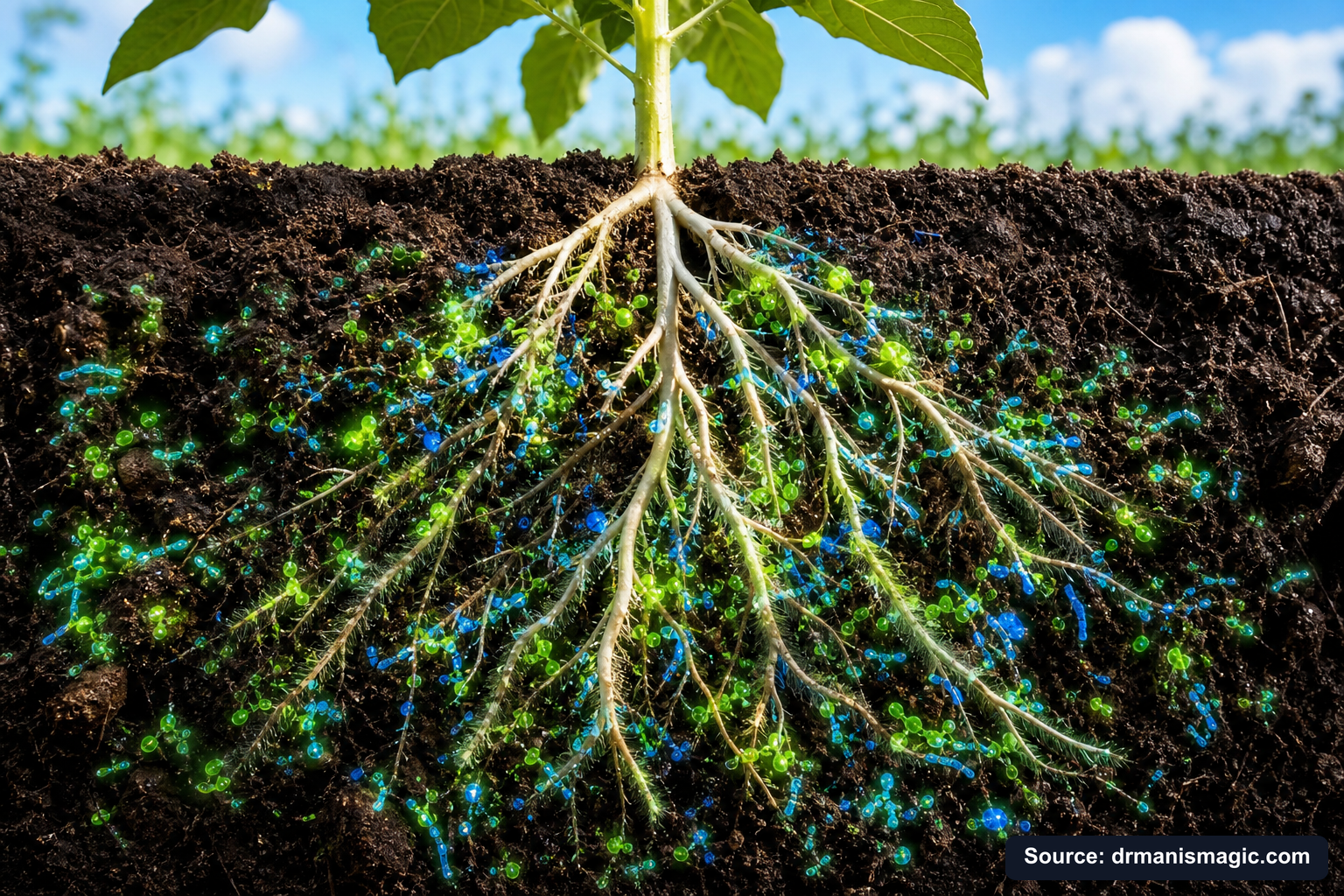
This is where most gardeners get stuck. And honestly, it is where most gardening advice fails them completely. Because yellowing leaves and declining trees can come from a dozen different root-zone problems, and the fix for each one is different. Treating Phytophthora with more fertilizer makes things worse. Treating salt damage with a fungicide does nothing. You have to know what you are dealing with.
UC IPM makes clear that citrus feeder root loss from Phytophthora can look almost identical to damage from nematodes, salinity, flooding, or drought injury. Root-zone diagnosis is not optional. It is the starting point for any real solution.
Here is a practical guide to tell these problems apart:
Phytophthora Root Rot: Feeder roots are dark, brown, or black, and feel mushy when you touch them. The damage is worst near the soil surface. It almost always follows a period of overwatering, poor drainage, or heavy rain. The pathogen loves wet, oxygen-poor soil. If you smell the roots, there is often a sour or rotten odor.
Citrus Nematode Damage: Feeder roots look stubby, swollen, or beaded. Sometimes you can see small galls or knots. The damage tends to be in the outer layer of the root zone and spreads in sandy soil. Trees decline slowly over years, not weeks.
Salt Damage: Root tips are brown or tan and feel dry and crispy, not mushy. The pattern often follows a fertilizer application or a period of drought. You may also see a white crust on the soil surface. Leaves may show brown, burned tips as well as yellowing.
Flooding or Drought Stress: Feeder roots die from suffocation (flooding) or desiccation (drought) and look pale or brown without the mushy rot of Phytophthora or the beading of nematodes. The pattern follows irrigation history closely.
A soil and root sample sent to a university plant diagnostic lab is the most reliable way to confirm what you are dealing with. But understanding these patterns helps you make smarter decisions while you wait for results and guides how you rebuild the defense system afterward.
Why Do Most Microbial Products Fail to Rebuild Citrus Root Defense?
Quick Answer: Most microbial products on store shelves contain dead or dying microbes. They are either dried powders made from lab-grown strains that rarely survive or establish in real soil, or liquids that have gone anaerobic and smell foul because the microbes are already decomposing. Dead microbes cannot rebuild a living defense system.
This is the part of the story that the gardening industry does not want you to think about too carefully.
Walk into any garden center and you will find bottles and bags labeled with impressive-sounding bacteria and fungi counts. Millions of colony-forming units. Dozens of species. Beautiful packaging. And most of it does almost nothing for your roots. Here is why.
The majority of commercial microbial products are made one of two ways. The first way is that microbes are grown in giant factory vats, then dried into a powder. The idea is that the dried spores will reactivate when you add water and pour them on the soil. In theory, this sounds reasonable. In practice, after testing dozens of batches on our 250,000-plus trees in South Texas, we found they simply did not help. The reactivation rate is low. The strains are narrow. And even if a few survive, they often cannot compete with the native microbial populations already in the soil.
The second way is that microbes are harvested from compost or worm castings and turned into a liquid. This sounds better, because compost is genuinely alive and powerful. But here is the problem: once that liquid is bottled and shipped, it begins to go anaerobic. The microbes start dying and fermenting. By the time you open the bottle, the smell tells you everything. If it smells like rotting sewage or fizzes when you open it, the biology is already dead or dying. You are pouring a corpse onto your roots.
And then there is a third approach: lactobacillus-based products. Yes, like the bacteria in yogurt. Easy to make and very vigorous. But lactobacillus tends to crowd out the beneficial microbes you are trying to establish. It belongs in your gut, not your soil.
The core problem is not that microbes are a bad idea. Microbes are the best idea. The problem is keeping them alive through production, shipping, and storage, and then delivering them to the root zone in a form that can actually establish and work. That is a genuinely hard problem, and almost no one in the commercial gardening industry has solved it.
Almost no one.
What Makes Live, Stabilized Microbes Different From Dead Ones?
Quick Answer: Live stabilized microbes are actively metabolizing organisms that can colonize roots, compete with pathogens, and perform all the soil food web functions that dead or dried microbes cannot. The difference is like comparing a fresh apple to a dried, shriveled one. The nutrition is not the same. The function is not the same. Only living microbes can rebuild a living defense system.
When Dr. Mani Skaria, Professor Emeritus of Plant Pathology and founder of the Clean Citrus Program in Texas, first encountered a proprietary natural stabilization technique for keeping full-spectrum compost microbes alive in a bottle, he was skeptical. He had seen too many microbial products come and go. He had tested them on his trees. He had watched them fail.
But this was different. The microbes in this product were not lab-grown. They were harvested from real, hot, actively composting material, the kind of compost that reaches 140 degrees Fahrenheit because of the sheer intensity of biological activity inside it. And they were stabilized through an all-natural process that kept them from going anaerobic. Alive. Active. Not rotting.
The proof was right there under a microscope. Take a drop of this product and look at it under magnification. You can watch the microbes moving. They are not dormant. They are not dead. They are alive and working, right in the bottle.
That product became Plant Super Boost, the live microbial formula at the heart of the Dr. Mani's Magic system. It carries over 2,000 strains of bacteria, 400 to 500 species of fungi including mycorrhizae, plus protozoa and beneficial nematodes. The full spectrum. The whole city, not just one building.
And because it is not rotting, it does not smell bad. It smells like earth. Like good, rich, healthy soil on a rainy morning. That smell alone tells you the microbes are stable and alive, not fermenting and dying.
Here is the head-to-head comparison so you can see exactly what separates genuinely live biology from the alternatives:
| Product Type | Microbial Viability at Use | Spectrum of Species | Odor | Real-World Results |
|---|---|---|---|---|
| Dried powder (lab-grown) | Very low | Narrow, 5-20 strains | Neutral or chalky | Little to no measurable benefit |
| Dried powder rehydrated in liquid | Very low | Narrow | Neutral | Same issue as dry powder |
| Compost tea (fresh, under 24 hours) | Moderate if aerated | Partial, depends on compost source | Earthy, slight sour note | Good, but time-sensitive and hard to scale |
| Compost tea (old, over 24 hours) | Low, anaerobic | Partial | Strong rotting odor | Not recommended |
| Lactobacillus-based product | High, but wrong species | Very narrow | Sour, fermented | Crowds out beneficial microbes |
| Plant Super Boost (stabilized, full-spectrum) | High, visibly active under microscope | 2,000+ bacteria, 400-500 fungi including mycorrhizae, protozoa, nematodes | Earthy, no foul odor | Proven across 250,000+ trees in South Texas |
What Are the Three Plant Pillars and How Do They Rebuild Root Defense?
Quick Answer: The Three Plant Pillars are the framework Dr. Mani developed after 35 years of citrus science: mineral-based soil for permanent structure and drainage, live microbials for biological defense and nutrient cycling, and organic fertilizer for slow-release nutrition that feeds the plant without killing the microbes. Together they recreate the conditions that make wild trees thrive without any inputs at all.
After decades in the field, after testing product after product and watching trees struggle or thrive, Dr. Mani Skaria arrived at a simple truth. Every healthy plant on earth is supported by three things working together: the right physical environment for roots to breathe and drain, a living microbial community to cycle nutrients and fight disease, and a slow, steady supply of nutrition that works with biology instead of against it.
He called these the Three Plant Pillars. And he built every product in the Dr. Mani's Magic line around them.
Pillar One: Mineral-Based Soil. Most potting mixes are made from pine bark and wood fiber. These organic materials break down. When they decompose, they compact into dense, oxygen-starved sludge that suffocates feeder roots and creates the wet, anaerobic conditions that pathogens like Phytophthora love. The fix is permanent mineral-based soil. Silica-rich sandy loam from South Texas that does not decompose, does not compact, and keeps the root zone open and oxygenated for years. No root rot. No sludge. Roots that can actually breathe.
Pillar Two: Live Microbials. This is the biological defense system. Bacteria, fungi, mycorrhizae, protozoa, and beneficial nematodes working as a team to cycle nutrients, crowd out pathogens, extend the root reach, and keep the soil food web running at full capacity. Without this pillar, the other two work at a fraction of their potential.
Pillar Three: Organic Fertilizer. Organic, slow-release nutrition from crab meal, kelp, and amino acids delivers the full spectrum of what a citrus tree needs, nitrogen, phosphorus, potassium, plus trace elements and biostimulants, in a gentle form that feeds the plant and feeds the microbes simultaneously. No synthetic salts. No PFAS contamination. No biosludge. Zero toxins. Just clean, earth-born nutrition that works with the biology instead of burning it down.
Miss any one pillar and the system cracks. Get all three right and the tree becomes, as we have seen again and again, nearly bulletproof.
How Do You Rebuild the Natural Defense System When It Has Already Collapsed?
Quick Answer: Rebuilding a collapsed citrus root defense system takes consistent action over several months. You cannot restore a living ecosystem overnight. But with the right steps, in the right order, the biology comes back, roots recover, and trees that looked finished can surprise you with new growth and eventually fruit.
This is the part people want to skip to. And we understand. If your tree is struggling, you want to fix it now. But here is the truth about biological systems: they take time to rebuild. The good news is that time is exactly what you have, provided you start today.
One of the most common things people tell Dr. Mani is that they just want to see fruit on their tree in their lifetime. They have been waiting. They have been trying. And every year that passes with a struggling tree is a year of fruit they will never get back. You cannot buy that time back. You can only stop losing it right now.
Here is a practical recovery checklist, based on what we have learned across 250,000 citrus trees and years of diagnosing struggling home growers:
- Stop the bleeding first. Remove any salt-based fertilizers, synthetic fungicides, or herbicides from your routine. These keep destroying the biology you are trying to rebuild.
- Fix the soil structure. If your tree is in a compacted, organic-based potting mix, consider repotting into mineral-based soil that will not break down. Roots need oxygen to recover.
- Drench the root zone with live full-spectrum microbials. Apply every month, consistently. Rebuilding a microbial community is not a one-time event. It takes repeated inoculation, especially in soils that have been damaged by synthetic inputs.
- Feed with organic, salt-free nutrition. Slow-release organic fertilizer feeds the plant and the microbes without setting back the biology you are building.
- Improve drainage if needed. Check that water moves freely through the soil and out the bottom of the container. Standing water is a Phytophthora invitation.
- Be patient but consistent. Within 30 days you will often see the tree stabilize. Within a few months, new growth appears. Fruit comes after the biology is genuinely established and the tree has the resources to invest in reproduction.
- Keep the biology fed. Even after the tree recovers, monthly microbial applications maintain the defense system that protects against the next stress event.
The biology does the heavy lifting. Your job is to give it what it needs and get out of the way.

What Is the Warm, Honest Closing You Deserve to Read
Here is the bottom line. Your citrus tree is not just a plant. It is a living system anchored by an underground world that most gardening advice completely ignores. The natural defense system of citrus roots is not a product. It is not a spray or a powder or a quick fix. It is a living, breathing community of bacteria, fungi, protozoa, nematodes, and organic matter working together in the root zone, the rhizosphere, to feed your tree, protect its roots, and keep pathogens from winning.
When that community is alive, trees thrive. When it is dead or damaged, no amount of fertilizer, fungicide, or wishful thinking will fix what is broken underground.
The good news is that the solution is not complicated. It is actually simpler than anything the Big Box stores have ever sold you. Mineral-based soil so roots can breathe. Genuine live microbials that can actually establish at the root zone. Organic nutrition that feeds the plant without torching the biology. Three pillars. One system. Proven across 250,000 trees in South Texas.
We built the Dr. Mani's Magic line because we needed it ourselves. We wanted our trees to thrive without chemicals, without guesswork, and without losing years of growth to products that were never designed to work with nature. Everything we make is produced in the USA, free of synthetic salts, PFAS, and biosludge, and backed by a 30-day money-back guarantee. Because we are that confident it works.
If you want to see what the full Three Plant Pillars system looks like, and get a free plant care field guide to walk you through it step by step, you can start right here: get the Free Plant Care Field Guide. Your roots, and the invisible army protecting them, will thank you for it.
Frequently Asked Questions
Your citrus tree is trying to tell you something. The yellow leaves, the weak fruit, the slow growth — it all starts underground where you cannot see it. These are the questions real growers ask when they finally want real answers, grounded in 30 years of testing on over 250,000 trees right here in South Texas.
What is the root system of a citrus tree, and why does it matter so much?
Citrus trees have two types of roots. The big structural roots anchor the tree. The tiny feeder roots — hair-thin and fragile — are where almost all water and nutrient absorption happens. These feeder roots live close to the soil surface and are surrounded by billions of microbes. That living zone around the roots is called the rhizosphere. When it is healthy and full of life, your tree thrives. When it is damaged, everything suffers. Most gardeners never think about this, and that is exactly why their trees struggle.
Why are my citrus tree leaves turning yellow?
Yellow leaves are almost always a root zone problem, not just a nutrient problem. When the living microbes around your roots are dead or missing, nutrients get locked in the soil and your tree cannot absorb them no matter how much fertilizer you pour on. Salt-based synthetic fertilizers make this worse by killing the very bacteria and fungi your roots depend on. Before you reach for another bag of fertilizer, ask yourself: is the underground defense system of your tree still alive? If not, feeding it more chemicals is like pouring water into a broken bucket.
What is the best fertilizer for citrus trees?
The best fertilizer for citrus trees works with the living soil, not against it. Dr. Mani's Crab, Kelp, and Amino Acids organic fertilizer delivers slow-release nitrogen, phosphorus, and potassium from natural sources. It feeds the tree gently without burning roots or wiping out beneficial microbes. Synthetic salt-based fertilizers give a quick green flush but quietly destroy the underground defense system your tree depends on for long-term health, disease resistance, and fruit production. Slow and natural wins every time.
How often should I fertilize my citrus tree?
With organic slow-release fertilizer like Dr. Mani's Crab, Kelp, and Amino Acids, you can feed two to four times per year. Apply in late winter, late spring, and early fall. Because organic fertilizer breaks down gradually, it feeds the tree steadily without shocking the roots or burning the soil. Avoid fertilizing in late fall or winter when the tree is resting. More important than frequency is the type of fertilizer you use. The wrong kind applied on the right schedule still destroys your root defense system.
What are the signs of magnesium deficiency in citrus trees?
Look for yellowing on older leaves first, especially in a V-shaped pattern where green stays near the base of the leaf and yellow spreads outward. This happens because magnesium is mobile — the tree pulls it from old leaves to feed new growth and developing fruit. Sandy soils and acidic soils lose magnesium fast. But before you treat a deficiency in isolation, check your soil and microbial health first. A living rhizosphere helps your tree access and hold magnesium naturally, reducing deficiencies over time.
Does Epsom salt help citrus trees?
Epsom salt adds magnesium and sulfur, which citrus trees do need. A diluted soil drench or foliar spray can give a short-term boost when deficiency is confirmed. But Epsom salt is a band-aid, not a foundation. It does nothing to rebuild the living root defense system your tree needs. If your soil microbes are gone and your soil structure is poor, magnesium will keep leaching away no matter how often you apply it. Fix the root zone first with the Three Plant Pillars, then use targeted supplements as needed.
Why are citrus plants restricted in Texas, and where can I safely buy one?
Texas bans importing citrus trees from other states to protect growers from deadly diseases like citrus greening and citrus canker, which are spread by the Asian citrus psyllid. There is no cure for citrus greening. Every tree sold legally in Texas must come from a state-certified nursery using clean, virus-free budwood from the official Texas citrus repository. Dr. Mani's Magic and US Citrus Nursery are based in Hargill, South Texas, fully certified, and have been growing and shipping Texas-legal citrus trees since 2006. You can order safely at uscitrusnursery.com.
About the Author
Ron Skaria, MD
Ron Skaria, MD, is the co-founder of Dr. Mani's Magic and the son of Dr. Mani. He trained as a medical doctor at Baylor College of Medicine, did his residency at UT Health Science Center - San Antonio and fellowship training at Texas Tech University. He now works full time on the family farm at US Citrus and US Citrus Nursery in Hargill, Texas, building Dr. Mani's Magic alongside his dad. He wrote the Brown Thumb Field Guide to put his father's 48 years of plant science into plain words any gardener can use. His belief is simple. You never had a brown thumb. You just never had the right help.


