


Why Synthetic Fertilizers Cause Root Rot: The Salt-Damage Chain | Dr. Mani's Magic
The Hidden Reason Synthetic Fertilizers Cause Root Rot (And What's Really Happening Underground)
Picture this. You did everything right. You bought the fertilizer. You followed the directions on the bag. You sprinkled it around your tree, watered it in, and waited for the explosion of green growth you were promised on the label.
A few weeks later, the leaves start yellowing. The plant looks limp, almost sad. You water more. Still nothing. You fertilize again, thinking maybe you didn't use enough. Then one morning you pull the pot over and look at the roots. They're brown. Mushy. They smell like something died. Your stomach drops. You were trying to feed your plant. But somehow, you killed it.
Here's the part nobody tells you. The fertilizer didn't just fail you. It set your plant up for this. Not because you used too much. Not because you're a bad gardener. But because of something happening underground that most gardening companies have zero interest in explaining to you. It's a chain reaction that starts with salt, moves through your root zone, and ends with a plant that can't protect itself anymore. We're going to show you exactly what that chain looks like, and more importantly, how to break it for good.
Key Takeaways
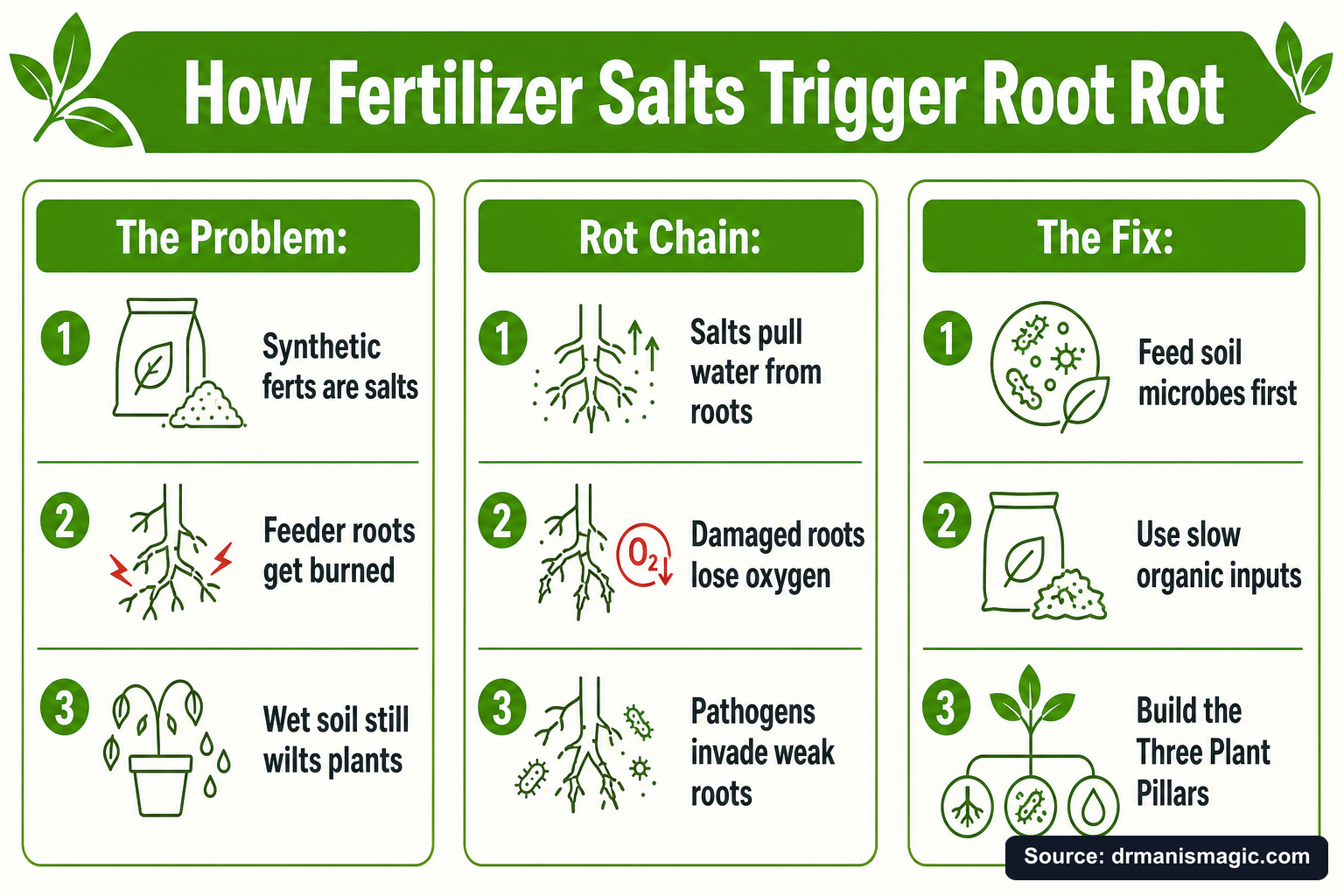
- Most synthetic fertilizers are salt-based, and high soluble salts can physically injure feeder roots through a process called osmotic stress.
- Salt-injured roots lose their ability to take up water and oxygen, making them easy targets for root rot pathogens like Pythium and Phytophthora.
- Root rot is almost never just about overwatering. It's about the combination of damaged roots, low oxygen, and poor soil biology working against your plant at the same time.
- Healthy soil biology, especially bacteria, fungi, and mycorrhizae, is your plant's first line of defense. Salt-based fertilizers destroy that biology every time you apply them.
- Organic, slow-release inputs like crab, kelp, and amino acids feed the microbes first, which then feed the plant in a steady, gentle way that mirrors nature.
- The Three Plant Pillars (mineral soil, live microbes, and organic fertilizer) work together to create a root zone where root rot simply cannot get a foothold.
- Recovery is possible. But it starts with understanding the real root cause, not just blaming overwatering.
What Is Osmotic Stress and Why Does It Make Roots Act Like They're Drowning in a Desert?
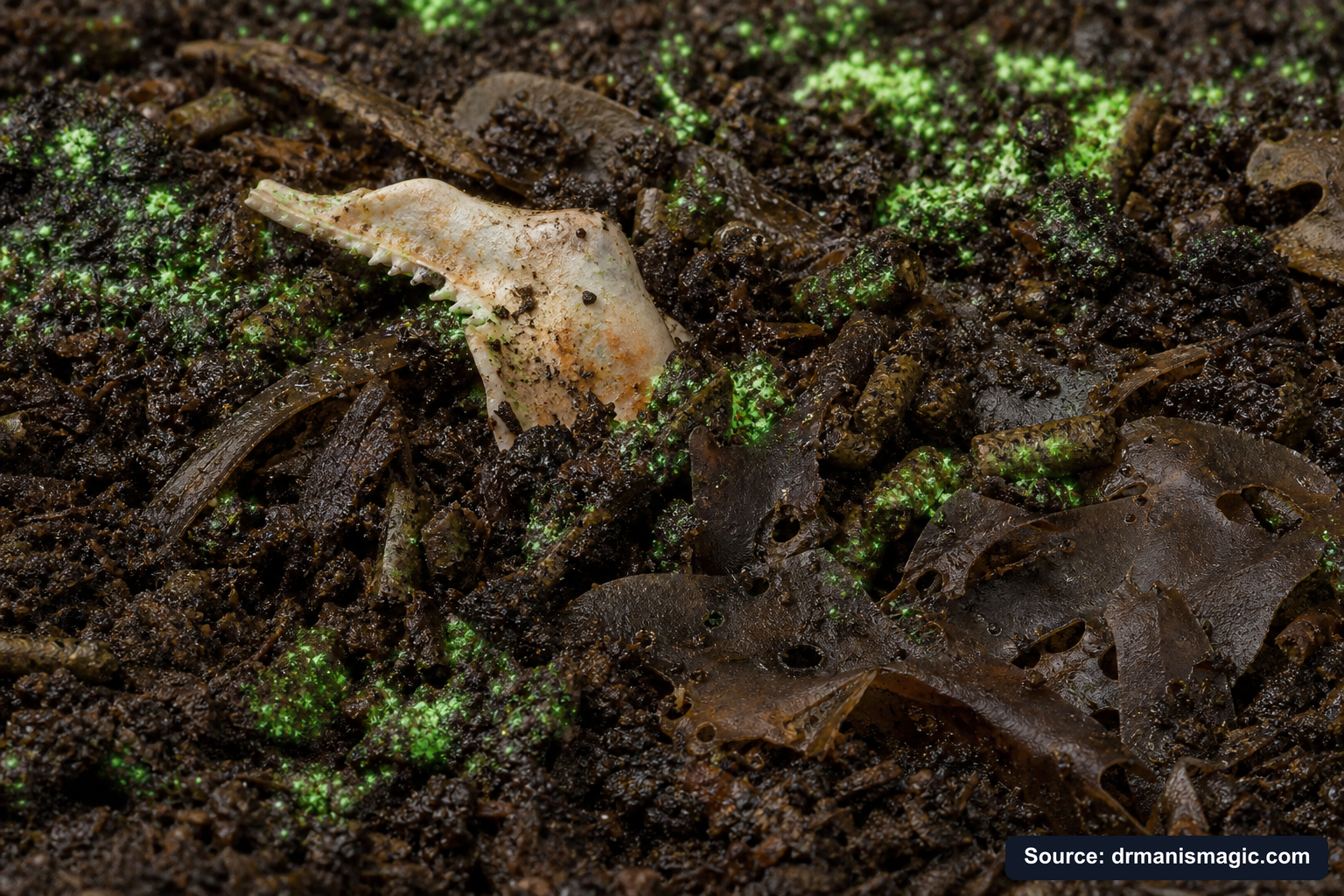
Osmotic stress happens when salt concentration around the roots is higher than inside the root cells. Water flows out of the roots to try to balance things, just like water leaves a cucumber in a salty pickle jar. The root shrivels, dries out, and starts dying, even if the soil around it is soaking wet. This is called physiological drought.
Imagine you're floating in the ocean and you're incredibly thirsty. There is water all around you. But you cannot drink it. The salt content is too high. Your body would actually lose more water trying to process it than it would gain.
Your plant's feeder roots face the exact same problem when there's too much synthetic fertilizer salt in the soil.
Here's the science in plain English. Water always moves from areas of lower salt concentration to areas of higher salt concentration. It's trying to balance things out. That movement is called osmosis. When you dump a high-salt synthetic fertilizer into your soil, the salt concentration outside the root becomes higher than the concentration inside the root. So instead of water flowing into the roots and up into the plant, water starts flowing out of the roots and into the soil. The root is losing water even though the soil is wet.
The root cells shrink. The feeder tips start to die back. The plant wilts even when you just watered it. You think the plant needs more water. You water again. The salt concentration gets worse. You're now in a spiral.
Maryland Extension is clear on this. Many fertilizers contain soluble salts that are directly toxic to root tissues at high concentrations. The problem isn't that the plant got too much nutrition. The problem is that the delivery vehicle for that nutrition, the salt, is physically damaging the very roots the plant needs to survive.
This is the hidden first step in the chain that leads to root rot. And it's the step almost no one talks about.
See also: The Osmotic Shock Your Plants Feel From Synthetic Nutrients
How Does Salt Damage Lead to Root Rot? (The Three-Step Chain Reaction)
Salt injures feeder roots and strips them of their protective function. Injured roots struggle to take up oxygen. Low-oxygen root zones become a perfect home for Pythium, Phytophthora, and other root rot pathogens. The salt doesn't directly create root rot, but it opens the door wide and rolls out the welcome mat.
Root rot doesn't just appear out of nowhere. It follows a path. And once you understand the path, you can stop it at any point.
Step One: Salt Burns the Feeder Roots
Feeder roots are the tiny, hair-thin roots at the very tips of the root system. They're the ones actually doing the work of pulling in water and nutrients. They're incredibly delicate. And they're the first casualties of salt stress.
When soluble salts accumulate around these feeder roots, they cause what looks like a small burn. The root tip cells collapse. The root loses its ability to function. Penn State Extension notes explicitly that excess fertilizer salts damage potted-plant roots and can predispose plants to root diseases and damping-off. This is especially brutal in containers, where salts have nowhere to go and just keep building up with every application.
Step Two: Damaged Roots Can't Breathe
Roots need oxygen. People forget this. We think of plants breathing through their leaves, and they do, but the roots need a constant supply of oxygen in the soil to stay alive and functional. When feeder roots are injured, their ability to use oxygen drops sharply. And when soil becomes compacted or waterlogged, which often happens when root structure has been compromised, there's less oxygen available anyway.
Mississippi State Extension links excessive water and poor drainage directly to feeder-root death from low oxygen. The two problems stack. Salt-damaged roots in a wet, low-oxygen zone are roots that are already on their way out.
Step Three: The Pathogens Move In
Pythium and Phytophthora, the two most common root rot pathogens, are opportunists. They're always present in most soils in low numbers. They don't cause problems when roots are healthy and the soil biology is active. But the moment roots are weakened and oxygen is low, they explode.
Think of it like this. A healthy person with a strong immune system can be in a room full of cold germs and be just fine. That same person, exhausted and run down, catches everything. Your plant's roots are the same. Salt-injured roots in a low-oxygen zone are run-down roots. And Pythium is the cold that finishes them off.
See also: How Salt-Based Feeding Quietly Destroys Root Systems
Why Does Synthetic Fertilizer Kill the Microbes Your Plant Desperately Needs?
Synthetic fertilizers are salt-based. High salt concentrations in the soil create an environment that is hostile to beneficial bacteria, fungi, and mycorrhizae. These microbes die or go dormant, leaving the root zone without its natural defense system. Without that biological shield, roots are exposed to pathogens with nothing to fight back.
Here is something that should change how you think about fertilizer forever.
The University of Minnesota Extension estimates that soil biology supplies about 75% of plant-available nitrogen and 65% of available phosphorus. Three-quarters of your plant's nitrogen doesn't come from a bag. It comes from living organisms in the soil doing their job every single day. Bacteria that pull nitrogen from the air. Fungi that break down organic matter and release nutrients. Mycorrhizal networks that extend the reach of roots by hundreds of times.
When you pour a high-salt synthetic fertilizer into that ecosystem, you're not just feeding your plant. You're salting a battlefield. The microbes die. The nutrient-cycling machinery shuts down. The plant gets a quick hit of easily available nutrition, sure. But it's now flying without a safety net.
And here's the cruel irony. Because the microbes are gone, the plant becomes dependent on you and your fertilizer bag to survive. The soil can no longer feed itself. So you keep buying. You keep applying. The salt keeps building. The microbes keep dying. The roots keep weakening. The cycle just gets tighter.
This is not an accident. This is how a business model built on repeat purchases works. We're not saying it's a conspiracy with a secret handshake. We're saying the incentives don't point toward soil health. They point toward next month's sale.
After growing more than 250,000 trees at our South Texas nursery, we watched this pattern play out over and over. Growers would come to us with sick trees. The soil smelled off. The roots were brown. They'd been faithfully fertilizing with whatever the big box store recommended. The fertilizer was the problem.
Fertilizer Burn vs. Root Rot vs. Overwatering: How Do You Actually Tell the Difference?
These three conditions look almost identical above the soil, but they have different causes and different fixes. Fertilizer burn shows up fast after a feeding. Root rot smells bad and the roots are brown and mushy. Overwatering alone makes roots pale and soft but not always smelly. The key is to check the roots and remember your recent fertilizer history.
This is one of the most confusing parts of plant care. Your leaves look yellow. Your plant is wilting. Is it too much water? Not enough water? Too much fertilizer? Root rot? The answer could be any of them, or all of them at once.
Here is a diagnostic table to help you sort it out.
| Condition | Leaf Signs | Root Appearance | Soil Smell | Watering History | Recent Fertilizer? |
|---|---|---|---|---|---|
| Salt / Fertilizer Burn | Leaf tip and edge browning, yellowing, crispy edges | Brown root tips, feeder root dieback | Normal or slightly salty | Normal or underwatered | Yes, recently or heavily |
| True Root Rot (Pythium / Phytophthora) | Wilting despite wet soil, yellowing, sudden collapse | Brown, black, mushy, slimy, pull-apart easily | Sour, sulfur, rotten smell | Consistently wet or poor drainage | Often yes, but not always |
| Overwatering Alone | Yellowing lower leaves, soft mushy stems at base | Pale, soft, but not yet slimy | Musty but mild | Watered too frequently | Not necessarily |
| Drought Stress | Wilting, curling, dry crispy leaf edges | Dry, light-colored, brittle | Dry, earthy | Underwatered or very fast-draining soil | No |
| Nutrient Deficiency | Interveinal yellowing, pale color, specific patterns | Normal or slightly sparse | Normal | Normal | No recent feeding, or salt lock-up |
| Salt Buildup (Chronic) | Gradual yellowing, white crust on soil surface, stunted growth | Progressively dying feeder roots | Sometimes salty or off | Normal or variable | Repeated synthetic fertilizer use |
The most important thing to notice is that salt damage and root rot often happen together. One leads to the other. Diagnosing one and ignoring the other is why so many plants keep declining even after "treatment."
What Is the Difference Between Synthetic and Organic Fertilizer at the Root Level?
Synthetic fertilizers dump immediately available salt-based nutrients into the root zone, causing osmotic stress and microbial die-off. Organic fertilizers feed the soil microbes first, and the microbes convert those nutrients into gentle, plant-ready forms over time. It's the difference between pouring gasoline on a fire versus feeding a slow, steady furnace.
This is the most important comparison in this entire article. So let's be precise about it.
| Feature | Synthetic Fast-Release Fertilizer | Synthetic Slow-Release (Coated) | Organic / Chitin + Kelp + Amino Acids |
|---|---|---|---|
| Salt Index | Very High | Moderate (plastic-coated) | Very Low |
| Microbial Impact | Kills beneficial bacteria and fungi | Still kills microbes, plastic shell delays it | Feeds and supports microbes |
| Root Safety | Can burn feeder roots at normal use rates | Lower direct burn risk, but still salt-based | Gentle on roots, no osmotic spike |
| Nutrient Release | Immediate spike, then gone | Delayed, then released in uncontrolled bursts | Steady, microbe-mediated, mirrors nature |
| Soil Health Over Time | Degrades biology, builds salt over time | Leaves plastic prills in soil, still degrades biology | Builds soil biology and structure with every application |
| PFAS / Biosludge Risk | Some contain biosludge fillers with PFAS | Plastic coating is a PFAS risk | Zero PFAS, zero biosludge when sourced clean |
| Plant Dependency Risk | High. Destroys natural cycles, creates dependency | Moderate to High | Low. Rebuilds natural cycles over time |
Notice something about the "slow-release" synthetic option. Those coated prills that are supposed to be safer? They're coated in plastic. That plastic shell stays in your soil long after the nutrients are gone. And some of those plastic coatings contain PFAS, the forever chemicals you've been hearing about in the news. You're trading one problem for another.
We want to be honest here. Organic doesn't automatically mean safe either. Some organic fertilizers are made with biosludge, which is treated municipal waste, basically processed sewage. Biosludge can contain PFAS at levels that accumulate in soil over time. This is a real problem in the organic fertilizer industry that most brands don't talk about.
Dr. Mani's Magic Crab, Kelp & Amino Acids contains zero biosludge, zero PFAS, and zero synthetic salts. We're not hiding anything in that bag.
You Never Had a Brown Thumb.
You were handed the wrong tools. This free guide hands you the right ones.
You watered it. You fed it. It died anyway.
It was never you. It was the dirt, the salt food, and the bad advice.
This guide shows you what really went wrong, and how to fix it for good.
- Why your plants really died, and why it was never your fault
- The salt hiding in your plant food that quietly burns the roots
- The hidden killer in almost every bag of store soil
- The tiny helpers that grow a whole forest for free
- The rescue trick that brings a half dead plant back to life

Why Do Your Roots Need Live Microbes to Stay Healthy and Fight Off Root Rot?
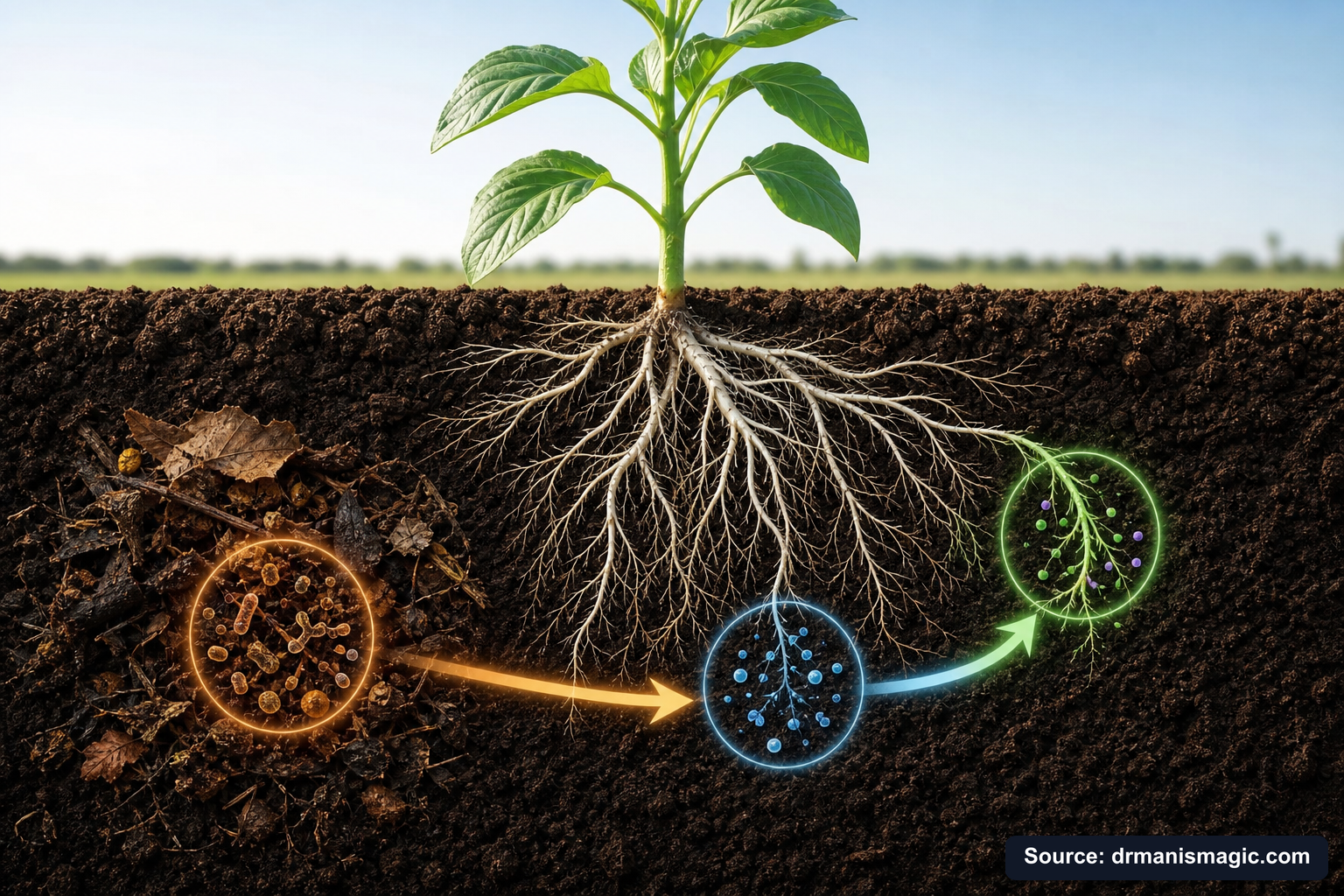
Live soil microbes, including bacteria, fungi, and mycorrhizae, form a biological shield around the root zone. They compete with pathogens like Pythium for space and resources, break down organic matter into plant-available nutrients, and help roots access water and minerals far beyond their physical reach. No microbes means no defense and no long-term fertility.
Let's go underground for a moment. Picture a healthy root zone. It looks alive because it is. There are hundreds of millions of microscopic organisms in a single tablespoon of healthy soil. Bacteria. Fungi with long thread-like strands called hyphae weaving between soil particles. Mycorrhizal networks connecting root to root like an underground internet.
This isn't a nice bonus. This is the system. According to the University of Minnesota Extension, soil organisms contribute to nutrient cycling, disease suppression, water infiltration, and soil structure. They estimate soil biology delivers about 75% of plant-available nitrogen and 65% of available phosphorus. Your plant is not feeding itself from a bag. It's feeding itself from a living ecosystem.
Now pour a high-salt synthetic fertilizer on that ecosystem.
The salt pulls water out of microbial cells the same way it pulls water out of root cells. Many bacteria and fungi die on contact with high-salt conditions. The mycorrhizal networks collapse. The biological shield disappears. The nutrient-cycling machinery stops. And the pathogens that were being outcompeted by all that biology now have open territory to colonize.
This is why Pillar Two of the Three Plant Pillars is live microbials. Not as an add-on. Not as a nice-to-have. As a non-negotiable. You can read more about how we think about the full system at our Three Plant Pillars guide.
Dr. Mani Skaria, Professor Emeritus of Plant Pathology at the Texas A&M Citrus Center and the founder of our nursery, spent four decades watching this biology at work. He didn't develop the Three Plant Pillars from a textbook. He developed it from thirty-plus years of watching what actually happened in the soil when you worked with biology instead of against it.
How Does Organic Fertilizer Actually Feed Your Plant? (The Microbe-First Mechanism)
Organic fertilizer doesn't go straight into the plant. It feeds the soil microbes first. The microbes eat it, process it, and convert it into gentle, plant-ready nutrients. When those microbes eventually die, they release even more nutrition directly into the root zone. The whole system works like a natural slow-release machine that keeps feeding your plant long after you walk away.
This is the part most gardening content skips completely. And it's the most important part.
When you apply an organic fertilizer like crab meal, kelp, and amino acids, nothing dramatic happens in the first five minutes. There's no immediate green-up. No visible rush of nutrients dissolving into the water and flooding the roots. And that's exactly the point.
Instead, the microbes in your soil smell the organic material and go to work. Bacteria and fungi break down the crab meal, the kelp, and the amino acids into smaller and smaller pieces. As they do this, they release nutrients at a pace the plant can actually use. A gentle trickle. Not a flood.
And then something even better happens. Those microbes eventually die. And when they die, every nutrient stored in their tiny bodies gets released directly into the root zone. It's a second wave of feeding. Completely automatic. Completely free. All because you supported the biology in the first place.
This is how nitrogen works in nature. Lightning breaks nitrogen bonds in the atmosphere and makes nitrates that fall with rain. Nitrogen-fixing bacteria in the soil pull nitrogen from the air and convert it into ammonia and nitrates. Fungi break down organic matter and unlock the nutrients inside. The plant's roots provide sugar to the bacteria in exchange. It's a trade. A partnership. A system that has been running without any help from a fertilizer bag for millions of years.
Synthetic fertilizers bypass this entire system. They dump immediately available nutrients directly into the root zone, skip the microbes entirely, and leave the plant without any of the biological support structure that keeps it resilient. You get a quick green-up. Then the biology dies. Then you need to feed again. And again. And again.
See also: Why Plants Become Dependent on Synthetic Fertilizers
What Makes Crab Shells, Kelp, and Amino Acids Special for Root Health?
Crab shells contain chitin, a natural compound that activates plant immune responses and suppresses soil pathogens. Kelp provides natural growth hormones, trace minerals, and biostimulants that improve root development. Amino acids give the plant and its microbes pre-built nitrogen in its most usable form, without any salt or osmotic stress.
Let's break down what's actually in a biology-friendly fertilizer and why each ingredient matters at the root level.
Crab Shells and Chitin: The Natural Pathogen Fighter
Crab shells are rich in a compound called chitin. Chitin is the same material that makes up the outer shells of insects and the cell walls of certain fungi. When chitin gets into the soil, something remarkable happens. The beneficial bacteria that break it down also produce enzymes that attack the cell walls of harmful fungi, including the pathogens that cause root rot. Your soil biology essentially gets trained to fight back.
On top of that, chitin is a natural source of calcium and magnesium. Calcium is the most abundant mineral in the woody structure of any plant. It builds strong cell walls and supports root tip growth. Magnesium sits at the center of every chlorophyll molecule. No magnesium, no photosynthesis.
Cold-Processed Kelp: The Growth Hormone Factory
Kelp is not just a trace mineral source. It contains natural plant growth hormones called auxins and cytokinins. These hormones directly stimulate root development. More roots means more surface area for water and nutrient uptake, which means a more resilient plant that can handle stress, drought, and even mild salt exposure without collapsing.
Cold processing matters. Heat destroys many of these hormones and biostimulants. Cold-processed kelp keeps them intact and active.
Amino Acids: Pre-Built Nitrogen That Skips the Queue
Plants normally have to wait for microbes to break down proteins into amino acids before they can use the nitrogen inside. Amino acid fertilizers skip that step. The nitrogen is already in a form the plant can absorb almost directly. There's no salt. There's no osmotic spike. Just clean, available nutrition delivered gently.
Amino acids also feed the microbes efficiently, so the biological system stays active and healthy even as the plant is being fed.
Volcanic Ash: The Trace Mineral Reservoir
Volcanic ash provides silica and a broad spectrum of trace minerals including iron, zinc, manganese, copper, boron, and molybdenum. These micronutrients play critical roles in enzyme activation, disease resistance, and cell wall strength. Silica in particular strengthens plant tissues against physical and biological stress. It's like building your plant's immune system from the inside out.
Our Crab, Kelp & Amino Acids fertilizer combines all of these ingredients into one granular, slow-release formula at a 7-4-4 NPK ratio. No biosludge. No PFAS. No synthetic salts. Just clean inputs that work with your soil biology instead of against it.
What Should You Actually Do If You Think Salt Has Already Damaged Your Roots?
Stop all fertilizing immediately. Flush the soil with clean water to dilute and drain excess salts. Improve drainage if it's poor. Remove dead or mushy root material if you can. Reintroduce beneficial microbes. Then switch to a low-salt, biology-friendly fertilizer going forward. Recovery takes time, but it is absolutely possible.
If you're reading this and thinking about a plant you have right now that's in trouble, here is a clear, step-by-step recovery path.
- Stop feeding immediately. No more fertilizer of any kind until the plant stabilizes. Adding more nutrients to a salt-stressed root zone makes things worse, not better.
- Flush the soil with clean water. For containers, water slowly and deeply three to four times over a couple of days. Let it drain completely each time. This leaches soluble salts out of the root zone. For in-ground plants, water deeply and let the soil drain fully before watering again.
- Check drainage. If water sits on the surface for more than a minute or two, your soil structure is the problem. Compacted or decomposed potting mix holds salt and cuts off oxygen. This is a root environment failure, not just a fertilizer problem. See also: Why Most Potting Mix Collapses Within 6-12 Months.
- Examine the roots if possible. Healthy roots are white or cream-colored and firm. Brown, black, slimy, or mushy roots are diseased. Trim away any completely dead root material with clean scissors before repotting.
- Reintroduce live beneficial microbes. A soil drench with live bacteria, fungi, and mycorrhizae helps repopulate the biology that salt destroyed. This is not optional in the recovery process. The Plant Super Boost liquid microbial drench was designed for exactly this purpose.
- Switch to a low-salt organic fertilizer. Once the plant shows new growth and has stabilized, begin a gentle feeding program with a biology-friendly, slow-release organic fertilizer. Start at half rate and build up slowly.
- Be patient. Roots recover from the outside in. You will see new white feeder root tips appearing before the plant looks dramatically different above the soil. Trust the process.
One thing we want to be honest about. If you've been using high-salt synthetic fertilizers for years and the root system is severely compromised, recovery takes months. Sometimes the best move is to start fresh with a new plant in a proper mineral-based soil with the right biology in place from day one. You cannot get those months back. That's the real cost of the old way. Not just the money spent on bad fertilizer, but the time lost watching a plant struggle that could have been thriving.
Why Does Soil Structure Matter as Much as Fertilizer Choice When It Comes to Root Rot?
Even the cleanest organic fertilizer cannot save roots growing in compacted, oxygen-starved soil. Root rot pathogens thrive in wet, low-oxygen environments. Mineral-based soil that drains freely and stays open and airy is the foundation that makes everything else work. Without it, you're fighting root rot with one hand tied behind your back.
Here's something that trips up even experienced gardeners. You can switch to the best organic fertilizer in the world, and if your soil is compacted, waterlogged, or filled with decomposing organic matter that's turned into a sludge, you will still get root rot.
Most commercial potting mixes are made from pine bark, wood chips, and other organic matter. When these materials are fresh, they hold some air space and drain reasonably well. But they break down. Within six to twelve months, they compress into a dense, low-oxygen mass. Water sits. Roots suffocate. The conditions for Pythium and Phytophthora become perfect.
This is why Pillar One of the Three Plant Pillars is mineral-based soil. Not organic potting mix. Mineral soil made from silica-rich sandy loam doesn't break down. It doesn't compress. It maintains its structure year after year. Water drains through it freely. Air follows the water out and keeps the root zone oxygenated. Roots grow deep and strong because they can breathe.
You can learn more about how we think about soil as the foundation of everything at our Super Soil product page.
The Three Plant Pillars work as a system. Mineral soil creates the right physical environment. Live microbes create the right biological environment. Organic fertilizer provides clean nutrition that supports both. Take any one of the three away and the other two can't fully do their job.
Synthetic vs. Organic: The Honest Side-by-Side
We promised you a direct comparison. Here it is without any sugarcoating.
The synthetic fertilizer promise: Fast results. Bright green color in days. Easy to apply. Cheap per bag.
The synthetic fertilizer reality: High salt index. Osmotic stress on feeder roots. Microbial die-off. Salt accumulation over time. Nutrient lock-up. Plant dependency. Plastic prill residue in your soil. Possible PFAS contamination from biosludge fillers. And a root zone that becomes progressively less able to defend itself against pathogens.
The organic fertilizer promise: Slower visible results. Requires healthy soil biology to work. Sometimes smells unpleasant (fish emulsion, we're looking at you).
The organic fertilizer reality: Low salt index. Feeds soil biology. Builds long-term soil health. Steady, gentle nutrition that mirrors natural cycles. No osmotic spikes. No plastic residue. And when sourced cleanly, no biosludge, no PFAS, no forever chemicals.
We hear the objection. "But I want to see results fast." We understand that. We feel that too. Here's what we know after 250,000-plus trees. The slow green-up from organic feeding is real, lasting growth. The fast green-up from synthetic feeding is the plant spending its savings account. It looks rich for a moment. But the account empties. And when it does, you're left with weakened roots, dead biology, and a plant that's far more vulnerable than when you started.
The real cost of synthetic fertilizers is not the price on the bag. It's the time you spend watching your plant struggle, stall, and slide backward. You cannot get that time back. The best time to switch to a biology-friendly system was the day you planted. The second best time is right now.
Bringing It All Together: A Root Zone Your Plants Will Thank You For
Here's what we know to be true after decades in the ground in South Texas.
Root rot is almost never a single-cause problem. It's a convergence. Salt-damaged feeder roots. Low-oxygen soil. Dead or depleted soil biology. Opportunistic pathogens filling the vacuum. These things don't happen one at a time. They happen together, feeding each other, making the situation worse with every passing week.
The solution isn't complicated. But it does require working with nature instead of trying to shortcut it.
Start with soil that drains freely and doesn't collapse. Build a living biology in that root zone with beneficial bacteria, fungi, and mycorrhizae. Feed that biology and your plant with clean, slow-release organic nutrition that doesn't carry a salt bomb into the root zone every time you apply it.
That's the Three Plant Pillars. Mineral foundation. Microbial muscle. Organic fertilizer. Three things working as one. It's what Dr. Mani Skaria spent forty years figuring out. It's what we've proven across a quarter million trees, a citrus grove, houseplants, tropical trees, and gardens of every kind.
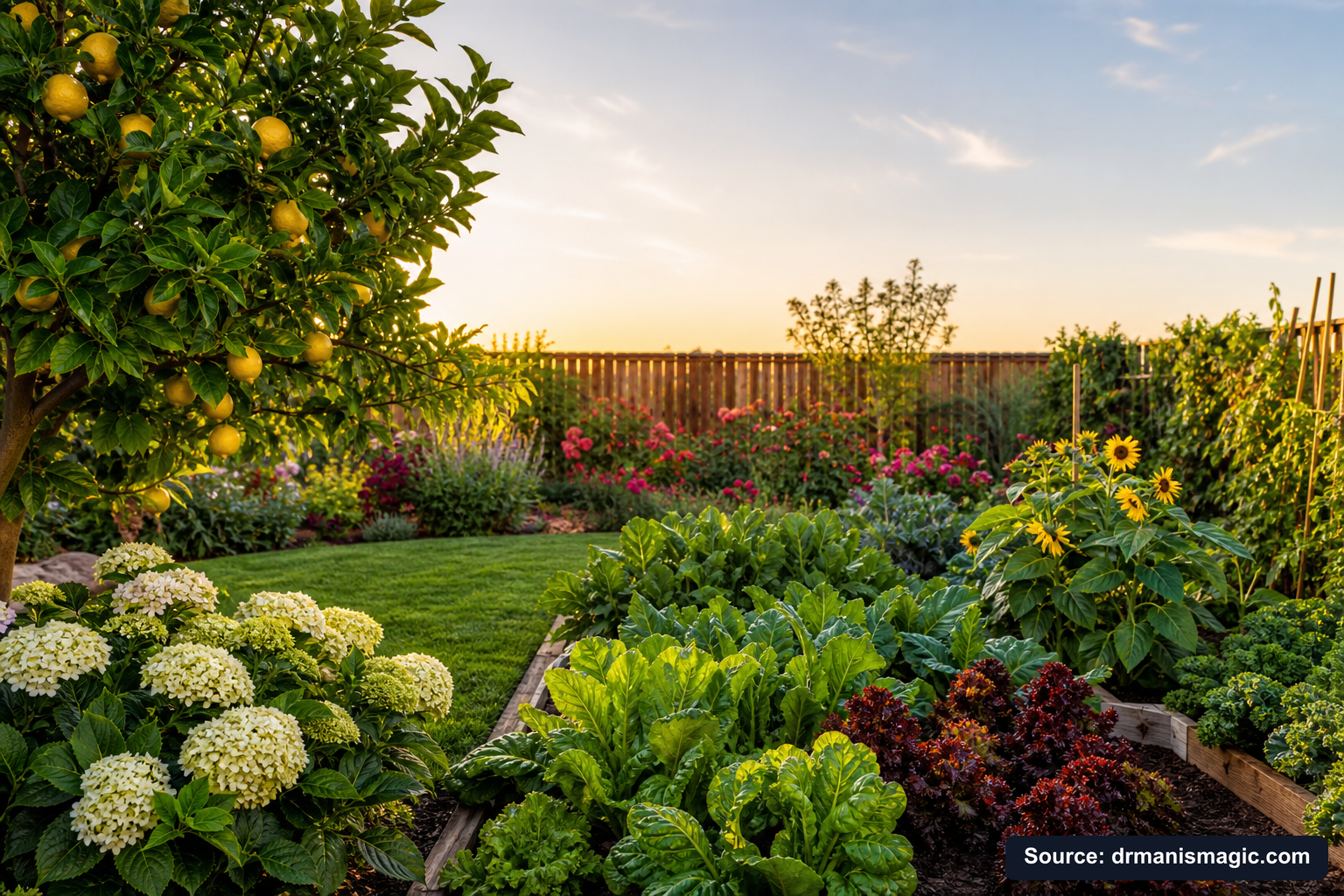
It applies to your lemon tree on the patio. Your raised vegetable garden. Your lawn. Your roses. Your indoor fiddle-leaf fig. Any plant that has roots has the same basic needs underground. Give those roots the right environment and the right biology, and root rot stops being something you worry about.
If you want to see how the full system fits together and which products address each pillar, our Free Plant Care Field Guide walks you through it in plain language, step by step. No jargon. No guesswork. Just what actually works, from people who grow plants for a living.
Your plants are waiting. And so is that moment when you pull back a healthy root ball and see nothing but clean, white, living roots reaching in every direction. That moment is real. And it's closer than you think.
Frequently Asked Questions
If your plants keep struggling no matter what you do, the answers below could change everything. These are the real questions gardeners ask after they find out synthetic fertilizers are quietly working against them underground. Read these before you fertilize again.
Are synthetic fertilizers bad for plants?
Synthetic fertilizers are not poison in small doses. But here is the problem. They are salt-based. Every time you apply them, those salts build up in your soil. Over time, they damage the feeder roots and wipe out the beneficial bacteria and fungi your plant depends on. We tested this across more than 250,000 citrus trees at US Citrus Nursery. The plants fed with synthetic fertilizers kept needing more and more just to stay alive. That is not feeding a plant. That is creating an addiction.
Why do synthetic fertilizers cause root rot?
It comes down to salt and what salt does underground. When synthetic fertilizer salts build up around your roots, water actually flows out of the root cells instead of into them. The roots shrink and die back. Dead roots cannot take up oxygen. That wet, airless zone becomes a perfect home for root rot pathogens like Pythium and Phytophthora. The fertilizer you used to help your plant ends up leaving the door wide open for the very thing that kills it.
What is the difference between organic and synthetic fertilizer?
Synthetic fertilizers dump nutrients directly into the soil in a fast, salt-based form that plants absorb right away. It sounds good until those salts burn roots and kill the microbes that keep your soil alive. Organic fertilizers like Dr. Mani's Magic Crab, Kelp, and Amino Acids work differently. They feed the microbes first. The microbes then feed your plant slowly and steadily. No salt buildup. No microbial massacre. Just steady, natural growth that builds on itself over time.
What is one big reason not to use Miracle-Gro?
Miracle-Gro is essentially a salt delivery system. It forces fast growth by flooding the soil with water-soluble synthetic nutrients. But those salts destroy the beneficial bacteria and fungi living in your soil. Once those microbes are gone, your plant has no natural defense system left. It cannot fight disease. It cannot unlock nutrients on its own. You end up in a cycle where you need more and more fertilizer just to keep the plant from dying. Dr. Mani saw this pattern for decades before he built a better way.
Do organic farmers use synthetic fertilizers?
No. Certified organic farming does not allow synthetic fertilizers. The reason is simple. Organic growing is built around feeding the soil, not just the plant. Synthetic fertilizers skip the soil biology entirely and go straight for fast results. That shortcut destroys the living ecosystem underground that makes soil healthy long-term. At Dr. Mani's Magic, we follow that same first-principles thinking. Healthy microbes come first. Everything else follows from there.
Why do so many people still use synthetic fertilizers if they cause these problems?
Because they work fast and the bag looks convincing. You sprinkle it on, and within days the plant looks greener. What you cannot see is what is happening underground. The roots are getting stressed. The microbes are dying off. The soil structure is slowly breaking down. By the time the damage shows up as yellow leaves or root rot, most people blame overwatering. Dr. Mani spent 35 years watching this pattern repeat. That is exactly why he built the Three Plant Pillars around mineral soil, live microbes, and organic fertilizer instead.
Is there a fertilizer that feeds plants without hurting the soil?
Yes. The key is slow-release organic inputs that work with your soil biology instead of against it. Dr. Mani's Magic Crab, Kelp, and Amino Acids fertilizer does exactly that. It delivers nitrogen, phosphorus, and potassium in natural forms that microbes can process and pass along to your plant roots gently over time. No salt burn. No microbial wipeout. Just steady, compounding growth. Pair it with Plant Super Boost and Super Soil and you have all Three Plant Pillars working together the way nature intended.
About the Author
Ron Skaria, MD
Ron Skaria, MD, is the co-founder of Dr. Mani's Magic and the son of Dr. Mani. He trained as a medical doctor and now works full time on the family farm in Hargill, Texas, building Dr. Mani's Magic alongside his dad. He wrote the Brown Thumb Field Guide to put his father's 48 years of plant science into plain words any gardener can use. His belief is simple. You never had a brown thumb. You just never had the right help.


