


How Roman Gardens Stayed Fertile for Centuries | Dr. Mani's Magic
How Roman Gardens Stayed Fertile for Centuries (And the Invisible Secret Modern Gardeners Are Still Missing)
Close your eyes for a second. Picture a garden in ancient Rome. Not the marble statues or the fountains. The soil. Rich, dark, crumbly earth that smells alive. Earthworms threading through it. Roots drinking deep. Generation after generation of families harvesting olives, figs, leeks, and herbs from the same patch of ground. No bag of synthetic fertilizer. No plastic-coated slow-release pellets. No trip to a big box store. Just the same fertile earth, year after year, decade after decade, century after century.
Now look at your garden. Maybe you have done everything "right." You bought the fertilizer the store recommended. You followed the label. And still, after a few seasons, something feels off. The plants look tired. The soil looks gray and lifeless. You water and feed and nothing seems to stick. Here is the maddening truth: you were never told the real reason Roman gardens stayed fertile. Nobody was. Because the real reason is invisible. It lives underground, in a world most people never think about.
What the Romans stumbled onto, without ever knowing the science, was a living soil. A self-renewing underground workforce of bacteria, fungi, protozoa, nematodes, and earthworms that recycled everything back into food for plants. They fed the soil, and the soil fed them back. It was not magic. But it sure looked like it. After growing over 250,000 trees at our South Texas nursery, we finally understood what the Romans already knew. And we are going to show you exactly how it worked, and how you can bring it back to your garden today.
Key Takeaways
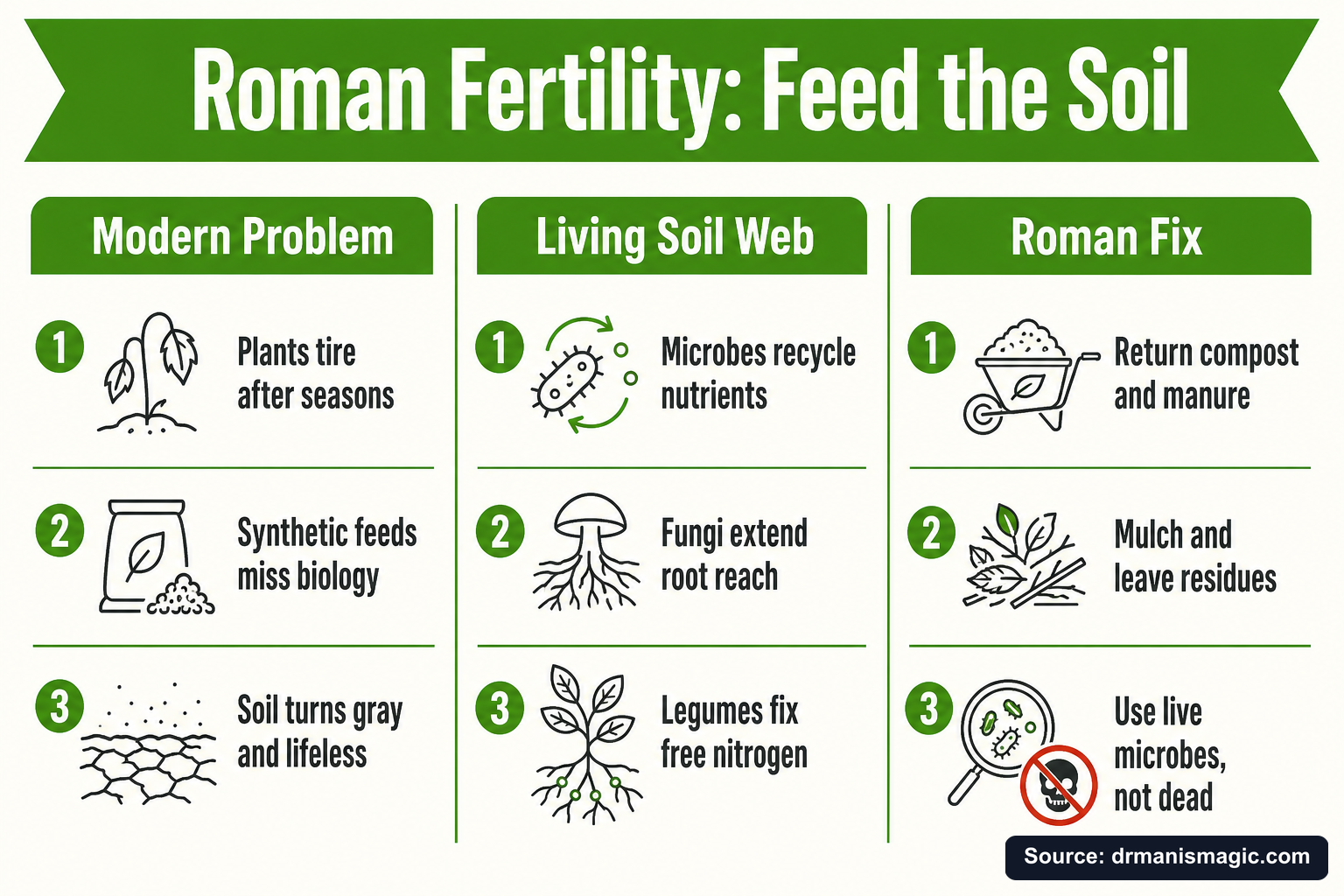
- Roman gardens stayed fertile because they continuously fed a living underground ecosystem, not just the plants themselves.
- Manure, compost, legumes, mulch, and crop residues were not just "nutrients." They were food for billions of soil microbes that then fed the plants.
- The soil food web, including bacteria, fungi, mycorrhizae, protozoa, and nematodes, is the real engine behind long-term plant health.
- Modern synthetic fertilizers, herbicides, and fungicides quietly destroy this living system, which is why gardens stop thriving after a few seasons.
- Mycorrhizal fungi alone can extend a plant's root system by hundreds of times, unlocking phosphorus and water that roots could never reach alone.
- Restoring living biology to your soil is possible today, but it requires genuinely live microbes, not dried powders or smelly dead liquids.
- The Three Plant Pillars framework (mineral soil, live microbials, organic fertilizer) mirrors exactly what Roman gardeners did intuitively for centuries.
Why Did Roman Gardens Stay Fertile Without Synthetic Fertilizer?
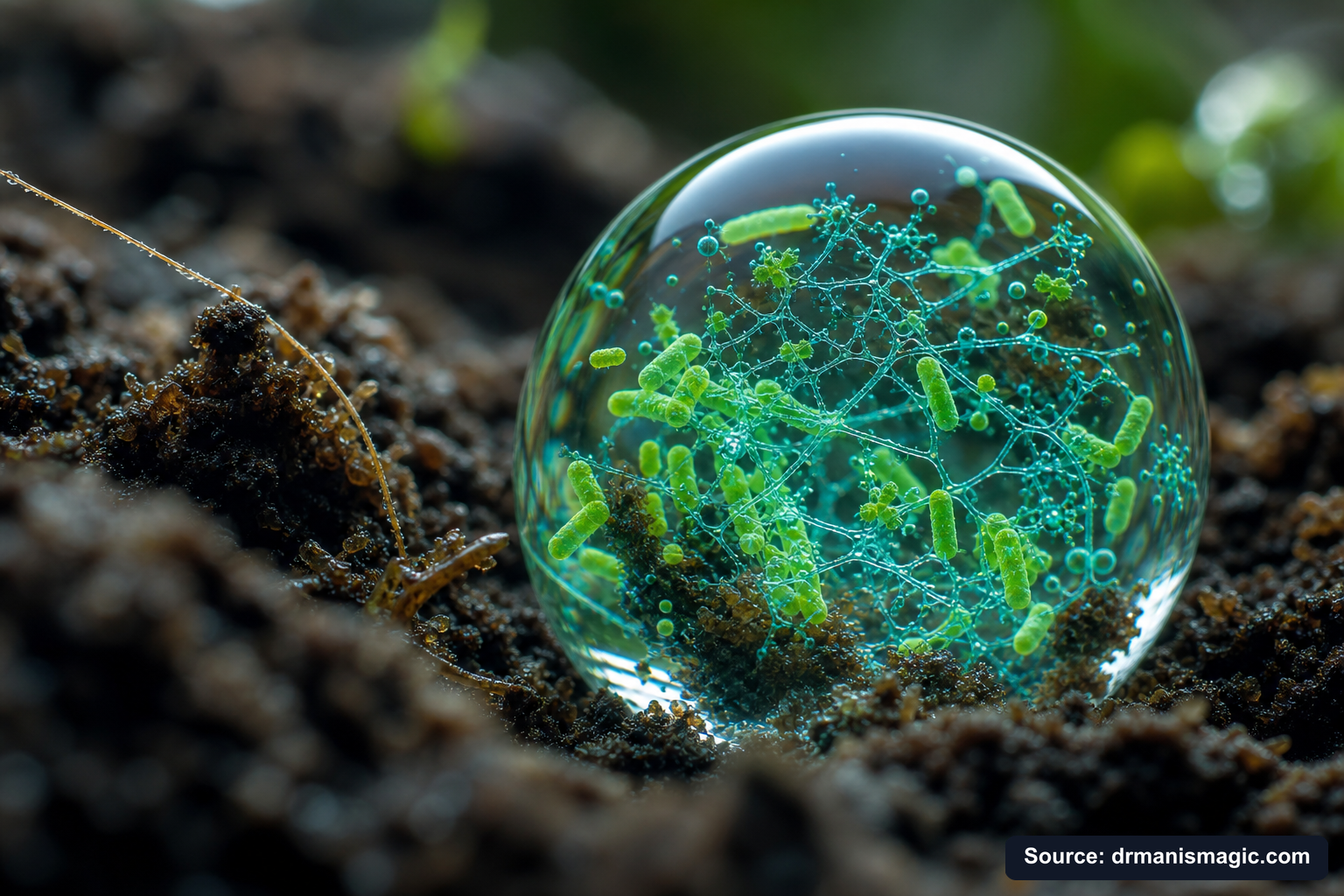
Quick Answer: Roman gardens stayed fertile because gardeners continuously returned organic matter to the soil through manure, compost, legumes, and crop residues. This fed billions of soil microbes that broke down organic material, cycled nutrients, and kept the underground ecosystem alive and self-renewing, without a single bag of synthetic fertilizer.
The Romans did not have a secret ingredient. They had a secret system.
Roman agricultural writers like Columella, Virgil, and Pliny the Elder wrote extensively about manure. They argued about which animal's manure was best. They composted household waste. They grew legumes to "rest" the soil. They returned crop residues to the earth. They irrigated carefully.
At the time, they described these practices in terms of fertility and vigor. They did not know about bacteria. They had no concept of mycorrhizal fungi. But they observed, over generations, that the earth responded. Give it back what you take out, and it gives you more in return.
Modern soil science now tells us exactly why this worked. According to the Utah State University Extension, healthy soil organisms contribute to nutrient cycling, water infiltration, disease suppression, and soil structure. Every single Roman practice fed these organisms. And those organisms fed the plants. It was not one amendment doing the work. It was an entire underground food web doing the work, generation after generation.
That is the answer modern gardening forgot. And that forgetting is costing you time you cannot get back.
What Was the Invisible Workforce Under a Roman Garden?
Quick Answer: Under every thriving Roman garden lived trillions of microbes, including bacteria, fungi, mycorrhizae, protozoa, and nematodes. Each group played a specific role: decomposing organic matter, cycling nutrients, suppressing disease, and extending root systems. Together they formed a self-renewing system that no synthetic fertilizer can replicate.
This is the part most articles about Roman gardens never tell you. The history is interesting. The archaeology is beautiful. But the real story is happening six inches below the surface.
Here is the cast of characters in that invisible workforce.
Bacteria: The Decomposers and Nutrient Miners
Bacteria are the most abundant life form in soil. A single teaspoon of healthy garden soil can contain over a billion bacteria. They are the first responders when organic matter lands in the soil. A handful of manure. A dead leaf. A rotting root. Bacteria break it down and release nitrogen, phosphorus, and other nutrients in forms plant roots can actually drink up.
Some bacteria fix nitrogen directly from the air. They pull atmospheric nitrogen into the soil and convert it into plant food. The Romans grew legumes, which host exactly these nitrogen-fixing bacteria in little nodules on their roots. They did not know why legumes refreshed the soil. But they knew they did. Now we know: the bacteria were mining the atmosphere for free fertilizer.
Fungi: The Underground Internet
Fungi spread through soil in long, hair-thin threads called hyphae. These threads weave through the soil like a web, connecting plant roots to mineral deposits and organic matter that roots could never reach on their own. Fungi also produce a sticky substance called glomalin that glues soil particles together into aggregates. Those aggregates create the crumbly, well-drained, oxygen-rich structure that healthy roots love.
Without fungi, soil becomes compacted and crusted. Water pools on the surface instead of sinking in. Roots suffocate. Roman gardens, continuously fed with organic matter, were continuously feeding their fungal communities. The fungi returned the favor with structure and nutrient access.
Mycorrhizal Fungi: The Root Supercharger
Mycorrhizal fungi deserve their own spotlight. According to Penn State Extension, mycorrhizal fungi form relationships with approximately 80 percent of all land plants. They attach directly to plant roots and extend the effective root system with their fine hyphae, sometimes multiplying the root's reach by hundreds of times.
What does that mean in practice? A plant with healthy mycorrhizal connections can reach phosphorus, zinc, and water far beyond what its roots could ever access alone. It becomes more drought-tolerant. It resists certain root diseases. It grows faster and fruits more heavily.
Roman orchards, vineyards, herb gardens, and vegetable beds all grew plants that depend on mycorrhizal partnerships. The manure and compost they applied kept feeding the fungi. The fungi kept supercharging the plants. Nobody called it mycorrhizae. They just called it a good harvest.
Protozoa: The Nutrient Releasers
Protozoa are single-celled organisms that eat bacteria. That sounds destructive. It is actually one of the most important nutrient cycles in all of soil biology. When protozoa eat bacteria, they release the nitrogen locked inside bacterial cells into the soil in a plant-available form. This is called the microbial loop. It is like a tiny pump that continuously releases fertilizer right at the root zone, on demand, all season long.
Nematodes: The Population Controllers
Nematodes are microscopic worms. There are harmful nematodes that attack plant roots. But there are also beneficial nematodes that eat bacteria, fungi, and even harmful nematodes. Beneficial nematodes are population controllers. They keep the microbial community balanced and prevent any single harmful organism from taking over.
Earthworms: The Tillers and Tunnelers
Earthworms eat organic matter and excrete it as castings, one of the most nutrient-dense natural fertilizers on earth. They also tunnel through soil, creating channels for air and water to move through. Roman gardens fed with manure and compost had plenty of earthworms. Those earthworms kept the soil loose, aerated, and continuously enriched.
| Organism | What It Does | What Feeds It | What Harms It |
|---|---|---|---|
| Bacteria | Decompose organic matter, cycle nutrients, fix nitrogen from air | Manure, compost, root exudates, organic residues | Synthetic fertilizer salts, herbicides, fungicides |
| Fungi | Break down tough organic matter, build soil structure with glomalin | Crop residues, mulch, compost | Synthetic antifungals, tilling, salt-based fertilizers |
| Mycorrhizal Fungi | Extend root systems, unlock phosphorus, improve drought tolerance | Living plant roots, organic matter nearby | Synthetic phosphorus fertilizers, soil disturbance |
| Protozoa | Eat bacteria and release plant-available nitrogen at root zone | Bacteria populations, moisture | Drying out, chemical disruption of bacterial hosts |
| Beneficial Nematodes | Control harmful organisms, cycle nutrients by eating bacteria and fungi | Bacteria, fungi, and other nematodes | Broad-spectrum pesticides, soil compaction |
| Earthworms | Aerate soil, create tunnels for water and air, produce nutrient-rich castings | Organic matter, manure, compost | Synthetic pesticides, compaction, lack of organic material |
How Did Roman Composting and Manure Management Feed the Soil Food Web?
Quick Answer: Roman gardeners composted household waste and used animal manure as the primary organic inputs to their soil. These materials were not just nutrient sources. They were food for bacteria, fungi, and the entire soil food web. Each application reseeded the underground ecosystem and kept the nutrient-cycling engine running.
Columella, writing in the first century AD, described composting in detail. He recommended heaping together manure, straw, leaves, ashes, and household refuse. He described turning the pile. He talked about the heat it generated. That heat is a sign of one thing: an explosion of microbial activity. A well-made compost pile can reach over 140 degrees Fahrenheit. That heat comes from billions of bacteria breaking down organic matter at full speed.
When Roman gardeners applied that finished compost to their beds, they were not just adding nutrients. They were transplanting an entire living community into the soil. Bacteria. Fungi. Protozoa. The full crew. And with living roots already in the ground, those microbes had a ready food source in root exudates. The sugars and compounds plants release through their roots to attract and feed the microbial community they need.
Roman legume crops did the same thing from the other direction. Legumes host nitrogen-fixing bacteria in their roots. When the plant dies and decomposes, all that nitrogen gets released into the soil. Romans rotated legumes into their gardens not because they understood nitrogen fixation. They did it because they saw it work. The field after a legume crop was always more vigorous. Now we know why.
The takeaway is simple. Every Roman practice that looks like "adding nutrients" was actually "feeding microbes." The microbes did the nutrient cycling. The microbes did the disease suppression. The microbes built the soil structure. The Romans were the managers. The microbes were the workforce.
What Is the Difference Between Adding Nutrients and Cycling Nutrients?
Quick Answer: Adding nutrients means pouring a chemical or amendment into soil and hoping the plant absorbs it. Cycling nutrients means feeding a living microbial system that continuously converts organic matter into plant-available food, then replenishes it. Cycling is self-renewing. Adding is a treadmill. Roman gardens cycled. Most modern gardens just add.
This is the distinction that changes everything. And it is the distinction that most gardening advice, most bag labels, and most store employees will never explain to you.
When you pour a synthetic salt-based fertilizer on your soil, you are adding nutrients. The plant might green up fast. That part is real. But here is what the bag does not tell you. Those salt concentrations in the fertilizer are hostile to soil bacteria and fungi. High salt levels pull water out of microbial cells by osmosis. Microbes die or retreat. The soil food web weakens. And now you need more fertilizer next season because the natural cycling system is breaking down.
It becomes a dependency. You feed the plant directly because the soil can no longer feed it naturally. You keep buying. The soil keeps getting weaker. The plant keeps needing more. The store keeps selling. Nobody wins except the company on the label.
Roman gardens cycled nutrients. They returned organic matter to the soil. Microbes broke it down. Nutrients became available slowly and continuously. Plant roots fed the microbes with exudates. Microbes fed the roots with mineralized nutrients. The system was self-renewing. The soil got richer over time, not poorer.
That is why a Roman villa garden could remain productive for centuries. And that is why a garden managed on synthetic inputs often starts declining within just a few seasons.
| Roman Practice | What Romans Observed | What the Science Now Explains | Modern Equivalent |
|---|---|---|---|
| Animal manure applications | Plants grew bigger and stronger | Manure feeds bacteria and fungi who then mineralize nutrients and release them to roots | Compost, organic fertilizer, live microbial inoculants |
| Composted household waste | Soil became darker and more crumbly | Compost introduces diverse microbial communities and builds soil aggregate structure via glomalin | Compost, biochar, organic matter additions |
| Legume crop rotations | Fields after legumes were more productive | Nitrogen-fixing bacteria in legume root nodules convert atmospheric nitrogen into plant-available forms | Cover crops, nitrogen-fixing green manures |
| Mulching with crop residues | Soil stayed moist and weeds were suppressed | Residues feed fungi and bacteria, moderate soil temperature, and reduce evaporation | Organic mulch, wood chips, straw |
| Continual cultivation near living roots | Gardens near homes were always more fertile | Living roots release exudates that select and feed specific microbial communities in the rhizosphere | Keeping soil planted, minimizing bare soil periods |
| Irrigation management | Consistent moisture kept plants and soil healthy | Microbial activity requires moisture; soil biology shuts down in extreme drought or waterlogging | Consistent, measured irrigation |
| Low chemical disturbance | Gardens maintained over generations without collapse | Without synthetic herbicides, pesticides, or salt fertilizers, the soil food web remains intact and resilient | Organic, biology-first gardening methods |
You Never Had a Brown Thumb.
You were handed the wrong tools. This free guide hands you the right ones.
You watered it. You fed it. It died anyway.
It was never you. It was the dirt, the salt food, and the bad advice.
This guide shows you what really went wrong, and how to fix it for good.
- Why your plants really died, and why it was never your fault
- The salt hiding in your plant food that quietly burns the roots
- The hidden killer in almost every bag of store soil
- The tiny helpers that grow a whole forest for free
- The rescue trick that brings a half dead plant back to life

Why Do Modern Gardens Lose Fertility So Fast Compared to Roman Gardens?
Quick Answer: Modern gardens lose fertility quickly because synthetic fertilizers, herbicides, and fungicides destroy the soil food web that naturally cycles nutrients. Without bacteria, fungi, and mycorrhizae doing the underground work, soil becomes dependent on chemical inputs and grows weaker each season. Roman gardens never faced this problem because they never used anything that harmed soil biology.
Here is the story nobody in the fertilizer aisle will tell you.
The green revolution of the mid-twentieth century brought synthetic fertilizers to every home garden in America. Miracle-Gro launched in the 1950s. It was essentially an advertising agency that found a way to sell imported salt-based fertilizer to home gardeners. The plants greened up fast. People were amazed. The sales pitch wrote itself.
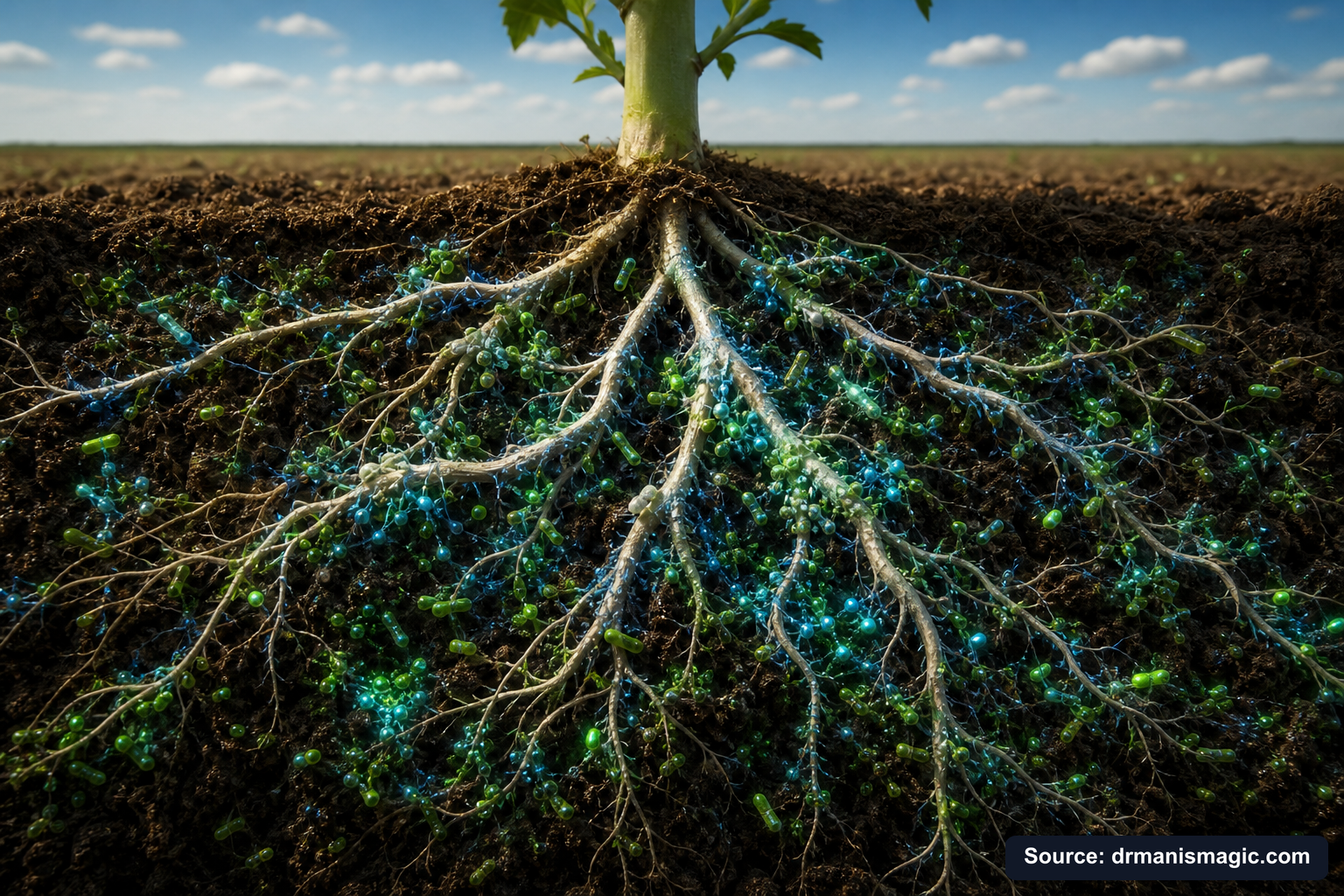
But salt-based fertilizers do something insidious. They are hostile to the very microbes that make soil fertile long-term. High salt concentrations pull water out of bacterial and fungal cells. Beneficial microbes die or go dormant. The soil food web collapses slowly, season by season. And now the plant has no underground workforce. It is dependent on you pouring chemicals on it every few weeks just to survive.
Add herbicides like glyphosate, which research links to disruption of soil microbial communities. Add synthetic fungicides that kill beneficial fungi along with harmful ones. Add broad-spectrum pesticides that harm nematodes and beneficial insects. And you have a soil that looks like dirt but functions like concrete. It holds the plant up. It does almost nothing else.
Roman gardens never experienced this. They used practices that continuously returned organic matter and never applied anything that harmed soil biology. Their gardens got better with time. Ours get worse. And we keep wondering why.
See also: The Hidden Reason Synthetic Fertilizers Cause Root Rot
Can You Actually Rebuild a Dead or Depleted Garden Soil Today?
Quick Answer: Yes, you can rebuild depleted soil, but it takes time and repeated applications of genuine living biology. The key steps are stopping the inputs that harm microbes, adding organic matter, and inoculating the soil with a full-spectrum live microbial product. Expect meaningful improvement within one growing season and increasing resilience over time.
This is where the Roman history becomes personal. Because you may be looking at soil right now that has been managed with synthetic inputs for years. Maybe decades. The biology is thin. The structure is poor. Plants struggle even with regular feeding.
The good news is that soil biology is remarkably resilient when you stop fighting it and start feeding it. Here is a practical recovery checklist you can start this week.
- Stop using salt-based synthetic fertilizers immediately. Every application further damages the microbial community you are trying to rebuild. Switch to an organic, slow-release option that works with soil biology instead of against it.
- Stop using broad-spectrum herbicides, fungicides, and synthetic pesticides. These are the biggest killers of beneficial soil organisms. Without this step, every microbe you add will be fighting upstream.
- Add organic matter in every form available to you. Compost, mulch, crop residues, cover crops. This is the food supply for your future microbial workforce. Without organic matter, microbes have nothing to eat.
- Inoculate with genuinely live, full-spectrum microbes. Not a dried powder. Not a smelly liquid that has gone anaerobic in the bottle. You need microbes that are actually alive when they reach your soil. (More on this in a moment.)
- Keep living roots in the soil as long as possible. Living roots release exudates that feed and select the microbial community around them. Bare soil is a biological dead zone. Plant something, even a cover crop, between seasons.
- Be patient and consistent. Rebuilding a damaged soil food web takes time. You will not see the full benefit in one application. Monthly inoculations of live biology, combined with organic inputs, will compound over time into a genuinely living, self-sustaining soil system.
- Evaluate and adjust. Watch your plants. Richer color, stronger stems, better fruit set, and fewer disease problems are all signs that the underground workforce is coming back online.
The Romans did not rebuild depleted soils because they never depleted them in the first place. But the biology they cultivated over centuries is the same biology you are trying to restore. The process is the same. Feed the soil. Let the microbes do the work. Stay out of their way.
Live Microbes vs. Dead Microbe Products: Why Most Bottles on the Shelf Do Not Work
Quick Answer: Most microbial products on store shelves contain dried, lab-grown organisms that have very low viability when they reach your soil. Others are liquid products that have gone anaerobic and smell bad because the microbes are dying. Neither delivers the living, diverse microbial community your soil actually needs. What works is stabilized, full-spectrum live biology harvested from genuine compost.
This is where we get honest about a problem in the gardening market. Microbial products are everywhere right now. Every garden center has a shelf of them. But most of them do not work the way you think.
Here is how most are made. A handful of specific bacterial or fungal species are grown in giant industrial vats. Then they are dried into a powder. The hope is that the dormant spores will reactivate when you add water and pour them into soil. But after testing dozens of these products at our South Texas nursery, across over 250,000 trees, we found they simply did not move the needle for plants. The viability at the moment of use is too low. The species diversity is too narrow.
The second category is liquid microbial products derived from compost or earthworm castings. These can be more diverse. But most of them go anaerobic during shipping and storage. Anaerobic means the oxygen runs out and the beneficial aerobic microbes die. The telltale sign? The bottle smells. Sometimes strongly. That smell is decomposition. The microbes are dying or already dead. Some benefit remains from compounds like humic and fulvic acid in the liquid. But the living biology that actually supercharges roots? Gone.
There is also a third category worth mentioning: lactobacillus-based products. Lactobacillus is the same bacteria in your yogurt. It is vigorous and stays alive easily. But in soil, it tends to outcompete the beneficial organisms you actually want. It belongs in fermented food, not in your garden.
| Product Type | Viability When It Reaches Your Soil | Microbial Diversity | Odor | Real-World Results |
|---|---|---|---|---|
| Dried powdered lab microbes | Very low | Narrow (a few species) | Little to none | Minimal to no plant response in our testing |
| Powdered microbes rehydrated into liquid | Very low | Narrow | Little to none | Same poor results as powder form |
| Compost tea, fresh under 24 hours, aerated | Moderate | Broad but variable | Earthy, pleasant | Good results but requires time, equipment, and immediate use |
| Compost tea, older than 24 hours | Low (anaerobic die-off) | Reduced, unbalanced | Strong, unpleasant | Unreliable; some humic and fulvic benefit but biology is compromised |
| Lactobacillus-based products | High (very vigorous) | Very narrow | Sour, fermented | Can outcompete beneficial organisms; not recommended for soil |
| Plant Super Boost (stabilized, full-spectrum, compost-harvested) | High (genuinely alive) | Extremely broad: 2,000+ bacteria, 400-500 fungi including mycorrhizae, plus protozoa and nematodes | Earthy, mild, not unpleasant | Visible microbial movement under microscope; lab-verified; proven across 250,000+ trees |
The reason Plant Super Boost is different comes down to how the microbes are preserved. Our compost expert, a world-recognized figure who has advised farming operations for royal families and governments, developed a proprietary all-natural technique to stabilize a full-spectrum microbial community harvested from living compost. The microbes stay alive without going anaerobic. The bottle does not stink. And if you put a single drop under a microscope, you can see them moving.
That is not a marketing claim. That is biology you can watch with your own eyes.
Zero synthetic salts. Zero biosludge. Zero PFAS. Made in the USA. And backed by our 30-day money-back guarantee.
See also: Why Most Fertilizers Are Actually Salt in Disguise
How Do the Three Plant Pillars Mirror What Roman Gardeners Did Naturally?
Quick Answer: The Three Plant Pillars, which are mineral-based soil, live microbials, and organic fertilizer, are the modern, science-backed version of exactly what Roman gardeners did intuitively. Romans used mineral-rich native soil, continuously fed microbial communities with organic matter, and applied slow-release organic nutrients in the form of manure and compost. The Romans had no name for it. We do.
After thirty-plus years of growing trees in South Texas, Dr. Mani Skaria, a Professor Emeritus of Plant Pathology, inventor of micro-budding, and founder of Texas's Clean Citrus Program, arrived at a framework that explains why plants thrive or fail. He called it the Three Plant Pillars.
It is not complicated. But it is profound. And when you hold it up against what Roman gardeners did for centuries, the parallel is striking.
Pillar One: Mineral Foundation. Roman gardens were planted in the native mineral-rich soils of the Mediterranean. They did not use pine bark, sawdust, or decomposing organic matter as a growing medium. Their soil had structure. It drained well. Roots could breathe. Our Super Soil is built on the same principle. Silica-rich sandy loam from South Texas that does not break down, does not compact, and does not steal oxygen from roots. Permanent. Structural. Real.
Pillar Two: Microbial Muscle. Roman gardeners fed their soil food web continuously with manure, compost, and organic residues. They maintained a living underground ecosystem without knowing what it was. Plant Super Boost delivers that same living ecosystem in a bottle. Not dried. Not dead. Not smelly. Genuinely alive and ready to go to work the moment it reaches your soil.
Pillar Three: Organic Fertilizer. Roman inputs were entirely organic. Manure, compost, green manures, ash. Slow-release. Biology-compatible. Our Crab, Kelp and Amino Acids fertilizer works the same way. It delivers a complete spectrum of nutrients in slow-release organic form, without synthetic salts that would harm the very microbes doing the nutrient cycling.
Miss any one pillar and the system wobbles. Get all three working together and something almost magical happens. The same thing that happened in Roman gardens for centuries. Plants that grow strong, fruit generously, and resist disease without constant chemical intervention.
You were not given a brown thumb. You were given the wrong information. The Romans had it right all along.
What Can You Do Right Now to Bring Roman Soil Biology Back to Your Garden?
Quick Answer: Start by feeding your soil instead of just feeding your plants. Stop synthetic inputs that harm microbes, add organic matter in every form available, and inoculate with genuinely live, full-spectrum microbial biology monthly. The soil food web responds quickly when you stop fighting it and start feeding it. You will see the difference within one growing season.
Here is the honest truth about time. You can get money back. You cannot get time back. Every season you spend managing a depleted soil with synthetic inputs is a season your garden does not flourish the way it could. Every year without a living soil is a year without the harvests, the colors, the smells, and the satisfaction that a thriving garden produces.
The number one thing people tell Dr. Mani they want is to see fruit on their own tree. To harvest something they grew with their own hands. To know they did it. That desire is primal. It is built into us. We were made to tend gardens. But you cannot tend a garden successfully if you are working against the natural order of things.
The Romans worked with nature. For centuries. The results speak for themselves.
You do not need to build a compost heap the size of a Roman manure pile. You do not need to rotate legumes through your backyard. You do not need decades of accumulated organic matter.
You need the Three Plant Pillars. Mineral soil that breathes and drains. Live microbial biology that actually works. And organic nutrition that feeds your plants without killing the ecosystem underneath them. That combination, tested across 250,000 trees at our South Texas nursery, is what finally cracked the code that Roman gardeners lived by intuitively for centuries.
For a complete walkthrough of how to set up your plants on this foundation, download the Free Plant Care Field Guide from Dr. Mani's Magic. It covers everything from soil setup to monthly microbial applications in plain language anyone can follow.
The Romans did not have a secret ingredient. They had a living system. And now, for the first time in modern gardening, so can you.
Frequently Asked Questions
Roman gardens fed families for centuries without a single bag of synthetic fertilizer. That sounds impossible today. But once you understand what was really happening underground, everything changes. These questions cut straight to the heart of what Roman gardeners knew, what modern gardeners lost, and how you can get it back starting right now.
Why did Roman gardens stay fertile for centuries without synthetic fertilizer?
Roman gardeners kept feeding the soil, not just the plants. They returned manure, compost, and crop waste to the earth constantly. This fed billions of bacteria and fungi living underground. Those microbes broke everything down and handed nutrients back to plant roots. The soil stayed alive and self-renewing. No chemicals needed. That living underground system is the real secret, and it still works today exactly the same way.
What is the soil food web and why does it matter for my garden?
The soil food web is a whole underground community working for your plants. Bacteria, fungi, protozoa, nematodes, and earthworms all work together. They break down organic matter, fight off disease, and deliver nutrients straight to roots. Without this community, your soil is just dead dirt. With it, your plants have a living support system that feeds them around the clock. Romans had it. Most modern gardens have lost it entirely.
Why do my plants stop thriving after a few seasons even when I fertilize regularly?
Synthetic fertilizers are salt-based. Salt kills the microbes in your soil. Every time you pour on a chemical fertilizer, you wipe out part of that underground workforce. At first, plants respond because the salt forces a quick feeding. But over time, the soil goes lifeless and gray. Roots struggle. Nothing sticks. You end up buying more fertilizer chasing a result that keeps slipping away. The problem is not your plants. The system was broken from the start.
What are mycorrhizal fungi and what do they actually do for plant roots?
Mycorrhizal fungi attach to plant roots and extend them hundreds of times farther into the soil. They unlock phosphorus and water that roots could never reach on their own. Think of them as a second root system working invisibly underground. Romans had these fungi thriving in their gardens because they never poisoned the soil. Dr. Mani tested this across more than 250,000 trees at the US Citrus Nursery and watched roots explode with growth once live fungi were added back in.
What are the Three Plant Pillars and how do they connect to what Roman gardeners did?
The Three Plant Pillars are the same system Romans used, just explained clearly for the first time. Pillar One is mineral-based soil that drains well and never compacts. Pillar Two is live microbials, the bacteria and fungi that power the underground food web. Pillar Three is organic fertilizer that feeds plants slowly without burning the soil. Romans did all three by instinct. Dr. Mani built products around all three so you can do it on purpose, not by accident.
How is Dr. Mani's Magic Plant Super Boost different from regular microbial products?
Most microbial products on the market are dead by the time you open the bottle. They dried out in storage or went bad from heat. Plant Super Boost uses a special all-natural process to keep the microbes alive and stable right inside the bottle. When you mix it with water and pour it on your plants, you are adding a living, working crew to your soil. It does not smell bad. It does not rot. It smells like earth because it actually is alive.
How long does it take to see results when I start using the Three Plant Pillars system?
Most gardeners notice a real difference within 30 days. Leaves look greener. Roots push deeper. Plants stop looking tired. The longer you stay with it, the stronger the results get because you are building a living soil, not just chasing a quick fix. Romans saw this compound over generations. You will start seeing it within a single season. And unlike synthetic fertilizers, the results do not stall out and reverse. They keep building on themselves month after month.
About the Author
Ron Skaria, MD
Ron Skaria, MD, is the co-founder of Dr. Mani's Magic and the son of Dr. Mani. He trained as a medical doctor at Baylor College of Medicine, did his residency at UT Health Science Center - San Antonio and fellowship training at Texas Tech University. He now works full time on the family farm at US Citrus and US Citrus Nursery in Hargill, Texas, building Dr. Mani's Magic alongside his dad. He wrote the Brown Thumb Field Guide to put his father's 48 years of plant science into plain words any gardener can use. His belief is simple. You never had a brown thumb. You just never had the right help.


