


How Pre-Industrial Gardens Stayed Disease-Free Through Living Soil | Dr. Mani's Magic
How Pre-Industrial Gardens Stayed Disease-Free: The Truth About Living Soil and Disease-Suppressive Gardens
Picture your great-great-grandmother's kitchen garden. No bags of fertilizer stacked in the corner. No spray bottles lined up on the shelf. No warning labels telling her to keep children away for 48 hours. Just dark, crumbly soil. Thick with earthworms. Smelling like rain and earth and something alive.
She grew tomatoes, beans, squash, and herbs year after year in that same patch of ground. Sometimes a plant got sick. Sometimes a late frost wiped out the seedlings. But the garden always bounced back. It didn't need a chemical rescue. It healed itself. You've probably wondered about that. How did she do it without all the products we have today? Was she just lucky? Was the weather different? Were the plants tougher back then?
Here's the real answer. And it's going to change how you look at every plant you own. Her garden wasn't disease-free. It was disease-resilient. There's a big difference. And the secret was hiding in the dirt the whole time — in billions of invisible workers that modern gardening accidentally wiped out. Once you understand what those workers are and what they do, you'll never look at a bag of synthetic fertilizer the same way again.

Plant Super Boost
Key Takeaways
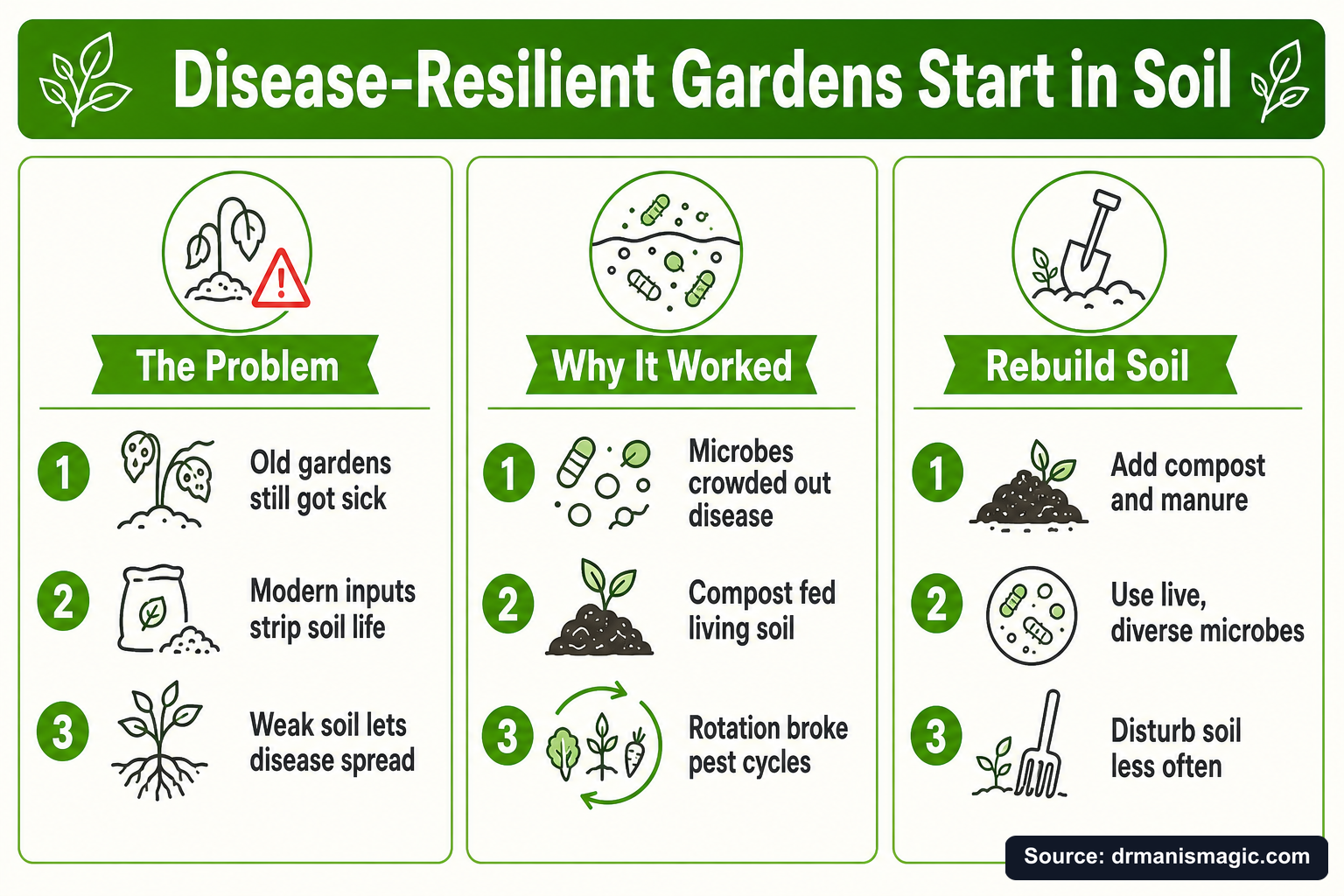
- Pre-industrial gardens were not disease-free — they were disease-resilient because the soil was teeming with diverse, living biology.
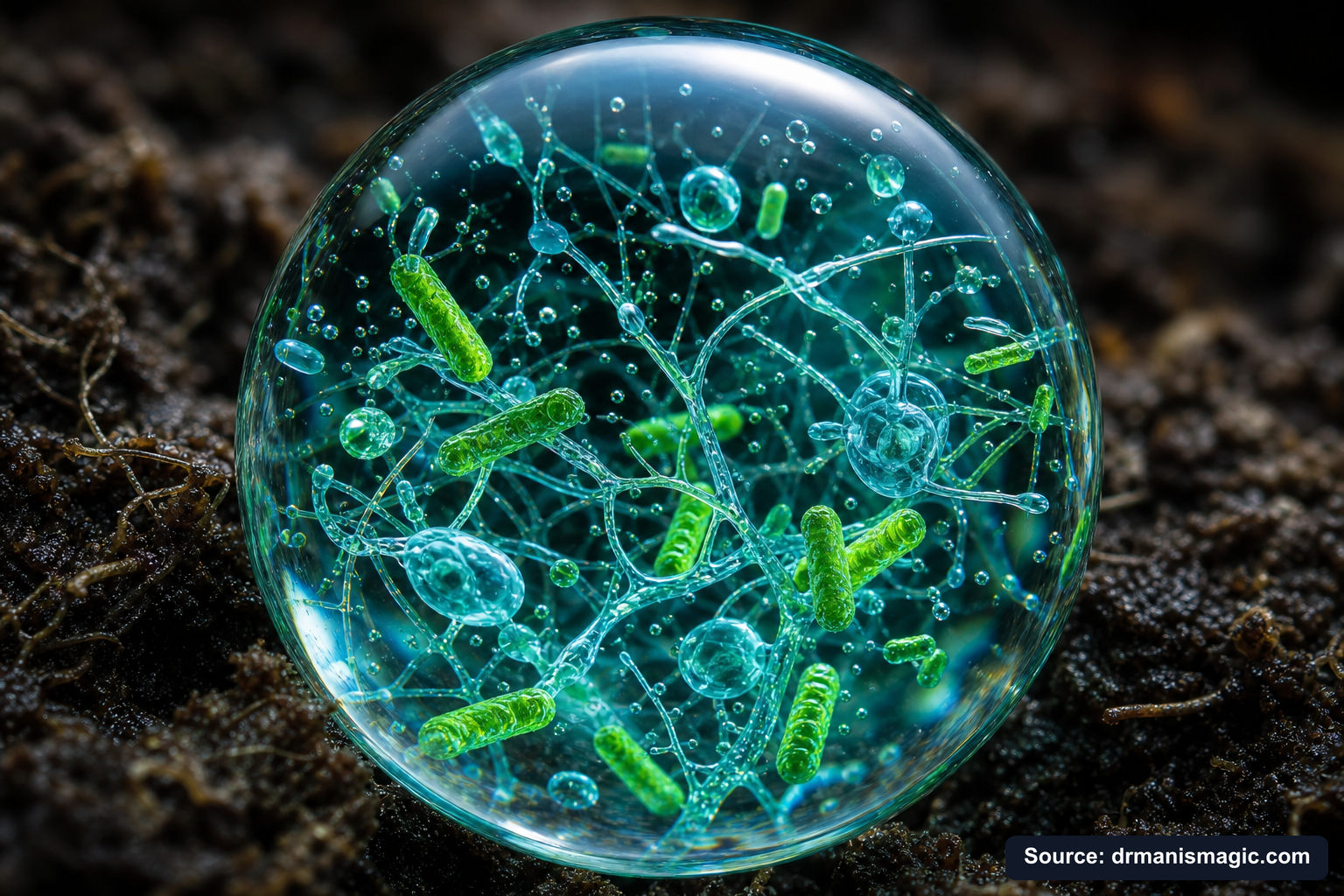
- Disease-suppressive soil is a real, science-backed concept: beneficial bacteria, fungi, protozoa, and nematodes compete with and crowd out plant pathogens.
- Modern synthetic fertilizers, pesticides, herbicides, and antifungals kill these beneficial microbes — stripping your soil of its natural defense system.
- The Three Plant Pillars (mineral-based soil + live microbials + organic fertilizer) rebuild the foundation that pre-industrial gardeners had naturally.
- Dried or stinky "microbe" products on store shelves are mostly dead on arrival — live, stabilized microbes are what actually move the needle.
- You can restore damaged or depleted soil using compost, organic inputs, reduced disturbance, and consistent applications of full-spectrum living microbes.
- Time is your most valuable resource in gardening — the right biological foundation gets results faster and keeps them going longer.
Were Pre-Industrial Gardens Actually Disease-Free?
Quick Answer: No. Pre-industrial gardens were not disease-free. They suffered from blights, rusts, mildews, root rots, and crop failures. But many were far more disease-resilient than modern gardens because they maintained living, biologically diverse soil through compost, crop rotation, manure, low disturbance, and local seed adaptation.
Let's be honest about history first. The Irish Potato Famine of the 1840s killed over one million people. That was a pre-industrial crop failure caused by a water mold pathogen called Phytophthora infestans. Wheat rust, grape powdery mildew, and storage rots wiped out harvests across Europe for centuries. Pre-industrial gardeners were not living in some paradise of perfect plants.
But here's what they did have that we mostly lost. Living soil. Real, biologically active, teeming-with-life soil. Not the brown, salty, compressed, microbe-depleted stuff that sits in most garden beds and pots today.
According to University of Minnesota Extension, healthy soil biology supplies a large share of the plant-available nitrogen and phosphorus that plants need — and those same organisms directly suppress disease pressure in the root zone. Pre-industrial gardeners didn't know the science. But their practices accidentally preserved exactly this living system.
They added manure and compost every season. They rotated crops so no single pathogen could build up in one spot. They let fields rest (fallow). They saved seeds from the strongest plants, selecting for local disease tolerance over generations. They didn't till deeply or constantly. And they never poured synthetic salts into the ground that would wipe out the invisible workforce keeping their plants alive.
The result? Soil that functioned the way nature designed it to function. A self-regulating, disease-suppressing, nutrient-cycling ecosystem that grew plants the way God intended — without a single bottle of chemicals.
What Is Disease-Suppressive Soil and Why Did Pre-Industrial Gardens Have It?
Quick Answer: Disease-suppressive soil is soil where diverse living organisms — bacteria, fungi, protozoa, and nematodes — naturally compete with, crowd out, and destroy plant pathogens before they can cause damage. Pre-industrial gardens had it because their practices fed and protected soil biology instead of killing it.
The term "disease-suppressive soil" comes from modern soil science, but the concept is ancient. It describes soil where plants resist disease not because pathogens are absent, but because the biological community in the soil keeps them in check.
Think of it like your own immune system. You're surrounded by germs every single day. You don't get sick every day because your immune system — diverse, active, and well-nourished — manages the threat. Healthy soil does the same thing for plant roots.
Penn State Extension notes that the soil food web — the interconnected community of bacteria, fungi, protozoa, nematodes, arthropods, and other organisms — drives nutrient cycling, water infiltration, and direct disease suppression in the root zone. When that community is healthy and diverse, pathogens struggle to get a foothold.
Pre-industrial gardeners maintained this system without knowing it by:
- Adding compost and manure (feeding the microbe community)
- Rotating crops (preventing pathogen buildup in one spot)
- Using green manures and cover crops (adding organic matter and living root exudates)
- Practicing low-tillage or surface cultivation (preserving fungal networks underground)
- Selecting locally adapted plants (naturally tolerant of regional pathogens)
- Removing diseased plant material (basic sanitation that stopped spread)
- Allowing soil to rest and recover between plantings
None of it was rocket science. All of it worked with the natural order instead of against it.
What Is the Soil Food Web and How Does It Protect Your Plants?
Quick Answer: The soil food web is the community of living organisms — bacteria, fungi, protozoa, nematodes, earthworms, and more — that eat each other, recycle nutrients, and collectively suppress plant disease. When this web is intact and active, it acts as an invisible immune system wrapped around every root in your garden.
Here's the part most gardening content skips over. The soil food web is not just bacteria and fungi. It's a whole layered ecosystem with predators, prey, recyclers, and defenders. Let's walk through it.
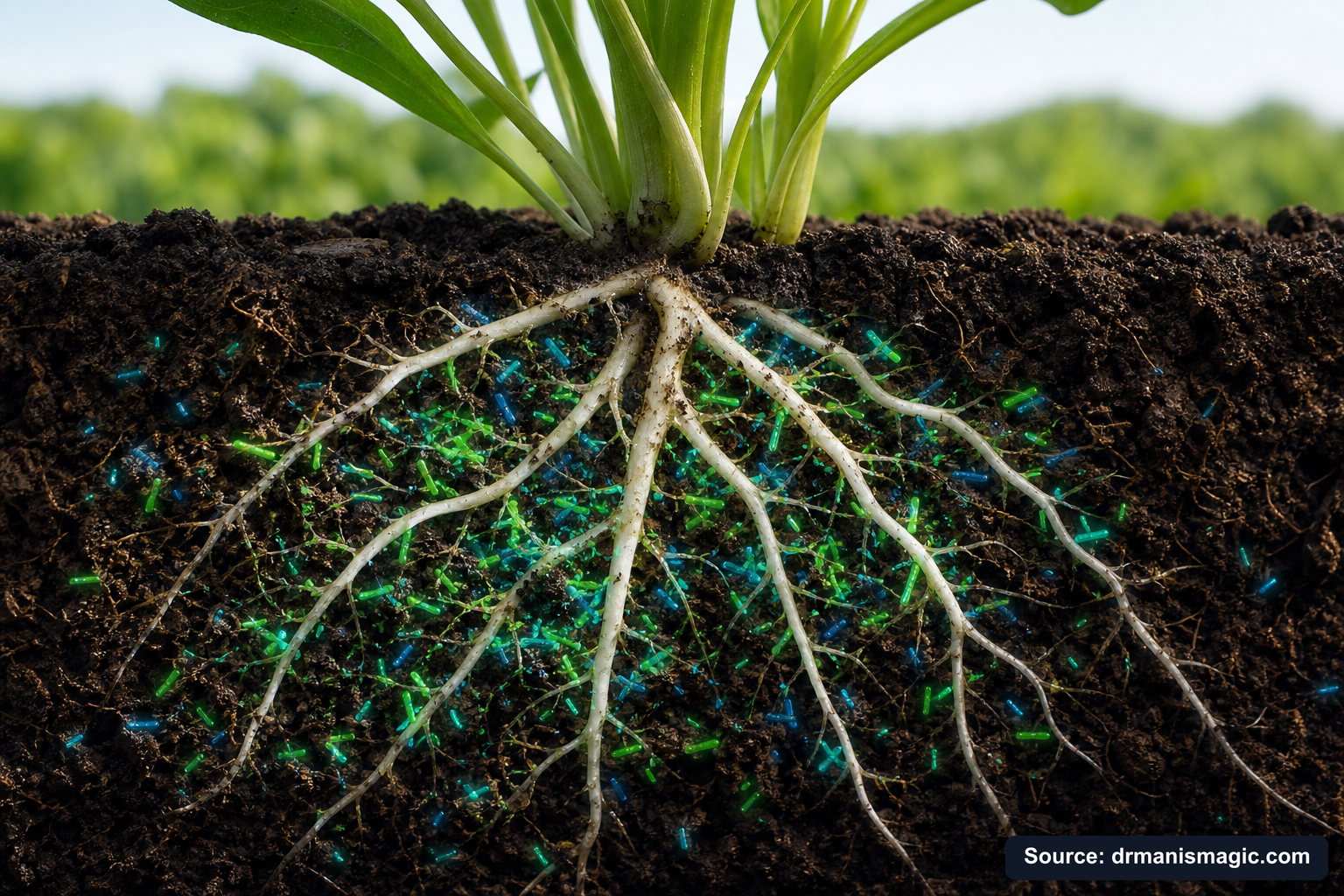
Roots release sugars and proteins into the soil. This is called root exudate, and it's the plant's way of feeding its allies. Bacteria and fungi rush to these root exudates. They multiply. They start breaking down organic matter, releasing nutrients the plant can actually absorb. Mycorrhizal fungi extend thread-like networks — called hyphae — far beyond where the roots can reach. These fungal threads find water and minerals and deliver them back to the plant. It's like the plant hired a mining crew.
Then protozoa (single-celled organisms) come in and eat the bacteria. When they do, they release nitrogen right next to the roots in a plant-available form. This is called the microbial loop, and it's one of the most important nutrient delivery systems on earth. Without protozoa, nitrogen stays locked up. With them, it flows freely to your plants.
Nematodes come in several types. Some eat bacteria. Some eat fungi. Some eat other nematodes. Predatory nematodes hunt and eat pathogenic nematodes — the ones that would otherwise attack your roots. It's a checks-and-balances system built into the soil itself.
Look at this breakdown of what each player does:
| Soil Organism | What It Does | Disease-Suppression Role |
|---|---|---|
| Beneficial bacteria | Break down organic matter, fix nitrogen, produce plant hormones | Compete with and crowd out pathogens; produce antibiotics against harmful bacteria |
| Mycorrhizal fungi | Extend root reach, deliver water and minerals, improve soil structure with glomalin | Create physical barrier around roots; compete with root-attacking pathogens |
| Other beneficial fungi | Break down tough organic compounds, cycle nutrients | Antagonize soil-borne pathogens like Pythium and Fusarium |
| Protozoa | Graze on bacteria, releasing nitrogen near roots in plant-available form | Regulate bacterial populations; help keep pathogenic bacteria in check |
| Bacterial-feeding nematodes | Eat bacteria, releasing more nutrients near the root zone | Support nutrient cycling; keep bacterial communities balanced |
| Predatory nematodes | Hunt and eat pathogenic nematodes and harmful insects | Directly destroy root-feeding pest nematodes |
| Earthworms | Aerate soil, process organic matter into castings rich in microbes | Spread beneficial microbes through the soil profile |
| Soil arthropods | Shred organic matter, create pathways for water and air | Help regulate insect pests and fungal disease |
When this whole community is alive and working together, your plants are genuinely tough. Pathogens show up and find the neighborhood already occupied. There's no room, no open resources, no easy entry point. The disease can't get established. That's what disease suppression looks like in practice.
Pre-industrial gardens had all of this going on beneath the surface, every single day, for free. No one had to buy it. No one had to spray it. It was just there — because the practices preserved it.
What Destroyed the Disease Suppression in Modern Gardens?
Quick Answer: Synthetic fertilizers, herbicides, pesticides, and antifungals wiped out the living biology that makes soil disease-suppressive. When you kill the microbes, you remove the plant's invisible immune system. What's left is chemically dependent soil that can't protect itself.
This is the part nobody at the big box store will tell you. And it's not because the staff is mean. It's because the system they're selling you doesn't include this information. There's no profit in telling you that the product you're buying is quietly destroying the very thing your plants need most.
After World War II, synthetic fertilizer production exploded. The same chemical industry that made explosives pivoted to making nitrogen-based plant food. It was cheap. It made things green fast. It looked like a miracle. But it was built on synthetic salts.
Here's what salt does in soil. It pulls water away from cells through osmosis — the same reason the ocean is deadly to drink. Beneficial bacteria and fungi live in thin water films around soil particles. When salt concentration spikes after a synthetic fertilizer application, those water films become hostile. Microbes die. Populations crash. The soil food web collapses.
Then pesticides kill the insects and arthropods that shred organic matter and spread microbes. Herbicides like glyphosate directly disrupt microbial enzyme pathways. Synthetic antifungals wipe out not just the disease-causing fungi but also the mycorrhizal fungi your plants desperately need. Every spray, every granule of synthetic salt fertilizer, chips away at the living community that used to protect your plants for free.
What you're left with is chemically dependent soil. It only produces when you feed it chemicals. Take the chemicals away and nothing grows. It can't cycle nutrients on its own. It can't suppress disease. It's biologically dead, or close to it.
After growing over 250,000 trees at our South Texas nursery, we learned this the hard way. We watched plants that looked green and healthy collapse the moment stress hit — drought, heat, a pest pressure — because the biological foundation underneath was gone. We'd been feeding the plant while starving the soil. It took Dr. Mani Skaria's decades of plant pathology research to understand what was actually happening underground.
See also: The Hidden Reason Synthetic Fertilizers Cause Root Rot
How Did Pre-Industrial Gardeners Actually Prevent Disease Without Chemicals?
Quick Answer: They used a combination of crop rotation, compost and manure inputs, low tillage, seed selection, sanitation, and plant diversity — all of which, without them knowing it, built and maintained the disease-suppressive soil biology that is the true defense against plant pathogens.
Let's make this practical. Here is what the old methods actually did, translated into the modern science of why they worked:
Compost and manure. Every time a pre-industrial gardener added manure or compost to the soil, they were inoculating it with billions of live, active microbes. Fresh compost can reach over 140 degrees Fahrenheit because of the heat generated by microbial activity. That's biological energy. When you spread it on your garden, you're spreading a living army of beneficial organisms that immediately begin suppressing pathogens and cycling nutrients.
Crop rotation. Moving plants to different spots every season prevented any single pathogen from building up a dominant population in one area. A pathogen that thrives on tomatoes has to wait years before tomatoes come back to that bed. By then, the microbial community has often suppressed it back to harmless levels.
Low tillage and soil disturbance. Mycorrhizal fungi build underground networks — literally miles of threads per teaspoon of healthy soil — that connect plants and transfer nutrients. Deep tillage destroys these networks. Pre-industrial gardeners who used shallow cultivation preserved them. Modern rototilling wipes them out every season.
Plant diversity. Growing many different plants together means many different root exudates going into the soil. Different exudates feed different microbes. More microbial diversity means more pathogen suppression. Monocultures — growing the same crop in the same soil year after year — feed the same narrow group of organisms and create biological vulnerability.
Seed selection. Saving seeds from the strongest, healthiest plants over generations meant the plants became locally adapted. They developed tolerance to the specific pathogens in their local soil environment. This is slow, natural disease resistance built into the plant itself.
Sanitation. Removing diseased leaves and plants stopped pathogens from spreading. Simple. Unglamorous. Effective.
None of this was magic. All of it was working with the natural order. The garden wasn't protected by what was added from a bottle. It was protected by what was preserved in the ground.
You Never Had a Brown Thumb.
You were handed the wrong tools. This free guide hands you the right ones.
You watered it. You fed it. It died anyway.
It was never you. It was the dirt, the salt food, and the bad advice.
This guide shows you what really went wrong, and how to fix it for good.
- Why your plants really died, and why it was never your fault
- The salt hiding in your plant food that quietly burns the roots
- The hidden killer in almost every bag of store soil
- The tiny helpers that grow a whole forest for free
- The rescue trick that brings a half dead plant back to life
Why Do Live Microbes Matter More Than Dried or Powdered Microbe Products?
Quick Answer: Live microbes are active, reproducing, and immediately effective in the root zone. Dried or powdered microbes have very low survival rates and have shown little measurable benefit in real-world plant tests. If the bottle smells like sewage, the microbes are already dying — and a dead microbe cannot protect your plant.
This is where we have to be completely honest with you, even if it costs us a sale on a cheaper product.
The market for microbial soil products has exploded. Walk through any garden center and you'll see dozens of bottles and bags claiming to add beneficial bacteria and fungi to your soil. Most of them are not doing what they claim. Here's why.
Most commercial microbial products are made in large industrial fermentation factories. The organisms are brewed in giant vats, then dried into a powder. The idea is that the dormant spores will reactivate when they hit moist soil. We have tested dozens of these products over years of growing at US Citrus Nursery. The results were consistently disappointing. The plants didn't respond. The microbes, if they survived the drying process at all, were not establishing and thriving in the root zone.
The second category is liquid products made from compost extracts or earthworm castings. These can be valuable — but only when fresh. Once the bottle is sealed and shipped, the microbes inside start consuming available oxygen. Within 24 to 48 hours, the product goes anaerobic. Anaerobic means the oxygen is gone and the biology shifts to organisms that produce the foul-smelling gases associated with rot and fermentation. If you open a microbial product and it smells like sewage — or the bottle fizzes — the beneficial organisms are already dead or dying.
A third type uses lactobacillus bacteria, the same organism in yogurt. It's vigorous and easy to grow. But in soil, lactobacillus overtakes and crowds out the beneficial bacteria you actually want. It belongs in your digestive system, not your garden bed.
Look at this comparison of microbe product types:
| Product Type | Microbe Viability | Spectrum of Organisms | Odor | Real-World Results |
|---|---|---|---|---|
| Dry/powdered lab-grown microbes | Very low | Narrow (selected species) | Neutral | Little to no measurable benefit in our tests |
| Dry microbes rehydrated into liquid | Very low | Narrow | Neutral to faint | Same poor results as powdered form |
| Compost tea (fresh, under 24 hours) | Moderate | Broad but variable | Earthy | Good when truly fresh — time-sensitive |
| Compost tea (old, over 24 hours) | Low — anaerobic | Partial | Strong, foul smell | Declining; not recommended |
| Lactobacillus-based products | High | Very narrow | Sour | Crowds out beneficial species; avoid |
| Plant Super Boost (stabilized, full-spectrum) | High — confirmed living | 2,000+ bacteria species, 400-500 fungi including mycorrhizae, plus protozoa and nematodes | Earthy — no sewage smell | Consistent results across 250,000+ trees at US Citrus Nursery |
The reason Plant Super Boost works differently is that it is harvested from our own hand-crafted compost using a proprietary all-natural stabilization technique developed by a world-renowned compostologist who joined Dr. Mani's team. The microbes stay alive without going anaerobic. The bottle doesn't stink because the biology isn't rotting. You can literally take a drop of Plant Super Boost and look at it under a microscope and watch the microbes moving. We have lab analyses that confirm it. That's not a marketing claim — that's biology you can see.
Zero PFAS. Zero biosludge. Zero synthetic salts. Just living soil biology in a bottle, made in the USA.
What Are the Three Plant Pillars and How Do They Recreate Pre-Industrial Soil Health?
Quick Answer: The Three Plant Pillars are the framework Dr. Mani Skaria developed after 40 years of plant pathology research and 250,000+ trees: mineral-based soil for drainage and root oxygen, live microbials for biological defense and nutrient cycling, and organic fertilizer to feed plants without burning microbes. Together they rebuild the disease-suppressive soil that pre-industrial gardens had naturally.
After decades of watching plants thrive and fail, Dr. Mani Skaria — Professor Emeritus of Plant Pathology, inventor of micro-budding, and founder of the Texas Clean Citrus Program — distilled everything he learned into three non-negotiable foundations. He called them the Three Plant Pillars.
Pillar One: Mineral-Based Soil. Most potting mixes are made from bark, sawdust, and organic material that decomposes. As it breaks down, it compacts. Compacted soil blocks oxygen from reaching roots. Roots need oxygen to breathe — yes, even though the plant above ground loves carbon dioxide. No oxygen at the roots means root rot. It means disease. It means a slow death that looks like a mystery. Mineral-based soil — silica-rich sandy loam from South Texas — doesn't decompose. It stays open. Roots breathe. Water drains. It's the physical foundation that makes everything else possible.
Pillar Two: Live Microbials. This is the invisible workforce. The disease-suppressive community. The living immune system around the roots. As we've walked through in this article, without this community, your plant is defenseless. It can't suppress pathogens. It can't cycle nutrients efficiently. It can't handle stress. Restoring this community with genuinely live, full-spectrum microbes is the single most impactful thing most gardeners can do for struggling plants.
Pillar Three: Organic Fertilizer. Plants need nutrients. But synthetic, salt-based fertilizers deliver nutrients in a form that kills the microbes doing the real work. Organic, slow-release fertilizer from crab, kelp, and amino acids feeds the plant gently while feeding the soil community at the same time. No salt shock. No microbial massacre. No plastic-coated slow-release pellets leaching toxins. Just nutrients in the form nature recognizes, delivered at the pace the plant can actually use.
When all three pillars are in place, you have recreated what your great-great-grandmother's garden had naturally. Living biology. Breathing roots. Slow-release nutrition. The system self-regulates. The plants become, as Dr. Mani says, practically bulletproof.
How Do You Rebuild Disease-Suppressive Soil in a Modern Garden?
Quick Answer: You restore disease-suppressive soil by stopping the inputs that kill microbes, adding organic matter and compost, introducing live full-spectrum microbials consistently, reducing tillage, and giving the biology time to re-establish. Recovery takes patience — but results often show within a month, and the system keeps improving from there.
This is the practical part. This is what you can actually do, starting now.
Here is a simple recovery checklist for damaged, depleted, or disease-prone soil:
- Stop the salt. Put away the synthetic fertilizers. Every application adds more salt stress to a microbe community that's already struggling. This is the single fastest way to stop the bleeding.
- Add compost or aged manure. Even a one-inch layer worked lightly into the top of the soil adds organic matter and reintroduces some native soil biology. This is the foundation pre-industrial gardeners built their gardens on every season.
- Apply live, full-spectrum microbials monthly. This re-establishes the biological community that makes soil disease-suppressive. Apply consistently — one treatment is a start, but your soil has likely been depleted over years and the biology needs time to rebuild and stabilize.
- Switch to organic, slow-release fertilizer. Feed the plant without burning the microbes. Crab, kelp, and amino acid-based fertilizers work with the soil food web instead of against it.
- Reduce tillage. Every time you deeply till, you destroy the fungal networks that took months to build. Cultivate shallowly or not at all where possible.
- Add diversity. Plant companion plants, cover crops, or a variety of species near each other. Different root exudates feed different microbes and create a more resilient biological community.
- Give it time. Healthy soil biology is not a one-week fix. But when the right inputs are in sync — mineral soil, living microbes, organic nutrition — most gardeners see measurable improvement within a month. The system keeps compounding from there.
We have watched this process play out across 250,000 trees at US Citrus Nursery. The trees that got all three pillars consistently were the ones that shrugged off disease pressure, handled stress, and produced fruit. The ones on synthetic salt fertilizers with dead soil looked fine for a season — then quietly collapsed when conditions got hard.
You can get money back. You cannot get time back. The best time to rebuild your soil was last year. The second best time is today. We've heard from thousands of gardeners who spent years wondering why their plants kept struggling — and saw dramatic turnarounds once the biological foundation was restored. Don't let another growing season slip by on a foundation that can't hold.
See also: Why Most Fertilizers Are Actually Salt in Disguise
For a complete walkthrough of what to plant in, what to feed, and how to apply live microbials — in plain language with no guesswork — the Free Plant Care Field Guide walks you through every step.
Living Soil vs. Dead Soil: What's the Real Difference for Your Plants?
Quick Answer: Living soil has a thriving food web that cycles nutrients, suppresses pathogens, builds soil structure, and reduces plant stress. Dead or depleted soil has none of this — it's biologically inert and entirely dependent on external chemical inputs to produce results, which means more expense, more risk, and plants that are always one stress event away from collapse.
Here is the clearest way to put it side by side:
| Factor | Living, Biologically Active Soil | Dead or Depleted Soil |
|---|---|---|
| Disease resistance | High — pathogens are competed out by diverse biology | Low — no competition; pathogens establish easily |
| Nutrient availability | Continuous — microbes cycle and release nutrients naturally | Dependent on synthetic inputs; crashes without them |
| Drought tolerance | Better — mycorrhizal fungi extend water access | Poor — roots have no fungal network to lean on |
| Root development | Strong — fungi stimulate root branching and extension | Weak — roots confined to their own reach |
| Soil structure | Open, aerated — fungi produce glomalin that aggregates particles | Compacted, dense — water pools, oxygen depleted |
| Cost over time | Decreasing — biology self-sustains and builds | Increasing — more chemicals needed as soil degrades |
| Safety | Safe for children, pets, barefoot walks, food harvest | Chemical exposure risks; warning labels; re-entry periods |
| Pre-industrial equivalent | The cottage garden, the monastery garden, the family farm | The over-managed, chemically dependent modern landscape |
The gap between these two columns is the gap between the gardener who walks into their backyard and feels pride — and the one who walks in and sees brown patches, wilting plants, recurring blight, and one more dead investment.
The good news is that the gap is closeable. The biology can come back. The soil can suppress disease again. It just needs what pre-industrial gardeners gave it without even thinking about it: organic matter, living microbes, and a chance to do its job without being poisoned.
What Can You Do Right Now to Start Growing Like a Pre-Industrial Garden?
Quick Answer: Start with the Three Plant Pillars: get your soil right, get live microbes into the root zone, and feed with organic slow-release nutrition. Stop using salt-based synthetic fertilizers. Apply full-spectrum living microbials consistently. Give the biology time to rebuild. The results compound — every month is better than the last.
You don't need a monastery. You don't need five acres of land. You don't need to make your own compost pile or brew your own compost tea — though both are wonderful if you have the time and muscle for it.
What you need is a foundation. The same foundation that made pre-industrial gardens resilient. Breathing soil. Living biology. Slow nutrition that works with the soil instead of burning it.
Dr. Mani spent 40 years studying plant disease, traveled the world, tested hundreds of products, and built everything he learned into one simple system — the Three Plant Pillars — and the products that make it easy to apply. Everything in the Dr. Mani's Magic line is made in the USA, zero PFAS, zero biosludge, zero synthetic salts. There's a 30-day money-back guarantee, no conditions, no runaround. Real people answer the phone — nursery experts who have grafted and grown the very trees we ship.
The number one thing people tell Dr. Mani they want is to see their plants flourish — to finally harvest fruit from their own tree, to walk barefoot through their own lawn without worrying about chemical residue, to grow something their family can eat, smell, and enjoy. That desire is not a hobby. It's something deep. Something planted in us from the very beginning — the impulse to tend a garden and watch it thrive.
Don't waste another season on a foundation that can't hold. The soil your great-great-grandmother stood on was alive. Yours can be too.
If you're ready to build that foundation, start with the Three Plant Pillars bundle — everything you need, designed to work together, built on the same science that kept gardens healthy for centuries before the chemical companies convinced us to forget it.
Frequently Asked Questions
People are waking up to the truth about old-school gardening. They want to know why plants used to thrive without a cabinet full of chemicals. These questions come up again and again, and the answers point to one thing: living soil is the real secret. Dr. Mani spent 35 years and 250,000 trees proving it.
How did pre-industrial gardens stay so healthy without modern chemicals?
They did not use chemicals because they did not need them. Farmers added compost and manure every season. They rotated crops. They let soil rest. All of that kept the soil packed with living microbes. Those microbes fought off disease naturally. It was not luck. It was biology doing its job. When you feed the soil instead of the plant, the soil feeds the plant back and protects it too.
What makes soil actually suppress plant disease on its own?
Healthy soil is full of bacteria, fungi, and other tiny organisms that compete with harmful pathogens. They crowd them out. They eat them. They produce natural compounds that stop disease from spreading. This is called disease-suppressive soil, and it is real science. Dr. Mani built his Plant Super Boost around this idea. Live microbes go in, set up camp, and start defending your roots from day one.
How do synthetic fertilizers damage garden soil over time?
Synthetic fertilizers are salt-based. Salt kills microbes. Every time you pour a chemical fertilizer on your soil, you are wiping out the tiny workers that protect your plants. Over months and years, the soil goes quiet. No biology means no defense. Disease moves in. Roots weaken. You buy more product to fix the problem, but the real problem keeps getting worse. That cycle is exactly what Dr. Mani's Three Plant Pillars are designed to break.
How can you prevent disease in your garden the natural way?
Start with the right foundation. Mineral-based soil gives roots room to breathe and drains properly so rot cannot take hold. Live microbes fill the soil with natural defenders. Organic fertilizer feeds plants slowly without burning or killing the biology underneath. That is the Three Plant Pillars working together. We proved this system on over 250,000 citrus trees at US Citrus Nursery. It works for every plant, not just citrus.
Why do most store-bought microbial products not work?
Most of them are dead before you open the bottle. Microbes need to be alive to do anything useful. Cheap products use dried or improperly stored microbes that cannot survive shipping or sitting on a shelf. Dr. Mani's Plant Super Boost uses a special stabilization method to keep microbes alive and active all the way to your door. When you mix it with water and pour it on your plants, those microbes get to work right away. You can even smell the difference. It smells like earth, not rot.
How did gardeners like the Amish keep pests and disease away without chemicals?
They used companion planting, crop rotation, and healthy soil. Marigolds next to vegetables. Basil near tomatoes. Strong plants grown in living soil resist pests on their own because their immune systems work. A plant grown in dead, depleted soil is like a person who never sleeps. It cannot fight anything off. When your soil has the right microbes and minerals, your plants build real natural resistance. That is the old way, and it still works today.
How do you restore soil that has been damaged by years of chemical use?
Stop adding chemicals first. Then rebuild from the ground up using the Three Plant Pillars. Switch to a mineral-based soil that does not compact and choke roots. Add live, stabilized microbes to repopulate the biology that was wiped out. Feed with slow-release organic fertilizer made from crab, kelp, and amino acids instead of salt-based synthetics. Results start showing up within a month. The longer you stay the course, the stronger your soil gets. Time is the one thing you cannot get back, so starting today matters.
About the Author
Dr. Mani Skaria, PhD
Dr. Mani Skaria, PhD, is a plant pathologist and the scientific founder of Dr. Mani's Magic. He earned his doctorate at Purdue University and spent 48 years studying how plants, soil, and living microbes work together, including his years as Professor Emeritus at Texas A&M and as a member of the USDA NAREEE Advisory Board. He invented micro-budding, a method for growing healthier, stronger trees, and has grown more than 250,000 trees on the family farm in Hargill, Texas - US Citrus Nursery. His life's work takes real lab science and practical experience and turns it into simple, safe, organic plant care anyone can use at home.


