


How Poor Processing Affects Plant Health: Salt, Rot & Toxic Amendments | Dr. Mani's Magic
How Poor Processing Affects Plant Health: Salt Burn, Root Rot, Toxic Compost, and Bad Amendments Explained
Picture this. You drive home from the garden center, trunk loaded with a bag of fertilizer and a fresh bag of potting mix. You are excited. This is going to be the year your tomatoes go crazy. Your lemon tree finally fruits. Your lawn turns that deep, thick green your neighbor keeps bragging about.
You follow the directions on the bag. You water it in. You wait. A week goes by. Then two. Then the leaves start to curl at the edges. Pale yellow creeps in from the tips. The soil looks fine. You watered it right. You did everything the bag told you to do. But something is wrong. The plant looks worse than before you started. You kneel down and pull it gently from the pot. The roots are brown. Soft. Maybe even a little slimy. And you get that sinking feeling. That old familiar feeling. I have a brown thumb. I always kill things.
Stop right there. Because here is what nobody at that garden center told you. The problem was not you. The problem started long before you ever touched that bag. It started in how that product was made. Poor processing of soil amendments and fertilizers is one of the most common and least talked about reasons plants suffer, stall, and die. At our South Texas nursery, after growing and shipping over 250,000 trees, we have seen this pattern destroy beautiful plants over and over. Today, we are going to open the whole thing up so you never fall for it again.

Plant Super Boost
Key Takeaways
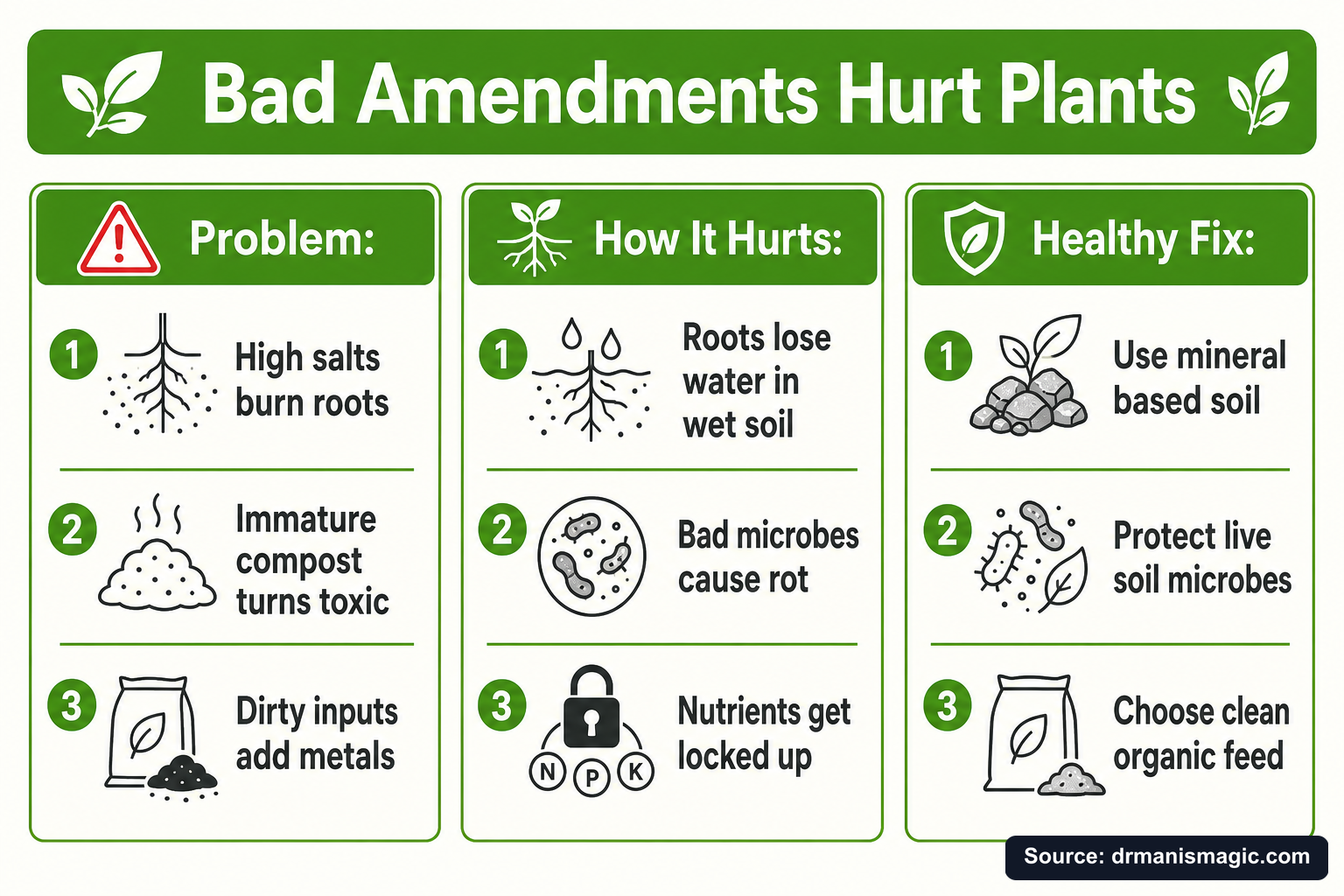
- Poorly processed fertilizers and amendments can burn roots, kill beneficial soil microbes, and make nutrients impossible for plants to absorb.
- Salt-based synthetic fertilizers create osmotic stress, which is a fancy way of saying they pull water out of roots instead of letting water in.
- Immature or anaerobic compost releases ammonia and toxic organic acids that can injure or kill roots directly.
- Some fertilizers and soil amendments contain biosludge, PFAS "forever chemicals," and heavy metals that have no place in your garden or your body.
- Healthy processing preserves beneficial microbes, manages salt load, and delivers nutrients slowly the way nature intended.
- The Three Plant Pillars — mineral-based soil, live microbes, and clean organic fertilizer — are the root-cause solution, not a bandage.
- You can diagnose salt damage, root rot, and immature compost injury by knowing what to look for before it is too late.
Why Does Poor Processing Hurt Plants in the First Place?
Quick Answer: Poor processing of fertilizers and soil amendments introduces salt, toxic compounds, harmful microbes, and incomplete organic matter into the root zone. These stressors damage or kill roots, wipe out beneficial soil biology, and block the nutrient pathways plants depend on to grow. The result looks like drought stress, disease, or mystery decline.
Your plant does not live above ground. Not really. The real action happens underground, in a few inches of root zone where everything either works together or falls apart. When you pour a poorly processed amendment into that zone, you are not helping. You are dropping a problem directly on the most sensitive part of the plant.
University of Minnesota Extension explains it simply: soil health is about biology, chemistry, and structure working together. Disrupt any one of those three and the whole system starts to fail. Minnesota Extension's composting and soil management guidance makes clear that immature compost, high-salt inputs, and anaerobic conditions are among the most common causes of avoidable plant damage in home gardens and landscapes.
Here is what can go wrong when an amendment or fertilizer is processed poorly:
- High soluble salts raise the electrical conductivity of the soil water. Roots can no longer pull moisture in. The plant wilts even when the soil is wet. This is called osmotic stress or physiological drought.
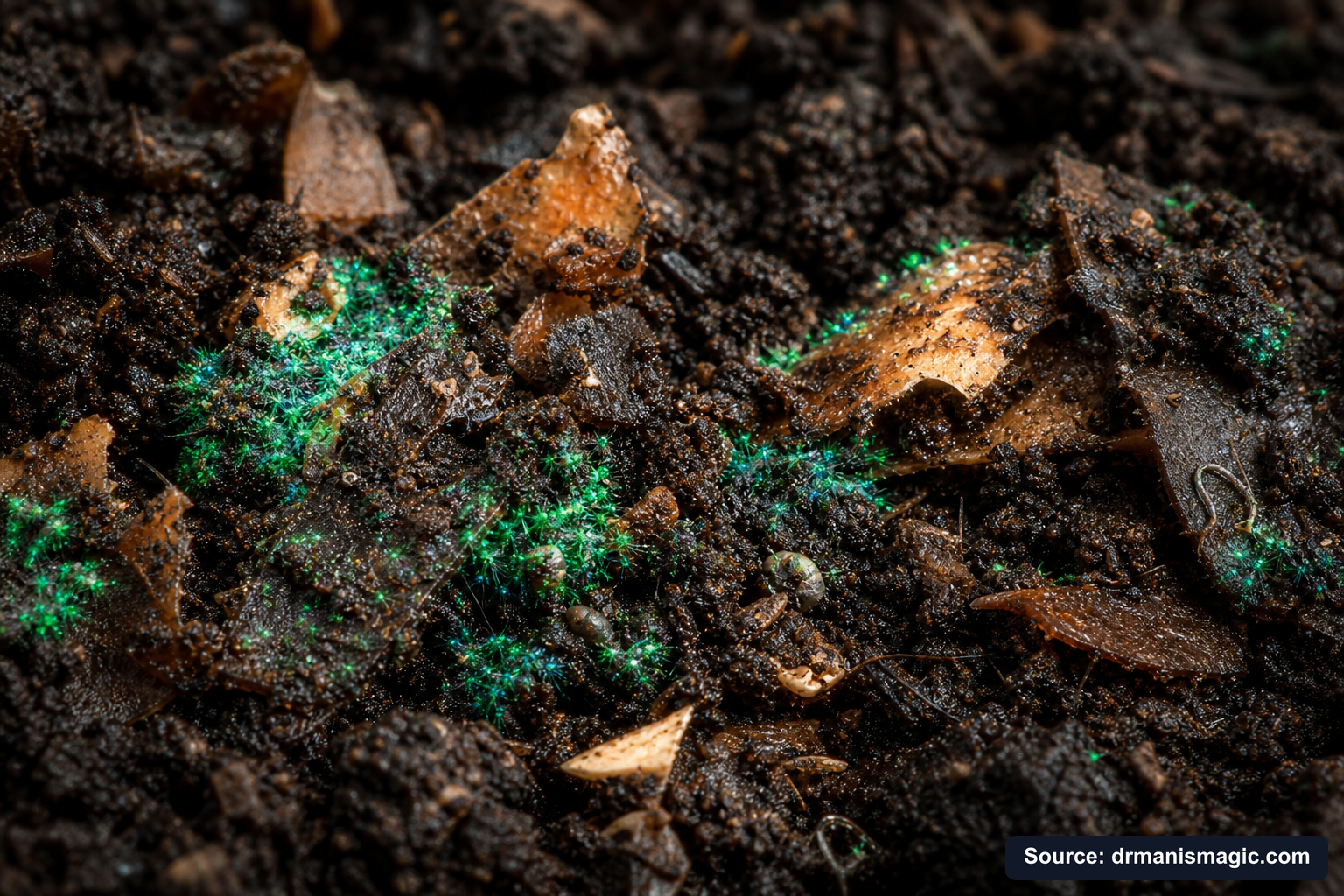
- Immature organic matter releases ammonia gas and volatile organic acids as it finishes breaking down inside your pot or garden bed. Both are toxic to roots at close range.
- Anaerobic storage or processing creates fermentation byproducts, sour odors, and compounds that directly injure root tissue. If your bag of organic fertilizer smells like a sewer, that is a warning sign.
- High-carbon unfinished material temporarily locks up nitrogen as soil microbes rush to break it down. Your plant starves for nitrogen even though you just added "fertilizer."
- Sterilizing heat or harsh chemistry during processing can wipe out the beneficial bacteria and fungi the plant needs to convert nutrients into absorbable forms.
See also: The Hidden Reason Synthetic Fertilizers Cause Root Rot
What Does Salt Actually Do to Plant Roots?
Quick Answer: Salt in the root zone raises the concentration of dissolved particles in soil water. Roots work by pulling water in when the concentration inside the root is higher than outside. Salt flips that equation. Water moves the wrong way, out of the root and into the soil. The plant dehydrates from the inside out, even in wet soil. This is osmotic stress.
Think of it like this. You know that drinking ocean water makes you more thirsty, not less? The salt pulls moisture right out of your body. The same thing happens to your plant's roots in a high-salt environment.
The technical term is osmotic stress. The plant experiences what researchers call physiological drought, meaning the soil has plenty of water, but the roots cannot access it. Utah State University Extension describes this as one of the primary mechanisms of fertilizer burn: the salt index of a fertilizer determines how much osmotic stress it creates in the root zone. High-salt-index fertilizers — which includes most conventional synthetic products — carry the highest risk.
Here is what you will actually see when salt is damaging your plant:
- Leaf tips and margins turn brown and crispy, as if scorched
- Plant wilts during the day even though the soil feels moist
- New growth is stunted and pale
- Roots look brown and compressed when you check them
- White crusty deposits may appear on the soil surface or around drain holes
And here is the part that most fertilizer companies will never tell you. Salt does not just hurt roots directly. It kills the microbes living in the root zone. Those microbes are the engine of nutrient delivery. Kill the microbes, and even a good fertilizer stops working. The plant is now alone. No biological army. No slow-release system. Just roots sitting in a saline environment, struggling to absorb anything at all.
See also: How Salt-Based Feeding Quietly Destroys Root Systems
How Does Immature Compost or Poorly Cured Organic Matter Damage Plants?
Quick Answer: Compost that has not finished breaking down is not safe to use on plants. It releases ammonia gas and volatile organic acids as it continues decomposing in your soil. Both compounds are directly toxic to roots at close range. Unfinished high-carbon material also temporarily steals nitrogen from your plant as soil microbes rush to process it.
Not all organic amendments are created equal. This is one of the most important things we want you to walk away understanding today. The word "organic" on a bag does not automatically mean safe or beneficial. It just means the source was once living. How it was processed after that matters enormously.
When organic matter breaks down aerobically — meaning with oxygen, the way nature intended — it creates stable, rich humus and a thriving microbial community. That is the goal. That is what a mature, well-processed compost does for your soil.
But when organic material is processed or stored without enough oxygen, things go wrong fast. Anaerobic (no-oxygen) breakdown is fermentation. It creates ammonia, which burns roots. It creates volatile fatty acids, which are acidic and toxic at high concentrations. It creates a sour, sewage-like smell. And it creates an environment that actively harms the beneficial bacteria and fungi your plant depends on.
Washington State University Extension warns gardeners to test compost maturity before application. A simple indicator: mature compost smells like fresh earth. Immature compost smells like ammonia or something rotting. If you would not want to breathe it, your roots do not want to be sitting in it either.
There is another mechanism worth knowing. Fresh or high-carbon organic material has a wide carbon-to-nitrogen ratio. When you add it to soil, the microbes go to work breaking it down. To do that job, they need nitrogen. They pull it from the soil water. This temporarily drops the available nitrogen in your root zone to near zero. Your plant shows nitrogen deficiency symptoms — pale yellowing leaves — even though you just added fertilizer. This is called nitrogen immobilization, and it is one of the most confusing and frustrating problems home gardeners run into.
What Is the Difference Between Salt Damage, Overwatering, and True Root Rot?
Quick Answer: Salt damage, overwatering, and root rot can all look similar above ground — wilting, yellowing, and stunted growth. But the causes and cures are completely different. Salt damage means the root zone chemistry is wrong. Overwatering means the roots are suffocating. Root rot, often caused by Pythium or Phytophthora, means a pathogen is actively destroying root tissue.
This is where most gardeners get stuck. The plant looks sick. They water more. That makes it worse. Or they add more fertilizer. That makes it worse too. The table below breaks down how to tell these three problems apart.
| Symptom or Sign | Salt / Fertilizer Burn | Overwatering / Oxygen Deprivation | Root Rot (Pythium / Phytophthora) |
|---|---|---|---|
| Leaf appearance | Brown tips and margins, crispy edges | Yellow overall, soft and limp | Yellow then brown, collapsing fast |
| Wilting pattern | Wilts in daytime even with moist soil | Wilts persistently, soil stays wet | Wilts suddenly, may not recover overnight |
| Root appearance | Brown, dry, compressed, stunted | White or tan but soft, few root tips | Brown-black, mushy, may smell foul |
| Soil surface clues | White crust, mineral deposits | Algae growth, always wet | May look normal above, rot below |
| Smell | No unusual smell | Earthy or slightly stale | Sour, rotten, or sulfur smell |
| Primary cause | High salt index fertilizer or amendment | Poor drainage, compacted soil, overwatering | Pathogen attack, often after root stress |
| First response | Flush soil with clean water, stop all fertilizer | Let dry out, improve drainage and aeration | Remove affected roots, improve drainage, add beneficial microbes |
Here is something important to understand. Salt damage and overwatering both weaken roots. Weak roots are easy targets for Pythium and Phytophthora, the two most common root rot pathogens. So what starts as a salt or drainage problem often ends up as root rot. The poor processing of the fertilizer opened the door. The pathogen walked right in.
This is why the Three Plant Pillars matter so much. When you have mineral-based soil that drains perfectly, living microbes that compete with pathogens, and clean organic fertilizer with no salt load, you take all three threats off the table at once. See how the Three Plant Pillars work together here.
What Are Biosludge, PFAS, and Why Should Every Gardener Care?
Quick Answer: Biosludge is treated municipal waste — sewage sludge — used as a cheap filler in some fertilizers. It often contains PFAS, which are synthetic "forever chemicals" that do not break down in soil or in your body. They have been linked to serious health concerns. Both synthetic and some organic fertilizers may contain biosludge unless the label specifically states otherwise.
This one surprised us when we first dug into it. And once you know it, you cannot un-know it.
Some fertilizer manufacturers — both conventional and organic — use what is called biosludge as a filler or nutrient source. Biosludge is treated municipal wastewater solids. In plain language, that is processed human sewage. It is legal. It is common. And it is almost never disclosed clearly on a fertilizer label.
The problem is what comes with it. PFAS are per- and polyfluoroalkyl substances, a class of thousands of synthetic chemicals used in manufacturing, packaging, and industrial processes. They end up in wastewater. They survive treatment. They concentrate in biosludge. And when you spread biosludge-containing fertilizer in your garden, they go into your soil. PFAS are called "forever chemicals" because they do not break down. They accumulate. In soil. In plants. In water. In human tissue.
Research from Penn State Extension and Iowa State University Extension has flagged biosludge-derived fertilizers as a potential vector for PFAS contamination in home gardens, raised beds, and edible landscapes. This is not a fringe concern. It is an emerging public health issue that the fertilizer industry has been very quiet about.
Here is what we do at Dr. Mani's Magic. Our Crab, Kelp & Amino Acids fertilizer contains zero biosludge, zero PFAS, and zero synthetic salts. Every ingredient is sourced clean and processed with care. Because you should be able to walk barefoot on your grass. Let your kids play in the garden. Harvest vegetables for your family dinner. Without wondering what invisible chemicals you are absorbing along the way.
You Never Had a Brown Thumb.
You were handed the wrong tools. This free guide hands you the right ones.
You watered it. You fed it. It died anyway.
It was never you. It was the dirt, the salt food, and the bad advice.
This guide shows you what really went wrong, and how to fix it for good.
- Why your plants really died, and why it was never your fault
- The salt hiding in your plant food that quietly burns the roots
- The hidden killer in almost every bag of store soil
- The tiny helpers that grow a whole forest for free
- The rescue trick that brings a half dead plant back to life

How Do Synthetic Fertilizers Compare to Organic Options Like Crab, Kelp, and Amino Acids?
Quick Answer: Synthetic fertilizers are salt-based, fast-release, and harmful to soil microbes. They can cause osmotic stress, root burn, and microbial die-off. Organic fertilizers made from ingredients like crab shells, kelp, and amino acids are slow-release, low-salt, and actually feed the microbes that feed the plant. The difference is not just chemistry — it is the entire philosophy of how plants get nourished.
Let us look at this side by side so you can see exactly what you are choosing between.
| Feature | Synthetic Fast-Release | Slow-Release Coated Synthetic | Organic: Crab, Kelp & Amino Acids |
|---|---|---|---|
| Salt content | Very high | Medium to high | Very low to none |
| Microbial impact | Kills beneficial microbes | Damages microbes over time | Feeds and supports microbes |
| Root burn risk | High, especially in containers | Moderate | Very low |
| Nutrient release speed | Immediate spike then crash | Gradual but still salt-based | Slow, steady, biology-driven |
| Plastic / coating residue | No coatings | Plastic polymer shells left in soil | None |
| Biosludge / PFAS risk | Possible in some products | Possible in some products | None (when sourced clean) |
| Biostimulant content | None | None | Chitin, auxins, kelp hormones, amino acids, trace minerals |
| Long-term soil health | Degrades biology over time | Neutral to negative | Builds and improves over time |
| Works with container plants | High burn risk | Moderate risk | Ideal, almost no risk of overfeeding |
After growing over 250,000 trees at our South Texas nursery, we learned something that changed how we think about fertilizer entirely. It is not just about what nutrients you put in the soil. It is about whether those nutrients can actually get into the plant. And that process depends almost entirely on biology.
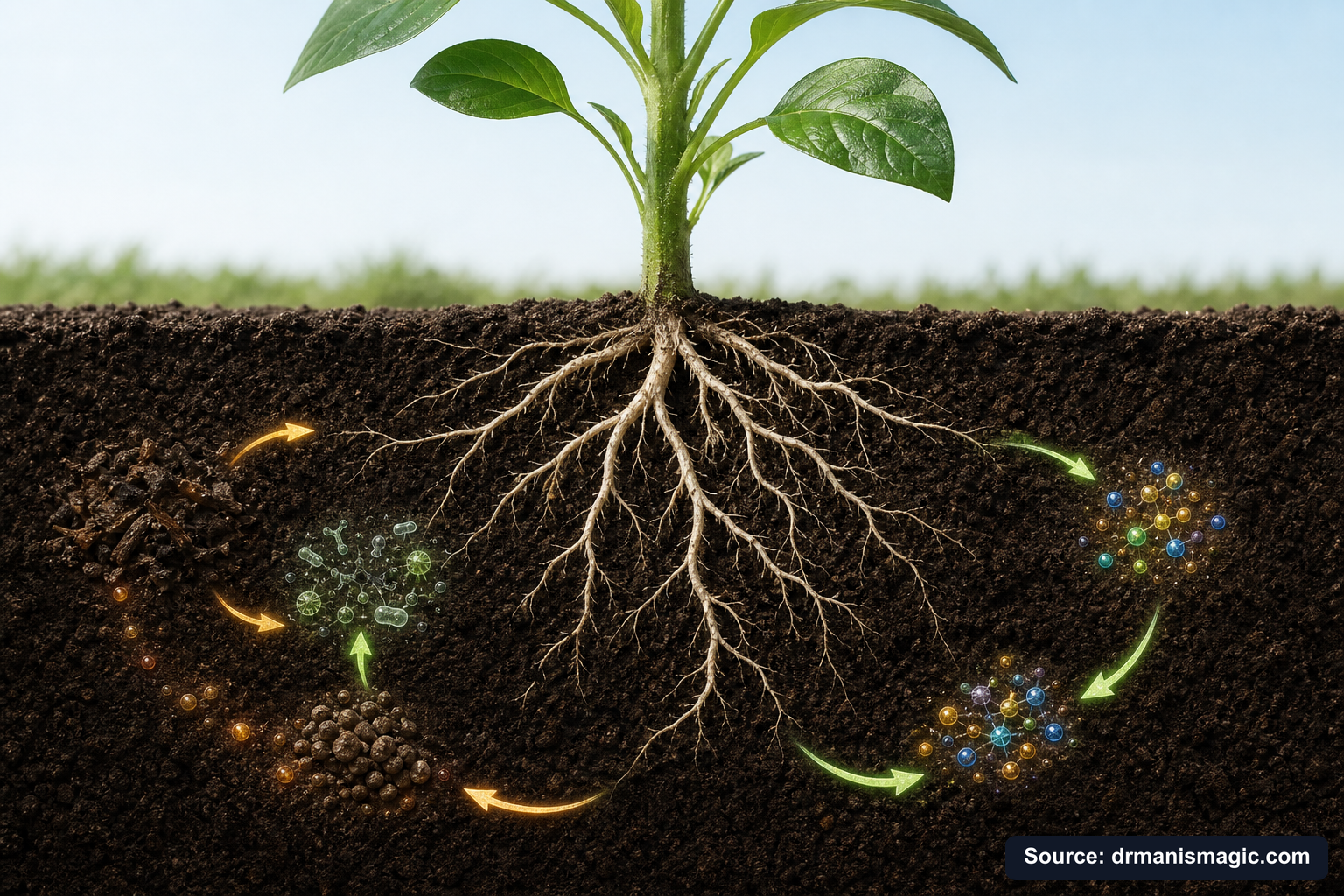
Here is the mechanism that most fertilizer labels will never explain to you. When you apply an organic fertilizer like crab shell meal, kelp, and amino acids, the microbes in your soil eat it first. They break it down. They convert it into forms the plant roots can actually absorb. Then, when those microbes complete their life cycle and die, they release all of that stored nutrition directly into the root zone in an easy, immediately usable form. The whole process works like a natural slow-drip IV. It keeps feeding the plant long after you applied it. No spike. No crash. No salt shock. Just steady, biology-driven nourishment that mirrors what happens in a healthy forest floor.
Synthetic fertilizers skip that whole biological step. They dump nutrients directly into the soil water in a salt form. Fast, yes. But harsh. The plant gets a flood, then a famine. And the microbes that would have been feeding it for weeks? Gone. Burned by the salt. That is the cycle that keeps you buying bag after bag with diminishing results.
What Makes Crab Shells, Kelp, and Amino Acids Different From Other Organic Options?
Quick Answer: Crab shells bring chitin, calcium, and magnesium. Chitin activates the plant's natural defense systems and feeds beneficial fungi. Kelp delivers natural plant growth hormones called auxins, plus dozens of trace minerals. Amino acids supply nitrogen in a form so plant-friendly that roots can absorb it directly without waiting for microbial conversion. Together, they create a complete, gentle, biology-supporting feeding system.
Let us break each one down in plain language, because these are not just marketing words. Each ingredient does something specific and remarkable in the root zone.
Crab Shell Meal and the Power of Chitin
Crab shells are rich in a compound called chitin. Chitin is the structural material that makes up the shell. When it goes into your soil, the microbes that break it down — called chitinase-producing bacteria — are the same microbes that attack fungal pathogens and pest eggs. By feeding those microbes chitin, you are essentially hiring a biological security team for your root zone. They suppress disease. They protect roots. And the crab shells also supply calcium, which builds strong cell walls, and magnesium, which sits at the center of every chlorophyll molecule. No magnesium means no green color. No photosynthesis. No growth.
Cold-Processed Kelp and Natural Plant Hormones
Kelp is not just a trace mineral source, though it is excellent at that too. Cold-processed kelp is packed with natural plant growth hormones called auxins and cytokinins. These are the chemical messengers plants use to tell themselves when to grow roots, when to push new leaves, when to set fruit. When you add cold-processed kelp to your soil, you are giving the plant a biological nudge in all the right directions at once. You are also adding carbohydrates that feed soil microbes and dozens of trace elements that most soils are silently missing. The key word is cold-processed. Heat destroys the hormones. Cheap kelp products are often heat-processed, and the hormones are gone before the bag ever reaches your door.
Amino Acids and the Fastest Path to Plant Nitrogen
Amino acids are the building blocks of proteins. When you supply amino acid nitrogen to your plant, you are giving it nitrogen in a form so close to ready that the roots can absorb it with very little conversion needed. This is gentler and faster than waiting for microbial breakdown of raw organic matter. It is also far safer than the salt-form nitrogen in synthetic fertilizers. Amino acid nitrogen does not spike. It does not burn. It does not raise the salt index of your soil. And it actively supports the microbes around the roots rather than harming them.
Volcanic Ash and the Trace Minerals Most Soils Are Missing
Volcanic ash brings silica and a spectrum of trace minerals that are almost impossible to get from standard fertilizers. Silica strengthens cell walls, which means stems that stand up to wind, fruit that does not crack, and leaves that resist pest puncture. The trace minerals fill in the gaps that even a good organic fertilizer can miss. Think of it as nature's multivitamin, the one that reminds us that plants did not evolve in a bag of NPK. They evolved in mineral-rich volcanic soils with complex chemistry that we are only beginning to fully understand.
What Does a Plant Recovery Plan Look Like After Amendment Damage?
Quick Answer: Recovery from salt damage, immature compost injury, or root rot damage is possible if you act quickly and systematically. The goal is to flush the toxin or stress source, restore oxygen to the root zone, reintroduce beneficial biology, and switch to a clean, low-salt nutrition program. Most plants begin to show improvement within two to four weeks when all steps are followed.
If you are reading this because something already went wrong, here is a step-by-step recovery checklist.
- Stop all fertilizer immediately. If salt or a poorly processed amendment is the problem, adding more inputs makes it worse. Give the root zone a break.
- Flush the root zone with clean water. For containers, water deeply until it runs freely from the drain holes. Do this two or three times over two days. This dilutes and removes soluble salts.
- Check your soil structure. If the soil is compacted, smells sour, or drains poorly, it is part of the problem. Bark-heavy potting mixes break down and collapse, cutting off oxygen to roots. A mineral-based soil that does not decompose solves this at the source. Learn more about Super Soil here.
- Trim away dead or mushy roots. If you see root rot, remove the damaged tissue with clean scissors. This stops the spread of Pythium or Phytophthora into healthy tissue.
- Reintroduce beneficial microbes. Live bacteria, fungi, and mycorrhizae colonize the root zone and compete directly with disease pathogens. They also rebuild the biological system that was damaged by salt or poor amendment inputs. Plant Super Boost delivers these live microbes in a liquid drench you apply monthly.
- Resume feeding with a clean, low-salt organic fertilizer. Once the plant shows new root growth and leaf color begins to stabilize, restart nutrition with a slow-release organic option. Use a granular product with no biosludge, no PFAS, and no synthetic salts.
- Be patient and consistent. Biology works at nature's pace, not the fertilizer industry's pace. Most plants show real improvement within three to six weeks when the full system is in place.
See also: Why Most Fertilizers Are Actually Salt in Disguise
How Do You Know if an Organic Amendment Is Safe Before You Use It?
Quick Answer: Ask for the product's compost maturity test, electrical conductivity (EC) reading, feedstock source, heavy metal analysis, biosludge status, and PFAS testing policy before you apply anything to your soil. A safe amendment smells like fresh earth, has a low EC, and comes from a transparent source with a clean ingredient list.
Most gardeners never ask these questions. They read the front of the bag, see a picture of a tomato or a rose, and assume it is safe. That is exactly how the industry wants it.
Here is a buyer's checklist you can use for any compost, soil amendment, or organic fertilizer before it goes anywhere near your plants:
- Feedstock source: What is it made from? Crab shells, kelp, and feather meal are clean. Biosludge, "municipal biosolids," and "water treatment residuals" are red flags.
- Electrical conductivity (EC): A measure of soluble salt concentration. Lower is safer. Ask for this number or look for it on the analysis sheet.
- Maturity and stability: Is the compost fully finished? Does it smell like earth or like ammonia and vinegar? Finished compost has a stable, sweet-earth aroma.
- C:N ratio: Carbon to nitrogen ratio. A ratio above 30:1 means the material may still immobilize nitrogen in your soil. Finished compost is typically between 10:1 and 20:1.
- PFAS testing: Has the product been tested for PFAS? Can the manufacturer provide documentation? If they cannot answer this question clearly, that is your answer.
- Heavy metal testing: Especially relevant for biosolid-derived products and some industrial byproduct amendments. Ask for the analysis.
- pH: Most plants prefer a slightly acidic to neutral soil pH. Amendments with very high or very low pH can lock up nutrients even when they are present in the soil.
- Smell test: Seriously. If it smells bad, do not put it on your plants. A good organic fertilizer smells like rich earth, not like fermentation or sewage. Ours smells like earth. That is intentional.
Why Do the Three Plant Pillars Solve the Root Cause Instead of the Symptom?
Quick Answer: The Three Plant Pillars — mineral-based soil, live microbes, and clean organic fertilizer — address the three most common root causes of plant failure simultaneously. Mineral soil provides oxygen and drainage. Live microbes provide biological defense and nutrient conversion. Clean organic fertilizer feeds both the microbes and the plant without salt damage or toxic inputs.
We have been talking about what goes wrong. Now let us talk about what goes right when you get all three pillars in place at once.
Dr. Mani Skaria developed this framework after 40 years of plant pathology research, teaching at the Texas A&M Citrus Center, and testing products on tens of thousands of trees at our South Texas nursery. He is a Professor Emeritus of Plant Pathology and the inventor of micro-budding. He has seen every way a plant can fail. And he kept tracing every failure back to the same three missing foundations.
Pillar One: Mineral-Based Soil. Most potting mixes are made from pine bark, wood fines, and peat. These materials break down. As they decompose, they compact. They cut off oxygen to roots. Roots need oxygen just as much as they need water. Without it, they suffocate. They rot. And no fertilizer in the world can fix a suffocating root system. Our Super Soil is built on a base of silica-rich sandy loam from the Rio Grande Valley. It does not decompose. It does not compact. It drains perfectly and keeps roots breathing for years.
Pillar Two: Live Microbes. Your soil is supposed to be alive. A single teaspoon of healthy forest soil contains more living organisms than there are people on earth. Those microbes mineralize nutrients, suppress disease pathogens like Pythium and Phytophthora, build soil aggregates, and create the root partnerships that turn average plants into thriving ones. Salt-based fertilizers kill them. Poor processing kills them. Without them, your plant is on its own — no army, no support system, no slow-release nutrition engine.
Pillar Three: Clean Organic Fertilizer. Once the soil structure is right and the biology is alive, you need nutrition that works with the system, not against it. Clean organic fertilizer feeds the microbes first. The microbes convert and release nutrients in the slow, steady trickle that plants evolved to expect. No salt load. No osmotic stress. No root burn. No PFAS. Just nourishment that builds on itself over time.
When all three pillars are working together, your plants become remarkably resilient. Not because you did something complicated. Because you stopped fighting nature and started working with it.
We want to say something directly to you here. The number one thing people tell Dr. Mani they want is to see their tree bear fruit while they can still enjoy it. Not someday. This season. That urgency is real. And every month spent cycling through the wrong inputs — burning roots with salt, killing microbes with synthetic fertilizers, smothering roots in decomposing bark — is a month you will never get back. Time is the one resource that cannot be refunded. Money you can earn again. Seasons do not wait.
The good news is that when the Three Plant Pillars are in sync, plants respond faster than almost anyone expects. We have watched trees that sat stalled for years suddenly push new growth within weeks of getting the foundation right. Because the foundation was always the missing piece. Not a new chemical. Not a special spray. The foundation.
Putting It All Together: What Good Processing Actually Looks Like
You now understand something that most home gardeners and even many professional landscapers do not. Poor processing is not just an inconvenience. It is a plant killer. It burns roots through salt. It releases toxic compounds through incomplete decomposition. It wipes out the biological army your plant depends on. It introduces PFAS and biosludge that have no place in a garden where your family walks barefoot and your kids pick strawberries.
Good processing is the opposite of all that. It is aerobic, stable, and biology-respecting. It manages salt load from the start. It screens out contaminants. It preserves or cultivates beneficial microbes. It converts raw materials into gentle, plant-ready nutrition that releases at nature's pace. And it smells like earth, not like a problem.
That is the standard we hold every ingredient in our line to. After thirty years of growing in South Texas, after 250,000 trees and 10,000 growers and a 4.9-star rating earned one honest review at a time, we do not cut corners on processing because we have seen exactly what happens when someone else does. We have pulled the roots. We have smelled the bags. We have watched beautiful plants fail for reasons that never had to happen.
You deserve better than that. Your plants deserve better than that. And honestly, so does your soil.
If you want to see exactly what the Three Plant Pillars look like in a complete, ready-to-use system — the mineral soil, the live microbes, and the clean organic fertilizer all working together — the Free Plant Care Field Guide walks you through it step by step. No jargon. No guesswork. Just the foundation your plants have been waiting for.
Frequently Asked Questions
Poor processing in fertilizers and soil amendments is one of the biggest hidden killers of healthy plants. After growing and shipping over 250,000 trees from our South Texas nursery, we have seen these problems wreck gardens that should have thrived. These questions cut straight to what matters most so you can stop guessing and start growing.
What are the main factors that affect plant health?
The biggest factors are soil structure, biology, and nutrition working together. Light, water, and temperature matter too. But here is what most people miss. If your soil is packed with dead organic matter, your fertilizer is salt-based, and your roots have no living microbes helping them, nothing else can save your plant. That is exactly why Dr. Mani built the Three Plant Pillars around mineral soil, live microbes, and clean organic fertilizer first.
What is the most common cause of plant disease?
Fungi and bacteria cause most plant diseases, but they only win when the soil is already weak. Poorly processed amendments create wet, oxygen-starved, microbe-dead conditions that disease loves. At Dr. Mani's Magic, we tested this across 250,000 citrus trees. When you feed the soil with live microbes like those in Plant Super Boost, your roots build their own natural defense. Healthy soil biology is your plant's immune system.
What three things must line up for plant disease to take hold?
A disease needs a host plant, a pathogen, and the right environment. Remove any one of those and disease cannot win. Poor processing creates the perfect environment for pathogens to explode. Bad compost, salt-heavy fertilizer, and sawdust-based potting mix all tip the environment in the wrong direction. Fix the environment with mineral-based soil and live microbes and you take away the conditions disease needs to survive.
What conditions does a plant need to grow healthy?
Plants need light, water, air, nutrients, proper temperature, and space. Most gardeners check those boxes and still fail. Why? Because the root zone is the real battlefield. Roots need oxygen to breathe, microbes to unlock nutrients, and soil that drains without compacting. Dr. Mani's Super Soil uses silica-rich sandy loam that never breaks down. It stays open, airy, and alive so roots can do what they were built to do.
How does poor fertilizer processing hurt plants?
When fertilizer is processed poorly, it carries a heavy salt load. That salt raises the electrical conductivity of the soil water. Roots cannot pull moisture in anymore. Your plant wilts even when the soil is soaking wet. It looks like drought. It looks like disease. But it is really a burn caused by the fertilizer itself. Dr. Mani's Crab, Kelp, and Amino Acids fertilizer releases slowly and naturally so roots never face that kind of stress.
What makes plants grow faster and stronger?
Speed comes from giving roots everything they need at the same time. That means soil that breathes, microbes that unlock nutrients, and organic fertilizer that feeds slowly without burning. At our South Texas nursery, we proved this on over 250,000 trees. When all Three Plant Pillars are in place, minerals, microbes, and organic nutrition, plants grow faster, fight off disease on their own, and keep producing without stalling. There is no shortcut that beats getting the foundation right.
What environmental factors make plant disease worse?
High soil moisture, poor drainage, low oxygen at the roots, and dead soil biology all make disease worse. These are not random bad luck. They are almost always caused by poor soil amendments and bad fertilizer choices. Sawdust-based potting mixes compact and hold too much water. Salt fertilizers wipe out beneficial microbes. Once the biology dies, pathogens take over fast. The fix starts with the Three Plant Pillars, because a living, mineral-based, microbe-rich soil simply does not give disease a place to grow.
About the Author
Dr. Mani Skaria, PhD
Dr. Mani Skaria, PhD, is a plant pathologist and the scientific founder of Dr. Mani's Magic. He spent 48 years studying how plants, soil, and living microbes work together, including his years as Professor Emeritus at Texas A&M and as a member of the USDA NAREEE Advisory Board. He invented micro-budding, a method for growing healthier, stronger trees, and has grown more than 250,000 trees on the family farm in Hargill, Texas - US Citrus Nursery. His life's work takes real lab science and turns it into simple, safe, organic plant care anyone can use at home.


