


How Plants Benefit From Structural Silica in the Root Zone | Dr. Mani's Magic
How Plants Benefit From Structural Silica: The Root-Zone Secret Big Box Stores Don't Want You to Know
Picture this. You're standing in your backyard on a warm Saturday morning. Coffee in hand. You're looking at your favorite potted tree — the one you've been nursing for two years. The one you imagined would one day be dripping with fruit. But something is wrong. The leaves are yellowing. The soil looks dark and sunken. It smells faintly sour, like a wet basement. You poke your finger into the mix and it feels like soggy bread. You've watered it exactly like the tag said. You fed it. You talked to it, maybe. And it's still dying.
Here's the thing. It's not your fault. The problem started before you ever bought the plant. It started with what the plant was sitting in. That dark, fluffy stuff they call "potting mix"? It was already dying the day you brought it home. And as it decomposes, it is slowly suffocating your roots — stealing the one thing roots crave more than water, more than fertilizer, more than sunlight. Oxygen. The fix, it turns out, has been buried in the earth for millions of years. It's called structural silica. And once you understand it, you'll never look at soil the same way again.
After growing more than 250,000 trees at our South Texas nursery, we cracked the code on why some plants thrive for decades and others circle the drain after six months. The answer always comes back to the same thing. Structure. Specifically, the mineral, silica-based structure that keeps roots breathing, water draining, and life thriving underground. This article is going to show you exactly what that means — and exactly what to do about it.
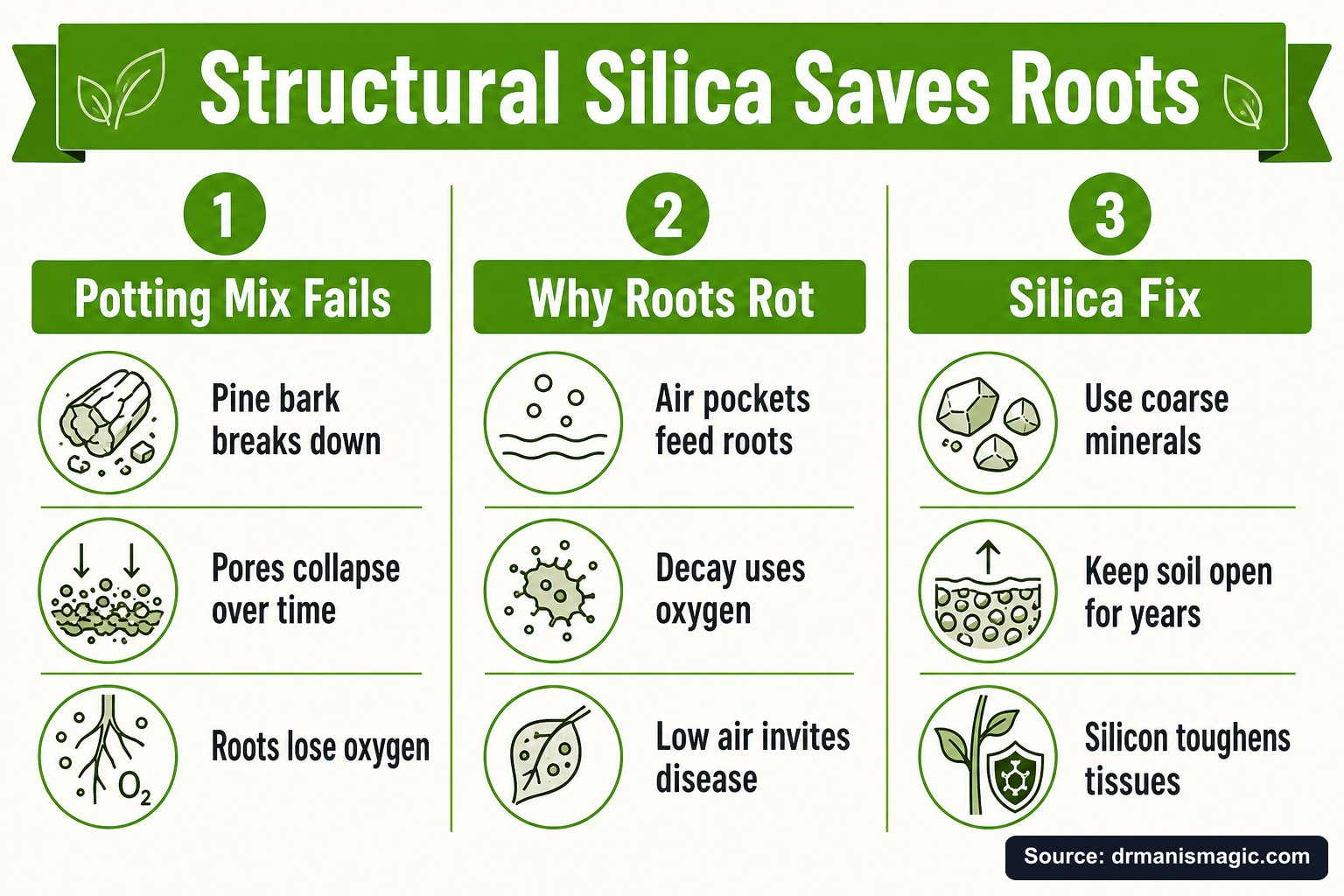
Key Takeaways
- Structural silica refers to durable mineral particles (like sand, pumice, perlite, and lava rock) that hold open air pockets in soil so roots can breathe.
- Potting mix is mostly pine bark sawdust — a carbon-based material that decomposes, collapses, and steals oxygen from your roots.
- Root rot is not caused by overwatering. It is caused by oxygen starvation, which allows pathogens to attack weakened roots.
- Plants can also absorb silicon as a nutrient (called monosilicic acid), which strengthens tissues and helps resist pests, drought, and disease.
- Not all silica sources are equal — fine sand can actually make drainage worse when mixed into peat or compost.
- The Three Plant Pillars — mineral-based soil, live microbes, and organic fertilizer — work together to create a root environment where plants thrive long-term.
- A mineral-based, silica-rich soil does not decompose, which means it stays open, aerated, and alive for years without replacement.
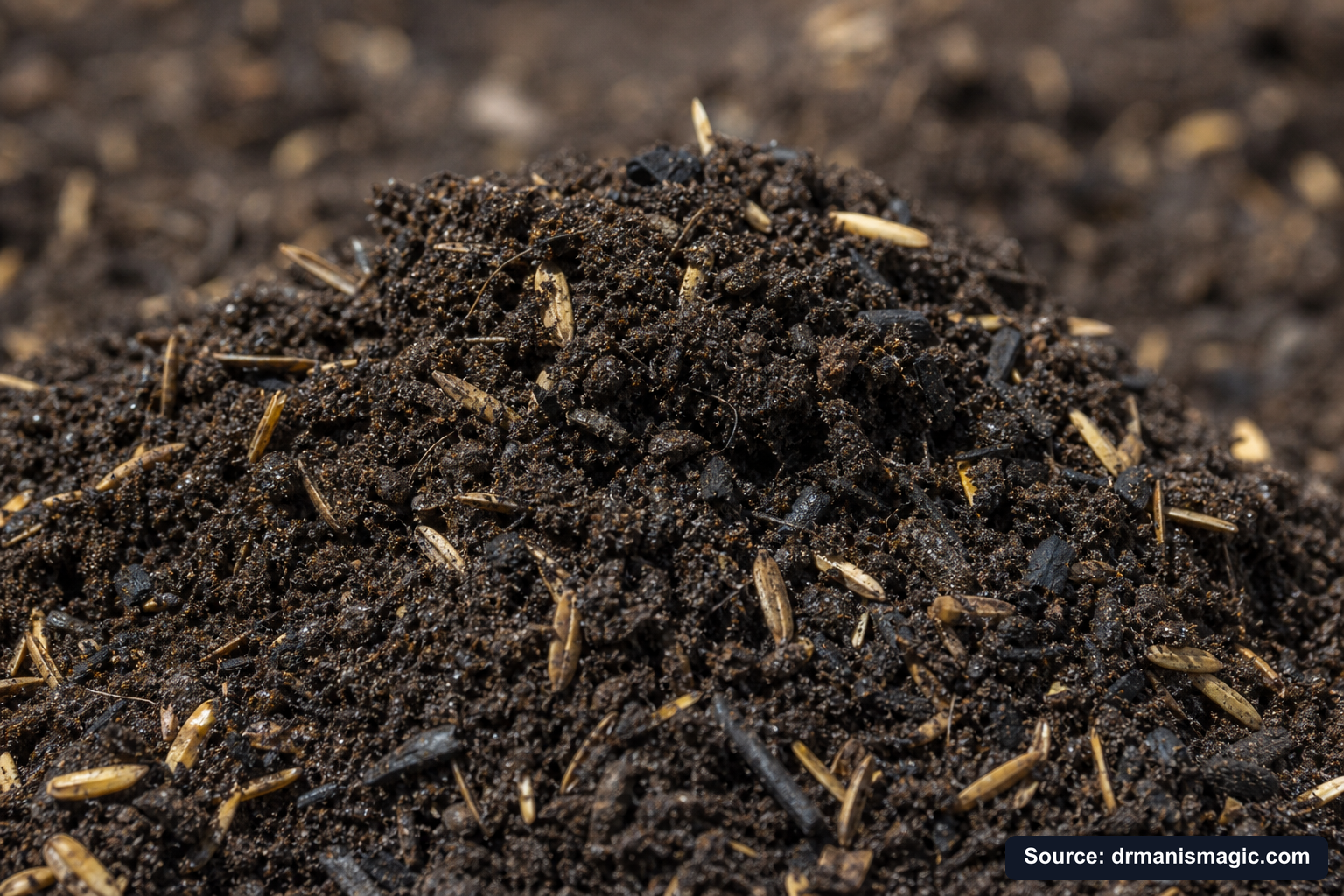
What Is Structural Silica and Why Do Plants Need It?
Quick Answer: Structural silica means hard, durable mineral particles — like sand, pumice, perlite, and lava rock — that physically hold soil pores open so air and water can move freely around roots. Unlike organic materials that decompose and collapse, silica-based particles stay in place for years, keeping roots oxygenated and healthy.
Silica is one of the most common minerals on earth. It is the backbone of sand, quartz, granite, pumice, and volcanic rock. In soil science, it plays two completely different roles — and most gardening advice confuses them badly.
Role Number One: Physical structure. Silica-based particles are hard. They do not break down. They do not compress. They hold their shape for decades. When you mix them into a growing medium, they act like tiny scaffolding beams. They prop open the spaces between soil particles — spaces that fill with air, water, and roots. Scientists call these spaces macropores. Macropores are where oxygen lives in soil.
Role Number Two: Plant nutrition. When silica dissolves in water — usually as a compound called monosilicic acid — plant roots can absorb it. Once inside the plant, it deposits in cell walls, stems, and leaves as a form called amorphous silica. This makes the plant physically tougher. Think thicker stems, stiffer leaves, stronger cell walls. Research from the University of California Agriculture and Natural Resources confirms that silicon-accumulating plants show measurably better resistance to drought stress, fungal disease, and pest damage. (UC ANR)
These two roles — structural support in the root zone and nutritional support inside the plant — are completely different mechanisms. Most articles online talk about one or the other. Almost none explain both. That gap is exactly why so many gardeners are still losing plants to problems that are completely preventable.
Here's the simple version: your roots need air pockets to breathe. Silica-based particles create and protect those air pockets. And your plant's tissues need silicon to stay strong. Mineral-rich soil delivers both. Potting mix delivers neither — at least not for long.
Why Does Potting Mix Suffocate Your Roots?
Quick Answer: Potting mix is mostly pine bark sawdust — a carbon-based organic material. As it decomposes, it collapses into fine particles that fill the air pockets roots need to breathe. The decomposition process also consumes oxygen directly. Within six months to a year, most potting mixes become dense, airless, and hostile to healthy roots.
Here's a sentence that should change how you garden forever. You have been planting your trees in other dead trees.
That is not a metaphor. Potting mix — the fluffy, dark stuff sold in every garden center and big box store — is almost entirely pine bark. It is a waste byproduct from the timber industry. Pine forests in the southeastern United States produce mountains of bark, and someone figured out that it could be sold as "premium growing media." It is cheap. It is light. It is easy to ship. It is perfect for profit margins. It is not perfect for your roots.
Here's what happens when you pot a plant in pine bark based mix. At first, it looks fine. The mix is loose and fluffy. Water flows through. Roots spread out. Everything looks great. But underneath, a clock is ticking. The organic material is decomposing. Bacteria and fungi are breaking it down into smaller and smaller particles. Those fine particles fill the air pockets. The mix compresses. The beautiful macropores that held oxygen disappear. The soil becomes dense and waterlogged.
And there is a cruel double blow. The decomposition process itself consumes oxygen. So not only is the structure collapsing and blocking air from reaching roots — the biological process of decomposition is actually burning through whatever oxygen remains. Your roots are being suffocated from two directions at once.
This process accelerates in containers. The University of Florida IFAS Extension explains that container media face a unique physics problem: a "perched water table" forms at the bottom of any pot, where water sits regardless of drainage holes. (UF IFAS Gardening Solutions) This perched water zone shrinks the usable root space even further. In a pot with decomposed, compacted media, there is almost nowhere left for air to exist near the roots.
Now add one more insult. Pine trees are chemical warriors. They produce a whole family of compounds called terpenes and terpenoids — the same chemical family that gives us Pine-Sol and turpentine. These are not gentle compounds. They are harsh, antimicrobial, and corrosive to delicate root tissues. Manufacturers try to age the bark in giant piles for years before using it, hoping the harshest chemicals break down. But that aging process is — you guessed it — decomposition. The exact process that consumes oxygen. So by the time the chemicals mellow out, the structure is already collapsing.
And to make fresh bark mix hold water at all, manufacturers add surfactants — synthetic chemicals that help the hydrophobic wood absorb moisture. These wash away over time. Once they're gone, dry potting mix becomes nearly impossible to rewet. Water runs around the outside of the root ball instead of through it. Roots in the center stay bone dry while the outer edges are flooded. It is a mess.
This is not bad luck. This is the predictable, unavoidable result of building a root zone out of decomposing organic matter. The big box stores know this. Their business model depends on it. Annual plant turnover is their profit engine. When your plant dies, you come back and buy another one.
See also: The Hidden Reason Synthetic Fertilizers Cause Root Rot
What Is the Difference Between Potting Mix and Mineral-Based Soil?
Quick Answer: Potting mix is organic and decomposes, collapsing pore space and stealing oxygen over time. Mineral-based soil is made of inorganic silica-rich particles that do not break down, holding structure and air space for years. For long-lived container plants, mineral-based soil is not optional — it is essential.
Let's put this side by side so it is crystal clear.
| Feature | Potting Mix (Pine Bark Based) | Mineral-Based Soil (Silica Rich) |
|---|---|---|
| Primary material | Pine bark sawdust (organic, carbon-based) | Sandy loam, pumice, perlite, lava rock (inorganic, silica-based) |
| Decomposition over time | Yes — collapses into fine, airless particles within months | No — holds structure for years or decades |
| Oxygen availability for roots | Starts adequate, rapidly declines as pores collapse | Stays high because pore structure is preserved |
| Drainage over time | Worsens as organic matter compacts | Remains consistent because particle size does not change |
| Chemical compounds in root zone | Pine terpenes, surfactants (wash away), decomposition byproducts | Inert minerals, no harsh chemical compounds |
| Rewetting after dry period | Becomes hydrophobic — hard to rewet once dried out | Rewets easily — mineral particles do not repel water |
| Long-term container suitability | Poor — needs replacement every 6-12 months | Excellent — suitable for perennial and permanent plantings |
| Root rot risk | High — oxygen starvation invites fungal pathogens | Low — well-drained, aerated conditions resist pathogens |
| Cost over time | Recurring — buy new mix every season | One-time investment — mineral structure is permanent |
The math here is not complicated. If you are growing a tree or a perennial plant — something you expect to live for five, ten, or twenty years — you cannot build its home out of material that will collapse in six months. That is like building a house on a foundation of cardboard. It works great for the first week. Then the rain comes.
Inorganic, silica-based particles do not have this problem. Sand is made of silica. Pumice is volcanic glass — mostly silica. Perlite is expanded volcanic mineral. Lava rock is silica and iron oxide. None of these decompose in any meaningful way on a human timescale. They stay put. They hold pore space open. They keep oxygen flowing to your roots for as long as the plant lives.
This is exactly why Dr. Mani Skaria — plant pathologist, Professor Emeritus at the Texas A&M Citrus Center, and founder of the Clean Citrus Program in Texas — built his growing system around a mineral-based, silica-rich soil. After decades of watching plants fail in organic media, and after testing on more than 250,000 trees at US Citrus Nursery, the conclusion was unavoidable: roots need inorganic structure that does not decompose.
Is Silica the Same as Silicon? What Is Monosilicic Acid?
Quick Answer: Silica (SiO2) is a solid mineral compound. Silicon (Si) is an element. Plants cannot absorb solid silica. They absorb silicon in its dissolved form — monosilicic acid — which roots take up from soil water. Once inside the plant, it deposits as amorphous silica in tissues, strengthening cell walls and improving stress tolerance.
This is where most gardening content gets fuzzy. People use "silica," "silicon," and "silicate" as if they mean the same thing. They do not. And the difference matters a lot for practical growing decisions.
Silica (SiO2) is the mineral. It is what sand, quartz, and pumice are made of. In this solid form, plants cannot absorb it. It does not dissolve easily in normal soil water. Its role in the root zone is purely structural — holding pore space open, improving drainage, preserving aeration.
Silicon (Si) is the element. When silica weathers and dissolves — a slow process accelerated by slightly acidic or slightly alkaline conditions — it releases silicon into the soil solution, primarily as monosilicic acid (Si(OH)4). This dissolved form is what plant roots can absorb through their membranes.
Monosilicic acid is plant-available silicon. Once absorbed, it travels through the plant and deposits in cell walls, epidermal tissues, and even within cells as amorphous silica — a glassy, non-crystalline form. This deposited silica acts like biological armor. It makes leaves thicker and more resistant to fungal penetration. It stiffens stems so they stand upright under their own weight. It reduces water loss through leaf surfaces during drought. UC ANR research confirms silicon-fed plants show stronger resistance to powdery mildew, rust, and other fungal diseases, as well as measurably better drought tolerance.
So here is the practical breakdown. Solid silica particles give you structural benefit in the root zone. Dissolved silicon (monosilicic acid) gives you nutritional and physiological benefit inside the plant. Both are valuable. They come from the same family of materials, but they work in completely different ways. A pumice-heavy potting mix gives you the structural benefit automatically. Whether it provides meaningful nutritional silicon depends on how weathered the particles are, soil pH, microbial activity, and water chemistry.
The bottom line for most gardeners: do not confuse "adding sand for drainage" with "feeding silicon to your plants." They are different tools for different jobs. The most important job — and the one most neglected — is the structural one.
Can You Just Add Sand to Potting Mix to Fix Drainage?
Quick Answer: No — and this is one of the most dangerous pieces of common gardening advice. Adding fine sand to peat or potting mix can actually make drainage worse by filling the large pores with tiny particles. For drainage to improve, you need coarse, angular particles — not fine sand — and ideally a media that has never been built on a decomposing organic base.
This is the gardening advice that has killed more plants than almost anything else. Someone tells you your soil drains badly. You go buy a bag of sand. You mix it in. And your soil gets harder and denser and wetter than before. You have made things worse. How?
Think about a jar of large marbles. There are big air gaps between them. Now pour in fine sand. The sand fills all those gaps. Now the jar is dense and compact. That is exactly what happens when you pour fine sand into a peat or bark-based potting mix. The tiny sand particles fill the macropores — the very spaces that were holding air and allowing water to drain. You have traded air for density.
The rule is particle size. Coarse, angular particles — the kind found in sharp sand, pumice, perlite, and lava rock — are large enough to create new pore space rather than fill existing pore space. They work because they are big. Fine sand, play sand, or beach sand are too small. They make things worse.
UC ANR research on container media targets a total porosity of at least 50%, air-filled porosity of at least 10%, and water-holding capacity of at least 40%. Oregon State University nursery research found that air-filled porosity above 30% significantly reduces the risk of Phytophthora root rot in container media. Fine sand mixed into peat cannot achieve those numbers. Coarse mineral mixes built on silica-based particles can — and do.
Here is a quick comparison of common silica-based amendments so you can see how they differ:
| Amendment | Primary Composition | Main Benefit | Drainage Role | Plant-Available Silicon? | Decompose Over Time? |
|---|---|---|---|---|---|
| Coarse sharp sand | Silica (SiO2) | Pore space, weight, drainage | Good if coarse; harmful if fine | Minimal — weathers very slowly | No |
| Pumice | Volcanic glass (silica-rich) | Aeration, drainage, moisture balance | Excellent — porous and stable | Some — weathers gradually | No |
| Perlite | Expanded volcanic mineral | Aeration, lightweight drainage | Excellent — large air pores | Minimal | No |
| Lava rock | Basaltic silica and iron oxides | Drainage, microbial habitat | Excellent — porous surface | Some | No |
| Diatomaceous earth | Fossilized diatom silica | Drainage, pest deterrent | Good in moderation | Low — amorphous silica | Very slowly |
| Fine play sand | Silica (SiO2) | None in most mixes | Worsens drainage in organic media | Minimal | No |
| Potassium silicate (liquid) | Soluble potassium and silicon | Plant-available silicon nutrition | None — this is a supplement | Yes — immediately soluble | N/A — liquid supplement |
The winner for long-lived container plants? A base of coarse mineral particles — sandy loam, pumice, and perlite — built from the ground up. Not a rescue amendment poured into a dying potting mix. The structure has to be right from the beginning. You cannot patch a crumbling foundation.
You Never Had a Brown Thumb.
You were handed the wrong tools. This free guide hands you the right ones.
You watered it. You fed it. It died anyway.
It was never you. It was the dirt, the salt food, and the bad advice.
This guide shows you what really went wrong, and how to fix it for good.
- Why your plants really died, and why it was never your fault
- The salt hiding in your plant food that quietly burns the roots
- The hidden killer in almost every bag of store soil
- The tiny helpers that grow a whole forest for free
- The rescue trick that brings a half dead plant back to life

How Does Silica Protect Plants From Root Rot, Pests, and Disease?
Quick Answer: Structural silica prevents root rot by keeping oxygen levels high in the root zone, which stops the anaerobic (oxygen-starved) conditions that allow fungal pathogens like Phytophthora to thrive. Plant-absorbed silicon strengthens cell walls, making it physically harder for fungal spores and insect mouthparts to penetrate leaf and stem tissue.
Root rot has a reputation as a watering problem. Water too much, plant dies. That is the story everyone tells. But it is not the whole story. It is not even the most important part.
Root rot is really an oxygen problem that becomes a pathogen problem.
Here is the sequence. Soil compacts or stays saturated. Oxygen disappears from the root zone. Roots — starved of air — begin to weaken and die. Dead and dying root tissue becomes a feast for opportunistic pathogens. Fungi like Phytophthora, Fusarium, and Pythium move in and rapidly colonize the damaged roots. The rot spreads. The plant declines. You blame the watering can.
The watering can is innocent. The real villain is the airless, compacted, decomposed growing medium that set the whole disaster in motion.
Silica-based media breaks this chain at the first link. When macropores stay open — because the structural particles do not decompose — oxygen stays present in the root zone. Roots stay healthy. Healthy roots have both physical and biological defenses against pathogen attack. Pathogens cannot gain a foothold. Root rot does not start.
Inside the plant, absorbed silicon adds another layer of defense. Research has shown that silicon deposited in leaf epidermis creates a physical barrier that fungal spores struggle to penetrate. It is like adding a microscopic layer of glass to the outside of every leaf cell. Sucking insects — aphids, spider mites, thrips — find it harder to pierce the toughened tissue. Powdery mildew cannot establish as easily on silicon-rich leaf surfaces.
This is why plants grown in mineral-based, silica-rich soil tend to look healthier, resist pests better, and bounce back faster from stress. The structural silica in the root zone keeps roots oxygenated and healthy. The nutritional silicon absorbed by the plant strengthens tissues above ground. Two layers of protection from the same family of minerals.
This is Pillar One of the Three Plant Pillars — the mineral foundation that makes everything else possible. Without healthy, oxygenated roots, no amount of fertilizer or microbial treatment can save your plant. The foundation has to come first.
What Are the Warning Signs That Your Potting Mix Has Collapsed?
Quick Answer: Signs that your potting mix has decomposed and collapsed include soil that smells sour or musty, water that drains very slowly or runs around the edge of the pot, soil that has shrunk away from the pot walls, a surface that stays wet for days, fungus gnats, yellowing leaves, and roots that look brown or slimy when you unpot the plant.
Your plant is trying to tell you something. You just need to know what to listen for.
Most gardeners blame themselves when a plant declines. They think they watered wrong, fed wrong, or picked the wrong spot. But often, the plant is perfectly capable of thriving — it just cannot breathe. The growing medium has turned against it.
Here are the signals to watch for, in roughly the order they appear as potting mix breaks down:
- Water drains too slowly. You water and it pools on the surface for a long time before soaking in. The pores have collapsed.
- Soil shrinks away from pot walls. The organic matter has decomposed so much that the volume has literally decreased. Water now channels down the gap between soil and pot, bypassing the root zone entirely.
- The mix smells sour or like a basement. Anaerobic conditions — no oxygen — produce distinctive sour, musty, or sulfurous odors as anaerobic bacteria take over.
- The surface stays wet for days. There is no aeration to help the top layer dry out. This moisture invites fungus gnats, whose larvae feed on roots and organic matter.
- Leaves yellow, starting with older leaves. Nutrient uptake requires oxygen at the root level. Airless roots cannot absorb nutrients efficiently, even if plenty of fertilizer is present.
- Growth stalls after a promising start. The plant looked great for the first three to six months, then just stopped. This is the timeline of potting mix collapse.
- Roots are brown, slimy, or smell rotten when you unpot. Healthy roots are white or light tan, firm, and smell like fresh earth. Brown, mushy, foul-smelling roots are in active decay.
If you recognize three or more of these signs, here is a recovery checklist to follow:
- Unpot the plant gently. Shake away as much of the old mix as possible without tearing healthy roots.
- Inspect the roots. Trim off any brown, mushy, or foul-smelling root sections with clean scissors or pruners.
- Let the roots air out briefly — 15 to 30 minutes in a shaded spot — before repotting. This helps any cut surfaces begin to callous.
- Repot into a mineral-based, silica-rich growing medium that will not decompose and collapse again. A mix built on sandy loam, pumice, and perlite gives roots the oxygen they need.
- Water in with a live microbial drench — beneficial bacteria and fungi like those in Plant Super Boost — to colonize the fresh root zone and protect recovering roots from pathogen attack.
- Hold off on heavy fertilizer for two to four weeks. Let the roots stabilize first. When you do fertilize, use a gentle organic fertilizer — not a salt-based synthetic that will stress already-weakened roots.
- Monitor drainage and drying time. Healthy media should dry out between waterings. If the top inch is still wet after three or four days, aeration is still insufficient.
See also: How Salt-Based Feeding Quietly Destroys Root Systems
How Does Silicon Work Inside the Plant as a Nutrient?
Quick Answer: Plants absorb silicon as monosilicic acid through their roots, then deposit it as amorphous silica in stems, leaves, and epidermis. This deposited silica thickens cell walls, stiffens plant structure, reduces water loss, and forms a physical barrier against fungal spores and insect feeding. Plants with more silicon show better drought, pest, and disease resistance.
Silicon is the second most abundant element in the earth's crust, right behind oxygen. It is everywhere. And yet most plants are not absorbing nearly as much as they could — because most modern growing media does not provide plant-available silicon in a form roots can use.
When silicon is available and absorbed, here is what happens inside the plant.
Silicon deposits in the outer cell layers — the epidermis — of leaves, stems, and roots. These deposits form a physical reinforcement layer. Think of it as the plant building its own armor from the inside out. The result is leaves that are slightly stiffer and thicker. Stems that stand up straighter under their own weight. A surface that is physically harder for fungal spores to penetrate and for insect mouthparts to pierce.
Silicon also accumulates in stomata — the tiny pores on leaves that regulate gas exchange and water loss. Silicon-reinforced stomata respond more efficiently to drought stress, closing quickly to reduce water loss when conditions dry out. This is why silicon-fed plants routinely outperform silicon-deficient plants during drought conditions. They simply lose less water per unit of time.
There is also evidence that silicon plays a role in signaling. When a plant is attacked by a pathogen or pest, silicon may help trigger faster immune responses. The plant's natural defense chemistry activates more quickly in silicon-rich tissues.
This nutritional role of silicon is separate from the structural role of silica in the root zone. But they work beautifully together. Structural silica in the soil keeps roots healthy and oxygenated. Nutritional silicon absorbed by those healthy roots strengthens every part of the plant above ground. Strong foundation. Strong structure. That is the pattern of every healthy, long-lived plant we have ever grown.
How Do the Three Plant Pillars Connect to Silica and Root Health?
Quick Answer: The Three Plant Pillars — mineral-based soil, live microbes, and organic fertilizer — are built around silica's role in the root zone. Mineral-based soil provides permanent silica structure. Live microbes protect and enhance the oxygenated root zone that silica creates. Organic fertilizer feeds the plant without harming the microbes that make the whole system work.
Dr. Mani Skaria did not develop the Three Plant Pillars in a laboratory. He developed them in the field — in a nursery in South Texas, through years of watching what worked and what failed across more than 250,000 trees. The patterns that emerged were not subtle. They were glaring.
Plants in mineral-based, silica-rich soil consistently outperformed plants in organic potting mix. They grew faster. They stayed healthier longer. They resisted pests and disease better. They did not collapse after six months. They kept improving year after year.
Here is how the three pillars connect directly to silica and root health.
Pillar One: Mineral Foundation. This is the silica story. A soil built on inorganic, silica-based particles — sandy loam, pumice, perlite — does not decompose. It holds macropore structure permanently. Roots have oxygen. Drainage is consistent. The growing environment stays stable for the life of the plant. This is not a nice-to-have. It is the non-negotiable base. Every other pillar depends on it.
Pillar Two: Live Microbial Muscle. Beneficial bacteria and fungi thrive in the oxygenated, mineral-rich root zone that silica creates. They cannot thrive in the anaerobic, decomposing conditions of collapsed potting mix. When the root zone is healthy, microbes colonize it, unlock nutrients, break down organic compounds into plant-available forms, and create a biological shield against pathogens. Silica creates the habitat. Microbes do the work.
Pillar Three: Organic Fertilizer. Organic, slow-release fertilizers — made from crab, kelp, and amino acids — feed the plant gently over time without the salt load of synthetic fertilizers. Salt-based synthetic fertilizers damage roots and kill soil microbes. In a silica-based, microbially-rich root zone, organic fertilizer completes the system. The roots can absorb nutrients efficiently because they are healthy and oxygenated. The microbes are alive to help process and deliver those nutrients. Everything works together.
Miss any one pillar and the system weakens. Great microbes in collapsed, airless potting mix cannot save a suffocating root system. Great soil with dead microbes is missing its biological engine. Great soil and great microbes with salt-based fertilizer burns the very biology you worked to build. The pillars are not optional. They are interdependent.
This is why Super Soil — Dr. Mani's mineral-based, silica-rich growing medium — was engineered as a permanent foundation, not a seasonal mix. It is built from steam-sterilized sandy loam from the Rio Grande Valley, blended with coco coir, rice hulls, and biochar. The mineral base does not decompose. The rice hulls are made of silica — they hold their structure long after organic amendments would have collapsed. The result is a growing medium that serves your plants for years, not months. Zero PFAS. Zero biosludge. Zero synthetic salts. Made in the USA.
If you want to understand how the organic fertilizer side of this system works — and why salt-based synthetic fertilizers undermine everything silica and microbes build — see also: Why Most Fertilizers Are Actually Salt in Disguise.
How Long Can a Plant Actually Live in a Mineral-Based Container Mix?
Quick Answer: A plant in a well-made mineral-based, silica-rich container mix can thrive for many years — even decades — without needing the mix replaced. Unlike potting mix that collapses within 6-12 months, silica-based media maintains its structure indefinitely, making it the right choice for any perennial plant, tree, or long-term container planting.
People ask this question all the time. And the answer surprises them every time.
A mineral-based growing medium does not have a shelf life. Sand does not decompose. Pumice does not decompose. Perlite does not decompose. Lava rock does not decompose. The particles you put into a pot today will have the same particle size in ten years. The macropores they create will still be there. The drainage will still work. The oxygen will still reach the roots.
This is not theory. It is observed practice across thousands of years of cultivation. Bonsai masters have been growing trees in highly mineral mixes — akadama, pumice, lava rock — for centuries. Some of their specimens are hundreds of years old, grown in containers, in mixes that are majority mineral. The trees outlive the humans who tend them. The mineral structure never fails.
Contrast that with potting mix. Most plant care guides recommend refreshing potting mix every one to two years for houseplants and container trees. That is not guidance — that is a product sales cycle. When the mix decomposes and the plant declines, you buy new mix, new fertilizer, maybe a new plant. The store wins every time your plant struggles.
The real cost of potting mix is not the price per bag. It is the time you lose. You invest months nurturing a plant. You feed it. You water it. You watch it grow. And then the medium collapses and you start over. Month after month. Year after year. That is time you never get back. The best time to put a plant in a permanent mineral medium was the day you bought it. The second best time is today.
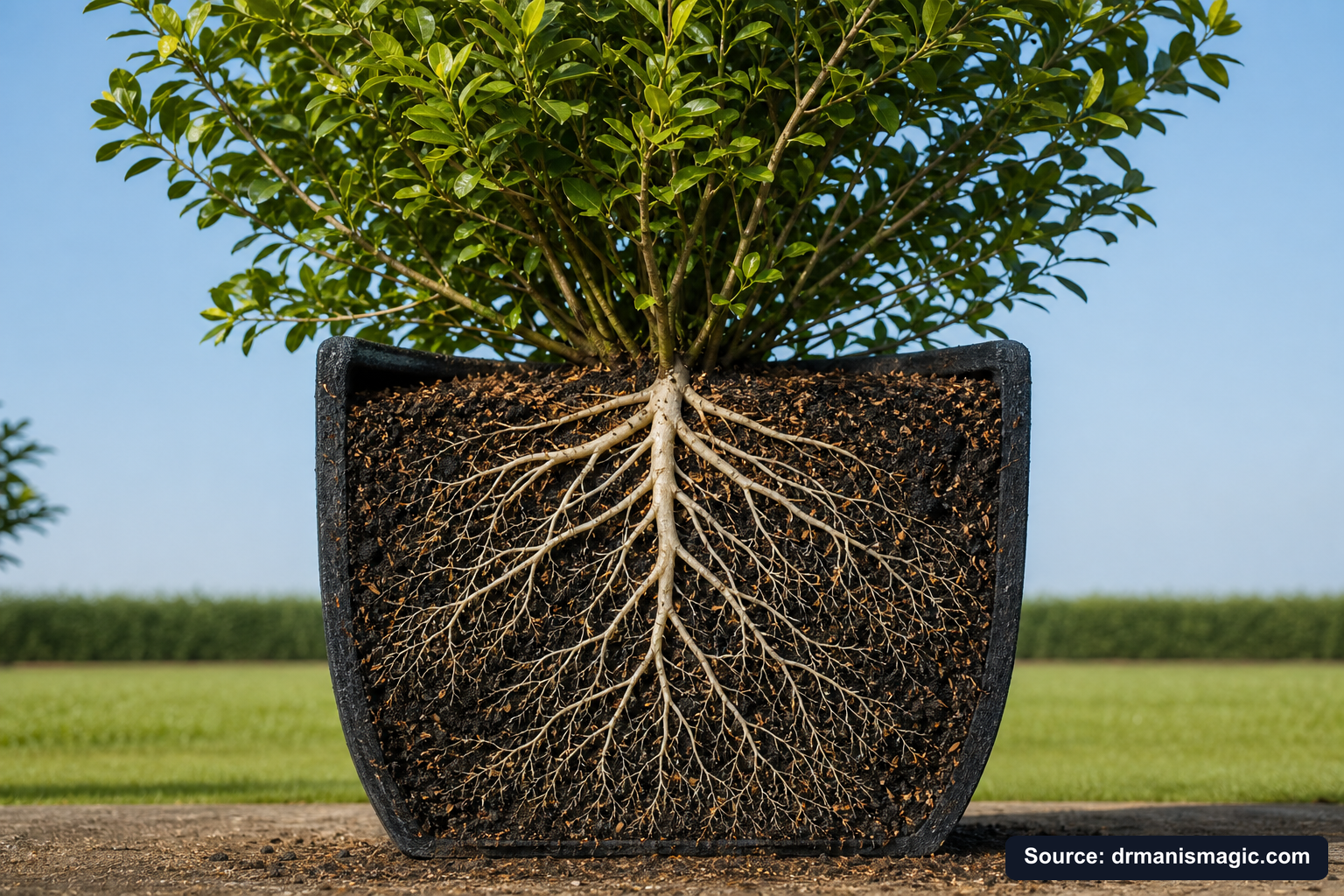
That is the real promise of structural silica. Not just better drainage. Not just fewer problems. A foundation that does not quit. A growing environment that stays as healthy in year five as it was in month one. Plants that keep getting better instead of slowly dying. That is what a mineral base built on silica actually delivers.
One Last Thing Before You Go
If you have read this far, you now know more about root-zone science than most professional gardeners. You know that potting mix is pine bark sawdust that decomposes and steals oxygen from your roots. You know that root rot is an oxygen problem, not a watering problem. You know that structural silica — the hard, inorganic, mineral particles in sand, pumice, and volcanic rock — preserves the pore space that roots need to breathe. You know that silicon absorbed by your plant strengthens cell walls and builds natural resistance to drought, pests, and disease. And you know that the Three Plant Pillars connect all of this into a system that actually works, long-term, for any plant you choose to grow.
That knowledge is worth more than any product. But knowledge without the right foundation only takes you so far. The plants you want to grow — whether that is a lemon tree dripping fruit on your back patio, a fig that your grandchildren will one day shade themselves under, or houseplants that actually thrive instead of slowly disappearing — they all need a root zone that does not collapse on them.
If you want to explore the complete system Dr. Mani built — the mineral soil, the live microbes, and the organic fertilizer that work together as the Three Plant Pillars — you can download the free Plant Care Field Guide here. It walks you through everything, step by step, in plain English. No jargon. No guesswork. Just a clear path to plants that thrive the way they were meant to.
Your roots deserve a real foundation. Give them one.
Frequently Asked Questions
You have questions about silica and your plants. That makes sense. Most gardeners have never heard the full story about what silica actually does underground. These answers come straight from what we learned growing over 250,000 trees in South Texas. Read them carefully. They might change everything about how you grow.
How does silica benefit plants?
Silica does two big jobs. First, it physically holds soil open so roots can breathe. That alone prevents root rot better than any spray or chemical. Second, when roots absorb dissolved silica, it deposits inside stems and leaves like natural armor. That armor makes it harder for pests to bite through and harder for fungal diseases to spread. Stronger stems. Tougher leaves. Healthier fruit. That is what silica delivers, and it is one reason our Three Plant Pillars start with a mineral-based soil foundation.
What is the difference between structural silica and silica as a plant nutrient?
Structural silica is the physical stuff. Think sand, pumice, and volcanic rock. These particles do not break down. They hold tiny air pockets open in your soil so roots get oxygen. Silica as a nutrient is different. When silica dissolves in water as monosilicic acid, roots can drink it in. Once inside, it hardens cell walls and boosts stress resistance. Most potting mixes give you neither. That is the problem Dr. Mani set out to fix with Super Soil.
Which soil is richest in silica?
Sandy soils built on silica-rich quartz and mineral particles hold the most structural silica. That is exactly why Dr. Mani built Super Soil on a silica-rich sandy loam base sourced right from the Rio Grande Valley in South Texas. It does not decompose. It does not compact. It stays open for years. Regular potting mix is pine bark and sawdust. It rots. When it rots, it collapses around your roots and steals their oxygen. That is not soil. That is a slow trap.
What plants are naturally high in silica?
Grasses, bamboo, horsetail, rice, and oats naturally pull the most silica from the soil. That is why lawn grass often shows the fastest response when you fix your soil structure. But here is what matters for you as a gardener: every plant benefits from a silica-rich growing environment, whether it is your lawn, your potted fruit tree, or your indoor houseplant. We proved this across citrus, tropicals, and houseplants at our South Texas nursery. The plant type changes. The need for structure never does.
Can you give a plant too much silica?
In soil form, it is very hard to overdo it. Silica-based particles like sand and rice hulls are inert. They just hold space. Where you want to pay attention is with liquid silica supplements. Very high doses can compete with phosphorus and cause nutrient imbalances. The smartest approach is to start with a properly structured mineral soil like Super Soil. That gives you the physical silica foundation your roots need without the guesswork of measuring liquid additives every week.
How do I apply silica to my plants?
The most powerful way is to start with a silica-rich mineral soil from the very beginning. That is Pillar One of the Three Plant Pillars, and it is the foundation everything else builds on. For a boost on top of that, rice hulls mixed into your soil add long-lasting silica structure and improve drainage at the same time. They break down slowly because they are made of silica, not carbon. You can also use them as a top dressing to slow weeds. Simple. Clean. No chemicals needed.
How often should I add silica to my plants?
If your soil is already mineral-based and silica-rich, you may not need to add anything extra. That is the beauty of getting Pillar One right from the start. If you are using rice hulls as a soil amendment, mix them in once at planting and they last for a long time before breaking down. If you use a liquid silica supplement, every watering during the active growing season is common. But remember, no supplement fixes bad soil structure. Fix the foundation first. Then everything else works better and lasts longer.
About the Author
Ron Skaria, MD
Ron Skaria, MD, is the co-founder of Dr. Mani's Magic and the son of Dr. Mani. He trained as a medical doctor at Baylor College of Medicine, did his residency at UT Health Science Center - San Antonio and fellowship training at Texas Tech University. He now works full time on the family farm at US Citrus and US Citrus Nursery in Hargill, Texas, building Dr. Mani's Magic alongside his dad. He wrote the Brown Thumb Field Guide to put his father's 48 years of plant science into plain words any gardener can use. His belief is simple. You never had a brown thumb. You just never had the right help.


