


How Fungi Build Drought Resistance in Plants (What Actually Works) | Dr. Mani's Magic
The Role of Fungi in Drought Resistance: What Actually Works, What Doesn't, and When to Use Mycorrhizae
Picture this. It's the middle of July. The sun is hammering your backyard like a blowtorch. You walked out this morning, coffee in hand, and found your favorite tree looking like it gave up. Leaves curling. Soil pulling away from the pot edges. You watered it two days ago. You did everything right. So why does it look like it's dying of thirst?
Here's what nobody told you. The water you pour on your plants is only part of the story. Underground, there is an invisible workforce that decides whether that water actually reaches the roots or just drains away. That workforce is made of fungi. Microscopic, threadlike, impossibly ancient fungi that have been helping plants survive drought for over 400 million years. They were doing it long before humans existed. Long before irrigation. Long before any fertilizer product was ever invented.
And here is the twist most gardeners never hear. You might have killed that workforce without knowing it. One synthetic herbicide. One round of chemical fertilizer. One bottle of fungicide. And suddenly the invisible army that kept your plant alive through dry spells is gone. That wilting tree isn't failing because of bad luck. It's failing because it lost its partners. The good news? You can bring them back. And when you do, the difference is something you can see, smell, and feel.
Key Takeaways
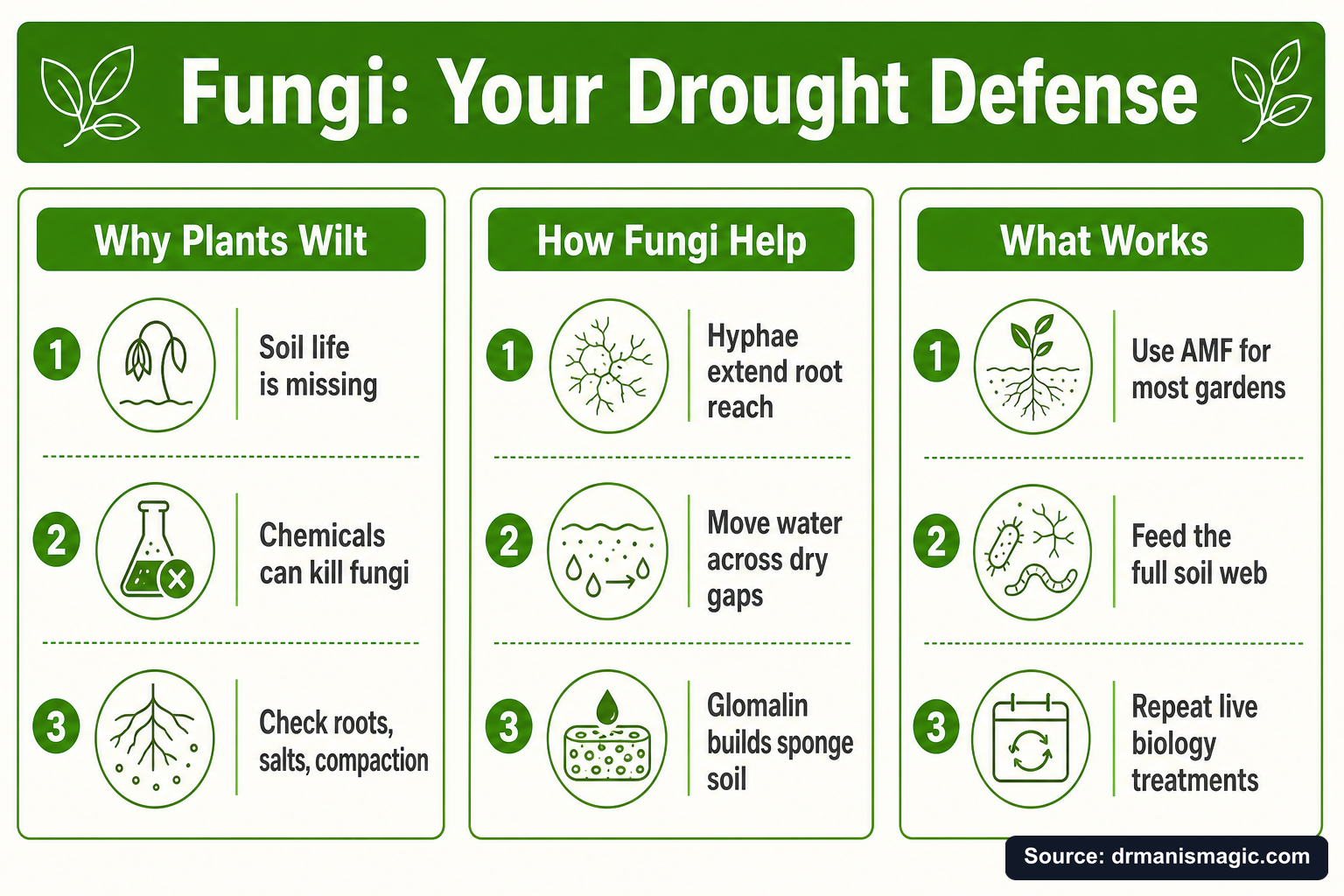
- Mycorrhizal fungi extend plant roots by up to 700 times their normal surface area, pulling water from soil your roots could never reach alone.
- Fungi do not just improve drought tolerance indirectly. Research shows fungal hyphae can physically transport water to plant roots across dry soil gaps.
- The full soil food web, including bacteria, protozoa, and nematodes, works together to build drought resistance. Fungi alone are not enough.
- Synthetic fertilizers, fungicides, herbicides, and pesticides destroy beneficial fungi. This is often the real reason plants struggle during dry weather.
- Most mycorrhizal inoculant products on the market use dried, lab-grown spores that show little to no real-world benefit. Live, stabilized biology is what works.
- Drought-like wilting symptoms are often caused by compaction, salt buildup, root rot, or transplant shock, not actual water shortage. Diagnose before you treat.
- Rebuilding soil biology takes time and repeated application. One treatment is a start, not a finish.
What Do Mycorrhizal Fungi Actually Do for a Drought-Stressed Plant?
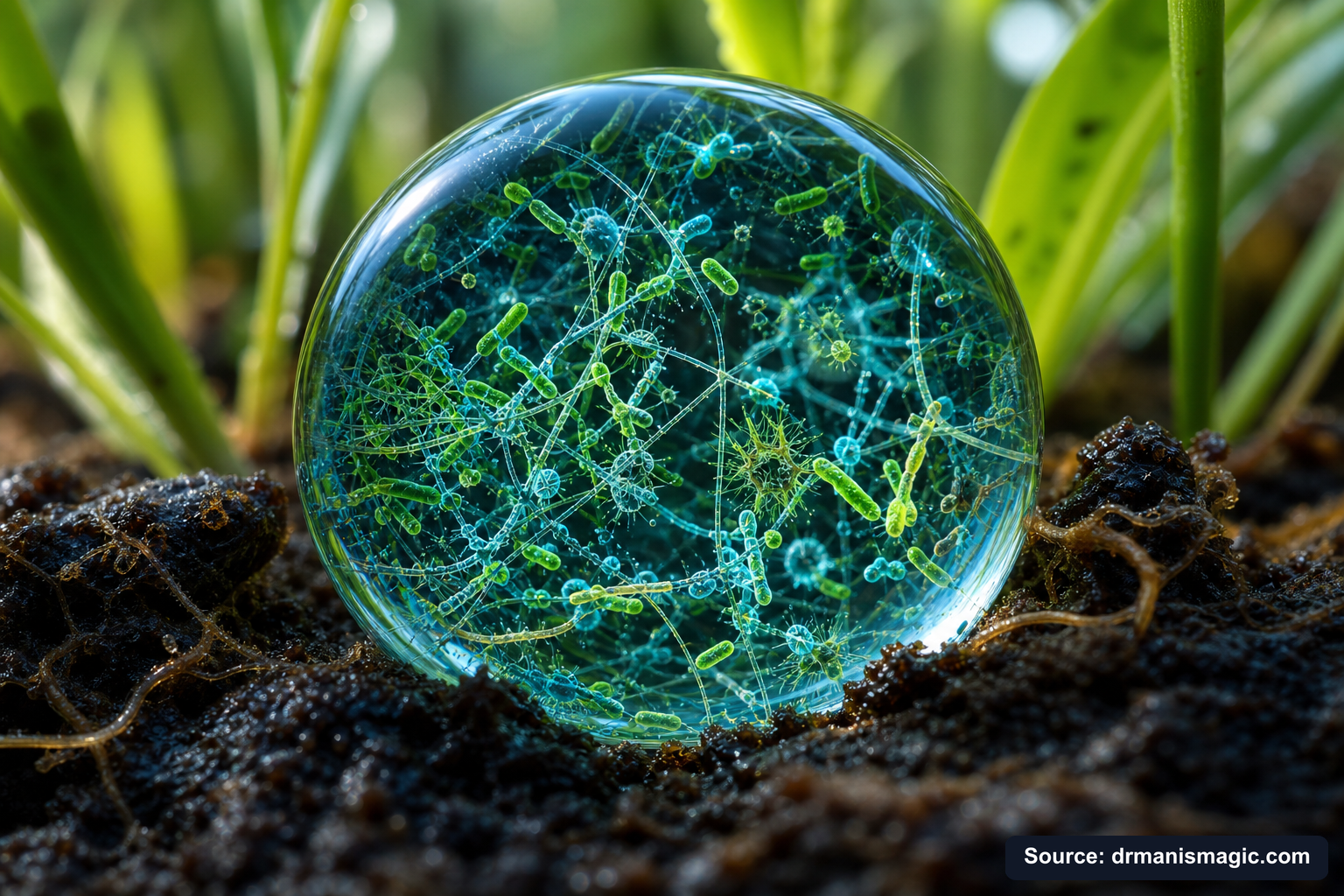
Quick Answer: Mycorrhizal fungi grow threadlike hyphae through the soil that act as a second root system, reaching water and nutrients far beyond what roots can access alone. They also change how plants manage water internally, improve root hydraulics, and trigger hormonal signals that help plants survive dry periods.
Mycorrhizal fungi form a physical partnership with plant roots. The fungus wraps around or grows inside the root cells and trades nutrients and water for the sugars the plant makes through photosynthesis. It is one of the oldest deals in nature.
But the real magic happens in the soil you can't see.
The fungal threads, called hyphae, are thinner than a human hair. They can push through tiny soil pores that roots could never enter. One teaspoon of healthy soil can hold miles of these threads. And collectively, they expand the effective reach of your plant's root system by a staggering amount. Some research from UC Davis Cooperative Extension suggests mycorrhizal colonization can increase the absorptive surface area of roots by 100 to 700 times.
During drought, that extra reach is the difference between life and death.
Here is what the fungi are doing at the same time:
- Physically carrying water: Hyphae do not just grow toward wet soil. Experimental work using compartmented growing chambers showed that AMF-connected plants accessed isotopically labeled water across an air gap in the soil, proving the hyphae transported the water directly.
- Improving phosphorus uptake: Phosphorus is almost immobile in dry soil. Fungi mine it and deliver it to the root. Better phosphorus means better water-use efficiency.
- Regulating stomata: Stomata are the tiny pores on leaves that let water vapor escape. Mycorrhizal fungi influence the hormonal signals (especially abscisic acid) that tell stomata to open or close, helping the plant conserve moisture without shutting down photosynthesis completely.
- Protecting roots from oxidative damage: Drought creates harmful free radicals inside plant cells. Mycorrhizal fungi boost the plant's antioxidant defenses, reducing the damage.
- Building soil structure: Fungi produce a sticky protein called glomalin. Glomalin glues soil particles into aggregates. Those aggregates create pores that hold water like a sponge instead of letting it drain straight through.
The bottom line is that mycorrhizal fungi are not a vague "wellness boost" for your plant. They are a physical infrastructure upgrade for surviving water stress.
If you want to dig deeper into how soil biology connects to root health overall, see also: The Hidden Reason Synthetic Fertilizers Cause Root Rot
What Are the Different Types of Fungi, and Which Ones Actually Fight Drought?
Quick Answer: Arbuscular mycorrhizal fungi (AMF) are the type with the strongest drought-resistance evidence and work with most garden plants, vegetables, flowers, and fruit trees. Ectomycorrhizal fungi help certain trees like oaks and pines. Saprophytic fungi decompose organic matter. Endophytes live inside plant tissue. Pathogenic fungi cause disease. For drought resistance, AMF are what you want.
Not all fungi are created equal. When you see "fungi" on a product label, it could mean almost anything. Let's sort them out plainly.
| Fungus Type | Where It Lives | What It Does | Drought Benefit? | Works With |
|---|---|---|---|---|
| Arbuscular Mycorrhizal Fungi (AMF) | Inside and around root cells | Extends root reach, transports water and phosphorus, produces glomalin | Yes — strongest evidence | Most vegetables, fruits, flowers, grasses, tropical trees |
| Ectomycorrhizal Fungi | Around (not inside) root cells | Nutrient and water uptake, especially nitrogen and phosphorus | Yes, in specific trees | Oaks, pines, firs, beeches |
| Saprophytic Fungi | Decomposing organic matter | Breaks down dead material, releases nutrients | Indirect (builds soil organic matter) | All soils |
| Endophytic Fungi | Inside plant tissue | Stress tolerance, disease resistance | Promising but context-dependent | Grasses, some trees |
| Pathogenic Fungi | Inside roots and stems | Causes root rot, wilts, cankers | No — causes damage | Any stressed plant |
When you pull a weed out of the ground and see fuzzy white threads clinging to the roots, that is almost always AMF. That white fuzz is why the weed grew so aggressively in dry conditions. It had a fungal partner. Your garden plants deserve the same advantage.
Important note for citrus and tropical tree growers: citrus does form mycorrhizal associations, but high phosphorus soils can suppress AMF colonization. If you have been applying heavy synthetic fertilizers for years, your soil phosphorus may actually be blocking fungal partnerships from forming. This is one reason plants can look well-fed but still wilt in dry weather.
How Does the Full Soil Food Web Create Drought Resistance?
Quick Answer: Fungi are the star players, but drought resistance is a team sport. Bacteria build soil aggregates and fix nutrients. Protozoa and nematodes release nutrients right at the root zone. Earthworms and arthropods create pore channels for water to flow and store. Remove any of these players and the whole system weakens.
Think about a forest. Nobody waters it. Nobody fertilizes it. Yet trees there survive drought years that would kill a potted plant in a week. Why?
Because the forest has a full team underground.
After growing and testing over 250,000 trees at US Citrus Nursery in South Texas, Dr. Mani Skaria and his team kept coming back to the same truth. You can give a plant perfect water and perfect nutrients, and it will still struggle. But when you restore the full biological community in the soil, plants become nearly bulletproof against stress.
Here is how the full team works together during drought:
| Soil Organism | Primary Role | Drought Contribution |
|---|---|---|
| Mycorrhizal Fungi (AMF) | Root extension, water and phosphorus transport | Direct water delivery, glomalin soil aggregation, stomatal regulation |
| Beneficial Bacteria | Nutrient cycling, nitrogen fixation, pathogen suppression | Build soil aggregates, improve root hydraulic conductivity, reduce salt stress |
| Protozoa | Feed on bacteria, release nutrients near roots | Mineralize nitrogen and phosphorus right where roots can grab them without extra water needed |
| Beneficial Nematodes | Feed on bacteria and fungi, release nutrients | Nutrient cycling near root zone, suppress root-damaging pest nematodes |
| Earthworms | Organic matter decomposition, soil aeration | Create macropores for deep water infiltration and storage |
| Saprophytic Fungi | Decompose organic matter | Build organic matter that increases water-holding capacity of soil |
The University of Minnesota Extension describes this community as the "soil food web," a layered system where every organism feeds, is fed by, and supports something else. When the web is intact, water moves through the soil differently. It infiltrates instead of running off. It stores in aggregates instead of evaporating. It reaches roots instead of draining past them.
When the web is broken, even perfect irrigation cannot compensate. You end up watering more and more, and the plant looks worse and worse. Sound familiar?
Why Do Plants Wilt Even When You Water Them? (The Drought Diagnosis You Need First)
Quick Answer: Wilting despite regular watering usually means the plant cannot access the water you're giving it. Common causes include compacted soil, root rot from fungal pathogens, salt buildup from synthetic fertilizers, transplant shock, or a destroyed soil biology that can no longer move water into the root zone efficiently.
This is the most important section of this entire article. Stop and read it twice.
If your plant looks drought-stressed, the problem is often not drought.
Pouring more water on a plant with root rot will kill it faster. Adding fertilizer to a compacted, salt-damaged soil will make things worse. Buying a mycorrhizal inoculant and adding it to a soil full of fungicide residue is like hiring firefighters and then locking the firehouse door.
Before you treat anything, diagnose first.
Here is a simple decision framework:
- Check the soil moisture, not just the surface. Push a finger two inches deep. Dry at the surface and wet below means poor drainage, not drought. Dry all the way through means underwatering or hydrophobic soil.
- Check for root rot. Pull the plant gently. Healthy roots are white or tan and firm. Rotting roots are brown, mushy, and smell sour. Root rot is a pathogenic fungus problem, not a drought problem. More water will worsen it.
- Check for salt crust. A white crusty layer on the soil surface or pot edges is salt buildup from synthetic fertilizers. Salt draws water out of roots by osmosis, causing drought symptoms even when the soil is wet.
- Check for compaction. If water pools on the surface instead of soaking in, your soil is compacted. Water is not reaching roots. No amount of mycorrhizal inoculant will fix a soil with no pore space for fungi to grow through.
- Check your recent chemical history. Have you applied herbicide, pesticide, or fungicide in the past few months? Have you used synthetic fertilizer heavily? If yes, you may have destroyed the soil biology that supports water uptake.
- Check for transplant shock. Newly planted trees often wilt because their root system was disrupted. They need weeks to re-establish fungal partnerships. Patience and moisture management matter more than any product at this stage.
Only after you diagnose the real cause does treatment make sense. Fungi can help enormously, but only when the conditions allow them to thrive.
Can Fungicides Kill the Beneficial Fungi That Protect Plants From Drought?
Quick Answer: Yes. Most broad-spectrum fungicides do not discriminate between harmful pathogens and beneficial mycorrhizal fungi. Regular fungicide use strips the soil of the very fungal partnerships that help plants access water and resist drought, leaving roots more vulnerable every season.
This is the part of the story that the chemical industry would rather not discuss.
You see a disease spot on a leaf. You reach for a fungicide. Completely understandable. The problem is that most fungicides work systemically or settle into the soil. They kill the pathogen, yes. But they also kill or suppress the mycorrhizal fungi living in your root zone.
The short-term win becomes a long-term loss.
Here is what the research tells us about common soil disruptors and their impact on beneficial fungi:
- Synthetic fungicides: Suppress AMF colonization rates. Repeated use can reduce fungal diversity to near zero in some soils.
- Glyphosate (Roundup): Disrupts the shikimate pathway in beneficial soil microbes, reducing AMF populations and weakening the entire soil food web.
- Salt-based synthetic fertilizers: High salt concentrations damage the cell membranes of soil fungi and bacteria. Regular use creates a progressively more sterile growing environment.
- Broad-spectrum pesticides: Reduce the populations of protozoa, nematodes, and bacteria that support fungal growth and nutrient cycling.
At US Citrus Nursery, we watched this pattern repeat itself for years. A grower would come to us with trees that looked exhausted. They had been "well cared for" with a full chemical program. But the soil was biologically dead. No white fungal threads on the roots. No earthy smell. Just a gray, compacted substrate that drained poorly and held almost no moisture. Those trees were not drought-stressed. They were biologically bankrupt.
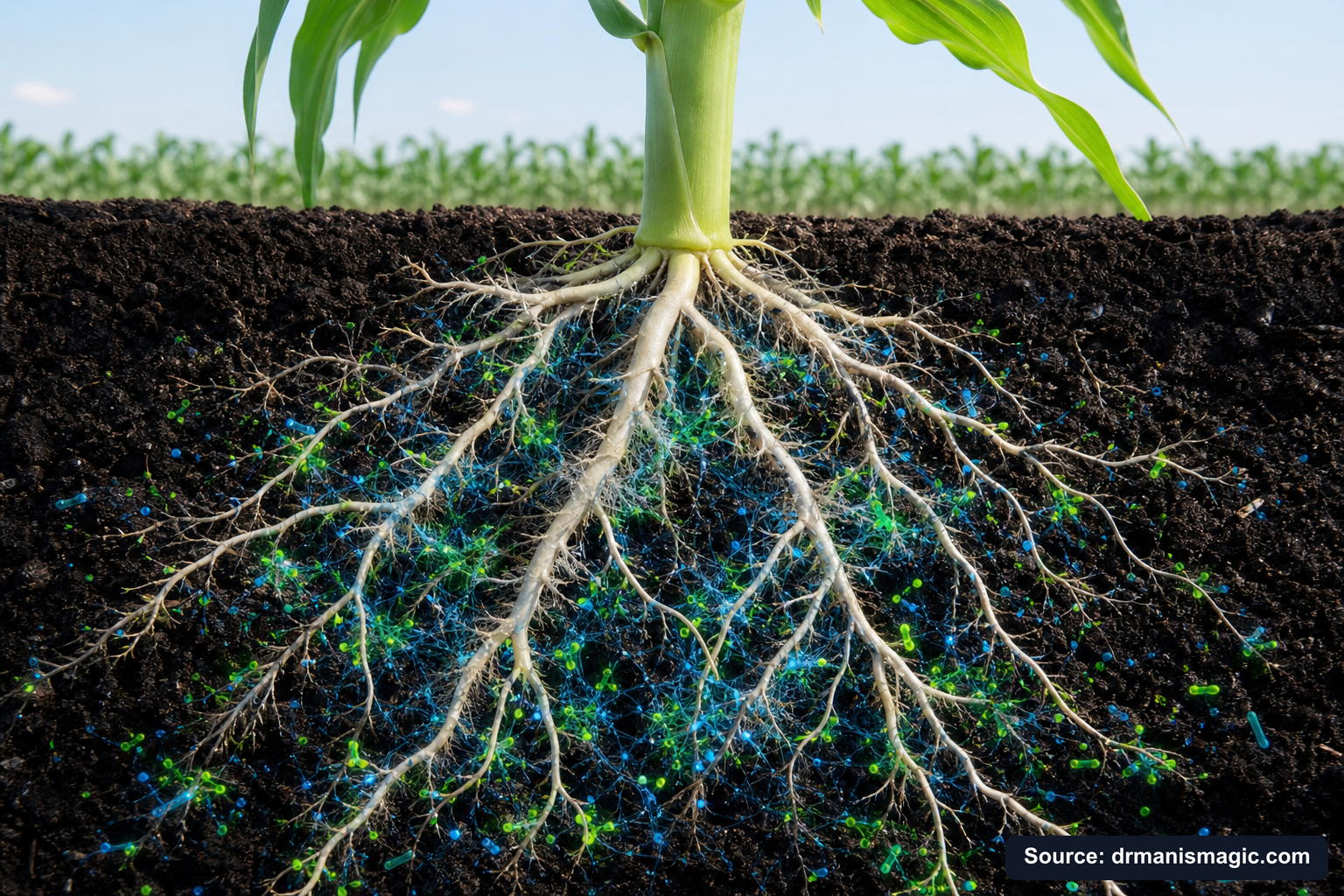
The fix was not a new chemical. The fix was stopping the chemicals that were causing the damage, and rebuilding the living system underneath.
See also: How Salt-Based Feeding Quietly Destroys Root Systems
You Never Had a Brown Thumb.
You were handed the wrong tools. This free guide hands you the right ones.
You watered it. You fed it. It died anyway.
It was never you. It was the dirt, the salt food, and the bad advice.
This guide shows you what really went wrong, and how to fix it for good.
- Why your plants really died, and why it was never your fault
- The salt hiding in your plant food that quietly burns the roots
- The hidden killer in almost every bag of store soil
- The tiny helpers that grow a whole forest for free
- The rescue trick that brings a half dead plant back to life

Live Mycorrhizal Inoculants vs. Dead Dried Products: Which One Is Worth Your Money?
Quick Answer: Most commercial mycorrhizal inoculant products use dried, lab-grown spores with low viability. They look impressive on the label but show little benefit in real soil. Genuinely live, stabilized microbial products harvested from active compost and kept viable through a natural process are what actually colonize roots and improve drought resistance.
Walk into any garden center and you'll find shelves of mycorrhizal products. Powders, granules, liquids. Big claims. Impressive-sounding species lists. But here is the uncomfortable truth we learned after testing dozens of these products on our own trees.
Most of them do not work.
Not because the science is wrong. The science on mycorrhizal fungi is rock solid. They work. The problem is the product. There is a massive gap between "live mycorrhizal fungi that help plants" and "a dried powder that used to contain mycorrhizal spores before it sat in a warehouse for eight months."
Here is how most commercial microbial products are made:
- Microbes are grown in a factory in large vats. Companies check boxes off a list of which organisms they want included.
- The live culture is dried into a powder. The hope is that spores will reactivate when water is added.
- The powder is packaged, warehoused, shipped, and sits on a shelf.
- By the time you buy it and apply it, viability is often near zero.
The second category is liquid compost-tea style products. Some of these have genuine value, but there is a telltale sign that tells you they are failing. They stink. A bottle that smells like sewage has gone anaerobic. The microbes are dying or dead. You are applying a liquid full of dead organisms and hoping for a miracle.
Here is a clear comparison of what is actually on the market:
| Product Type | Microbial Viability at Use | Spectrum of Organisms | Odor | Real-World Result |
|---|---|---|---|---|
| Dried powder (lab-grown, factory) | Very low | Narrow (checklist species) | None | Little to no observed plant benefit |
| Dry powder rehydrated in liquid | Very low | Narrow | None to mild | Same issue — avoid |
| Fresh compost tea (under 24 hours) | Moderate (when actively aerated) | Broad but inconsistent | Earthy to slightly sour | Good when fresh, impractical for most gardeners |
| Old compost tea (over 24 hours) | Low (gone anaerobic) | Partial | Strong foul odor | Microbes mostly dead; some humic acid benefit remains |
| Lactobacillus-based products | High viability but wrong organisms | Very narrow | Mild sour | Outcompetes beneficial microbes; not recommended |
| Plant Super Boost (stabilized, compost-harvested) | High — visibly alive under microscope | 2,000+ bacteria, 400-500 fungi including mycorrhizae, protozoa, nematodes | Earthy, not foul | Visible plant response; proven across 250,000+ trees |
Plant Super Boost is different because it is not factory-grown. It is harvested from actively managed compost, the same way nature builds its most powerful microbial communities. Then a proprietary all-natural stabilization technique keeps those organisms alive without going anaerobic. You can take a single drop of Plant Super Boost and look at it under a microscope. You will see movement. Live organisms. Not a powder. Not a corpse. A living community ready to go to work in your soil.
Zero PFAS. Zero biosludge. Zero synthetic salts. And it does not stink, because it is not rotting.
When Should You Actually Add a Mycorrhizal Inoculant?
Quick Answer: Mycorrhizal inoculants are most valuable at transplanting into new or sterile soil, in potting mixes (which contain no native biology), in recently fumigated or chemically damaged soil, and in any situation where native soil biology has been disrupted. They are less necessary in healthy, biologically rich garden soil with compost and undisturbed organic matter.
Not every situation calls for buying a mycorrhizal product. Here is the honest guide.
Strong case for adding mycorrhizae:
- New container planting into sterile potting mix (potting mixes have zero biology)
- Transplanting trees or shrubs where roots were bare-rooted or washed
- Soil that has received heavy synthetic fertilizer, herbicide, or fungicide applications
- Construction-disturbed soil where topsoil was removed or compacted by machinery
- Solarized, fumigated, or steam-sterilized growing media
- Indoor houseplants in commercial potting mix
- Any situation where you want to accelerate establishment and drought resilience from day one
Weaker case or lower priority:
- Mature trees in undisturbed, biologically healthy native soil
- Soil with very high phosphorus (above 100 ppm) — high phosphorus suppresses AMF colonization
- Plants in the Brassica family (cabbage, broccoli, kale) — these do not form mycorrhizal partnerships
- Soils still receiving regular synthetic fungicide applications (the inoculant will be destroyed)
The bigger point is this. An inoculant is a seed. The soil has to be a garden. If the conditions are hostile, even the best product will fail. Build the habitat first.
That means stopping inputs that kill biology. Adding organic matter. Improving drainage. Reducing compaction. And then applying a genuinely live product like Plant Super Boost consistently, every month, so the biological community can build and sustain itself over time.
How Do You Rebuild Soil Biology After Chemical Damage, Sterilization, or Compaction?
Quick Answer: Soil biology recovery requires stopping the harmful inputs, improving physical soil conditions, adding organic matter as microbial food, applying live full-spectrum microbials repeatedly, and being patient. Depending on severity of damage, meaningful recovery begins within weeks but full fungal network restoration takes months to years.
This is where the rubber meets the road. You have diagnosed the problem. You know your soil biology is damaged. Now what?
Here is a practical recovery protocol we developed across decades of growing at US Citrus Nursery.
- Stop the damage first. You cannot rebuild a house while someone is still swinging a wrecking ball. Stop synthetic herbicides, broad-spectrum pesticides, and salt-based fertilizers. Every application resets the biological clock.
- Test and correct pH and salinity. Beneficial fungi prefer a pH between 5.5 and 7.0. High salt concentrations from synthetic fertilizer buildup need to be flushed with several deep waterings before biology can reestablish. If you can, get a basic soil test through your local extension office.
- Add organic matter as microbial food. Compost, mulch, and cover crops feed the organisms you are trying to restore. No biology survives without food. A two-inch layer of compost or shredded wood mulch on the soil surface is one of the highest-leverage actions you can take.
- Apply live, full-spectrum microbials. This is where a genuinely live product earns its place. Apply monthly, consistently. One application is a start. The community needs repeated reinforcement, especially in the first season, because environmental pressures, residual salts, and competing pathogens are still present.
- Improve soil structure if compacted. Compacted soil has no pore space for fungal hyphae to grow through. Aerate, add perlite or rice hulls to container soils, and avoid walking on planted areas. Roots and fungi both need oxygen.
- Keep soil consistently moist but not waterlogged during the recovery period. Beneficial fungi need moisture to grow and colonize. But waterlogged conditions favor pathogenic fungi and root rot. The goal is even moisture, not saturation.
- Monitor and be patient. Fungal networks do not rebuild overnight. In the first few weeks, you may notice improved water retention and less wilting between waterings. Over the first season, you will see stronger growth. Over multiple seasons, the soil itself changes. It smells earthier. It holds moisture better. It drains more evenly. These are signs the web is alive again.
We have seen severely damaged container soils begin showing visible biological recovery within 30 days of this protocol. We have seen trees that were struggling for years transform within one growing season. Not because of any miracle. Because the natural system was restored and allowed to do what it was always designed to do.
For the soil side of this equation, pairing a live microbial application with a mineral-based soil that does not compact or decompose gives the fungal community a permanent, stable home to grow in. That is the foundation of the Three Plant Pillars system. Mineral soil for structure. Live microbes for biology. Organic fertilizer that feeds the plants and the microbes without burning either one.
Fungi and Drought Resistance: What Works vs. What Doesn't
Quick Answer: The most reliable drought benefits come from living AMF colonizing roots, combined with healthy soil food web organisms and soil with good structure and organic matter. Commercial dried inoculants with low viability, high-phosphorus soils that suppress AMF, and soils still receiving fungicides offer little to no fungal drought benefit regardless of what you apply.
Let's be direct. The market is full of exaggerated claims. Here is an honest breakdown of what the evidence actually supports.
| Approach | Evidence Level | Conditions Required | Verdict |
|---|---|---|---|
| AMF colonization via live inoculant in new planting | Strong | Viable product, fungicide-free soil, appropriate host plant | Works — do this |
| AMF colonization in undisturbed native soil | Strong | Low chemical input history, organic matter present | Works — protect it |
| Dried powder inoculant (lab-grown) | Weak in practice | Requires viable spores, correct conditions | Usually ineffective |
| Old anaerobic compost tea | Weak for microbes | Some humic acid benefit remains | Not recommended for microbial use |
| Compost and mulch application | Strong (indirect) | Any soil | Works — do this always |
| Fungicide application alongside inoculant | Counterproductive | N/A | Cancels the inoculant benefit |
| High-phosphorus synthetic fertilizer with AMF | Counterproductive | N/A | Suppresses AMF colonization |
| Full soil food web restoration (bacteria, fungi, protozoa, nematodes) | Strong | Requires live full-spectrum product and supportive management | Most reliable long-term approach |
The pattern is clear. Fungi work when they are alive, when the soil welcomes them, and when the full biological community supports them. Products work when they contain genuinely living organisms. And the whole system works best when you stop poisoning it first.

What Can You Do Today to Help Your Plants Survive Drought?
Quick Answer: Start by stopping chemical inputs that destroy soil biology. Add compost or mulch as microbial food. Apply a genuinely live, full-spectrum microbial product monthly to rebuild the fungal network. Improve soil drainage and structure. Then water consistently but not excessively. The biology does the rest.
You do not need a complicated program. You need a solid foundation.
Dr. Mani spent over 40 years as a plant pathologist and Professor Emeritus at the Texas A&M Citrus Center. He traveled the world testing products. He grew citrus through brutal South Texas summers where drought is not a seasonal concern, it is a way of life. And everything he learned pointed to the same truth. The plants that survived without stress were the ones with living soil underneath them.
Time is the one resource you cannot replace. You can earn more money. You cannot earn more summers to watch your trees grow. Every season you spend fighting a biologically dead soil is a season you will never get back. The number one thing people tell Dr. Mani they want? To see fruit on the trees they plant. Not years from now. In their lifetime. While they can still taste it, smell it, and share it with the people they love.
That does not happen by accident. And it does not happen with chemicals that slowly strip the soil of the invisible partners your plants cannot live without.
Here is your starting point:
- Stop any synthetic fungicide, herbicide, or salt-based fertilizer applications.
- Add a layer of compost or organic mulch around your plants today.
- Apply a live, full-spectrum microbial product monthly. Not a dried powder. Not a stinky bottle. Something alive.
- Make sure your soil drains well and has pore space for fungal threads to grow.
- Water deeply and consistently rather than lightly and frequently.
- Give it at least one full growing season. Biology takes time to build.
If you want a free guide that walks you through the whole system from the ground up, the Free Plant Care Field Guide covers all three pillars in plain language with no guesswork and no chemical rabbit holes. It is the same foundation we use for every plant at our South Texas nursery. And it comes with a 30-day money-back guarantee on every product in the Dr. Mani's Magic line, because we stand behind what we sell and we want you to actually see results.
The fungi are already trying to help your plants. Give them a fighting chance.
Frequently Asked Questions
If your plants are wilting even after watering, fungi might be the missing piece. These questions come up again and again from gardeners who are tired of watching their plants struggle through dry spells. Read these answers carefully. They could save your plants and your time.
What do mycorrhizal fungi actually do for plants during a drought?
Mycorrhizal fungi grow tiny threads through the soil called hyphae. These threads reach water your roots could never find on their own. They can expand your plant's water-grabbing surface area by up to 700 times. They also carry water directly to the roots across dry soil gaps. Think of them as a second root system working underground while you sleep. Without them, your plant is working with one hand tied behind its back.
Can synthetic fertilizers hurt the fungi that protect my plants from drought?
Yes. This is one of the biggest problems in gardening today. Salt-based synthetic fertilizers wipe out the beneficial fungi and bacteria living in your soil. One application can set your soil biology back dramatically. That is exactly why Dr. Mani built the Three Plant Pillars around organic, slow-release inputs. We proved this across more than 250,000 trees at US Citrus Nursery. When you stop burning your soil with salt bombs, the biology comes back and so does your drought resistance.
Why is my plant wilting even though I watered it?
Wilting after watering usually means something underground went wrong. Compacted soil, salt buildup, root rot, or dead soil biology can all block water from reaching the roots. If your soil is packed tight or loaded with chemical residue, water just drains away or sits on top. The roots never drink. Fixing the soil structure and bringing back live microbes is the real answer. That is what Dr. Mani's Super Soil and Plant Super Boost are designed to do.
Do most mycorrhizal products at garden centers actually work?
Most of them do not work well. Here is why. The majority of products on store shelves use dried, lab-grown spores that are already dead or inactive by the time you open the bottle. Dead spores do nothing for your roots. Dr. Mani's Plant Super Boost uses live, stabilized biology. Our compost expert developed a special all-natural method to keep these microbes alive in the bottle. That is a very different thing from what you find at a big box store.
How long does it take for soil fungi to rebuild after damage?
Rebuilding soil biology takes time. One treatment is a start, not a finish. You will likely see improvement within the first month. But a truly thriving soil food web builds up over several applications and growing seasons. The good news is that every application of Plant Super Boost adds live bacteria, fungi, and mycorrhizae that get to work right away. The longer you feed the system, the more drought-resistant your plants become. Time is the one thing you cannot get back, so start now.
Does the type of soil I use affect how well fungi work?
Absolutely. Fungi need oxygen to thrive. Most potting mixes are made from pine bark and sawdust that break down and compact over time. Compacted soil chokes out oxygen and kills your soil biology. Dr. Mani's Super Soil uses mineral-based sandy loam from South Texas that does not break down. It stays loose and airy so fungi can spread their threads freely. Good soil structure is Pillar One of the Three Plant Pillars for a reason. Without it, even great microbes cannot do their job.
Can I use fungi products on plants other than citrus trees?
Yes. Mycorrhizal fungi work with almost every plant on earth. Lawns, vegetables, flowers, houseplants, fruit trees, tropical trees, and more all benefit from a healthy soil food web. Dr. Mani developed the Three Plant Pillars while growing over 250,000 citrus trees at US Citrus Nursery, but the same biology that kept those trees alive through South Texas heat works for your potted fiddle leaf fig, your backyard rose garden, and your vegetable beds too. The principles are universal because nature is universal.
About the Author
Ron Skaria, MD
Ron Skaria, MD, is the co-founder of Dr. Mani's Magic and the son of Dr. Mani. He trained as a medical doctor at Baylor College of Medicine, did his residency at UT Health Science Center - San Antonio and fellowship training at Texas Tech University. He now works full time on the family farm at US Citrus and US Citrus Nursery in Hargill, Texas, building Dr. Mani's Magic alongside his dad. He wrote the Brown Thumb Field Guide to put his father's 48 years of plant science into plain words any gardener can use. His belief is simple. You never had a brown thumb. You just never had the right help.


