


How Early Citrus Groves Stayed Productive for Generations | Dr. Mani's Magic
How Early Citrus Groves Stayed Productive for Generations: The Living Soil Beneath Ancient Orchards
Picture yourself standing in the shade of a lemon tree that was planted before your grandfather was born. The bark is thick and gray. The roots spread wide and deep. And every spring, without fail, the branches fill with blossoms that smell like heaven. No synthetic fertilizer. No plastic-coated pellets. No soil from a bag that turns to concrete after six months.
How did that tree do it? How did it just... keep going, decade after decade, long before anyone had heard of Miracle-Gro or NPK ratios? The answer is not magic. It is not luck. It is not some mystery locked inside the seeds of an ancient variety. The answer is underneath your feet right now, in a world so small you cannot see it without a microscope. The answer is alive.
We have been growing citrus at our South Texas nursery for over 30 years. We have grown and tested more than 250,000 trees. And the single most important lesson we have learned is this: the tree is only as strong as the invisible workforce living in its soil. Once we understood that, everything changed. And once you understand it, your garden will never be the same either.

Plant Super Boost
Key Takeaways
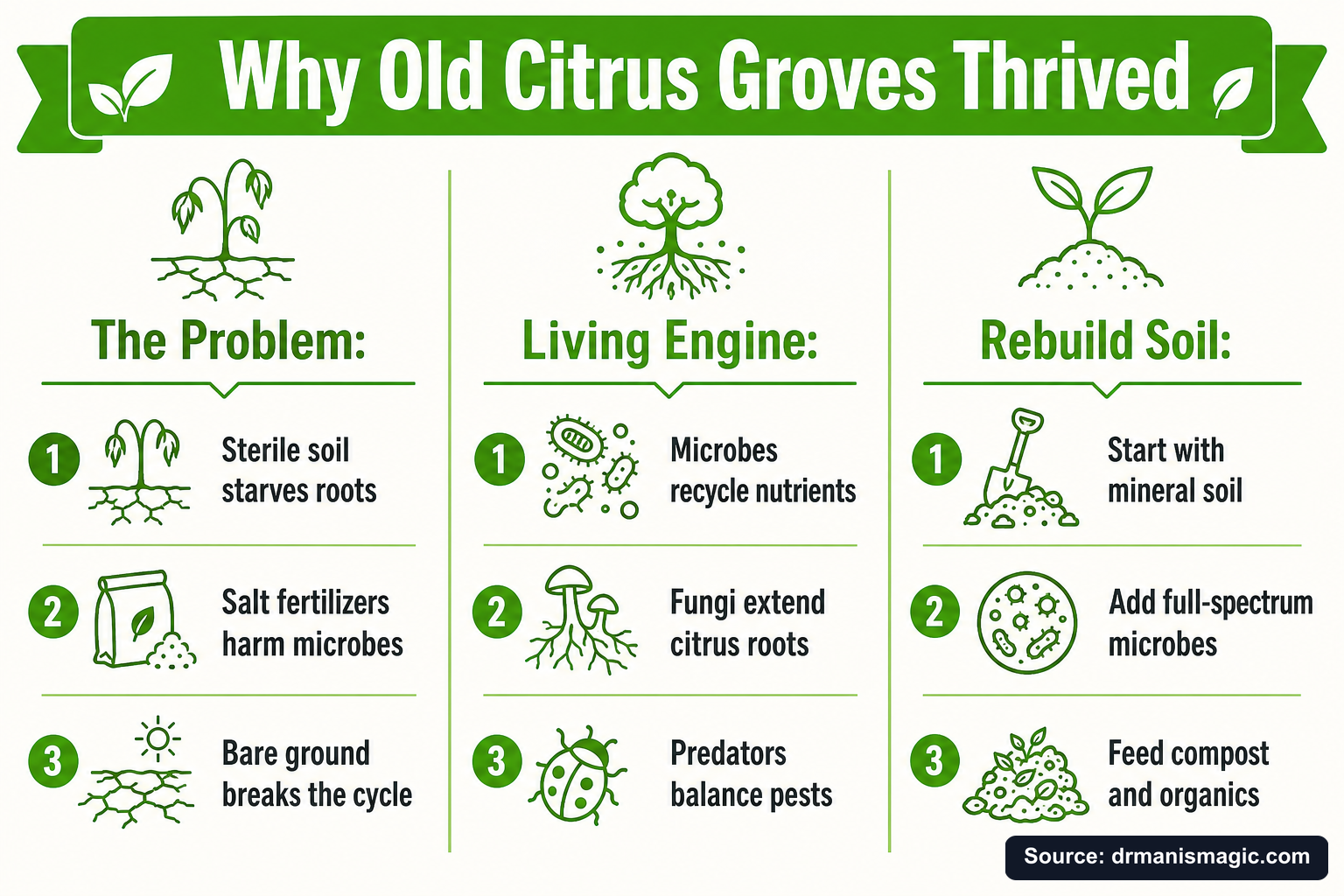
- Early citrus groves lasted for generations because their soil was a living, breathing ecosystem — not just dirt.
- Billions of bacteria, fungi, protozoa, and beneficial nematodes worked 24/7 to recycle nutrients directly to tree roots.
- Mycorrhizal fungi extended the root system far beyond what the tree could grow alone, unlocking water and phosphorus.
- Leaf litter, compost, and animal manure kept organic matter flowing back into the soil food web year after year.
- Modern practices like salt-based fertilizers, synthetic herbicides, and soil fumigation destroy this invisible workforce — and that is why so many gardens struggle today.
- Sterile or damaged soil can be rebuilt, but it takes repeated applications of genuinely live, full-spectrum microbes.
- The Three Plant Pillars — mineral-based soil, live microbials, and organic fertilizer — are the modern blueprint for recreating what those ancient groves had naturally.
What Did Early Citrus Groves Look Like on the Inside?
Quick Answer: Early productive citrus groves were not just trees in dirt. They were layered, living ecosystems where leaf litter, compost, animal manure, perennial roots, and diverse understory plants continuously fed trillions of soil microbes. Those microbes recycled nutrients back to the roots in an endless loop that could last generations.
Think about what a Mediterranean citrus grove looked like 500 years ago. No bare, swept-clean orchard floor. No synthetic weed killer sprayed in a perfect grid. The ground was covered. Leaf litter piled up and slowly broke down. Donkeys and goats grazed nearby, leaving manure that soaked into the soil. Border plants and understory herbs grew in the gaps. Irrigation channels brought water in gentle, measured flows learned over centuries.
That messiness was the point. All of that organic material — the fallen leaves, the decomposing fruit, the manure, the roots of grasses and herbs — was food. Not food for the tree directly. Food for the invisible workforce living in the top few inches of soil.
The University of Florida IFAS Extension notes that many major citrus-growing soils in Florida have extremely low organic matter and low nutrient-holding capacity. That means the biology in the soil is not a bonus. It is the entire fertility engine. Without living microbes cycling nutrients, those soils have almost nothing to offer a tree.
Ancient growers did not know the science. But they knew the results. Feed the ground, and the ground feeds the tree. Disturb the ground, and the tree suffers. That wisdom lasted for centuries. Then the chemical revolution came along and told us we could skip the middle step. We could not.
Who Were the Invisible Workers Keeping Those Trees Alive?
Quick Answer: The invisible workers were bacteria, fungi, protozoa, and beneficial nematodes — collectively called the soil food web. Bacteria and fungi broke down organic matter. Protozoa and nematodes grazed on microbes and released plant-available nitrogen right at the root zone. Mycorrhizal fungi extended roots and unlocked phosphorus, water, and disease resistance.
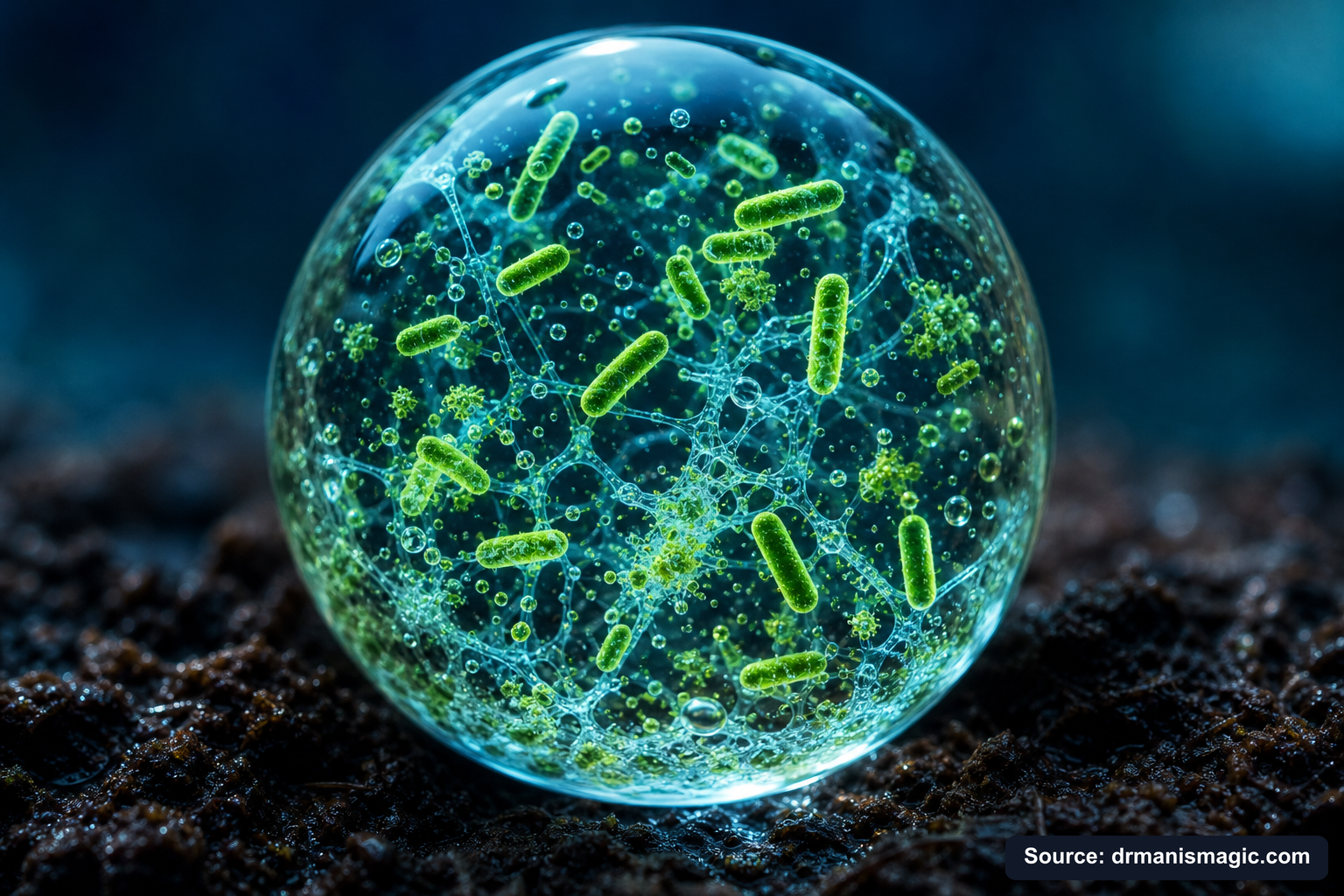
Here is what most people do not know. A single teaspoon of healthy grove soil can hold up to one billion bacteria. Hundreds of feet of fungal threads. Thousands of protozoa. And dozens of beneficial nematodes. All of them working, eating, dying, and releasing nutrients right where the tree roots can grab them.
This is called the soil food web. And it is the real reason early citrus groves stayed productive for generations.
Here is how it worked, step by step:
- Leaves fell. Fruit dropped. Roots died back and regrew. All of that organic material piled up on and in the soil.
- Bacteria and fungi broke that material down into simpler compounds. They locked the nutrients inside their own tiny bodies.
- Protozoa and bacterial-feeding nematodes grazed on the bacteria and fungi. When they ate, they released the locked-up nutrients as plant-available nitrogen and minerals — right at the root surface.
- Predatory nematodes and soil arthropods kept the populations of harmful organisms in check.
- Mycorrhizal fungi threaded through the soil for feet in every direction, pulling phosphorus, zinc, and water back to the tree in exchange for sugars the tree produced through photosynthesis.
Round and round. Season after season. The tree fed the microbes. The microbes fed the tree. And the whole system grew stronger over time — not weaker.
| Organism | What It Does | Why the Tree Needs It |
|---|---|---|
| Bacteria | Break down organic matter, fix nitrogen from the air, solubilize minerals | Converts dead material into food the roots can actually absorb |
| Fungi (general) | Decompose tough organic matter like lignin, produce glomalin that holds soil together | Builds soil structure, aeration, and long-term fertility |
| Mycorrhizal fungi | Extend root surface area enormously, deliver phosphorus, water, and minerals | Dramatically increases drought tolerance, disease resistance, and nutrient uptake |
| Protozoa | Graze on bacteria, releasing nutrients as they digest | Delivers plant-available nitrogen directly at the root zone |
| Beneficial nematodes | Graze on bacteria and fungi, regulate pest populations | Mineral cycling and natural pest suppression without chemicals |
| Earthworms | Mix and aerate soil, cast nutrient-rich material | Improves drainage, structure, and biological activity throughout the profile |
| Soil arthropods | Shred organic matter, prey on pests | Speeds up decomposition and keeps harmful populations balanced |
What Role Did Mycorrhizal Fungi Play in Ancient Grove Longevity?
Quick Answer: Mycorrhizal fungi were one of the most powerful hidden tools in ancient grove soil. They formed a physical partnership with citrus roots, extending the tree's reach by hundreds of times. This gave the tree access to far more phosphorus, water, and minerals than its roots could ever find alone — and built disease resistance that lasted decades.
Have you ever pulled a weed out of the ground and noticed white, fuzzy threads clinging to the roots? That is mycorrhizae. And that is exactly why weeds grow so aggressively even in terrible soil. They have a fungal partner doing the heavy lifting for them.
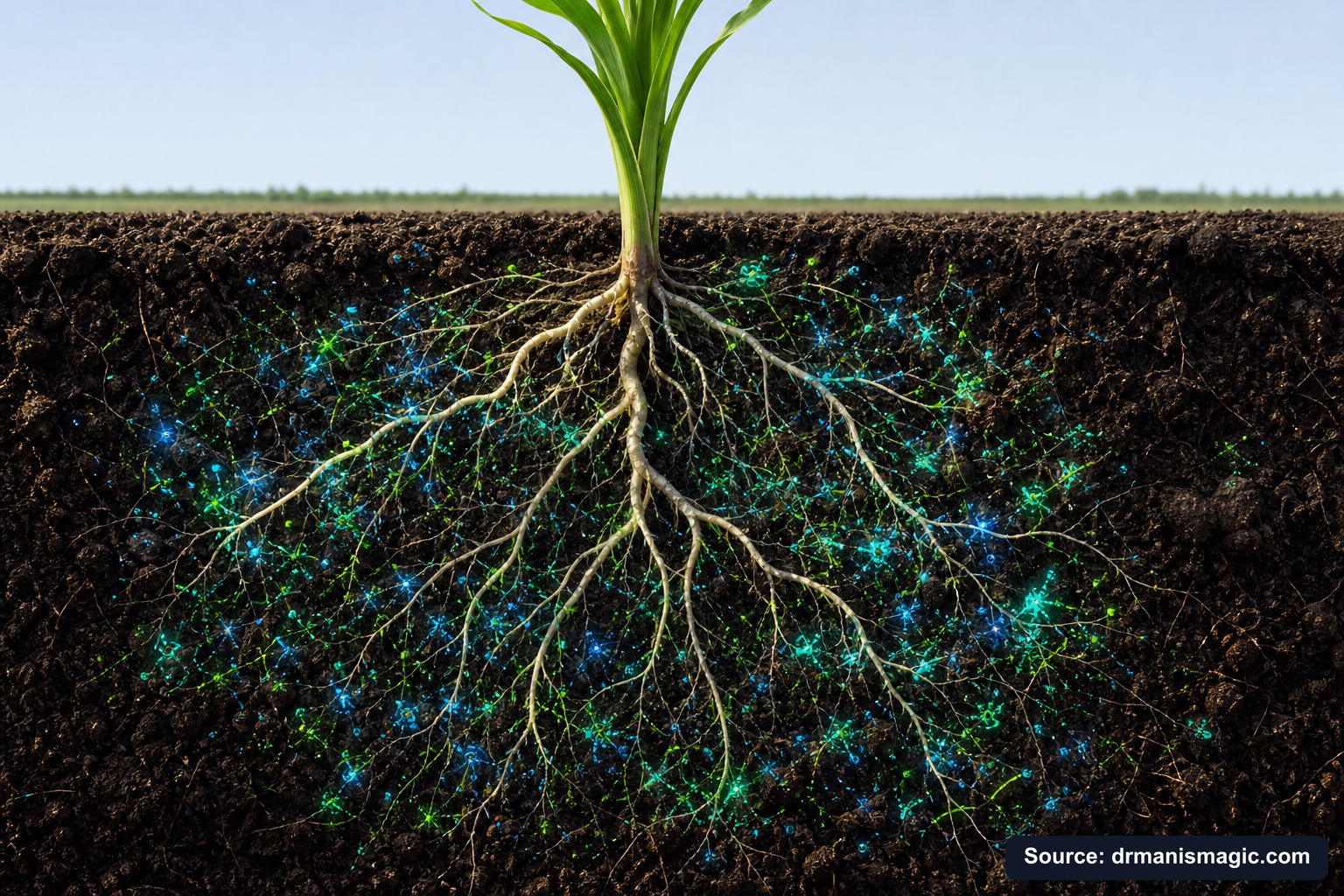
Ancient citrus trees had the same partner. The mycorrhizal network in an undisturbed orchard can spread for hundreds of feet through the soil. The tree's own root system might cover a few square feet. But the fungal network covers the entire orchard floor. Every patch of phosphorus, every pocket of moisture, every trace mineral — the network finds it and brings it back to the tree.
According to research from University of California Agriculture and Natural Resources, mycorrhizal associations are especially critical in soils with low phosphorus availability, which describes most traditional citrus-growing regions. The fungi do the mining that the tree cannot do alone.
Here is the part that should make you angry. Every time you apply a broad-spectrum fungicide, you kill those fungi too. Every time you use a salt-based synthetic fertilizer at high rates, the salt stress weakens or kills the mycorrhizal network. Every time you fumigate soil, you wipe the slate clean — including every beneficial fungus that took years to establish.
Ancient growers did not use any of those things. So their fungal networks stayed intact. And their trees stayed productive for generations.
How Did Organic Matter Keep the Soil Food Web Running?
Quick Answer: Organic matter was the fuel that kept the entire soil food web alive. Leaf litter, fallen fruit, manure, cover crops, and dying roots gave bacteria and fungi something to eat. Without that constant input of organic material, the microbial workforce starved, nutrient cycling slowed, and the tree eventually ran out of food — no matter how much synthetic fertilizer you poured on top.
Think of the soil food web like a fire. Microbes are the flames. Organic matter is the wood. You can have the most amazing fire-starting setup in the world, but if you never add wood, the fire goes out.
Early citrus groves had a constant supply of wood. Here is what kept flowing into the soil:
- Leaf litter: Citrus trees drop leaves continuously. Each fallen leaf is a meal for bacteria and fungi.
- Fallen fruit and pruned branches: More food for the decomposers.
- Animal manure: Donkeys, goats, and chickens were common in historic groves. Their manure brought nitrogen, phosphorus, and fresh microbial populations directly into the root zone.
- Cover crops and understory plants: Their roots died back seasonally, adding organic matter deep into the soil profile. Their above-ground material was mulched back in.
- Root exudates: Even while alive, citrus roots leak sugars and proteins into the soil — on purpose. This is the tree feeding its microbial partners. In return, those partners keep nutrients flowing back.
This is a closed loop. Nothing leaves. Everything cycles. The same carbon, nitrogen, and minerals that fell as a leaf in October became food for next spring's blossoms. That is the ancient secret. Not magic. Not mystery. Just an unbroken cycle of organic matter feeding living soil.
When we strip that cycle out — when we sweep the orchard floor clean, spray herbicides on every green thing, and replace organic inputs with synthetic salt pellets — we break the loop. The microbes starve. The mycorrhizal network collapses. The tree becomes dependent on whatever we pour on it. And the moment we stop pouring, the tree struggles.
That is not a coincidence. That is cause and effect.
What Practices Did Ancient Growers Use That We Have Forgotten?
Quick Answer: Ancient growers kept soil covered, minimized disturbance, returned organic matter consistently, managed water carefully to avoid salt buildup, and maintained diverse plant life around their trees. These practices — not any single input — created the long-lived, productive grove ecosystems that lasted for generations.
The citron, one of the oldest citrus fruits in recorded history, was cultivated in Mesopotamia and Persia thousands of years ago. Islamic scholars and farmers in medieval Spain developed some of the most sophisticated irrigation systems the world had ever seen — systems designed not just to deliver water, but to deliver it without building up damaging salts in the soil.
They were solving a problem we still struggle with today. When you water with mineral-heavy water and never flush, salts concentrate in the root zone. Salts damage roots. Salts kill beneficial microbes. Salts are one of the main reasons modern container-grown trees decline even when the grower is doing everything else right.
Here is a side-by-side look at what the ancient grove did versus what modern chemical gardening does:
| Practice | Ancient Groves (Generational Productivity) | Modern Chemical Approach (Declining Soil) |
|---|---|---|
| Soil cover | Leaf litter, mulch, cover crops, understory plants | Bare ground, herbicide programs, swept orchard floors |
| Fertilization | Compost, manure, green mulch, organic residues | Salt-based synthetic fertilizers applied on schedule |
| Fungal management | No fungicides — mycorrhizal networks intact for decades | Broad-spectrum fungicides that kill beneficial fungi too |
| Soil disturbance | Low — roots and fungal networks stayed intact year after year | High — tilling, fumigation, repotting in sterile media |
| Water management | Careful, measured irrigation to avoid salt buildup | Heavy irrigation with mineral-rich water, poor flushing |
| Pest and disease control | Diverse biology creating natural suppression | Broad-spectrum pesticides that reduce beneficial populations |
| Organic matter input | Continuous cycle — nothing removed from the system | Inputs removed, bagged, and discarded |
Notice that none of the ancient practices required a trip to the store. They required understanding the system and working with it. That is the philosophy behind the Three Plant Pillars that Dr. Mani developed after 35 years of research and 250,000 trees. Mineral-based soil. Live microbials. Organic fertilizer. Three things. One system. Working the way nature intended.
You Never Had a Brown Thumb.
You were handed the wrong tools. This free guide hands you the right ones.
You watered it. You fed it. It died anyway.
It was never you. It was the dirt, the salt food, and the bad advice.
This guide shows you what really went wrong, and how to fix it for good.
- Why your plants really died, and why it was never your fault
- The salt hiding in your plant food that quietly burns the roots
- The hidden killer in almost every bag of store soil
- The tiny helpers that grow a whole forest for free
- The rescue trick that brings a half dead plant back to life

Why Do Modern Soils Fail to Replicate What Ancient Groves Had?
Quick Answer: Modern soils fail because they are typically sterile, salt-damaged, or organically depleted. Potting mixes made from pine bark decompose and collapse within months, suffocating roots. Salt-based fertilizers kill the beneficial microbes that should be feeding the tree. Without a living soil food web, even the best tree in the best location will eventually struggle.
Here is something that should bother you. The bag of potting mix you buy at the big box store? It probably started mostly sterile. No beneficial bacteria. No mycorrhizal fungi. No protozoa. No nematodes. Just decomposing bark and peat that will compact into a soggy, airless sludge within six to twelve months.
And then the synthetic fertilizer you pour on top? Salt-based. Every granule or dissolved pellet raises the salt concentration in the root zone. Salts pull water away from roots through osmosis. Salts kill the beneficial bacteria and fungi that should be cycling nutrients. You get a burst of green growth. Then a slow decline. Then a sick tree that you keep feeding more and more fertilizer to, chasing a result that gets harder to reach every year.
That is not a brown thumb. That is a rigged game. The system was set up to keep you buying. Not to keep your tree growing.
We are not angry about it. We are just honest about it. And we have spent 30 years building an alternative.
See also: The Hidden Reason Synthetic Fertilizers Cause Root Rot
How Do You Rebuild Soil Biology After It Has Been Destroyed?
Quick Answer: You rebuild soil biology by stopping the inputs that kill microbes, flooding the root zone with genuinely live, full-spectrum microbial inoculants, adding organic matter to feed them, and giving the system time to reestablish itself. Recovery is real but it requires patience and repeated applications because many soils have been damaged for years.
This is the question we get asked more than almost any other. "I have been using chemical fertilizers for years. My plant looks awful. Can I fix it?"
Yes. But you need to understand what you are working with. Soil that has been hit with years of synthetic herbicides, salt-based fertilizers, broad-spectrum pesticides, or fumigation is not just low on nutrients. It is biologically depleted. The invisible workforce is gone or nearly gone. Rebuilding it takes more than one application of any product.
Here is a practical recovery checklist we recommend based on what we have seen work across thousands of trees:
- Stop the damage first. Eliminate salt-based fertilizers, synthetic herbicides, and broad-spectrum fungicides from your program. You cannot rebuild biology while continuing to destroy it.
- Flush accumulated salts. Water deeply and thoroughly to push salt buildup down through the root zone and out the drainage holes. Do this two or three times before moving to the next step.
- Check drainage and aeration. Compacted or waterlogged soil suffocates both roots and microbes. If your soil does not drain well, consider repotting into a mineral-based soil that will not collapse over time. Our Super Soil was built specifically to solve this problem — it is a permanent, mineral-based blend that does not decompose or compact.
- Add organic matter as food for the microbes. A layer of compost or organic mulch on the soil surface gives the incoming microbes something to eat. Without food, they will not establish.
- Introduce genuinely live, full-spectrum microbials. This is the most critical step and the most misunderstood one. Not all microbial products work. More on this below.
- Repeat monthly. Soil recovery is not a one-time event. Environmental pressures, residual chemical damage, and the ongoing absence of a natural ecosystem mean you need to keep replenishing the biological workforce consistently.
- Switch to organic fertilizer. Once the biology is coming back, feed it with an organic, slow-release fertilizer that works with the microbes instead of killing them. Our Crab, Kelp and Amino Acids fertilizer was formulated to do exactly that — no synthetic salts, no biosludge, no PFAS. Zero.
Recovery will not happen overnight. But we have seen trees that looked nearly dead come back strong within a few months of following this protocol. The biology was always capable of recovering. It just needed the right conditions and the right inputs.
Why Do Most Microbial Products on the Market Not Work?
Quick Answer: Most commercial microbial products fail because the microbes inside them are either dead or nearly dead by the time you use them. Dried powders contain dormant spores that rarely reactivate effectively in real soil. Liquid compost tea products often go anaerobic within 24 hours and smell like sewage. Neither delivers the living, diverse microbial population your soil actually needs.
This is a conversation we have been having for years. The microbial product market has exploded. Every garden center now has shelves full of bottles and bags promising billions of bacteria and fungi. Most of them do not work. And here is why.
There are basically three ways these products are made. And two of them are close to useless.
The first way is the factory method. Bacteria or fungi are grown in giant industrial vats, then dried into a powder. The idea is that the dormant spores will reactivate when you add water and pour them on your soil. We have tried dozens of these products on our own trees. The results were consistently disappointing. The organisms either do not survive the drying process well enough, or they cannot reestablish in real soil conditions.
The second way is the compost tea method. Microbes are extracted from compost or earthworm castings and turned into a liquid. When it is fresh — within 24 hours — actively aerated compost tea does have genuine biological value. But by the time it has been bottled, shipped, and sitting on a shelf or in your garage? It has gone anaerobic. The beneficial microbes have died. The bottle may fizz when you open it. It definitely smells like something went wrong. That smell is not character. It is failure.
The third way is what Dr. Mani's Magic does. And it is different.
What Makes Plant Super Boost Different From Every Other Microbial Product?
Quick Answer: Plant Super Boost uses a proprietary all-natural stabilization technique to keep genuinely live, full-spectrum microbes — harvested from real compost, not grown in a factory — alive and active in the bottle without going anaerobic. It contains over 2,000 species of bacteria, 400 to 500 species of fungi including mycorrhizae, plus protozoa and beneficial nematodes. You can see them moving under a microscope.
The story behind Plant Super Boost is one of our favorites to tell. Because it starts with a man who was blacklisted.
A world-renowned compost expert — someone who had advised royal families and governments on agricultural practices — discovered a natural technique for stabilizing the full spectrum of live microbes from fresh compost. Not dried. Not lab-grown. Not fermented into an anaerobic mess. Genuinely alive and active, captured at peak biological activity and held there without going off.
When large citrus groves started seeing remarkable results with his method, the big chemical companies took notice. They were not happy. His work was threatening products worth billions of dollars. He was blacklisted. At one point he feared for his safety and stopped production entirely.
Years later, through what we can only describe as a providential meeting, he found Dr. Mani. They joined forces at US Citrus Nursery. And the Dr. Mani's Magic line was born.
That stabilization technique is why Plant Super Boost does not stink. It is not rotting. It is not going anaerobic. The microbes inside it are alive and stable. You can take a drop and look at it under a microscope and watch them move. We have lab analyses that confirm it. And we have 250,000 trees that prove it works in the real world.
Here is how the different microbial product types compare side by side:
| Product Type | Microbial Viability | Spectrum of Organisms | Odor | Real-World Results |
|---|---|---|---|---|
| Dried powder (lab-grown) | Very low — dormant spores rarely reactivate well | Narrow — a few selected species | Low odor | Consistently poor in our testing |
| Dry microbes rehydrated in liquid | Very low — same issue as powder | Narrow | Low odor | Same disappointing results |
| Compost tea (fresh, under 24 hours) | Moderate if actively aerated | Partial — depends on compost source | Earthy turning sour quickly | Good when truly fresh — but hard to time |
| Compost tea (old, over 24 hours) | Low — anaerobic die-off | Partial | Strong, foul sewage smell | Not recommended |
| Lactobacillus-based products | High — but wrong organisms | Very narrow — one genus | Low | Outcompetes beneficial microbes — avoid in soil |
| Plant Super Boost (stabilized, full-spectrum) | High — live and confirmed under microscope | 2,000+ bacteria species, 400-500 fungi species including mycorrhizae, plus protozoa and nematodes | Earthy — not foul | Proven across 250,000+ trees at US Citrus Nursery |
No Zero PFAS. No biosludge. No synthetic salts. That is not just a marketing claim. It is a commitment built into how the product is made. And it comes with a 30-day money-back guarantee. If you do not see results you are happy with, we will refund you. No drama.
What Does All of This Mean for Your Garden Right Now?
Quick Answer: It means that the reason your plants are struggling is almost certainly not your fault. You were sold a system designed around synthetic inputs that slowly destroy the living soil your plants need. The good news is that soil biology can be restored. The tools exist. And the time to start is right now — not next season, not next year.
Here is the thing about time that nobody tells you when you buy a tree or a bag of seeds. You can always get more money. You cannot get more time.
We hear it over and over from the people who come to us. "I just want to see fruit on my tree while I can still enjoy it." That desire — that deep, human drive to plant something and watch it grow and bear fruit — is as old as civilization itself. It is wired into us. It is the same drive that had ancient Persian farmers tending citron trees 3,000 years ago.
But if you keep doing what the big box stores and chemical companies have been selling you, you will keep losing time. A few months of green growth. Then a slow stall. Then a decline that takes more years to recover from than it took to create. That is the hidden cost of the old way. Not just money. Time.
The ancient citrus growers did not have our products. They did not have a Dr. Mani Skaria, a Professor Emeritus of Plant Pathology and inventor of micro-budding, who spent 40 years at the Texas A&M Citrus Center learning exactly why some groves thrived for generations while others failed. But they had the principles right. Living soil. Organic inputs. Minimal disturbance. Respect for the invisible workforce.
We spent 30 years and 250,000 trees distilling those principles into three things you can start using today. Mineral-based soil that will not collapse. Live microbials that are genuinely alive when they reach you. Organic fertilizer that feeds the soil without burning it. The Three Plant Pillars.
Get the Free Plant Care Field Guide to see exactly how to put all three pillars to work for your specific plants. It is plain English, step by step, built from everything we have learned growing trees in South Texas for over three decades.
The ancient groves lasted for generations because the soil was alive. Your soil can be alive again too. And when it is, you will feel it in the weight of the fruit, in the smell of the blossoms, and in the quiet satisfaction of knowing you finally cracked the code.
See also: Why Most Fertilizers Are Actually Salt in Disguise
Frequently Asked Questions
These are the questions we hear most from growers who want their citrus trees to last a lifetime and actually bear fruit they can enjoy. After 30 years and more than 250,000 trees grown in South Texas, we have learned what really keeps a grove alive for generations. The answers below are grounded in that hard-won experience.
What made ancient citrus groves stay productive for so many generations?
The secret was living soil. Ancient groves had billions of bacteria, fungi, and other microbes working around the clock to recycle nutrients straight to the roots. Leaf litter, manure, and decomposing plant matter kept feeding that invisible workforce year after year. Nobody sprayed salt-based fertilizers that killed the microbes. Nobody used synthetic herbicides that wiped out the soil food web. The tree thrived because the ground beneath it was alive. That is exactly what the Three Plant Pillars rebuild today.
What is the lifespan of a citrus tree?
A citrus tree planted in the ground with proper care can live 75 to 100 years or more. Container trees in standard potting mix usually last only 10 to 15 years because that mix breaks down, compacts, and suffocates the roots. But plant your tree in a permanent, mineral-based soil with live microbes and organic fertilizer, and a container tree can thrive for 50 years or longer. Soil quality is the single biggest factor in how long your tree lives.
How many times a year do orange trees produce fruit?
Most orange trees produce one main crop per year. They bloom in spring, and the fruit ripens anywhere from late fall through the following summer depending on the variety. Navel oranges ripen from October through spring. Valencia oranges take up to 12 months to mature and are harvested from late winter into summer. In warm climates with healthy, microbe-rich soil, some varieties can push out smaller off-season flushes. Strong roots fed by live microbes and organic nutrients make every crop more reliable.
What do coffee grounds do for citrus trees?
Used coffee grounds add small amounts of nitrogen, phosphorus, and potassium as they break down. They also help lower soil pH slightly, which citrus trees appreciate. Sprinkle a thin layer around the drip line and water it in. Never pile them thick because they can mat together and block water. That said, coffee grounds alone are not a complete feeding program. Pair them with a slow-release organic fertilizer and live microbes to give your tree everything it needs from root to canopy.
What does Epsom salt do for citrus trees?
Epsom salt delivers magnesium, which is the mineral at the center of every chlorophyll molecule. If your tree's older leaves are turning yellow while the veins stay green, that is a classic magnesium deficiency. Mix two tablespoons per gallon of water and pour it around the drip line monthly during the growing season. Use it as a targeted fix, not a replacement for a full fertilizer program. Too much Epsom salt blocks calcium absorption and creates new problems. Always pair it with balanced organic nutrition.
Why are there so few orange groves left in Florida?
Florida's citrus production has collapsed by more than 90 percent over the last two decades. The main cause is citrus greening disease, a bacterial infection spread by a tiny insect called the Asian citrus psyllid. It destroys a tree's vascular system from the inside. Back-to-back hurricanes, historic freezes, and rapid urban development have made things worse. Many multigenerational farming families sold their groves rather than fight an unwinnable battle. Research into disease-resistant varieties and protective growing structures is giving the industry a slow path forward.
Is Florida citrus making a comeback?
There are real signs of hope. Florida has invested close to 140 million dollars in citrus research, disease-tolerant varieties, and new growing methods. Some growers are using giant screened enclosures to keep the psyllid insects out entirely. Gene-editing research is working toward trees that resist greening disease at the root level. Citrus acreage is also expanding northward into parts of Florida less affected by storms and development. Production is still far below its peak, but the growers who are rebuilding are doing it smarter, with healthier soil and better biology.
About the Author
Ron Skaria, MD
Ron Skaria, MD, is the co-founder of Dr. Mani's Magic and the son of Dr. Mani. He trained as a medical doctor at Baylor College of Medicine, did his residency at UT Health Science Center - San Antonio and fellowship training at Texas Tech University. He now works full time on the family farm at US Citrus and US Citrus Nursery in Hargill, Texas, building Dr. Mani's Magic alongside his dad. He wrote the Brown Thumb Field Guide to put his father's 48 years of plant science into plain words any gardener can use. His belief is simple. You never had a brown thumb. You just never had the right help.


