


How Crab-Based Inputs Toughen Plants Naturally with Chitin and Microbes | Dr. Mani's Magic
How Crab-Based Inputs Toughen Plants Naturally: Chitin, Microbes, Slow Nitrogen, and the Biology of Real Resilience
Picture this. You walk out to your backyard on a Saturday morning. Coffee in hand. The air smells like fresh soil after rain. You look at your tomatoes, your fruit tree, your rose bed. And everything looks... alive. Deep green. Standing tall. Like nothing could knock it over.
Now picture the other Saturday. The one where you spent $40 on a blue granular fertilizer, followed the directions exactly, and two weeks later your leaves are yellow at the edges, your roots smell faintly wrong, and something just feels off. You did everything right. So why does your plant look worse than before you started? Here is the part nobody tells you at the garden center: that blue stuff is salt. And salt, at the root level, is quietly doing damage you cannot see until it is too late.
After growing more than 250,000 trees at our South Texas nursery, we have seen this story play out thousands of times. The plant that should be thriving. The gardener who is doing everything they were told. And a bag of fertilizer that is working against the very biology it was supposed to support. That is exactly why Dr. Mani Skaria, plant pathologist, professor emeritus at the Texas A&M Citrus Center, and the founder of the Clean Citrus Program in Texas, spent decades chasing a better answer. What he found was not a new chemical. It was a return to something ancient. Something alive. Something that starts with a crab shell.

Organic Fertilizer | Crab, Kelp & Amino Acids
Key Takeaways
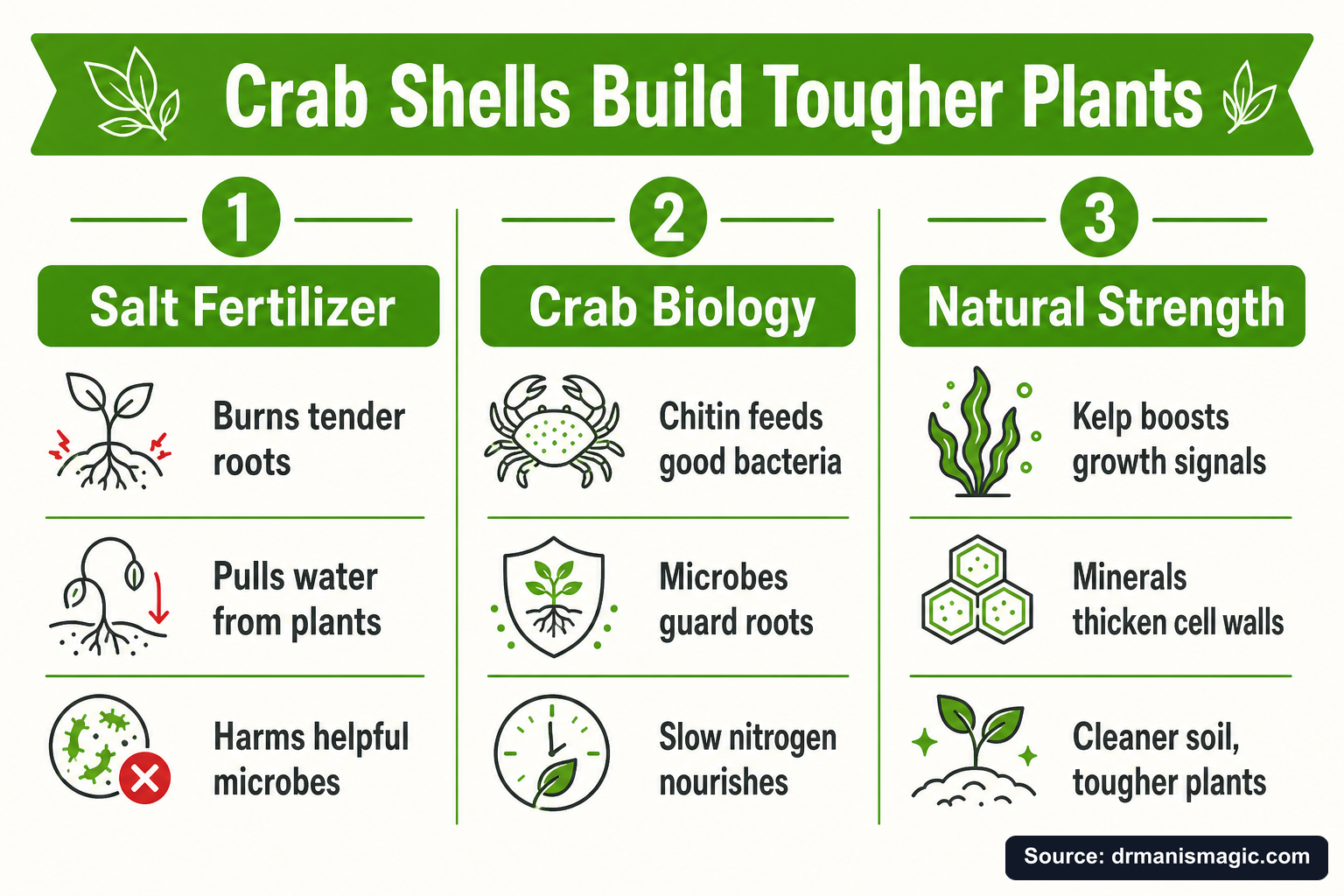
- Crab-based inputs work by feeding soil microbes first, not by directly dumping nutrients on roots — this is what makes them genuinely different from synthetic fertilizers.
- Chitin, the tough fiber in crab shells, selectively feeds beneficial bacteria like Actinobacteria, Bacillus, and Streptomyces — the same microbes associated with disease suppression and root protection.
- Salt-based synthetic fertilizers create osmotic stress at the root zone, pulling water away from roots and killing the beneficial microbes your plant depends on to stay strong.
- Amino acid nitrogen from crab and feather meal feeds plants gently and also feeds the microbes — it is the most plant-friendly form of nitrogen that exists.
- Cold-processed kelp delivers natural plant hormones (auxins and cytokinins), trace minerals, and carbohydrates that act as biostimulants — not fertilizer in the traditional sense.
- Volcanic ash trace minerals, including silica, physically toughen cell walls so plants can handle drought, pest pressure, and disease more effectively.
- Zero PFAS, zero biosludge, zero synthetic salts — clean inputs matter for your family, your soil, and your long-term results.
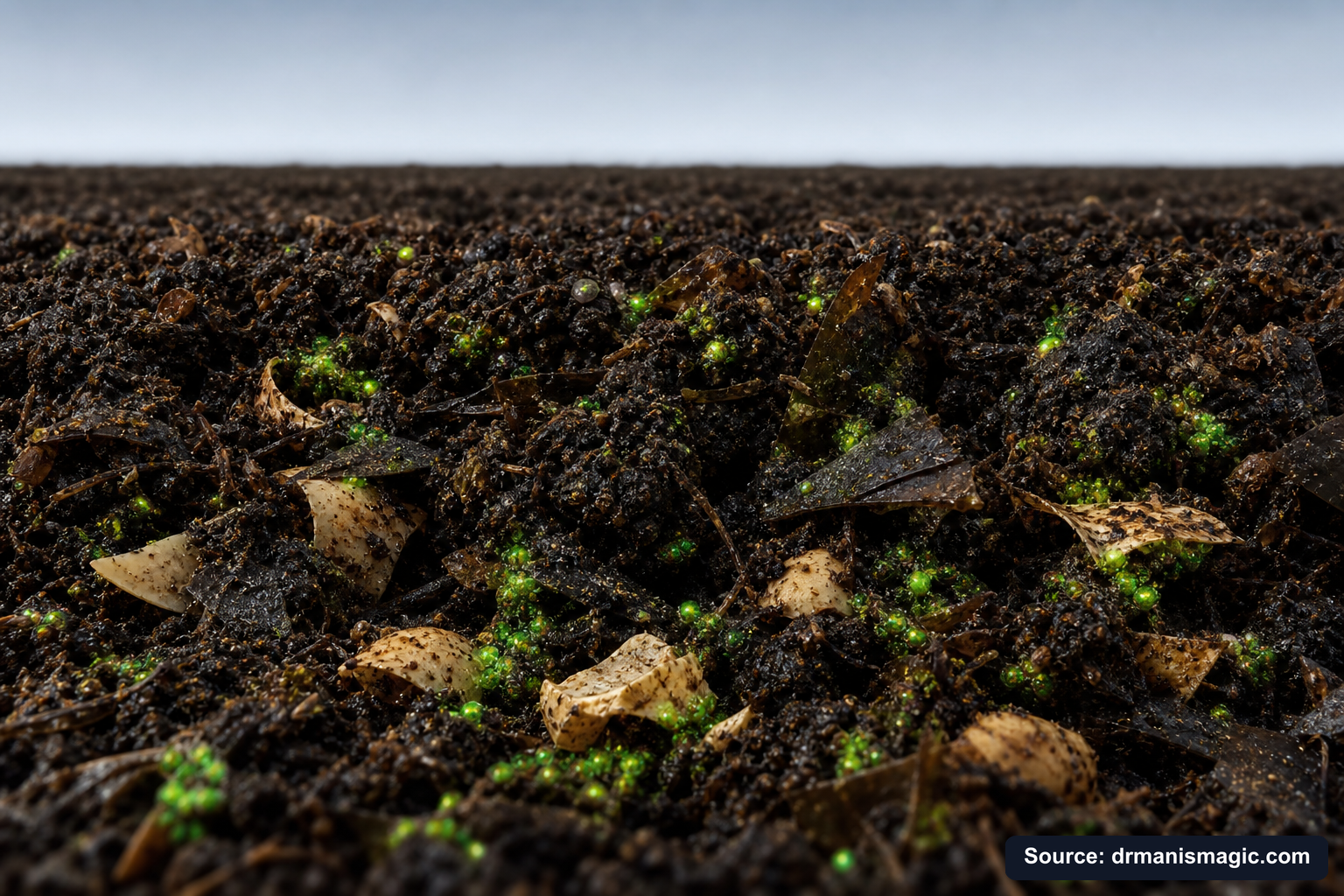
What Does "Toughen Plants Naturally" Actually Mean?
Quick Answer: Toughening plants naturally means building their biology from the ground up — stronger roots, a living soil full of beneficial microbes, and cell walls that can handle stress. It is not a spray that hardens leaves. It is a slow, biological process that makes the whole plant more resilient from the inside out.
This is not about hardening off seedlings before transplant. That is a different process entirely. When we say crab-based inputs toughen plants, we mean something deeper.
We mean the roots are stronger. The soil around them is alive with microbes that fight disease. The cell walls are thicker. The plant's own immune system is primed and alert. And the nutrition feeding all of that comes in slowly, steadily, at the pace nature intended.
Think of it like the difference between a child raised on fast food versus one raised on home-cooked meals. Both get calories. But only one builds genuine strength over time.
Plants are the same. Fast, salt-based fertilizer gives a quick green flush. But it does not build biology. It does not feed microbes. It does not strengthen cell walls. It just pushes the plant hard for a few weeks, then leaves the soil a little worse than before.
Crab-based inputs do the opposite. They feed the soil engine first. And the plant that comes out the other side is genuinely tougher.
Why Do Salt-Based Fertilizers Actually Hurt Your Roots?
Quick Answer: Salt-based fertilizers raise the salt concentration around your roots. By basic chemistry, water moves away from lower-salt zones toward higher-salt zones — which means water moves OUT of your roots and INTO the salty soil. This is called osmotic stress, and it is the same mechanism that causes plants to wilt even when the soil is wet. It also kills the beneficial microbes your plant depends on.
Here is a fact that will change how you look at every bag of fertilizer you have ever bought.
Most synthetic fertilizers — the blue crystals, the coated prills, the quick-dissolve granules — are made from mineral salts. Ammonium nitrate. Ammonium sulfate. Muriate of potash. These are all salts. And when you dissolve a salt in water and pour it on your soil, something happens at the root zone that nobody at the big box store ever explains to you.
Water moves toward salt. That is basic osmosis — the same process your body uses, the same process every living cell uses. When the salt concentration outside the root is higher than inside, water flows out of the root cells trying to balance things out. The plant experiences what scientists call osmotic stress, sometimes called physiological drought. The soil can be soaking wet. The roots can be drowning. And the plant still wilts, still struggles, still looks like it needs water.
University of Minnesota Extension describes this exact mechanism in their soil fertility guides — high-salt fertilizers applied near roots or in concentrated doses can cause direct tissue damage and reduce water uptake even in moist soils. You can read more about fertilizer salt index and root burn at the University of Minnesota Extension.
But there is a second victim in this story. The microbes.
Your soil is supposed to be alive. Billions of bacteria and fungi living in a web of activity that unlocks nutrients, fights pathogens, and keeps roots healthy. Salt destroys them. A concentrated dose of synthetic fertilizer near the root zone does not just stress the plant. It causes what Dr. Mani calls a microbial massacre. The very organisms your plant depends on for long-term health are wiped out. And once they are gone, the plant is on its own. Defenseless. Vulnerable to root rot pathogens like Pythium and Phytophthora. Struggling to absorb the very nutrients you just paid good money to provide.
This is not a fringe opinion. It is chemistry. And it is exactly why the Three Plant Pillars that Dr. Mani developed at US Citrus Nursery start with biology, not a bag of fast-release fertilizer.
See also: The Hidden Reason Synthetic Fertilizers Cause Root Rot
What Is Chitin and Why Does It Make Plants Stronger?
Quick Answer: Chitin is the tough structural fiber found in crab shells, shrimp shells, and insect exoskeletons. When you add it to soil, specific beneficial microbes feed on it and multiply. Those microbes — including Actinobacteria, Bacillus, and Streptomyces — are the same ones associated with suppressing root diseases, cycling nutrients, and priming the plant's own immune system.
Imagine you scattered a feast across your backyard. But only the good guys — the ones that protect your garden — could eat it. Everyone else had to go elsewhere. That is essentially what chitin does in your soil.
Chitin is the second most abundant natural polymer on Earth, right after cellulose. It is what makes a crab shell hard. It is what gives an insect its exoskeleton. And when it breaks down in soil, it does something remarkable.
Certain microbes — scientists call them chitinolytic organisms — have evolved specifically to eat chitin. These include Actinobacteria, Streptomyces, Bacillus, and Pseudomonas species. These are not random soil bacteria. These are the microbes most strongly associated with plant health, disease suppression, and nutrient cycling.
When you add chitin to soil, you are selectively feeding this army. They multiply. They outcompete the pathogens. They release enzymes that break chitin down into smaller fragments. And those fragments — called chitin oligomers — are recognized by plant roots as a signal. A warning. "Something with a chitin exoskeleton is nearby." To the plant, that means potential pests or fungal invaders. So the plant primes its immune system in response.
This is called chitin-induced systemic resistance. And it has been documented in peer-reviewed research. A 2022 study published in Frontiers in Plant Science found that crab shell meal amendments significantly shifted soil microbial communities toward chitin-degrading organisms, increased predicted nitrification activity, improved plant growth, and reduced root-knot nematode severity in cucumber trials. You can read the full study at Frontiers in Plant Science.
The plant does not just get fed. It gets tougher. It gets smarter. Its root zone becomes a less hospitable place for the pathogens that cause root rot. And it does all of this through biology, not chemistry.
We tested this across more than 250,000 citrus trees at US Citrus Nursery. The trees grown with chitin-rich organic inputs consistently showed better root health, stronger disease resistance, and more vigorous growth than trees fed with conventional synthetic programs. That is not a theory. That is 30 years of real-world results in South Texas soil.
How Does Organic Fertilizer Actually Feed a Plant?
Quick Answer: Organic fertilizer does not feed the plant directly. It feeds the microbes first. The microbes eat it, multiply, and convert it into simple nutrient forms the plant can absorb. When those microbes die, they release everything they stored straight into the root zone. The whole process works like a biological time-release capsule — slow, steady, and perfectly timed to how plants actually grow.
This is the most important thing we can teach you. Read it twice if you need to.
When you sprinkle a granular organic fertilizer like Crab, Kelp & Amino Acids on your soil, it does not immediately dissolve and rush to your roots. It sits there. And microbes in the soil start eating it. Bacteria. Fungi. The whole microscopic crew.
As they eat it, they break the complex proteins, chitin, and other organic compounds down into simpler forms. Ammonium. Nitrate. Phosphate ions. The exact same nutrients a plant needs, but now in a gentle, bioavailable form that roots can actually absorb without stress.
Then those microbes live their lives, multiply, and eventually die. And when they die? They release everything stored in their bodies directly into the soil around your roots. It is like a second wave of nutrition arriving right on time, weeks after you first applied the fertilizer.
This is why organic fertilizers keep working long after synthetic ones have flushed through the soil. The microbes are doing the slow conversion work. They are the time-release mechanism. No plastic coating needed. No petroleum chemistry. Just biology doing what it has done for 500 million years.
And here is the key point: you cannot have this system without living microbes. Salt kills them. Which is exactly why synthetic fertilizers break this cycle. Every bag of salt-based fertilizer you pour on your soil is not just missing the point. It is actively destroying the engine that makes organic nutrition work.
See also: Why Most Fertilizers Are Actually Salt in Disguise
What Does Amino Acid Nitrogen Do That Other Nitrogen Sources Cannot?
Quick Answer: Amino acid nitrogen comes pre-assembled into the building blocks plants use to make proteins, enzymes, and chlorophyll. The plant absorbs it faster and with less energy than it takes to process nitrate nitrogen from synthetic sources. It also feeds the microbes alongside the plant, so the whole soil ecosystem benefits at the same time.
Nitrogen is the nutrient that drives green growth. But not all nitrogen is the same.
When a synthetic fertilizer says it provides nitrogen, it usually means nitrate or ammonium — simple inorganic ions that dissolve immediately in water. Fast. Intense. The plant gets a surge of green. But the delivery is salty, the dose is hard to control, and the microbes in the surrounding soil pay the price.
Amino acid nitrogen is different. Amino acids are the building blocks of protein. Every enzyme your plant makes, every molecule of chlorophyll in every leaf, every structural protein in every root tip — all of it is built from amino acids. When you supply nitrogen already in amino acid form, the plant does not have to do the conversion work. It absorbs the amino acids directly through roots and uses them immediately.
Less energy spent on conversion means more energy available for growth. For flowering. For fruiting. For building the root system that makes everything else possible.
The amino acids in our Crab, Kelp & Amino Acids formula come from feather meal and animal tankage — concentrated sources of protein-bound nitrogen that break down slowly as microbes work through them. The microbes get fed. The plant gets fed. And the soil gets a steady trickle of nitrogen that mirrors what happens in nature, when organic matter decomposes after a rainstorm and the forest floor hums with microbial activity.
This is what the Law of the Minimum is really about. One missing nutrient shuts down everything else. Amino acid nitrogen ensures the nitrogen never becomes that bottleneck, without the salt, without the burn, and without the microbial casualty count.
What Does Cold-Processed Kelp Actually Do for Plants?
Quick Answer: Cold-processed kelp delivers natural plant hormones called auxins and cytokinins, along with carbohydrates, trace minerals, and polysaccharides that act as biostimulants. These are not nutrients in the traditional NPK sense — they are biological signals that tell the plant to root faster, grow more efficiently, and handle environmental stress with greater resilience.
Think of kelp as the coaching staff. The fertilizer is the training. But the coaching staff is what tells the athlete how to use all that training most efficiently.
Kelp — specifically cold-processed kelp, where heat has not destroyed the active compounds — contains auxins and cytokinins. These are natural plant hormones. Auxins tell roots to grow. Cytokinins tell cells to divide. Together, they accelerate root development, improve nutrient uptake efficiency, and help the plant respond to stress signals faster.
Kelp also contains alginic acid and other marine polysaccharides. These are carbohydrates that feed soil microbes, improve soil structure, and help retain moisture around roots without waterlogging them. They are, in a very real sense, food for the microbial community that the chitin is building and the amino acids are sustaining.
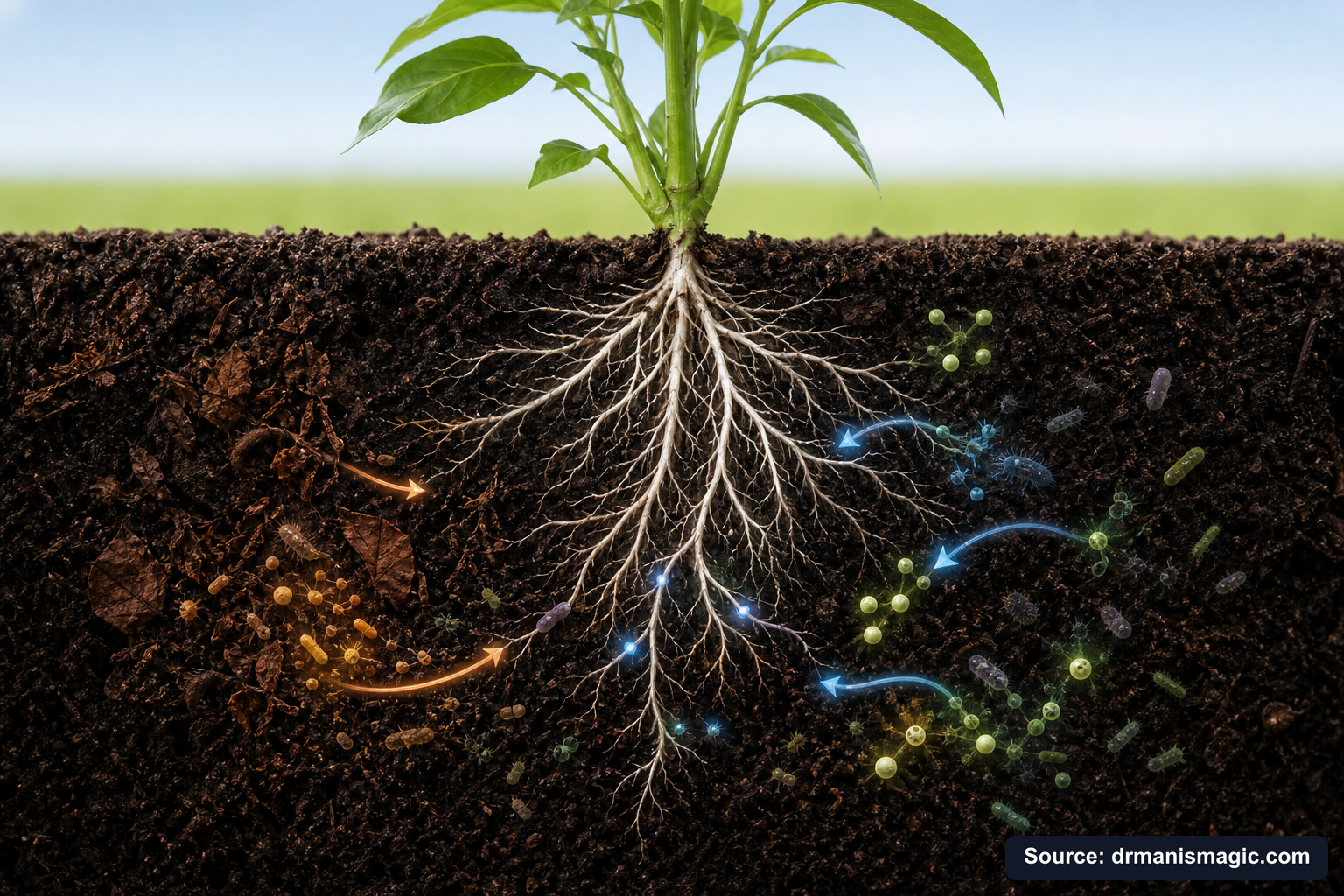
And then there are the trace minerals. The ocean is a mineral-rich environment. Kelp bioaccumulates dozens of trace elements — iodine, selenium, boron, manganese, zinc — in forms that are highly bioavailable to plants. These are the micronutrients that most gardeners never think about until a deficiency shows up as yellowing leaves or misshapen fruit.
The cold-processing matters. Heat destroys hormones. It denatures proteins. A kelp product that has been heat-extracted has most of its biological value cooked out. Cold-processed kelp retains the auxins, the cytokinins, the polysaccharides, and the trace mineral profile intact. That is why we insist on it in our formula.
You Never Had a Brown Thumb.
You were handed the wrong tools. This free guide hands you the right ones.
You watered it. You fed it. It died anyway.
It was never you. It was the dirt, the salt food, and the bad advice.
This guide shows you what really went wrong, and how to fix it for good.
- Why your plants really died, and why it was never your fault
- The salt hiding in your plant food that quietly burns the roots
- The hidden killer in almost every bag of store soil
- The tiny helpers that grow a whole forest for free
- The rescue trick that brings a half dead plant back to life

Why Does Volcanic Ash Make Plants Physically Tougher?
Quick Answer: Volcanic ash is rich in silica and dozens of trace minerals. When plants absorb silica, they deposit it in their cell walls, making them physically stronger and harder for pests and fungal pathogens to penetrate. Plants with higher silica content also handle drought and heat stress better because their cell structure is more rigid and less prone to collapse.
Run your finger along a blade of grass. That slight roughness you feel? That is silica. The same mineral found in volcanic ash, in rice hulls, in the sandy loam soil of South Texas.
Silica is not traditionally listed as an essential plant nutrient. But the evidence for its role in plant toughening is hard to ignore. Plants that have access to adequate silica deposit it in their epidermal cell walls — the outer skin of leaves, stems, and roots. That deposition creates a physical barrier.
Fungal pathogens trying to penetrate a leaf have a harder time. Sap-sucking insects have a harder time piercing the surface. The cell wall does not collapse under heat stress as easily. The plant holds its shape better under drought conditions.
This is not marketing language. It is plant physiology. And it is one reason why the volcanic ash component of our Crab, Kelp & Amino Acids blend is not an afterthought. It is structural armor for your plants, delivered through the soil at every feeding.
Pair that silica deposition with the chitin-primed immune system, the amino acid nitrogen fueling chlorophyll production, and the kelp hormones accelerating root development — and you start to see why plants fed with this system look and behave differently from plants fed with conventional synthetic fertilizers. It is not one thing. It is the combination working together.
Crab-Based Organic Inputs vs. Synthetic Salt Fertilizers vs. Biosludge: Which Is Actually Safe?
Quick Answer: Crab-based organic inputs supply slow nutrition without salts, without PFAS contamination, and without biosludge (treated municipal waste). Synthetic salt fertilizers deliver fast but risky nutrition that burns microbes and can cause osmotic root stress. Some organic fertilizers use biosludge fillers that contain PFAS "forever chemicals" — a risk most gardeners do not know about until it is too late.
Let us put all three side by side so you can see exactly what you are choosing between.
| Feature | Crab/Kelp/Amino Organic (e.g., 7-4-4) | Synthetic Salt Fertilizer (Fast-Release) | Biosludge-Based "Organic" Fertilizer |
|---|---|---|---|
| Nutrient Release Speed | Slow, microbe-mediated, steady | Immediate, flush-and-crash cycle | Variable, often partially soluble |
| Salt Index / Root Burn Risk | Very low — protein-bound, not salt-based | High — ammonium and nitrate salts | Low to moderate |
| Effect on Soil Microbes | Feeds and builds the microbial community | Kills microbes with salt concentration spikes | Variable — may support some microbes |
| PFAS / Forever Chemicals | Zero PFAS — no municipal waste inputs | Generally PFAS-free, but plastic coatings on slow-release prills | High risk — sewage sludge concentrates PFAS |
| Biosludge / Sewage Sludge | None — clean sourcing only | None | Often contains treated municipal waste |
| Chitin / Disease Suppression | Yes — chitin feeds disease-suppressive microbes | None | None |
| Plant Hormones / Biostimulants | Yes — kelp auxins, cytokinins, polysaccharides | None | None |
| Cell Wall Strengthening (Silica) | Yes — volcanic ash trace minerals | None | None |
| Smell | Earthy, mild — no offensive odor | Chemical smell | Often strong, unpleasant |
| Safe for Kids, Pets, Bare Feet | Yes — no chemical re-entry warnings needed | Caution advised — read label warnings | Caution advised — PFAS exposure risk |
| Made in USA | Yes | Often imported inputs (Canada, Russia, China) | Varies |
The biosludge issue deserves a moment. Some fertilizers — both synthetic and marketed as organic — use treated municipal waste as a filler. This is sewage sludge. Human waste, processed and dried. It is legal. It is common. And it concentrates PFAS "forever chemicals" that do not break down in soil, do not wash away, and accumulate in the food you grow.
Our Crab, Kelp & Amino Acids contains zero biosludge. Zero PFAS. Zero synthetic salts. That is not a marketing line. That is a sourcing commitment we make because Dr. Mani's family grows food in this same soil. What is good enough for your garden is good enough for ours.
How Do You Know If Your Plant Is Suffering From Salt Damage Versus Overwatering Versus True Root Rot?
Quick Answer: Salt damage, overwatering, and true root rot caused by pathogens like Pythium and Phytophthora all look similar on the surface — wilting, yellow leaves, declining vigor. But the root cause is different, and so is the fix. This table helps you tell them apart before you make things worse.
One of the most common mistakes we see is a gardener treating root rot with more water, or treating salt damage with more fertilizer. Both make things dramatically worse. Here is how to read the signs correctly.
| Symptom | Salt / Fertilizer Burn | Overwatering (Oxygen Starvation) | True Root Rot (Pythium / Phytophthora) |
|---|---|---|---|
| Leaf appearance | Brown, scorched tips and edges; otherwise green | Yellow all over; soft and limp | Yellow to brown; wilting despite wet soil |
| Root appearance | Brown tips; roots look dried or shriveled | White to tan, mushy, no smell initially | Dark brown or black; slimy; foul smell |
| Soil condition | Crusty white salt deposits on surface | Consistently wet; poor drainage | Wet soil; often compacted or dense potting mix |
| Wilting pattern | Wilts even with adequate water | Wilts despite wet soil | Sudden collapse; rapid decline |
| Most likely cause | High-salt synthetic fertilizer; over-application | Organic potting mix compaction; no drainage | Pathogen infection aided by wet, oxygen-poor roots |
| Primary fix | Flush soil with water; stop salt inputs; switch to organic | Improve drainage; add mineral-based soil; reduce watering | Remove infected roots; improve drainage; add beneficial microbes |
Notice how all three problems lead back to the same root-cause solution: mineral-based soil with drainage, living microbes, and clean organic nutrition. This is exactly what the Three Plant Pillars framework addresses from the start, before problems develop.
If you are already seeing symptoms, here is a simple recovery sequence.
- Stop all synthetic fertilizer immediately. Do not add more salt to a salt-damaged system.
- Flush the root zone with clean water two or three times over a week to push accumulated salts down and out.
- Check drainage. If water sits on the surface for more than 30 seconds, your soil structure is the real problem.
- If roots are brown or mushy, trim the damaged sections back to healthy white tissue with a clean tool.
- Drench the root zone with live beneficial microbes to re-establish the biological community.
- Wait two weeks before applying any fertilizer. Let the microbes rebuild first.
- Resume feeding with a slow-release, salt-free organic input at half the normal rate to restart gently.
Does Crab Meal Work for Lawns, Vegetables, Houseplants, and Ornamentals — Not Just Fruit Trees?
Quick Answer: Yes. The mechanisms that make crab-based inputs effective — chitin feeding beneficial microbes, amino acid nitrogen releasing slowly, kelp hormones stimulating root growth, silica strengthening cell walls — work in any soil, for any plant. We proved this across 250,000+ citrus trees, but the same biology applies to your lawn, your raised bed tomatoes, your indoor fiddle-leaf fig, and your rose garden.
The Three Plant Pillars are not a citrus-only doctrine. They are a first-principles framework for how plants grow.
Every plant on earth needs three things at the root level: oxygen-rich soil structure, a living microbial community, and clean nutrition that does not destroy either of the first two. That is true for a Meyer lemon in a container in Minnesota. It is true for a St. Augustine lawn in Houston. It is true for a raised bed of kale in Oregon and a potted orchid in a Chicago apartment.
The chitin in crab shells feeds the same beneficial bacteria whether the plant above them is a tomato or a magnolia. The amino acids release nitrogen at the same biological pace regardless of what roots are nearby. The kelp hormones stimulate root cell division in grass the same way they do in a citrus tree.
What changes is the application rate and timing. But the core biology? Universal.
We developed this system at US Citrus Nursery because citrus is unforgiving. It shows every mistake quickly and clearly. That made it the perfect testing ground. 250,000 trees over 30 years. Countless combinations of soil, microbes, and nutrition. What we found was a system that works so consistently, so reliably, that we built an entire product line around it and made it available to every plant owner in America.
Your lawn. Your garden. Your houseplants. Your fruit trees. The biology is the same. The Three Plant Pillars work for all of them.
For a deeper look at how soil structure interacts with everything above, see the Super Soil page — the mineral foundation that lets all of this biology function properly.
See also: Why Soil Structure Matters More Than Fertilizer
How Long Does It Take to See Results From Crab-Based Inputs?
Quick Answer: Most gardeners see measurable improvement in leaf color, root vigor, and overall plant health within 4 to 8 weeks of switching to a crab-based organic program. The full benefit — including disease-suppressive microbial community shifts and structural calcium uptake in woody plants — builds over months and keeps improving with each application.
This is the honest answer most people do not want to hear but end up being grateful for.
Organic inputs do not give you the overnight green-up that a bag of synthetic fertilizer will. That green-up from synthetics is real. It is also temporary, and it comes with a biological cost you cannot see. When the salt flushes through and the microbes recover, you are right back where you started, maybe a little worse.
With crab-based inputs, the first thing that changes is underground. Microbial populations shift. Chitin-degrading bacteria multiply. Root tips get healthier. Calcium starts depositing into cell walls. This happens in the first two to four weeks, before you see anything above ground.
By week four to eight, you start to see it. Deeper green leaves. Stronger new growth. Less yellowing. Less wilting between waterings. The plant just looks more... settled. More confident, if a plant can look confident.
By month three, the full picture starts to emerge. Disease pressure is lower. Root systems are visibly more developed. And if you are growing something that fruits or flowers, the quality difference is often striking.
The real cost of the slow path is not money. It is time. Dr. Mani hears this from gardeners constantly — they want to see their trees fruit, want to smell their roses, want to taste their tomatoes, while they still have the years and health to enjoy it. Every season spent fighting a synthetic fertilizer addiction is a season you do not get back. The biological approach takes a few weeks longer to show up above ground. But it compounds. It builds on itself. And the plant you have in year two is so much more resilient than the plant that just got its quarterly salt dose.
You can get money back. You cannot get time back. Start the right way, and your garden rewards you for seasons to come.
You can also download our Free Plant Care Field Guide for a complete walkthrough of timing, application rates, and what to watch for as your soil comes alive.
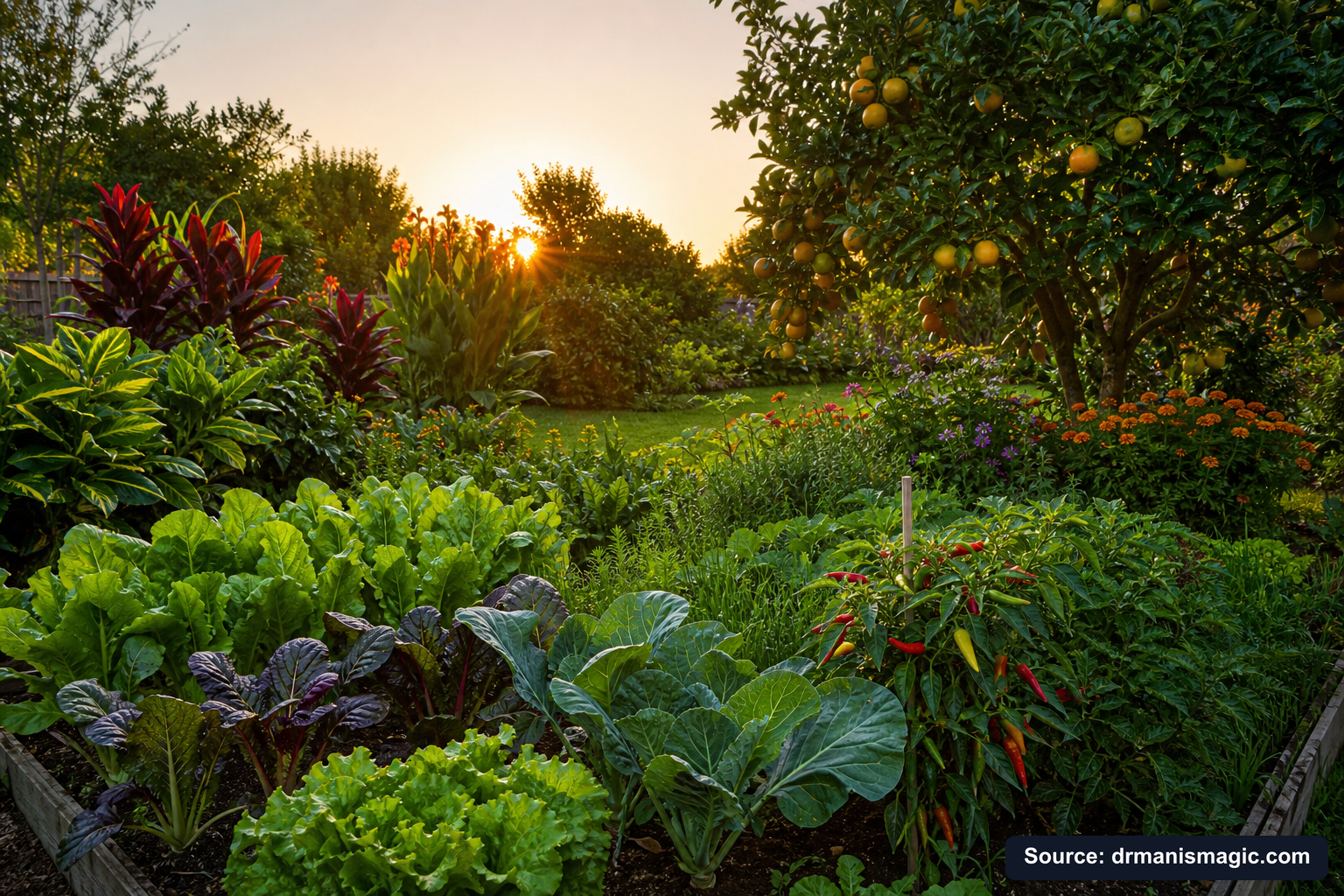
The Warm Truth About What Your Plants Have Been Waiting For
You did not get a brown thumb because you are bad at gardening. You got a brown thumb because you were handed the wrong tools and told they were the best ones available. Blue crystals that burn roots. Potting mix that turns to mud in six months. Fertilizers filled with municipal waste and chemicals that do not break down in a hundred years.
The real system — the one that has worked for 500 million years before Miracle-Gro was invented — runs on soil that breathes, microbes that build, and nutrition that moves at nature's pace. Crab shells. Kelp from the ocean. Amino acids from protein. Volcanic minerals forged in the earth. These are not exotic ingredients. They are ancient ones. And they work because they work with the biology your plant already knows how to use.
Dr. Mani spent 40 years as a plant pathologist, led Texas's Clean Citrus Program, and grew more than 250,000 trees testing every input he could find. The Three Plant Pillars framework he developed is the distillation of all of that. Mineral-based soil that does not suffocate roots. Living microbes that build a biological shield. And clean, slow organic nutrition that feeds the whole system without burning any of it.
Every plant you own deserves that foundation. Your lawn. Your tomatoes. Your Meyer lemon. Your fiddle-leaf fig in the corner of the living room. They are all running the same biological operating system. And when you feed that system right, the results feel less like gardening and more like what it was always supposed to be: easy, abundant, and alive.
If you are ready to stop fighting your plants and start working with them, take a look at Crab, Kelp & Amino Acids — our complete organic fertilizer built around exactly the biology this article describes. Try it for 30 days. If you do not love what you see, we will refund every penny. No arguments. No runaround. Just results, or your money back.
Your plants have been waiting for this. So have you.
Frequently Asked Questions
Gardeners ask us all the time why their plants look rough even after doing everything "right." The answers below cut through the noise. They are grounded in what Dr. Mani learned growing over 250,000 trees in South Texas, and they will change how you think about feeding your plants for good.
How do crab-based inputs actually toughen plants naturally?
Crab shells contain a tough fiber called chitin. When chitin breaks down in your soil, it feeds beneficial bacteria like Bacillus and Streptomyces. Those microbes protect roots, fight disease, and help your plant build thicker cell walls. The result is a plant that stands up to heat, drought, and pests on its own. This is Pillar Two and Pillar Three of the Three Plant Pillars working together exactly as nature intended.
Why does synthetic fertilizer make plants look worse over time?
Synthetic fertilizers are salt-based. Salt pulls water away from roots and kills the beneficial microbes your plant depends on. You get a quick green flush, then yellow edges, weak roots, and a plant that cannot fight anything on its own. Dr. Mani saw this pattern thousands of times at the US Citrus Nursery. The plant is not failing. The fertilizer is failing the plant.
What is the "sleep, creep, leap" rule and how do the Three Plant Pillars speed it up?
Sleep, creep, leap describes how newly planted trees spend year one building roots, year two putting on growth, and year three finally taking off. Most gardeners lose plants in year one because the soil is wrong and the microbes are missing. When you start with mineral-based Super Soil, live microbes from Plant Super Boost, and slow-release organic fertilizer, roots establish faster. You stop waiting and start growing.
How do you make seedlings and young plants genuinely strong, not just green?
Green leaves are easy. Real strength comes from the root zone. Feed your soil with live microbes and organic, slow-release nutrients from crab, kelp, and amino acids. Those inputs build biology underground first. When the root system is strong and surrounded by a living microbial community, the plant above ground becomes practically bulletproof. That is the difference between a plant that looks healthy and one that actually is.
Does Dr. Mani's organic fertilizer smell bad like fish emulsion?
No. Fish emulsion goes anaerobic fast and can smell like rotting sewage, which is a real problem for indoor plants and backyard gardens. Dr. Mani's Crab, Kelp, and Amino Acids fertilizer is formulated to stay stable. It smells earthy, not foul. You can use it on your houseplants, your vegetable garden, and your fruit trees without clearing the room or clearing the yard.
Can these inputs work on any plant, or just citrus trees?
Any plant. The Three Plant Pillars are first-principles biology. Mineral-based soil, live microbes, and organic fertilizer work for grass, flowers, tomatoes, houseplants, tropical trees, and everything in between. Dr. Mani proved the system on 250,000 citrus trees at the US Citrus Nursery in South Texas. Then he tested it across his grove, his houseplants, and his tropical trees. The biology does not change. Only the plant does.
How long before you see real results with crab-based organic inputs?
Most gardeners notice a visible difference within 30 days. Roots start expanding into healthy soil. Leaves deepen in color. The plant stops looking stressed. But here is the thing about time: you cannot get it back. Every month you spend using salt-based fertilizers is a month your soil biology is being damaged. The best time to switch was last season. The second best time is right now.
About the Author
Ron Skaria, MD
Ron Skaria, MD, is the co-founder of Dr. Mani's Magic and the son of Dr. Mani. He trained as a medical doctor at Baylor College of Medicine, did his residency at UT Health Science Center - San Antonio and fellowship training at Texas Tech University. He now works full time on the family farm at US Citrus and US Citrus Nursery in Hargill, Texas, building Dr. Mani's Magic alongside his dad. He wrote the Brown Thumb Field Guide to put his father's 48 years of plant science into plain words any gardener can use. His belief is simple. You never had a brown thumb. You just never had the right help.


