


The Natural Defense Signal Hidden in Chitin and How Plants Use It | Dr. Mani's Magic
The Natural Defense Signal Hidden in Chitin: What Your Plants Already Know How to Fight
Picture this. You walk out to your garden on a Tuesday morning, coffee in hand, and something just looks wrong. A leaf is curling. A stem looks soft. The color is off. You've watered it right. You've fed it. You've done everything the bag told you to do. And yet the plant looks like it's losing a fight you didn't even know was happening.
Here's what nobody told you. Deep in the soil, your plant has been waiting for a signal. Not a signal from you. A signal it evolved over millions of years to detect all by itself. A signal that tells it: danger is near, wake up, get ready, defend yourself. That signal is chitin. And it's been sitting inside crab shells, shrimp shells, insect skeletons, and fungal cell walls the whole time. Right under our noses. Hiding in plain sight.
At our South Texas nursery, we've grown over 250,000 citrus trees. We've seen what happens when plants get the right biological inputs. We've also seen what happens when they don't. And one of the most powerful things we ever added to our fertility program wasn't a chemical. It wasn't a synthetic salt. It was chitin. A humble compound from crab shells that turned out to be one of nature's oldest and most elegant alarm systems. This is that story.

Organic Fertilizer | Crab, Kelp & Amino Acids
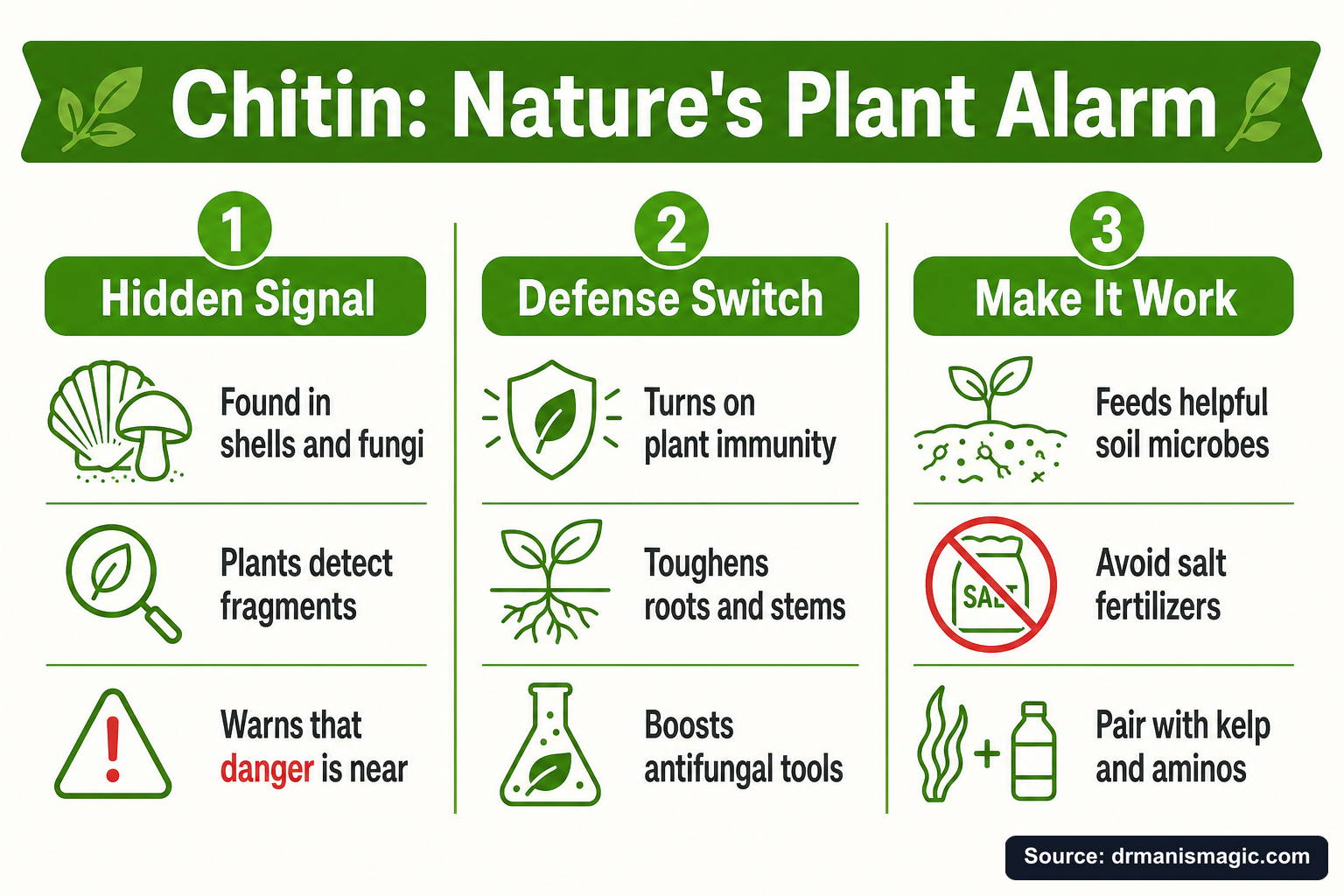
Key Takeaways
- Chitin is a natural compound in crab shells, shrimp shells, insect skeletons, and fungal cell walls that plants detect as a danger signal.
- When plants sense chitin fragments in the soil, they activate a built-in immune response that primes defenses against disease, fungi, and pests.
- Chitin also feeds a specific group of soil microbes that break it down, and those microbes help suppress root rot, nematodes, and fungal pathogens.
- Synthetic salt-based fertilizers kill the microbes chitin needs to work, which is why most gardeners never get the full benefit.
- Kelp adds plant growth hormones and stress signals that work alongside chitin to build plant resilience from the root zone up.
- Amino acids provide gentle, plant-friendly nitrogen that feeds microbes first and lets them release nutrients slowly into the root zone.
- The Three Plant Pillars framework, developed and proven at US Citrus Nursery, is the system that lets chitin, microbes, and organic nutrition all work together the way nature intended.
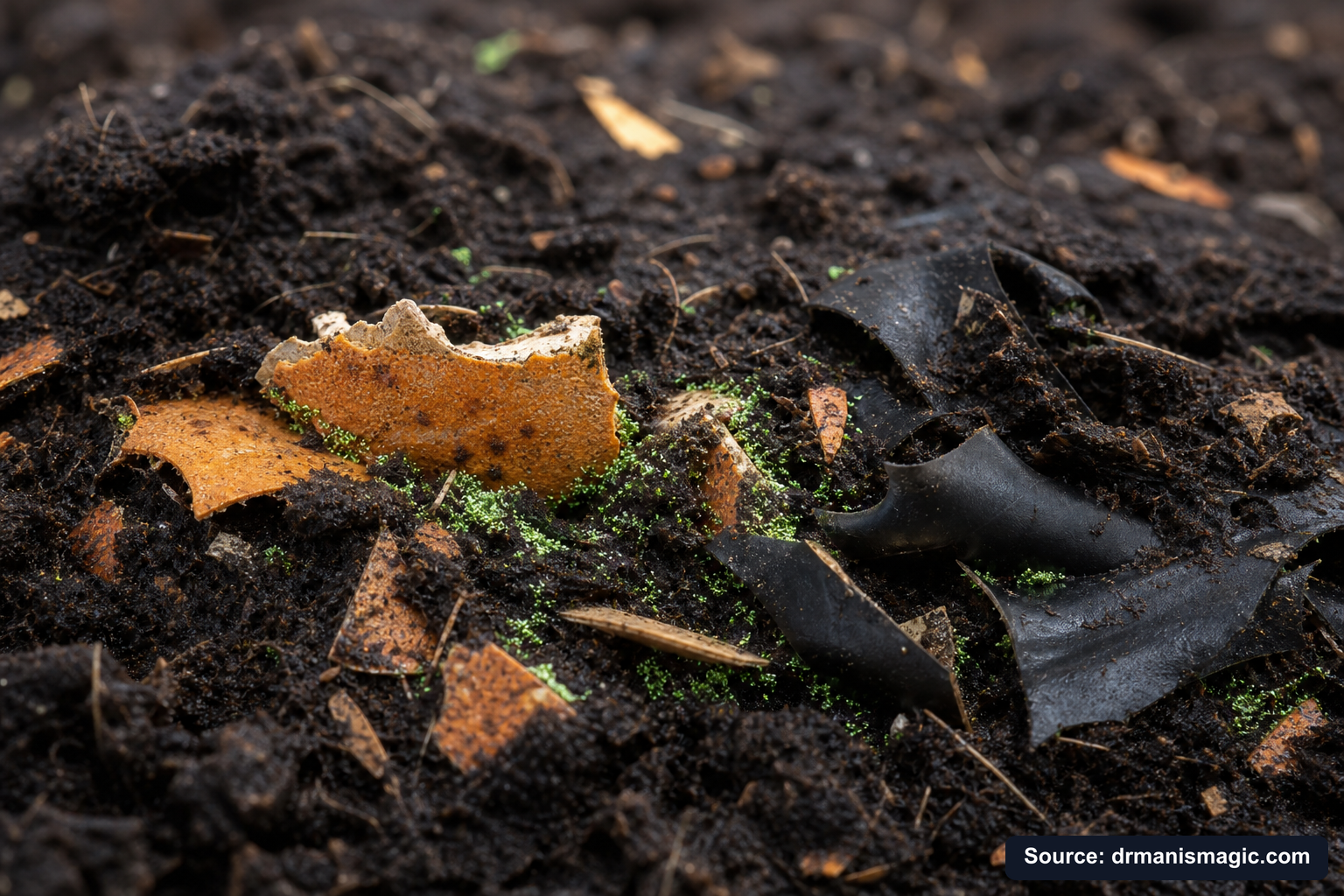
What Is Chitin and Why Do Plants Care About It?
Quick Answer: Chitin is a tough, natural fiber found in the shells of crabs and shrimp, the outer skeletons of insects, and the cell walls of many fungi. Plants have evolved special receptors that detect chitin fragments in the soil. When they do, they flip on their immune system and prepare to fight. It is nature's biological alarm bell.
Think of chitin like a fingerprint at a crime scene. Detectives know that if they find it, something was there. Plants work the same way. When chitin fragments show up in the root zone, the plant's cells read them and say: a fungus or an insect was here. Something is attacking. Time to get ready.
Scientists call these chitin fragments "elicitors." They elicit, or trigger, a whole cascade of defense responses inside the plant. According to peer-reviewed plant pathology research, chitin fragments activate jasmonic acid signaling, reactive oxygen species, and the production of defense proteins called PR proteins. The plant also ramps up lignin production to toughen its cell walls, and it can even release compounds called phytoalexins that act like natural antibiotics.
This works across almost every type of plant you grow. Monocots like grass and corn. Dicots like tomatoes, roses, citrus, and peppers. The chitin receptor system is ancient, conserved, and powerful.
But here is the part most people miss. Chitin does not just signal the plant. It also feeds a very specific group of soil microbes called chitin-degrading bacteria. These microbes eat chitin for breakfast. And in the process of breaking it down, they release nutrients, suppress pathogens, and create a healthier root zone for everything growing nearby.
That is a two-for-one deal you simply cannot get from a bag of synthetic fertilizer.
What Happens Inside the Plant When It Detects Chitin?
Quick Answer: When chitin fragments reach a plant's root-zone receptors, the plant launches a full immune response. It produces defensive enzymes, strengthens cell walls, and activates chemical signals that make it harder for pathogens and pests to take hold. Think of it as the plant calling its own internal army to attention.
Your plant's immune system is real. Plants cannot run from danger. They can't swat bugs or call a doctor. So over millions of years, they evolved something better. A whole network of chemical signals and physical defenses that activate the moment something dangerous shows up.
Here is what the science shows happens when a plant detects chitin in its root zone:
- Jasmonic acid floods the plant. This is a plant hormone that coordinates the immune response, similar to how adrenaline works in your body. It tells every cell to get ready.
- Chitinase and glucanase enzymes ramp up. These are proteins that actually attack and break down fungal cell walls. The plant starts producing its own antifungal tools.
- Callose forms around cell walls. Callose is a thick, gummy material that plugs up entry points and slows down pathogen invasion.
- Lignin production increases. Lignin is what makes wood hard. More lignin means tougher stems, tougher roots, tougher everything.
- Phytoalexins are released. These are natural antimicrobial compounds the plant makes itself. Think of them as the plant's own antibiotics.
- PR proteins are expressed. Pathogenesis-Related proteins are a broad class of defense proteins that help the plant resist infection even after the initial threat has passed.
This is not just one reaction. This is a whole symphony of defense. And chitin in the root zone is the conductor that starts it all.
According to research shared by the University of California's Division of Agriculture and Natural Resources, plants that are primed by chitin-based inputs show stronger and faster responses when they later encounter real pathogens. The plant does not just fight. It remembers. It gets better at fighting over time.
This is called immune priming. And it is one of the most exciting concepts in modern plant biology. Not because it is new science, but because most home gardeners and even most commercial growers have never had access to it in a simple, practical form.
How Do Chitin-Degrading Microbes Change Your Soil?
Quick Answer: Chitin feeds specific bacteria in the soil that specialize in breaking it down. As these microbes eat chitin, they multiply, crowd out harmful pathogens, release plant-available nutrients, and create an underground ecosystem that actively protects your roots. More chitin-eating microbes means fewer disease-causing organisms have room to survive.
The soil under a healthy plant is not quiet. It is one of the most densely populated places on Earth. One teaspoon of healthy soil can contain more living organisms than there are people on the planet.
When you add chitin to your soil, you are not just signaling the plant. You are feeding a very specific team of microbial warriors. Chitin-degrading bacteria like Bacillus and Streptomyces species multiply rapidly when chitin is present. These are the same microbes that suppress some of the most common root diseases in home gardens and orchards.
Here is why that matters in plain terms. Root rot pathogens like Pythium and Phytophthora thrive in soil where the beneficial microbial community has been wiped out. When you use salt-based synthetic fertilizers, you create osmotic stress in the root zone. That stress kills your beneficial microbes. And without those microbes, the bad guys move in.
But when chitin-degrading microbes are thriving, they outcompete the pathogens for space and resources. They also produce enzymes and compounds that directly attack fungal cell walls. And research from North Carolina State University's cooperative extension has shown that chitin amendments can help reduce nematode pressure in the soil by encouraging populations of nematode-suppressive organisms.
The bottom line is this. Adding chitin to your soil does not just help the plant defend itself. It reshapes the entire microbial neighborhood into one that actively protects your roots.
That is something no synthetic fertilizer has ever been able to do.
What Is the Difference Between Chitin, Chitosan, Crab Meal, and Insect Frass?
Quick Answer: Chitin is the raw structural fiber. Chitosan is chitin that has been processed with an alkaline solution to make it more water-soluble. Crab meal and shrimp meal are shell-based fertilizers that contain chitin along with calcium and protein. Insect frass is the waste product from insects and also contains chitin. All deliver chitin, but in different concentrations and forms.
This one confuses a lot of people. So let's break it down fast and simple.
| Source | Chitin Form | Other Nutrients | Best Use | Notes |
|---|---|---|---|---|
| Crab / Shrimp Shell Meal | Raw chitin in shell matrix | Calcium, magnesium, nitrogen | Soil amendment, granular fertilizer | Slow to break down; feeds microbes over time |
| Chitosan (processed chitin) | Deacetylated, water-soluble chitin | Minimal | Foliar spray, soil drench | Faster-acting plant signal; used in some organic sprays |
| Insect Frass | Chitin in waste and exoskeleton fragments | Nitrogen, phosphorus, potassium, microbes | Soil top-dress or tea | Also contains live microbial populations |
| Fungal Cell Wall Extracts | Chitin from fungal walls | Minimal | Specialty soil biology inputs | Less common in consumer products |
The crab shell meal in our fertility program is the workhorse. It breaks down slowly. That slow breakdown feeds chitin-degrading microbes over weeks and months. The microbes eat it, multiply, and keep producing defense-supporting compounds long after you first applied it.
It is the opposite of a quick-fix. It is a long-term investment in your soil's immune memory.
Why Do Synthetic Fertilizers Undermine the Chitin Signal?
Quick Answer: Synthetic fertilizers are salt-based. Salt creates osmotic stress in the root zone, which damages fine root hairs and kills beneficial microbes. Without those microbes, chitin cannot be broken down properly, the plant defense signal cannot fire the way it should, and your root zone becomes a ghost town where pathogens thrive.
Here is a painful truth we learned the hard way at our nursery. You can add all the chitin in the world to your soil. But if you are also pouring salt-based synthetic fertilizers on that same soil, you are taking one step forward and two steps back.
Salt-based fertilizers work by flooding the soil with high concentrations of mineral salts. Those salts dissolve quickly and create what scientists call osmotic stress. In plain English: the soil gets so salty that water actually pulls away from root cells instead of flowing into them. The roots get thirsty even when the soil is wet. This is sometimes called physiological drought, and it is one of the sneakiest ways plants get hurt.
Even worse, those salt levels are toxic to the very microbes chitin depends on. The chitin-degrading bacteria that should be eating your crab meal, multiplying, and protecting your roots? They die. The mycorrhizal fungi that help plants access phosphorus and water? They die too.
What you are left with is sterilized soil. Soil that looks normal. Soil that might even produce a green flush of growth for a few weeks. But soil that is quietly falling apart underneath. Soil where Pythium and Phytophthora can now move in and cause root rot because there is nothing left to stop them.
See also: The Hidden Reason Synthetic Fertilizers Cause Root Rot
We have seen this pattern repeat thousands of times across our nursery. Growers who came to us with struggling trees that had been fertilized regularly. Sometimes over-fertilized. The problem was never a lack of nutrients. The problem was that the salt had killed the biology, and without the biology, nothing worked right.
This is exactly why the Three Plant Pillars framework places organic, biology-friendly nutrition as a non-negotiable foundation. Not because organic sounds nice. Because the science shows it is the only way to keep the microbial community alive and let chitin do its job.
How Do Amino Acids, Kelp, and Chitin Work Together?
Quick Answer: Amino acids provide gentle, plant-ready nitrogen that feeds microbes and lets them release nutrients slowly into the root zone. Kelp adds natural plant hormones and stress-resistance signals. Chitin primes the immune system. Together, these three inputs create a complete biological support system that no single synthetic fertilizer can replicate.
Think of it like a three-person team. Each one does a different job. But together, they accomplish something none of them could do alone.
Amino acids are the building blocks of protein. When you apply amino acid-based nitrogen to your soil, something interesting happens. The microbes eat it first. They break it down, multiply, and then as they die and cycle through the soil, they release that nitrogen in a plant-ready form. Slow. Steady. Continuous. This is how nature has always fed plants. Not with a salt bomb. With a living relay race.
This process is gentle on roots because it does not create osmotic stress. There is no salt spike. The plant absorbs nitrogen at its own pace, in the form it prefers. And the microbes benefit too, which means your soil biology stays strong and active.
Kelp brings something different to the table. Cold-processed kelp is packed with natural auxins, cytokinins, and other plant growth hormones. These are the same hormones plants produce to regulate root growth, stress tolerance, flowering, and fruit development. When you apply kelp to the root zone, you are essentially giving the plant a concentrated dose of natural growth signals that help it respond better to heat, drought, cold, and nutrient stress.
Kelp also contains trace minerals, carbohydrates that feed soil microbes, and compounds that help the soil retain moisture. It works with the microbial community, not against it.
Chitin ties it all together. With healthy microbes fed by amino acids and kelp-fueled biology, chitin-degrading organisms can do their best work. They break down the crab shell meal, release nutrients, suppress pathogens, and keep sending that immune-priming signal up to the plant's roots day after day.
This is the logic behind Crab, Kelp & Amino Acids. It is not three random ingredients thrown together. It is a system designed around how plants and soil biology actually communicate with each other.
You Never Had a Brown Thumb.
You were handed the wrong tools. This free guide hands you the right ones.
You watered it. You fed it. It died anyway.
It was never you. It was the dirt, the salt food, and the bad advice.
This guide shows you what really went wrong, and how to fix it for good.
- Why your plants really died, and why it was never your fault
- The salt hiding in your plant food that quietly burns the roots
- The hidden killer in almost every bag of store soil
- The tiny helpers that grow a whole forest for free
- The rescue trick that brings a half dead plant back to life

Is Chitin Good for Lawns, Vegetables, Trees, and Container Plants?
Quick Answer: Yes. The chitin defense signal works across almost every plant type because the receptor system is universal in the plant kingdom. Lawns become more disease-resistant. Vegetable roots grow stronger. Trees build tougher bark and more resilient root systems. Container plants get immune-priming benefits even in small volumes of soil. Chitin is not crop-specific. It is biology-universal.
We tested this on 250,000 citrus trees over decades at US Citrus Nursery in South Texas. That gave us the data and the confidence to say: the biology holds across plant types.
But we have also seen it work on lawns, roses, tomato gardens, houseplants, tropical trees, and even ornamental hedges. The mechanism does not change. The plant's chitin receptor does not know if it is a Meyer lemon tree or a St. Augustine grass blade. It just knows: chitin is here, get ready to defend.
Here is a quick guide for different plant types:
| Plant Type | Primary Benefit of Chitin | Additional Benefit | When to Apply |
|---|---|---|---|
| Lawn / Turf | Suppresses fungal disease like brown patch | Encourages chitin-degrading microbes that reduce thatch | Spring and fall, monthly light applications |
| Citrus / Fruit Trees | Primes immunity against Phytophthora root rot | Calcium from crab shell strengthens cell walls and bark | Every 4-6 weeks during growing season |
| Vegetables / Gardens | Reduces nematode pressure; suppresses damping-off fungi | Amino acid nitrogen supports fast, even growth | At planting and monthly through season |
| Ornamentals / Flowers | Stronger stems, more resilient to fungal disease | Kelp hormones support bloom and stress recovery | Monthly during growing season |
| Houseplants / Containers | Immune priming in small soil volume | Slow-release nutrition without salt buildup | Monthly, light application on soil surface |
One thing that matters a lot for container plants: salt accumulation. In a pot, there is nowhere for excess salt to go. It builds up. It creates osmotic stress. It hurts roots. It kills microbes. And then chitin cannot work because there is nothing alive to process it.
Organic, low-salt inputs like chitin-based granular fertilizers are especially important in containers for this reason. The biology stays alive. The immune signal keeps firing. The plant stays healthy.
See also: How Salt-Based Feeding Quietly Destroys Root Systems
How Do You Recognize Salt Damage, Overwatering, and True Root Rot?
Quick Answer: Salt damage shows up as brown leaf edges, wilting in moist soil, and crusty white deposits on the soil surface. Overwatering causes yellowing, soft stems, and waterlogged roots that smell musty. True root rot from Pythium or Phytophthora turns roots black and slimy, and the plant collapses even with correct watering. Knowing which problem you have determines how to fix it.
Most gardeners see a struggling plant and reach for more fertilizer. That is almost always the wrong move. Here is a simple diagnostic guide to help you figure out what is actually happening before you add anything to the soil.
| Symptom | Salt / Fertilizer Damage | Overwatering | Root Rot (Pythium / Phytophthora) |
|---|---|---|---|
| Leaf color | Yellowing then brown edges (marginal scorch) | Overall yellowing, pale green | Rapid yellowing and drop, often sudden |
| Wilting pattern | Wilts even when soil is moist | Wilts and stays wilted; soil feels wet | Sudden collapse despite adequate moisture |
| Soil surface | White crusty deposits, hardened surface | Algae, moss, or green film on top | Soggy, compacted, may smell sour |
| Root appearance | Burnt root tips, brown fine roots | Pale, waterlogged, mushy in spots | Black, slimy, foul-smelling roots |
| Germination | Poor germination, seedling burn | Damping-off, seedlings fall over | No germination; seeds rot in place |
| Progression | Gradual, worsens with each feeding | Slow, worsens with more water | Fast, can kill a plant in days to weeks |
If you suspect salt damage, the first step is to flush the soil with clean water to leach out accumulated salts. Then stop all synthetic fertilizer. Give the soil time to recover. Then reintroduce biology with live microbes and switch to a salt-free organic nutrition program.
If you suspect root rot, here is a simple recovery checklist:
- Remove the plant from its container or gently expose the root zone.
- Trim away any black, slimy, or foul-smelling roots with clean scissors.
- Allow roots to air-dry for 30-60 minutes before replanting.
- Repot into well-draining, mineral-based soil with excellent aeration. Organic bark-based mixes hold too much moisture and make root rot worse.
- Drench the new soil with live beneficial microbes to help recolonize the root zone and crowd out remaining pathogens.
- Do not fertilize for at least two to three weeks. Let the roots recover first.
- When you do resume feeding, use only organic, low-salt inputs that will not re-create osmotic stress in recovering roots.
The soil structure piece of this is critical. This is exactly why mineral-based soil that drains freely is Pillar One of the Three Plant Pillars. You cannot solve a root rot problem by adding the right inputs into the wrong soil. The foundation has to be right first.
Learn more about building the right foundation here: The Three Plant Pillars
Why Does Clean Nutrition Matter? The PFAS and Biosludge Problem
Quick Answer: Some fertilizers, both synthetic and organic, use biosludge, which is treated municipal waste, as a filler. Biosludge can contain PFAS "forever chemicals" that accumulate in soil and in the food you grow. Clean, biosludge-free inputs with no synthetic salts protect your family, your soil biology, and the long-term health of everything you plant.
This is the part of the fertilizer conversation that makes people uncomfortable. But it needs to be said.
You have probably heard of PFAS. Per- and polyfluoroalkyl substances. They are called forever chemicals because they do not break down. They accumulate in soil. They accumulate in groundwater. They accumulate in plants. And they accumulate in the bodies of people who eat those plants.
Some fertilizers, including products labeled organic, use biosludge as a filler. Biosludge is treated municipal wastewater waste. It is human sewage, processed and dried. And it can carry PFAS from everything that went down the drain in that city. Pharmaceuticals. Industrial chemicals. Flame retardants. All of it.
We do not use biosludge. We never have. Our crab, kelp, and amino acid program is clean. No forever chemicals. No municipal waste. No synthetic salts. Zero PFAS.
This matters especially if you are growing food. Vegetables. Fruits. Herbs. Things your family is going to eat. The inputs you choose are not just about plant health. They are about your health.
And there is another safety angle here that we feel strongly about. If you have children playing in the backyard, or a dog who rolls in the grass, or you like to walk barefoot in your garden, what is soaking into that soil matters. The real luxury of a beautiful garden is being able to enjoy it without worry. Without reading warning labels. Without wondering what just splashed on your skin.
Organic, biology-based inputs let you grow food and tend your garden with confidence. That peace of mind is not a small thing. It is the whole point.
Chitin vs. Synthetic Fertilizer: What Does Each One Actually Do to Your Soil?
Quick Answer: Synthetic fertilizers deliver nutrients fast but at the cost of salt damage, microbial death, and long-term soil degradation. Chitin-based organic inputs work slower but build a living soil ecosystem that feeds plants, suppresses disease, primes immunity, and gets better over time. One is a short-term fix that creates long-term problems. The other is a long-term investment that keeps compounding.
Here is the comparison you actually need to see.
| Factor | Synthetic Fast-Release Fertilizer | Synthetic Slow-Release (Coated) | Chitin / Crab Meal / Organic Program |
|---|---|---|---|
| Salt index | Very high. Burns roots and microbes. | Moderate but plastic-coated pellets leach microplastics. | Very low. No osmotic stress on roots or microbes. |
| Microbial impact | Kills beneficial bacteria and fungi. | Still harmful over time. Salt accumulates. | Feeds and multiplies beneficial microbes. |
| Disease suppression | None. Often makes things worse by removing microbial competition. | None. | Active. Chitin-degrading microbes suppress Pythium, Phytophthora, and nematodes. |
| Plant immune priming | None. | None. | Yes. Chitin fragments trigger jasmonic acid, PR proteins, chitinase, lignin, and phytoalexins. |
| Speed | Fast green-up, then crash. | Moderate but inconsistent. | Slower start, then steady and self-sustaining. |
| PFAS / Biosludge risk | Some products use biosludge fillers. | Plastic coatings. Some biosludge risk. | Zero with clean-source crab/kelp/amino acid inputs. |
| Long-term soil health | Degrades over years. Creates dependency. | Slightly better but still degrades biology. | Improves over time. Soil gets better each season. |
The fast green-up from synthetic fertilizers feels good. We understand the appeal. But what you are seeing is the plant being force-fed salt. It pushes out new leaves. Then it crashes. Then you feed it again. Then it crashes again. It is a cycle that gets worse every year because the biology underneath keeps dying.
Here is the painful truth about time that nobody in the big chemical world wants you to think about. You can always get your money back. You cannot get your time back. Every season you spend running that salt cycle is a season your soil biology moves further from what it should be. And every season you delay building the right foundation is a season you do not get fruit, flowers, or the lush lawn you pictured.
The number one thing people tell Dr. Mani when they come to us is that they want to see fruit on their tree while they still can. Not in some distant future. Now. This season. Next season. That is not going to happen on a salt cycle. It happens when the soil is alive, the inputs are clean, and the plant is not spending all its energy fighting off root damage.
See also: Why Most Fertilizers Are Actually Salt in Disguise
How Does the Three Plant Pillars System Unlock Everything Chitin Can Do?
Quick Answer: Chitin's full power requires living soil. Without the right soil structure for drainage and aeration, without active beneficial microbes to process the chitin, and without clean organic nutrition to keep those microbes fed and thriving, the chitin signal fires weakly or not at all. The Three Plant Pillars create the conditions where everything works together the way nature designed it.
We want to be straight with you. You can buy crab meal from anywhere and sprinkle it on your plants. You might see some benefit. But you will not see the full picture unless the other pieces are in place.
Here is why.
Chitin-degrading microbes need oxygen to work. If your soil is compacted or waterlogged, they suffocate and die. Most potting mixes are loaded with pine bark and wood chips that break down over months into a dense, airless sludge. Roots cannot breathe. Microbes cannot breathe. Chitin cannot be processed.
That is why Pillar One is mineral-based soil with true drainage and aeration. Sandy loam from South Texas that does not decompose. That does not compact. That stays open and breathable so roots and microbes can do their jobs for years, not months.
Chitin-degrading microbes also need to be there in the first place. If salt-based fertilizers have been wiping out your soil biology for years, there may not be enough of the right microbes to process the chitin you add. You need to reintroduce them directly.
That is Pillar Two. Live bacteria, fungi, and mycorrhizae added directly to the root zone. A living microbial team that can actually receive and process the chitin signal and pass it along to the plant.
And then the nutrition itself, Pillar Three, needs to support those microbes and the plant without creating the salt stress that undoes everything. Chitin from crab shells. Kelp for hormones and trace minerals. Amino acids for gentle, microbe-friendly nitrogen. All slow-release. All biology-supporting. All without synthetic salts, biosludge, or forever chemicals.
When these three pillars are all in place, something remarkable happens. The plant stops fighting. It starts thriving. The immune system is primed. The root zone is alive. The nutrition is steady and clean. And you start seeing the results that made you want to garden in the first place.
Explore the complete system: The Three Plant Pillars at Dr. Mani's Magic
And if you want the full care guide that walks you through exactly how to use all three pillars for any plant you grow, we put everything together in one place: Free Plant Care Field Guide
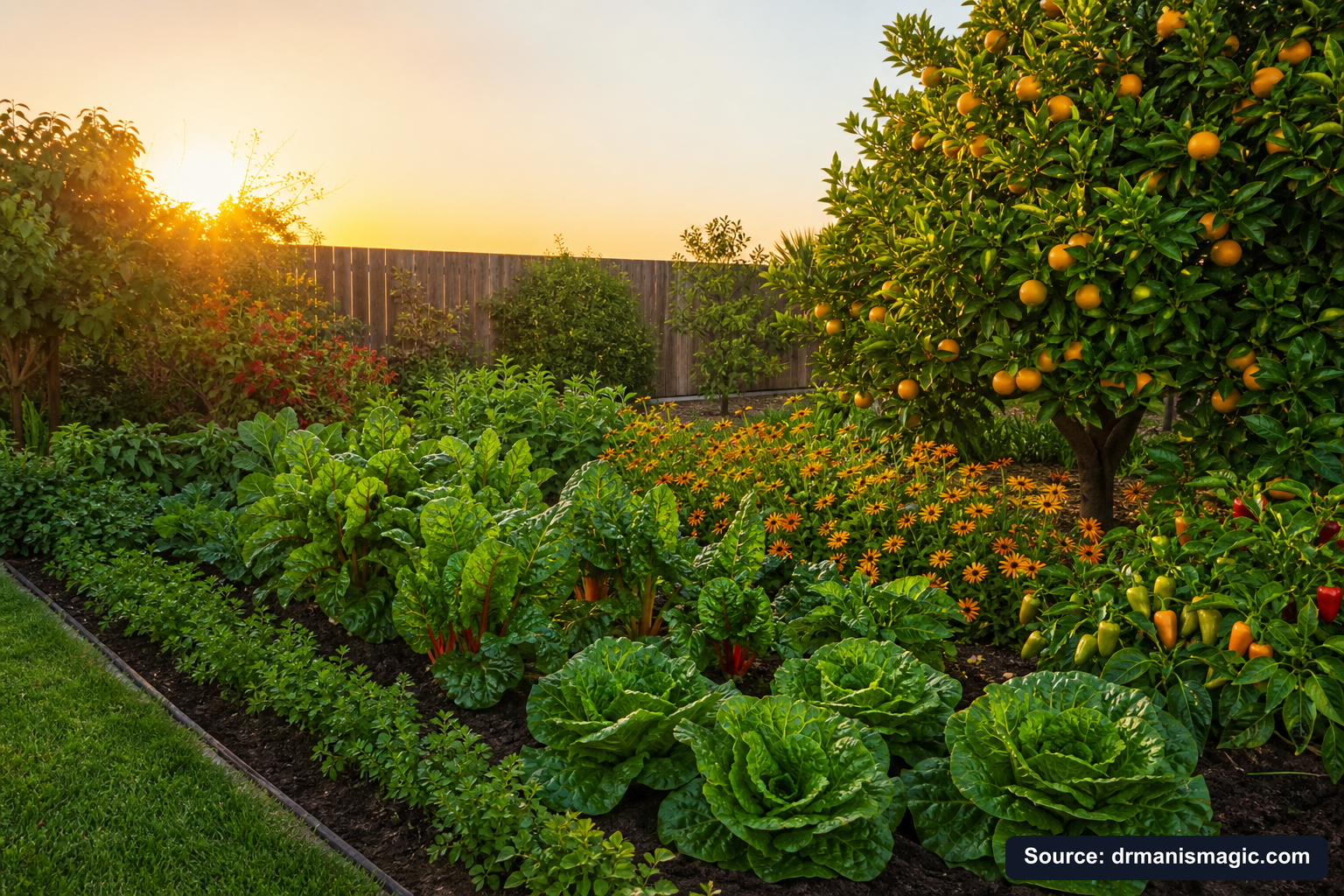
What Your Plants Have Been Waiting to Tell You
Chitin has been in the soil, in crab shells, in shrimp husks, in the wings of insects, for hundreds of millions of years. Plants evolved to hear it. To read it. To respond to it. Long before we had fertilizer bags and synthetic chemistry, this conversation between chitin and plant roots was already happening in every healthy forest and grassland on Earth.
We just stopped listening. We got sold on the idea that a quick salt flush was feeding our plants. That faster was better. That the green-up meant health. It does not. It means the plant is reacting. Not thriving.
Real thriving looks different. It is roots that go deep and stay clean. Leaves that hold their color through heat and stress. Fruit that actually sets. Grass that bounces back from summer. Flowers that bloom harder than they did last year. Plants that get better every season instead of needing more and more input just to stay alive.
That is what the chitin signal, combined with living soil biology and clean organic nutrition, can build for you. Not in a decade. Starting this season.
Dr. Mani spent 40 years studying plant pathology and citrus science at Texas A&M Kingsville. He has seen every trick the chemical companies push. And after testing on 250,000 trees, across our nursery, our grove, and our houseplant and tropical tree programs, the conclusion is always the same. When the biology is right, everything else falls into place.
If you are ready to stop the salt cycle and start building soil that actually works with your plants instead of against them, the simplest place to start is with a fertility program that brings chitin, kelp, and amino acids together in one clean, slow-release granular form. No biosludge. No PFAS. No synthetic salts. And a 30-day money-back guarantee if you are not happy with what you see.
Your plants have been waiting for this signal their whole lives. Give it to them.
Frequently Asked Questions About Chitin and Your Plants
Most gardeners have never heard of chitin. But once you understand what it does in your soil, you will never look at a crab shell the same way again. These are the questions people ask most often after learning that a compound from shellfish could be the missing piece in their garden.
What does chitin actually do for plants?
Chitin acts like a natural alarm bell for your plants. When plant roots detect tiny chitin fragments in the soil, they flip on their built-in immune system. The plant toughens its cell walls, produces natural defense compounds, and gets ready to fight off disease and pests. At our South Texas nursery, we have watched this play out across more than 250,000 citrus trees. The results are not subtle. Plants with chitin in their root zone fight back. Plants without it just sit there and take the hit.
Where does chitin come from in a garden setting?
Chitin is found naturally in crab shells, shrimp shells, insect skeletons, and the cell walls of many fungi. That is exactly why our Crab, Kelp, and Amino Acids fertilizer contains real crab meal. It is not just a nutrient source. It is a biological signal that wakes your plant up and puts it on high alert. Nature hid this tool in plain sight for millions of years. We just decided to use it on purpose.
Why do most fertilizers miss this completely?
Most fertilizers are salt-based synthetics. They push a quick green flush, then burn out. Worse, they wipe out the very soil microbes that break chitin down and make it useful. Without those microbes, chitin cannot do its job. The big chemical companies never told you this. They profit when your plants stay weak and you keep buying. The Three Plant Pillars system that Dr. Mani developed fixes this by putting microbes, mineral soil, and organic inputs all back together the way nature designed them.
Does chitin help with root rot and fungal problems?
Yes, and this is one of the most exciting parts. When chitin feeds the right bacteria in your soil, those bacteria produce enzymes that break down the cell walls of harmful fungi. Root rot pathogens, nematodes, and other underground threats lose their protection. Your plant does not need a chemical spray. It builds its own defense from the inside out. We have seen this work on citrus, tropicals, houseplants, and garden beds. The biology does not play favorites.
Is chitin safe for kids, pets, and the environment?
Chitin is completely natural. It is found in the food we already eat, including mushrooms and shellfish. There are no harsh warning labels. No re-entry periods. No worrying about your dog rolling in the yard or your kids running barefoot through the garden. That was a big part of why Dr. Mani chose crab meal as a core ingredient. You should be able to enjoy your garden every single day, not just on the days you did not spray something scary.
How does chitin work with the other Two Plant Pillars?
Chitin works best when it has live microbes to activate it and mineral-based soil to give those microbes a healthy home. That is the whole point of the Three Plant Pillars. Pillar One is mineral soil that drains well and lets roots breathe. Pillar Two is live microbes that break chitin down and unlock nutrients. Pillar Three is organic fertilizer, including crab meal with chitin, that feeds the whole system slowly and safely. Pull one pillar out and the others weaken. Keep all three together and your plants become practically bulletproof.
How fast will I see results after adding chitin to my soil?
Most people notice a difference within the first 30 days. Roots get more active. Leaves look stronger. The plant just carries itself differently. The deeper changes, like long-term disease resistance and soil biology, build over time. That is the trade-off with natural systems. They take a little longer to get started, but they do not stall out after a few months the way synthetic programs do. You are building something that lasts, not just patching a problem until next season.
About the Author
Dr. Mani Skaria, PhD
Dr. Mani Skaria, PhD, is a plant pathologist and the scientific founder of Dr. Mani's Magic. He earned his doctorate at Purdue University and spent 48 years studying how plants, soil, and living microbes work together, including his years as Professor Emeritus at Texas A&M and as a member of the USDA NAREEE Advisory Board. He invented micro-budding, a method for growing healthier, stronger trees, and has grown more than 250,000 trees on the family farm in Hargill, Texas - US Citrus Nursery. His life's work takes real lab science and practical experience and turns it into simple, safe, organic plant care anyone can use at home.


