


How Biology Turns Organics Into Plant Nutrition | Dr. Mani's Magic
How Biology Turns Organics Into Nutrition: The Soil Secret Every Plant Owner Needs to Know
Picture this. You walk outside on a warm morning. You push your fingers into the dark, crumbly soil under a towering oak tree in the middle of the woods. Nobody fertilized that tree. Nobody watered it. Nobody bought it anything at a big box store. And yet it is enormous. Healthy. Covered in leaves. Maybe even dropping acorns the size of your thumb.
How? How does a tree in the wild grow bigger and stronger than the one you babied all summer with expensive fertilizer from a plastic bag? The answer is not magic. But it is pretty close. The secret is alive, and it lives in the soil. It is invisible to the naked eye. And once you understand what it does, you will never look at your yard, your garden, or your houseplants the same way again.
Here is the thing most fertilizer companies never tell you. Plants do not eat fertilizer the way you eat lunch. There is a conversion process happening underground. A living, breathing engine made of billions of tiny microbes that take raw organic material and turn it into the exact nutrition your plant can actually use. Skip that engine, and all the fertilizer in the world is just expensive salt sitting in your soil, doing damage. Feed that engine right, and your plants practically take care of themselves. That is what this article is about. Let us open the hood.

Organic Fertilizer | Crab, Kelp & Amino Acids
Key Takeaways
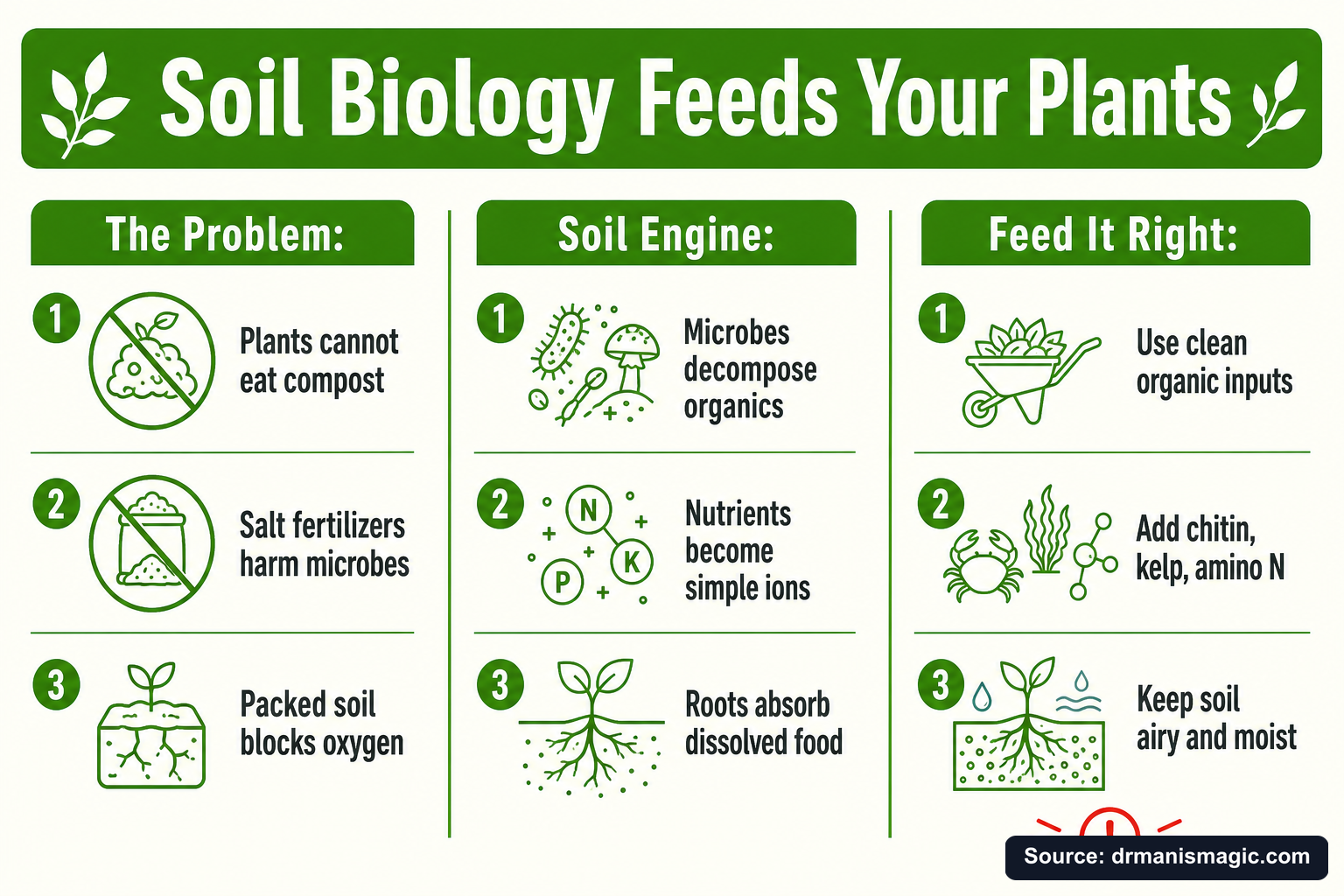
- Plants cannot eat compost or organic fertilizer directly. Soil microbes have to convert it first.
- The conversion process has several steps: decomposition, mineralization, chelation, and root uptake. Microbes run every step.
- Synthetic fertilizers are salt-based. Salt kills microbes and can cause root rot by blocking water uptake.
- Oxygen is the hidden requirement. Roots and beneficial microbes both need air-filled soil pores to survive and function.
- Chitin from crab shells, hormones from kelp, and amino acid nitrogen all feed the soil biology in ways synthetic salts cannot.
- Some organic fertilizers use biosludge and contain PFAS "forever chemicals." Clean inputs with zero biosludge matter.
- The Three Plant Pillars (mineral soil, live microbes, organic fertilizer) create a self-reinforcing system that keeps feeding your plant long after you apply anything.
Why Can't Plants Just Eat Compost Directly?
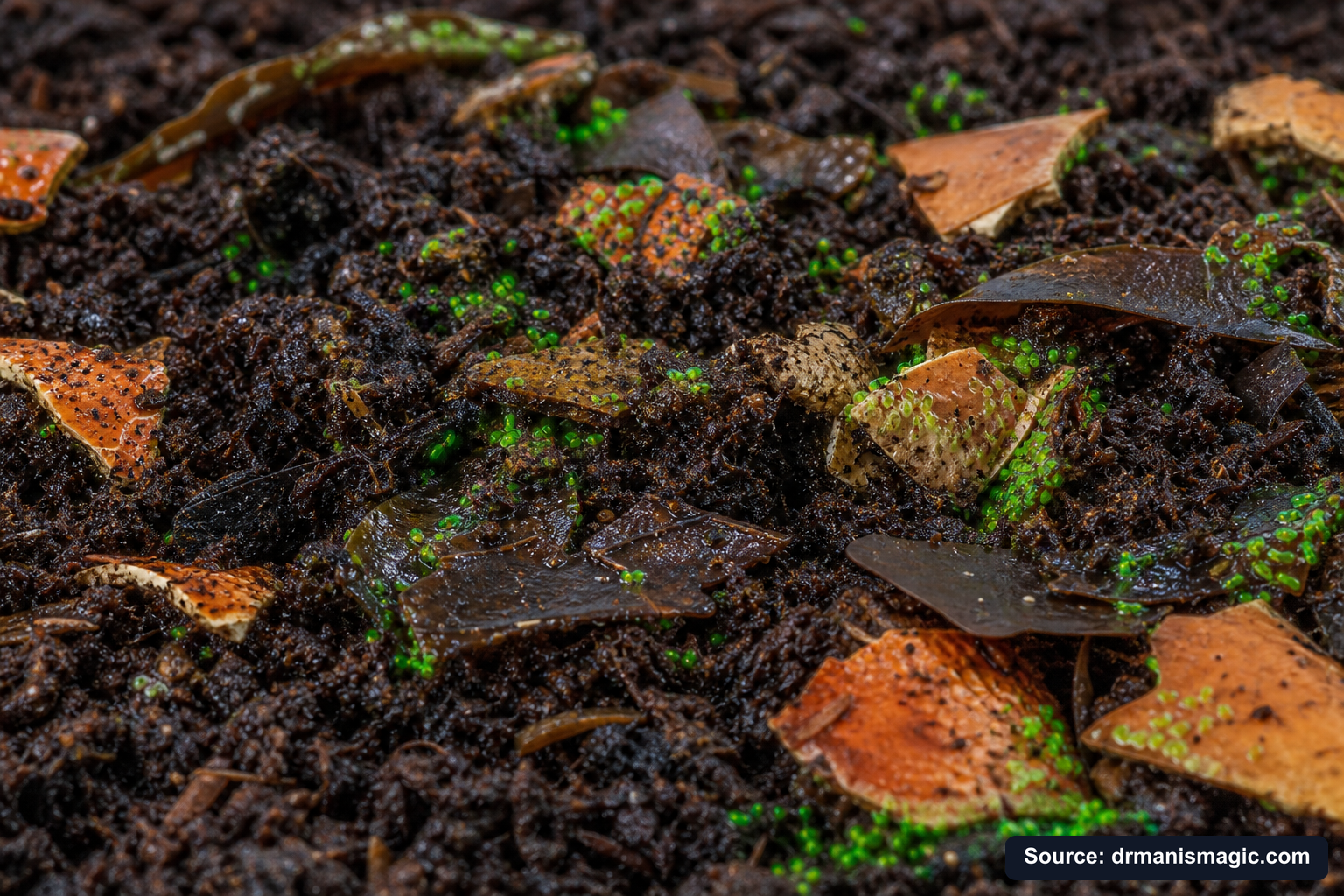
Quick Answer: Plants can only absorb nutrients in simple dissolved forms like nitrate, phosphate, and potassium ions. Compost, organic fertilizer, and dead leaves are too complex. Soil microbes must first break them down into those simple forms before a root can absorb anything useful.
Think about a steak. You cannot pour a raw steak into your bloodstream and expect your body to use it. You have to chew it, digest it, and break it down into amino acids and simple molecules your body can actually absorb. Soil works the same way.
Organic matter, whether it is a dead leaf, a handful of crab shell meal, or a pile of compost, is built from long, complex chains of carbon, nitrogen, phosphorus, and other elements. Those chains are locked up tight. A plant root cannot grab them. The root can only absorb simple, dissolved ions floating in the soil water around it.
That is where the microbes come in. Bacteria and fungi in the soil act like your digestive system. They break down those complex chains. They release enzymes that chew up proteins, starches, and fibers. They pull out the nutrients locked inside and convert them into simple forms the plant can actually drink up through its roots.
According to the University of Minnesota Extension, the rhizosphere (the zone of soil right around plant roots) is one of the most biologically active places on Earth. Billions of microbes live there, feeding on root secretions and breaking down organic residues, releasing nutrients in the process.
No microbes? The chain breaks. The organic matter just sits there. And your plant goes hungry even when it is surrounded by nutrients.
What Is the Step-by-Step Process That Turns Organic Matter Into Plant Food?
Quick Answer: Organic matter goes through at least five steps before a plant can use it: decomposition by fungi and bacteria, immobilization (microbes hold nutrients inside their own bodies), mineralization (microbes release nutrients as simple ions when they die or excrete), chelation (nutrients bind to organic acids and become root-accessible), and finally root uptake through water absorption.
Let us walk through each step the way it actually happens underground. Picture a single crab shell sitting in your garden bed.
Step 1: Decomposition
Bacteria and fungi arrive first. They secrete enzymes that start breaking apart the crab shell's structure. Chitin, the tough fiber that makes up the shell, starts to dissolve. Proteins inside the shell begin to unravel. This is decomposition. It does not happen overnight, and that slowness is the whole point. It is a natural, controlled release.
Step 2: Immobilization
Here is the part that surprises most people. When microbes eat organic matter, they pull the nutrients inside their own tiny bodies. The nitrogen, phosphorus, and other minerals get locked up inside microbial cells. This is called immobilization. It sounds bad. But it is actually your soil's savings account. The nutrients are stored safely, not washed away by rain, not leached deep where roots cannot reach.
Step 3: Mineralization
Microbes live short lives. When they die, all those nutrients stored inside their bodies get released back into the soil water in simple, plant-available forms. Nitrogen comes out as ammonium. Other bacteria convert that ammonium into nitrate through a process called nitrification. Phosphorus is released as phosphate. This release is slow and steady, timed perfectly with when plants are actively growing and actually need it.
According to Maryland Extension, nutrients in organic compounds are converted by these exact biochemical processes into inorganic forms that plants and microbes can use. The whole cycle is driven by biology.
Step 4: Chelation and Mycorrhizal Exchange
Certain organic acids and fungal networks called mycorrhizae attach to nutrients and carry them directly to root surfaces. Mycorrhizal fungi act like an extension cord for roots, reaching far beyond where the root itself can grow and delivering minerals like phosphorus, zinc, and iron straight to the root tip in exchange for sugars the plant produces. It is a trade. The plant feeds the fungus sugar. The fungus feeds the plant minerals. This is millions of years of evolution at work.
Step 5: Root Uptake
Finally, simple dissolved ions in the soil water are pulled into the root cells through tiny channels. The plant gets exactly what it needs, in the form it can use, at the pace the biology delivers it. No burn. No shock. No salt damage.
| Stage | Who Does It | What Happens | Result for Your Plant |
|---|---|---|---|
| Decomposition | Bacteria, fungi | Enzymes break apart complex organic molecules | Raw material becomes digestible |
| Immobilization | Microbial cells | Nutrients stored inside living microbes | Nutrients protected from leaching |
| Mineralization | Dying microbes, nitrifying bacteria | Nutrients released as simple ions (nitrate, phosphate, etc.) | Plant-available nutrition released slowly |
| Chelation | Organic acids, humic substances | Ions bound to organic carriers for easier root access | Trace minerals become accessible |
| Mycorrhizal Exchange | Mycorrhizal fungi | Fungal threads extend root reach; trade minerals for sugars | Phosphorus, zinc, iron delivered to roots |
| Root Uptake | Root cells | Dissolved ions absorbed through root channels | Nutrition enters the plant |
Why Does Salt in Synthetic Fertilizer Destroy This Whole System?
Quick Answer: Synthetic fertilizers are made from mineral salts. High salt concentration in soil pulls water out of root cells and microbial cells through osmosis, causing what scientists call osmotic stress or physiological drought. This kills beneficial microbes, burns fine roots, and collapses the very biology that converts organic matter into nutrition.
Here is a picture that will stick with you. You know what happens when you pour salt on a slug? It shrivels up and dies. That is osmotic stress. Water gets pulled out of the cells faster than the organism can survive.
That is exactly what happens to your soil microbes when synthetic fertilizer salt levels get too high. The microbes shrivel. They die. And when they die, the conversion engine shuts down. No more mineralization. No more chelation. No more mycorrhizal exchange. The nutrients in your soil get locked up with no biology to release them.
And here is the cruel irony. The plant starts showing yellow leaves and weak growth. You think it needs more fertilizer. So you add more. More salt. More microbial death. More locked-up nutrients. The plant looks worse. You buy more fertilizer. This is the cycle the big chemical companies profit from. It was never designed to end.
Dr. Mani Skaria, founder of US Citrus Nursery and a Professor Emeritus of Plant Pathology with 40 years of research experience, watched this exact pattern destroy thousands of trees before he started connecting the dots. After growing over 250,000 trees at the South Texas nursery, the pattern became impossible to ignore. Salt-based fertilizers were not feeding the trees. They were slowly starving them by killing the biology that did the real feeding.
See also: The Hidden Reason Synthetic Fertilizers Cause Root Rot
See also: How Salt-Based Feeding Quietly Destroys Root Systems
What Is Osmotic Stress and Why Does It Look Like Root Rot?
Quick Answer: Osmotic stress happens when salt in the soil pulls water out of root cells, causing the plant to wilt even when the soil is wet. It mimics overwatering or root rot because the symptoms look the same: drooping, yellowing, and dying roots. But the cause is salt damage, not too much water.
This is one of the most misunderstood problems in home gardening. Your plant looks like it is drowning. The soil feels moist. So you stop watering, which helps a little. But the real problem is the salt index of your fertilizer, not the water level.
Physiological drought is the technical term. The plant is surrounded by moisture but cannot drink any of it because the osmotic pressure is wrong. The salt concentration outside the root is higher than inside. Water flows the wrong direction. Out of the root instead of in.
Meanwhile, root pathogens like Pythium and Phytophthora thrive in stressed, oxygen-deprived root zones. Salt damage weakens roots. Weakened roots become easy targets for these water mold pathogens. The root rots. And everyone blames overwatering.
| Symptom | Salt Damage (Osmotic Stress) | Overwatering (Oxygen Deprivation) | True Root Rot (Pythium / Phytophthora) |
|---|---|---|---|
| Leaf appearance | Yellowing, brown tips, wilting | Yellowing, mushy base, wilting | Rapid wilting, brown/black leaves |
| Soil moisture | Normal or dry | Wet, soggy, waterlogged | Often wet but can be normal |
| Root appearance | Brown tips, stunted fine roots | Brown, slimy, mushy | Black, mushy, smell of decay |
| Cause | High salt index from synthetic fertilizer | Compacted or poor-draining soil, no oxygen | Pathogen infection in stressed root zone |
| Fix | Flush soil, stop synthetic fertilizer, switch to organic | Improve drainage, switch to mineral soil, reduce watering | Remove affected roots, improve drainage, add beneficial microbes |
| Prevention | Use organic, low-salt-index fertilizer | Use mineral-based soil with good pore space | Maintain live microbes that outcompete pathogens |
The good news? When you build on the Three Plant Pillars (mineral soil, live microbes, organic fertilizer), you address all three causes at once. Not just the symptoms.
Why Does Oxygen Matter as Much as Fertilizer?
Quick Answer: Almost all beneficial soil microbes are aerobic, meaning they need oxygen to survive. Compacted soil, waterlogged roots, and decomposing potting mix all collapse the air-filled pores that microbes breathe in. No oxygen means no beneficial biology, no nutrient conversion, and no plant nutrition, no matter how much fertilizer you apply.
Here is something most fertilizer articles skip entirely. Oxygen is the operating condition that makes everything else work.
Your soil is not just dirt. It is a three-dimensional structure full of tiny air pockets. Those pockets are where roots breathe. They are where aerobic bacteria and fungi live. They are where the whole conversion engine runs.
When those pockets collapse (from compaction, from heavy clay, from bark-based potting mix decomposing into sludge over time) the air disappears. Aerobic microbes die. Anaerobic bacteria take over. And anaerobic bacteria do not help your plant. They produce compounds that are actually toxic to roots.
That is why most common potting mixes are a time bomb. They start out fluffy and light. But they are built from wood bark and organic material that decomposes over 6 to 12 months. As it breaks down, the structure collapses. Pores close. Oxygen disappears. The same material that was supposed to protect roots starts suffocating them.
Mineral-based soil does not decompose. Silica-rich sandy loam from South Texas does not collapse. It holds its structure permanently. That means permanent drainage. Permanent pore space. Permanent oxygen for roots and microbes. That is Pillar Number One of the Three Plant Pillars, and without it, no fertilizer program works the way it should.
See also: Why Most Potting Mix Collapses Within 6-12 Months
What Does Chitin From Crab Shells Actually Do for Your Soil?
Quick Answer: Chitin is a tough natural fiber found in crab shells. When added to soil, chitin feeds a specific group of beneficial bacteria that also happen to attack and suppress the chitin-coated shells of harmful soil pathogens and fungal disease organisms. It is a natural, biology-driven defense system that builds immunity from the ground up.
Crab shell meal is not just a source of calcium and nitrogen. That would be enough. But chitin is the bonus that most gardeners have never heard of.
Here is how it works. Certain soil bacteria love to eat chitin. When you add crab shell meal, these bacteria multiply. Their population explodes. And here is the beautiful part: the outer coating of many harmful root pathogens, fungal disease organisms, and even some pest nematodes is also made of chitin. So when these chitin-eating bacteria run out of crab shell to eat, they turn to the chitin-coated bodies of harmful organisms in the soil.
You are essentially building an army of beneficial bacteria that protect your roots as a side effect of eating their organic meal. No synthetic pesticide. No chemical drench. Just biology doing what biology does when you give it the right fuel.
At the same time, crab shells are rich in calcium, which plants need more of than most people realize. Calcium builds cell walls. It makes stems rigid and strong. It helps fruit develop properly without cracking. A large portion of the woody structure of any tree or shrub is literally calcium. And crab shells deliver it in an organic, slowly mineralized form that does not spike and crash the way a synthetic calcium drench would.
You Never Had a Brown Thumb.
You were handed the wrong tools. This free guide hands you the right ones.
You watered it. You fed it. It died anyway.
It was never you. It was the dirt, the salt food, and the bad advice.
This guide shows you what really went wrong, and how to fix it for good.
- Why your plants really died, and why it was never your fault
- The salt hiding in your plant food that quietly burns the roots
- The hidden killer in almost every bag of store soil
- The tiny helpers that grow a whole forest for free
- The rescue trick that brings a half dead plant back to life

How Does Cold-Processed Kelp Feed Your Plants at a Hormonal Level?
Quick Answer: Kelp contains natural plant growth hormones called auxins and cytokinins, plus complex carbohydrates, trace minerals, and biostimulant compounds. These hormones signal root cells to multiply, tell the plant when to push new growth, and prime stress-response systems that help plants survive heat, drought, and pest pressure. This is biology-level nutrition, not just NPK.
Most people think of fertilizer as just nitrogen, phosphorus, and potassium. But plants are not machines running on three inputs. They are living organisms responding to hormonal signals, environmental cues, and dozens of trace compounds that regulate everything from root branching to fruit set.
Kelp delivers many of those signals. The auxins in kelp tell roots to grow longer and branch more. More roots mean more surface area for nutrient absorption. More absorption means faster, healthier growth. Cytokinins from kelp signal the plant to push new leaf flushes and divide cells more actively. You see this as visible vigor: greener leaves, stronger stems, faster recovery after stress.
But kelp also delivers something harder to measure. Complex carbohydrates called alginates act as food for beneficial soil microbes. They stimulate the same biology that converts organic matter into plant nutrition. So kelp does double duty. It feeds the plant directly through hormonal signaling, and it feeds the soil biology that does the slow-release nutrient conversion work.
The key word in the sourcing is cold-processed. Heat destroys the hormones and many of the biologically active compounds in kelp. Cold processing preserves them. This is why sourcing and processing method matter as much as the ingredient itself.
Why Are Amino Acids a Smarter Nitrogen Source Than Synthetic Urea?
Quick Answer: Amino acids are organic nitrogen compounds that soil microbes readily digest, releasing nitrogen in a controlled, plant-safe form. Unlike synthetic urea or ammonium nitrate, amino acid nitrogen does not spike salt levels, does not burn roots, and actively feeds the soil biology that keeps the whole nutrient conversion engine running.
Nitrogen is the nutrient plants need most. It drives leaf growth, chlorophyll production, and the amino acids inside the plant itself that build every protein and enzyme the plant needs to function. Without enough nitrogen, leaves turn pale yellow and growth stalls.
Synthetic fertilizers deliver nitrogen as simple salts: ammonium nitrate, urea, ammonium sulfate. These are immediately soluble. They spike in the soil water fast. Plants grab some. But a lot leaches away in rain or irrigation. And the salt left behind damages roots and kills microbes.
Amino acid nitrogen works differently. Amino acids are the building blocks that proteins are made from. When you add amino acid-based organic fertilizer to soil, microbes eat the amino acids as an organic food source. As they digest and eventually die, they release nitrogen in ammonium form at a slow, controlled rate. The plant gets a steady trickle of exactly what it needs instead of a sudden flood it cannot handle.
Even better, amino acids can be absorbed directly by plant roots in small amounts, bypassing the conversion step entirely for a quick, gentle boost. No salt. No burn. No microbial massacre.
This is one of the reasons Dr. Mani built amino acids into Crab, Kelp & Amino Acids, the organic fertilizer at the heart of the Three Plant Pillars. It covers nitrogen needs without compromising the biology that makes the whole system work.
What Do Volcanic Minerals Do That Regular Fertilizer Cannot?
Quick Answer: Volcanic ash and rock minerals are dense with trace elements like silica, iron, manganese, zinc, copper, and boron that most fertilizers skip entirely. These trace elements strengthen cell walls, activate enzymes, support stress resistance, and fill nutritional gaps that cause slow, mysterious decline in plants that look "fine" but never really thrive.
You have probably seen a plant that gets fed regularly but just looks flat. Not dying. Not obviously sick. Just never quite right. Pale. Slow. Never fully vibrant.
Often, the missing piece is trace minerals. The Law of the Minimum says that if even one essential nutrient is deficient, the whole plant is limited by that deficiency. Even if every other nutrient is abundant. One missing link breaks the chain.
Volcanic ash is one of nature's most complete mineral sources. Over millions of years, volcanic rock weathers down and releases a broad spectrum of trace elements into the soil. Silica from volcanic sources strengthens cell walls, making plants more resistant to insects that try to pierce those walls and diseases that try to penetrate them. Silica also improves drought resistance by helping the plant manage water loss through its leaves.
These trace elements do not work instantly the way synthetic micronutrient sprays do. They work through the soil biology. Microbes help weather and release them slowly over time. That is another reason why keeping the biology alive matters so much. The biology is not just converting nitrogen. It is unlocking the entire mineral profile of your soil.
What Are PFAS and Biosludge, and Why Should Every Gardener Care?
Quick Answer: Biosludge is treated municipal waste used as filler in some fertilizers, both synthetic and organic. It often contains PFAS, called "forever chemicals" because they do not break down in soil, water, or the human body. Some organic fertilizers labeled as "natural" contain biosludge. Clean inputs with zero PFAS and zero biosludge are essential for safe home gardening.
This one might make you put down your coffee.
Some fertilizers on store shelves, including some labeled "organic," use treated municipal wastewater sludge as a filler. This material is called biosolids or biosludge. It is essentially processed human waste. And it often carries PFAS compounds, industrial chemicals from manufacturing, pharmaceuticals, and heavy metals that accumulate over time in your soil, your plants, and eventually your body.
PFAS are called "forever chemicals" for a reason. They do not break down. They build up. In the soil. In groundwater. In the food you grow. In you. The EPA has been tightening regulations on PFAS in water supplies, but no comprehensive federal rule yet governs PFAS in fertilizers or soil amendments sold for home use.
This is not a scare tactic. It is a reason to know exactly what is in what you put on your garden. If you grow vegetables, herbs, or fruit, this matters directly. If your kids or pets play on your lawn, this matters directly.
Dr. Mani's Magic Crab, Kelp & Amino Acids contains zero biosludge, zero synthetic salts, and zero PFAS. The inputs are sourced from crab shells, cold-processed kelp, volcanic ash, and amino acids derived from animal meal, all from USA-based suppliers. Every ingredient has a reason. None of them are cheap fillers.
How Do the Three Plant Pillars Work Together as One System?
Quick Answer: Mineral-based soil provides the oxygen-rich structure that beneficial microbes need to survive. Live microbes convert organic inputs into plant-available nutrition and protect roots from pathogens. Organic fertilizer feeds the microbes and delivers clean, slow-release nutrition. Remove any one pillar and the other two are weakened. Together, they create a self-reinforcing cycle that gets stronger over time.
Imagine three legs on a stool. Take one away and the whole thing tips over. That is the Three Plant Pillars.
It starts with the soil. Mineral-based soil, built from silica-rich sandy loam that does not decompose, holds its structure permanently. Air pores stay open. Water drains freely. Oxygen reaches every root tip and every microbial cell. Without this, even the best fertilizer and the most carefully cultivated microbes cannot do their jobs.
Add live microbes. Bacteria, fungi, and mycorrhizae that take up residence in the root zone. They convert organic inputs into nutrition. They outcompete harmful pathogens like Pythium and Phytophthora. They extend the root system's reach far beyond where the physical roots can grow. They are the conversion engine and the immune system in one.
Then feed those microbes with organic fertilizer that does not kill them. Crab shells that feed chitin-eating bacteria and deliver calcium. Cold-processed kelp that provides hormones and biostimulants and feeds the microbial community. Amino acids that deliver nitrogen in a form both microbes and plant roots can readily use. Volcanic ash that fills in the trace mineral profile. All of it working together. All of it reinforcing the biology instead of burning it down.
This is not a new idea. It is what every healthy forest, meadow, and garden ecosystem does on its own. We are just recreating it intentionally, based on 30 years of trial and error growing over 250,000 trees in South Texas. We did not invent this system. We decoded it, simplified it, and made it available in a box you can open on your kitchen counter.
See also: Why Soil Structure Matters More Than Fertilizer
| Input Type | Salt Level | Microbial Impact | Release Speed | PFAS Risk | Best For |
|---|---|---|---|---|---|
| Synthetic fast-release (e.g., ammonium nitrate) | Very high | Kills beneficial microbes; causes osmotic stress | Immediate spike, then crash | Low (but salt damage is the main risk) | Nothing we recommend |
| Synthetic slow-release (plastic-coated prills) | Moderate to high | Damages microbes over time; plastic shell residue in soil | Slower, but still salt-based | Low (plastic residue instead) | Not recommended for biology-focused programs |
| Biosolids-based "organic" fertilizer | Low to moderate | Mixed; may contain pathogens and PFAS that harm biology | Moderate | High risk | Avoid for edibles, lawns, and container plants |
| Fish emulsion / hydrolysate | Low | Generally supportive but can go anaerobic; strong odor | Moderate | Low | Occasional use; not ideal indoors |
| Crab, Kelp & Amino Acids (organic granular) | Very low | Feeds microbes directly; supports chitin-eating bacteria | Slow and steady (biology-mediated) | Zero (no biosludge) | All plants, containers, lawns, gardens, trees |
What Does a Recovery Plan Look Like When Salt Damage Has Already Happened?
Quick Answer: Recovery from salt damage or fertilizer burn requires flushing the soil, removing the source of the problem, reintroducing live beneficial microbes, and switching to a clean organic fertilizer program. Most plants can recover within one to three months when the biology is restored and the salt source is removed.
If your plant is already showing symptoms (yellowing leaves, brown root tips, wilting in moist soil, or stunted growth despite feeding), here is a simple recovery checklist.
- Stop the salt input immediately. Set aside the synthetic fertilizer. Do not apply any more until the soil recovers. Adding more salt to a salt-damaged plant makes things worse, not better.
- Flush the soil with clean water. For container plants, water deeply until water runs freely from the drainage holes. Do this two or three times over a week. This pushes accumulated salts down and out of the root zone.
- Check drainage and soil structure. If the soil is compacted or waterlogged, the biology cannot recover no matter what else you do. Consider repotting into mineral-based soil with good pore space and drainage.
- Reintroduce live beneficial microbes. Apply a liquid microbial drench to the root zone. Plant Super Boost delivers live bacteria, fungi, and mycorrhizae that begin repopulating the root zone and competing against any harmful pathogens that moved in during the stress period.
- Begin gentle organic feeding. Once the plant shows signs of recovery (new leaf color, reduced wilting), begin a monthly organic fertilizer program. Start at a conservative rate. The biology will amplify what you apply. You do not need to overfeed.
- Observe and adjust. Watch the plant for four to six weeks. New growth is the best signal that the biology is working. Pale green new leaves mean nitrogen is still low. Deep green growth means the conversion engine is running again.
- Stay the course. The biology builds over time. The first month is repair. The second month is recovery. By month three, most plants look better than they did before the damage happened, because now they have a functioning microbial community instead of just a periodic salt spike.
How Long Does It Take to See Results With a Biology-First Approach?
Quick Answer: Most plant owners see visible improvement in color, leaf turgidity, and new growth within 30 days of switching to a biology-first program. Full soil biology establishment typically takes 60 to 90 days. After that, the system becomes self-reinforcing and improvements compound over time rather than fading between applications.
We hear this question a lot. And it is a fair one. If you have been using synthetic fertilizer that gives you a quick green flush every few weeks, waiting for biology to kick in can feel slow.
But here is the thing about that quick green flush. It is borrowed time. The salt spike forces the plant to push out new growth. But it also kills the microbes that were building long-term health. A few weeks later, the plant crashes back down. You apply more. The cycle continues. Year after year, the soil gets saltier, the biology gets thinner, and the plant gets weaker underneath the surface even when it looks okay on the outside.
Biology-first results build differently. The first 30 days, you are mostly watching the microbial community establish. The plant starts pulling more nutrition from the soil. Leaves get a little deeper green. The wilting between waterings decreases. By 60 days, root growth is visibly stronger. By 90 days, you often have a plant that looks better than it ever did on synthetic fertilizer, and it will keep improving because the system is now self-reinforcing.
Time is the real currency here. You cannot get it back. Every month spent in the salt cycle is a month of growth lost forever. The people who contact us most urgently are the ones who planted a tree years ago and are still waiting for fruit. They want to see that harvest while they still can. And the sad truth is that many of them were close. The biology was always available. They just needed to stop poisoning it and start feeding it.
The Free Plant Care Field Guide walks through the timing, the application rates, and the observation checkpoints so you always know exactly where you are in the process.
Bringing It All Together: Biology Is the Engine, Not the Bonus
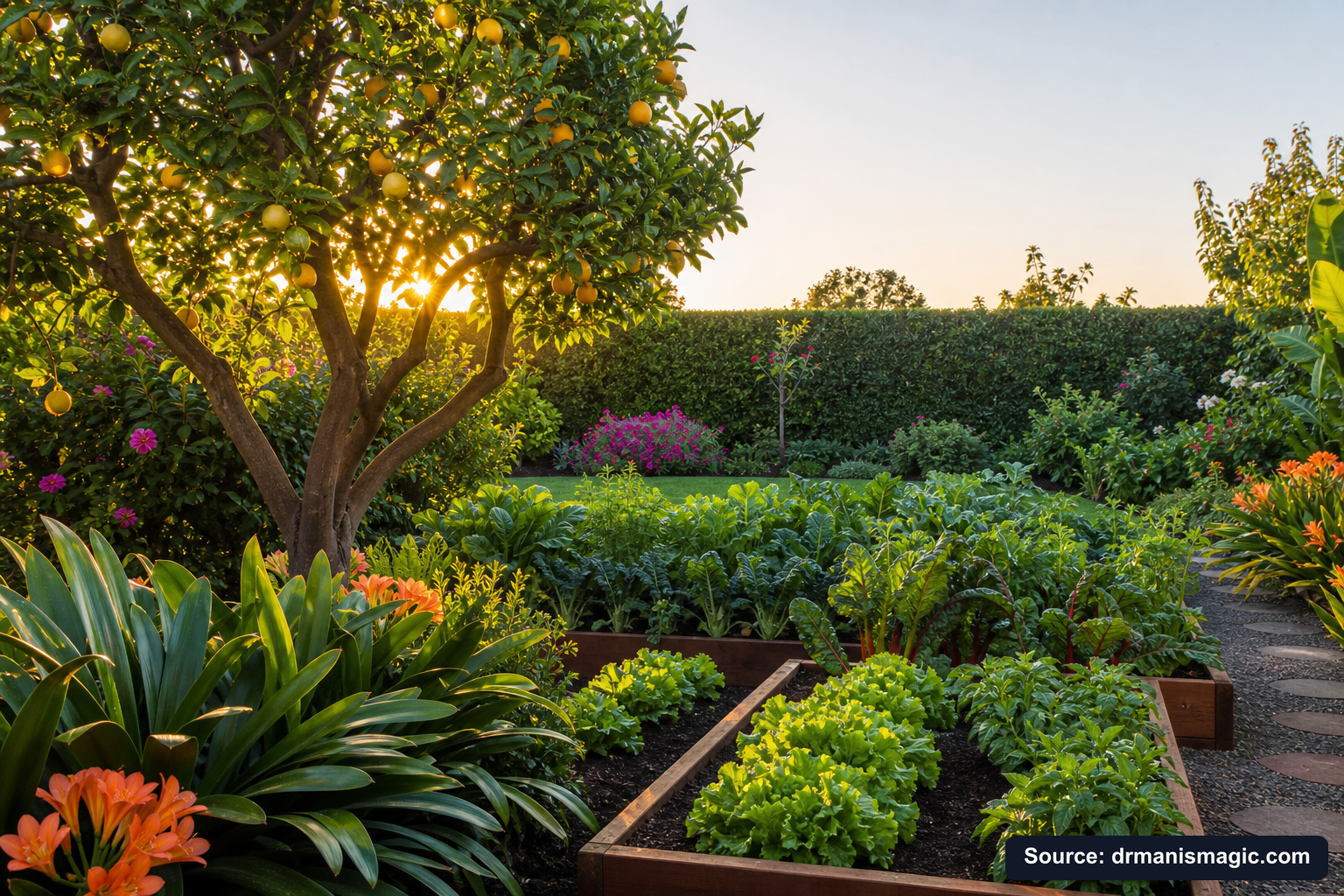
Here is the bottom line. Your plant does not eat fertilizer. Your plant eats what biology makes from fertilizer. The soil is not a storage tank for nutrients. It is a living factory where billions of microbes convert raw organic material into the exact forms your roots can absorb.
Feed that factory right and your plants get a slow, steady, perfectly timed supply of everything they need. Burn it down with salt and you are left with a plant that looks like it is eating but is actually starving, slowly, quietly, from the roots up.
Chitin from crab shells builds a microbial defense army. Kelp delivers hormones and biostimulants that activate growth at a cellular level. Amino acids feed the nitrogen cycle without spiking salt. Volcanic minerals fill in the trace element gaps that cause mysterious slow decline. And clean inputs with zero PFAS and zero biosludge mean you can grow food, tend a lawn, and let your kids and pets outside without second-guessing what you put in the ground.
This is not complicated gardening. It is simplified gardening, built on first principles that every forest, meadow, and thriving garden already runs on. We just made it available in a form you can use this weekend, on your fruit tree, your flower bed, your lawn, or your kitchen windowsill.
If you want to see what the Three Plant Pillars look like put together as one complete system, start with Crab, Kelp & Amino Acids and explore the full Dr. Mani's Magic line. Everything is made in the USA, backed by a 30-day money-back guarantee, and tested on over 250,000 trees before it ever shipped to a single customer. Your plants have been waiting for this. So have you.
Frequently Asked Questions
If you have ever wondered why your plants struggle even after you feed them, you are not alone. The real answer lives underground, in the biology of your soil. These questions cut straight to the truth about how organic nutrition actually works, and what Dr. Mani's Magic discovered after growing over 250,000 trees in South Texas.
Why can't plants just absorb organic fertilizer directly?
Plants can only drink nutrients in simple dissolved forms. Think of it like digestion. You cannot absorb a raw steak through your skin. Your stomach has to break it down first. Soil microbes do the same job for your plants. They break down organic material like crab shell, kelp, and amino acids into simple ions the root can actually absorb. No microbes means the organic matter just sits there doing nothing.
What do soil microbes actually do to turn organics into plant nutrition?
Microbes are tiny workers that never stop. Bacteria break down proteins and release nitrogen. Fungi stretch out like a web and pull phosphorus toward roots. Together they run a process called mineralization, turning complex organic chains into simple nutrients your plant can drink up. Dr. Mani tested this system on citrus trees, tropical trees, and houseplants for decades before building it into Plant Super Boost.
Why do synthetic fertilizers hurt plants over time?
Synthetic fertilizers are salt based. Salt pulls water away from roots and kills the beneficial microbes living in your soil. Once those microbes are gone, the whole conversion system shuts down. Your plant gets a short burst of nutrients and then slowly starves. Worse, the soil compacts and stops breathing. That is why plants fed with synthetic fertilizers often look great for a season and then crash hard.
What makes crab shell, kelp, and amino acids better than regular fertilizer?
Crab shell contains chitin, which feeds specific bacteria that also fight harmful pathogens. Kelp carries natural hormones that signal roots to grow faster. Amino acids deliver nitrogen in a form microbes love and plants can use quickly. Together they feed the soil biology first, and the biology feeds your plant. That is the exact formula in Dr. Mani's Magic Crab, Kelp, and Amino Acids fertilizer, with zero biosludge and zero synthetic salts.
Why does soil need oxygen for this whole process to work?
Roots breathe oxygen the same way you do. Beneficial microbes need oxygen too. When soil is packed tight with decomposing organic matter like sawdust or pine bark, it collapses over time and squeezes out all the air. Roots suffocate. Microbes die. The whole system stops. That is why Dr. Mani built Super Soil from mineral based sandy loam that stays open and airy for years, keeping roots and microbes alive and working.
How do the Three Plant Pillars create a self-feeding system?
Mineral soil keeps the structure open so roots and microbes can breathe. Live microbes from Plant Super Boost break down organic matter and unlock nutrients. Organic fertilizer feeds the microbes and delivers slow release nutrition to the plant. Each pillar supports the other two. Once all three are in place, the system keeps running on its own. That is what Dr. Mani proved across 250,000 trees at US Citrus Nursery before making these products available to every plant owner.
How long before this biology starts working in my soil?
Most people notice real change within 30 days. Roots get more oxygen. Microbes multiply fast when they have clean mineral soil and organic food to work with. New growth starts pushing out. The system keeps building on itself month after month. That is why Dr. Mani backs every product with a 30 day guarantee. If you do not love what you see, you get your money back. No arguments, no runaround.
About the Author
Ron Skaria, MD
Ron Skaria, MD, is the co-founder of Dr. Mani's Magic and the son of Dr. Mani. He trained as a medical doctor at Baylor College of Medicine, did his residency at UT Health Science Center - San Antonio and fellowship training at Texas Tech University. He now works full time on the family farm at US Citrus and US Citrus Nursery in Hargill, Texas, building Dr. Mani's Magic alongside his dad. He wrote the Brown Thumb Field Guide to put his father's 48 years of plant science into plain words any gardener can use. His belief is simple. You never had a brown thumb. You just never had the right help.


