


Why Organic Inputs Fail in Sterile Soil (And How to Fix It) | Dr. Mani's Magic
Why Organic Inputs Fail in Sterile Soil (And What Your Plants Actually Need to Fix It)
You bought the bag. You followed the directions. You sprinkled that organic fertilizer around your tree, watered it in, and waited. And waited. And waited some more.
Nothing happened. No flush of new green leaves. No burst of growth. Your lawn stayed yellow. Your citrus sat there looking tired. Your garden beds shrugged. You started wondering if "organic" was just a fancy word for "doesn't work." Maybe you even went back to the store and bought the bright blue chemical stuff. And sure, that made things green for a few weeks. But then things got worse again. And you're still stuck in the same loop.
Here's the truth nobody told you. The organic fertilizer did not fail because it was weak. It failed because your soil was missing the one thing that makes it work. Without that missing piece, even the best organic inputs just sit there like a pile of groceries in an empty kitchen with no cook. The food is there. But nobody is home to prepare it. That missing piece? Living soil biology. And once you understand why it matters, everything about growing plants starts to make sense.

Organic Fertilizer | Crab, Kelp & Amino Acids
Key Takeaways
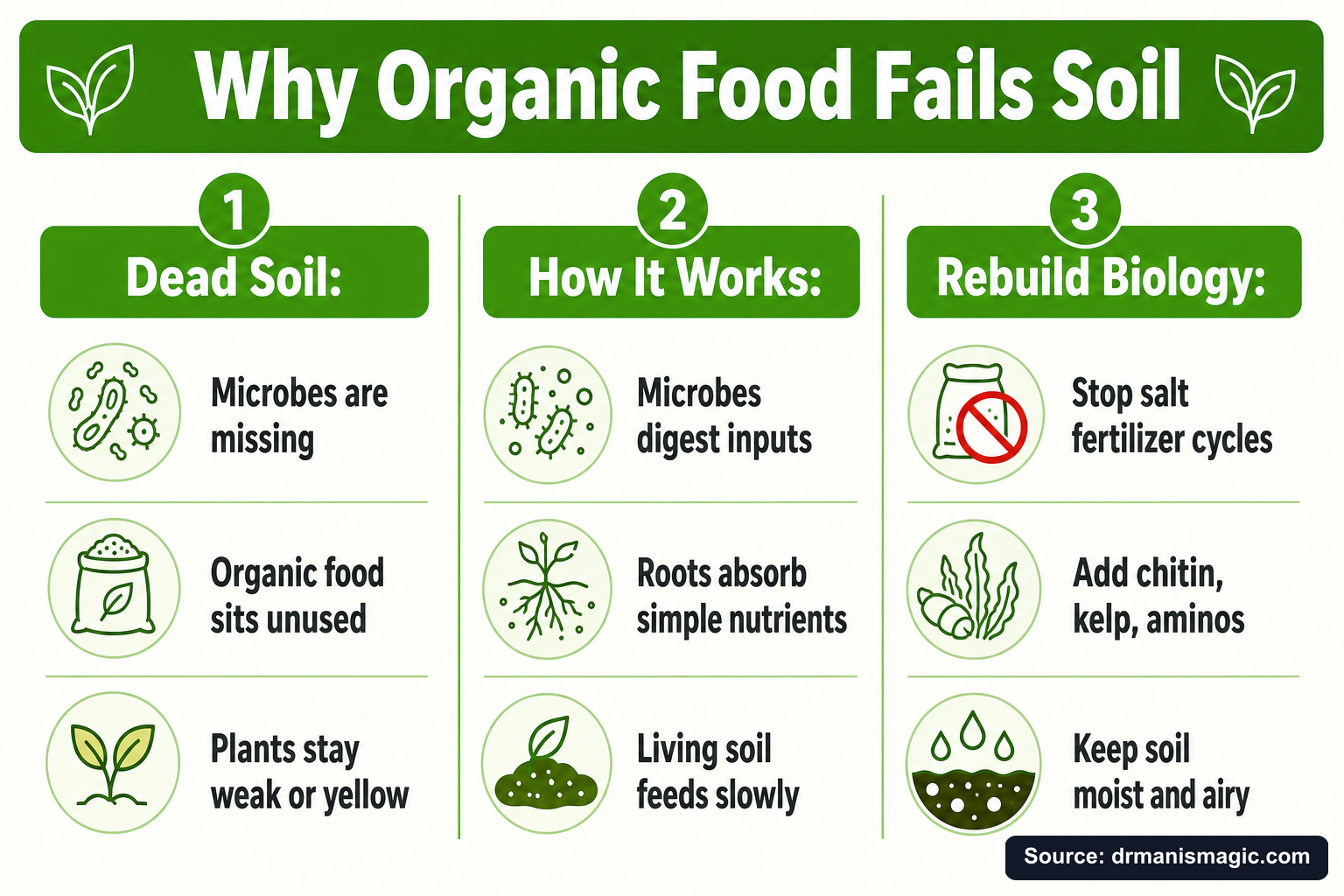
- Organic fertilizers need living soil microbes to convert them into forms plants can actually absorb.
- Sterile or biologically dead soil cannot process organic inputs, no matter how high-quality they are.
- Salt-based synthetic fertilizers kill the microbes that make organic nutrition work, creating a damaging cycle.
- Two completely different failure modes exist: salt burn (too much, too fast) and microbial starvation (too little biology to unlock nutrition).
- Chitin from crab shells, cold-processed kelp, and amino acids each play a specific role in feeding both plants and the microbes that serve them.
- Fixing sterile soil is not complicated, but it requires addressing the root cause, not just adding more product.
- The Three Plant Pillars framework, developed and tested on over 250,000 trees at US Citrus Nursery in South Texas, gives any plant the foundation it needs to thrive.
What Does "Sterile Soil" Actually Mean for Your Plants?
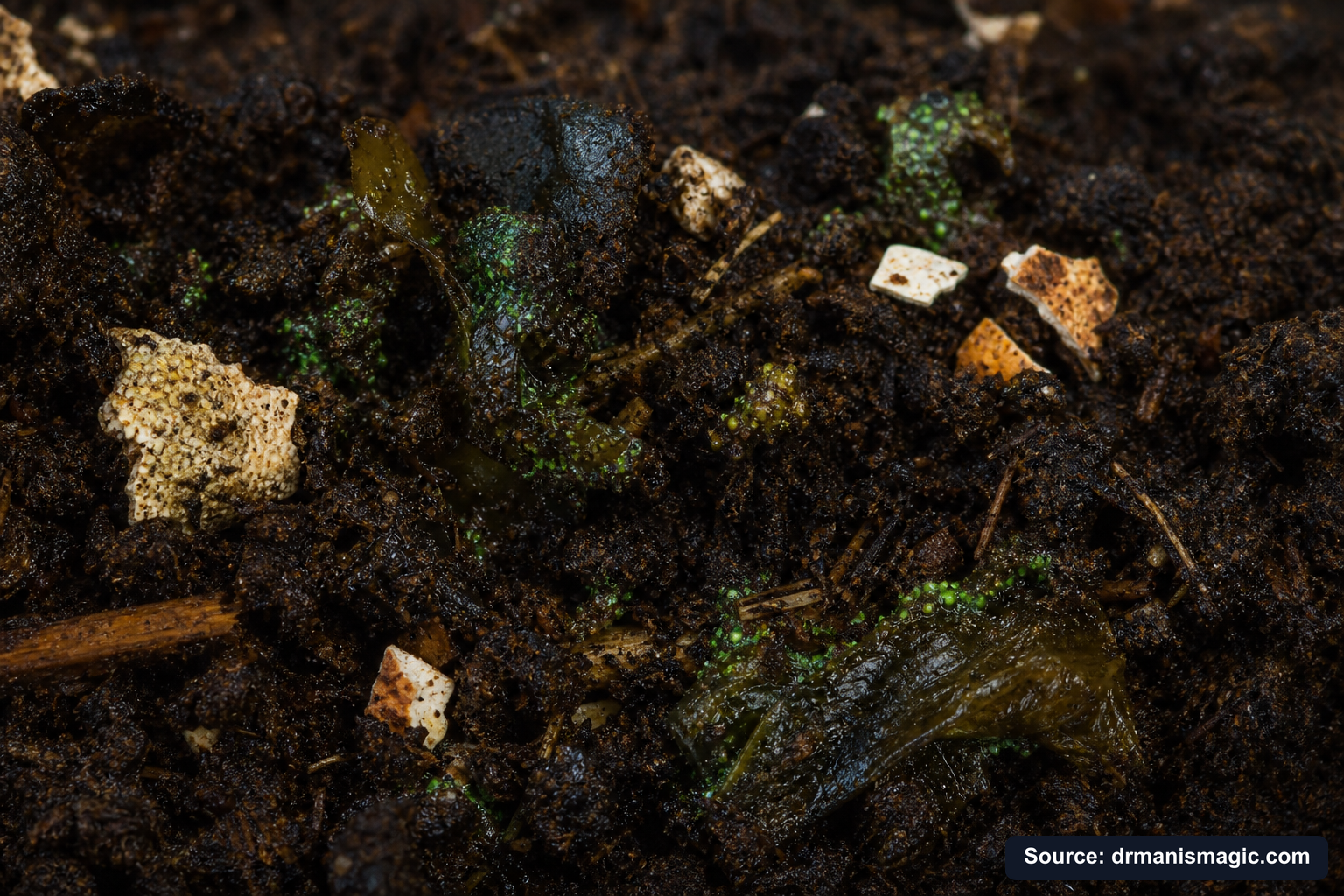
Quick Answer: Sterile soil is soil where the living microbial community has been killed off or severely weakened. Without bacteria, fungi, and other tiny organisms, organic fertilizer cannot be converted into plant-available nutrients. The soil looks normal but is biologically empty, like a factory with no workers.
Healthy soil is alive. We mean that literally. One teaspoon of living soil holds more microorganisms than there are people on Earth. Bacteria. Fungi. Protozoa. Tiny worms called nematodes. These creatures are constantly working. They break down organic matter. They convert raw proteins, amino acids, and minerals into simpler forms that plant roots can drink up. They connect roots to distant nutrients through fungal highways called mycorrhizae. They suppress disease. They hold moisture. They build soil structure.
When that community is gone, the soil becomes biologically sterile. It may still look like dirt. It may still hold water. But it cannot process food. According to research from the USDA Natural Resources Conservation Service, soil biological activity drives nearly every nutrient cycle that feeds plants in nature. Remove the biology, and you remove the engine.
How does soil get sterile? More ways than most people realize:
- Repeated use of salt-based synthetic fertilizers that burn microbial communities over time
- Fungicide and pesticide applications that kill soil fungi along with target pests
- Commercial potting mixes that start as nearly inert media with little biological life
- Compacted, poorly drained soil where oxygen cannot reach and microbes suffocate
- Extreme pH imbalance that shuts down microbial activity
- Waterlogged soil that drives out oxygen and drowns aerobic microbes
- Very dry soil where microbial activity slows to almost nothing
- High salt buildup from years of chemical feeding, poor irrigation water, or deicing salt near driveways
Most gardeners have soil that sits somewhere on a spectrum between living and sterile. The further toward sterile it sits, the less any organic input will do. This is not a flaw in the product. It is a flaw in the soil environment that was never fixed first.
See also: Why Most Fertilizers Are Actually Salt in Disguise
How Does Organic Fertilizer Actually Work When Soil Is Healthy?
Quick Answer: Organic fertilizer works by feeding soil microbes first. Those microbes digest the organic material and convert it into simple nutrients that roots can absorb. When the microbes die, they release stored nutrition directly into the root zone. This creates a natural, slow-release feeding cycle that mirrors how plants are fed in nature.
This is the part most people never learn. And it changes everything.
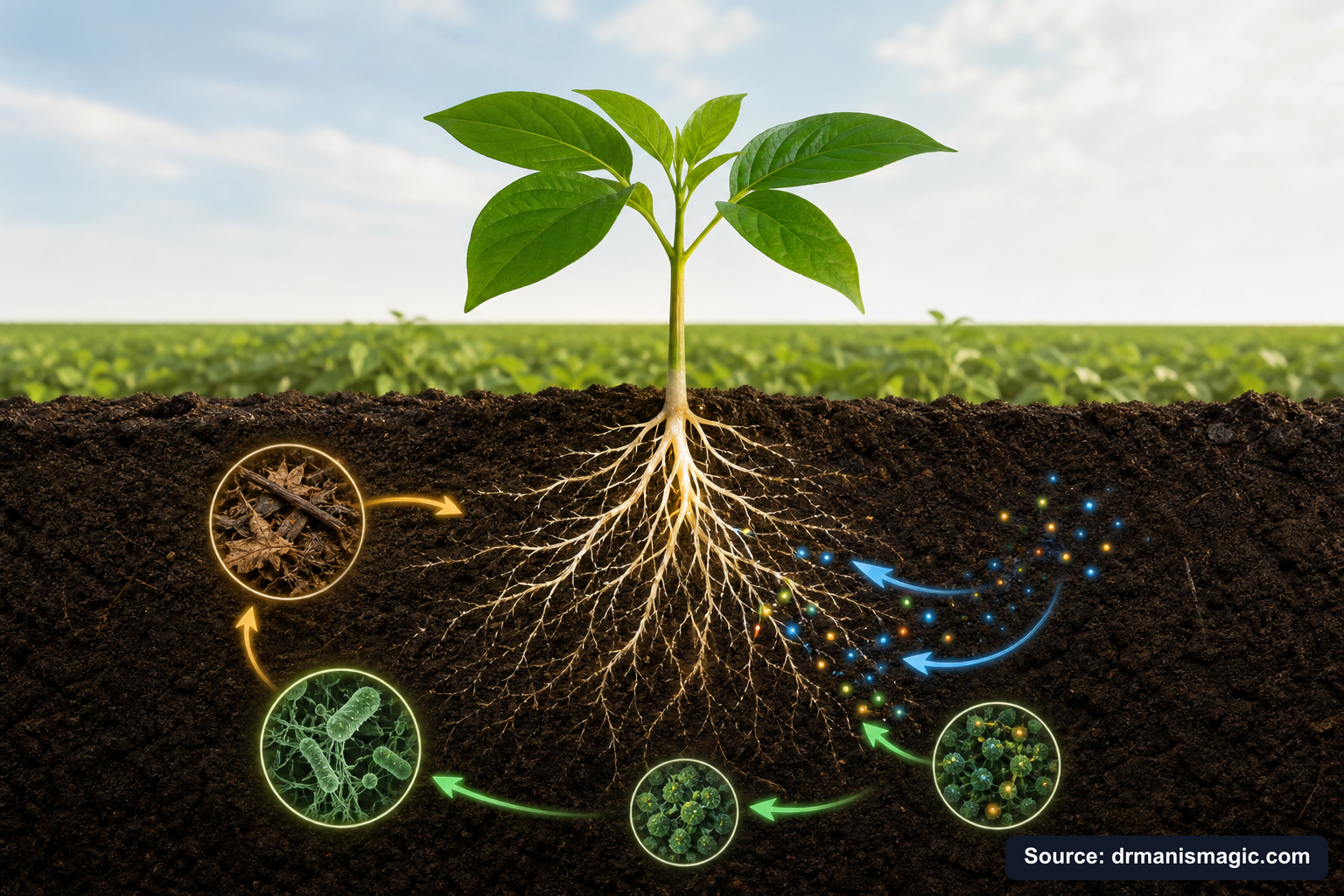
When you apply an organic fertilizer, the plant does not eat it directly. Not right away. Think of it like a relay race. You hand the baton to the microbes first. Bacteria and fungi in the soil break down the organic proteins, amino acids, chitin, and minerals. They digest them. They use what they need to grow and multiply. And in that process, they convert complex organic compounds into simple, soluble forms: ammonium, nitrate, phosphate, sulfate, chelated micronutrients. Forms the plant's roots can absorb like water through a straw.
Then comes the second part of the magic. When those microbes finish their work and die, they release everything they stored. All that nutrition pours directly into the root zone in a steady, gentle trickle. It is a natural time-release system. Not because of a plastic coating. Not because of chemistry. Because that is how living soil works.
This is exactly why organic fertilizer feels "slow." It is not slow because it is weak. It is slow because it is working the way nature designed it to work. Steady. Consistent. Impossible to over-apply in a way that burns roots.
And this is also exactly why organic fertilizer does nothing in sterile soil. If the microbes are not there to start the relay, the baton just sits on the ground. The nutrients stay locked in their raw form. The plant starves even though the food is right there at its feet.
The UC Davis Cooperative Extension describes this process as mineralization, the biological conversion of organic nitrogen into plant-available mineral forms. Without active microbial communities, mineralization stops. Full stop.
Why Do Salt-Based Fertilizers Make This Problem Worse Over Time?
Quick Answer: Salt-based synthetic fertilizers dissolve into highly concentrated salts in the soil. These salts kill or suppress soil microbes, which destroys the biological engine that organic inputs depend on. Over time, each application of synthetic fertilizer makes the soil more sterile, which makes future organic feeding less effective.
Here is a story that plays out in gardens across America every single year.
A gardener's lawn or tree starts looking pale. They grab a bag of fast-release synthetic fertilizer from the big box store. It is cheap. It is blue. The bag promises deep green color in days. And it delivers. The grass turns green. The tree pushes out a flush of leaves. The gardener feels like a genius.
Then, six weeks later, things look worse than before. So they apply more. And the cycle repeats. Each time the interval gets shorter. Each time the dose creeps up. The plant looks okay for a while and then crashes harder. This is not a coincidence. This is what salt dependency looks like.
Synthetic fertilizers are salt-based. That is not an opinion. It is chemistry. When you dissolve them in water and apply them to soil, they raise what scientists call the electrical conductivity, or EC. High EC creates osmotic stress. That means the soil solution becomes saltier than the water inside the root cells. Water flows out of the roots instead of in. The plant cannot absorb water even when the soil is wet. This is called physiological drought. The plant wilts and shows scorch symptoms on leaf margins even when you just watered it.
At the same time, those salts are burning the fine root hairs and the microbes living in the root zone. The beneficial bacteria and fungi, the ones that make organic feeding possible, get wiped out. The soil becomes more sterile. Now, even if you switch to organic inputs, there is nothing left to process them. You have broken the engine before you filled the tank.
At US Citrus Nursery in South Texas, we watched this happen on hundreds of trees over decades. Trees fed with salt-based fertilizers looked fine for a season or two, then declined. Their roots showed burn. Their soil tested low for biological activity. Their leaves showed classic symptoms of root rot caused by Pythium and Phytophthora pathogens, the exact diseases that thrive when beneficial microbes are gone and roots are already stressed.
We have grown over 250,000 trees at our nursery. We learned this the hard way so you do not have to.
See also: The Hidden Reason Synthetic Fertilizers Cause Root Rot
What Is the Difference Between Salt Damage, Overwatering, and True Root Rot?
Quick Answer: Salt damage, overwatering, and root rot can all look almost identical above ground but have completely different causes below it. Salt damage creates osmotic stress that blocks water uptake. Overwatering suffocates roots by removing oxygen. True root rot is a fungal or oomycete infection that destroys root tissue. All three are made worse by sterile soil and synthetic inputs.
This is one of the most important diagnostic questions in gardening. Because the symptoms overlap, gardeners often treat the wrong thing and make it worse.
| Symptom | Salt Damage | Overwatering / Oxygen Starvation | True Root Rot (Pythium / Phytophthora) |
|---|---|---|---|
| Leaf wilting | Yes, even in moist soil | Yes, soft and mushy feel | Yes, progressive and worsening |
| Leaf margin scorch | Common, brown edges on tips | Less common early on | Can appear in later stages |
| Root appearance | Brown, brittle fine roots | Mushy, waterlogged, gray-brown | Dark brown to black, slimy, foul smell |
| Soil smell | Normal or chemical | Musty or sour | Sulfur-like, rotten egg odor |
| Soil moisture | Normal or dry | Consistently wet | Often wet, poor drainage |
| Microbial health | Severely depleted | Anaerobic, wrong community | Pathogenic organisms dominant |
| Recovery without intervention | Unlikely, salts remain | Possible if drainage is fixed | Unlikely without biology and drainage fix |
What all three conditions share is this: they are made dramatically worse by synthetic salt-based inputs and dramatically better by living soil biology. Beneficial microbes suppress Pythium and Phytophthora. They improve soil aggregation, which improves drainage and oxygen flow. They break down the compounds that feed pathogenic organisms. Healthy biology is not just about nutrition. It is your plant's immune system.
What Role Do Chitin, Kelp, and Amino Acids Each Play in Feeding Plants and Microbes?
Quick Answer: Chitin from crab shells triggers natural disease resistance and feeds chitin-eating microbes. Cold-processed kelp delivers plant hormones, trace minerals, and stress-response compounds. Amino acids provide the most direct form of organic nitrogen, one that microbes love and plants can absorb quickly once biology is active. Together they feed the whole system, not just the plant.
When Dr. Mani Skaria developed the Crab, Kelp & Amino Acids formula, he was not just building a fertilizer. He was building a feeding system that works with the Three Plant Pillars from the ground up.
Let's break down what each ingredient actually does.
Chitin From Crab Shells
Crab shells are loaded with a compound called chitin. Chitin is the same material found in the cell walls of insects and fungi. When you add chitin to soil, something remarkable happens. A specific group of bacteria called chitin-degrading microbes wake up. They multiply rapidly to consume it. And as they do, they produce enzymes that also break down the chitin walls of harmful soil pathogens like fungal disease organisms. It is a natural defense response.
Crab shells also deliver calcium and magnesium, two nutrients that make up a huge proportion of a plant's woody structure. Calcium builds cell walls. Magnesium sits at the center of every chlorophyll molecule. No magnesium, no photosynthesis. It is that simple.
Cold-Processed Kelp
Kelp is a marine plant that spends its life absorbing minerals directly from the ocean. It contains over 60 trace minerals in chelated, bioavailable forms. It is also rich in natural plant hormones called auxins and cytokinins. These hormones tell plants to grow new roots, push new shoots, and hold their fruit instead of dropping it. They signal the plant's stress-response systems to activate. Think of kelp as the plant's internal messaging system, upgraded.
The key word is cold-processed. Heat destroys these delicate hormones. Low-temperature processing preserves them. This matters enormously. A kelp meal that was heat-dried has a fraction of the hormonal activity of cold-processed kelp. The difference shows up in your roots.
Amino Acids
Amino acids are the building blocks of protein. They are the most direct form of organic nitrogen available. When you apply amino acid-based nutrition, microbes recognize it immediately. They use it as food and as raw material. And because amino acids are already partially broken down, the conversion into plant-available nitrogen happens faster than with raw protein sources.
Plants can also absorb certain amino acids directly through their roots, bypassing the mineralization step entirely in small quantities. This gives a gentle, quick signal to the plant while the longer-term microbial process continues in the background. Amino acid nitrogen has a very low salt index, meaning it delivers nitrogen without the osmotic stress that synthetic nitrate salts cause.
You Never Had a Brown Thumb.
You were handed the wrong tools. This free guide hands you the right ones.
You watered it. You fed it. It died anyway.
It was never you. It was the dirt, the salt food, and the bad advice.
This guide shows you what really went wrong, and how to fix it for good.
- Why your plants really died, and why it was never your fault
- The salt hiding in your plant food that quietly burns the roots
- The hidden killer in almost every bag of store soil
- The tiny helpers that grow a whole forest for free
- The rescue trick that brings a half dead plant back to life

What Is the Fertilizer Type Comparison Every Plant Owner Should Know?
Quick Answer: Fast-release synthetic fertilizers deliver a quick jolt but carry high salt loads that burn roots and kill microbes. Slow-release synthetics reduce burn risk but often use plastic coatings that leach into soil. Organic inputs like chitin, kelp, and amino acids feed microbes and plants together, with no salt, no plastic, no PFAS, and no biosludge.
| Feature | Fast-Release Synthetic | Slow-Release Synthetic (Plastic-Coated) | Organic: Chitin / Kelp / Amino Acids |
|---|---|---|---|
| Speed of action | Very fast (days) | Weeks to months | Steady, microbe-mediated (weeks, then ongoing) |
| Salt index | Very high | Moderate to high | Very low |
| Microbial impact | Burns and kills beneficial microbes | Still suppresses biology over time | Feeds and stimulates microbial growth |
| Root burn risk | High, especially in containers | Moderate | Very low to none |
| PFAS / biosludge risk | Possible with some biosolid blends | Possible with some blends | Zero with clean inputs (no biosludge, no PFAS) |
| Long-term soil health | Degrades over time | Neutral to slightly degrading | Improves with every application |
| Disease suppression | None; often makes disease worse | None | Active through chitin-degrader stimulation |
| Hormone and biostimulant content | None | None | Auxins, cytokinins, carbohydrates from kelp |
| Made in USA, no foreign salt inputs | Often imported (Canada, Russia, China) | Often imported | Yes, proudly made in South Texas |
A word about biosludge. Some organic fertilizers on the market use treated municipal waste, also called biosolids, as a filler. These can contain PFAS, the so-called "forever chemicals" that accumulate in soil, plants, water, and living tissue. They do not break down. They build up. If you are growing food your family eats, or grass your kids and pets walk on barefoot, this matters enormously. Clean inputs are not optional. They are the point.
What Are the Three Plant Pillars and Why Does Organic Feeding Fail Without All Three?
Quick Answer: The Three Plant Pillars are mineral-based soil for drainage and root oxygen, live microbials for biological conversion and disease protection, and organic fertilizer for slow-release complete nutrition. Miss any one pillar and the others cannot fully work. Organic feeding fails most often because Pillar Two, the living microbial community, is missing or depleted.
Dr. Mani spent over 40 years studying why plants thrive or fail. He led the Clean Citrus Program for Texas. He taught plant pathology at the Texas A&M Citrus Center. He watched thousands of trees respond to different inputs under different conditions. And after all of that, the answer kept coming back to the same three things.
Think of the Three Plant Pillars as a three-legged stool. Pull one leg out and the whole thing crashes.
Pillar One: Mineral-Based Soil. Most potting mixes are made from pine bark and organic waste materials. They break down. As they decompose, they compact. Compacted soil blocks oxygen from reaching roots. Roots without oxygen cannot function. They cannot absorb water. They cannot take up nutrients. They become easy targets for Pythium and Phytophthora root rot pathogens. Dr. Mani's solution was a permanent mineral-based sandy loam from the Rio Grande Valley, silica-rich soil that does not decompose, does not compact, and keeps roots breathing for years.
Pillar Two: Live Microbials. This is the engine. Without living bacteria, fungi, and mycorrhizae in the root zone, organic inputs cannot be converted into plant nutrition. Mycorrhizal fungi extend the root system's reach by hundreds of times, connecting it to minerals and water far beyond where roots grow. Beneficial bacteria suppress disease organisms. The entire system depends on a thriving microbial community. You can learn more about building this community at our Free Plant Care Field Guide.
Pillar Three: Organic Fertilizer and Biostimulants. Once the soil structure is right and the biology is alive, you feed the system. Not with salts. With organic inputs that microbes can process at a pace the plant prefers. Slow. Steady. Complete. The full spectrum of macronutrients, micronutrients, amino acids, and biostimulants that mirror what nature provides through decomposition and lightning and rain.
When all three pillars are in place, something shifts. The plant stops struggling and starts thriving. New growth appears. Color deepens. Roots expand. Disease resistance increases. And it builds on itself. Each healthy microbial generation improves the soil for the next one. Each dose of organic fertilizer feeds the biology that feeds the plant that feeds the roots that feed the biology. It is a virtuous cycle. And it is the opposite of what happens with synthetic salts.
You can explore the complete Three Plant Pillars system at the Dr. Mani's Magic bundle builder.
How Do You Know If Your Soil Is Sterile or Just Slow? A Diagnostic Framework
Quick Answer: If organic inputs produced no visible plant response after four to six weeks, check these factors in order: soil temperature, moisture balance, oxygen and compaction, pH, salt buildup, root health, and microbial activity. Most failures trace back to one of these conditions, not the quality of the organic input itself.
Your organic fertilizer did not fail. Your soil conditions failed to support it. Here is how to figure out which condition is the problem.
- Check soil temperature. Microbial activity slows dramatically below 50 degrees Fahrenheit. In cold soil, organic inputs barely mineralize at all. If you applied fertilizer in late fall or early spring to cold soil, that is likely your answer. Wait until soil temperature is consistently above 55 degrees for measurable response.
- Check moisture balance. Microbes need moisture to survive and work. Bone-dry soil shuts down biological activity as surely as frozen soil does. But waterlogged soil is equally deadly. It drives out oxygen and kills aerobic microbes. The sweet spot is moist but never soggy. Pick up a handful of soil. It should feel like a wrung-out sponge.
- Check compaction and oxygen. Push a pencil into your soil. If it does not slide in easily past the first inch, your soil is compacted. Compaction blocks oxygen. Without oxygen, aerobic microbes die and pathogenic anaerobic organisms take over. This is often the root cause of Pythium and Phytophthora infections that look like overwatering.
- Check pH. Most beneficial soil microbes work best between pH 6.0 and 7.0. Outside that range, microbial activity slows and nutrient availability drops even when nutrients are present. A simple pH test from any garden center takes two minutes and tells you a great deal.
- Check for salt buildup. White crusty deposits on the soil surface or around the pot rim are a visible sign of salt accumulation. High electrical conductivity from years of synthetic fertilizer or poor irrigation water blocks nutrient uptake and kills microbes. Flushing containers with clean water helps reduce surface salt. Fixing the underlying input is the real solution.
- Check root health. Carefully remove your plant from its container or dig gently near the root zone. Healthy roots are white to cream-colored and firm. Brown, black, or slimy roots indicate root rot. Gray, brittle roots suggest salt burn or oxygen starvation. Either condition needs to be addressed before organic feeding can work.
- Check for prior chemical use. Fungicide applications, systemic pesticides, and some herbicides can drastically reduce soil microbial populations. If your soil received any of these recently, it may need time and deliberate microbial reintroduction before organic inputs can function normally.
See also: How Salt-Based Feeding Quietly Destroys Root Systems
How Do You Rebuild a Sterile or Depleted Soil So Organic Inputs Finally Work?
Quick Answer: Rebuilding biologically depleted soil requires fixing structure and drainage first, then reintroducing living microbes, then feeding the system with clean organic inputs. Do not add more fertilizer to sterile soil expecting different results. Fix the environment the microbes need, then the organic nutrition begins working as designed.
Recovery is not complicated. But it does require doing things in the right order. Think of it like renovating a restaurant. You do not hire the best chef in the world and then wonder why the food is bad when the kitchen has no working stove. Fix the kitchen first. Then bring in the chef. Then stock the pantry.
In soil terms, that means:
- Fix the physical structure first. If you are container growing, consider whether your potting mix has broken down and compacted. Organic-matter-heavy mixes collapse over time. A mineral-based growing medium that does not decompose solves this permanently. Good drainage and oxygen flow are not optional. They are the foundation that everything else builds on. This is Pillar One.
- Reintroduce living biology. You cannot grow microbes from nothing. If your soil biology has been burned out by synthetic salts, fungicides, or compaction, you need to actively reintroduce it. This is Pillar Two. Live bacteria, fungi, and mycorrhizae inoculated directly into the root zone restart the biological engine that makes everything else work. Monthly applications maintain and grow that community over time.
- Feed with clean organic inputs only. Once biology is active, feed it with organic inputs that it can process without being harmed. No synthetic salts. No biosludge. No PFAS-contaminated filler materials. Clean, complete, slow-release organic nutrition that microbes recognize as food and plants recognize as nature. This is Pillar Three.
- Maintain consistent moisture without saturation. Microbes need moisture to live and work. Inconsistent watering, alternating between bone dry and soaking wet, stresses both plants and microbes. Steady, moderate moisture is the goal.
- Mulch to protect the surface. A layer of organic mulch on the soil surface moderates temperature, holds moisture, feeds surface microbes, and protects the root zone from temperature extremes. It also prevents the soil crust that forms in bare soil and blocks water infiltration.
This is not a dramatic protocol. It is not expensive. And it does not require a shelf full of different products. It requires getting the foundation right. Every great garden, every productive orchard, every lush lawn starts with the same three things. Soil that breathes. Biology that lives. Nutrition that feeds without burning.
We tested every version of this on over 250,000 trees at US Citrus Nursery. On our citrus grove. On houseplants and tropical trees. On grass and flowers and vegetable gardens. The Three Plant Pillars work the same way whether you are growing a Meyer lemon in a pot on a patio or managing an acre of ornamentals. The biology does not care what species you are growing. It only cares whether its conditions are met.
A Warm Closing: The Garden You Were Meant to Have Is Still Waiting
There is something deep in us that wants to grow things. To plant a seed or a tree and watch it become something real. Something alive. Something that feeds us, or shades us, or just makes the backyard feel like a place worth spending time in.
The number one thing people tell Dr. Mani they want is to see their tree bear fruit in their lifetime. Not someday. Now. Before the years slip by. And the heartbreaking truth is that most of them have been sold tools that quietly work against that goal. Salt-based fertilizers that kill the very biology their plants depend on. Potting mixes that collapse and suffocate roots within months. Advice that treats the symptoms and ignores the cause.
You cannot get time back. The season you lose chasing the wrong approach is gone. But the fix is not complicated. It never was. It just required someone to explain why the engine was not running, not just to pour in more fuel.
Now you know why organic inputs fail in sterile soil. You know what sterile soil actually is. You know the difference between salt damage, overwatering, and true root rot. You know what chitin, kelp, and amino acids each do and why they work together. You know the Three Plant Pillars and why skipping any one of them breaks the whole system.
The soil biology that makes your plants thrive has been there all along. It just needed the right conditions to come alive. If you are ready to give it those conditions and stop wasting another season on the same old approach, a great place to start is reading through our Free Plant Care Field Guide. It walks you through the Three Plant Pillars in plain language, step by step, for any plant you are growing. No jargon. No guesswork. Just the foundation your plants have been waiting for.
Frequently Asked Questions
If your organic fertilizer is not working, you are not alone. Most gardeners never get told the real reason their plants stay stuck. These questions get to the root of why organic inputs fail in sterile soil, and what you can actually do about it right now.
Why does organic fertilizer stop working in dead or sterile soil?
Organic fertilizer needs living microbes to break it down into food plants can drink up. When your soil is biologically dead, those microbes are gone. The fertilizer just sits there. Nothing converts it. Nothing moves it to the roots. Think of it like a kitchen full of groceries with no cook. The food is there. But nobody is home to prepare it. That is exactly what happens when you feed sterile soil.
How do you fix nutrient lockout in soil?
Nutrient lockout usually means your soil biology is broken or your soil pH is off. Stop adding more fertilizer. Flush the soil with clean water to move salt buildup out. Then bring the biology back. That means adding live microbes like the ones in Dr. Mani's Magic Plant Super Boost. Once the microbial workforce is active again, nutrients unlock naturally. Adding more product without fixing the biology first just makes the problem worse.
How do you restore soil that has lost its fertility?
Start with the Three Plant Pillars. First, give your soil a mineral base that drains well and does not compact. Second, reintroduce live bacteria, fungi, and mycorrhizae to rebuild the biological engine. Third, feed with a slow-release organic fertilizer that nourishes both the plant and the microbes. Dr. Mani tested this exact system on over 250,000 citrus trees in South Texas. It works on lawns, gardens, houseplants, and fruit trees too.
How do you unlock nutrients that are already in the soil?
You unlock nutrients by rebuilding your soil's living microbial community. Bacteria and fungi convert bound-up minerals into forms plant roots can actually absorb. Without that community, nutrients stay locked up no matter how much you add. Dr. Mani's Magic Plant Super Boost delivers live microbes directly to your root zone. Once they are active, they start unlocking what is already there and making every input you add work harder.
What kills soil biology and causes it to go sterile?
Salt-based synthetic fertilizers are the biggest culprit. They burn microbial communities every time you use them. Fungicides and pesticides wipe out soil fungi along with their targets. Compacted soil suffocates microbes by cutting off oxygen. Most commercial potting mixes start nearly lifeless. Even overwatering drowns the aerobic microbes your plants depend on. Big box store products and chemical shortcuts create this problem over and over, and then they sell you more product to chase the symptoms.
How do you add nutrients back into old or depleted soil naturally?
Remove old roots and debris first. Then address all three pillars. Swap out dead, compacted organic potting mix for a mineral-based soil that drains and breathes. Add live microbes to restart the biological engine. Then feed with a clean organic fertilizer like Dr. Mani's crab, kelp, and amino acid blend. This delivers slow-release nitrogen, phosphorus, and potassium without salt burn and without killing the microbes you just worked to bring back.
What are the main reasons soil loses its fertility over time?
Repeated chemical fertilizer use kills the microbial life that keeps soil productive. Organic potting mixes break down and compact, choking roots of oxygen. Overuse of pesticides and fungicides strips out beneficial fungi. Poor drainage drowns aerobic microbes. Planting in the same depleted soil season after season without rebuilding the biology drains nutrients fast. The fix is not adding more product. The fix is rebuilding the foundation with mineral soil, live microbes, and clean organic nutrition working together.
About the Author
Dr. Mani Skaria, PhD
Dr. Mani Skaria, PhD, is a plant pathologist and the scientific founder of Dr. Mani's Magic. He earned his doctorate at Purdue University and spent 48 years studying how plants, soil, and living microbes work together, including his years as Professor Emeritus at Texas A&M and as a member of the USDA NAREEE Advisory Board. He invented micro-budding, a method for growing healthier, stronger trees, and has grown more than 250,000 trees on the family farm in Hargill, Texas - US Citrus Nursery. His life's work takes real lab science and practical experience and turns it into simple, safe, organic plant care anyone can use at home.


