


Why Living Soil Makes Organic Fertilizers Actually Work | Dr. Mani's Magic
Why Living Soil Makes Organics Work (And Why Synthetic Fertilizers Fight Against Nature)
Picture this. You walk out to your backyard on a Saturday morning, coffee in hand, bare feet on the grass. You stop in front of that lemon tree you planted two years ago. You've fed it. You've watered it. You've Googled it at midnight more times than you'd like to admit. And yet the leaves are pale. The growth is slow. Something is just... off.
You head to the big box store. A teenager in an orange vest hands you a bright blue bag of fertilizer. "This stuff works fast," he says. And it does. For about three weeks, the leaves perk up. Then they yellow again. Then you buy more. Then you wonder why you're stuck in this cycle, spending money and time, watching your plant limp along when it should be exploding with life. Here's what that teenager didn't tell you: that blue bag is basically salt. And salt is quietly destroying the invisible world underneath your soil. The world that makes everything grow.
That hidden world is called living soil. And once you understand what it is, why it matters, and what it needs to thrive, gardening will never feel frustrating again. We've grown over 250,000 citrus trees at our South Texas nursery, and the single biggest lesson we learned is this: feed the soil, and the soil feeds your plants. Everything else is secondary.

Organic Fertilizer | Crab, Kelp & Amino Acids
Key Takeaways
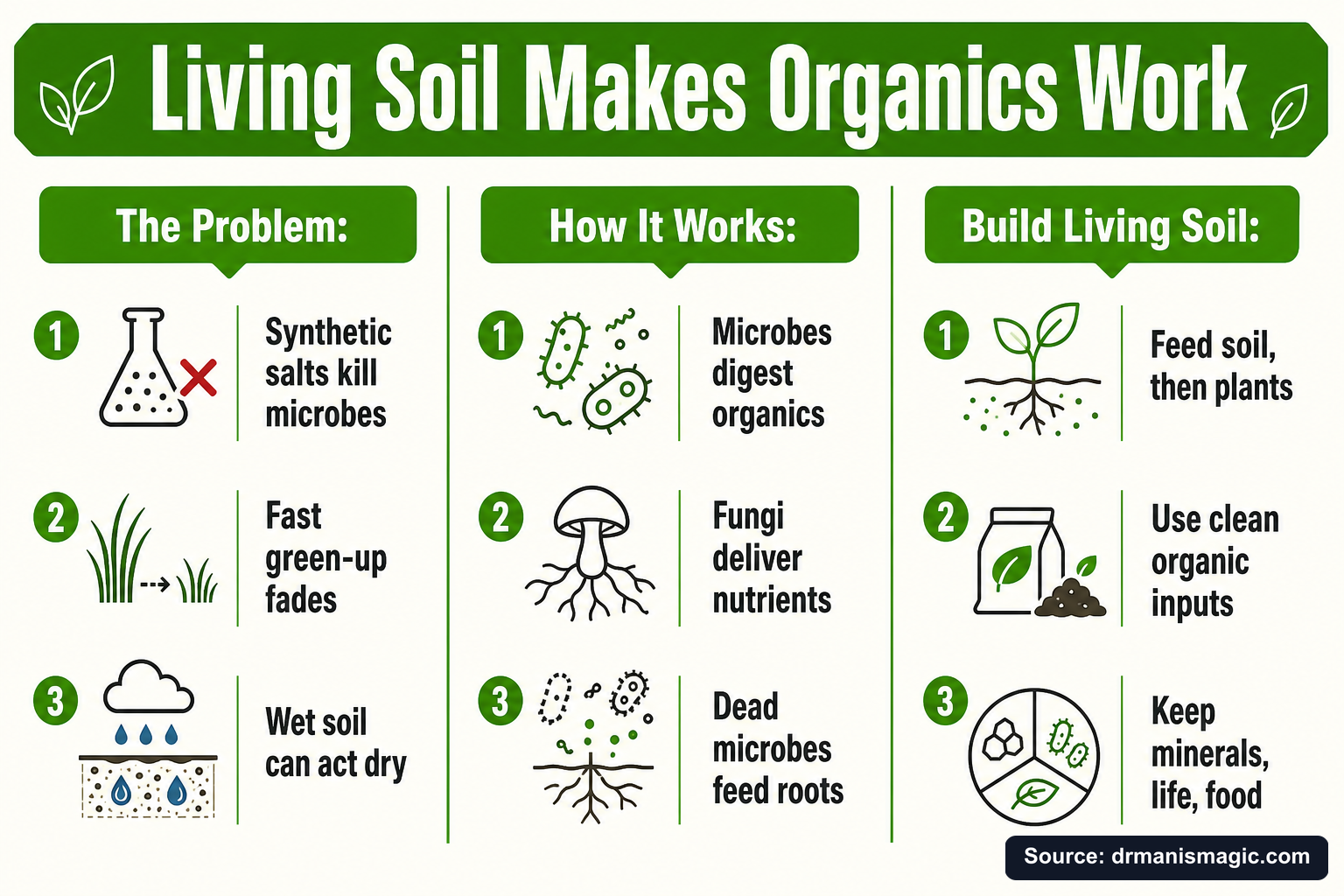
- Living soil is a working ecosystem of bacteria, fungi, and other microbes that convert raw organic inputs into nutrients plants can actually use.
- Organic fertilizers do not feed plants directly. They feed microbes first. The microbes do the converting, then deliver nutrition straight to plant roots.
- Salt-based synthetic fertilizers kill the very microbes that make nutrients available, creating a cycle of dependency and long-term soil damage.
- Excess soluble salts cause osmotic stress, also called "chemical drought," where plants cannot absorb water even in wet soil.
- Not all organic inputs are clean. Some contain biosludge, municipal waste, and PFAS "forever chemicals." Source matters enormously.
- The Three Plant Pillars (mineral soil, live microbes, clean organic fertilizer) work together as a system. Miss one, and the other two underperform.
- Ingredients like chitin from crab shells, cold-processed kelp, amino acids, and volcanic minerals each play a specific, proven role in root-zone health.
What Exactly Is Living Soil, and Why Does It Matter for Your Plants?
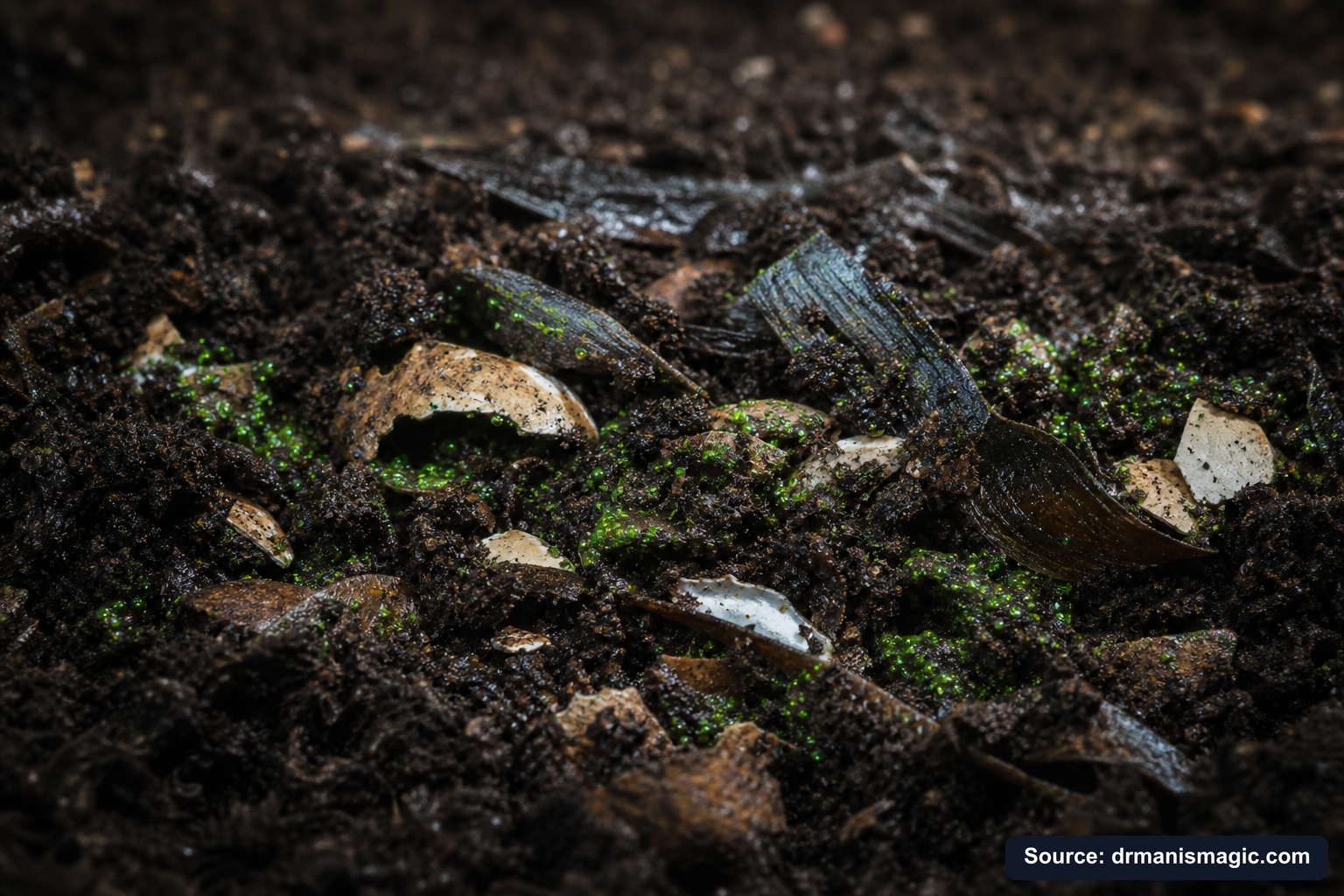
Quick Answer: Living soil is soil that contains billions of active microorganisms, including bacteria, fungi, protozoa, and nematodes, that work together to break down organic matter, cycle nutrients, and deliver food directly to plant roots. Without these microbes, organic fertilizers cannot work, and plants struggle to absorb nutrition no matter how much you apply.
Living soil is not a mystical concept from an organic gardening magazine. It is a working system. Think of it like a city economy underground.
In that city, bacteria are the workers. They break down raw organic materials like crab shells, kelp, feather meal, and compost into simpler compounds. Fungi are the delivery network. They form long, thread-like strands called mycorrhizae that stretch far beyond where roots can reach, pulling in water and minerals and handing them directly to root cells. Protozoa and nematodes eat the bacteria and, when they do, they release nutrients in forms plants can absorb instantly. Even earthworms play a role, tunneling through soil and creating air pockets that keep oxygen flowing.
According to Texas A&M AgriLife Extension, healthy soil contains hundreds of millions of microorganisms in a single teaspoon. These organisms drive the decomposition, mineralization, and nutrient-cycling processes that make plant growth possible. University extension research on nutrient cycling dynamics confirms that organic matter acts as both food for microbes and a long-term reservoir of plant nutrients, and that the two functions are inseparable.
When this system is alive and active, your soil holds more water, releases nutrients slowly and steadily, and protects roots from disease. When it is dead, even the most expensive fertilizer in the world sits in the ground and does almost nothing useful.
This is why living soil is not optional. It is the engine that makes organics work.
How Does Organic Fertilizer Actually Feed Your Plants Through the Soil?
Quick Answer: Organic fertilizer feeds microbes first, not plants directly. Microbes eat the organic material, break it down into plant-available nutrients, and release those nutrients when they die. This creates a natural, slow time-release system that keeps feeding your plants long after a single application, without burning roots or killing soil biology.
Here is the mechanism most gardening content completely skips over. And it is the most important thing to understand.
When you sprinkle an organic granular fertilizer on your soil, the plant does not immediately "eat" it. The plant cannot. The raw ingredients in that fertilizer, crab shells, kelp meal, feather meal, are not in a form plant roots can absorb yet.
So what happens next? The microbes go to work.
Bacteria and fungi in the soil sense the new food source. They colonize it. They digest it. They convert complex proteins into simpler amino acids. They break down chitin into nitrogen compounds. They mineralize kelp into potassium, trace minerals, and growth hormones. This process takes days to weeks depending on soil temperature, moisture, and oxygen levels. But the result is extraordinary. Nutrients get released slowly, steadily, and in exactly the forms plant roots prefer.
Then, when those microbes die, their bodies become a second wave of nutrition. Every microbe is a tiny package of nitrogen, phosphorus, carbon, and trace minerals. When it dies and decomposes, all of that nutrition flows directly into the root zone. It is a self-replenishing system. Nature's original slow-release capsule.
This is profoundly different from synthetic fertilizer, which bypasses the microbes entirely. Synthetic fertilizer dumps soluble nutrients directly into the soil water. Plants can grab them right away. That is why you see the fast green-up. But nothing is built. No biology is fed. No reserves are created. And the salt that carries those nutrients starts doing real damage, which we will cover in a moment.
The organic pathway is slower at first. But it builds something permanent. A root zone that feeds itself, protects itself, and keeps your plants thriving season after season.
See also: Why Most Fertilizers Are Actually Salt in Disguise
What Are the Key Ingredients That Feed Living Soil, and What Does Each One Do?
Quick Answer: The most effective clean organic inputs for living soil include chitin from crab shells, cold-processed kelp, amino acids from plant and animal proteins, and volcanic mineral ash. Each one feeds microbes, delivers specific nutrients, and supports root-zone biology in ways synthetic fertilizers simply cannot replicate.
Let's break down each ingredient in plain language.
Chitin from Crab Shells: Nature's Pest Defense and Nitrogen Source
Crab shells are loaded with a compound called chitin. You probably haven't heard much about it. But your soil microbes love it.
When chitin-digesting bacteria break down crab shells in the soil, two things happen. First, those bacteria release nitrogen, calcium, and magnesium directly into the root zone. Second, and this is the fascinating part, the same bacteria that digest chitin also attack the chitin-based exoskeletons of harmful soil insects and fungal pathogens. Your soil essentially builds its own pest-defense army every time you fertilize.
Calcium from crab shells also strengthens cell walls. Think of calcium as the rebar inside concrete. Without it, your plant's structure is soft and vulnerable. With it, stems are firm, fruit holds together, and roots push through soil with force.
Cold-Processed Kelp: Marine Biostimulants, Hormones, and Trace Minerals
Kelp is not just a seaweed. It is one of the most nutrient-dense plants on earth. Cold-processed kelp (meaning it was never exposed to high heat that would destroy active compounds) delivers a remarkable package to your soil.
It contains natural plant growth hormones called auxins and cytokinins. These hormones signal plant cells to divide faster, push roots deeper, and set more flowers. They are the biological equivalent of a "grow faster" message sent directly to plant tissue.
Kelp also carries over 60 trace minerals, complex carbohydrates that feed soil microbes, and natural chelating agents that help bind minerals in a form roots can absorb more easily. When kelp breaks down in living soil, it is like sending a care package to every root tip and microbe in the zone.
Amino Acids: The Fastest Natural Nitrogen on the Planet
Amino acids are the building blocks of proteins. When you apply amino acid-based fertilizer to living soil, something special happens. Microbes convert those amino acids into plant-available nitrogen faster than any other organic nitrogen source. Some amino acids can even be absorbed directly through root membranes without any microbial conversion at all.
This is why amino acid fertilizers feel faster than compost, but still work gently, without the salt spike and microbe damage of synthetic nitrogen. They are the bridge between slow and fast, safe and effective.
They also reduce stress in plants. Certain amino acids act as natural osmotic protectants, helping roots stay hydrated and functional even when conditions get tough.
Volcanic Ash and Mineral Trace Elements
Volcanic ash delivers silica and a wide range of micronutrients including iron, manganese, zinc, copper, boron, and molybdenum. Silica strengthens cell walls, making plants more resistant to drought, heat, and physical damage. It is the reason plants grown with volcanic mineral amendments feel sturdier, stand upright in wind, and hold fruit without cracking.
Micronutrients from volcanic sources are in a naturally chelated, bioavailable form. They do not need extra chemistry to unlock. Living soil microbes can access them immediately, and so can plant roots.
Why Do Salt-Based Synthetic Fertilizers Hurt Living Soil?
Quick Answer: Synthetic fertilizers are made from soluble salt compounds. These salts raise the osmotic pressure around roots and microbes, pulling water out of cells and causing dehydration. This kills beneficial microbes, damages fine root hairs, and over time destroys the biological system that makes soil productive. The result is plants that look fed but are actually becoming weaker.
Let's talk about the big lie.
Since the 1950s, when Miracle-Gro popularized synthetic fertilizer as a household staple, American gardeners have been trained to reach for a bag of fast-release, water-soluble plant food whenever something looks yellow. The marketing is brilliant. The science, however, tells a different story.
Synthetic fertilizers are salt-based. Every one of them. The nitrogen in them comes from ammonium nitrate or urea, both of which are salt compounds. The potassium comes from potassium chloride, another salt. The phosphorus comes from superphosphate, derived from acid-treated rock, which also introduces excess sulfate salts into the soil.
What do salts do in soil? They raise something called osmotic pressure. Think of osmosis like a tug-of-war over water between your plant's roots and the surrounding soil. Normally, roots win that tug-of-war because they have a higher concentration of dissolved minerals inside. Water flows in. The plant drinks.
But when you dump a lot of salt into the soil, the soil wins the tug-of-war instead. Water flows out of the roots. The plant is literally sitting in wet soil but dying of thirst. Penn State Extension calls this "chemical drought," or osmotic stress. Penn State's research on over-fertilization documents how high soluble salts damage roots, restrict growth, cause leaf burn, and predispose plants to root disease, even in containers that appear to have adequate moisture.
And while all of this is happening to your roots, the microbes in your soil are suffering the same osmotic shock. Beneficial bacteria and fungi lose water through their cell membranes. Populations crash. The biological engine that makes organic fertilizer work, that converts nutrients, that protects roots, that builds soil structure, gets wiped out.
The plant looks good for a few weeks because of the direct nutrient hit. Then it crashes, because the biology that should sustain long-term health is gone.
See also: The Hidden Reason Synthetic Fertilizers Cause Root Rot
What Is the Difference Between Organic Fertilizer and Synthetic Fertilizer for Soil Biology?
Quick Answer: Organic fertilizers feed microbes, build soil structure, and release nutrients slowly without raising salt levels. Synthetic fertilizers bypass microbes, spike soluble salt concentrations, kill beneficial biology, and create a dependency cycle where plants need more and more product to maintain results that get shorter and shorter.
| Feature | Synthetic Fast-Release Fertilizer | Synthetic Slow-Release Fertilizer | Organic Fertilizer (Chitin, Kelp, Amino Acids) |
|---|---|---|---|
| Salt Content | Very high. Immediate osmotic stress risk. | Moderate. Plastic-coated to delay release, but still salt inside. | Negligible. Protein and mineral-based, not salt-based. |
| Effect on Microbes | Kills beneficial bacteria and fungi rapidly. | Less immediate, but still toxic at buildup concentrations. | Feeds and multiplies microbes. Biology improves over time. |
| Nutrient Delivery | Instant. Direct to soil water. Fast green-up, fast crash. | Delayed by coating. Still bypasses biology. | Slow. Microbe-mediated. Steady, lasting release for weeks. |
| Root Safety | High burn risk. Especially in containers or hot weather. | Lower burn risk, but plastic residue stays in soil. | Extremely low burn risk. Self-regulating absorption. |
| Soil Structure Over Time | Degrades. Less aggregation. More compaction. | Neutral to slightly negative. Plastic accumulates. | Builds. More aggregation, better water retention, richer biology. |
| PFAS and Biosludge Risk | Some products use biosludge fillers. PFAS risk present. | Possible. Plastic coating itself is a microplastic source. | Zero risk when sourced cleanly. No biosludge. No PFAS. |
| Long-Term Plant Health | Declining. Dependency cycle develops. | Flat. No biology built. | Improving. Soil gets better every season. |
The pattern is clear. Synthetic fertilizers, whether fast or slow, are working against the biology that makes soil productive. Organic inputs work with that biology. The direction of travel is completely different.
Can Organic Fertilizer Burn Plant Roots?
Quick Answer: True organic fertilizers made from plant, animal, and mineral sources carry a very low risk of burning roots. Because they are not salt-based, they do not create osmotic stress. Plants can regulate how much nutrition they absorb from organic sources, which acts as a natural safety mechanism. This makes organics especially safe in containers where salt accumulation is a major problem.
This is one of the most reassuring things about organic nutrition, and it is almost never explained clearly.
When you feed a plant with synthetic fertilizer, you are forcing nutrients into the soil water at high concentrations. The plant has no choice but to deal with that concentration whether it wants to or not. If the level is too high, damage happens. Full stop.
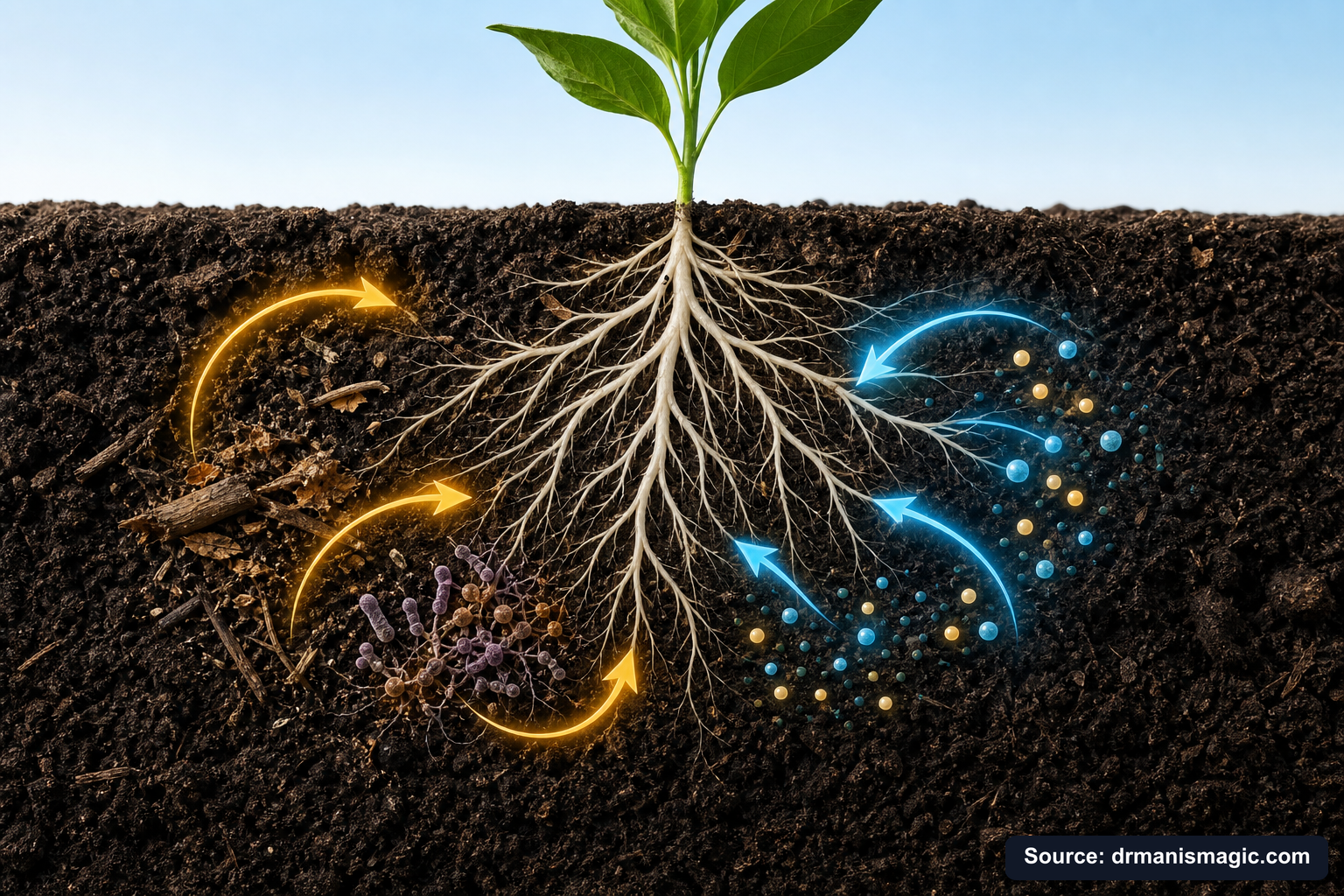
With organic fertilizer, the microbes act as a buffer. They break down the raw materials at a pace controlled by temperature, moisture, and oxygen. Nutrients enter the soil water slowly, in small amounts, at a rate that matches the plant's actual uptake capacity. It is like the difference between someone handing you a glass of water versus opening a fire hose in your face.
Plants also have some ability to regulate amino acid absorption at the root membrane level. This means an organic amino acid fertilizer is self-limiting in a way that ammonium nitrate never could be.
The practical result: you can apply organic fertilizer monthly in containers without fear of salt buildup or root burn. The same schedule with a synthetic fertilizer would likely cause serious damage within a few months. If you have ever seen the crusty white residue on the outside of a clay pot or at the soil surface, that is salt buildup from synthetic feeding. It is visible proof of what is happening invisibly inside the root zone.
You Never Had a Brown Thumb.
You were handed the wrong tools. This free guide hands you the right ones.
You watered it. You fed it. It died anyway.
It was never you. It was the dirt, the salt food, and the bad advice.
This guide shows you what really went wrong, and how to fix it for good.
- Why your plants really died, and why it was never your fault
- The salt hiding in your plant food that quietly burns the roots
- The hidden killer in almost every bag of store soil
- The tiny helpers that grow a whole forest for free
- The rescue trick that brings a half dead plant back to life

Does Living Soil Help Prevent Root Rot?
Quick Answer: Yes. Living soil with active microbial populations, good drainage, and adequate oxygen directly suppresses the pathogens that cause root rot, including Pythium and Phytophthora. Compacted, oxygen-starved, or salt-damaged soil loses its biological defenses and becomes a breeding ground for root diseases. Keeping soil alive is one of the most effective root rot prevention strategies available.
Root rot is not just about overwatering. That is an oversimplification that sends people in the wrong direction.
Root rot is caused by specific pathogens, most commonly Pythium and Phytophthora, which are water molds that thrive in anaerobic (oxygen-deprived) conditions. They attack weakened root tissue. Roots weakened by salt damage, oxygen starvation from compacted soil, or biological death from synthetic fertilizer overuse are easy targets.
Healthy living soil creates multiple layers of protection. First, beneficial bacteria and fungi compete directly with Pythium and Phytophthora for space and resources. They produce natural antifungal compounds. They occupy the root surface so pathogens cannot attach. Second, well-aggregated living soil drains better, which means water does not sit around roots long enough to create the anaerobic conditions those pathogens need. Third, mycorrhizal fungi form a physical shield around root tips, blocking pathogen entry at the most vulnerable points.
When you kill living soil with salt fertilizers, all three of those protection layers disappear at once. The plant is left defenseless, sitting in degraded soil that holds water poorly, with roots already weakened by osmotic stress. Root rot is almost inevitable in that scenario.
The most effective root rot prevention strategy is not a fungicide. It is building and maintaining living soil through mineral-based structure, active microbiology, and clean organic nutrition. That is the foundation we call the Three Plant Pillars.
| Symptom | Salt Damage (Osmotic Stress) | Overwatering (Oxygen Deprivation) | True Root Rot (Pythium / Phytophthora) |
|---|---|---|---|
| Leaf appearance | Tip burn, crispy brown edges, scorched look | Yellow all over, soft and limp | Yellow, wilting, dropping despite moist soil |
| Soil condition | White crust on surface or pot edges | Constantly wet, smells musty | Wet or previously wet. May smell like rot. |
| Root appearance | Fine roots brown and brittle, tips damaged | Roots pale, soft, starting to decay | Roots black, slimy, fully collapsed |
| Onset speed | Gradual. Worsens with each fertilizer application. | Gradual. Linked to watering frequency. | Can progress rapidly once established. |
| Primary cause | Excess soluble salts from synthetic fertilizer | Poor drainage, compacted soil, overwatering | Pathogen attack on weakened, oxygen-starved roots |
| Best fix | Flush soil. Switch to clean organic inputs. | Improve drainage. Reduce watering. Add aeration. | Remove affected roots. Rebuild with living soil and microbials. |
Why Does Soil Need Oxygen, and What Happens When It Runs Out?
Quick Answer: Roots and beneficial soil microbes need oxygen to survive. When soil compacts, stays waterlogged, or fills with decomposing organic matter that collapses pore spaces, oxygen disappears. Without oxygen, beneficial aerobic microbes die, anaerobic pathogens take over, roots suffocate, and the nutrient-cycling system that makes organic fertilizers work completely shuts down.
Here is something that surprises most gardeners. Roots breathe. They need oxygen just like you do. Not carbon dioxide like the leaves above ground. Oxygen. Real oxygen, flowing through open pore spaces in the soil.
When soil is full of pine bark, sawdust, and organic matter, it feels light and fluffy at first. But that material starts decomposing. Within six to twelve months, it collapses. The pore spaces close up. Water sits in the root zone instead of draining through. Oxygen cannot get in. And now your roots are slowly suffocating, even if you are watering perfectly.
The same thing happens when you overwater compacted soil. Water fills every available space. Oxygen gets pushed out. The aerobic bacteria and fungi that make living soil work start to die. The anaerobic organisms that survive without oxygen start to dominate, and those are the pathogens. The ones that cause root rot.
This is why the first of our Three Plant Pillars is mineral-based soil structure. Silica-rich sandy loam from the Rio Grande Valley does not decompose. It does not collapse. It keeps pore spaces open permanently, so oxygen keeps flowing, water keeps draining, and roots keep breathing. No matter how many years pass.
Without oxygen, even the best organic fertilizer and the most robust microbial inoculant will fail. Oxygen is not a nice-to-have. It is the foundation everything else rests on.
See also: Dr. Mani's Magic Super Soil was engineered specifically to maintain permanent oxygen flow in the root zone.
Is All Organic Fertilizer Safe? What About Biosludge and PFAS?
Quick Answer: No. Not all organic fertilizers are clean or safe. Some are made from biosolids, which is treated municipal wastewater sludge containing PFAS "forever chemicals" and heavy metals. These contaminants accumulate in soil and plant tissue over time. Clean organic fertilizers use verified plant, animal, and mineral sources, with no biosludge, no PFAS, and no synthetic fillers of any kind.
This is the part nobody wants to talk about. But you deserve to know it.
The word "organic" on a fertilizer bag does not automatically mean clean or safe. It means the nitrogen came from a biological source rather than a purely synthetic process. And some of those biological sources are deeply problematic.
Biosolids is the industry term for treated municipal sewage sludge. It is literally processed human waste from water treatment facilities. It is legal to use in fertilizers sold as organic or natural. And it is present in more products than most consumers realize.
The problem is that biosolids contain PFAS, a class of synthetic chemicals known as "forever chemicals" because they do not break down in the environment or in human tissue. They accumulate. Penn State Extension's overview of PFAS and land-applied biosolids documents the risks of applying biosolids to agricultural land, including PFAS uptake into crops, groundwater contamination, and long-term soil loading that persists for decades.
Biosolids can also carry heavy metals, pharmaceutical residues, and microplastics. None of these belong in your vegetable garden, your children's lawn, or your fruit trees.
The buyer's checklist for clean organic inputs:
- Ask whether the product contains biosolids or municipal waste. If the manufacturer cannot answer clearly, walk away.
- Look for PFAS-free and biosludge-free certifications or explicit statements on the label.
- Choose inputs derived from verified plant, animal, and mineral sources: crab shells, kelp, feather meal, amino acids, volcanic minerals.
- Avoid products with vague "organic matter" listings and no ingredient transparency.
- Use soil testing from a university extension service before and after any major amendment program to establish a baseline and track what is building in your root zone.
Our Crab, Kelp & Amino Acids contains zero biosludge, zero PFAS, and zero synthetic fillers. The ingredients are exactly what the name says: crab shells, cold-processed kelp, amino acids from clean animal protein sources, and volcanic mineral ash. That is it. Nothing hidden. Nothing that would make you hesitate before letting your kids or your dog play in the garden.
How Do the Three Plant Pillars Work Together to Activate Living Soil?
Quick Answer: The Three Plant Pillars work as an integrated system. Mineral-based soil provides permanent structure and oxygen flow. Live microbials populate the root zone with the biology needed to cycle nutrients. Organic fertilizer feeds those microbes and the plant together. Remove any one pillar and the other two underperform. All three together create a self-sustaining root-zone economy that gets stronger every season.
After growing over 250,000 trees at our South Texas nursery, here is what we learned. You can have the best organic fertilizer in the world, but if your soil is compacted and oxygen-starved, the microbes cannot survive to process it. You can have the most alive microbial inoculant ever bottled, but if you feed it synthetic salt fertilizer, you will kill it within a month. You can have perfect mineral soil and thriving biology, but without consistent clean nutrition, the system stalls.
The Three Plant Pillars are not three separate tips. They are one system. Dr. Mani Skaria, Professor Emeritus of Plant Pathology at Texas A&M Kingsville and founder of the Clean Citrus Program in Texas, developed this framework over four decades of research and field testing. It applies to every plant on earth. Citrus trees. Roses. Bermuda grass. Tomatoes. Fiddle-leaf figs. Container orchids. All of them.
Here is how the three pillars interact in living soil:
Pillar One: Mineral-Based Soil. Silica-rich sandy loam creates permanent pore structure. Water drains. Oxygen flows. Roots push deep. The physical architecture of living soil is maintained without decomposition or collapse.
Pillar Two: Live Microbials. Bacteria, fungi, and mycorrhizae populate the root zone. They form partnerships with roots, trading nutrients for sugars. They protect roots from pathogens. They build the biological infrastructure that turns organic matter into plant food. Our Plant Super Boost delivers these living organisms in a stabilized liquid form that does not smell, does not rot, and reaches your roots alive and active.
Pillar Three: Organic Fertilizer. Clean, salt-free, biostimulant-rich nutrition feeds both the microbes and the plant. The microbes eat it first, convert it, and release it slowly into the root zone in plant-ready forms. When the microbes die, they release a second wave of nutrition. The cycle repeats, building organic matter, improving CEC (the soil's ability to hold nutrients), and deepening root health with every passing season.
Miss any one of these, and the whole system weakens. This is why plants that get organic fertilizer but sit in cheap decomposing potting mix still struggle. And why plants with great soil but no biology respond briefly to fertilizer and then stall. The three pillars must work together.
Download our Free Plant Care Field Guide for a step-by-step walkthrough of applying all three pillars to any plant in any setting.
How Do You Know If Your Soil Is Alive or Dead? A Simple Recovery Checklist
Quick Answer: Signs of dead or dying soil include white salt crust on the surface, persistent yellowing despite fertilizing, slow growth after initial green-up, roots that are brown and brittle instead of white and supple, and soil that dries into a hard crust or stays soggy long after watering. Recovery starts with removing the salt load, reintroducing oxygen, and rebuilding biology.
You do not need a lab test to know something is wrong. Your plant will tell you. And your soil will show you, if you know what to look for.
Dead or dying soil smells like nothing. Truly alive soil smells like earth after rain. Rich, slightly sweet, mineral. That petrichor smell you love after a summer thunderstorm? That is actually the chemical signature of healthy microbial activity, a compound called geosmin released by actinobacteria. No smell means no biology.
If you suspect your soil has been damaged by salt fertilizers, compaction, or poor drainage, here is a practical recovery protocol:
- Stop all synthetic fertilizer immediately. Every additional application makes the salt problem worse before you can start fixing it.
- Flush the root zone with clean water. In containers, water deeply three times in a row, letting water run freely from drainage holes each time. This dilutes and flushes accumulated salts.
- Check drainage and aeration. If water sits on the surface for more than a few seconds, your soil pore structure is compromised. Consider repotting into mineral-based soil or amending with rice hulls or biochar to restore aeration.
- Reintroduce live biology. Apply a live microbial inoculant as a soil drench to begin repopulating the root zone with beneficial bacteria and fungi. This is the most important recovery step.
- Begin clean organic fertilization. Start at half the recommended rate to avoid overwhelming a recovering root system. Build up over two to three applications.
- Be patient for the first four to six weeks. You will not see dramatic visible changes right away. What is happening is invisible and underground. The biology is rebuilding. Trust the process.
- Monitor leaf color and new growth. New leaves emerging green, full, and firm is the clearest sign the root-zone economy is coming back online.
We have watched this recovery process happen in our nursery more times than we can count. Trees that looked like they were headed for the compost pile have come back fully within one growing season once the Three Plant Pillars were restored. The biology wants to work. You just have to stop fighting it.
The Living Soil Payoff: What You Are Actually Growing Toward
Here is the real reason any of this matters.
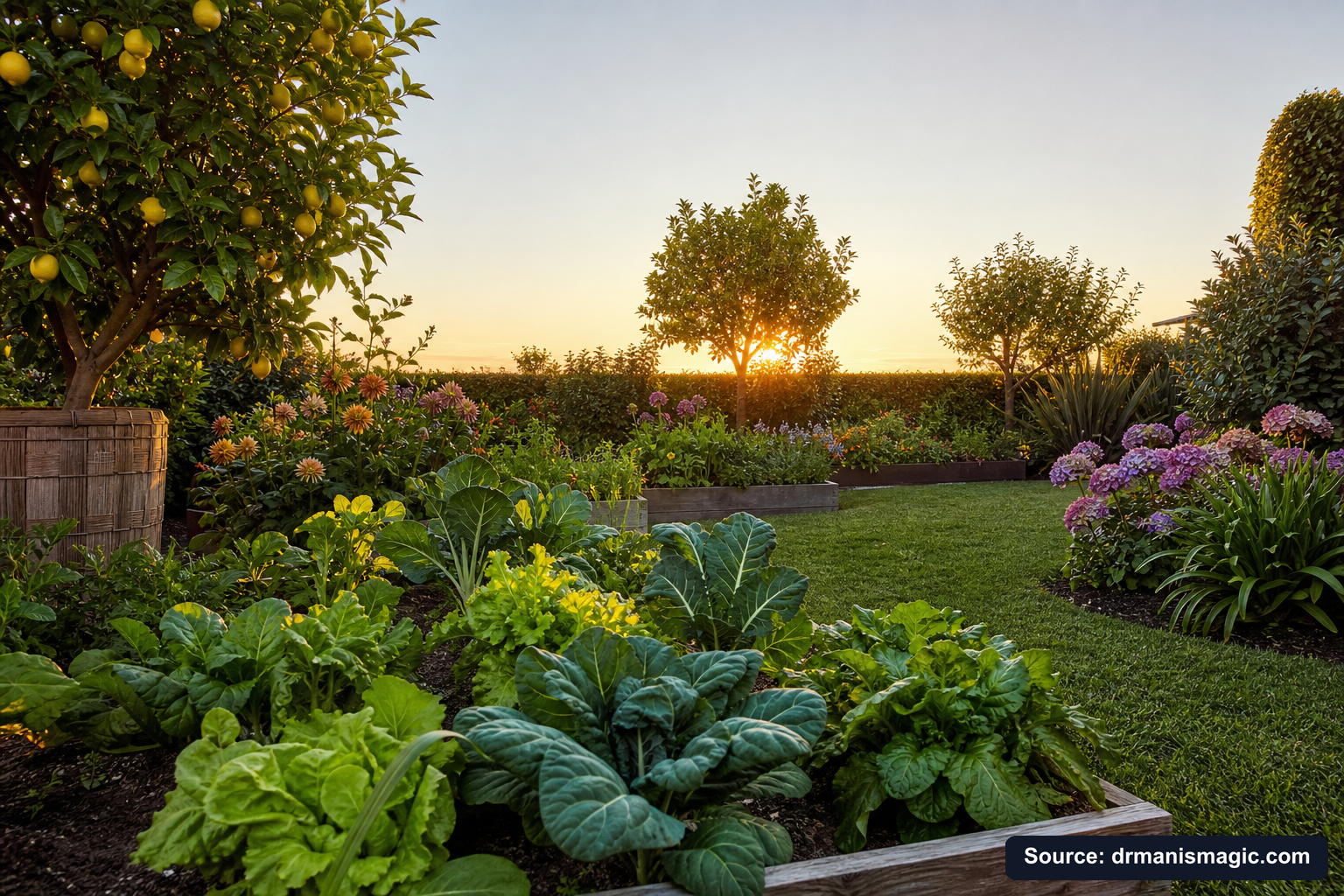
You did not start gardening to manage a chemistry project. You started because there is something deeply satisfying, almost primal, about growing things. About tending a garden. About walking outside and picking something you grew with your own hands. About the smell of a ripe lemon you coaxed from a tree you planted. About watching your lawn go from patchy and pale to deep, thick, rolling green.
That satisfaction is not possible when your soil is dead and your plants are locked in a cycle of synthetic dependency. You spend money and time, and the results always feel temporary. A few weeks of green, then back to struggling. Years pass. The tree you planted never quite delivers on its promise. And the question you never say out loud but always feel stays unanswered: will I ever actually see this thing bear fruit?
You cannot get that time back. Money you can earn again. Time moves in one direction only. Every season you spend fighting against soil biology instead of working with it is a season that does not come back.
Living soil changes all of that. When your soil is alive, your plants stop struggling and start thriving. The system does most of the work. The roots go deeper. The leaves stay greener. The flowers set. The fruit comes. Season after season, the soil gets better, not worse. You stop buying more fertilizer to chase diminishing returns. You start actually enjoying the garden you always imagined.
That is what the Three Plant Pillars build. Not a quick fix. A foundation. One that works with the laws of nature instead of against them, and keeps paying you back in green leaves, ripe fruit, and bare feet on thick grass for as long as you tend it.
If you want to see what clean organic nutrition designed specifically to feed living soil looks like, start by exploring our Crab, Kelp & Amino Acids fertilizer. Zero biosludge. Zero PFAS. Zero synthetic salts. Just the ingredients living soil actually needs, proven across 250,000 trees and backed by a 30-day money-back guarantee. Your plants, and the invisible world beneath them, will feel the difference.
Frequently Asked Questions
Living soil is the secret behind every thriving garden, every heavy fruit tree, every lawn that feels like velvet under your bare feet. These are the questions we hear most from real growers, and the answers come straight from 30-plus years of testing on over 250,000 trees in South Texas. Get these right and everything changes.
What does living soil actually do for your plants?
Living soil is packed with billions of tiny microbes. Bacteria break down raw organic matter. Fungi stretch out like delivery roads, pulling water and minerals straight to your roots. Together they convert organic inputs into food your plants can actually use. Without this living crew underground, organic fertilizer just sits there doing almost nothing. Feed the soil first, and the soil feeds your plants. That is the whole game.
Why do organic fertilizers stop working without living soil?
Organic fertilizers do not feed plants directly. They feed microbes first. The microbes do the converting and then hand nutrients right to the root zone. No microbes means no conversion. That is why you can pour expensive organic fertilizer on dead, compacted soil and see zero results. This is exactly why Dr. Mani built the Three Plant Pillars around live microbes as the engine that makes everything else fire correctly.
How does synthetic fertilizer damage living soil over time?
Synthetic fertilizers are salt-based. Salt pulls water away from microbes and roots alike, creating what scientists call osmotic stress. Your plant looks thirsty even in wet soil. Worse, those salts wipe out the beneficial bacteria and fungi your soil depends on. You get a quick green flush for a few weeks, then a crash. Then you buy more. It is a cycle designed to keep you spending, not growing.
Can you use living soil for indoor houseplants?
Yes, and your indoor plants will feel the difference fast. The key is starting with a mineral-based soil that does not break down and compact over time. Dr. Mani's Super Soil uses sandy loam from the Rio Grande Valley, rice hulls, coco coir, and biochar to keep roots breathing freely. Add Plant Super Boost to bring live microbes into the mix and your indoor plants get the same underground army as a full outdoor orchard.
How often should you feed living soil with organic fertilizer?
With a clean organic fertilizer like Dr. Mani's Crab, Kelp, and Amino Acids blend, less is more. Slow-release organics feed steadily over weeks, not days. There is no salt spike, no crash, no burn. A consistent light feeding every few weeks keeps the microbial crew well supplied. Occasionally flushing with plain clean water helps clear any mineral buildup and keeps the soil balanced and healthy for the long term.
Can you reuse living soil season after season?
With the right foundation, yes, and it actually gets better with time. Cheap potting mixes made from pine bark and sawdust break down, compact, and choke roots within one season. Dr. Mani's Super Soil is built on inorganic sandy loam that does not decompose. That means the structure stays open and airy year after year. Top it up with Plant Super Boost to recharge the microbial population and you have a permanent growing system, not a one-and-done bag of dirt.
What is the best soil mix for plants that need excellent drainage?
The best mix combines a mineral base that never compacts, an aeration material that lasts, and live microbes to keep the root zone healthy. Dr. Mani's Super Soil does exactly that with steam-sterilized sandy loam, rice hulls for long-lasting aeration, biochar to hold nutrients and water, and coco coir for moisture balance. It was developed and proven on over 250,000 citrus trees and works just as powerfully for houseplants, tropical trees, and container gardens of every kind.
About the Author
Dr. Mani Skaria, PhD
Dr. Mani Skaria, PhD, is a plant pathologist and the scientific founder of Dr. Mani's Magic. He earned his doctorate at Purdue University and spent 48 years studying how plants, soil, and living microbes work together, including his years as Professor Emeritus at Texas A&M and as a member of the USDA NAREEE Advisory Board. He invented micro-budding, a method for growing healthier, stronger trees, and has grown more than 250,000 trees on the family farm in Hargill, Texas - US Citrus Nursery. His life's work takes real lab science and practical experience and turns it into simple, safe, organic plant care anyone can use at home.


