


Why Fertilizer Alone Will Never Fix a Struggling Plant | Dr. Mani's Magic
Why Fertilizer Alone Will Never Fix a Struggling Plant
You walk outside on a Saturday morning, coffee in hand, and something stops you cold. Your tree looks wrong. The leaves are yellowing at the edges. A few are dropping. The soil looks the same as always. You did everything right — or so you thought. You fed it last month. Good fertilizer, too. The kind with the big numbers on the bag.
So you fed it again. Double dose this time, just to be safe. And now, a week later, it looks worse. The tips are brown. The leaves are curling. Something is dying, and you have no idea why. That feeling? That sick, sinking frustration? We know it well. After growing over 250,000 trees at our South Texas nursery, we have watched this exact scene play out thousands of times. And every single time, the answer was the same. The fertilizer was not the problem. And it was not the solution either.
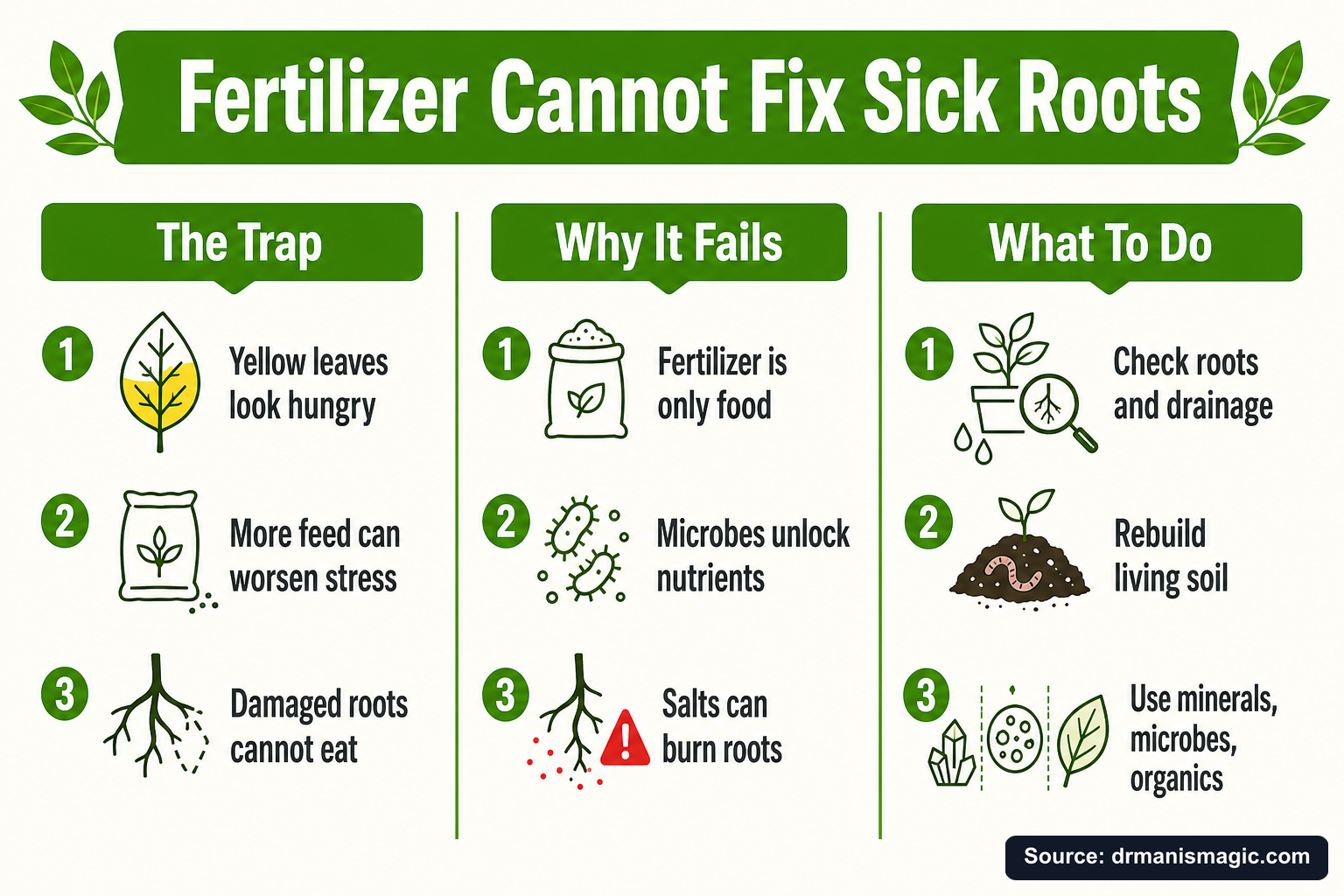
Here is what nobody tells you at the garden center: fertilizer is just food. And food only helps a body that can actually eat. When a plant is struggling, there is almost always something broken deeper down — in the roots, in the soil, in the invisible living world underneath your feet. Pour more fertilizer on a broken system, and you do not fix it. You make it worse. This article is going to show you exactly why — and exactly what to do instead. Read this before you buy another bag of plant food.
Key Takeaways
- Fertilizer only works when a plant can actually absorb nutrients — and many struggling plants cannot.
- The soil is a living ecosystem. Without beneficial bacteria, fungi, protozoa, and nematodes, nutrients stay locked away no matter how much fertilizer you add.
- University of Minnesota Extension research shows that soil biology supplies roughly 75% of plant-available nitrogen and 65% of available phosphorus — microbes do most of the heavy lifting.
- Fertilizer can make a sick plant sicker. Salt buildup, osmotic shock, and root burn are real and common.
- The real fix is the Three Plant Pillars: mineral-based soil, live microbials, and organic fertilizer working together.
- Damaged roots — from overwatering, compaction, salt burn, or pathogens — cannot absorb nutrients even when they are present in the soil.
- Recovery starts with the root zone, not the fertilizer bag. Diagnose first. Feed second.
Why Can a Plant Look Starving Even With Fertilizer in the Soil?
Quick Answer: A plant can look nutrient-starved even when fertilizer is present because damaged roots cannot absorb nutrients, high soil salts block water uptake, wrong pH locks nutrients into forms plants cannot use, and a collapsed soil food web stops the natural nutrient cycling that plants depend on every single day.
Think of it this way. Fertilizer is groceries. Soil biology is digestion. You can fill a kitchen with the best food in the world, but if the digestive system is broken, the body still starves.
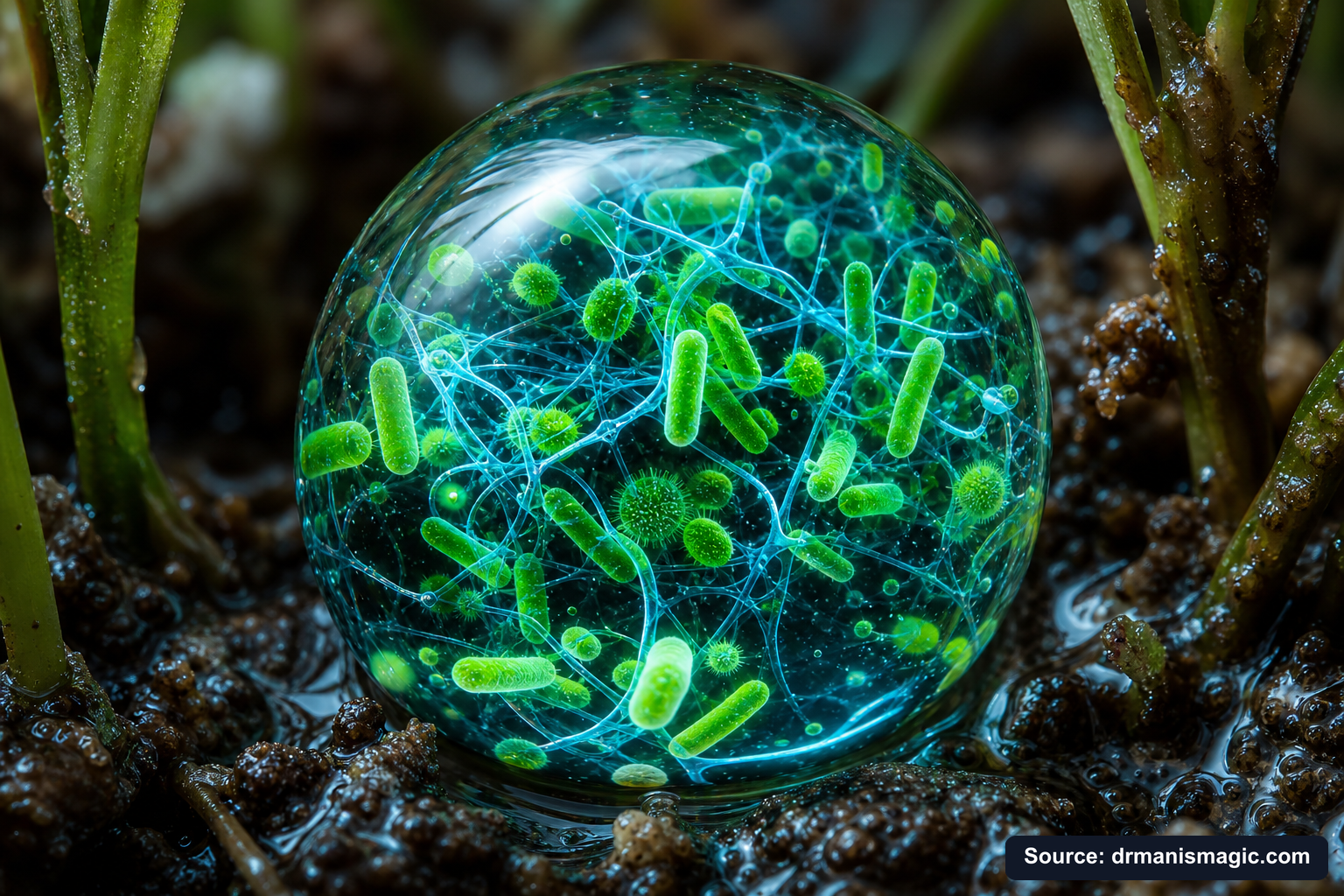
Plants are the same. They do not eat fertilizer directly. They absorb nutrients that have been broken down, transformed, and delivered by a living underground workforce — billions of bacteria, fungi, protozoa, and nematodes working around the clock. When that workforce is gone, the nutrients just sit there. Unused. Locked up. Invisible to the plant's roots.
And here is what makes it worse. Most synthetic fertilizers are salt-based. High salt levels in the soil actually pull water out of roots through a process called osmosis. The plant gets chemically dehydrated — even when you are watering it. The leaves wilt. They yellow. They drop. And the gardener, seeing what looks like a hungry plant, adds more fertilizer. More salt. More damage. It is a terrible loop, and it is incredibly common.
The University of Minnesota Extension confirms that biological processes in healthy soil are responsible for roughly 75% of plant-available nitrogen and 65% of available phosphorus. That means the microbes in your soil are doing the majority of the nutrient work — not the bag of fertilizer you bought at the hardware store.
See also: Why Most Fertilizers Are Actually Salt in Disguise
What Is the Soil Food Web and Why Does It Matter to Your Plant?
Quick Answer: The soil food web is the living community of bacteria, fungi, protozoa, nematodes, and other organisms that break down organic matter, cycle nutrients, build soil structure, and protect roots from disease. Without it, soil is just expensive dirt — and fertilizer dissolves into it without helping the plant at all.
Imagine the ground beneath your plant as a city. Not dead rock. A living, breathing city with workers, supply chains, waste management, and security forces.
Bacteria are the smallest workers. They break down organic matter and lock nutrients into their tiny bodies. Fungi spread like underground highways, reaching far beyond the root zone to pull in water and minerals. Then come the grazers — protozoa and nematodes — that eat the bacteria and fungi. When they do, they release a flush of plant-available nutrients right at the root tip, exactly where the plant needs them most. This predator-prey nutrient release is one of the most important processes in gardening, and almost nobody talks about it.
The USDA's Natural Resources Conservation Service describes the soil food web as the engine that drives nutrient cycling, disease suppression, and soil structure in every healthy growing environment on earth. When this engine is running, plants practically take care of themselves. When it is gone, nothing works — not water, not sunlight, and definitely not fertilizer.
| Organism | What It Does for Your Plant | What Destroys It |
|---|---|---|
| Beneficial bacteria | Break down organic matter; fix atmospheric nitrogen; suppress root pathogens; improve soil aggregation | Synthetic herbicides, salt-based fertilizers, fungicides |
| Mycorrhizal fungi | Extend root reach up to 100x; unlock phosphorus; improve drought and disease resistance; produce glomalin for soil structure | Synthetic fungicides, tillage, salt-based fertilizers |
| Protozoa | Graze on bacteria; release plant-available nitrogen in the rhizosphere; regulate bacterial populations | Pesticides, synthetic inputs, soil compaction |
| Beneficial nematodes | Graze on bacteria and fungi; distribute microbes through soil; accelerate nutrient cycling | Broad-spectrum pesticides, soil sterilization |
| Organic matter | Feeds the whole system; holds water; buffers pH; provides slow-release nutrients | Over-tilling, synthetic chemicals, bark-heavy potting mixes that decompose and compact |
Most gardening advice mentions microbes in a single sentence and then moves on. But this table is the whole story. Every one of these organisms is doing work that fertilizer simply cannot replace.
When Does Fertilizer Make a Sick Plant Worse?
Quick Answer: Fertilizer makes a sick plant worse when the roots are damaged, the soil is dry, the pH is off, or salts have already built up. Adding more fertilizer to these conditions increases osmotic stress, burns roots, locks out other nutrients, and can push a struggling plant past the point of recovery.
This is the part nobody wants to hear. But it is the truth, and it has saved thousands of plants once people understood it.
When a plant is already stressed, its roots are weak. Maybe they are waterlogged. Maybe they are compacted. Maybe a pathogen has been eating at them for weeks. In any of these cases, the root system cannot handle the chemical load of a salt-based fertilizer. The fertilizer draws water away from the roots through osmosis. The plant dehydrates. It looks like it needs more water — or more food. So the gardener adds both. And the plant crashes.
Here are the situations where fertilizer actively does harm:
- Dry soil: Never fertilize dry soil. The concentrated salts burn roots immediately. Always water deeply before any feeding.
- Root rot present: Fertilizer cannot fix root rot. It makes it worse by stressing already damaged tissue.
- Salt buildup in containers: Over time, soluble fertilizers leave salt deposits. You can see the white crust on soil or pot rims. This crust locks moisture out of the root zone.
- Wrong pH: If the soil pH is too high or too low, nutrients get chemically locked into forms the plant cannot absorb. Pouring more fertilizer into a pH-locked soil is like throwing groceries into a locked refrigerator.
- Transplant shock: A freshly moved plant has torn root hairs. It needs time and biology — not a chemical blast.
- Herbicide or pesticide injury: These chemicals kill the soil biology that makes nutrients available. Fertilizer on dead soil is wasted.
See also: The Hidden Reason Synthetic Fertilizers Cause Root Rot
How Do You Tell the Difference Between a Hungry Plant and a Broken Plant?
Quick Answer: A truly hungry plant has healthy roots, good drainage, correct pH, and no salt buildup — it just needs more nutrients. A broken plant shows root damage, compaction, waterlogging, salt crust, or pathogen signs first. Fertilizing a broken plant without fixing the root zone first will make it worse, not better.
Yellow leaves do not always mean hungry. That is the trap most gardeners fall into.
Yellow leaves can mean overwatering. They can mean compacted soil stealing oxygen from the roots. They can mean a pH that has locked iron or manganese away. They can mean root rot has cut off the plant's ability to move any nutrients at all. In every one of those cases, adding fertilizer makes zero difference — and often causes real harm.
Before you reach for the fertilizer, run through this checklist. It takes five minutes and it will save you months of frustration.
- Check the roots. Gently unpot a container plant or dig near the base of a garden plant. Healthy roots are white or light tan and firm. Rotted roots are brown, mushy, and may smell foul. If you see rot, fertilizer is not the answer.
- Check soil moisture. Push your finger two inches into the soil. Is it soggy? Bone dry? Either extreme damages roots before fertilizer ever gets a chance to work.
- Check drainage. Does water pool around the base? Does the pot drain freely? Poor drainage leads to root rot. No fertilizer fixes that.
- Check for salt crust. White or yellowish crust on the soil surface or pot rim is a salt warning sign. Flush the soil with clean water before anything else.
- Check for pests or disease. Look under leaves and at the stem base. Spider mites, scale, and fungal lesions all cause symptoms that look like nutrient deficiency.
- Check light levels. A plant in too much shade cannot photosynthesize properly. No amount of fertilizer replaces light.
- Only after all of the above check out — then consider a true nutrient deficiency and add fertilizer accordingly.
What Are the Three Plant Pillars and Why Do They Fix What Fertilizer Cannot?
Quick Answer: The Three Plant Pillars — mineral-based soil, live microbials, and organic fertilizer — address the root causes of plant failure together. Mineral soil gives roots oxygen and drainage. Live microbials rebuild the soil food web that cycles nutrients and fights disease. Organic fertilizer feeds without burning. All three working together is what fertilizer alone can never do.
Dr. Mani Skaria spent 40 years studying why plants thrive or fail. He is a Professor Emeritus of Plant Pathology, the inventor of micro-budding, and the founder of Texas's Clean Citrus Program. He worked at the Texas A&M Citrus Center. He has tested more products than most people will ever see.
And after all of that, after growing over 250,000 trees at US Citrus Nursery in South Texas, he arrived at a simple truth. Plants do not need more chemicals. They need three things working together. He called it the Three Plant Pillars.
Pillar 1: Mineral-Based Soil. Most potting mixes are made from pine bark and wood fibers. They decompose. As they break down, they compact into a dense, airless sludge that chokes roots and holds water like a wet sponge. Roots need oxygen. When they cannot breathe, they rot — even with perfect watering. Mineral-based soil does not decompose. It holds its structure permanently. Roots breathe. Water drains. The whole system stays open and alive.
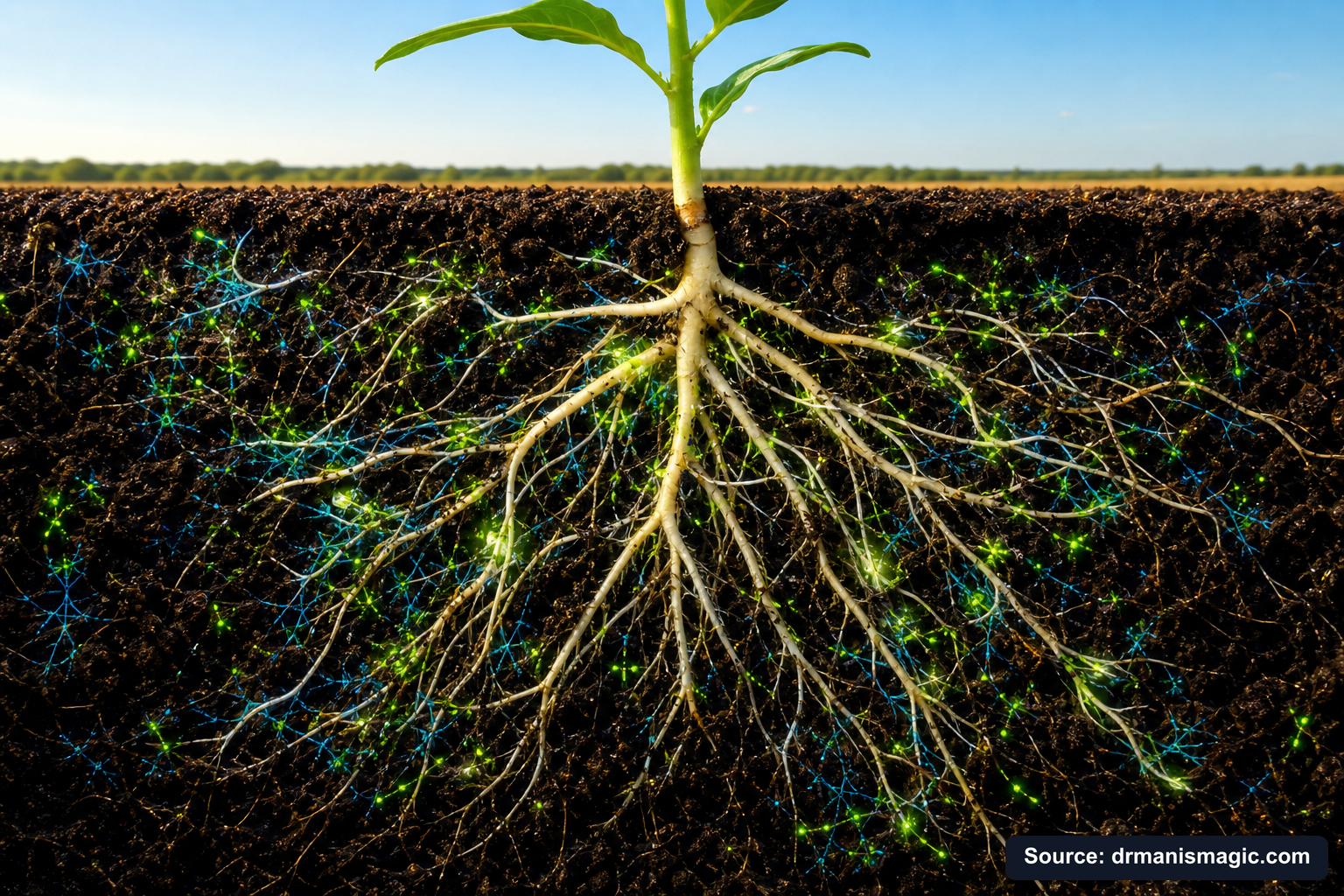
Pillar 2: Live Microbials. This is the invisible workforce. Bacteria, fungi, protozoa, nematodes — the full soil food web we described earlier. Without these organisms, nutrients stay locked. Disease spreads. Roots stay weak. With them, the plant has an army working on its behalf around the clock, for free, powered by the sugars the plant itself releases through its roots.
Pillar 3: Organic Fertilizer. Not salt-based chemicals. Real, slow-release nutrition from sources like crab meal, kelp, and amino acids. This feeds the plant gently over time. It works with the microbes instead of burning them. It builds long-term soil health instead of depleting it. And critically — it does not poison the living system that the first two pillars built.
Miss any one of these three, and you are gardening uphill. Use all three together, and the plant practically takes care of itself.
You Never Had a Brown Thumb.
You were handed the wrong tools. This free guide hands you the right ones.
You watered it. You fed it. It died anyway.
It was never you. It was the dirt, the salt food, and the bad advice.
This guide shows you what really went wrong, and how to fix it for good.
- Why your plants really died, and why it was never your fault
- The salt hiding in your plant food that quietly burns the roots
- The hidden killer in almost every bag of store soil
- The tiny helpers that grow a whole forest for free
- The rescue trick that brings a half dead plant back to life

Why Do Live Microbes Beat Dried Powder Products Every Single Time?
Quick Answer: Dried and powdered microbial products contain spores that rarely reactivate in soil, providing little to no measurable benefit in real growing conditions. Liquid products from stale compost teas go anaerobic and the microbes die before you even open the bottle. Genuinely stabilized, living microbes — harvested from active compost and kept alive — are the only form that consistently works.
Walk into any garden store today and you will see shelves full of microbial products. Bags of powder. Bottles of liquid. All promising to "boost soil biology." Most of them do not work. We know this because we tried dozens of them at US Citrus Nursery before we built our own.
Here is what is really inside most of those products. The powders are microbes that were grown in a factory, dried into spores, and packed into a bag. The idea is that the spores will wake up when you add water. In a perfect lab setting, some do. In the real world, in your soil, under your conditions? We saw no results. None. We tested batch after batch.
The liquids are often worse. Many are made from compost tea — which is genuinely powerful stuff when it is fresh and actively aerated. But compost tea goes anaerobic within 24 hours without aeration. The microbes die. The liquid starts to ferment. By the time it ships to you, sits in a warehouse, and arrives at your door, it smells like sewage. The bottle might even fizz when you open it — that is fermentation gas. The biology is gone. What is left is just smelly water with some dissolved humic compounds.
This is why Dr. Mani's Magic Plant Super Boost was built differently from the ground up. It starts with real, hand-crafted compost — not a factory vat. Then a proprietary all-natural stabilization technique keeps the full spectrum of microbes alive without letting them go anaerobic. The result? A product that smells earthy, not rotten. A product where you can actually see the microbes moving under a microscope. A product with lab analyses confirming living biology — including over 2,000 bacterial species, 400 to 500 fungal species including mycorrhizae, plus protozoa and nematodes.
| Product Type | Microbe Viability | Spectrum | Odor | Real-World Results |
|---|---|---|---|---|
| Dried powder (lab-grown) | Very low — spores rarely reactivate | Narrow — a few selected species | Minimal | Little to no measurable plant response |
| Rehydrated powder in liquid | Low — same spore problem in liquid form | Narrow | Minimal to mild | Inconsistent; mostly ineffective |
| Compost tea (fresh, under 24 hours) | Moderate — good if actively aerated | Broad but variable | Earthy, then sour | Good when truly fresh; impractical for most growers |
| Compost tea (old, over 24 hours) | Low — gone anaerobic | Partial | Strong foul smell; may fizz | Microbes dead; some humic compounds remain |
| Lactobacillus-based products | High — very vigorous | Single species | Yogurt-like | Overtakes beneficial microbes; not recommended for soil |
| Plant Super Boost (stabilized, full-spectrum) | High — confirmed by lab analysis and microscope | 2,000+ bacteria; 400-500 fungi including mycorrhizae; protozoa and nematodes | Earthy, not foul | Consistent root improvement; visible plant response |
Zero PFAS. Zero biosludge. Zero synthetic salts. That is what is in Plant Super Boost, and what is not in it matters just as much as what is.
Should You Fertilize a Stressed Plant? The Honest Answer
Quick Answer: No. Do not fertilize a stressed plant until you have identified and addressed the root cause of its stress. Fertilizing a plant with root damage, salt buildup, waterlogging, compaction, or active disease adds chemical stress to an already overwhelmed system and commonly makes recovery slower or impossible.
We know this goes against everything the fertilizer companies have told you. They want you to fertilize when plants look bad. That is how they sell more product. But after three decades and 250,000 trees, we can tell you plainly — the best thing you can do for a stressed plant is stop adding chemical inputs and start rebuilding the living system around its roots.
A plant in distress is like a person with a broken leg. You do not hand them a pile of groceries and tell them to run. You fix the leg first. Then you feed them. Then you watch them recover.
The time cost of doing it wrong is the part that hurts most. You can replace money. You cannot replace the months or years you spent watching a tree struggle before you figured out the real problem. That is time you will never get back. And that is why we are so direct about this. The number one thing people tell Dr. Mani is that they want to see fruit on their own tree — to actually taste something they grew — before life runs out of time. That goal is completely achievable. But not if years are wasted feeding a broken system.
What Can You Do Right Now to Start Fixing a Struggling Plant?
Quick Answer: Stop fertilizing. Inspect the roots. Fix drainage and aeration first. Leach or flush salt buildup. Rebuild soil biology with live microbials. Once the root zone is functioning again, resume feeding with organic, slow-release fertilizer. This sequence — not more fertilizer — is what turns a struggling plant into a thriving one.
Here is a practical recovery sequence. Follow it in order. Do not skip steps.
- Stop all fertilizer immediately. Give the plant a chemical rest. This is the single most important first step.
- Inspect the roots. If they are brown, mushy, or foul-smelling, you have root rot. Trim the damaged roots with clean scissors. Let the cuts dry for an hour before repotting.
- Flush salt buildup. Run clean water through the soil slowly for two to three minutes. This leaches accumulated salts out through the drainage holes. Do this once a week for two to three weeks if the white crust is heavy.
- Fix the soil structure. If your plant is in bark-heavy potting mix, consider repotting into mineral-based soil that drains freely and does not compact. This is the foundation. Everything else depends on it. See our Super Soil for a permanent, non-decomposing option.
- Add live microbials. Once the root zone is clean and draining, introduce a full-spectrum microbial inoculant. Mix two ounces of Plant Super Boost into a gallon of water and drench the soil. Do this monthly. This is what rebuilds the invisible workforce your plant needs.
- Resume organic feeding only when the plant shows new growth. New leaves or new root tips are the signal that the system is working again. At that point, apply a gentle, slow-release organic fertilizer. Not before.
- Be patient. Biology takes time to rebuild. But when it does, the results are not just good — they are durable. The plant becomes genuinely resilient, not chemically dependent.
For a complete walkthrough of this approach, including watering guidance and seasonal care, our Free Plant Care Field Guide covers the whole system in plain language.
Fertilizer vs. Soil Biology: The Real Comparison
Quick Answer: Fertilizer delivers raw nutrients that may or may not be accessible to the plant. Soil biology transforms, transports, and safely delivers those nutrients while also fighting disease, building soil structure, and improving drought resistance. Fertilizer without soil biology is like having a grocery store with no roads into town — the food exists but it cannot get to you.
People think of these as the same category. They are not. One is a chemical input. The other is a living system. Here is how they actually compare across the things that matter most to your plant.
| Function | Synthetic Fertilizer | Healthy Soil Biology |
|---|---|---|
| Delivers nitrogen | Yes — fast but temporary; leaches out | Yes — slow release; sustained cycling; University of Minnesota: ~75% of plant-available nitrogen |
| Delivers phosphorus | Yes — but much gets locked by soil chemistry | Yes — mycorrhizal fungi unlock and deliver phosphorus directly to roots; ~65% of available phosphorus per U of MN Extension |
| Fights root disease | No | Yes — beneficial bacteria and fungi crowd out pathogens |
| Builds soil structure | No — salts degrade soil aggregation over time | Yes — glomalin from mycorrhizal fungi binds soil particles into stable aggregates |
| Improves drought resistance | No — can increase osmotic stress | Yes — mycorrhizae dramatically extend root water uptake range |
| Safe for children, pets, barefoot use | Often no — chemical burn risk; re-entry warnings | Yes — biology is naturally safe |
| Works long-term without repeated inputs | No — creates dependency; biology declines | Yes — a healthy soil food web self-sustains and improves over time |
| Helps in containers and potting soil | Partially — salts accumulate; no food web | Requires intentional inoculation — container soil lacks natural microbial communities |
The comparison is not even close. Biology wins on almost every measure that matters for long-term plant health. Fertilizer has its place — but only after the biology is working.
The Quiet Cost of Doing It the Old Way
Money you can earn back. Time you cannot.
That is not a cliche. It is the most honest thing we can tell you. Every month a plant spends struggling in dead, salty, compacted soil is a month it is not growing. Not rooting. Not building toward the harvest or the bloom or the lush green lawn you pictured when you planted it. Those months add up into years. And years add up into a long time without the thing you were gardening for.
The old way — bag of salt-based fertilizer, cheap potting mix from a big box store, no biology, no foundation — might show a flash of green for a few weeks. Then it stalls. Then it goes backward. Because you cannot go against nature indefinitely. The laws that govern how plants grow have not changed. They were written long before Miracle-Gro ran its first advertisement in the 1950s. And they will still be true long after.
The good news is the right foundation is not complicated. It is three things. Mineral soil that breathes. Live microbes that work. Organic fertilizer that feeds without burning. That is it. That is the whole system. Everything else — the pruning, the watering schedules, the seasonal adjustments — those are the art of gardening. And they become genuinely enjoyable once the science underneath them is solid.
We have seen it happen hundreds of times. A plant that looked hopeless, sitting in bark sludge with burned roots and no biology, gets repotted into mineral soil, gets drenched with live microbes, gets fed with organic nutrition. Within weeks, new growth appears. Within months, the transformation is real. It feels like magic. It is not magic. It is just nature doing what it has always done — when you stop fighting it and start working with it.
See also: How Salt-Based Feeding Quietly Destroys Root Systems
Start Here: Build the Foundation Your Plant Was Always Missing
If your plant is struggling right now, the best thing you can do today is stop and diagnose before you add anything. Run through the checklist above. Check the roots. Flush the salts. Fix the drainage. Then, when the root zone is ready, rebuild the biology.
The products that address all three pillars — mineral-based Super Soil, live-microbe Plant Super Boost, and our crab, kelp, and amino acids organic fertilizer — were not invented to sell to gardeners. They were built by Dr. Mani Skaria to solve his own problems growing 250,000 trees in South Texas. They are tested, proven, and backed by a 30-day money-back guarantee. No whining. No excuses. If you do not see results, you get your money back.
And if you want the full picture — how to water, when to fertilize, how to read your plant's signals — the Free Plant Care Field Guide walks you through the whole Three Plant Pillars system, step by step, in plain language. It is free. It is practical. And it is the shortcut to the green thumb you have always wanted — without the years of wasted time figuring it out the hard way.
Your plant is not hopeless. The system it was put in probably was. Fix the system first. Everything else follows.
Frequently Asked Questions
If your plant is struggling right now, you probably have questions. And you deserve straight answers. After growing over 250,000 trees at our South Texas nursery, we have seen almost every plant problem there is. These are the questions we hear most often, and the answers that actually work.
Should you fertilize a struggling plant?
No. Not yet. If your plant is already stressed, adding fertilizer can make things much worse. Most fertilizers are salt-based. Salt pulls moisture away from roots. That means a struggling plant gets even more dehydrated. At Dr. Mani's Magic, we always say diagnose first, feed second. Fix the soil and the root zone first. Once your plant is stable and showing new growth, then you feed it with a gentle organic fertilizer like our Crab, Kelp, and Amino Acids formula that will not burn or shock the roots.
Why does my plant look starving even though I keep fertilizing it?
Because fertilizer is just groceries. If the digestive system is broken, the body still starves. Plants do not eat fertilizer directly. They rely on billions of soil microbes to break nutrients down and deliver them to the roots. When those microbes are gone, nutrients just sit in the soil unused. Salt-based synthetic fertilizers kill those microbes. So the more you feed, the worse the problem gets. Our Plant Super Boost puts live bacteria, fungi, and mycorrhizae back into your soil so your plant can actually absorb what you give it.
How do you revive a struggling plant?
Start with the root zone, not the fertilizer bag. First, check if the soil is too wet or too dry. Soggy soil kills roots fast. Bone-dry soil starves them. Trim dead leaves and stems so the plant stops wasting energy. Then repot into a mineral-based soil with real drainage, like Dr. Mani's Magic Super Soil. It is built from sandy loam from the Rio Grande Valley and will never compact or rot. Add live microbes with Plant Super Boost. Give the roots a living foundation and most plants bounce back fast.
When should you not apply fertilizer?
Never fertilize a plant that is sick, dormant, or sitting in extreme heat or cold. Fertilizer during stress is like forcing a sick person to run a marathon. It causes more damage. Also skip fertilizing right before heavy rain since the nutrients wash away. And never use synthetic salt-based fertilizers at all if you want long-term results. They wipe out the soil microbes your plant depends on every single day. Our organic slow-release fertilizer is gentle enough to use without worrying about burning your plants.
Can I just sprinkle fertilizer on top of the soil?
You can, but it depends entirely on what kind of fertilizer you use. Synthetic chemical powders dumped on the surface can crust over, burn roots, and destroy beneficial soil life. A slow-release organic fertilizer like our Crab, Kelp, and Amino Acids formula is much safer to top dress with. Sprinkle it around the drip line of the plant, scratch it in lightly, and water it in. The nutrients release slowly and feed the soil microbes, not just the plant. That is how you build long-term health.
What is the real reason most plants stop growing after a few months?
The soil breaks down and the microbial life collapses. Most potting mixes are made from pine bark and sawdust. They rot. When they rot, they compact. Compacted soil chokes roots and blocks oxygen. No oxygen means no root growth. No root growth means the plant stalls, then slowly declines. This is not bad luck. It is a predictable outcome of bad soil. That is exactly why Dr. Mani built Super Soil from mineral-based sandy loam that never breaks down, never compacts, and keeps roots breathing for years.
What are the Three Plant Pillars and why do they matter more than fertilizer alone?
The Three Plant Pillars are the foundation Dr. Mani developed after 35 years of growing citrus, tropical trees, and houseplants. Pillar One is mineral-based soil that drains well and never rots. Pillar Two is live microbials that unlock nutrients and protect roots. Pillar Three is organic fertilizer that feeds slowly without burning. Fertilizer alone is just one pillar. Without the other two, it cannot do its job. All three working together is what turned struggling trees into thriving ones across 250,000 plants at our South Texas nursery. That is not a theory. That is proof.
About the Author
Dr. Mani Skaria, PhD
Dr. Mani Skaria, PhD, is a plant pathologist and the scientific founder of Dr. Mani's Magic. He earned his doctorate at Purdue University and spent 48 years studying how plants, soil, and living microbes work together, including his years as Professor Emeritus at Texas A&M and as a member of the USDA NAREEE Advisory Board. He invented micro-budding, a method for growing healthier, stronger trees, and has grown more than 250,000 trees on the family farm in Hargill, Texas - US Citrus Nursery. His life's work takes real lab science and practical experience and turns it into simple, safe, organic plant care anyone can use at home.


